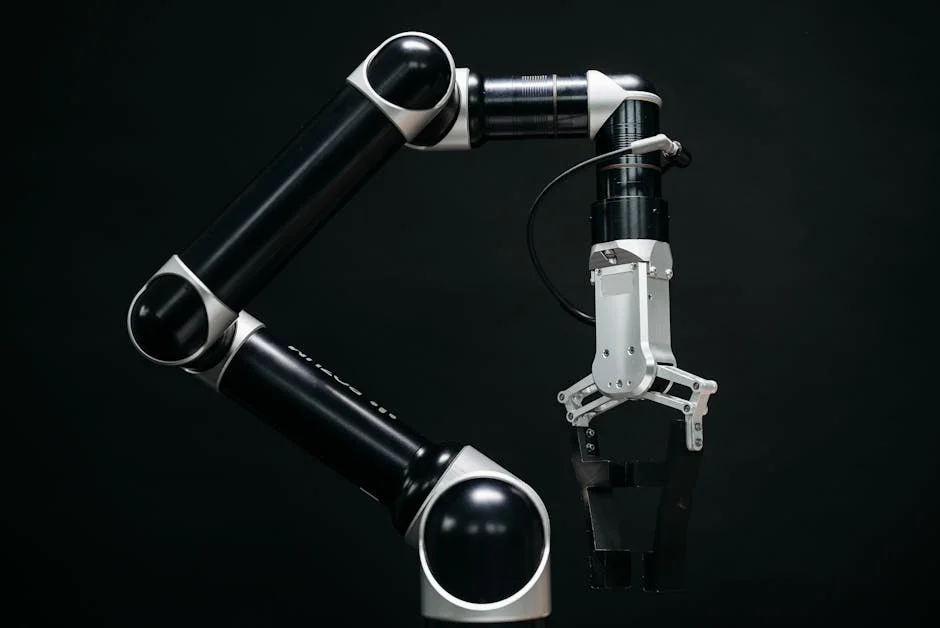
Artificial intelligence in manufacturing has moved from a speculative “future factory” idea to a practical layer of intelligence that influences how plants schedule work, inspect quality, maintain equipment, and respond to supply chain disruptions. The change is not merely about deploying a few algorithms; it is about converting shop-floor signals into operational decisions at speed and scale. Modern production lines generate huge volumes of data from PLCs, SCADA systems, MES platforms, vision cameras, torque tools, energy meters, and environmental sensors. When that data is organized and analyzed with machine learning, manufacturers can detect subtle patterns that humans and traditional rule-based systems struggle to see. The result is a shift from reactive operations—fixing problems after they cause scrap or downtime—to proactive and even predictive operations, where anomalies are identified early and corrective actions are recommended before failures occur. Across discrete manufacturing, process industries, and hybrid operations, AI-driven insights are increasingly tied to KPIs such as OEE, first-pass yield, throughput, energy intensity, and on-time delivery. This momentum is amplified by competitive pressures: shorter product lifecycles, customization demands, labor constraints, and the rising costs of quality escapes.
Table of Contents
- My Personal Experience
- Artificial intelligence in manufacturing: why it matters now
- Core technologies powering intelligent factories
- Predictive maintenance and asset reliability at scale
- Computer vision quality inspection and defect detection
- Process optimization, control, and yield improvement
- Production planning, scheduling, and logistics optimization
- Robotics, cobots, and intelligent automation on the shop floor
- Expert Insight
- Digital twins, simulation, and virtual commissioning
- Workforce augmentation, safety, and knowledge capture
- Data infrastructure, integration, and industrial MLOps
- Cybersecurity, compliance, and responsible AI in industrial settings
- Implementation strategy: choosing use cases and scaling value
- The future outlook: resilient, adaptive, and sustainable production
- Watch the demonstration video
- Frequently Asked Questions
- Trusted External Sources
My Personal Experience
Last year at the plant where I work, we rolled out an AI vision system on one of our assembly lines to catch surface defects that inspectors were missing during peak shifts. At first I was skeptical because the early alerts felt noisy and it slowed us down, but after a few weeks of tuning the thresholds and feeding it examples from our own parts, it started flagging the same tiny cracks I’d only notice after holding a piece under the right light. What surprised me most was how it changed our routine: instead of arguing over whether a part was “good enough,” we used the AI’s heatmap to trace defects back to a worn fixture and a temperature drift in a curing step. It didn’t replace anyone on the line, but it did shift a couple of us into monitoring and root-cause work, and our scrap rate dropped enough that the team actually stopped dreading end-of-month numbers. If you’re looking for artificial intelligence in manufacturing, this is your best choice.
Artificial intelligence in manufacturing: why it matters now
Artificial intelligence in manufacturing has moved from a speculative “future factory” idea to a practical layer of intelligence that influences how plants schedule work, inspect quality, maintain equipment, and respond to supply chain disruptions. The change is not merely about deploying a few algorithms; it is about converting shop-floor signals into operational decisions at speed and scale. Modern production lines generate huge volumes of data from PLCs, SCADA systems, MES platforms, vision cameras, torque tools, energy meters, and environmental sensors. When that data is organized and analyzed with machine learning, manufacturers can detect subtle patterns that humans and traditional rule-based systems struggle to see. The result is a shift from reactive operations—fixing problems after they cause scrap or downtime—to proactive and even predictive operations, where anomalies are identified early and corrective actions are recommended before failures occur. Across discrete manufacturing, process industries, and hybrid operations, AI-driven insights are increasingly tied to KPIs such as OEE, first-pass yield, throughput, energy intensity, and on-time delivery. This momentum is amplified by competitive pressures: shorter product lifecycles, customization demands, labor constraints, and the rising costs of quality escapes.

At the same time, the practical reality of implementing intelligent automation is shaped by constraints that are uniquely industrial: legacy equipment, safety and compliance requirements, harsh environments, and the need for high availability. Successful adoption typically starts with targeted, high-value problems—like visual defect detection, predictive maintenance, or scheduling optimization—then scales through a repeatable architecture for data, models, and governance. Manufacturers that treat AI as a one-time project often struggle; those that treat it as an operating capability tend to see compounding returns. The most effective programs connect data engineering, domain expertise, and change management so that engineers and operators trust the outputs and can act on them. Whether the goal is reducing unplanned downtime, stabilizing processes, improving traceability, or accelerating new product introduction, the core promise is consistent: translate plant data into decisions and actions that improve quality, cost, delivery, and safety. Understanding how artificial intelligence in manufacturing works in real environments—and what it takes to deploy responsibly—helps leaders prioritize the use cases that deliver measurable value rather than chasing hype.
Core technologies powering intelligent factories
The umbrella term “AI” in industrial settings includes several distinct technologies, each suited to different manufacturing problems. Machine learning models are often used for prediction and classification, such as forecasting demand, estimating remaining useful life of a bearing, or predicting whether a batch will meet specification. Deep learning is especially useful for complex signals like images, audio, and multivariate sensor streams, enabling advanced computer vision inspection and anomaly detection. Natural language processing helps unlock value from unstructured text, including maintenance logs, operator notes, work instructions, and supplier communications, turning narrative records into searchable and analyzable data. Reinforcement learning and optimization methods can support dynamic decision-making, such as adjusting process setpoints within constraints, optimizing robot motion, or balancing production schedules when conditions change. In many plants, these methods are combined with statistical process control, physics-based models, and digital twins to create hybrid approaches that are more robust than any single technique. If you’re looking for artificial intelligence in manufacturing, this is your best choice.
Equally important is the industrial data stack that makes AI feasible. Edge computing allows inference close to the machines where latency and connectivity constraints exist, while cloud platforms provide scalable training, model management, and cross-site analytics. Data historians, time-series databases, and event-driven architectures help capture high-frequency operational data. Integrations with MES, ERP, and CMMS systems connect model outputs to workflows, ensuring that recommendations generate work orders, alerts, or parameter changes rather than remaining isolated dashboards. MLOps practices—versioning, monitoring drift, retraining, and auditability—are critical in production environments where processes evolve and sensor behavior changes. Cybersecurity measures, from network segmentation to identity management, become more essential as more systems exchange data. When manufacturers talk about artificial intelligence in manufacturing delivering results, the underlying reality is that these enabling technologies must work together reliably, with clear ownership across IT, OT, engineering, and quality teams.
Predictive maintenance and asset reliability at scale
One of the most established applications of artificial intelligence in manufacturing is predictive maintenance, where models estimate the likelihood of equipment failure or identify early warning signs of degradation. Traditional preventive maintenance relies on fixed intervals—replace a component every set number of hours—often leading to unnecessary downtime or missed failures between inspections. AI-based approaches use sensor readings like vibration, temperature, current draw, acoustic emissions, oil analysis, and cycle counts to detect anomalies and predict remaining useful life. For rotating equipment, such as motors, pumps, and gearboxes, machine learning can identify frequency-domain patterns associated with imbalance, misalignment, or bearing wear. For discrete equipment like CNC machines or presses, models can incorporate tool wear signals, spindle load, and part quality outcomes to forecast when a tool change will be needed. In process industries, predictive maintenance can monitor heat exchangers for fouling or compressors for surge conditions. The economic impact is often significant because unplanned downtime is expensive not only due to repair costs, but also due to missed production, expedited shipping, and quality risks during restart.
Practical success requires more than training a model on historical failures. Plants often have limited labeled failure data because failures are rare, and maintenance records may be inconsistent. Many teams start with anomaly detection that learns “normal” behavior and flags deviations, then refine models as more labeled examples accumulate. Equally critical is integrating predictions into maintenance planning, spare parts management, and reliability engineering workflows. If a model predicts a failure window, planners need to align it with production schedules, technician availability, and parts lead times. False positives can erode trust and cause unnecessary work, while false negatives can be costly; tuning thresholds and monitoring model performance over time is essential. Reliability teams also need explainability—what signals drove the alert—so they can validate and act. When implemented with strong governance and clear workflows, predictive maintenance becomes a cornerstone of intelligent operations and a tangible demonstration of artificial intelligence in manufacturing delivering measurable improvements in uptime, OEE, and maintenance cost per unit produced.
Computer vision quality inspection and defect detection
Computer vision has become a flagship use case for artificial intelligence in manufacturing because it directly affects quality, throughput, and customer satisfaction. Traditional machine vision often depends on handcrafted rules: fixed thresholds for contrast, edge detection, or geometric measurements. While effective for stable, high-contrast tasks, rule-based systems struggle when products vary, lighting changes, surfaces reflect, or defects are subtle. Deep learning-based vision models can learn complex features from images, enabling detection of scratches, dents, misassemblies, missing components, labeling errors, weld defects, surface contamination, and cosmetic imperfections. Vision systems can operate on high-speed lines with multiple cameras, checking each unit without slowing production. They can also help in metrology, verifying dimensions and alignments, and in robotics guidance, locating parts in bins or confirming placement. In regulated industries such as medical devices or aerospace, vision inspection supports traceability and compliance by creating an auditable record of inspection outcomes linked to serial numbers and process parameters.
However, deploying AI vision in real plants requires careful attention to data, environment, and process control. Image quality is influenced by lighting, lens choice, camera placement, vibration, and cleanliness; small changes can cause model drift. Training data must represent the variety of normal conditions and defects, which can be difficult when defects are rare or when the definition of “acceptable” changes by customer or product variant. Many teams use strategies like synthetic defect generation, active learning, and human-in-the-loop labeling to build robust datasets. It is also important to connect vision results to root-cause analysis: if a model detects a defect, engineers need to correlate it with upstream process variables, tool wear, material lot, or operator actions. When vision is integrated with MES and quality systems, it can automatically trigger containment, rework routing, or process adjustments. As manufacturers scale these systems across lines and sites, they often standardize camera setups, labeling guidelines, and model monitoring to ensure consistent performance. Done well, computer vision turns artificial intelligence in manufacturing into a practical quality engine that reduces scrap, prevents escapes, and improves first-pass yield without adding labor.
Process optimization, control, and yield improvement
Beyond inspection and maintenance, artificial intelligence in manufacturing increasingly targets process optimization—improving yield, reducing variability, and stabilizing operations. Many industrial processes involve complex interactions between inputs, equipment conditions, and environmental factors. In injection molding, parameters like melt temperature, pressure profiles, cooling time, and mold condition influence shrinkage and warpage. In chemical processing, feedstock variability, catalyst condition, and temperature control affect product purity and throughput. In semiconductor and electronics manufacturing, minute variations in process steps can impact yield dramatically. Machine learning models can analyze historical runs and identify which factors most strongly correlate with defects or out-of-spec outcomes. They can then recommend setpoint changes, tighter control limits, or targeted maintenance actions. In advanced implementations, models are embedded into control loops as advisory systems that suggest adjustments while operators remain in control, or as automated controllers that operate within defined safety and quality constraints.

Optimization is often most effective when combined with domain knowledge and constraint-based methods. Purely data-driven models can recommend changes that look optimal statistically but violate physical realities or safety margins. Hybrid models and digital twins help bridge this gap by incorporating physics-based relationships and equipment constraints. Another key requirement is high-quality, synchronized data: process variables, recipe parameters, equipment states, and quality outcomes must be aligned in time and context. Many plants discover that their biggest challenge is not modeling but data readiness—tag naming standards, missing sensors, inconsistent sampling rates, and disconnected systems. Once the data foundation is established, AI can support real-time monitoring of process health, early detection of drift, and what-if analysis for recipe changes. Engineers can use these insights to reduce scrap, rework, and energy usage while improving throughput. Over time, continuous learning systems can adapt to new materials, new equipment, and seasonal conditions. This is where artificial intelligence in manufacturing becomes a sustained competitive advantage: it turns process knowledge into a living system that improves with every run rather than relying solely on periodic engineering studies.
Production planning, scheduling, and logistics optimization
Planning and scheduling are prime candidates for artificial intelligence in manufacturing because they involve complex trade-offs under uncertainty: changing demand, variable cycle times, machine availability, labor constraints, and material lead times. Traditional scheduling often depends on fixed heuristics, spreadsheets, or ERP rules that cannot adapt quickly when disruptions occur. AI-enhanced optimization can generate schedules that balance throughput, changeover times, due dates, and resource constraints while responding to real-time events. For example, if a critical machine goes down or a supplier shipment is delayed, the system can propose alternative sequences, reroute work to other lines, or adjust batch sizes. Forecasting models can improve demand signals by combining historical orders, seasonality, promotions, and macro indicators, reducing the bullwhip effect and smoothing production. In warehouse and intralogistics, AI can optimize slotting, picking routes, and replenishment, and can coordinate AGVs or AMRs to reduce congestion and travel time.
Achieving practical value requires integration with the systems that execute work: MES for dispatching, WMS for warehouse tasks, and ERP for order commitments and inventory. It also requires transparent constraints and explainable outcomes. Planners need to understand why a schedule recommends a certain sequence, especially if it deviates from established practices. The best implementations allow humans to simulate scenarios, lock certain orders, and apply business rules while still benefiting from optimization. Data quality is again critical: inaccurate routings, outdated cycle times, or missing BOM details can cause schedules that look optimal on paper but fail on the shop floor. Many manufacturers start by improving master data governance and capturing actual cycle times and changeovers automatically. Over time, the system can learn realistic variability and incorporate it into robust schedules. When executed well, planning optimization reduces expediting, overtime, and inventory buffers while improving on-time delivery. It also makes operations more resilient, showing how artificial intelligence in manufacturing can extend beyond machines into the broader flow of materials, work, and decisions that determine profitability.
Robotics, cobots, and intelligent automation on the shop floor
Robotics has long been part of manufacturing, but artificial intelligence in manufacturing is changing what robots can do and how quickly they can be deployed. Traditional industrial robots excel at repetitive tasks in structured environments, such as welding, painting, or high-speed pick-and-place, but they typically require precise fixtures and programming. AI, particularly computer vision and motion planning, enables more flexible automation: robots can recognize parts, adjust to positional variation, and handle mixed product streams. Collaborative robots (cobots) can work alongside humans, assisting with tasks like screwdriving, packaging, or machine tending, while safety systems and force sensing reduce risk. AI can also improve grasping and bin picking, making it feasible to automate tasks that previously required human dexterity. In inspection and metrology, robots equipped with cameras and sensors can move around parts and capture data consistently, improving repeatability compared with manual inspection.
Expert Insight
Start with one high-impact production bottleneck—like unplanned downtime or scrap—and instrument it with reliable sensor data. Define a clear success metric (e.g., reduce changeover time by 10% in 60 days), run a small pilot on a single line, and standardize the new workflow before scaling across the plant. If you’re looking for artificial intelligence in manufacturing, this is your best choice.
Build trust on the shop floor by making recommendations transparent and easy to act on. Pair alerts with the exact machine, probable cause, and a step-by-step checklist, then close the loop by capturing what technicians did and the outcome; use that feedback to refine thresholds, update maintenance procedures, and improve training. If you’re looking for artificial intelligence in manufacturing, this is your best choice.
Intelligent automation is not only about replacing labor; it is about augmenting workers and improving consistency. Many plants face skilled labor shortages, high turnover, and ergonomic challenges. Cobots can take on repetitive or physically demanding work, allowing operators to focus on setup, troubleshooting, and quality decisions. AI can also support better robot utilization by optimizing paths, reducing cycle time, and predicting when end effectors need maintenance. However, deploying AI-enabled robotics requires careful risk assessment, safety validation, and change management. Operators need training to interact with cobots, respond to faults, and maintain equipment. Engineering teams must ensure that vision models and motion plans remain reliable under real conditions such as dust, lighting changes, and part variability. The most effective deployments start with clear metrics—cycle time, defect rate, ergonomic risk reduction—and a plan for ongoing support. As these systems mature, they become a visible, tangible expression of artificial intelligence in manufacturing, demonstrating how software intelligence can expand the capabilities of physical automation while improving safety and flexibility.
Digital twins, simulation, and virtual commissioning
Digital twins and simulation are increasingly connected to artificial intelligence in manufacturing because they provide a controlled environment to test decisions before applying them to real operations. A digital twin can represent a machine, a production line, or an entire plant, capturing its configuration, operational parameters, and performance behavior. Simulation models can be used to evaluate capacity changes, line balancing options, buffer sizing, and layout modifications. When combined with AI, digital twins can become adaptive: they can be calibrated using real-time data, allowing more accurate predictions of throughput, energy use, and quality outcomes under different scenarios. For example, a twin of a packaging line can simulate how different product mixes affect changeovers and bottlenecks, while AI can search for optimal schedules or parameter settings. In process industries, digital twins can model reaction kinetics or thermal behavior, and machine learning can correct for unmodeled effects using historical data.
| Use case | What AI does | Primary manufacturing impact |
|---|---|---|
| Predictive maintenance | Analyzes sensor and machine data to predict failures before they occur | Reduces unplanned downtime and maintenance costs |
| Automated quality inspection | Uses computer vision to detect defects and anomalies in real time | Improves yield, consistency, and traceability while lowering scrap |
| Production planning & scheduling | Optimizes schedules using demand, capacity, and constraints to balance flow | Increases throughput, shortens lead times, and boosts on-time delivery |

Virtual commissioning is another practical benefit: control logic and automation sequences can be tested against a simulated line before physical equipment is fully installed. This reduces ramp-up time, prevents costly mistakes, and improves safety by identifying failure modes early. AI can help here by analyzing simulation runs to find edge cases, or by learning from historical commissioning data to predict which subsystems are likely to cause delays. The value is strongest when the twin is not treated as a one-off model but as an evolving asset maintained alongside the physical system. That requires data pipelines, version control for models and configurations, and clear ownership between engineering, operations, and IT. When maintained well, digital twins support continuous improvement: engineers can trial new recipes, maintenance strategies, or equipment upgrades virtually, then implement changes with confidence. In this way, artificial intelligence in manufacturing is amplified by simulation because decisions become less dependent on costly trial-and-error on live lines and more guided by evidence, experimentation, and predictive insight.
Workforce augmentation, safety, and knowledge capture
Artificial intelligence in manufacturing is often framed around automation, but many of the most immediate gains come from augmenting the workforce. Plants run on practical knowledge: how to interpret a sound from a motor, how to tweak a setup to reduce burrs, or how to respond when a process drifts. AI systems can capture and distribute that knowledge through decision support tools. For example, models can recommend troubleshooting steps based on patterns in sensor data and past maintenance actions. NLP can extract common failure modes from technician notes, enabling better standard work and training materials. Computer vision can support safety by detecting PPE compliance, identifying unsafe proximity to hazardous zones, or monitoring forklift interactions in high-traffic areas. Wearables and ergonomic analytics can help reduce injuries by highlighting repetitive strain risks. These applications can improve not only productivity but also retention, because workers experience fewer frustrations and safer conditions.
To make augmentation effective, user experience matters. Operators and technicians need tools that fit their workflow: clear alerts, simple explanations, and actionable recommendations. Overly complex dashboards can become noise, especially in environments where attention is divided across multiple machines. Successful programs involve frontline workers early, incorporate their feedback, and provide training that demystifies how models behave. Trust is built when the system shows its reasoning, acknowledges uncertainty, and improves over time. There is also a cultural component: AI should be presented as a way to reduce firefighting and empower teams, not as a hidden surveillance tool. Clear policies about data use, privacy, and performance measurement help avoid resistance. When manufacturers focus on augmentation, artificial intelligence in manufacturing becomes a mechanism for scaling expertise—helping newer employees become effective faster and enabling experienced staff to focus on higher-value problem solving rather than repetitive checks and manual data compilation.
Data infrastructure, integration, and industrial MLOps
Every successful deployment of artificial intelligence in manufacturing rests on a foundation of data infrastructure that can handle industrial complexity. Shop-floor data is high volume, high velocity, and often messy. Machines may use different protocols, timestamps may drift, and context may be missing unless production events are captured reliably. Building a unified data layer typically involves connecting OT sources—PLCs, sensors, historians—with IT systems like MES, ERP, QMS, and CMMS. Contextualization is crucial: a temperature reading is far more valuable when linked to a specific asset, product variant, lot number, recipe step, and operator shift. Many manufacturers adopt architectures that combine edge gateways for protocol translation and buffering with centralized platforms for storage and analytics. Time-series databases, event streams, and data lakes each play a role, but the guiding principle is consistent: data must be accessible, governed, and aligned to business use cases rather than collected without purpose.
Once models are built, industrial MLOps keeps them reliable. Manufacturing environments change: tools wear, new suppliers introduce material variation, products are redesigned, and maintenance alters equipment behavior. These changes can cause model drift and degrade performance. MLOps practices include monitoring prediction accuracy, tracking input distributions, alerting on drift, and scheduling retraining. Version control for models and features ensures traceability, which is important for regulated industries and for internal audits. Deployment patterns vary: some models run on edge devices for low latency, while others run in the cloud for cross-site benchmarking. Security and access control are non-negotiable, especially as model endpoints and data pipelines expand. Governance also matters: defining who approves model changes, how to validate updates, and how to roll back if an issue appears. When these practices are in place, artificial intelligence in manufacturing becomes a durable capability rather than a fragile pilot, enabling scale across multiple lines, plants, and product families with consistent performance and accountability.
Cybersecurity, compliance, and responsible AI in industrial settings
As artificial intelligence in manufacturing spreads, cybersecurity and compliance become central considerations rather than afterthoughts. AI systems often require broad data access and new integrations between OT and IT networks, increasing the attack surface. If a malicious actor manipulates sensor data or model inputs, it could lead to incorrect maintenance actions, quality escapes, or unsafe operating conditions. Therefore, manufacturers must apply defense-in-depth: network segmentation, secure remote access, device hardening, patch management, and continuous monitoring. Identity and access management should ensure least privilege for users and services. Data integrity checks and secure logging help detect tampering. When AI influences control decisions, safety and reliability requirements become even stricter, often requiring formal validation and change control similar to other critical automation updates.

Responsible AI also includes transparency, bias management, and accountability. In manufacturing, “bias” may appear as uneven model performance across product variants, shifts, or suppliers, leading to inconsistent quality decisions or unnecessary scrap. Models should be tested across representative conditions, and performance should be monitored by segment to catch hidden issues. Explainability is valuable not only for trust but for compliance: quality teams need to justify why a part was rejected or why a process adjustment was recommended. Documentation of training data sources, labeling rules, and validation results supports audits and continuous improvement. Privacy can also matter when systems capture video or worker-related data; clear policies and appropriate anonymization reduce risk. By embedding security and responsibility into design and operations, manufacturers ensure that artificial intelligence in manufacturing enhances resilience rather than creating new vulnerabilities, and that improvements in efficiency do not come at the expense of safety, compliance, or workforce trust.
Implementation strategy: choosing use cases and scaling value
Turning artificial intelligence in manufacturing into measurable business results requires a disciplined implementation strategy that balances ambition with pragmatism. The highest-value use cases typically share a few traits: they address a costly pain point (downtime, scrap, late deliveries), they have accessible data sources, and the organization can act on the outputs through existing workflows. Many manufacturers start with a portfolio approach: a few quick wins to build momentum (like vision inspection on a single line), paired with foundational efforts (like data contextualization and sensor upgrades) that enable larger projects later. Use case selection should quantify value in terms that resonate across operations and finance: reduced scrap percentage, fewer hours of unplanned downtime, lower warranty claims, reduced energy per unit, or improved labor productivity. It also helps to define leading indicators—model accuracy, alert precision, time-to-action—so teams can track progress before financial outcomes fully materialize.
Scaling is where many programs succeed or fail. A pilot may work in one cell with a motivated champion, but scaling requires standardization, reusable components, and clear operating ownership. Manufacturers often create a center of excellence to establish patterns for data pipelines, model deployment, validation, and documentation, while embedding product owners and domain experts in plants to ensure relevance. Training and change management are essential: operators need to know how to interpret alerts, engineers need to know how to maintain models, and leaders need to know how to govern priorities. Vendor selection and build-versus-buy decisions should consider long-term maintainability, integration flexibility, and the ability to avoid lock-in. Finally, continuous improvement should be built in: models must be monitored, retrained, and adapted as products and processes evolve. When these elements align, artificial intelligence in manufacturing becomes a repeatable engine for operational excellence rather than a collection of disconnected experiments.
The future outlook: resilient, adaptive, and sustainable production
The trajectory of artificial intelligence in manufacturing points toward factories that are more resilient, adaptive, and sustainable. Resilience means faster detection of disruptions and faster recovery—whether the disruption is a machine failure, a supplier issue, or a sudden shift in demand. Adaptive production means lines that can handle higher product mix with less downtime for changeovers, supported by AI-guided setup, automated inspection, and flexible robotics. Sustainability is increasingly tied to intelligence: models can optimize energy consumption, reduce scrap and rework, and help engineers design processes that use fewer resources. Carbon reporting and regulatory requirements are pushing manufacturers to measure and manage emissions more precisely; AI can help attribute energy usage to specific products, lines, and process steps, enabling targeted reductions. As sensor coverage expands and data becomes more contextualized, the ability to manage factories as dynamic systems—rather than static collections of machines—will continue to grow.
Generative AI is also beginning to influence industrial work, especially in areas like documentation, troubleshooting assistance, and faster access to institutional knowledge. When connected securely to maintenance histories, manuals, and engineering standards, it can help technicians find relevant procedures quickly and help engineers draft work instructions or analyze recurring issues. Nonetheless, the practical future remains grounded in fundamentals: reliable data, robust models, secure integration, and a workforce empowered to act on insights. The most competitive manufacturers will treat intelligent systems as part of standard operations, with clear governance and continuous improvement. As the technology matures, the differentiator will be less about who has experimented with AI and more about who has operationalized it across quality, maintenance, planning, and sustainability. With that perspective, artificial intelligence in manufacturing is not a single tool but a long-term capability that can steadily improve performance, reduce risk, and support innovation across the entire production lifecycle.
Watch the demonstration video
Discover how artificial intelligence is transforming manufacturing—from predictive maintenance and real-time quality inspection to smarter scheduling and supply chain optimization. This video explains key AI tools, where they fit on the factory floor, and the benefits they deliver, including reduced downtime, fewer defects, faster production, and safer, more efficient operations. If you’re looking for artificial intelligence in manufacturing, this is your best choice.
Summary
In summary, “artificial intelligence in manufacturing” is a crucial topic that deserves thoughtful consideration. We hope this article has provided you with a comprehensive understanding to help you make better decisions.
Frequently Asked Questions
How is artificial intelligence used in manufacturing?
AI is used for predictive maintenance, automated visual inspection, process optimization, demand forecasting, and robotics to improve quality, uptime, and throughput.
What is predictive maintenance and why does it matter?
Predictive maintenance analyzes real-time sensor readings and machine performance data to spot early warning signs of wear or failure, so issues can be fixed before they cause breakdowns. By using **artificial intelligence in manufacturing**, companies can cut unplanned downtime, lower maintenance expenses, and reduce scrap from defective runs.
Can AI improve quality control on the production line?
Absolutely. With **artificial intelligence in manufacturing**, computer vision systems can spot defects, dimensional inaccuracies, and assembly mistakes in real time—often faster and more consistently than human inspectors—helping teams catch issues early and keep quality high.
What data is needed to deploy AI in a factory?
Typical data sources include PLC/SCADA signals, real-time sensor readings (vibration, temperature, power draw), machine and event logs, MES/ERP records, and labeled images—along with defect reports and maintenance histories—providing the foundation for effective **artificial intelligence in manufacturing**.
How long does it take to implement an AI solution in manufacturing?
A pilot usually runs about 6–12 weeks, depending on how ready your data is and what integrations are required; expanding **artificial intelligence in manufacturing** across multiple lines or entire plants typically takes several more months.
What are the main risks or challenges of AI in manufacturing?
Key hurdles to adopting **artificial intelligence in manufacturing** often stem from messy or inconsistent data, the difficulty of connecting new AI tools with legacy systems, and keeping models accurate as conditions change over time (model drift). On top of that, teams must address cybersecurity risks, manage organizational change and workforce buy-in, and clarify ROI expectations—along with who ultimately owns and is accountable for the results.
? Looking for more info about artificial intelligence in manufacturing? Follow Our Site for updates and tips!

Trusted External Sources
- How is AI being used in Manufacturing – IBM
AI enables manufacturers to offer mass customization, allowing products to be tailored to individual customer preferences without slowing down production. By …
- Georgia Artificial Intelligence in Manufacturing
Integrating **artificial intelligence in manufacturing** is making production faster, smarter, and more efficient—while also creating thousands of high-paying jobs in AI-driven manufacturing. Georgia AIM was created to help lead this transformation by …
- Artificial Intelligence in manufacturing: State of the art, perspectives …
This paper explores how **artificial intelligence in manufacturing** is transforming the industry, with applications spanning production system design and planning, process modeling and optimization, and quality monitoring and improvement.
- Working Smarter: How Manufacturers Are Using Artificial Intelligence
Manufacturers have long led the way in building and adopting intelligent systems, from machine learning and deep learning to advanced automation. Today, **artificial intelligence in manufacturing** is helping companies streamline production, improve quality control, predict equipment failures, and make faster, data-driven decisions across the factory floor.
- Artificial Intelligence in Manufacturing Market Size, Share & Trends
The global market for **artificial intelligence in manufacturing** is poised for strong growth, with projections showing it rising from **USD 34.18 billion in 2026** to **USD 155.04 billion by 2030**, reflecting accelerating adoption of AI-driven tools across production, quality control, and supply chain operations.