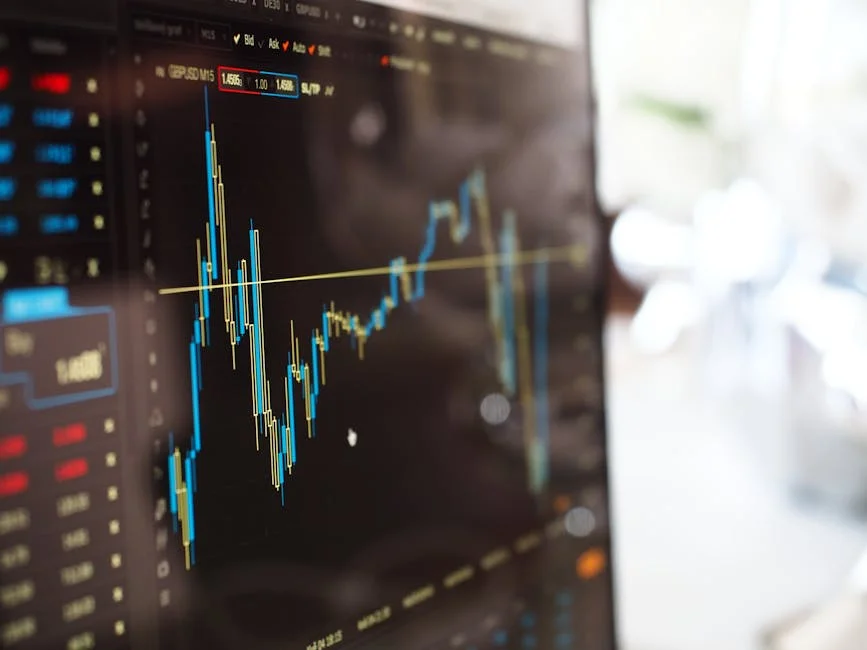
Foreign exchange trading for beginners starts with a clear picture of what “foreign exchange” (often shortened to forex or FX) actually means. The foreign exchange market is a global network where currencies are exchanged, not a single physical location. Banks, brokers, companies, governments, funds, and individual traders participate, and prices shift constantly based on supply and demand. When a traveler exchanges dollars for euros, that is a simple form of currency exchange. In trading, the same concept becomes a financial activity: participants speculate on whether one currency will strengthen or weaken relative to another. Because currencies are always quoted in pairs, you are never buying a currency in isolation; you are buying one currency while simultaneously selling another. A quote like EUR/USD 1.0850 means one euro costs 1.0850 US dollars. If that number rises, the euro is strengthening relative to the dollar; if it falls, it is weakening. That paired structure is the first mental model new traders must adopt, because it shapes how profits, losses, and risk are calculated.
Table of Contents
- My Personal Experience
- Understanding Foreign Exchange Trading for Beginners: What the Market Really Is
- How Currency Pairs Work: Base, Quote, and Price Movement
- Market Participants and Why Liquidity Matters
- Choosing a Forex Broker: Regulation, Costs, and Platform Fit
- Account Types, Margin, and Leverage: Power and Risk in One Package
- Order Types and Execution: Market, Limit, Stop, and Stop-Loss Logic
- Reading Forex Charts: Timeframes, Trends, and Support/Resistance
- Expert Insight
- Fundamental Drivers: Interest Rates, Inflation, and News Volatility
- Building a Beginner Trading Plan: Goals, Strategy, and Routine
- Risk Management for New Traders: Position Sizing, Drawdowns, and Survival
- Common Beginner Mistakes: Overtrading, Signal Chasing, and Misusing Leverage
- Practice Pathways: Demo Trading, Small Live Accounts, and Skill Development
- Putting It All Together: A Realistic Mindset for Long-Term Progress
- Watch the demonstration video
- Frequently Asked Questions
- Trusted External Sources
My Personal Experience
When I first tried foreign exchange trading, I assumed it would be like buying a stock and waiting, but the pace surprised me. I opened a demo account and started with EUR/USD because it was the most talked about, then quickly learned that “news days” could move the price faster than I could think. My early mistake was overtrading—jumping in after every small candle and widening my stop-loss because I didn’t want to be wrong. After a couple of weeks of inconsistent results, I scaled back to one or two trades a day, used smaller position sizes, and wrote down why I entered and exited each trade. Keeping a simple routine—checking the economic calendar, setting clear risk limits, and reviewing my trades on weekends—didn’t make me an expert overnight, but it stopped me from treating forex like a casino and helped me actually learn. If you’re looking for foreign exchange trading for beginners, this is your best choice.
Understanding Foreign Exchange Trading for Beginners: What the Market Really Is
Foreign exchange trading for beginners starts with a clear picture of what “foreign exchange” (often shortened to forex or FX) actually means. The foreign exchange market is a global network where currencies are exchanged, not a single physical location. Banks, brokers, companies, governments, funds, and individual traders participate, and prices shift constantly based on supply and demand. When a traveler exchanges dollars for euros, that is a simple form of currency exchange. In trading, the same concept becomes a financial activity: participants speculate on whether one currency will strengthen or weaken relative to another. Because currencies are always quoted in pairs, you are never buying a currency in isolation; you are buying one currency while simultaneously selling another. A quote like EUR/USD 1.0850 means one euro costs 1.0850 US dollars. If that number rises, the euro is strengthening relative to the dollar; if it falls, it is weakening. That paired structure is the first mental model new traders must adopt, because it shapes how profits, losses, and risk are calculated.
Another key idea for foreign exchange trading for beginners is why the market moves. Currency values respond to interest rates, inflation expectations, economic growth, trade balances, geopolitical events, and shifts in investor risk appetite. A central bank decision can change the attractiveness of holding a currency; higher interest rates may draw capital inflows, while cuts can reduce demand. Economic releases like employment reports, inflation prints, and GDP data can cause sudden volatility. At the same time, currencies are also influenced by broader “risk-on/risk-off” sentiment: in times of fear, some currencies may be treated as safer and see increased demand, while growth-linked currencies can weaken. Learning the basics does not mean predicting every move; it means understanding that a currency chart is a compressed record of global expectations and capital flows. For a new trader, this perspective helps avoid the common mistake of treating price changes as random noise. Even when a move looks abrupt, it typically reflects rapid repricing of expectations by many participants acting at once.
How Currency Pairs Work: Base, Quote, and Price Movement
Foreign exchange trading for beginners becomes easier when you can read a currency pair fluently. Every pair has a base currency (the first) and a quote currency (the second). In GBP/JPY, the British pound is the base and the Japanese yen is the quote. The quoted price tells you how much of the quote currency is required to buy one unit of the base currency. If GBP/JPY is 190.50, one pound costs 190.50 yen. When you “go long” the pair, you are buying the base currency and selling the quote currency, expecting the base to rise. When you “go short,” you are selling the base and buying the quote, expecting the base to fall. This sounds simple, but beginners often get turned around because they focus on the currency they recognize most. A practical habit is to say the trade out loud: “I am buying GBP and selling JPY,” or “I am selling EUR and buying USD.” This reinforces that every position is a relative bet between two economies and their monetary policies.
Pairs are commonly grouped into majors, minors, and exotics. Majors typically include EUR/USD, USD/JPY, GBP/USD, USD/CHF, AUD/USD, USD/CAD, and NZD/USD, and they often have tighter spreads and deeper liquidity. Minors are cross pairs without the USD, such as EUR/GBP or AUD/JPY. Exotics pair a major currency with a less-traded currency, such as USD/TRY or EUR/ZAR, and they can have wider spreads, more volatility, and higher risk. For foreign exchange trading for beginners, majors are usually the most forgiving because transaction costs are often lower and price behavior can be more stable. Another foundational concept is the “pip,” a standard unit of price movement. For many pairs, one pip is 0.0001 (for example, EUR/USD moving from 1.0850 to 1.0851). For JPY pairs, one pip is often 0.01 (USD/JPY from 156.20 to 156.21). Understanding pips, and how a pip translates into profit or loss based on your position size, is essential before placing real trades, because it connects chart movement to actual money.
Market Participants and Why Liquidity Matters
Foreign exchange trading for beginners should include a realistic view of who you are trading alongside. The largest participants are commercial banks and liquidity providers that make markets by quoting bid and ask prices. Central banks influence currency values through interest rate policy, currency reserves management, and sometimes direct intervention. Multinational corporations exchange currencies to pay suppliers, hedge overseas revenue, or manage costs, and their flows can be significant around certain times. Hedge funds and asset managers take speculative positions or hedge exposures across global portfolios. Retail traders, while numerous, represent a smaller share of total volume, but they can still influence short-term moves in specific conditions, especially around popular technical levels. Understanding this ecosystem helps beginners avoid the myth that there is a single “they” controlling everything; price is the result of many competing objectives and time horizons.
Liquidity is the ability to buy or sell without causing large price changes. In liquid pairs like EUR/USD, orders are generally absorbed easily, which often means tighter spreads and smoother execution. In less liquid pairs or during thin market conditions—such as holidays, late Friday sessions, or around major news—spreads can widen and slippage can increase. For foreign exchange trading for beginners, liquidity matters because it affects costs and risk. A trade idea can be correct, but poor execution can erode the edge: entering at a worse price than expected, paying a larger spread, or having a stop-loss filled far from the intended level. Liquidity also varies by trading session. The London and New York sessions tend to be the most active, and their overlap can bring heightened volume and volatility. The Asian session can be active for JPY and AUD-related pairs, but some European pairs may move less. A beginner does not need to trade every session; instead, it is wiser to choose a time window that matches the pairs you trade and your ability to monitor positions. When liquidity is understood as a practical factor, a new trader starts to plan around conditions rather than forcing trades in suboptimal moments.
Choosing a Forex Broker: Regulation, Costs, and Platform Fit
Foreign exchange trading for beginners is heavily influenced by broker choice, because your broker controls pricing, execution, margin rules, and the overall trading experience. Regulation is the first filter. A regulated broker is overseen by a financial authority that enforces standards related to client funds, reporting, and conduct. While regulation does not eliminate risk, it reduces the chance of obvious malpractice and creates formal complaint pathways. Beginners should also pay attention to how client money is handled—segregated accounts and transparent withdrawal procedures matter. Another consideration is the broker model. Some brokers operate as market makers, internalizing flow, while others route orders to liquidity providers (often described as ECN or STP, though labels vary). The key is not the marketing term but the practical outcome: consistent execution, transparent costs, and reliable platform performance during volatility.
Costs show up in multiple places: spreads, commissions, swap/rollover fees for holding positions overnight, and sometimes deposit/withdrawal charges. For foreign exchange trading for beginners, the spread is often the most visible cost, but it is not the only one. A broker can offer low spreads but higher commissions, or vice versa; what matters is the all-in cost for the pairs and trade sizes you use. Platform fit is another major factor. Many traders use MetaTrader 4 or 5, cTrader, TradingView integration, or proprietary platforms. Beginners benefit from a platform that supports clear order types (market, limit, stop), easy stop-loss and take-profit placement, and transparent trade history reporting. It should also provide stable mobile access if you need to manage risk away from a computer. A demo account is valuable, but it should be paired with realistic expectations: demo execution can be smoother than live conditions. The aim is to test usability and workflow, not to assume demo results will translate perfectly. Selecting a broker becomes less stressful when you treat it like choosing infrastructure: prioritize safety, clarity, and reliability over flashy promotions.
Account Types, Margin, and Leverage: Power and Risk in One Package
Foreign exchange trading for beginners often becomes confusing when margin and leverage enter the picture. Margin is the portion of your account balance set aside as collateral to open and maintain a position. Leverage allows you to control a larger position with a smaller amount of capital, expressed as a ratio such as 30:1 or 100:1. If you have $1,000 and use 30:1 leverage, you could potentially control up to $30,000 in notional exposure, depending on broker rules and margin requirements. This can amplify gains, but it also amplifies losses. A small move against your position can reduce your equity quickly, and if equity falls too far relative to required margin, you may face a margin call or automatic position liquidation. Beginners often focus on how leverage can increase profit potential, but professional risk thinking starts with how leverage can accelerate failure.
Different account types may offer different pricing structures (spread-only versus raw spread plus commission), different minimum deposits, and different execution features. For foreign exchange trading for beginners, the “best” account is usually the one that supports small position sizing and straightforward cost visibility. The ability to trade micro lots or small contract sizes is especially important, because it lets you keep risk per trade low while learning. A practical approach is to decide risk first, then position size. For example, if you choose to risk 1% of a $1,000 account ($10) on a trade and your stop-loss is 25 pips away, you can calculate a position size where 25 pips equals about $10. This risk-first method keeps leverage as a tool rather than a temptation. It also helps you survive the learning curve, because mistakes become tuition rather than catastrophic. Leverage does not need to be used to the maximum allowed; many consistent traders use far less than their broker offers. Treat leverage like a sharp instrument: useful in skilled hands, dangerous when used casually.
Order Types and Execution: Market, Limit, Stop, and Stop-Loss Logic
Foreign exchange trading for beginners becomes far more manageable when you understand order types and how they behave in real market conditions. A market order is executed immediately at the best available price, which is useful when you need to enter or exit quickly, but it can result in slippage during fast moves. A limit order sets a price at which you want to buy lower or sell higher than the current market; it prioritizes price but not execution certainty. A stop order triggers when price reaches a specified level, often used to enter breakout trades or to protect positions through stop-loss placement. Many platforms also offer stop-limit variants, which add a price constraint to a stop trigger, but they can fail to fill if the market moves too quickly past the limit. Beginners should understand that the “perfect fill” is not guaranteed; the market is dynamic, and execution is a real-world process, not a theoretical one.
Stop-loss orders deserve special attention in foreign exchange trading for beginners because they are one of the main tools for controlling downside. A stop-loss is an exit plan that activates when price moves against you to a predefined level. The point is not to avoid all losses; it is to cap losses so one trade does not derail the account. A common beginner error is placing stops at random distances or moving stops farther away to avoid being stopped out. That behavior turns a planned risk into an unplanned one. A more disciplined approach is to place stops where the trade idea is invalidated, then size the position so the dollar risk is acceptable. Take-profit orders can also help by defining a target, reducing emotional decision-making. However, fixed targets should still make sense relative to market structure and volatility. Some beginners prefer using alerts and manual exits, but that demands constant attention and can be risky during sudden spikes. If you cannot watch the market continuously, protective orders are often the safer choice. Execution details—spread, slippage, and order fill quality—are not “advanced” topics; they directly affect outcomes, especially for short-term strategies.
Reading Forex Charts: Timeframes, Trends, and Support/Resistance
Foreign exchange trading for beginners often starts with charts, but the goal is not to memorize patterns; it is to interpret price behavior with context. The most common chart types are line, bar, and candlestick charts, with candlesticks being popular because they show open, high, low, and close in a compact form. Timeframes matter because they change what you see. A five-minute chart can look chaotic while the daily chart shows a clear trend. Beginners frequently jump between timeframes and feel confused by conflicting signals. A practical approach is to choose a primary timeframe aligned with your trading style—such as one-hour or four-hour for swing trading—and then use a higher timeframe like daily to understand the broader trend. This helps you avoid trading against dominant momentum without realizing it.
Expert Insight
Start by mastering risk control before chasing profits: risk no more than 1% of your account on any single trade, always use a stop-loss, and calculate position size based on the distance to your stop (not on how confident you feel). This keeps a few bad trades from wiping out your progress. If you’re looking for foreign exchange trading for beginners, this is your best choice.
Keep it simple and track everything: focus on one or two major currency pairs, trade only during the most liquid sessions (London/New York overlap), and follow a basic checklist (trend, key support/resistance, news calendar). Log every trade with entry, exit, reason, and outcome so you can spot patterns and improve quickly. If you’re looking for foreign exchange trading for beginners, this is your best choice.
Trend and market structure are foundational for foreign exchange trading for beginners. A basic uptrend is a sequence of higher highs and higher lows; a downtrend is lower highs and lower lows. Markets also range, moving between established boundaries when neither side dominates. Support and resistance are zones where buying or selling pressure has appeared before, often near prior highs/lows, round numbers, or areas with heavy trading. These levels are not exact lines; they are areas where reactions are more likely. Beginners often draw too many levels and end up paralyzed; it is usually better to identify a few meaningful zones that are obvious even when you zoom out. Volume is less centralized in forex than in exchange-traded markets, so many traders rely on price action, volatility, and session behavior instead. Indicators can be helpful, but they should support a clear decision process rather than replace it. The chart is a decision aid: it helps you define where you enter, where you are wrong, and where you might take profit. When those three points are clear, trading becomes less emotional and more methodical.
Fundamental Drivers: Interest Rates, Inflation, and News Volatility
Foreign exchange trading for beginners benefits from understanding fundamental drivers even if you prefer technical setups. Currencies are heavily influenced by interest rate expectations, because global capital tends to seek better risk-adjusted returns. When a central bank signals higher rates, its currency may strengthen as investors anticipate improved yields, though the reaction depends on what the market already priced in. Inflation matters because it affects purchasing power and central bank decisions. Strong inflation can lead to tighter policy, but if inflation is seen as damaging growth, the currency response can be mixed. Employment, wage growth, and consumer spending also shape expectations for future policy. Beginners do not need to become economists, but they should know which events can change the market’s narrative quickly. Economic calendars list scheduled releases and central bank meetings, and simply being aware of them can prevent avoidable surprises.
| Approach | Best for beginners who… | Key pros | Main risks / watch-outs |
|---|---|---|---|
| Spot FX (major pairs) | Want simple, liquid markets and straightforward pricing | High liquidity, tight spreads on majors, lots of educational resources | Leverage can magnify losses; news-driven volatility; needs disciplined risk management |
| FX CFDs (with leverage) | Prefer short-term trading with small starting capital | Easy access via brokers, flexible position sizing, can go long or short | Higher costs (spreads/overnight fees), leverage risk, broker/regulated status matters |
| Copy trading / managed signals | Want guidance while learning and don’t have a full strategy yet | Can learn by observing, saves time, diversification across traders/strategies | Past performance isn’t reliable; fees and slippage; dependency on others’ risk controls |
News volatility is a practical risk factor in foreign exchange trading for beginners. During major announcements—like rate decisions, press conferences, inflation releases, or employment reports—spreads can widen and price can jump rapidly. Stop-losses may fill with slippage, and limit orders may not execute as expected. Some traders choose to avoid holding positions through high-impact events, while others build strategies around them, but both approaches require planning. Another fundamental layer is geopolitical risk: elections, trade disputes, conflicts, and sudden policy changes can shift capital flows quickly. Commodity-linked currencies can also respond to moves in oil, metals, or agricultural prices. For example, changes in crude oil can influence CAD, and shifts in broader commodity sentiment can affect AUD and NZD. The most important beginner skill is not forecasting every headline; it is managing exposure when uncertainty is high. If you decide to trade around news, reduce position size and predefine risk. If you decide to avoid it, close or hedge positions ahead of time. Consistency in process matters more than being “right” about the news.
Building a Beginner Trading Plan: Goals, Strategy, and Routine
Foreign exchange trading for beginners becomes sustainable when it is guided by a written plan rather than impulsive decisions. A trading plan defines what you trade, when you trade, how you enter, how you exit, and how you manage risk. Goals should be realistic and process-based. Instead of aiming for a certain monthly return, a more controllable goal is to follow your rules for a set number of trades, maintain consistent position sizing, and review performance weekly. Strategy selection should match your time availability and temperament. If you cannot monitor the market frequently, short-term scalping strategies may be inappropriate. Swing trading on higher timeframes can reduce the pressure to react to every tick and can make spreads less significant relative to targets. A beginner plan should also specify which pairs you focus on, because specializing helps you learn typical volatility, session behavior, and reaction to news.
A routine supports discipline in foreign exchange trading for beginners. A simple routine might include checking the economic calendar, marking key support/resistance zones on a higher timeframe, and waiting for a setup that matches your criteria. After entry, risk management rules should be applied consistently: position size based on stop distance, predefined stop-loss, and a clear profit-taking method. Journaling is a major advantage. Record entry reasons, screenshots, emotions, and whether you followed the plan. Over time, patterns emerge—such as trading poorly during certain sessions or breaking rules after a loss. A plan should also define what you will not do, like adding to losing positions without a rule-based method or trading when tired. Beginners often underestimate how much performance depends on behavior rather than knowledge. A clear plan reduces decision fatigue and prevents the common cycle of chasing signals, overtrading, and then abandoning the approach after a drawdown. When your plan is specific enough that another person could follow it, it is usually specific enough to keep you accountable.
Risk Management for New Traders: Position Sizing, Drawdowns, and Survival
Foreign exchange trading for beginners is less about finding the perfect entry and more about surviving long enough to learn. Risk management is the skill that keeps you in the game. Position sizing connects your stop-loss distance to the amount of money you are willing to lose. Many beginners choose a fixed lot size and then place a stop somewhere on the chart, which makes risk inconsistent and unpredictable. A better method starts with a fixed percentage risk per trade—often 0.5% to 2% for newer traders—then calculates position size accordingly. This keeps losses manageable and prevents a single mistake from causing a large drawdown. Drawdown is the decline from a peak in account equity, and it matters because recovering from large drawdowns requires disproportionately large gains. Losing 50% requires a 100% gain to break even. That math alone explains why conservative risk is not “timid”; it is rational.
Another part of risk management in foreign exchange trading for beginners is understanding correlation and exposure. If you hold multiple trades that are effectively the same bet—like long EUR/USD and long GBP/USD—you may be doubling exposure to USD weakness without realizing it. Similarly, trading several JPY pairs in the same direction can concentrate risk around a single currency. Beginners can reduce this risk by limiting the number of open positions and by tracking total exposure per currency. Risk management also includes psychological limits: setting a daily loss limit or a maximum number of trades can prevent revenge trading. Stops should be respected, but they should also be placed with market structure and volatility in mind; overly tight stops can lead to frequent small losses, while overly wide stops can inflate risk. The goal is balance. A practical survival mindset is to treat early trading as skill development. If you can keep risk small, focus on executing well, and avoid catastrophic losses, you create space to refine strategy and build consistency. Profits are a byproduct of good risk habits repeated over time.
Common Beginner Mistakes: Overtrading, Signal Chasing, and Misusing Leverage
Foreign exchange trading for beginners often goes off track due to predictable mistakes rather than lack of intelligence. Overtrading is one of the most common. The forex market is open for long hours, and beginners can feel pressured to “always be doing something.” This leads to taking mediocre setups, trading out of boredom, or entering without a clear edge. Signal chasing is another trap: jumping into a move after it has already traveled far, often because of fear of missing out. Late entries can force wider stops and reduce reward-to-risk, making it harder to be profitable even if your direction is right. Beginners also commonly change strategies too quickly. A few losses can trigger a switch to a new indicator or system, which prevents meaningful learning. Consistency requires enough sample size to evaluate whether a method works and whether you are executing it correctly.
Misusing leverage is a major reason accounts fail in foreign exchange trading for beginners. High leverage can make small market noise feel like a crisis, leading to emotional exits and impulsive re-entries. Another mistake is moving stop-loss orders farther away when price approaches them, turning a planned small loss into an uncontrolled one. Some beginners also average down without a structured plan, adding to losing positions because they “feel” the market must reverse. That can work occasionally, which reinforces the habit, but it exposes the account to large drawdowns when the market trends strongly. Ignoring transaction costs is another subtle mistake. Spreads and swaps can materially affect results, especially for frequent trading or holding positions long-term. Finally, many beginners fail to keep records. Without a journal, it is difficult to know whether losses come from strategy weakness, execution errors, or psychological lapses. Avoiding these mistakes is not glamorous, but it is often the difference between a short-lived attempt and a long-term skill-building path.
Practice Pathways: Demo Trading, Small Live Accounts, and Skill Development
Foreign exchange trading for beginners should include a structured practice pathway rather than a sudden leap into large live positions. Demo accounts are useful for learning platform mechanics, order placement, and basic strategy testing. They allow you to make mistakes without financial damage, which is valuable early on. However, demo trading has limitations: emotions are different when no money is at risk, and execution conditions can differ from live environments. A productive way to use a demo is to simulate real constraints—use the same account size you plan to start with, risk a realistic percentage per trade, and follow a routine. Track results and focus on process metrics such as rule adherence and consistency, not just profit. When demo performance is stable and rule-following is strong, transitioning to live trading can be done gradually.
Starting small is often the most effective step in foreign exchange trading for beginners. A small live account introduces real emotions—fear, greed, impatience—while keeping the financial stakes manageable. This phase is about learning to execute your plan under pressure. Micro-lot trading and low risk per trade help you stay calm and objective. Skill development also involves review: weekly analysis of your trades, identification of repeated errors, and refinement of rules. Beginners can benefit from focusing on one or two setups and a small set of currency pairs, because repetition builds pattern recognition. Education should be applied, not hoarded. Watching endless strategy content can create the illusion of progress without improving execution. A better approach is to learn one concept, test it, journal results, and adjust. Over time, you develop a personal playbook: the conditions you trade best, the times you perform well, and the situations you avoid. That self-knowledge is a competitive advantage, because it turns trading from random participation into a deliberate craft.
Putting It All Together: A Realistic Mindset for Long-Term Progress
Foreign exchange trading for beginners becomes more coherent when you view it as a probability-based activity rather than a search for certainty. No strategy wins all the time, and even high-quality setups can fail due to random variation or unexpected events. The aim is to build a repeatable process with positive expectancy: over many trades, wins and losses should result in net progress if risk is controlled and execution is consistent. Patience is a skill. Waiting for conditions that match your plan is often more profitable than forcing trades. Another mindset shift is focusing on “good trades” rather than “winning trades.” A good trade is one that followed your rules, had a defined stop-loss, appropriate position sizing, and a clear rationale. If it loses, it still contributes to long-term consistency by reinforcing discipline.
Long-term progress in foreign exchange trading for beginners depends on continuous improvement and self-management. Markets change: volatility regimes shift, central banks adjust policy, and correlations evolve. A flexible trader adapts without becoming chaotic, using data from a journal and periodic review to refine the approach. Protecting mental capital matters as much as protecting financial capital. Taking breaks after a losing streak, reducing size during uncertainty, and maintaining healthy routines outside trading can prevent burnout and impulsive behavior. Finally, remember that the market does not reward effort; it rewards effective decision-making under uncertainty. With a clear plan, controlled risk, and honest review, foreign exchange trading for beginners can move from confusing and emotional to structured and measurable, where each month adds experience and resilience rather than frustration.
Watch the demonstration video
In this beginner-friendly video, you’ll learn the basics of foreign exchange (forex) trading—what the forex market is, how currency pairs work, and how traders aim to profit from price movements. It also covers key terms like pips, spreads, leverage, and risk management, helping you understand how to start trading more confidently and safely. If you’re looking for foreign exchange trading for beginners, this is your best choice.
Summary
In summary, “foreign exchange trading for beginners” is a crucial topic that deserves thoughtful consideration. We hope this article has provided you with a comprehensive understanding to help you make better decisions.
Frequently Asked Questions
What is foreign exchange (forex) trading?
Forex trading is buying one currency while selling another in pairs (e.g., EUR/USD), aiming to profit from changes in exchange rates.
How does the forex market work and when is it open?
Forex is a decentralized global marketplace where currencies are bought and sold over-the-counter through brokers and banks. It runs 24 hours a day, Monday through Friday, as trading moves through major financial hubs around the world—making it an accessible starting point for anyone exploring **foreign exchange trading for beginners**.
What do bid, ask, and spread mean?
The bid is the price you can sell at, the ask is the price you can buy at, and the spread is the difference between them—often a key trading cost. If you’re looking for foreign exchange trading for beginners, this is your best choice.
What is leverage and why is it risky?
Leverage in **foreign exchange trading for beginners** means you can open a much larger position using only a small deposit (called margin). This can boost your profits when the market moves your way, but it can just as quickly increase your losses—sometimes causing steep drawdowns or wiping out your account faster than you expect.
How much money do I need to start forex trading?
It depends on the broker and your risk tolerance; many start with a small amount, but you should only trade money you can afford to lose and use conservative position sizing. If you’re looking for foreign exchange trading for beginners, this is your best choice.
What are basic risk management tips for beginners?
To manage risk effectively, set stop-loss orders on every trade and limit your exposure to a small portion of your account—around 1–2% per position. Steer clear of excessive leverage, follow a clear trading plan, and build confidence by practicing on a demo account before risking real money. These habits are especially important in **foreign exchange trading for beginners**.
? Looking for more info about foreign exchange trading for beginners? Follow Our Site for updates and tips!

Trusted External Sources
- How to start forex trading – Saxo Bank
A practical way to begin **foreign exchange trading for beginners** is to pick a trustworthy broker, start with a demo account or a small live account, and focus on mastering the essentials—like pips, spreads, leverage, and risk management—before gradually increasing your trade size and strategy complexity.
- Foreign Exchange (Forex) Trading for Beginners | Charles Schwab
The forex market operates nearly 24 hours a day across global financial centers, giving traders constant opportunities to buy and sell currencies. If you’re exploring **foreign exchange trading for beginners**, here are four essential things to understand before you get started.
- Forex trading for beginners. Reddit help? : r/Forex_Reddit
If you’re exploring **foreign exchange trading for beginners**, platforms like MetaTrader 4 are a solid place to start thanks to their intuitive, easy-to-navigate interface and the wide range of built-in tools and learning resources that help new traders get up to speed quickly.
- What is Forex (FX) Trading and How Does it Work? – IG UK
Forex trading, also known as foreign exchange or FX trading, is the conversion of one currency into another.
- How to Start Forex Trading: A Guide to Making Money With Forex
At its core, forex trading is about profiting from shifts in the value of one currency relative to another. In **foreign exchange trading for beginners**, the idea is simple: currencies are traded in pairs, and if you expect the first currency to strengthen against the second, you buy the pair—if you expect it to weaken, you sell—aiming to benefit as prices move in your favor.