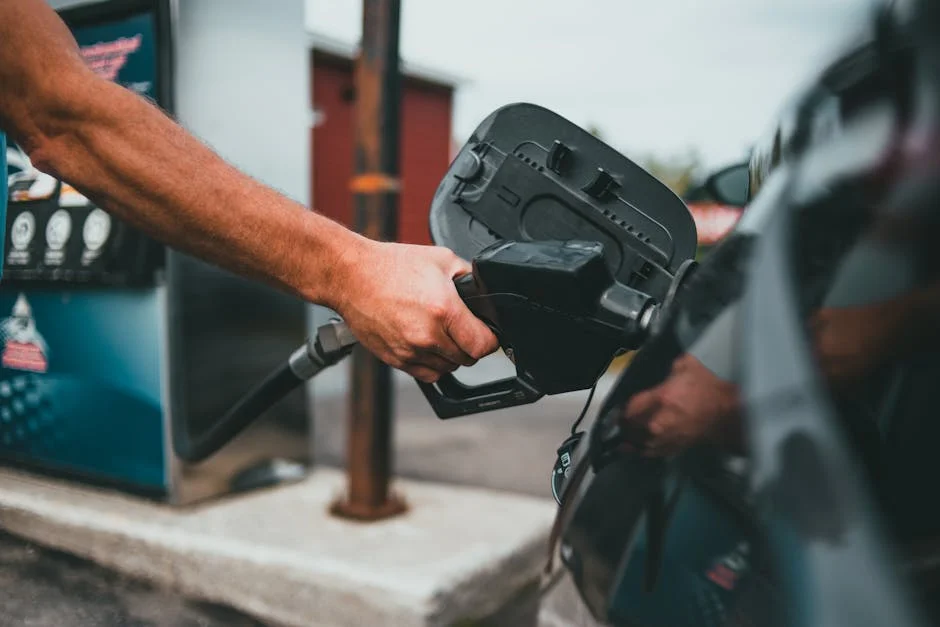
Carbon footprint gas vs electric car comparisons often sound like a single number that settles the debate, but the phrase actually bundles multiple emissions sources into one shorthand. A “carbon footprint” can include tailpipe exhaust, upstream fuel production, vehicle manufacturing, maintenance, and end-of-life processing. For gasoline vehicles, most people picture the tailpipe first, because the combustion of gasoline is visible as a direct source of carbon dioxide. For electric vehicles, the tailpipe is absent, but emissions may occur at the power plant, along the electricity transmission network, and during the manufacturing of batteries and other components. A meaningful carbon footprint gas vs electric car comparison therefore requires a “life-cycle” view that follows carbon emissions from raw materials to driving to disposal. Without that scope, it is easy to compare a gasoline car’s full tank-to-wheel emissions against an electric car’s only wheel-to-road emissions, which is an apples-to-oranges approach that can mislead buyers and policymakers.
Table of Contents
- My Personal Experience
- Understanding carbon footprint gas vs electric car: what the phrase really measures
- Tailpipe emissions versus upstream emissions: where the carbon actually comes from
- Manufacturing emissions: batteries, steel, aluminum, and the “front-loaded” footprint
- Driving efficiency in real conditions: city, highway, weather, and driving style
- Electricity mix and charging behavior: why location can change the outcome
- Maintenance, fluids, and parts: hidden emissions over the life of the vehicle
- Vehicle class and use case: compact cars, SUVs, pickups, and hybrids
- End-of-life and recycling: what happens to batteries and metals
- Expert Insight
- Cost, incentives, and the “price of carbon”: how economics intersects with emissions
- Comparison table: typical options and how they stack up on features and ownership factors
- How to estimate your personal footprint: a practical method without guesswork
- Common misconceptions that skew carbon comparisons
- Putting it together: when gas may look closer, and when electric clearly wins
- Conclusion: making a confident choice based on your real-world carbon impact
- Watch the demonstration video
- Frequently Asked Questions
- Trusted External Sources
My Personal Experience
When I replaced my old gas sedan with a used electric car last year, I expected my carbon footprint to drop instantly, but it felt more nuanced in real life. My commute is mostly stop-and-go city driving, so the EV’s efficiency and regenerative braking made a noticeable difference—no idling at lights, and I stopped making weekly trips to the gas station. I did some rough math using my utility’s energy mix, and charging at home still came out cleaner than burning gasoline, especially in warmer months when the battery range was better. The biggest surprise was how much my footprint depended on my habits: planning charging around off-peak hours, keeping tires properly inflated, and combining errands mattered more than I thought. I know the battery has an upfront environmental cost, but day to day, the EV has made it easier for me to drive less wastefully and feel like I’m actually shrinking my impact. If you’re looking for carbon footprint gas vs electric car, this is your best choice.
Understanding carbon footprint gas vs electric car: what the phrase really measures
Carbon footprint gas vs electric car comparisons often sound like a single number that settles the debate, but the phrase actually bundles multiple emissions sources into one shorthand. A “carbon footprint” can include tailpipe exhaust, upstream fuel production, vehicle manufacturing, maintenance, and end-of-life processing. For gasoline vehicles, most people picture the tailpipe first, because the combustion of gasoline is visible as a direct source of carbon dioxide. For electric vehicles, the tailpipe is absent, but emissions may occur at the power plant, along the electricity transmission network, and during the manufacturing of batteries and other components. A meaningful carbon footprint gas vs electric car comparison therefore requires a “life-cycle” view that follows carbon emissions from raw materials to driving to disposal. Without that scope, it is easy to compare a gasoline car’s full tank-to-wheel emissions against an electric car’s only wheel-to-road emissions, which is an apples-to-oranges approach that can mislead buyers and policymakers.

Another reason carbon footprint gas vs electric car debates become confusing is that the answer changes depending on where and how a vehicle is used. Electricity can be generated from coal, natural gas, nuclear, hydro, wind, or solar, and each source has a different greenhouse gas intensity. Meanwhile, gasoline supply chains can vary by crude source, refinery efficiency, and distribution distance. Driving patterns also matter: city stop-and-go traffic, high-speed highway travel, cold winters, and very hot summers all change energy use. Electric vehicles typically do well in city driving because regenerative braking recovers energy that a gasoline car would waste as heat. On long highway trips at high speeds, EV efficiency can drop, narrowing the gap. When people ask whether the carbon footprint gas vs electric car is “better,” they are often asking for a universal answer, but the most honest response is conditional: it depends on the electricity mix, the vehicle class, the annual mileage, and how long the car is kept. Still, with careful assumptions, it is possible to produce a clear comparison that reflects real-world decisions.
Tailpipe emissions versus upstream emissions: where the carbon actually comes from
For a gasoline vehicle, the carbon footprint gas vs electric car conversation begins with tailpipe emissions because they are direct and unavoidable when fuel is burned. Every gallon of gasoline combusted produces carbon dioxide, plus smaller amounts of other greenhouse gases and pollutants. That means the more you drive and the less efficient your vehicle is, the higher your emissions. Even if two drivers buy the same model, their tailpipe footprint can differ widely based on driving style, tire pressure, idling habits, and maintenance. Gasoline engines also emit pollutants such as nitrogen oxides and particulate matter that may not always be counted in a strict “carbon footprint,” but they affect local air quality and health. When calculating carbon footprint gas vs electric car, it’s important to separate climate impact (greenhouse gases) from local pollution, because electric cars shift emissions away from dense streets to power generation sites, which can still matter for communities near power plants.
Electric vehicles have no tailpipe, but upstream emissions can be substantial depending on how electricity is generated. If the grid is coal-heavy, charging can indirectly produce significant carbon dioxide. If the grid is dominated by renewables or nuclear, charging emissions can be very low. Beyond generation, there are “line losses” during transmission and distribution, and there are emissions associated with building and maintaining the power infrastructure. On the gasoline side, upstream emissions also exist: extracting crude oil, transporting it, refining it into gasoline, and distributing it to stations all require energy and produce greenhouse gases. A fair carbon footprint gas vs electric car comparison includes these upstream stages for both fuels. Many studies show that even when upstream electricity emissions are considered, an EV can still have a lower life-cycle footprint than a comparable gasoline car in many regions, but the margin is not identical everywhere. The key is to use a region-specific grid intensity and a realistic vehicle efficiency rather than relying on a single global average that may not reflect local conditions.
Manufacturing emissions: batteries, steel, aluminum, and the “front-loaded” footprint
Manufacturing is a major part of carbon footprint gas vs electric car comparisons because electric vehicles typically have higher production emissions upfront, largely due to battery manufacturing. Producing battery cells requires energy-intensive processes such as mining, refining, cathode and anode production, and cell assembly in controlled environments. The carbon intensity of battery manufacturing depends heavily on the electricity used in the factories, the chemistry of the battery (such as LFP versus NMC), and the size of the pack. Larger batteries generally mean more embodied emissions, though a larger pack can also enable more electric miles and potentially offset manufacturing emissions if it displaces gasoline use over many years. Gasoline cars also have manufacturing emissions—steel, aluminum, plastics, electronics, and assembly all contribute—but the battery pack makes EV production footprints more “front-loaded.” This is why some analyses show an EV starting its life with a higher carbon “debt” compared with a gasoline car, before the cleaner operation begins to pay it back.
In practical terms, the manufacturing portion of carbon footprint gas vs electric car is most sensitive to how long the vehicle is kept and how many miles it drives. If an EV is purchased and then driven very little, the operational savings may not fully compensate for the higher production footprint, especially in places where electricity is carbon-intensive. Conversely, for drivers with moderate to high annual mileage, the operational advantage can dominate over time. Battery longevity also matters: if the pack lasts the life of the car, the manufacturing footprint is amortized over more miles. If a battery replacement is needed early, the footprint rises. However, battery durability has improved, and many modern EVs are designed for long service life with sophisticated thermal management. Another often-missed nuance in carbon footprint gas vs electric car is that manufacturing emissions are not fixed forever; they can decrease as factories switch to renewable electricity, improve yields, and recycle materials. That means the “front-loaded” footprint for new EVs may trend downward over the coming decade, while gasoline car manufacturing may not see an equivalent step change because it lacks the same leverage from clean electricity in both manufacturing and operation.
Driving efficiency in real conditions: city, highway, weather, and driving style
Operational energy use is the daily reality behind carbon footprint gas vs electric car decisions. Gasoline vehicles waste a lot of energy as heat because internal combustion engines are limited by thermodynamics and real-world inefficiencies. In city driving, frequent braking and idling increase fuel consumption and emissions. Electric vehicles, by contrast, typically achieve high drivetrain efficiency and can recapture energy through regenerative braking. This difference often makes EVs particularly strong in urban commutes. That said, EV efficiency is not constant. At high highway speeds, aerodynamic drag rises sharply, and EV range can drop. Tires, vehicle weight, and accessory loads also matter. Heating is a notable factor: in cold climates, cabin heat for an EV may come from resistive heating or a heat pump, which draws electricity and reduces range. Gasoline cars get “waste heat” from the engine, so cabin heating has less impact on fuel economy, though cold engines run less efficiently and may idle longer to warm up.
Because carbon footprint gas vs electric car depends on energy use per mile, it’s important to think in terms of “what do you actually drive.” A driver with short trips, city traffic, and frequent stops may see a strong EV advantage, both in cost and emissions. A driver with very long highway commutes at high speed may still benefit from an EV, but the margin can be smaller, especially if the grid is fossil-heavy. Driving style can swing results: aggressive acceleration increases consumption for both types, but EV torque can encourage spirited driving that reduces efficiency. Tire choice and maintenance also influence energy use; low rolling resistance tires can improve both EV and gasoline efficiency, while underinflated tires increase consumption. For a realistic carbon footprint gas vs electric car comparison, use your local electricity emissions factor, your typical seasonal temperatures, and your actual driving pattern. Many owners also charge at different times of day; in some regions, nighttime electricity may be cleaner or dirtier depending on the generation mix. Operational footprint is therefore not just “EV vs gas,” but “EV charged on this grid at these times, driven this way, versus gas car driven under these conditions.”
Electricity mix and charging behavior: why location can change the outcome
The strongest variable in carbon footprint gas vs electric car is often the electricity mix. An EV charged in a region with a high share of wind, solar, hydro, or nuclear can have very low operational emissions. In such places, the main climate impact of the EV may be manufacturing, and the “break-even” point versus a gasoline car can arrive quickly. In a region where coal dominates, operational emissions may be higher, and the break-even point can take longer. But even coal-heavy grids are changing, and EVs can become cleaner over time without changing the vehicle, simply because the grid decarbonizes. A gasoline car does not get cleaner as the fuel supply changes modestly; its tailpipe emissions per gallon remain largely constant. That dynamic is a critical but sometimes overlooked part of carbon footprint gas vs electric car thinking: an EV is connected to a system that can improve, while a gasoline car is locked into combustion for its entire life.

Charging behavior also affects carbon footprint gas vs electric car outcomes. Home charging can be paired with rooftop solar, community solar, or a renewable electricity plan, which can reduce charging emissions dramatically. Workplace charging can also be cleaner if the facility purchases renewable power. Public fast charging may have a different emissions profile depending on the operator’s energy sourcing and the time of day. Some grids are cleanest at midday when solar output is high, while others are cleanest at night when wind is strong. Smart charging—delaying charging to cleaner hours—can reduce emissions without changing driving habits. Another factor is charging efficiency: energy is lost as heat in charging equipment and in the battery, especially at very high charging rates. Those losses increase the electricity required per mile, slightly raising emissions. Still, even with charging losses, many scenarios show an EV’s operational footprint lower than a comparable gasoline car. The most practical advice is to treat carbon footprint gas vs electric car as a local question: look up your region’s grid intensity, consider how you charge, and recognize that your EV’s footprint can improve over the years as electricity generation becomes cleaner.
Maintenance, fluids, and parts: hidden emissions over the life of the vehicle
When people compare carbon footprint gas vs electric car, maintenance is often simplified to “EVs need less service,” which is broadly true but deserves detail. Gasoline cars require regular oil changes, oil filters, spark plugs, and emissions system components. Over time, they may need replacements for exhaust systems, catalytic converters, and other parts tied to combustion. Producing and transporting these fluids and parts has an emissions footprint. EVs generally eliminate engine oil and many combustion-related maintenance items, which can reduce life-cycle emissions modestly. Brake wear can also be lower for EVs due to regenerative braking, though tire wear can be higher because EVs tend to be heavier and deliver torque quickly. Tire production and replacement has its own carbon impact, and for high-mileage drivers, tires can be a meaningful contributor to the overall footprint.
Battery and thermal management systems introduce different maintenance considerations in the carbon footprint gas vs electric car equation. Coolant loops, cabin air filters, and occasional brake fluid service still exist, and EVs may need specialized components such as high-voltage contactors or onboard chargers. However, many EV powertrains have fewer moving parts than combustion engines, potentially reducing the need for replacements that carry embodied emissions. Another hidden element is software and hardware updates; while these don’t usually have large direct emissions, the supply chain for electronics does. For gasoline vehicles, engine efficiency can degrade with age if maintenance is neglected, increasing emissions per mile. EV efficiency can also change with tire wear and battery aging, but the change is often smaller. When you zoom out, maintenance is rarely the dominant factor in carbon footprint gas vs electric car comparisons, but it can tilt the result at the margins, especially for drivers who keep vehicles for a long time. A well-maintained gasoline car will have a lower footprint than a neglected one; an EV charged on a clean grid and driven efficiently will generally look even better over the long run.
Vehicle class and use case: compact cars, SUVs, pickups, and hybrids
Carbon footprint gas vs electric car comparisons can be distorted when the vehicles being compared are not truly equivalent. A compact gasoline sedan compared to a large electric SUV is not a fair match in terms of size, weight, and utility. Bigger vehicles require more energy to move, regardless of powertrain, so a large EV can sometimes have higher total emissions than a very efficient small gasoline car in certain grid conditions, especially if the EV is charged on a carbon-intensive grid and driven fewer miles. Conversely, when comparing like-for-like—compact to compact, crossover to crossover—EVs frequently come out ahead over the full life cycle in many regions. The most useful approach is to choose the smallest vehicle that meets your needs, then choose the cleanest powertrain available for that class. Downsizing often reduces emissions more than switching powertrains alone.
Hybrids and plug-in hybrids add nuance to carbon footprint gas vs electric car discussions. A conventional hybrid can significantly reduce fuel use and tailpipe emissions compared with a non-hybrid gasoline vehicle, especially in city driving. A plug-in hybrid can operate on electricity for shorter trips and use gasoline for longer journeys, which can lower emissions if it is charged frequently and driven mostly within its electric range. However, if a plug-in hybrid is rarely charged, it may carry the weight of a battery without realizing the electric benefit, and its footprint can rise. For drivers without reliable home charging, a hybrid may offer a strong emissions reduction without the need for charging infrastructure. For drivers with home charging and a moderate daily commute, a battery electric vehicle can deliver a lower operational footprint and potentially a lower total carbon footprint gas vs electric car outcome over time. The “best” choice depends on access to charging, driving patterns, climate, and how long the vehicle will be kept, not simply on whether the car has a plug.
End-of-life and recycling: what happens to batteries and metals
End-of-life is a smaller portion of carbon footprint gas vs electric car than manufacturing and operation, but it is increasingly important as EV adoption grows. Gasoline cars have established recycling streams for steel, aluminum, and some plastics, though the recycling rates and processes vary by region. EVs share those same materials and recycling pathways, but they add a high-voltage battery pack that requires specialized handling. The good news is that batteries contain valuable metals that create economic incentives for recycling. Recycling can reduce the need for new mining and refining, which can lower the embodied emissions of future batteries. However, recycling itself requires energy, and the net benefit depends on process efficiency, transportation distances, and the cleanliness of the electricity used in recycling facilities.
| Aspect | Gas Car | Electric Car (EV) |
|---|---|---|
| Tailpipe emissions (driving) | High CO₂ emissions from burning gasoline; emissions occur directly on the road. | Zero tailpipe emissions; any emissions shift to electricity generation. |
| Upfront manufacturing footprint | Typically lower manufacturing emissions than EVs due to smaller battery requirements. | Often higher manufacturing emissions, mainly from battery production; can be offset over time. |
| Lifetime carbon footprint (typical use) | Usually higher total CO₂ over the vehicle’s life, especially with frequent driving. | Usually lower total CO₂ over the vehicle’s life; advantage grows with cleaner grids and efficient charging. |
Expert Insight
To compare the carbon footprint of a gas vs. electric car in your area, start with your local electricity mix: charging on a cleaner grid (or with a renewable plan) can dramatically cut lifetime emissions. If you can, schedule charging during off-peak hours when the grid is often less carbon-intensive, and keep tires properly inflated to reduce energy use regardless of powertrain. If you’re looking for carbon footprint gas vs electric car, this is your best choice.
For the lowest real-world footprint, focus on efficiency and longevity: choose the smallest vehicle that meets your needs, and prioritize models with strong efficiency ratings (MPG for gas, kWh/100 miles for electric). Then extend vehicle life with regular maintenance—especially battery-friendly habits for EVs (avoid frequent 0–100% charging unless needed) and timely oil/air filter service for gas cars—to prevent avoidable emissions from premature replacement. If you’re looking for carbon footprint gas vs electric car, this is your best choice.
Battery “second life” can also influence carbon footprint gas vs electric car calculations. Some packs that are no longer ideal for vehicle range can still be useful for stationary energy storage, supporting grid stability and renewable integration. If a battery serves additional years in a stationary role, some analysts allocate part of the manufacturing footprint to that second application, effectively reducing the EV’s attributed footprint. Allocation methods vary, and they can be controversial, but the broader point remains: EV batteries are not automatically waste at the end of automotive life. Meanwhile, the end-of-life footprint of gasoline vehicles includes handling of used oil, filters, and other fluids that can cause environmental harm if improperly managed. Over time, improvements in battery recycling, cleaner manufacturing, and better material recovery can make EVs progressively stronger in carbon footprint gas vs electric car comparisons. The direction of change matters for consumers: buying an EV today may be cleaner than a gasoline car now, and it may become even cleaner as the grid and recycling systems improve, whereas gasoline combustion remains an inherently carbon-emitting process.
Cost, incentives, and the “price of carbon”: how economics intersects with emissions
Although carbon footprint gas vs electric car is about emissions, real-world decisions often hinge on economics. Upfront purchase price, fuel or electricity costs, maintenance, and resale value shape what people buy and keep. EVs can cost more initially, especially in larger segments, but incentives and tax credits can narrow the gap. Operating costs can be lower because electricity is often cheaper per mile than gasoline and because EV maintenance can be simpler. However, electricity prices vary widely, and home charging equipment can add cost. Public fast charging can be expensive in some areas, which may push drivers toward charging at home or work. From a carbon perspective, economics can either support or hinder lower-emission choices: if cheap electricity encourages more driving, total emissions can rise even if emissions per mile are low. If high gasoline prices encourage efficient driving or smaller vehicles, emissions can fall.

Carbon pricing and policy also influence carbon footprint gas vs electric car outcomes. Fuel economy standards push gasoline vehicles toward higher efficiency, lowering tailpipe emissions per mile. Clean electricity standards and renewable portfolio requirements reduce grid intensity, lowering EV charging emissions. Battery manufacturing incentives can encourage factories to locate where power is cleaner, reducing embodied emissions. Consumer incentives can accelerate adoption, which can speed up infrastructure investment and grid planning. Still, incentives can be blunt tools if they encourage oversized vehicles with large batteries that exceed actual needs. For drivers who want to align cost and emissions, the most effective strategy is often to pick an efficient vehicle in the right size, maximize low-carbon charging when possible, and keep the vehicle long enough to amortize manufacturing emissions. Over a typical ownership period, many scenarios show EVs achieving a lower carbon footprint gas vs electric car profile, but the economic path to get there is smoother in regions with affordable electricity, strong incentives, and convenient charging.
Comparison table: typical options and how they stack up on features and ownership factors
Choosing between a gasoline vehicle and an EV is easier when the comparison includes not only emissions, but also practical ownership factors that influence real-world behavior. Carbon footprint gas vs electric car outcomes are shaped by whether a driver can charge at home, how often they take long trips, and whether the vehicle class fits daily needs without excess size. A compact EV that is charged at home on a moderately clean grid can deliver strong emissions reductions, but a driver who relies entirely on public fast charging in a fossil-heavy region may see a smaller advantage. Likewise, a highly efficient gasoline hybrid can be a meaningful step down in emissions compared with a conventional gasoline SUV, particularly for drivers who cannot install charging at home. The table below uses common categories rather than specific brand promises, because actual ratings and prices vary by model year, trim, and region. The intent is to show how different choices can change the practical side of the carbon footprint gas vs electric car decision.
Ratings shown are generalized ownership satisfaction scores on a 1–5 scale to reflect typical user-reported experiences such as convenience, perceived reliability, and operating cost satisfaction. Prices are broad ranges in USD for new vehicles, because incentives and market conditions can shift quickly. The “features” column highlights what tends to matter for emissions and daily usability: efficiency, charging capability, and typical trip suitability. For a personal carbon footprint gas vs electric car calculation, the best next step after this kind of comparison is to estimate your annual mileage, your local grid emissions intensity, and your likely charging mix (home vs public). Those inputs will often tell you more than a generic national average. The table is a practical snapshot to help narrow down which powertrain type is likely to fit your lifestyle without forcing tradeoffs that could lead to a less efficient choice later.
| Name | Features | Ratings | Price |
|---|---|---|---|
| Conventional Gasoline Compact | Lower upfront cost; fast refueling; higher tailpipe CO2; best if low annual mileage and limited charging access | 3.8/5 | $22,000–$30,000 |
| Gasoline Hybrid (Non-Plug) | High city efficiency; no charging required; reduced tailpipe CO2 vs standard gas; strong transitional option | 4.2/5 | $26,000–$38,000 |
| Plug-in Hybrid (PHEV) | Electric miles for short trips; gasoline backup for long trips; emissions depend heavily on charging frequency | 4.0/5 | $33,000–$50,000 |
| Battery Electric Vehicle (BEV) Compact/Crossover | No tailpipe emissions; low operating cost; best with home/work charging; footprint depends on grid cleanliness | 4.3/5 | $32,000–$55,000 |
| Battery Electric SUV/Truck (Large Pack) | High utility and power; higher manufacturing footprint; can be low-carbon if driven a lot and charged on clean grid | 4.1/5 | $55,000–$90,000+ |
How to estimate your personal footprint: a practical method without guesswork
A personal carbon footprint gas vs electric car estimate doesn’t require a scientific lab, but it does require consistent assumptions. Start with annual miles driven. Then estimate energy use per mile: for gasoline, use your real-world miles per gallon (not just the window sticker), and for an EV, use your typical kWh per 100 miles (or miles per kWh) from onboard data. Next, assign emissions factors. Gasoline emissions per gallon are relatively stable for tailpipe CO2, but upstream emissions from refining and distribution can add a meaningful percentage. Electricity emissions per kWh vary by region and can change by time of day. If you can’t find hourly data, a regional annual average is still better than a national average if you live in a grid that differs significantly. Multiply your annual energy use by the emissions factor to estimate annual operational emissions. Then add manufacturing emissions as an amortized amount over the years you expect to keep the vehicle. This is where many carbon footprint gas vs electric car comparisons go wrong: they compare only annual operational emissions and ignore the upfront manufacturing footprint, or they include manufacturing but assume a very short ownership period that exaggerates the per-year manufacturing share.
To make the estimate more realistic, include your charging mix. If you plan to charge mostly at home on a renewable plan, your EV operational emissions can be much lower than the regional average. If you plan to rely on fast charging on road trips, assume a portion of your charging uses the general grid mix and includes charging losses. Seasonal adjustments are also worthwhile: winter efficiency for EVs can be lower, and winter fuel economy for gasoline cars can also drop due to cold starts and winter gasoline blends. A simple approach is to use your worst-month efficiency and your best-month efficiency and average them based on your climate. Finally, sanity-check your result by comparing it with typical ranges for similar vehicles. The purpose is not to produce a perfect number, but to avoid misleading conclusions. When done carefully, this method often shows that the carbon footprint gas vs electric car difference is meaningful over typical ownership periods, especially when the EV is charged on a cleaner-than-average grid and driven enough miles to offset its manufacturing emissions. The biggest levers you control are vehicle size, annual mileage, and charging cleanliness.
Common misconceptions that skew carbon comparisons
Several misconceptions repeatedly derail carbon footprint gas vs electric car conversations. One is the idea that EVs are “zero-emissions.” They are zero tailpipe emissions, but not necessarily zero life-cycle emissions. Another is the claim that battery production makes EVs always worse than gasoline cars. Battery manufacturing does add emissions, but that does not automatically outweigh the operational savings, especially over moderate to high mileage and on cleaner grids. A third misconception is that gasoline cars can be made “clean” simply by being efficient. High efficiency helps, but combustion still produces CO2, and even the most efficient gasoline vehicle will have ongoing tailpipe emissions that accumulate with every mile. There is also confusion between carbon dioxide and other pollutants; EVs can reduce local tailpipe pollution dramatically, but upstream pollution from power generation can still exist depending on the grid. A precise carbon footprint gas vs electric car evaluation separates these categories and doesn’t substitute one for the other.

Another misconception is that the grid is static, so an EV purchased today will have the same emissions every year. In many regions, grids are decarbonizing, which means an EV can get cleaner without any hardware changes. Meanwhile, battery technology is evolving; newer chemistries can reduce reliance on certain materials and can sometimes reduce manufacturing emissions. People also overgeneralize from extreme cases: a coal-heavy region or a very large battery EV can be used to argue that all EVs are worse, while a renewables-heavy region can be used to argue that all EVs are nearly zero-carbon. Reality is more nuanced. Finally, some comparisons ignore rebound effects: if driving becomes cheaper and easier, people might drive more, which can increase total emissions even if emissions per mile are lower. A responsible carbon footprint gas vs electric car viewpoint recognizes that technology interacts with behavior. The cleanest mile is the one not driven, and the second-cleanest mile is the one driven efficiently with low-carbon energy. That framing helps keep the discussion grounded in outcomes rather than slogans.
Putting it together: when gas may look closer, and when electric clearly wins
There are situations where carbon footprint gas vs electric car results can look closer than expected. If the electricity used for charging is very carbon-intensive, and if the EV is large, driven infrequently, or replaced quickly, the manufacturing footprint may dominate and the operational advantage may be reduced. A highly efficient gasoline hybrid driven modest miles can sometimes rival a large EV on a dirty grid in the short term. Similarly, if an EV is charged primarily from inefficient or high-loss sources, or if the driver routinely uses high-speed fast charging with significant losses, the operational footprint rises. These cases do not mean EVs are inherently worse; they mean that vehicle choice, grid mix, and usage patterns matter. The practical lesson is to avoid oversizing the battery and the vehicle for rare scenarios. Renting a larger vehicle for occasional long trips or selecting a plug-in hybrid for a transitional period can sometimes reduce emissions compared with buying an oversized EV “just in case.”
In many common scenarios, though, electric clearly wins in carbon footprint gas vs electric car comparisons. A reasonably sized EV, charged mostly at home on an average-to-clean grid, driven for many years and many miles, often delivers substantially lower life-cycle emissions than a comparable gasoline car. The advantage tends to be strongest in city-heavy driving, where EV efficiency and regenerative braking shine, and in regions with strong renewable or nuclear generation. Even on moderately fossil-heavy grids, EVs can still come out ahead over a full life cycle, particularly when compared with non-hybrid gasoline SUVs and trucks. The biggest “win conditions” are straightforward: choose the smallest vehicle that meets your needs, prioritize efficient models, charge with the cleanest electricity available, and keep the vehicle long enough to spread manufacturing emissions across a large number of miles. When those conditions are met, the carbon footprint gas vs electric car comparison usually points toward electrification as the lower-carbon path.
Conclusion: making a confident choice based on your real-world carbon impact
The most accurate way to think about carbon footprint gas vs electric car is as a life-cycle question shaped by where you live, what you drive, how you charge, and how long you keep the vehicle. Gasoline cars carry ongoing tailpipe emissions that accumulate with every mile, plus upstream emissions from oil extraction and refining. Electric cars shift emissions upstream and tend to front-load more emissions in manufacturing, especially in the battery, but they can dramatically cut operational emissions when charged on a cleaner grid. Over time, EVs can also benefit from grid decarbonization, meaning the same car can get cleaner year after year, while a gasoline car remains tied to combustion. A confident decision comes from matching vehicle size to actual needs, estimating your annual mileage, and choosing the cleanest, most convenient charging path you can access. With those inputs, the carbon footprint gas vs electric car comparison becomes less of a debate and more of a practical calculation that guides you to the lowest-emission option for your specific driving life.
Watch the demonstration video
This video breaks down the carbon footprint of gas versus electric cars, comparing emissions from manufacturing, driving, and charging. You’ll learn how electricity sources affect an EV’s impact, when an EV becomes cleaner than a gasoline car over time, and what factors—like battery size, mileage, and efficiency—change the results. If you’re looking for carbon footprint gas vs electric car, this is your best choice.
Summary
In summary, “carbon footprint gas vs electric car” is a crucial topic that deserves thoughtful consideration. We hope this article has provided you with a comprehensive understanding to help you make better decisions.
Frequently Asked Questions
Which has a lower carbon footprint: an electric car or a gas car?
In most regions, studies show that a **carbon footprint gas vs electric car** comparison favors electric vehicles over their full lifecycle—from manufacturing to daily driving—especially as power grids shift toward cleaner, renewable electricity.
Do electric cars have higher emissions because of battery manufacturing?
Battery production increases an EV’s upfront (manufacturing) emissions, but many EVs offset this through lower driving emissions over time, often within a few years depending on the grid and vehicle efficiency. If you’re looking for carbon footprint gas vs electric car, this is your best choice.
How does the electricity source affect an EV’s carbon footprint?
EV driving emissions aren’t fixed—they depend on where your electricity comes from. If you charge using renewable power, an EV can be extremely low-carbon, but on a coal-heavy grid the benefits shrink, even though the **carbon footprint gas vs electric car** comparison often still favors electric over time.
At what mileage does an EV typically break even with a gas car on CO2 emissions?
The break-even point for the **carbon footprint gas vs electric car** can vary a lot, but it often happens after driving tens of thousands of miles. If you’re charging on a cleaner electricity grid and driving an efficient EV, you’ll reach that point sooner; if the EV has a larger battery or the local grid relies more on fossil fuels, it can take longer.
How do hybrids compare to EVs and gas cars for carbon footprint?
Hybrids generally produce fewer emissions than traditional gas-powered cars because they burn less fuel, but when you look at the **carbon footprint gas vs electric car**, hybrids often still come out higher over their full lifetime—especially in places where the electricity grid is relatively low-carbon.
What can I do to minimize my car’s carbon footprint regardless of type?
Cutting your driving time, picking a fuel-efficient model, and keeping your tires properly inflated can all make a noticeable difference—especially when you pair it with smoother, less aggressive driving. When possible, share rides or use public transit to reduce trips altogether. And if you drive an EV, charge with renewable energy or during off-peak hours when the grid is cleaner to improve the **carbon footprint gas vs electric car** equation even further.
? Looking for more info about carbon footprint gas vs electric car? Follow Our Site for updates and tips!

Trusted External Sources
- Are electric vehicles definitely better for the climate than gas …
On Oct 13, 2026, new emissions figures showed a clear split: hybrid and plug-in hybrid models came in at roughly 260 grams of CO₂ per mile, while fully battery-electric vehicles produced significantly less—highlighting why the **carbon footprint gas vs electric car** comparison increasingly favors going fully electric.
- Carbon Footprint Face-Off: A Full Picture of EVs vs. Gas Cars
Jan 20, 2026 — Electric vehicles don’t emit anything from the tailpipe, but their batteries and the electricity used to charge them still create emissions upstream during manufacturing and power generation. So when you compare the **carbon footprint gas vs electric car** over the full life cycle—from production to daily driving—what does the real impact look like over time?
- Electric Vehicle Myths | US EPA
FACT: When you compare the **carbon footprint gas vs electric car**, electric vehicles (EVs) usually come out ahead. Even after factoring in the emissions from generating the electricity used for charging, EVs typically produce less overall pollution than gasoline-powered cars over their lifetime—especially as power grids get cleaner and more renewable energy comes online.
- Debunking the myth of EV mfg creating more emissions than ICE
As of Dec 2, 2026, producing an average gas-powered car releases about 8.5 tons of CO₂, while manufacturing an electric vehicle with a 64 kWh battery can generate roughly 14.3 tons. That higher upfront impact is why the **carbon footprint gas vs electric car** conversation often focuses on the “break-even” point—when the EV’s lower emissions during driving make up for the extra emissions created during production.
- Electric Vehicles Contribute Fewer Emissions Than Gasoline …
As of Feb 7, 2026, research continues to show that electric vehicles generally produce fewer greenhouse gas emissions over their full life cycle than traditional internal combustion cars—an important point to consider when weighing the **carbon footprint gas vs electric car**, from manufacturing and charging to years of everyday driving.