Searching for the best 3d filament sounds simple until you realize that “best” depends on how you print, what you print, and what you expect from the finished part. A tabletop figurine, a functional bracket in a hot car, and a food-adjacent kitchen organizer each demand different material behavior. Even the same spool can act differently across printers because nozzle type, hotend design, enclosure temperature, bed surface, ambient humidity, and slicer settings all influence outcomes. Instead of treating filament like a commodity, it helps to treat it like an engineered input: diameter consistency, resin quality, additives, moisture control, and winding all show up in surface finish and dimensional accuracy. When people say a material is “the best,” they often mean it’s forgiving, prints reliably without warping, and produces strong, attractive parts with minimal tuning. That’s a valid definition, but it’s not the only one. For many users, the best filament is the one that hits their target properties—impact resistance, heat deflection, stiffness, UV stability, chemical resistance—while still fitting their printer’s capabilities.
Table of Contents
- My Personal Experience
- Choosing the Best 3D Filament: What “Best” Really Means for Your Prints
- PLA: The Default “Best” for Ease, Finish, and Everyday Success
- PETG: A Strong Contender for Functional Prints and Chemical Resilience
- ABS: Classic Engineering Plastic with Real Requirements
- ASA: Outdoor-Ready Performance and a Strong “Best” Choice for Sunlight
- Nylon (PA): Tough, Wear-Resistant, and Demanding About Moisture
- TPU and Flexible Filaments: The Best 3D Filament for Grip, Damping, and Impact Absorption
- Polycarbonate (PC) and PC Blends: High Heat, High Strength, Higher Difficulty
- Expert Insight
- Fiber-Reinforced Filaments (Carbon Fiber, Glass Fiber): Stiffness and Dimensional Stability
- Specialty PLA Blends (Silk, Matte, Wood, Metal-Fill): When Aesthetics Define “Best”
- What Separates Premium Filament from Budget Spools: Tolerance, Dryness, and Winding
- Printer and Slicer Factors That Decide Whether a Filament Feels “Best”
- How to Build a “Best Filament” Toolkit: One Spool for Looks, One for Function, One for Tough Jobs
- Storage and Handling: Keeping Filament Dry Enough to Stay “Best”
- Final Thoughts: Defining the Best 3D Filament for Your Specific Goals
- Watch the demonstration video
- Frequently Asked Questions
- Trusted External Sources
My Personal Experience
After a lot of trial and error, I’ve learned that the “best 3D filament” really depends on what I’m printing, but a few brands have consistently saved me headaches. For everyday parts and prototypes, I stick with a good PLA because it prints cleanly on my machine with minimal tuning, and the dimensional accuracy is usually spot-on. When I needed something tougher—like a replacement latch for a storage bin—I switched to PETG, and it held up way better than my earlier PLA version that cracked after a week. I tried a couple of cheap spools early on and spent more time clearing clogs and fighting stringing than actually printing, so now I’m willing to pay a little more for filament that’s dry, evenly wound, and consistent in diameter. The biggest difference for me wasn’t a magic material—it was buying reliable filament and storing it properly so it stays that way.
Choosing the Best 3D Filament: What “Best” Really Means for Your Prints
Searching for the best 3d filament sounds simple until you realize that “best” depends on how you print, what you print, and what you expect from the finished part. A tabletop figurine, a functional bracket in a hot car, and a food-adjacent kitchen organizer each demand different material behavior. Even the same spool can act differently across printers because nozzle type, hotend design, enclosure temperature, bed surface, ambient humidity, and slicer settings all influence outcomes. Instead of treating filament like a commodity, it helps to treat it like an engineered input: diameter consistency, resin quality, additives, moisture control, and winding all show up in surface finish and dimensional accuracy. When people say a material is “the best,” they often mean it’s forgiving, prints reliably without warping, and produces strong, attractive parts with minimal tuning. That’s a valid definition, but it’s not the only one. For many users, the best filament is the one that hits their target properties—impact resistance, heat deflection, stiffness, UV stability, chemical resistance—while still fitting their printer’s capabilities.

The practical way to pick the best 3d filament is to start with constraints and then optimize. Constraints include your maximum nozzle temperature, whether you have an enclosure, the bed temperature range, and whether the printer can handle abrasive or flexible materials. If your hotend tops out at 240–250°C and you print in an open room, you’ll gravitate toward PLA, PLA blends, PETG, and perhaps some low-temp ABS alternatives. If you have an all-metal hotend, hardened nozzle, and enclosure, you can add ASA, ABS, nylon, polycarbonate blends, and fiber-reinforced composites to the shortlist. Another constraint is intended use: a decorative model can prioritize color and ease; a mechanical assembly might prioritize layer adhesion and creep resistance. “Best” also includes supply-chain stability and quality control—brands that maintain tight tolerances and dry-pack properly reduce failed prints and wasted time. With that framing, the material recommendations below focus on common use cases and the real-world tradeoffs that separate a good spool from the best spool for your project.
PLA: The Default “Best” for Ease, Finish, and Everyday Success
PLA remains the most common answer when someone asks for the best 3d filament for general printing, largely because it is consistently easy to use. It prints at relatively low temperatures, sticks to many bed surfaces, and tends to warp less than higher-temperature plastics. That combination makes it friendly for open-frame printers and beginners, but it’s also appreciated by experienced users who want predictable results with minimal fuss. For aesthetic prints, PLA excels at crisp detail, clean overhangs, and a wide range of colors and special effects. Many PLA formulations also have a pleasant surface texture that hides layer lines better than some glossy materials. When you need a prototype that looks close to the finished product, PLA often delivers the best balance of speed, appearance, and print reliability. It’s also widely available, and many manufacturers offer consistent diameter control, which supports accurate extrusion and stable flow.
PLA’s main limitation is heat and long-term mechanical performance. It can soften at temperatures that are easy to reach in a sunny window, a warm car, or near electronics that run hot. For static items like organizers, display pieces, cosplay props used indoors, and low-stress fixtures, PLA can still be the best 3d filament because it’s stiff and prints dimensionally well. For functional parts that see impact or flex, standard PLA can crack rather than bend, though “PLA+” or “tough PLA” blends improve ductility and layer adhesion. If you want to push PLA into more demanding roles, consider annealable PLA or high-temperature PLA variants, but be prepared for dimensional changes during annealing and the need for controlled cooling. Storage matters too: while PLA is not the most hygroscopic material, it still benefits from dry storage. A dry, well-made PLA spool often produces smoother walls, better bridging, and more consistent extrusion than a bargain spool that has absorbed humidity or is wound poorly.
PETG: A Strong Contender for Functional Prints and Chemical Resilience
PETG is frequently considered the best 3d filament for users who want stronger functional parts without jumping into the warping and odor challenges of ABS or the moisture sensitivity of nylon. It offers a useful mix of toughness, layer adhesion, and moderate temperature resistance. PETG also tends to be less brittle than PLA, making it better for parts that may be dropped, flexed, or subjected to repeated handling. It performs well for brackets, enclosures, tool holders, and household items that need a bit of “give” rather than snapping under stress. Another advantage is chemical resistance: PETG generally tolerates oils and mild chemicals better than PLA, which can be helpful in garages, workshops, or around cleaning products. Many users also appreciate PETG’s ability to produce watertight prints when tuned, making it suitable for planters, containers, and light-duty fluid applications.
Printing PETG is not difficult, but it rewards careful tuning. It can string more than PLA, and it can be prone to blobs if retraction, temperature, and travel settings aren’t dialed in. Bed adhesion can be excellent—sometimes too excellent—so using a release layer or the right build surface prevents damage when removing prints. PETG also benefits from slower speeds and controlled cooling to maintain layer bonding and reduce surface imperfections. If you’re evaluating PETG as the best 3d filament for your printer, pay attention to spool dryness and brand consistency. PETG can absorb moisture and then produce popping sounds, rough surfaces, and inconsistent extrusion. A dry box or filament dryer often makes PETG behave like a premium material, especially for longer prints. For outdoor use, PETG is decent but not perfect; UV exposure can degrade many plastics over time, so if the part will live outdoors in sunlight, ASA may be a better pick. Still, for many makers who want a dependable “one spool does most jobs” option, PETG is a top-tier choice that sits in the sweet spot between ease and performance.
ABS: Classic Engineering Plastic with Real Requirements
ABS has a long history in manufacturing and remains a candidate for the best 3d filament when you need heat resistance, impact strength, and the ability to post-process with acetone smoothing. It can handle higher service temperatures than PLA and often outperforms PETG in certain mechanical scenarios, particularly when the part needs to survive elevated heat without softening. ABS is also relatively light and can be sanded, drilled, and finished well, which matters for prototypes and parts that need a refined look after printing. For enclosures around electronics, automotive-adjacent parts, and fixtures that may see warmth, ABS can deliver a more stable result than PLA. It’s also widely available in many colors, including industrial basics like black and gray that hide wear and scuffs.
The catch is that ABS tends to warp and crack if printed without the right environment. For many printers, an enclosure is the difference between frustration and success, because ABS needs stable ambient temperature and controlled cooling to prevent layer separation. Odor and fumes are also considerations; ventilation and filtration are advisable. If your setup can support it, ABS can be the best 3d filament for practical parts that must handle heat and impacts, but it’s not the most forgiving material. Bed adhesion strategies—proper bed temperature, a suitable surface, and sometimes a brim—often determine whether a large print survives. Another factor is dimensional accuracy: ABS can shrink more than PLA, so designs may need compensation. When quality is the goal, choose ABS from manufacturers known for consistent formulation and tight diameter tolerance, and keep it dry. ABS is less moisture-sensitive than nylon, but dry filament still improves surface finish and reduces random extrusion artifacts. With the right printer conditions, ABS becomes a reliable engineering option rather than a temperamental specialty.
ASA: Outdoor-Ready Performance and a Strong “Best” Choice for Sunlight
ASA is often described as “ABS for outdoors,” and for many applications it earns a spot on the shortlist for the best 3d filament. Its standout advantage is UV resistance, which helps printed parts survive sunlight exposure with less brittleness and color fading than ABS. ASA also provides good heat resistance, solid impact strength, and a professional-looking surface. For outdoor brackets, signage, weather-exposed enclosures, garden hardware, and vehicle accessories, ASA can be a smarter pick than PLA or PETG when long-term durability matters. It can also be post-processed similarly to ABS in some cases, and it tends to produce parts that feel more “manufactured” than typical hobby plastics. When your project involves real-world weathering, ASA’s material properties align well with the demands of outdoor life.

Like ABS, ASA benefits from an enclosure and stable printing conditions to reduce warping and layer splitting. Many users find ASA slightly more forgiving than ABS, but it still prefers controlled airflow and consistent bed temperature. If you want the best 3d filament for outdoor use and you have a printer capable of maintaining higher nozzle temperatures with good bed heating, ASA is a compelling option. It also rewards attention to bed adhesion and first-layer quality; a solid first layer helps prevent corner lift on larger parts. Another practical detail is color selection: darker colors can absorb more heat in sunlight, which can stress parts, so selecting an appropriate color and wall thickness can improve longevity. ASA isn’t always the cheapest, but the cost can be justified when the alternative is reprinting outdoor parts every season. For makers who sell prints intended for outdoor installation, ASA often becomes a default “premium” material because it reduces returns and complaints related to UV degradation.
Nylon (PA): Tough, Wear-Resistant, and Demanding About Moisture
Nylon is a strong contender for the best 3d filament when you need toughness, abrasion resistance, and fatigue performance. It’s well-suited for gears, bushings, hinges, clips, and functional components that must survive repeated motion or impacts. Compared with PLA and many PETG formulations, nylon tends to be more resilient and less likely to crack under sudden loads. It also has a “self-lubricating” feel in some applications, which can help with sliding parts. When printed well, nylon parts can handle demanding use cases in workshops and light industrial settings. For makers who build robots, mechanical assemblies, or tools, nylon can deliver the kind of real-world durability that feels closer to injection-molded components than typical hobby prints.
The biggest obstacle is water absorption. Nylon is famously hygroscopic, and wet filament can turn an otherwise excellent material into a source of stringing, weak layers, and rough surfaces. If nylon is going to be your best 3d filament, a filament dryer and dry storage are not optional extras; they are part of the workflow. Printing nylon also often benefits from an enclosure to prevent warping and to improve layer adhesion, especially on larger parts. Bed adhesion can be tricky, and different nylon blends prefer different build surfaces. Some users choose nylon blends like PA12 for lower moisture sensitivity, or copolymers designed for easier printing. Another important consideration is flexibility: nylon can be slightly flexible, which is great for clips and living hinges, but not ideal when you need rigid precision. If dimensional stability is critical, you may prefer fiber-reinforced nylon, which reduces warp and increases stiffness. In exchange for extra setup discipline, nylon can become the best 3d filament for mechanical parts that need to survive real loads without becoming brittle.
TPU and Flexible Filaments: The Best 3D Filament for Grip, Damping, and Impact Absorption
Flexible filaments like TPU are often the best 3d filament for parts that need to bend, compress, or provide grip. Typical use cases include phone cases, protective corners, vibration dampers, gaskets, belts, feet for devices, and custom grips for tools. TPU’s elasticity and toughness allow it to absorb impacts and return to shape, which is difficult to replicate with rigid plastics. It can also create parts with high friction surfaces, useful for clamps, mounts, and anti-slip pads. Many makers also like TPU for functional prototypes because it reveals how a flexible component will behave without having to order custom rubber parts. Shore hardness varies widely, so you can choose a softer TPU for squishy parts or a firmer TPU for semi-rigid applications that still need flex.
Printing TPU can be straightforward if your printer has a good filament path and you adjust expectations about speed. Direct-drive extruders generally handle flexible filament better than long Bowden paths, though some Bowden setups can still succeed with careful tuning. Retraction settings often need to be reduced to prevent jams, and print speeds are typically slower to maintain control. If you’re deciding whether TPU is the best 3d filament for a specific project, consider wear and environmental factors: TPU can perform well in many conditions, but it can also be sensitive to moisture and may string if not dry. Bed adhesion is usually manageable, and TPU can bond strongly to some surfaces, so removal technique matters. Flexible materials also show layer lines differently; the surface can look slightly matte or textured, which is often desirable for grip. For parts that must survive repeated bending, TPU often outlasts rigid plastics, making it an excellent “best” choice when flexibility is a requirement rather than a novelty.
Polycarbonate (PC) and PC Blends: High Heat, High Strength, Higher Difficulty
Polycarbonate is sometimes the best 3d filament when the project demands high impact strength and elevated temperature performance. It’s used for parts that must withstand heat near motors, lights, or electronics, and for components that can’t afford to crack under stress. PC can produce very strong parts with good layer bonding when printed correctly, and it maintains properties at temperatures that would soften PLA and challenge PETG. PC is also valued for certain structural applications where stiffness and toughness must coexist. Many users choose PC blends that lower printing temperature and reduce warping while keeping much of PC’s performance. If your goal is a functional part that feels truly “engineering grade,” PC-based materials can be a good candidate for the best 3d filament in your toolkit.
Expert Insight
Match the filament to the job: use PLA for easy, high-detail prints; PETG for tougher parts with some flex; and ABS/ASA for heat resistance (ASA if it will live outdoors). Before buying, confirm your printer can handle the needed nozzle and bed temperatures, and choose a diameter (1.75mm or 2.85mm) that matches your extruder. If you’re looking for best 3d filament, this is your best choice.
Prioritize consistency and storage: pick reputable brands with tight diameter tolerances and low moisture content, then keep spools sealed with desiccant to prevent stringing and weak layers. If a spool has been exposed to humidity, dry it before printing and run a quick temperature tower to dial in the best settings for that specific filament. If you’re looking for best 3d filament, this is your best choice.
The tradeoff is that PC demands a capable printer: high nozzle temperatures, a heated bed, and often an enclosure. Warping can be significant, and first-layer adhesion needs to be excellent. Cooling is usually reduced to maintain layer adhesion and prevent cracking. If your setup is not designed for higher-temperature printing, PC may be more frustration than benefit. Even with the right hardware, spool dryness and print environment matter a lot. PC can absorb moisture, and wet filament will degrade surface quality and strength. Another consideration is nozzle wear if the filament includes reinforcing fibers; that requires hardened nozzles. When you do have the right printer conditions, PC can be the best 3d filament for demanding brackets, mounts, and parts that need to survive heat and impacts. PC blends can be a more approachable entry point, offering improved printability while still delivering performance above PLA and many PETG options.
Fiber-Reinforced Filaments (Carbon Fiber, Glass Fiber): Stiffness and Dimensional Stability
Fiber-reinforced filaments—often carbon-fiber or glass-fiber filled—can be the best 3d filament when stiffness, reduced warping, and a professional matte finish matter more than maximum layer-to-layer toughness. These composites are typically based on nylon, PETG, or other engineering plastics, with chopped fibers added to improve rigidity and dimensional stability. The result can be parts that hold shape better, sag less, and feel more “technical” in the hand. For jigs, fixtures, tool mounts, and structural components where bending is a problem, fiber reinforcement can be transformative. Many users also like the surface appearance: carbon-fiber blends often create a uniform, understated texture that hides layer lines and looks premium.
| Filament | Best for | Key strengths | Trade-offs | Typical print settings (guideline) |
|---|---|---|---|---|
| PLA | Easy, high-detail prints; prototypes; decorative parts | Low warp, great surface finish, wide color options, beginner-friendly | Lower heat resistance; can be brittle vs. tougher plastics | Nozzle: 190–220°C Bed: 0–60°C |
| PETG | Functional parts needing toughness and mild heat/chemical resistance | Good layer adhesion, less brittle than PLA, more heat resistant, durable | Can string; needs tuning; slightly less crisp detail than PLA | Nozzle: 220–250°C Bed: 70–90°C |
| ABS / ASA | Strong parts for higher-heat use; outdoor (ASA) applications | Higher temperature performance, impact resistance; ASA adds UV/weather resistance | Warps more; fumes/odor; typically needs enclosure and good ventilation | Nozzle: 230–260°C Bed: 90–110°C |

There are important caveats. Fiber-filled filament is abrasive, so a hardened steel, ruby, or other wear-resistant nozzle is strongly recommended; brass nozzles can wear quickly, changing extrusion width and ruining precision. Layer adhesion can also be lower than the base polymer because fibers interrupt the plastic matrix, so design choices like thicker walls, higher temperatures, and appropriate orientation become more important. If you’re evaluating whether a composite is the best 3d filament for your part, consider the load type: composites excel in stiffness but can be less ideal for impact-heavy parts that need to flex rather than snap. Moisture management depends on the base polymer; nylon-based composites still need serious drying. When used for the right purpose—stiff brackets, camera mounts, drone frames, machine accessories—fiber-reinforced materials can outperform standard filaments and reduce print failures caused by warping. They are often chosen not because they are the easiest, but because they deliver a specific mechanical “feel” that standard materials can’t match.
Specialty PLA Blends (Silk, Matte, Wood, Metal-Fill): When Aesthetics Define “Best”
Sometimes the best 3d filament is the one that achieves a specific look without requiring days of sanding and painting. Specialty PLA blends are designed for visual impact: silk PLA creates glossy, reflective surfaces; matte PLA reduces shine and can make layer lines less noticeable; wood-filled PLA produces a warm, organic appearance and can be stained; metal-filled PLA adds weight and a metallic sheen that can be polished. These materials are popular for display models, gifts, cosplay accessories, architectural mockups, and decorative household items. They can elevate a print from “3D printed” to “designed object” with minimal post-processing. Because many of these filaments are PLA-based, they often retain PLA’s user-friendly printing behavior, though the additives can change flow and cooling needs.
Specialty blends still require practical awareness. Silk PLA can be more brittle and may need higher temperatures and slower speeds to prevent weak layers. Wood-filled and metal-filled filaments can be abrasive and may benefit from a hardened nozzle, especially for long-term use or small nozzle diameters. Wood-filled materials can also swell slightly with moisture and may string if not stored properly. If the goal is a showpiece, these blends can absolutely be the best 3d filament, but they are not always the best for structural strength. Another consideration is nozzle size: some filled filaments print more reliably with 0.5 mm or 0.6 mm nozzles to avoid clogs. When you match the filament to the aesthetic goal and adjust settings accordingly, specialty PLA can produce stunning results at a fraction of the effort required for painting or finishing. For makers who sell decorative items, choosing consistent, high-quality specialty spools can be a competitive advantage because color and sheen variations between batches can affect product consistency.
What Separates Premium Filament from Budget Spools: Tolerance, Dryness, and Winding
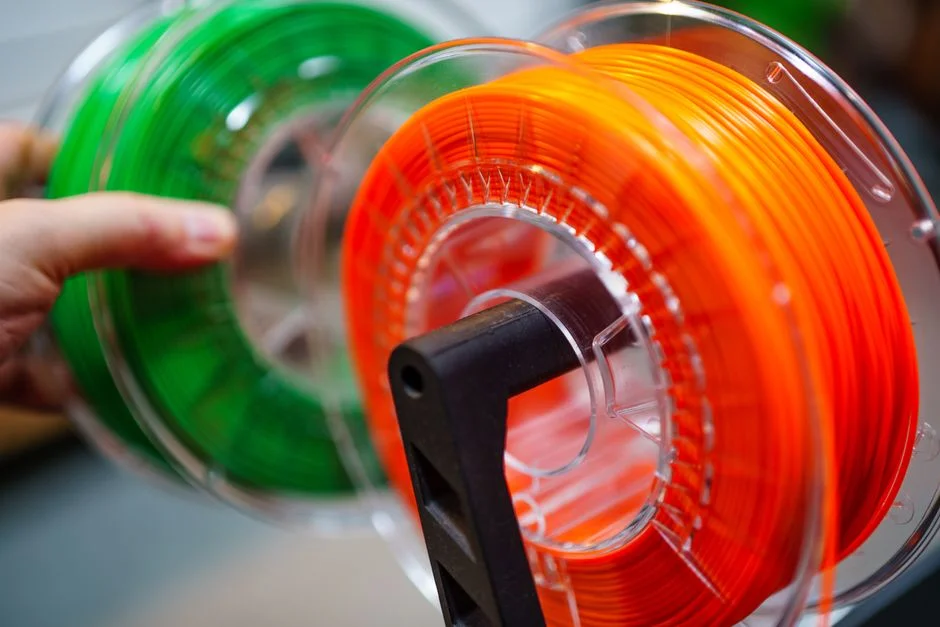
Two spools labeled the same material can behave very differently, and that difference often determines whether you feel you’ve found the best 3d filament or a source of constant troubleshooting. Diameter tolerance is a major factor: consistent filament diameter leads to consistent extrusion, which improves surface finish, dimensional accuracy, and layer bonding. Premium manufacturers typically publish tight tolerances and have quality control to back them up. Another factor is resin quality and formulation consistency. Additives, colorants, and plasticizers affect melt flow and strength; when those are controlled well, the filament prints predictably from the first meter to the last. Packaging also matters. Filament that is sealed with a good desiccant and shipped quickly is more likely to arrive dry, while poorly packaged spools can arrive already compromised, especially in humid climates. A dry spool is not just a convenience; it can be the difference between clean walls and a surface full of pits and strings.
Winding quality is an underappreciated marker of the best 3d filament. Neat, consistent winding reduces tangles and sudden tension spikes that can cause under-extrusion, layer gaps, or even failed prints when the filament binds. Premium brands often invest in winding equipment and inspection that prevent crossed loops and snags. Another premium indicator is spool geometry and material; sturdy spools feed smoothly and don’t deform or drag. Color consistency also matters if you print multi-part assemblies or sell products—batch-to-batch variation can be noticeable. None of this means budget filament can’t work; many affordable spools print beautifully. But when you’re aiming for reliability, low failure rates, and repeatable results, these manufacturing details become the practical definition of “best.” If you’re running long prints, producing items for customers, or printing parts that must fit precisely, paying for consistent quality often costs less than reprinting failures and losing time to tuning problems that originate in the filament rather than in your slicer.
Printer and Slicer Factors That Decide Whether a Filament Feels “Best”
Even the best 3d filament can perform poorly if printer hardware and slicer settings aren’t aligned with the material. Nozzle temperature control, bed leveling, extrusion calibration, and cooling performance all shape outcomes. For example, PLA usually benefits from strong part cooling to improve overhangs, while ABS and ASA generally prefer minimal cooling to prevent layer splitting. PETG often needs a middle ground: enough cooling to control stringing and surface quality, but not so much that layer adhesion suffers. Retraction settings can make or break PETG and TPU performance. Print speed interacts with melt capacity; high-speed printing can be excellent with the right hotend and tuned profiles, but it can also expose inconsistent filament diameter or moisture issues faster. First-layer technique—bed surface choice, cleaning routine, and temperature—often determines whether a “great” filament becomes a stress-free experience or a constant battle with warping and lifting.
Matching nozzle type to filament is also crucial. Abrasive composites require hardened nozzles, and small nozzles can clog with filled materials. Flexible filament benefits from a constrained filament path. Enclosures can transform ABS, ASA, nylon, and PC from temperamental to dependable. If you’re trying to identify the best 3d filament for your setup, consider not just the material’s datasheet but your printer’s ecosystem: build plate surface, enclosure, hotend max temperature, and your willingness to dry filament. Slicer features matter too—pressure advance or linear advance can improve corners and reduce blobs, while temperature towers and retraction tests help you tune quickly. A filament that feels “best” is often the one that matches your printer’s strengths. If you have a fast, well-cooled open printer, PLA and certain PETG blends may shine. If you have an enclosed, high-temp machine, ASA, nylon, and PC become more realistic daily drivers. The goal is not to chase a single universal winner, but to build a small set of materials that each behave like the best option for a specific category of prints.
How to Build a “Best Filament” Toolkit: One Spool for Looks, One for Function, One for Tough Jobs
Instead of searching endlessly for one best 3d filament to cover every scenario, many experienced printers build a small toolkit of complementary materials. A common approach is to keep a high-quality PLA (or matte PLA) for prototypes and visual models, because it prints cleanly and reveals design issues quickly. Then keep a dependable PETG for everyday functional parts that need toughness and better heat tolerance than PLA. Finally, add an engineering option like ASA or nylon for outdoor parts or high-stress components. This three-material approach covers most needs without requiring a printer farm of specialized hardware. It also reduces tuning time because you can develop stable profiles for each material and stick with them. When you buy from consistent manufacturers and keep spools dry, the printing experience becomes repeatable, which is often the real meaning of “best.”

Stocking a toolkit also helps you choose based on part requirements rather than habit. If a part will sit in sunlight, ASA may be the best 3d filament even if PETG printed fine on your last project. If a part needs flexibility, TPU becomes the obvious choice rather than forcing PLA to do a job it’s not meant for. If a bracket must be stiff and dimensionally stable, a carbon-fiber reinforced nylon or PETG composite might outperform standard materials. The key is to avoid overbuying exotic spools that don’t fit your printer or your typical projects. Start with one premium spool in each category and learn its behavior: ideal temperatures, fan settings, bridging limits, and how it responds to drying. Over time, you’ll develop confidence in which material is “best” for each design, and you’ll waste less filament chasing settings that can’t overcome a fundamental mismatch between material and use case. This approach also makes budgeting easier, because you can spend more on the few spools that truly matter and less on random experiments.
Storage and Handling: Keeping Filament Dry Enough to Stay “Best”
Filament storage is one of the biggest hidden factors in whether a spool remains the best 3d filament over weeks and months. Many common materials absorb moisture from the air, and moisture affects print quality in predictable ways: sizzling or popping at the nozzle, extra stringing, rough surfaces, weak layers, and inconsistent extrusion. PETG, nylon, TPU, and polycarbonate are especially sensitive, but even PLA can degrade in humid conditions. Good storage doesn’t have to be complicated. Airtight bins with desiccant, vacuum bags, or dedicated dry boxes can keep spools stable. For materials like nylon, a filament dryer that can maintain a steady temperature during printing can be a game changer, turning a difficult material into a reliable one. When you control moisture, you often reduce the need to compensate with higher temperatures or aggressive retraction, which can introduce other issues.
Handling also matters. Dust and debris can cling to filament and end up in the nozzle, causing partial clogs and surface defects that make even the best 3d filament look bad. Simple filament clips, clean storage, and occasional wiping with a filament cleaner can help. Another overlooked point is spool aging: some materials become more brittle over time, especially if exposed to UV light or stored near heat sources. Keep spools in a cool, dark place when possible. Labeling spools with purchase date and material type helps you rotate stock and avoid surprises mid-print. If you’re printing for clients or producing repeatable parts, consistent storage practices are part of quality control. The difference between a print that looks professional and one that looks fuzzy and stringy can be as simple as drying the spool overnight. When a material is kept in optimal condition, it’s easier to claim it as the best option for your workflow because it performs the way the manufacturer intended rather than fighting you with moisture-related artifacts.
Final Thoughts: Defining the Best 3D Filament for Your Specific Goals
The best 3d filament is the one that matches your printer’s capabilities, your environment, and the real demands of the part, not just the most popular name on a spool. PLA often wins for ease and visual quality, PETG frequently wins for everyday functional durability, ASA stands out for outdoor and UV exposure, nylon excels for tough moving parts when kept dry, TPU dominates flexible applications, and PC-based materials shine when heat and impact performance are non-negotiable. Quality control, dryness, and winding can matter as much as the polymer itself, and a premium spool can save more money than it costs by preventing failed prints and wasted time. When you pick a small toolkit of materials and store them properly, your success rate rises and your prints become more consistent. With those habits in place, finding the best 3d filament stops being a guessing game and becomes a repeatable choice based on performance, reliability, and the finish you want.
Watch the demonstration video
In this video, you’ll learn how to choose the best 3D printing filament for your needs, comparing top materials by strength, flexibility, heat resistance, and printability. It breaks down popular options like PLA, PETG, ABS, and TPU, explains ideal use cases, and shares practical tips to get cleaner prints and more reliable results. If you’re looking for best 3d filament, this is your best choice.
Summary
In summary, “best 3d filament” is a crucial topic that deserves thoughtful consideration. We hope this article has provided you with a comprehensive understanding to help you make better decisions.
Frequently Asked Questions
What is the best 3D printing filament overall?
For most makers, PLA is the **best 3d filament** for everyday printing—it’s beginner-friendly, easy to source, resists warping, and delivers reliable results for prototypes, decorative pieces, and general-purpose parts.
Which filament is best for strong functional parts?
PETG is a common best choice for functional parts due to good strength and impact resistance with easier printing than ABS; nylon is stronger/tougher but harder to print and more moisture-sensitive. If you’re looking for best 3d filament, this is your best choice.
What’s the best filament for heat resistance?
ABS and ASA handle heat far better than PLA, and if you need even more temperature resistance, polycarbonate (PC) is the next step up—though it demands hotter print settings and a tightly controlled printer environment, which can make it the **best 3d filament** choice for high-heat applications.
Which filament is best for outdoor use?
ASA is often the go-to choice for outdoor prints thanks to its excellent UV stability and weather resistance, making it a strong contender for the **best 3d filament** when your parts will live outside. PETG can also handle outdoor use, but it typically breaks down and fades faster under prolonged sunlight compared to ASA.
What is the best filament for beginners?
PLA is often the go-to choice for beginners because it prints at lower temperatures, resists warping, sticks reliably to the build plate, and delivers consistent results on most machines—making it a strong contender for the **best 3d filament** when you’re just getting started.
How do I choose the best filament brand and quality?
When choosing the **best 3d filament**, prioritize a tight diameter tolerance (around ±0.02–0.05 mm), neatly and consistently wound spools, and moisture-resistant packaging to keep the material dry. It also helps to check reliable reviews and confirm the filament performs consistently for its specific material type. Low-quality filament is more likely to absorb moisture, clog your nozzle, extrude unevenly, and produce weaker, less reliable prints.
? Looking for more info about best 3d filament? Follow Our Site for updates and tips!

Trusted External Sources
- What the best filament : r/BambuLab – Reddit
Mar 22, 2026 … PolyCarbonate – Super hard to print but the toughest plastic i have found yet · Fiberology Matteflex · Polymaker CF-PLA · Prusament Jet Black PETG … If you’re looking for best 3d filament, this is your best choice.
- Amazon Best Sellers: Best 3D Printing Filament
Upgrade your prints with this 2kg bundle of black and white PLA 1.75mm filament—designed for smooth, no-tangle feeding, strong layer bonding, and reliable overhang performance. With tight dimensional accuracy of ±0.02mm, it’s a dependable choice for anyone looking for the **best 3d filament** for crisp, consistent results.
- Best filament for 3d printing? : r/FTC – Reddit
As of Sep 13, 2026, we’ve been sticking with PLA because it prints quickly, stays reliable, and holds up well to everyday wear and tear. I’ve also heard PETG is a strong contender for the **best 3d filament** if you need extra durability, though it typically prints a bit slower.
- What are the best filament brands to use for 3D printing? – Facebook
As of July 10, 2026, many makers say the **best 3d filament** comes down to a balance of reliable print quality and reasonable pricing. Popular top picks frequently include Sunlu, Hatchbox, Bambu, and Polymaker—brands often praised for consistent results, strong layer adhesion, and good value. Esun and Sunlu also come up often in community recommendations, especially for everyday printing.
- What is your go to filament brand? : r/3Dprinting – Reddit
Oct 21, 2026 … Sunlu black pla works the best out of any pla I have messed with. It has great dimensional stability and doesn’t string. Their clear pla strings … If you’re looking for best 3d filament, this is your best choice.