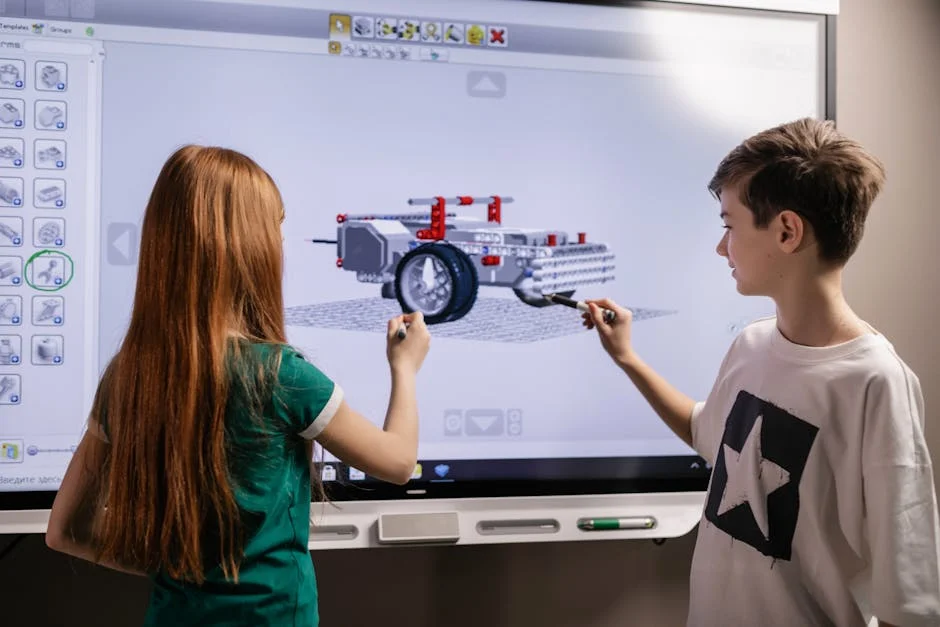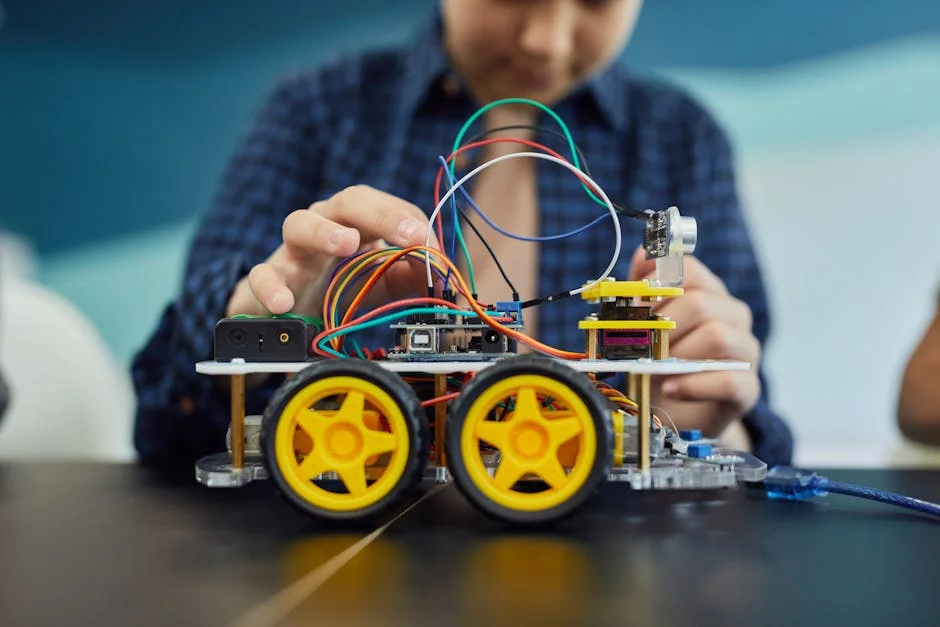
Robotics STEM education has moved from a niche enrichment activity to a central pathway for building real-world problem-solving skills in schools and community programs. The reason is simple: robotics brings together science, technology, engineering, and mathematics in a way that feels tangible and immediate. When learners design a robot to follow a line, pick up objects, or navigate a maze, they are forced to translate abstract concepts into physical outcomes. The robot either works or it doesn’t, and that feedback loop creates a powerful learning environment. Students naturally begin asking better questions: Why does the motor stall? How does wheel diameter affect speed? What happens to torque when the robot carries more weight? Those questions lead directly into physics, measurement, and applied mathematics. Even better, robotics encourages iteration. Learners quickly realize that “first try” success is rare, and that improvement comes from testing, observing, and refining. That process builds resilience and scientific thinking, which are essential for long-term academic and career success.
Table of Contents
- My Personal Experience
- Why Robotics STEM Education Matters in Modern Learning
- How Robotics Connects the STEM Disciplines into One Experience
- Core Concepts Learners Build Through Robotics Programs
- Age-Appropriate Pathways from Early Learners to Advanced Students
- Tools, Kits, and Platforms: Choosing What Fits Your Goals
- Teaching Strategies That Make Robotics Instruction Effective
- Project Ideas That Build Skills Progressively
- Expert Insight
- Equity, Access, and Inclusion in Robotics Learning
- Assessment and Measuring Growth Beyond “Does the Robot Work?”
- Competitions, Clubs, and Community Partnerships
- Preparing Educators and Building Sustainable Programs
- Future Trends: AI, Automation, and Ethical Robotics in Education
- Building Long-Term Confidence and Career Readiness Through Robotics
- Watch the demonstration video
- Frequently Asked Questions
- Trusted External Sources
My Personal Experience
I got into robotics through a STEM club in middle school, mostly because a friend needed an extra person for their team. The first few meetings were humbling—I could follow the build instructions, but I didn’t really understand why the robot kept drifting or why the code worked one day and failed the next. Our mentor pushed us to treat every mistake like a clue: check the wiring, test one motor at a time, add comments, and keep a simple log of changes. The moment it clicked for me was when I tuned a basic line-following sensor and watched the robot finally track the tape smoothly after hours of trial and error. Since then, robotics has been the most practical STEM class I’ve had because it made math and programming feel less like separate subjects and more like tools you use to solve a real problem in front of you. If you’re looking for robotics stem education, this is your best choice.
Why Robotics STEM Education Matters in Modern Learning
Robotics STEM education has moved from a niche enrichment activity to a central pathway for building real-world problem-solving skills in schools and community programs. The reason is simple: robotics brings together science, technology, engineering, and mathematics in a way that feels tangible and immediate. When learners design a robot to follow a line, pick up objects, or navigate a maze, they are forced to translate abstract concepts into physical outcomes. The robot either works or it doesn’t, and that feedback loop creates a powerful learning environment. Students naturally begin asking better questions: Why does the motor stall? How does wheel diameter affect speed? What happens to torque when the robot carries more weight? Those questions lead directly into physics, measurement, and applied mathematics. Even better, robotics encourages iteration. Learners quickly realize that “first try” success is rare, and that improvement comes from testing, observing, and refining. That process builds resilience and scientific thinking, which are essential for long-term academic and career success.
Another reason robotics STEM education is increasingly valued is that it supports a wide range of learning styles and abilities. Some students excel at programming logic, others at mechanical design, and others at documentation or presenting results. Robotics projects make it easier to recognize these different strengths and help learners collaborate. A robotics team can mirror a small engineering group: one student focuses on sensors and calibration, another on CAD and building, another on code structure and debugging, and another on recording data and communicating outcomes. This collaborative model aligns with how modern technology companies operate, where cross-functional teamwork is the norm. It also creates inclusive entry points, because students who may not see themselves as “math people” can still contribute meaningfully through creative design, careful building, or thoughtful testing. Over time, those learners often become more confident in the technical parts because they are motivated by a goal they care about: making the robot perform.
How Robotics Connects the STEM Disciplines into One Experience
Robotics STEM education is uniquely effective because it naturally integrates the four STEM disciplines without forcing artificial connections. Science appears in the form of forces, motion, energy, and sensor behavior. Technology shows up in microcontrollers, programming environments, and digital communication between components. Engineering becomes real when students design mechanisms, choose materials, and balance trade-offs such as speed versus stability. Mathematics is everywhere: measuring distances, calculating gear ratios, converting units, interpreting graphs, and using logic to structure algorithms. Instead of learning each subject in isolation and hoping students make the connections later, robotics asks students to blend them immediately. A simple task like having a robot stop a certain distance from a wall can involve ultrasonic sensor readings (science), code that filters noise (technology), a chassis design that prevents tipping (engineering), and calculations for threshold values and timing (mathematics). This integration helps students understand why each discipline matters and how they reinforce one another.
This interdisciplinary nature also helps educators design learning progressions that feel coherent. Early activities can focus on foundational ideas such as input/output, basic movement, and simple conditionals. As students gain confidence, projects can incorporate data logging, proportional control, or mechanical advantages. At each stage, the robot becomes a “shared object” that anchors learning, making it easier for students to retain concepts because they associate them with a lived experience. Robotics STEM education can also support standards-based instruction when mapped thoughtfully to learning outcomes. For example, lessons can align with measurement and data standards by requiring students to run repeated trials and compute averages and variability. They can align with engineering design standards by documenting constraints, criteria, and iterative improvements. Because robots are visible and interactive, assessment can extend beyond worksheets. Teachers can evaluate code readability, build quality, testing rigor, and how well students explain their reasoning. That combination of hands-on work and reflective explanation strengthens both technical competence and communication.
Core Concepts Learners Build Through Robotics Programs
Robotics STEM education builds a set of core concepts that serve as building blocks for advanced study and future careers. One foundational concept is systems thinking: recognizing that a robot is not “just code” or “just hardware,” but a system where sensors, actuators, power, structure, and algorithms interact. Students learn that a change in one part affects the rest. For instance, adding a heavier gripper may require a stronger motor, which may draw more current, which may reduce battery life, which may affect performance during longer runs. This kind of reasoning is difficult to teach through lectures alone, but robotics makes it unavoidable and therefore memorable. Another core concept is feedback. Even basic robots often require feedback loops—reading sensor values and adjusting behavior accordingly. Learners see that open-loop control (move forward for three seconds) is less reliable than closed-loop control (move forward until the sensor says you reached the target). That insight lays groundwork for later topics such as PID control, automation, and even machine learning.
Robotics STEM education also strengthens computational thinking. Students practice decomposing problems into smaller steps, creating algorithms, and debugging systematically. Debugging becomes a skill rather than a frustrating mystery when students are taught to isolate variables: test motors independently, print sensor values, check wiring, and simplify code until the issue becomes clear. This approach fosters patience and logic. Additionally, robotics supports design thinking. Students identify user needs (for example, a robot that can sort objects by color), brainstorm solutions, prototype quickly, test, and revise. They learn to justify choices, such as why a tank drive might be better than a two-wheel differential drive for a certain terrain, or why a certain sensor placement reduces false readings. Over time, learners build a practical vocabulary—torque, friction, calibration, tolerance, latency—that helps them communicate precisely. These concepts are transferable to many fields, including mechanical engineering, electronics, computer science, biomedical devices, and industrial automation.
Age-Appropriate Pathways from Early Learners to Advanced Students
Robotics STEM education can be designed as a developmental pathway that grows with learners rather than a one-time experience. For early elementary students, robotics may focus on sequencing, cause-and-effect, and spatial reasoning using simple, durable kits with large parts and icon-based programming. Students can learn that commands occur in order, that loops repeat actions, and that sensors can trigger behaviors. The goal at this stage is curiosity and confidence, not technical depth. As students move into upper elementary and middle school, programs can introduce more precise measurement, structured programming concepts, and mechanical design. Learners can begin working with gear trains, simple machines, and sensor calibration. They can also start documenting experiments: recording trials, comparing results, and explaining why one design performed better than another. This is an ideal stage to introduce challenges that feel like games—maze navigation, object pushing, or mini “robot rescue” missions—because they motivate persistence while still allowing for clear learning objectives.
For high school students, robotics STEM education can become a rigorous pre-engineering experience. Students can work with text-based programming languages, microcontrollers, and more complex sensor arrays. Projects can incorporate control theory, data analysis, and design constraints that mirror real engineering limitations such as cost, power consumption, and reliability. Teams can be organized with roles—software lead, mechanical lead, electrical lead, project manager—to teach collaboration and accountability. Advanced students can explore computer vision, autonomous navigation, or robotic arms with inverse kinematics. Importantly, a strong pathway includes multiple entry points so students can join at different grades without feeling behind. That might mean offering beginner modules alongside advanced extensions, or using a spiral approach where each year revisits core skills at a higher level of complexity. When robotics is structured as a progression, learners build a durable identity as capable problem-solvers, which is one of the most valuable outcomes of robotics STEM education.
Tools, Kits, and Platforms: Choosing What Fits Your Goals
Robotics STEM education succeeds when the tools match the learning goals, budget, and teaching context. Schools and organizations often choose from a range of platforms: snap-together construction kits, competition-focused systems, Arduino-based builds, Raspberry Pi projects, or integrated classroom solutions with curriculum materials. The “best” platform depends on the outcomes you want. If the goal is to teach basic logic and sequencing, a block-based coding environment and robust parts may be ideal. If the goal is to teach electronics and embedded programming, a microcontroller platform with breadboards, sensors, and component-level wiring may be more appropriate. If you want students to experience engineering trade-offs and rapid iteration, a modular building system with gears, structural elements, and multiple motor types can help. Tool selection also affects classroom management. Some kits are designed to reduce setup time and minimize lost parts, while others offer deeper customization at the cost of more organization.
When evaluating tools for robotics STEM education, consider durability, replacement parts, community support, and the availability of lesson plans. A platform with an active educator community can save enormous time because teachers can access troubleshooting tips, project ideas, and proven classroom routines. Also consider accessibility: are parts easy to manipulate for younger learners or students with motor challenges? Is the software usable on the devices you have, including Chromebooks or tablets? Another key factor is the balance between “black box” simplicity and transparency. Some systems work very reliably but hide how components function, which can limit deeper learning. Others expose the underlying electronics and code, which is excellent for advanced understanding but may overwhelm beginners. Many programs adopt a staged approach: start with a more guided platform to build confidence, then transition to more open-ended tools as students mature. A thoughtful tool strategy keeps robotics STEM education engaging while ensuring that learners are actually building transferable skills rather than only assembling pre-defined models.
Teaching Strategies That Make Robotics Instruction Effective
Robotics STEM education thrives when instruction emphasizes inquiry, structure, and reflection in equal measure. Inquiry matters because robotics is naturally exploratory: students learn by trying ideas and observing results. However, without structure, exploration can become random tinkering that doesn’t build durable understanding. Effective teaching often uses short, focused mini-lessons followed by guided practice and then open-ended challenges. For example, a teacher might demonstrate how a sensor reading changes with distance, then ask students to collect data at multiple distances, and finally challenge them to design a behavior that uses those readings reliably. Reflection is equally important. When students document what they tried, what failed, and why they changed direction, they begin to think like engineers. This also improves assessment, because teachers can evaluate the reasoning process, not just the final performance of the robot.
Classroom routines can make or break robotics STEM education. Clear expectations for parts management, team roles, and debugging procedures prevent chaos and support equitable participation. Many educators assign rotating roles such as builder, programmer, tester, and documenter so that every student engages with multiple aspects of the project. Another effective strategy is to teach debugging as a formal method. Students can learn to check power first, then wiring, then motor direction, then sensor values, and finally code logic. This reduces frustration and builds independence. Additionally, teachers can use “design constraints” to deepen learning: limit the number of motors, restrict the size of the robot, or require it to complete a task within a time limit. Constraints encourage creativity and force students to prioritize. Finally, showcasing student work through demonstrations, design reviews, or small competitions can boost motivation. The key is to frame performance as a learning opportunity rather than a judgment, so students feel safe taking risks—an essential condition for meaningful robotics STEM education.
Project Ideas That Build Skills Progressively
Robotics STEM education becomes more impactful when projects are sequenced to build complexity step by step. Early projects might focus on movement fundamentals: driving forward a set distance, turning accurately, and stopping consistently. Students can explore how wheel slippage, battery level, and surface texture affect results. Next, projects can introduce sensing: line following with light sensors, obstacle avoidance with ultrasonic sensors, or wall following with distance sensors. These activities teach students to interpret sensor data, set thresholds, and handle noisy readings. As learners progress, projects can incorporate decision-making and state machines: for example, a robot that searches for an object, approaches it, grabs it, and returns to a home base. These multi-stage behaviors encourage students to plan, define states, and handle transitions, which is a major step in computational thinking.
Expert Insight
Start with a clear, real-world challenge (line-following, obstacle avoidance, or sorting) and break it into small milestones: build the chassis, wire sensors, test motor control, then refine the code. Use a simple checklist and quick test runs after each change to help students connect cause and effect and troubleshoot with confidence. If you’re looking for robotics stem education, this is your best choice.
Make learning visible by assigning rotating roles—builder, programmer, tester, documenter—and requiring a brief build log with photos, wiring notes, and what changed between trials. End each session with a 5-minute demo and one measurable goal for next time (faster lap, fewer collisions, or improved accuracy) to keep progress focused and motivating. If you’re looking for robotics stem education, this is your best choice.
More advanced robotics STEM education projects can incorporate data and optimization. Students can run repeated trials, record time-to-completion, and then make design changes based on evidence. They can test different gear ratios and graph speed versus torque outcomes. They can compare navigation strategies, such as reactive obstacle avoidance versus mapping a simple grid. Another strong project category is human-centered robotics, where students design a robot to assist with a real need: a device that reminds someone to take medication, a robotic sorter for recycling, or an automated plant-watering system. These projects can incorporate ethics and empathy, helping students see that engineering is not only about technical performance but also about serving people. Group projects can culminate in a design expo where teams present their constraints, prototypes, failures, and final results. When projects are designed as a progression, students experience steady growth rather than sudden difficulty spikes, leading to better retention and a more positive view of robotics STEM education.
Equity, Access, and Inclusion in Robotics Learning
Robotics STEM education has the potential to widen opportunity, but only if programs are designed with equity and access in mind. One barrier is cost: kits, spare parts, and devices can be expensive, and competition travel can add more. Schools and organizations can address this by choosing scalable platforms, sharing resources across classrooms, applying for grants, and building partnerships with local businesses or universities. Another barrier is exposure. Students who encounter robotics early often develop confidence and a sense of belonging, while those who discover it later may assume they’re behind. Creating beginner-friendly entry points at every grade level helps prevent that gap. It also helps to highlight diverse role models in robotics and engineering so students can imagine themselves in those futures. Inclusion also means making the learning environment welcoming for students with different abilities, language backgrounds, and learning needs. Clear visuals, structured team roles, and multiple ways to demonstrate understanding can make robotics more accessible.
| Program Type | Best For | What Students Learn |
|---|---|---|
| Beginner Robotics Kits | Elementary & early middle school learners starting STEM | Basic mechanics, simple circuits, block-based coding, problem-solving through guided builds |
| Classroom Robotics Curriculum | Schools needing structured, standards-aligned instruction | Engineering design process, sensors & actuators, data collection, collaboration, iterative testing |
| Competition & Project-Based Robotics | Middle/high school students seeking challenge and real-world application | Advanced programming, autonomous behavior, systems integration, documentation, teamwork under constraints |
Team dynamics matter deeply in robotics STEM education. Without guidance, teams may fall into patterns where one student dominates programming while others watch. Teachers can prevent this by rotating roles, requiring individual reflections, and designing tasks that require collaboration. For example, one student can be responsible for sensor calibration, another for mechanical alignment, and another for coding a specific function, with a final integration step that requires communication. Inclusive programs also value “soft skills” as real engineering skills: planning, documenting, communicating, and managing time. When these contributions are recognized, more students find a meaningful place on the team. Additionally, culturally responsive project themes can increase engagement. A robotics challenge tied to local community needs, environmental issues, or accessibility can feel more relevant than a generic obstacle course. When equity is treated as a design requirement rather than an afterthought, robotics STEM education becomes a powerful tool for broadening participation in technical fields.
Assessment and Measuring Growth Beyond “Does the Robot Work?”
Robotics STEM education invites richer assessment than many traditional subjects because learning is visible in both process and product. While it’s tempting to grade based on whether the robot completes a task, that approach can punish experimentation and reward luck. Better assessment includes multiple dimensions: planning quality, testing rigor, code clarity, mechanical design reasoning, and teamwork. For instance, students can be evaluated on how they define the problem, identify constraints, and propose solutions. They can submit design notebooks with sketches, iteration notes, and data tables from trials. They can annotate code to explain logic and show how they handled edge cases. This encourages students to think like engineers who must justify decisions, not just produce a working prototype. It also makes assessment fairer for teams whose ambitious designs encountered setbacks but generated deep learning.
Rubrics can support consistent evaluation in robotics STEM education, especially when they emphasize growth. A rubric might include categories such as “use of data,” “debugging strategy,” “documentation,” “collaboration,” and “communication.” Teachers can also use checkpoints: a sensor test day, a code review day, and a final demonstration day. Peer feedback can be valuable when structured properly, such as having students conduct design reviews where they ask each other about assumptions, failure modes, and test coverage. Another approach is performance-based reflection: after a run, students explain what happened, what they expected, and what they will change. This builds metacognition and helps students internalize engineering habits. Over time, learners should be able to articulate not only what they built, but why they built it that way and what evidence supports their decisions. When assessment captures these skills, robotics STEM education becomes more than a fun activity—it becomes a disciplined learning experience with measurable outcomes.
Competitions, Clubs, and Community Partnerships
Robotics STEM education often expands beyond the classroom through clubs, competitions, and partnerships that provide authentic motivation and real deadlines. Competitions can be powerful because they create a clear goal, encourage iteration, and expose students to a larger community of builders and programmers. Students learn to manage time, allocate tasks, and handle pressure when something breaks unexpectedly. They also learn sportsmanship and the idea that engineering progress is shared—teams often exchange ideas and help each other troubleshoot. However, competitions should be framed carefully so that the learning remains central. If winning becomes the only focus, some students may feel excluded or fear taking risks. The healthiest competition environments celebrate creativity, documentation, and collaboration alongside performance, making space for beginners and advanced students alike.
Community partnerships can deepen robotics STEM education by connecting students with mentors and real-world applications. Local engineers, university labs, makerspaces, and technology companies often welcome opportunities to support youth programs through guest talks, mentorship, equipment donations, or site visits. These experiences help students see pathways from what they are doing now to future study and careers. Partnerships can also support teacher development, giving educators access to training and technical support. For rural or under-resourced communities, virtual mentorship and remote workshops can provide similar benefits. A strong robotics ecosystem might include a school club that meets weekly, a summer camp that intensifies learning, and a community showcase that celebrates student projects. When students feel part of a broader network, they are more likely to persist through challenges. This sense of belonging and purpose is one of the most durable benefits of robotics STEM education.
Preparing Educators and Building Sustainable Programs
Robotics STEM education depends heavily on educator confidence and program sustainability. Many teachers did not study robotics in their own training, so expecting instant expertise is unrealistic. Effective programs invest in professional development that is hands-on and paced appropriately. Training should cover not only how to use the kits, but also how to teach debugging, manage teams, and align projects with learning standards. It helps when educators experience the learner mindset by building and troubleshooting a robot themselves. This normalizes mistakes and prepares teachers to model problem-solving rather than perfection. Ongoing support is also important: a community of practice where teachers share lesson ideas, common errors, and classroom management strategies can reduce burnout and improve quality over time.
Sustainability in robotics STEM education also requires planning for logistics and funding. Kits need maintenance, batteries need replacement, and parts will get lost. A simple inventory system, labeled bins, and student roles for cleanup can protect the investment. Programs should also plan for continuity when staff change. Documented lesson sequences, shared files, and clear equipment procedures prevent a program from collapsing when a single champion teacher moves on. Funding can come from multiple sources: school budgets, grants, parent organizations, and partnerships. Some programs create a repair and replacement budget line to avoid “broken kit paralysis.” Finally, sustainability includes student leadership. When older students mentor younger ones, knowledge stays in the community and students gain confidence through teaching. With strong training, clear routines, and long-term planning, robotics STEM education becomes a stable part of a school’s identity rather than a temporary initiative.
Future Trends: AI, Automation, and Ethical Robotics in Education
Robotics STEM education is evolving alongside rapid advances in artificial intelligence, sensors, and automation. As these technologies become more accessible, students can explore more sophisticated behaviors such as object recognition, mapping, and adaptive decision-making. Even simple AI concepts can be introduced through practical activities, like training a basic classifier to distinguish between colors or gestures, then integrating that output into robot actions. These experiences help students understand that AI is not magic; it is built on data, models, and probabilities, each with limitations. Robotics also provides a platform for discussing cybersecurity and safety. If a robot connects wirelessly, what data is transmitted? How could interference affect performance? These questions build digital literacy and responsible engineering habits.
Ethics is increasingly important in robotics STEM education because robots influence real lives in healthcare, transportation, manufacturing, and home environments. Students can explore ethical scenarios: how to design robots that are safe around humans, how to reduce bias in data-driven systems, and how to ensure accessibility for people with disabilities. They can discuss environmental impacts, such as battery disposal and material choices, and consider how design decisions affect sustainability. Educators can integrate ethics without turning robotics into a purely philosophical subject by grounding discussions in project requirements. For example, a robot designed to assist someone should meet safety constraints, include clear user feedback, and consider privacy. When students learn to connect technical decisions with human consequences, they develop the mindset needed for future innovation. As technology continues to advance, robotics STEM education will remain a practical way to prepare learners not only to use tools, but to shape them responsibly.
Building Long-Term Confidence and Career Readiness Through Robotics
Robotics STEM education supports career readiness because it mirrors the workflow of many technical professions: define a problem, build a prototype, test, analyze results, and iterate. Students learn that complex goals are achieved through smaller tasks and that failure is often a data point rather than a dead end. This shift in mindset can influence performance across subjects. A student who learns to troubleshoot a robot systematically may approach a challenging math problem with more patience and structure. Robotics also builds communication skills. Teams must explain decisions, write documentation, and present outcomes to peers, judges, or community members. These experiences develop the ability to translate technical ideas into clear language, a skill that is essential in engineering, research, product design, and project management.
Over time, robotics STEM education can help students discover interests that guide future study. Some will gravitate toward software and pursue computer science. Others will love mechanical design and explore engineering. Others may find a passion for electronics, data analysis, or user-centered design. Importantly, robotics can validate students who have not always felt successful in traditional academic settings, because it rewards persistence, creativity, and hands-on intelligence. When students see their ideas become a moving machine, they gain a sense of agency: they can build things that work in the real world. That confidence is not only academic; it shapes identity and ambition. By combining technical skills, teamwork, and iterative problem-solving, robotics STEM education offers a durable foundation for lifelong learning and adaptability in a changing job market, and it remains one of the most engaging ways to connect STEM knowledge to meaningful outcomes.
Watch the demonstration video
Discover how robotics can make STEM learning hands-on, engaging, and relevant. This video shows how building and programming robots helps students develop problem-solving, coding, and engineering skills while encouraging teamwork and creativity. You’ll learn practical ways educators use robotics projects to boost confidence, spark curiosity, and connect classroom concepts to real-world applications. If you’re looking for robotics stem education, this is your best choice.
Summary
In summary, “robotics stem education” is a crucial topic that deserves thoughtful consideration. We hope this article has provided you with a comprehensive understanding to help you make better decisions.
Frequently Asked Questions
What is robotics STEM education?
Robotics STEM education uses building and programming robots to teach science, technology, engineering, and math through hands-on projects.
What skills do students gain from robotics?
Students build coding, engineering design, problem-solving, teamwork, communication, and iterative testing/debugging skills.
What age is appropriate to start robotics?
Many learners can begin in early elementary with simple kits and block-based coding, then steadily build their skills through **robotics stem education**—moving into more advanced hardware, sensors, and text-based programming as they reach middle and high school.
Do students need prior coding experience?
No. Programs often begin with beginner-friendly block coding and gradually introduce text-based languages as confidence grows.
What equipment is needed for a robotics class?
Most programs start with a few essentials: robotics kits, a computer or tablet, easy-to-use programming software, basic hand tools, and a safe, organized workspace. The exact setup for **robotics stem education** can vary widely depending on your curriculum goals, student age group, and budget.
How does robotics align with school standards and careers?
Robotics aligns closely with key standards in engineering practices, computational thinking, and mathematical modeling, while giving students a hands-on bridge to real careers in software development, mechanical and electrical engineering, automation, and artificial intelligence—making it a powerful foundation for **robotics stem education**.
? Looking for more info about robotics stem education? Follow Our Site for updates and tips!

Trusted External Sources
- Why Robotics STEM Education Matters for Tomorrow’s Jobs
Aug 18, 2026 … Hands-on robotics STEM education develops technical and soft skills, fueling curiosity, confidence, and critical thinking in future …
- FIRST Robotics
We’re a leading youth-focused nonprofit dedicated to expanding STEM opportunities for every child. Through our **robotics stem education** programs, including FIRST Robotics, kids of all ages can build, code, and collaborate—at school and in communities worldwide.
- mBot2: No.1 Coding Robot for STEM Education – Makeblock
Makeblock mBot2 is a top-choice robot kit for K–12 learners, designed to make coding and hands-on building genuinely fun. Through DIY projects and interactive programming, students strengthen problem-solving skills, spark creativity, and build real confidence—making it an excellent fit for **robotics stem education**.
- Robotics – STEMfinity
Makeblock mBot Ranger – Transformable STEM Educational Robot Kit – STEMfinity … EZ-Robot Education Starter Pack EZ-Robot. $2,199.99.
- The effects of educational robotics in STEM education: a multilevel …
As of Feb 1, 2026, educational robotics has emerged as a powerful tool in **robotics stem education**, widely used to enrich STEM classrooms by boosting engagement, strengthening problem-solving skills, and supporting more interactive, hands-on instruction.