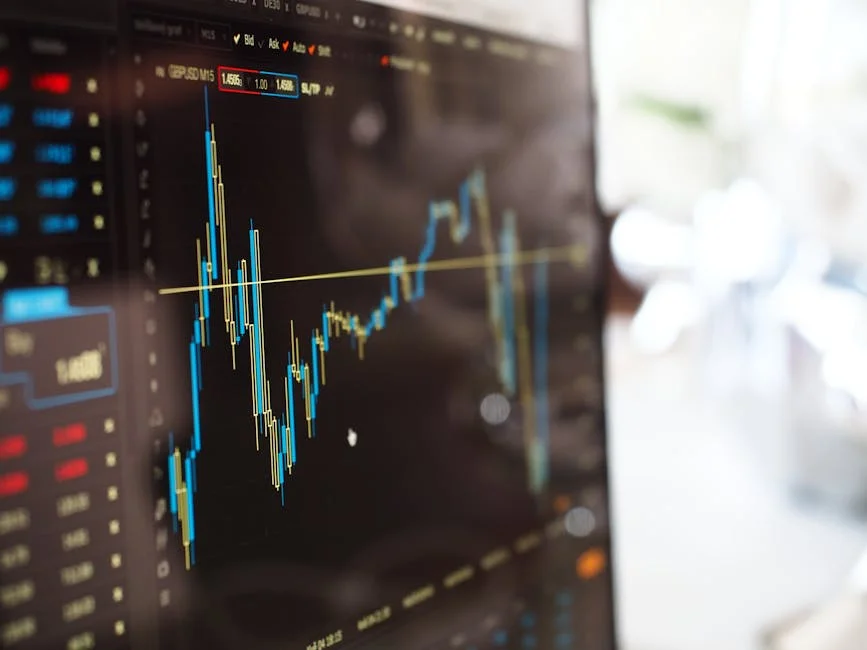
If you want to learn to trade fx, the first challenge is not finding a broker or downloading a charting app; it is understanding what the foreign exchange market actually is and why it behaves the way it does. FX is the global marketplace where currencies are exchanged, usually in pairs like EUR/USD or USD/JPY, because every currency is priced relative to another. That pairing is more than a format choice: it means every trade expresses two views at once—buying one currency while selling another. When you buy EUR/USD, you are long the euro and short the U.S. dollar. This structure creates constant motion because macroeconomic conditions, interest rates, and risk sentiment are always changing across countries. Unlike many stock markets, currency trading is decentralized and operates across a network of banks, liquidity providers, and brokers, with activity rolling from Asia to Europe to North America. That near-continuous flow brings opportunity, but also encourages overtrading and impulsive decisions if you treat the market like a slot machine rather than a probability-driven business. The most productive mindset is to think in terms of process: how you analyze, how you execute, how you manage exposure, and how you measure results.
Table of Contents
- My Personal Experience
- Getting Oriented When You Want to Learn to Trade FX
- How the FX Market Works: Pairs, Pips, Lots, and Spreads
- Choosing a Broker and Trading Platform Without Costly Mistakes
- Building a Strong Foundation: Market Sessions, Liquidity, and Volatility
- Core Analysis Skills: Reading Price Action and Market Structure
- Using Indicators Wisely: Confirmation, Not Prediction
- Risk Management: The Skill That Keeps You in the Game
- Expert Insight
- Developing a Trading Plan and Strategy You Can Actually Follow
- Practice Methods: Demo Trading, Small Live Accounts, and Deliberate Drills
- Trading Psychology: Discipline, Patience, and Handling Losses
- Fundamental Drivers: Interest Rates, Inflation, and Economic Calendars
- Tracking Performance: Journaling, Metrics, and Continuous Improvement
- Realistic Expectations and a Sustainable Path as You Learn to Trade FX
- Watch the demonstration video
- Frequently Asked Questions
- Trusted External Sources
My Personal Experience
When I decided to learn to trade FX, I thought it would be like learning a few patterns and then just “following the market.” The first couple of weeks proved me wrong—I overtraded, chased moves after news spikes, and kept widening my stop because I didn’t want to be wrong. What finally helped was treating it like a skill instead of a shortcut: I picked one pair, stuck to a simple setup, and started journaling every trade with screenshots and a short note about what I was thinking. Seeing my mistakes on paper—especially trading when I was tired or trying to win back losses—was uncomfortable but useful. I’m still not consistently profitable every month, but my risk is controlled now, and I can explain why I’m in a trade before I click buy or sell, which feels like real progress.
Getting Oriented When You Want to Learn to Trade FX
If you want to learn to trade fx, the first challenge is not finding a broker or downloading a charting app; it is understanding what the foreign exchange market actually is and why it behaves the way it does. FX is the global marketplace where currencies are exchanged, usually in pairs like EUR/USD or USD/JPY, because every currency is priced relative to another. That pairing is more than a format choice: it means every trade expresses two views at once—buying one currency while selling another. When you buy EUR/USD, you are long the euro and short the U.S. dollar. This structure creates constant motion because macroeconomic conditions, interest rates, and risk sentiment are always changing across countries. Unlike many stock markets, currency trading is decentralized and operates across a network of banks, liquidity providers, and brokers, with activity rolling from Asia to Europe to North America. That near-continuous flow brings opportunity, but also encourages overtrading and impulsive decisions if you treat the market like a slot machine rather than a probability-driven business. The most productive mindset is to think in terms of process: how you analyze, how you execute, how you manage exposure, and how you measure results.
Another early realization is that FX prices often move for reasons that are not obvious on a single chart. A currency can strengthen because its central bank is expected to raise rates, because its economy is outperforming peers, or simply because traders are reducing risk and rotating into perceived safe havens. At the same time, short-term price swings can be dominated by flows, positioning, and technical levels that have nothing to do with the latest headline. To learn to trade fx effectively, you have to accept that multiple forces can be true at once: fundamentals can define the broader direction while technicals shape entries and exits, and risk management determines whether a good idea becomes a profitable trade. New traders often focus almost exclusively on “finding the best indicator,” but seasoned traders typically spend more energy on controlling downside, staying consistent, and avoiding avoidable errors like trading during illiquid periods or ignoring scheduled news. The goal is not to predict every tick; it is to build an approach that survives uncertainty and compounds small advantages over time.
How the FX Market Works: Pairs, Pips, Lots, and Spreads
To build competence, you need a clear grasp of the market’s basic mechanics. Currency pairs are typically quoted with a base currency first and a quote currency second. In EUR/USD, the quote tells you how many U.S. dollars it takes to buy one euro. If EUR/USD is 1.0800, one euro costs $1.08. Movement is often measured in pips, which for most major pairs is the fourth decimal place (0.0001). Some pairs like USD/JPY are commonly quoted to two decimals, making one pip 0.01. Brokers may also show fractional pips (pipettes), adding an extra digit for more precise pricing. These details matter because your profit and loss is calculated from pip movement multiplied by position size. Position size is expressed in lots: a standard lot is typically 100,000 units of the base currency, a mini lot is 10,000, and a micro lot is 1,000. If you trade a micro lot of EUR/USD, a one-pip move is roughly $0.10; in a standard lot, it is roughly $10, though exact value depends on the pair and account currency. Understanding these relationships helps you avoid the common mistake of trading too large because the entry “looks good.” If you’re looking for learn to trade fx, this is your best choice.
Spreads and execution quality are equally important. The spread is the difference between the bid and ask price; it is one of the key costs of trading and affects short-term strategies the most. A tight spread on EUR/USD might be 0.1–1.0 pips depending on broker model and market conditions, while exotic pairs can have much wider spreads. Some accounts charge a commission and offer lower spreads; others build costs into the spread. Slippage—getting filled at a different price than expected—can occur during fast markets or low liquidity. When you learn to trade fx, it is tempting to focus only on chart setups, but cost structure can determine whether a strategy is viable. A scalping approach that targets 5 pips can be crippled by a 2-pip spread and frequent slippage. Even swing trading is impacted by financing costs (swap/rollover) if you hold positions overnight, because currencies have different interest rates. You do not need to memorize every formula, but you do need to know what your broker charges, when spreads widen, and how your position size converts price movement into real money. That clarity supports disciplined risk control and makes your performance data meaningful.
Choosing a Broker and Trading Platform Without Costly Mistakes
Broker selection can either support your development or quietly undermine it. Regulation and trust should come first. A reputable, well-regulated broker typically provides transparent pricing, segregated client funds, and clearer dispute resolution. Beyond regulation, evaluate execution model and liquidity. Some brokers operate as market makers, others use ECN/STP routing, and many offer hybrid structures. The practical question is whether you get consistent fills, reasonable spreads, and stable platform performance during active sessions and major news events. Platform stability matters more than fancy features; a platform that freezes during volatility can sabotage risk management. Also consider the availability of order types: market orders, limit orders, stop orders, and ideally stop-loss and take-profit functionality that can be attached at entry. If you plan to use trailing stops or advanced order management, confirm your platform supports it reliably. When you learn to trade fx, you want your attention on decision-making, not on fighting your tools.
Account structure deserves careful thought. Many brokers offer standard, mini, and micro accounts, and some offer cent accounts designed for smaller-scale practice with real execution. Leverage is another major variable. High leverage can magnify returns, but it magnifies errors more efficiently. A broker offering 1:500 leverage is not giving you an advantage if it encourages you to oversize positions. A healthier approach is to pick a broker that lets you trade small enough to keep risk per trade modest while you build consistency. Check deposit/withdrawal methods, fees, and processing time; operational friction can create stress and lead to rushed trading decisions. Also pay attention to the instruments available: majors, minors, exotics, and CFDs if offered. Many developing traders do better focusing on a small watchlist of highly liquid pairs like EUR/USD, GBP/USD, USD/JPY, and AUD/USD before branching out. Finally, verify customer support quality, because platform issues happen at the worst times. A broker is not just a place to click buy and sell; it is part of your trading infrastructure, and infrastructure quality has a direct impact on performance. If you’re looking for learn to trade fx, this is your best choice.
Building a Strong Foundation: Market Sessions, Liquidity, and Volatility
FX trading is often described as a 24-hour market, but it is more accurate to say it is a rolling sequence of regional sessions. Liquidity and volatility are not constant throughout the day, and recognizing this can improve both strategy selection and execution. The Asian session can be calmer for many pairs, though JPY and AUD crosses may be more active. The London session typically brings increased volume and clearer directional moves, while the New York session can either extend the London trend or reverse it depending on news and positioning. The overlap between London and New York is frequently the most liquid period, which often means tighter spreads and better fills, but also faster movement. If you learn to trade fx without understanding session behavior, you might place tight stops during a volatile overlap and get stopped out repeatedly, or you might trade during illiquid times and experience wider spreads that distort your risk calculations.
Volatility is not inherently good or bad; it simply changes what tactics make sense. A breakout strategy might perform well when volatility expands, while a mean-reversion approach might do better in range-bound conditions. The key is to match your method to the environment rather than forcing trades. Liquidity also affects technical levels: a support line that holds during a quiet session might break decisively when larger participants arrive. Scheduled events—central bank decisions, inflation data, employment reports—can also change the trading landscape in minutes. Many developing traders mistake “more action” for “more opportunity,” but the truth is that fast markets demand faster decision-making and cleaner execution. If you are still refining your plan, it is often wise to avoid trading the first minutes after major news. Instead, you can wait for spreads to normalize and for price to form a clearer structure. Learning session rhythm helps you plan when to analyze, when to execute, and when to stay out—an underrated skill that separates consistent traders from those who chase volatility. If you’re looking for learn to trade fx, this is your best choice.
Core Analysis Skills: Reading Price Action and Market Structure
Price action is the language of the market, and market structure is its grammar. Even if you use indicators, understanding structure helps you interpret what those tools are showing. Market structure is about swings, trends, ranges, and the transitions between them. In an uptrend, price tends to make higher highs and higher lows; in a downtrend, lower highs and lower lows. Ranges form when buyers and sellers reach temporary balance, producing repeated reactions near support and resistance. When you learn to trade fx, it is useful to train your eye to identify the current regime first, then decide whether your setup fits it. For example, buying pullbacks can make sense in a clear uptrend, but buying “support” in a strong downtrend can turn into catching a falling knife. Candlestick patterns can add context, but they are not magic. A bullish engulfing candle at random is less meaningful than a strong rejection candle at a well-defined level aligned with the broader trend.
Support and resistance are often misunderstood as precise lines, but they function more like zones where orders cluster. The more times a level is respected, the more attention it receives—until it breaks. Breaks can be genuine or false, and learning the difference takes practice. A false break (sometimes called a stop run) can occur when price briefly pushes beyond a level to trigger stops and collect liquidity, then reverses. Volume is not centralized in spot FX, but you can still infer participation through candle size, speed, and how price reacts at key zones. Multi-timeframe analysis is another skill worth developing: a level that looks minor on a 5-minute chart might be critical on a 4-hour chart. Many traders improve dramatically when they stop hunting for perfect entries and start prioritizing context: where price is relative to higher-timeframe levels, whether the market is trending or ranging, and whether volatility is expanding or contracting. These habits reduce random trades and build a repeatable decision framework that you can test and refine. If you’re looking for learn to trade fx, this is your best choice.
Using Indicators Wisely: Confirmation, Not Prediction
Indicators can be helpful, but only when you understand what they measure and how they lag price. Moving averages smooth price to help you see direction and potential dynamic support or resistance. RSI and stochastic oscillators measure momentum and can highlight overextended conditions, but “overbought” does not mean “must fall,” especially in strong trends. MACD can help visualize momentum shifts, yet it is derived from moving averages and will react after price. The best way to learn to trade fx with indicators is to treat them as confirmation tools rather than decision engines. For instance, you might use a moving average to define trend bias, then use price action at a support zone to time an entry. Or you might use ATR (Average True Range) to set more realistic stop-loss distances based on current volatility instead of arbitrary pip counts. That approach connects indicators to risk management, which is where they can add real value.
Indicator overload is a common trap. When multiple tools conflict, traders tend to cherry-pick the one that supports the trade they already want to take. A cleaner approach is to limit yourself to a small set of indicators that each serve a distinct purpose: one for trend context, one for momentum, and one for volatility, if any. Then define in writing how each indicator influences your decisions. For example: “Only take long setups when price is above the 200 EMA,” or “Avoid entries when ATR is unusually low because breakouts are less reliable.” Another practical concept is signal quality versus frequency. Many indicators produce frequent signals in choppy conditions, which can lead to a streak of small losses. If you are developing discipline, fewer high-quality trades are often better than constant activity. Finally, remember that indicators do not remove uncertainty. They organize information, but they cannot guarantee outcomes. The edge comes from combining context, execution, and risk control, then repeating that process consistently enough for probabilities to work in your favor. If you’re looking for learn to trade fx, this is your best choice.
Risk Management: The Skill That Keeps You in the Game
Risk management is the difference between a trader who survives long enough to improve and one who blows up before learning anything meaningful. The simplest and most powerful concept is risk per trade: decide how much of your account you are willing to lose if the trade fails, then size the position accordingly. Many experienced traders risk 0.25% to 2% per trade depending on strategy and confidence, but the right number depends on your psychology and your method’s historical drawdowns. When you learn to trade fx, smaller risk is often better because it allows you to accumulate experience without emotional panic. A stop-loss is not a sign of weakness; it is the cost of doing business. The market can move against you for reasons outside your analysis, and a predefined exit prevents a manageable loss from becoming a catastrophic one. Position sizing ties everything together: stop distance, pip value, and account size. If you change one variable, your position size should change too.
Expert Insight
Start with a simple, repeatable setup and test it before risking real money. Define your entry trigger, stop-loss placement, and profit target in advance, then backtest on historical charts and forward-test on a demo account until you can execute the rules consistently. If you’re looking for learn to trade fx, this is your best choice.
Protect your account with strict risk limits on every trade. Risk a small, fixed percentage per position (e.g., 0.5%–1%), size trades based on the distance to your stop-loss, and keep a trading journal to track mistakes, market conditions, and results so you can refine your process. If you’re looking for learn to trade fx, this is your best choice.
Beyond individual trades, think in terms of portfolio risk and exposure. If you are long EUR/USD and long GBP/USD, you may be effectively short USD twice, increasing correlation risk. Similarly, trading multiple JPY pairs can concentrate exposure to yen moves. Another layer is event risk: holding trades through major economic releases can cause slippage and gap-like moves even in FX. Some traders reduce size or exit before high-impact events; others trade the volatility intentionally, but that requires specific planning and acceptance of larger variance. Drawdown control is also critical. Set rules such as a daily loss limit or a maximum number of losing trades in a row before you stop for review. These guardrails prevent revenge trading and protect your mental capital. Risk management is not only about preventing losses; it also supports consistency. When your risk is stable, your performance data becomes comparable from trade to trade, making it easier to identify whether your edge is real or whether results are random. If you’re looking for learn to trade fx, this is your best choice.
Developing a Trading Plan and Strategy You Can Actually Follow
A trading plan turns good intentions into executable rules. Without a plan, traders tend to improvise, and improvisation usually means emotional decisions. A practical plan includes: the markets you trade, the timeframes you use, the session hours you prefer, the setup criteria, the entry trigger, the stop-loss method, the take-profit approach, and the position sizing model. It should also specify when you do not trade, such as during major news or when spreads widen. When you learn to trade fx, it is tempting to build an elaborate strategy with many conditions, but complexity can make execution inconsistent. A better approach is to start with a simple, testable idea: for example, trading pullbacks in a trend or trading breakouts from well-defined ranges. Then define exactly what qualifies as a trend, what a pullback looks like, and what confirms the entry. If you cannot describe the setup clearly, you will not be able to execute it consistently under pressure.
| Learning Option | Best For | What You Get |
|---|---|---|
| Self-Paced FX Course | Beginners who want structured lessons on their schedule | Core forex concepts, platform walkthroughs, strategy basics, quizzes, and a clear learning path |
| Live Mentorship / Coaching | Traders who want feedback and faster skill correction | Real-time Q&A, trade reviews, risk management guidance, and accountability sessions |
| Demo Trading + Practice Plan | Anyone who needs hands-on reps before risking real money | Simulated trading, journaling templates, backtesting routine, and performance tracking metrics |
Equally important is deciding how you will take profits. Many new traders set targets arbitrarily or close trades early out of fear. Consider using structure-based targets, such as the next resistance zone in an uptrend, or a measured move based on the range height. Risk-to-reward ratio matters, but it is not a magic number; a 1:3 target is meaningless if your win rate becomes too low. Your plan should reflect the relationship between win rate and payoff. For instance, a strategy with a 60% win rate can be profitable with modest average reward, while a strategy with a 30% win rate needs larger average wins. That is why testing and journaling are essential. Finally, build routines into the plan: pre-market analysis, a checklist before entry, and a post-trade review. This turns trading from a reactive activity into a structured practice. The goal is not to create a plan that looks impressive; it is to create one you can follow even when you are tired, distracted, or coming off a losing streak. If you’re looking for learn to trade fx, this is your best choice.
Practice Methods: Demo Trading, Small Live Accounts, and Deliberate Drills
Practice is necessary, but not all practice is equal. A demo account helps you learn platform mechanics, order placement, and chart navigation without financial risk. It also allows you to test whether your strategy rules are clear enough to execute. However, demo trading can create a false sense of confidence because emotions are muted when losses are not real. To learn to trade fx efficiently, treat demo trading like a simulator: follow the same risk rules you would use live, record every trade, and review performance metrics. If you change strategy rules frequently, your results will not be interpretable. Give each variation enough trades to be meaningful. Another useful technique is replay or bar-by-bar practice if your platform supports it. This isolates decision-making skills without the distraction of waiting for live setups.
After you have basic consistency in demo, transitioning to a small live account can be valuable because it introduces real psychological pressure while keeping losses manageable. The goal is not to make significant money at first; it is to execute your plan under real conditions: spreads, slippage, and the emotional reality of profit and loss. Keep position sizes small enough that a loss feels like feedback, not a personal crisis. Deliberate drills can also accelerate learning. For example, spend a week focusing only on identifying trend structure across timeframes, without trading. Or take trades only at predefined support and resistance zones to strengthen patience. Another drill is to practice placing stops and targets based on volatility rather than fixed pips, then compare outcomes. The point of drills is to build specific skills, not to chase random market action. Over time, structured practice creates pattern recognition and reduces impulsive behavior. If you commit to measurable routines—like reviewing 20 charts per day, journaling every trade, and calculating weekly stats—you build the feedback loop that turns experience into improvement. If you’re looking for learn to trade fx, this is your best choice.
Trading Psychology: Discipline, Patience, and Handling Losses
Psychology is not a motivational add-on; it is part of execution. Even a strong strategy fails if you cannot follow it. Fear, greed, and frustration show up as common behaviors: moving stops farther away, taking profits too early, doubling down after a loss, or skipping valid setups after a losing streak. When you learn to trade fx, it helps to normalize losses as a statistical outcome rather than a verdict on your intelligence. A well-designed strategy can have strings of losses, and your job is to keep risk consistent so those strings are survivable. Discipline is easier when your rules are simple and when you have a checklist before entry. A checklist can include items such as: trend alignment, level quality, stop placement logic, news schedule, and whether the trade fits your daily risk limit. If any key item fails, you skip the trade. This reduces emotional bargaining in the moment.
Patience is another psychological edge. Many traders lose not because they pick the wrong direction, but because they trade too often in low-quality conditions. Waiting for your setup is a skill, and it improves when you define “no trade” conditions clearly. Handling losses well is also a learned behavior. After a loss, record whether you followed your rules. If you did, it is a “good loss” and requires no emotional reaction beyond review. If you broke rules, focus on the behavior that caused it, not on the money. Techniques such as scheduled breaks, limiting screen time, and using alerts instead of staring at charts can reduce impulsive entries. Some traders benefit from pre-commitment, such as setting orders in advance and walking away, or reducing size after a drawdown. The objective is not to eliminate emotion; it is to prevent emotion from changing your process. Over time, consistent routines create trust in your plan, and that trust makes it easier to hold winners, accept losses, and avoid revenge trading. If you’re looking for learn to trade fx, this is your best choice.
Fundamental Drivers: Interest Rates, Inflation, and Economic Calendars
Fundamentals matter in FX because currencies reflect relative economic strength and, crucially, relative interest rates. Central banks influence currency values through policy rates, forward guidance, and balance sheet actions. When markets expect a central bank to raise rates, the currency may strengthen in anticipation; when cuts are expected, it may weaken. Inflation data, employment figures, GDP growth, and consumer spending all feed into those expectations. To learn to trade fx with a more complete perspective, it helps to track an economic calendar and understand which events typically move which pairs. U.S. CPI and Non-Farm Payrolls can affect USD pairs broadly, while decisions from the ECB, BoE, BoJ, and RBA can drive their respective currencies. Importantly, the reaction depends on expectations: a “good” number can still cause a currency to fall if the market expected an even better number or if positioning was crowded.
Fundamental awareness does not require turning into a macro economist, but it does require respecting event risk. If you are a short-term trader, you might avoid opening positions shortly before high-impact releases, or you might tighten exposure. If you are a swing trader, you might incorporate fundamentals to choose directional bias while using technicals to time entries. Another key concept is risk sentiment. In periods of market stress, capital often flows into perceived safe havens, and correlations can strengthen. In calmer “risk-on” environments, higher-yielding or growth-linked currencies can outperform. Also consider commodity influence: currencies like AUD and CAD can be sensitive to commodities and global demand, though the relationship is not constant. Fundamental context can prevent you from fighting a strong macro trend with repeated countertrend trades. It can also help you choose which pairs are likely to trend and which may range. Even if your entries are purely technical, knowing the fundamental backdrop helps you avoid surprises and interpret large moves more accurately. If you’re looking for learn to trade fx, this is your best choice.
Tracking Performance: Journaling, Metrics, and Continuous Improvement
Improvement requires feedback, and feedback requires records. A trading journal is not just a diary; it is a dataset. Record the pair, date and time, session, setup type, entry and exit prices, stop and target, position size, and outcome in both pips and money. Also record qualitative notes: why you took the trade, whether you followed your rules, and what you felt during execution. When you learn to trade fx, journaling can feel tedious, but it quickly becomes a competitive advantage because it reveals patterns you cannot see in memory. Many traders discover that a large portion of losses come from a small number of mistakes: trading outside their session, entering before confirmation, or moving stops. Once you identify the biggest leak, you can focus your practice on fixing it rather than changing strategies endlessly.
Metrics turn journal entries into insight. Track win rate, average win, average loss, expectancy, maximum drawdown, and profit factor. Also track behavioral metrics: percentage of trades that followed the plan, number of impulsive entries, or how often you violated daily loss limits. Segment results by setup type and by market condition if possible. You may find that your breakout trades perform well during London session but poorly during late New York, or that you do better on majors than on volatile cross pairs. That information lets you refine the plan based on evidence rather than emotion. Another helpful habit is weekly review. Choose a consistent time to analyze results, screenshot the best and worst trades, and write a small action plan for the next week. Keep changes minimal and testable. If you adjust too many variables at once, you will not know what caused improvement or decline. Over time, this review process builds a personal playbook: the setups you trade best, the conditions you avoid, and the risk parameters that keep you stable. Trading becomes less about chasing and more about repeating what works. If you’re looking for learn to trade fx, this is your best choice.
Realistic Expectations and a Sustainable Path as You Learn to Trade FX
Many people enter currency trading with unrealistic expectations, and those expectations can create pressure that leads to poor decisions. A sustainable approach treats trading as a skill that develops through structured practice, measured risk, and continuous feedback. Progress often comes in phases: first you learn platform basics and terminology, then you build a simple strategy, then you learn to execute it consistently, and only later do you optimize performance. During these phases, the biggest goal is survival—keeping losses small enough that you can stay in the game. When you learn to trade fx, it is wise to think in months and years rather than days. Consistency matters more than occasional big wins, because big wins can come from oversized risk and reinforce bad habits. A steady equity curve, even if it grows slowly, is usually a sign of better process.
Sustainability also means fitting trading into your life. Choose timeframes that match your schedule. If you cannot watch charts all day, consider higher timeframes and set alerts. If you thrive on active decision-making, focus on the most liquid hours and limit your watchlist to avoid fatigue. Protect your mental and physical energy, because tired traders make expensive mistakes. Keep learning, but do it selectively: focus on one method long enough to gather meaningful data, then refine. Avoid constant strategy hopping, which often masks the real issue—discipline, risk control, or unclear rules. Finally, remember that the market will be there tomorrow. Missing a trade is not a problem; breaking your rules is. If you commit to a process that emphasizes risk management, clear setups, and honest review, you give yourself the best chance to improve over time. The most important step is to keep your approach grounded: treat trading like a business, keep records, control exposure, and stay patient as you learn to trade fx.
Watch the demonstration video
In this video, you’ll learn the fundamentals of trading FX (foreign exchange), including how currency pairs work, what moves prices, and how to read basic charts. You’ll also get practical tips on risk management, choosing a trading strategy, and avoiding common beginner mistakes so you can start trading with more confidence. If you’re looking for learn to trade fx, this is your best choice.
Summary
In summary, “learn to trade fx” is a crucial topic that deserves thoughtful consideration. We hope this article has provided you with a comprehensive understanding to help you make better decisions.
Frequently Asked Questions
What is FX trading?
FX (foreign exchange) trading is buying one currency while selling another, aiming to profit from exchange-rate movements.
How much money do I need to start trading FX?
You can begin with a small deposit, as long as it’s money you can truly afford to risk. If you want to **learn to trade fx** sustainably, keep your position sizes modest so you can ride out normal drawdowns and stay in the game long enough to improve.
What are pips, lots, and leverage?
In forex, a pip is the tiny step a currency pair moves, a lot is the amount you’re trading, and leverage allows you to control a much bigger position with a smaller deposit—boosting your potential profits, but also increasing your risk. Understanding how these three work together is essential if you want to **learn to trade fx** confidently.
What’s the difference between demo and live trading?
Demo uses simulated funds to practice; live uses real money and includes real emotions, slippage, and execution differences.
Which FX trading strategy should beginners learn first?
Start with a simple, rule-based approach (e.g., trend-following with clear entries/exits) and test it before scaling up.
How do I manage risk in FX trading?
Use stop-losses, risk a small percent per trade, avoid overleverage, and track performance with a trading journal.
? Looking for more info about learn to trade fx? Follow Our Site for updates and tips!

Trusted External Sources
- How should i learn to trade? : r/Forex – Reddit
Nov 22, 2026 … I’d begin with the basics—support and resistance—so you can understand how price tends to react at key levels. From there, I’d focus on the essentials of staying in the game: solid risk management, smart position sizing, and a clear risk-to-reward plan. If you want to **learn to trade fx**, mastering these fundamentals first will give you a much stronger foundation.
- How to start forex trading – Saxo Bank
9. **Learn from your trades.** Each time you close a position, take a moment to review what happened and why. Note what you did well, where you hesitated, and what you’d change next time. Keeping a simple trading journal can reveal patterns in your decisions and results—one of the fastest ways to **learn to trade fx** with more confidence and consistency.
- How did you learn to trade FOREX? And some follow up questions.
Jul 14, 2026 … 1. Read about 4 different books and learned a whole lot from free videos and content 2. Reps lots of reps using your strategy, I use a daily journal to chart … If you’re looking for learn to trade fx, this is your best choice.
- Trading Academy – Learn to Trade – FOREX.com US
Begin your trading journey with FOREX.com US and **learn to trade fx** through interactive online courses designed for every level—from complete beginners to experienced traders looking to sharpen their skills.
- Learn FX and Money Markets – Trade Execution – LSEG
Learn how to navigate the FX and money markets with LSEG Advanced Dealing—the newest evolution of Conversational Dealing. Discover powerful new features, streamline your pre-trade workflow, and **learn to trade fx** with greater speed and confidence.