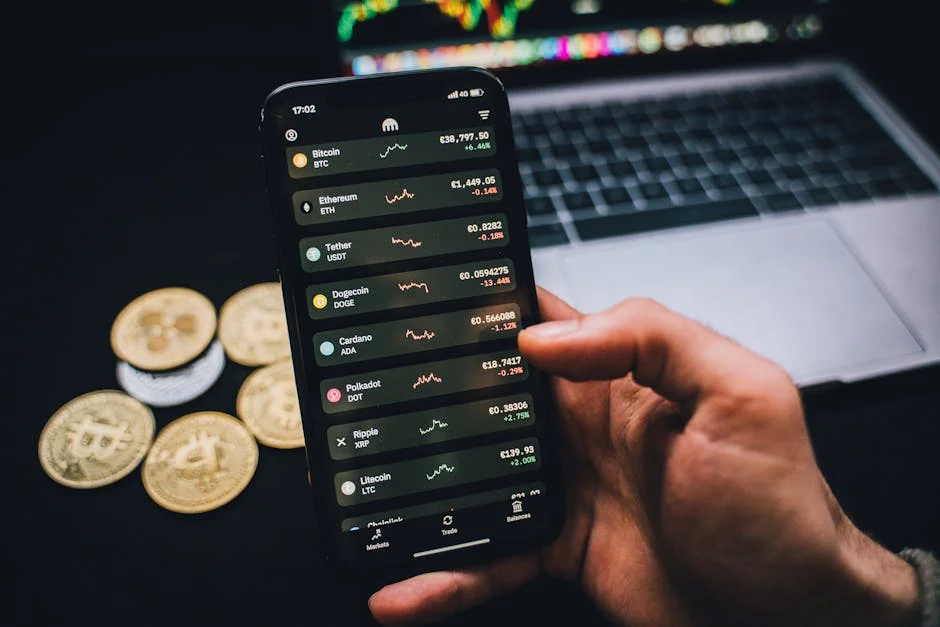
When people ask, “how do i invest in cryptocurrency,” they often mean very different things. Some want to buy and hold Bitcoin or Ethereum for years, hoping adoption grows and the price rises. Others want to trade frequently, aiming to profit from short-term volatility. Another group wants exposure without directly holding coins, using products like ETFs (where available), trusts, or equities tied to the crypto ecosystem. Each approach carries different risks, costs, and expectations, and mixing them up can lead to bad decisions, like using rent money for a high-risk trade or storing long-term holdings on an exchange meant for quick buying and selling. A useful first step is to define your time horizon, your risk tolerance, and your goal: long-term wealth building, diversification, learning, or speculative trading. Crypto can be a legitimate part of a diversified portfolio, but it can also be a fast track to losses if you treat it like a lottery ticket. The same asset class that can rise 20% in a week can also drop 30% in a day, and those swings are emotionally and financially challenging. Understanding what you mean by “invest” helps you choose the right tools and prevents mismatched expectations.
Table of Contents
- My Personal Experience
- Understanding the question: how do i invest in cryptocurrency and what “investing” really means
- Setting goals, risk limits, and a realistic budget before buying any crypto
- Choosing what to buy: Bitcoin, Ethereum, stablecoins, and altcoins
- Where to buy: exchanges, brokers, and payment apps (and how to compare them)
- Account setup and safety basics: passwords, 2FA, and avoiding common scams
- How to place your first buy: market orders, limit orders, and dollar-cost averaging
- Storage decisions: leaving crypto on an exchange vs using a wallet
- Expert Insight
- Understanding fees, spreads, taxes, and recordkeeping
- Research and due diligence: evaluating a crypto project beyond hype
- Advanced ways to invest: staking, lending, DeFi, and crypto funds (with risk context)
- Building a long-term strategy: diversification, rebalancing, and emotional discipline
- Common mistakes to avoid when investing in crypto for the first time
- Putting it all together: a simple step-by-step plan you can follow
- Watch the demonstration video
- Frequently Asked Questions
- Trusted External Sources
My Personal Experience
When I first asked myself how to invest in cryptocurrency, I started small because I didn’t trust my own hype. I picked a well-known exchange, verified my identity, and linked my bank account, then bought a tiny amount of Bitcoin and Ethereum just to learn how orders and fees worked. The first time the price dipped, I realized I didn’t actually have a plan, so I set a simple rule: only invest money I wouldn’t need for at least a few years and buy on a schedule instead of trying to time the market. I also moved most of what I bought into a hardware wallet after reading about exchange hacks, which made me feel a lot more in control. It’s still volatile, but treating it like a long-term, high-risk slice of my portfolio helped me stop making impulsive decisions. If you’re looking for how do i invest in cryptocurrency, this is your best choice.
Understanding the question: how do i invest in cryptocurrency and what “investing” really means
When people ask, “how do i invest in cryptocurrency,” they often mean very different things. Some want to buy and hold Bitcoin or Ethereum for years, hoping adoption grows and the price rises. Others want to trade frequently, aiming to profit from short-term volatility. Another group wants exposure without directly holding coins, using products like ETFs (where available), trusts, or equities tied to the crypto ecosystem. Each approach carries different risks, costs, and expectations, and mixing them up can lead to bad decisions, like using rent money for a high-risk trade or storing long-term holdings on an exchange meant for quick buying and selling. A useful first step is to define your time horizon, your risk tolerance, and your goal: long-term wealth building, diversification, learning, or speculative trading. Crypto can be a legitimate part of a diversified portfolio, but it can also be a fast track to losses if you treat it like a lottery ticket. The same asset class that can rise 20% in a week can also drop 30% in a day, and those swings are emotionally and financially challenging. Understanding what you mean by “invest” helps you choose the right tools and prevents mismatched expectations.
Crypto investing also differs from traditional investing because the market runs 24/7, pricing is global, and the underlying technology introduces new categories of risk. You’re not only evaluating a company’s earnings or a bond’s yield; you’re evaluating networks, token economics, security models, governance, and adoption. Even if you never read a whitepaper, you should know the basics: the difference between a blockchain and an app built on top of it, why token supply matters, what “market cap” represents, and how liquidity affects your ability to buy or sell near the current price. You should also understand that “ownership” can mean holding an asset in your own wallet (self-custody) or holding an IOU on an exchange account. Both can be valid, but they have different threat models. If you’re still at the “how do i invest in cryptocurrency” stage, treat the first days as building a foundation: define the objective, learn the major categories (Bitcoin, smart-contract platforms, stablecoins, DeFi tokens, memecoins), and decide what level of complexity you can realistically manage without making security mistakes. The goal is not to know everything; it’s to know enough to avoid predictable errors and to create a plan you can follow consistently.
Setting goals, risk limits, and a realistic budget before buying any crypto
Before placing your first order, it helps to set constraints that protect you from the most common mistake: overexposure. Crypto’s upside can be exciting, but it should not come at the cost of your emergency fund, high-interest debt payoff, or essential savings. A simple framework is to separate money into tiers: (1) necessities and short-term obligations, (2) emergency fund and near-term goals, (3) long-term investments, and (4) high-risk speculative capital. Crypto generally belongs in tiers 3 and 4, depending on the asset and how you plan to hold it. If you’re unsure how do i invest in cryptocurrency safely, a prudent starting point is a small allocation you can afford to see fluctuate heavily without changing your lifestyle. Many investors choose a percentage approach—like 1% to 5% of investable assets—then adjust after gaining experience. The percentage can be higher for someone with high risk tolerance and long time horizon, but it should be a deliberate choice rather than a reaction to headlines or social media hype.
Risk limits are not only about the amount you invest; they’re also about how you invest. Decide in advance whether you will dollar-cost average (DCA) weekly or monthly, whether you’ll rebalance when crypto grows beyond a threshold, and whether you will ever use leverage (many long-term investors decide “never”). Write down a simple rule set: what you will buy, how often, how you’ll store it, and under what conditions you would sell. Selling rules matter because greed can keep you from taking profits, while fear can push you to sell at the bottom. Also consider liquidity needs: if you might need the funds within a year, the volatility makes crypto a poor match. Finally, define what “success” looks like. Is it learning how wallets work, building a small position in Bitcoin, or diversifying across several networks? Clear goals reduce impulsive decisions. If you keep returning to “how do i invest in cryptocurrency” every time the market moves, it’s often a sign that the plan is too vague. A plan doesn’t remove risk, but it replaces panic with process, which is one of the biggest advantages you can give yourself in a market that never sleeps.
Choosing what to buy: Bitcoin, Ethereum, stablecoins, and altcoins
Asset selection is where many new investors get overwhelmed. The market includes thousands of tokens, but most long-term portfolios start with a small set of established assets. Bitcoin is often viewed as a store-of-value asset with the simplest narrative: digital scarcity, strong brand recognition, and a long operating history. Ethereum is widely used for smart contracts, supporting applications like decentralized exchanges, lending protocols, and tokenized assets. These two are commonly treated as “core” holdings because they have deeper liquidity, broader adoption, and more robust infrastructure compared to smaller projects. If you’re asking how do i invest in cryptocurrency without drowning in complexity, starting with one or two well-known assets can help you learn the mechanics—exchanges, order types, wallet transfers, and security—before adding more exotic positions.
Stablecoins are another category, designed to track a fiat currency like the US dollar. They can be useful as a parking place between trades or as a tool for moving value quickly, but they are not risk-free. Stablecoins can have issuer risk, reserve risk, regulatory risk, and de-pegging events. For many investors, stablecoins are more of a utility than an investment, unless used in yield strategies that introduce additional risks. Altcoins range from serious infrastructure projects to highly speculative tokens driven mostly by attention. Evaluating them requires looking at token supply schedules, use cases, developer activity, governance, and whether the token is actually needed for the product. Be cautious with narratives that sound too good to be true, such as guaranteed yields or “the next Bitcoin.” A sensible approach is to keep the majority of your crypto allocation in assets with long track records and to size smaller bets modestly. The question “how do i invest in cryptocurrency” often becomes easier when you limit your menu: choose a core asset, decide whether you want a secondary asset for diversification, and only then consider a small satellite allocation for higher-risk ideas you’ve researched thoroughly.
Where to buy: exchanges, brokers, and payment apps (and how to compare them)
Most people buy crypto through centralized exchanges, brokers, or payment apps that offer crypto trading. Centralized exchanges typically provide more features: limit orders, advanced charting, lower fees at higher volumes, and a wider selection of assets. Brokers and payment apps can be simpler, but sometimes charge higher spreads or make it harder to transfer assets out. When deciding where to buy, compare total costs rather than just advertised fees. Costs can include trading fees, bid-ask spreads, deposit/withdrawal fees, and network fees when you move coins to a wallet. Reliability matters too: an exchange with frequent outages during volatile periods can prevent you from executing your plan. If you’re learning how do i invest in cryptocurrency, convenience is important, but so is transparency. Look for platforms that clearly show fees, provide order confirmations, and have a straightforward interface for withdrawals.
Security and compliance should be part of your comparison. Reputable platforms typically require identity verification (KYC), offer two-factor authentication (2FA), and provide account activity logs. Some platforms also offer features like address whitelisting (only allowing withdrawals to pre-approved addresses) and hardware security keys for stronger protection than SMS codes. Consider the platform’s custody model, insurance disclosures, proof-of-reserves reporting (where applicable), and history of hacks or regulatory actions. Also evaluate whether the platform supports the assets and networks you plan to use; for example, withdrawing Ethereum-based tokens requires choosing the correct network, and mistakes can be costly. For beginners, it can be wise to start with one well-known platform, learn the process end-to-end, and avoid scattering funds across many apps. Over time, some investors diversify platform risk by using more than one exchange, but that adds operational complexity. The simplest answer to “how do i invest in cryptocurrency” is “buy on a reputable platform with clear fees and strong security, then move long-term holdings to a wallet,” but the best platform depends on your country, banking options, and comfort with self-custody.
Account setup and safety basics: passwords, 2FA, and avoiding common scams
Creating an account is easy; securing it properly is the work that prevents disasters. Use a unique, long password generated by a reputable password manager, and never reuse passwords across services. Enable two-factor authentication using an authenticator app or, even better, a hardware security key. Avoid SMS-based 2FA when possible, because SIM swap attacks can compromise phone numbers. Many losses happen not because the crypto protocol failed, but because the account was taken over through phishing, weak passwords, or malware. If you’re still figuring out how do i invest in cryptocurrency, treat security as part of the investment process rather than an optional add-on. It’s also wise to secure your email account with strong 2FA, because password resets often go through email. Review account recovery options carefully; a recovery method that’s too easy can become an attacker’s shortcut.
Scams in crypto are persistent and often sophisticated. Be skeptical of unsolicited messages, “support” staff who contact you first, and links that ask you to connect a wallet or enter seed phrases. No legitimate exchange or wallet provider will ever ask for your seed phrase. Watch for fake apps and browser extensions that mimic real products, and verify URLs before logging in. Consider using a dedicated browser profile for financial activities, keeping it free of unnecessary extensions. If you use social media, assume impersonation is common: scammers clone accounts, buy ads, and create fake giveaways that promise to “double” your funds. A simple rule is that any offer requiring you to send crypto first is almost certainly a scam. Also be cautious with “too good” yield opportunities, especially those that require you to deposit funds into unknown platforms. Learning how do i invest in cryptocurrency includes learning how to say no. The best defense is slowing down: verify, cross-check, and never make urgent decisions based on fear of missing out or threats that your account will be closed. Patience is a security tool as much as it is an investing virtue.
How to place your first buy: market orders, limit orders, and dollar-cost averaging
Once your account is funded, you’ll choose an order type. A market order buys immediately at the best available price, which is convenient but can be costly in fast-moving markets due to slippage. A limit order lets you specify the maximum price you’ll pay (or minimum price you’ll sell), which gives you more control but may not fill if the market doesn’t reach your price. For beginners, limit orders can reduce surprises, especially on less liquid assets where the bid-ask spread is wider. If you’re asking how do i invest in cryptocurrency with less stress, consider using limit orders near the current price, or buying in smaller chunks rather than one big purchase. Smaller purchases reduce the chance of buying at a temporary peak and also help you learn the mechanics without risking too much on a single click.
Dollar-cost averaging is a popular strategy for long-term investors: you invest a fixed amount on a schedule (weekly, biweekly, or monthly) regardless of price. DCA can reduce the emotional burden of timing the market and tends to smooth your average entry price over time. It’s not guaranteed to outperform lump-sum investing in every scenario, but it can be easier to stick with, which matters more than theoretical optimization for many people. If you use DCA, choose a schedule you can maintain and review it periodically rather than reacting to every price move. Some platforms offer recurring buys, which can automate discipline, but you should still monitor fees and spreads. Also consider whether you want to rebalance: if crypto grows faster than the rest of your portfolio, you might sell a portion to maintain your target allocation; if it falls, you might buy more to return to the target. The question “how do i invest in cryptocurrency” often becomes “how do I keep investing when the market is scary,” and DCA combined with clear allocation rules is one of the most practical answers for long-term participation without constant decision fatigue.
Storage decisions: leaving crypto on an exchange vs using a wallet
After buying, you must decide where to store your crypto. Leaving assets on an exchange is convenient for active traders because it allows quick selling and swapping. However, it exposes you to platform risk: hacks, insolvency, withdrawal freezes, and account lockouts. Exchanges can be safe enough for small amounts or short-term holdings, but long-term investors often prefer self-custody, where you control the private keys. If you’re learning how do i invest in cryptocurrency responsibly, it helps to separate “spending/trading funds” from “long-term savings.” You might keep a small amount on an exchange for convenience and move the rest to a wallet you control. This approach reduces the damage if an exchange account is compromised or if the platform experiences operational issues during a market crisis.
Expert Insight
Start by choosing a reputable, regulated exchange in your country, then secure your account with a unique password and two-factor authentication. Make your first purchase small, use a limit order to control your entry price, and keep a simple plan (e.g., invest a fixed amount weekly) to avoid emotional, all-in decisions. If you’re looking for how do i invest in cryptocurrency, this is your best choice.
Protect what you buy: move long-term holdings to a hardware wallet, back up your recovery phrase offline, and never share it. Before adding any new coin, verify the project’s purpose, token supply, and liquidity, and set risk rules—such as limiting any single asset to a small percentage of your portfolio and using stop-loss or take-profit targets where appropriate. If you’re looking for how do i invest in cryptocurrency, this is your best choice.
Wallets come in several forms: software wallets (mobile or desktop apps), browser extension wallets, and hardware wallets (dedicated devices that store keys offline). Hardware wallets are often considered the gold standard for long-term storage because they reduce exposure to malware and phishing, but they require careful setup and backup handling. Software wallets are easier to use but require stronger device security and good habits. No matter the wallet type, your recovery phrase (seed phrase) is the master key. It should be written down offline, stored securely, and never typed into websites or shared with anyone. Consider making multiple backups in separate secure locations to protect against fire, loss, or theft. Also practice restoring the wallet with a small amount first, so you know your backup works. Storage is not just a technical detail; it’s part of the investment decision. Many people discover that the real answer to “how do i invest in cryptocurrency” includes “how do I avoid losing it,” and custody choices are where that battle is won or lost.
Understanding fees, spreads, taxes, and recordkeeping
Crypto costs can be subtle. Trading fees may be displayed clearly, but the spread—the difference between the buy and sell price—can be a significant hidden cost, especially on simple “buy now” interfaces. Withdrawals can incur network fees, which vary by blockchain congestion and the asset’s design. Some platforms also charge additional withdrawal fees on top of network costs. If you’re making frequent small transactions, fees can quietly erode returns. A practical way to manage this is to consolidate purchases and limit unnecessary transfers while still maintaining security. Compare the all-in cost of buying $100 worth of an asset across platforms: the difference can be meaningful over time. If you’re new and asking how do i invest in cryptocurrency without getting nickeled-and-dimed, prioritize platforms with transparent pricing, and learn to use order books or advanced trade views if they reduce costs.
| Method | How it works | Best for |
|---|---|---|
| Buy crypto on an exchange | Create an account, fund it (bank transfer/card), purchase coins/tokens, then store on the exchange or move to a wallet. | Beginners who want direct ownership and a wide selection of cryptocurrencies. |
| Use a crypto broker or investing app | Buy and sell through a simplified interface; sometimes you don’t control on-chain withdrawals or advanced order types. | Hands-off investors prioritizing ease of use over maximum control and features. |
| Invest via crypto funds/ETFs (where available) | Gain price exposure through a regulated product in a brokerage account; typically no need to manage wallets or private keys. | Traditional investors who want simpler tax/reporting and custody handled for them. |
Taxes are another essential piece. In many jurisdictions, selling crypto, swapping one token for another, or spending crypto can be taxable events, even if you never convert back to fiat. That means a simple trade from Bitcoin to Ethereum can trigger capital gains or losses. Keeping records is crucial: dates, amounts, cost basis, fees, and transaction IDs. Many investors use crypto tax software to aggregate exchange trades and wallet transactions, but you still need to verify accuracy, especially when transferring between your own wallets, which can be mislabeled as taxable disposals if the software can’t match them. Also understand that staking rewards, airdrops, and interest-like earnings may be treated as income in some places. Because rules vary by country and can change, consider consulting a qualified tax professional if your activity becomes complex. The investing side is only half the job; the administrative side keeps you compliant and prevents unpleasant surprises later. For anyone serious about the question “how do i invest in cryptocurrency,” learning the fee structure and the tax impact of each action is as important as picking the coin itself.
Research and due diligence: evaluating a crypto project beyond hype
Due diligence in crypto is less about predicting the next viral token and more about reducing avoidable risk. Start with the basics: what problem does the project solve, who uses it today, and why does it need a token? Look at token supply and distribution—how much is held by insiders, how emissions work, and whether there are large unlocks scheduled that could increase selling pressure. Review the project’s documentation, but also look for independent signals: developer activity, audits, bug bounties, and the credibility of the team and investors. Adoption metrics matter: transaction volume, active addresses (with caution, since they can be gamed), and whether real businesses or applications rely on the network. If you’re asking how do i invest in cryptocurrency in a way that isn’t purely speculative, focus on projects with clear utility and resilient communities rather than those driven solely by influencer marketing.
Security and governance are often overlooked by newcomers. Smart contract platforms and DeFi protocols can have vulnerabilities that lead to hacks, even if the underlying blockchain is secure. Look for multiple audits from reputable firms, but remember audits are not guarantees. Consider whether the protocol has had incidents and how it responded. Governance design matters too: if a small group can change rules, pause contracts, or mint new tokens easily, that may be a risk depending on your investment thesis. Also evaluate liquidity: thinly traded tokens can be difficult to exit without moving the price. Finally, be honest about your circle of competence. If a project’s value depends on complex mechanisms you don’t understand, you may be taking more risk than you realize. It’s okay to pass. Many successful investors keep it simple: a core allocation to established assets and a small “research budget” for experiments. The practical version of “how do i invest in cryptocurrency” is not “buy everything,” but “buy what you can explain, store it safely, and size it according to uncertainty.”
Advanced ways to invest: staking, lending, DeFi, and crypto funds (with risk context)
After buying and holding, some investors look for ways to earn yield. Staking involves helping secure certain blockchains and earning rewards, typically paid in the network’s token. While staking can increase your token count, it introduces new risks: lock-up periods, validator risk, protocol changes, slashing penalties, and tax complexity. Centralized platforms may offer “staking” or “earn” programs that are actually lending or rehypothecation, adding counterparty risk. If you’re exploring how do i invest in cryptocurrency beyond simple holding, treat yield as compensation for taking additional risk, not as free money. Understand where the yield comes from, who pays it, and what happens in a stress scenario. If the explanation is vague, the risk is probably high.
DeFi lending and liquidity provision can offer higher returns, but they come with smart contract risk, liquidation risk, and sometimes impermanent loss. Using DeFi also requires careful wallet management and awareness of phishing, malicious approvals, and fake tokens. Crypto funds, trusts, and ETFs (where available) can provide exposure without self-custody, which may suit investors who prefer traditional brokerage accounts. However, they may have management fees, tracking error, limited trading windows, and sometimes restrictions on redemptions. For some people, these products are the safest practical answer to “how do i invest in cryptocurrency” because they reduce operational risk. For others, the lack of direct ownership is a downside. The key is to match the method to your capabilities. If managing private keys feels overwhelming, a regulated product might be better than self-custody done poorly. If you want full control and can handle security, holding directly might align better. Advanced strategies can be useful, but they should come after you’ve mastered the basics: buying, storing, and tracking your holdings with confidence.
Building a long-term strategy: diversification, rebalancing, and emotional discipline
A long-term strategy helps you survive crypto’s volatility. Diversification can mean holding more than one crypto asset, but it can also mean limiting crypto to a portion of a broader portfolio that includes stocks, bonds, and cash. Within crypto, diversification has trade-offs: adding more tokens can reduce dependence on one network, but it can also increase exposure to low-quality projects. Many investors prefer a barbell approach: a large portion in established assets and a small portion in higher-risk bets. Rebalancing is another tool. If your crypto allocation grows beyond your target, trimming can lock in gains and reduce risk. If it falls below the target, adding modestly can maintain your plan. This systematic behavior counters the instinct to buy high and sell low. If you’re still asking how do i invest in cryptocurrency without letting emotions run the show, rules-based rebalancing is one of the most effective habits you can develop.
Emotional discipline is not just mindset; it’s structure. Avoid checking prices constantly if it pushes you to make impulsive trades. Set a review cadence—monthly or quarterly for long-term investors—and focus on whether the thesis has changed rather than reacting to every candle on a chart. Be cautious about leverage and margin, which can force liquidation during normal volatility. Also consider the role of taking profits. Some investors sell a portion after a large run-up to recover their initial investment, letting the remainder ride. Others hold through cycles, accepting drawdowns as the cost of potential long-term gains. There’s no universal rule, but there should be a rule you can live with. Finally, maintain good operational habits: update security settings, keep backups, and document your holdings for estate planning. Crypto ownership can be harder for heirs to access without clear instructions. A mature approach to “how do i invest in cryptocurrency” includes planning for both market risk and life risk, so your investment doesn’t depend on perfect memory or constant attention.
Common mistakes to avoid when investing in crypto for the first time
Many first-time investors lose money not because the idea was wrong, but because execution was sloppy. One common mistake is chasing pumps: buying after a token has already surged because social media says it’s “going to the moon.” Another is ignoring liquidity and market depth, which can make it hard to exit without taking a big hit on price. Overtrading is also a frequent problem. Crypto’s 24/7 nature encourages constant action, but activity is not the same as progress. Fees, spreads, and taxes add up, and emotional decisions compound losses. If you’re learning how do i invest in cryptocurrency, it’s often better to make fewer, higher-conviction moves and give them time, rather than trying to outsmart the market every day. Also beware of concentration risk: putting too much into a single small-cap token can be devastating if the project fails or insiders sell.
Security mistakes can be even more costly than bad trades. Storing large amounts on an exchange without strong 2FA, clicking phishing links, downloading fake wallet apps, or sharing seed phrases are all avoidable errors that still happen daily. Another mistake is sending assets on the wrong network or to the wrong address, which can be irreversible. Always test with a small transfer before moving large amounts, and double-check the network selection on withdrawals. People also underestimate the importance of documentation: without clear records, taxes become chaotic, and you may not even know your true cost basis. Finally, don’t confuse community enthusiasm with guaranteed returns. A strong community can help a project grow, but it can also become an echo chamber. If criticism is dismissed as “FUD” automatically, that’s a warning sign. The practical answer to “how do i invest in cryptocurrency” is to reduce unforced errors: size positions sensibly, keep your process simple, secure your accounts and wallets, and avoid making decisions under time pressure.
Putting it all together: a simple step-by-step plan you can follow
A straightforward plan helps turn curiosity into action without taking reckless risks. Start by choosing a reputable platform available in your region, completing identity verification, and securing the account with a password manager and strong 2FA. Decide on a starting budget that won’t affect your emergency fund or essential goals. Pick one or two assets with strong liquidity and long track records, and consider using dollar-cost averaging to reduce timing stress. Place your first order using a limit order near the current price if you want more control, or a small market order if you value simplicity and the asset is highly liquid. After the purchase, decide what portion is for long-term holding and what portion (if any) is for trading. For long-term holdings, set up a wallet, back up the recovery phrase offline, and send a small test transaction before moving larger amounts. Keep a written record of what you bought, when, and at what price, including fees. This routine answers “how do i invest in cryptocurrency” in a way that is repeatable rather than reactive.
As you gain experience, refine rather than reinvent. Review your allocation periodically, rebalance if crypto grows beyond your comfort level, and keep learning about security and market structure. If you explore staking or DeFi, do it with a small amount first and treat the extra yield as payment for extra risk. Stay skeptical of guaranteed returns and urgent calls to action. Most importantly, keep the process sustainable: investing should support your life, not consume it. Crypto can be a meaningful innovation and a legitimate investment category, but it rewards patience and punishes carelessness. If you’ve been repeatedly asking “how do i invest in cryptocurrency,” the most valuable shift is moving from searching for perfect timing to building a disciplined system: controlled position sizing, secure custody, low friction costs, and clear rules for buying and selling. With that structure in place, you can participate in the market’s potential while minimizing the mistakes that derail new investors.
Watch the demonstration video
In this video, you’ll learn the basics of investing in cryptocurrency—from choosing a reputable exchange and setting up a secure wallet to researching coins, managing risk, and placing your first buy order. It also covers common mistakes to avoid, simple strategies for beginners, and tips for protecting your funds with smart security practices. If you’re looking for how do i invest in cryptocurrency, this is your best choice.
Summary
In summary, “how do i invest in cryptocurrency” is a crucial topic that deserves thoughtful consideration. We hope this article has provided you with a comprehensive understanding to help you make better decisions.
Frequently Asked Questions
What do I need to start investing in cryptocurrency?
Choose a reputable exchange or broker, create an account, complete identity verification (if required), set up a secure wallet (optional but recommended), and fund your account via bank transfer, card, or other supported methods. If you’re looking for how do i invest in cryptocurrency, this is your best choice.
Should I use an exchange wallet or a personal crypto wallet?
Exchange wallets are convenient for trading, but a personal wallet gives you more control. For long-term holdings, consider withdrawing to a hardware or reputable software wallet and securely storing your recovery phrase offline. If you’re looking for how do i invest in cryptocurrency, this is your best choice.
How much money should I invest in crypto?
Invest only what you can afford to lose and keep crypto as a portion of a diversified portfolio. Many investors start small and use dollar-cost averaging (buying fixed amounts regularly) to reduce timing risk. If you’re looking for how do i invest in cryptocurrency, this is your best choice.
How do I choose which cryptocurrencies to buy?
Before you decide **how do i invest in cryptocurrency**, take time to research each project’s real-world use case, current adoption, token supply and issuance schedule, security history, the strength of its team and community, and how easily it can be bought or sold (market liquidity). Many beginners feel more comfortable starting with larger, well-established coins and then diversifying gradually and cautiously as they learn.
What are the main risks of investing in cryptocurrency?
Key risks include high price volatility, scams and fraud, exchange or wallet hacks, regulatory changes, liquidity issues, and irreversible transactions. Use strong security practices and avoid promises of guaranteed returns. If you’re looking for how do i invest in cryptocurrency, this is your best choice.
What fees and taxes should I expect when investing in crypto?
Common fees include trading fees, spreads, deposit/withdrawal fees, and network (gas) fees. Taxes often apply to selling, trading, or spending crypto; keep detailed records and consult local tax guidance or a professional. If you’re looking for how do i invest in cryptocurrency, this is your best choice.
📢 Looking for more info about how do i invest in cryptocurrency? Follow Our Site for updates and tips!

Trusted External Sources
- How to Invest in Cryptocurrency: A Beginner’s Guide | Charles Schwab
Curious **how do i invest in cryptocurrency**? Start by learning the basics—how crypto markets work, what drives prices, and the difference between long-term investing and active trading. Before you buy, weigh the potential rewards against real risks like volatility, security threats, and regulatory changes, and explore common strategies and key factors that can help you make smarter decisions.
- Ways to invest in crypto | Fidelity
If you’re wondering **how do i invest in cryptocurrency**, there are a few common routes to consider: you can **buy crypto outright** through an exchange or app, **invest via crypto ETPs or crypto-related ETFs** using a brokerage account for more traditional market access, or **purchase shares of cryptocurrency-related stocks**—such as companies involved in mining, trading platforms, or blockchain technology.
- Crypto: The basics – FCA
Feb 17, 2026 … Crypto can be thought of as ‘digital representations of value or rights’ that are secured by encryption and typically use some type of ‘distributed ledger … If you’re looking for how do i invest in cryptocurrency, this is your best choice.
- Is crypto a good investment—or a financial roller coaster?
Wondering **how do i invest in cryptocurrency**—and whether it’s actually safe? Crypto isn’t inherently good or bad, but it *is* a high-volatility asset, which means prices can swing quickly and risk is part of the deal. The key is understanding those risks, doing your research, and investing in a way that fits your goals and comfort level.
- Distrust or speculation? the socioeconomic drivers of U.S. …
On July 1, 2026, we took a closer look at how cryptocurrency investing has evolved—tracking trends over time and comparing patterns across different coins and tokens. If you’ve been wondering, “how do i invest in cryptocurrency,” this analysis breaks down what investors are doing, how their strategies shift, and what those changes can reveal about the broader market.