Robotics and manufacturing have become inseparable in modern production, not because factories suddenly “love technology,” but because global competition, labor constraints, and customer expectations have converged into a single demand: make more, make better, and make it faster—without sacrificing safety or profitability. The contemporary factory is expected to handle short product life cycles, frequent design changes, and volatile demand. Traditional approaches that rely heavily on manual labor and fixed tooling struggle to keep pace, especially when product variants multiply and quality tolerances tighten. Industrial robots, collaborative robots, and automated material-handling systems are increasingly chosen not as a futuristic add-on, but as a practical response to recurring operational pain: inconsistent cycle times, repetitive strain injuries, high scrap rates, and difficulty staffing physically demanding roles. When deployed with clear goals—such as stabilizing throughput, reducing defects, and supporting traceability—automation can turn a fragile process into a resilient one.
Table of Contents
- My Personal Experience
- The New Era of Robotics and Manufacturing: Why Automation Is Reshaping the Factory Floor
- Core Technologies Powering Industrial Robotics on the Shop Floor
- Where Robotics Delivers the Most Value: Common Manufacturing Applications
- Collaborative Robots and Human-Centered Automation in Production
- Quality, Consistency, and Traceability: How Robots Support Defect Reduction
- Productivity and Throughput: Measuring the Real Impact on Output
- Workforce Evolution: Skills, Safety, and Job Design in Automated Plants
- Expert Insight
- Design for Automation: How Product and Process Choices Affect Robot Success
- Integration with Industry 4.0: Data, Connectivity, and Smarter Decisions
- ROI and Cost Considerations: Building a Business Case That Holds Up
- Challenges and Pitfalls: What Can Go Wrong and How to Avoid It
- The Future Outlook: AI, Flexible Automation, and Resilient Supply Chains
- Watch the demonstration video
- Frequently Asked Questions
- Trusted External Sources
My Personal Experience
During my last year working at a small manufacturing plant, we brought in a collaborative robot to handle the repetitive pick-and-place work on our assembly line. I was skeptical at first because I’d seen automation projects stall out, but after a week of training and tweaking the gripper settings, the cobot started running smoothly alongside us. My job shifted from rushing to keep up with the conveyor to monitoring cycle times, clearing occasional jams, and logging small adjustments when parts came in slightly out of spec. What surprised me most was how quickly the team stopped seeing it as a threat and started treating it like another tool—especially when it reduced wrist strain and helped us hit our daily targets without overtime. It didn’t replace anyone on our shift, but it definitely changed the pace and made the work feel more controlled. If you’re looking for robotics and manufacturing, this is your best choice.
The New Era of Robotics and Manufacturing: Why Automation Is Reshaping the Factory Floor
Robotics and manufacturing have become inseparable in modern production, not because factories suddenly “love technology,” but because global competition, labor constraints, and customer expectations have converged into a single demand: make more, make better, and make it faster—without sacrificing safety or profitability. The contemporary factory is expected to handle short product life cycles, frequent design changes, and volatile demand. Traditional approaches that rely heavily on manual labor and fixed tooling struggle to keep pace, especially when product variants multiply and quality tolerances tighten. Industrial robots, collaborative robots, and automated material-handling systems are increasingly chosen not as a futuristic add-on, but as a practical response to recurring operational pain: inconsistent cycle times, repetitive strain injuries, high scrap rates, and difficulty staffing physically demanding roles. When deployed with clear goals—such as stabilizing throughput, reducing defects, and supporting traceability—automation can turn a fragile process into a resilient one.
At the same time, robotics and manufacturing are not just about replacing tasks; they are also about redesigning how work gets done. A robot cell changes the rhythm of a line: it encourages standardization, forces clearer documentation, and often reveals hidden bottlenecks upstream and downstream. The best outcomes happen when automation is treated as a system that includes fixtures, sensors, software, maintenance routines, and human workflows rather than a standalone machine. That system view matters because the factory must still deal with part variation, tooling wear, supply interruptions, and engineering changes. A robot that is technically capable can still underperform if it receives inconsistent parts or if operators lack the authority and training to intervene. When leaders align automation with business objectives—capacity expansion, lead-time reduction, safety improvements, and quality consistency—robotics becomes a lever that strengthens the entire production model instead of a shiny project that never scales.
Core Technologies Powering Industrial Robotics on the Shop Floor
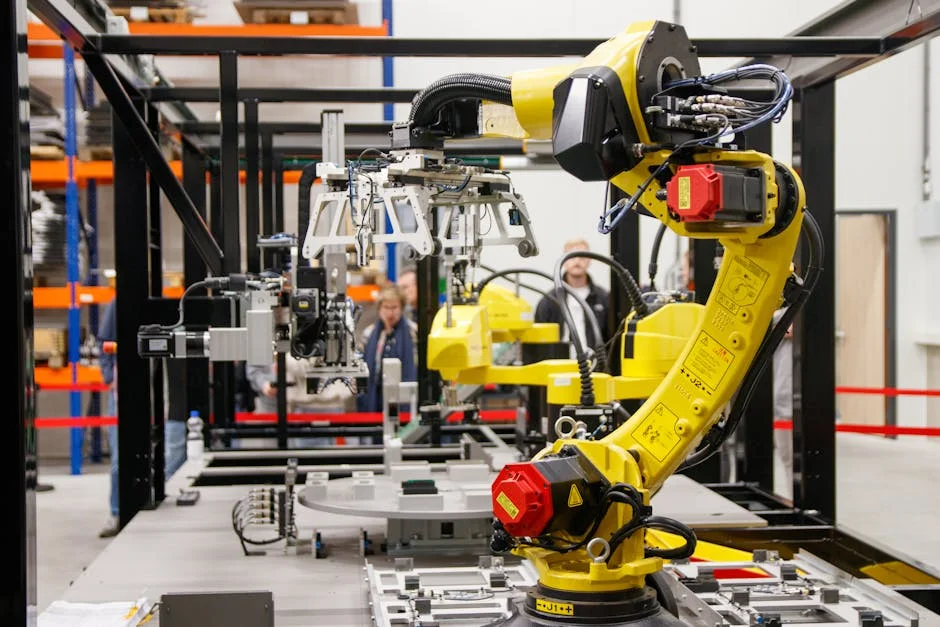
The practical capabilities of robotics and manufacturing rest on a stack of technologies that have matured significantly over the last decade. At the center are robot manipulators—articulated arms, SCARA robots, delta robots, and gantry systems—each optimized for certain envelopes, speeds, and payloads. Around these robots sits a layer of end-of-arm tooling (EOAT): grippers, vacuum cups, magnetic pick heads, welding torches, dispensing valves, and adaptive fingers that can handle variation. Sensors close the loop. Vision systems identify parts, verify orientation, read codes, and perform in-line inspection; force-torque sensors help robots “feel” contact for assembly and finishing; laser scanners and safety-rated cameras allow safe operation near people. Motion controllers and servo drives provide precise acceleration profiles, while modern programming environments offer offline simulation, digital commissioning, and faster changeovers via parameterized routines. The result is a broader range of feasible automation targets, from delicate electronics handling to heavy palletizing.
Software is equally central to robotics and manufacturing performance. Manufacturing execution systems (MES) increasingly integrate with robot controllers so production data, tool life, alarms, and quality checks are captured automatically rather than written on paper. Industrial communication protocols and edge computing make it easier to connect robots to conveyors, presses, CNC machines, and inspection stations. In many plants, data historians and analytics platforms track downtime events and micro-stoppages at the cell level, enabling maintenance teams to address root causes instead of reacting to major failures. Simulation tools help engineers test layouts, reach, cycle time, and collision risks before equipment arrives. This reduces commissioning time and lowers the risk of costly rework. Meanwhile, safety technology has advanced beyond simple fences; safe speed monitoring, safe torque off, and zoned safety scanning allow more flexible layouts, especially with collaborative robots. Together, these technologies turn robotics from a single-purpose machine into a configurable production asset that can be redeployed as product mixes change.
Where Robotics Delivers the Most Value: Common Manufacturing Applications
Robotics and manufacturing intersect in many tasks, but value tends to concentrate in processes that are repetitive, hazardous, precision-dependent, or constrained by throughput. Material handling is a primary example: picking, placing, sorting, kitting, and palletizing can be automated to stabilize cycle time and reduce ergonomic risk. Machine tending is another high-impact use case. When robots load and unload CNC machines, presses, injection molding machines, or furnaces, the plant can extend spindle utilization and reduce idle time between cycles. Welding—especially in automotive and metal fabrication—remains a flagship application because robots deliver consistent torch angles, travel speed, and heat input, which can improve weld quality and reduce rework. Painting, coating, and dispensing also benefit from repeatability and controlled deposition, while keeping workers away from fumes and overspray.
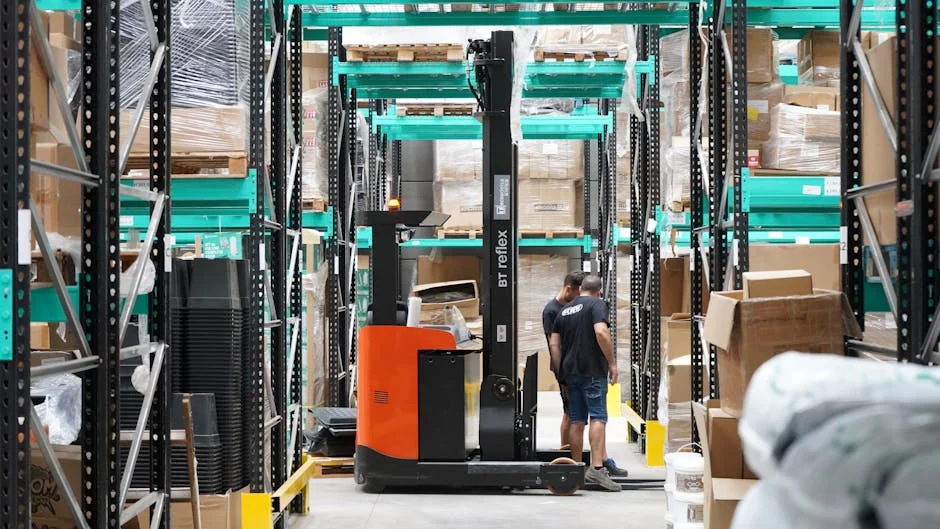
Assembly and quality inspection are growing frontiers for robotics and manufacturing, particularly as sensors and compliant control improve. In assembly, robots can insert components, apply torque, press-fit parts, and perform adhesive bonding with controlled force profiles. In inspection, vision-guided robots can handle parts while cameras and lighting capture images for dimensional checks, surface defect detection, and label verification. Even when a task cannot be fully automated, partial automation often pays off: a robot can present parts to a worker in a consistent orientation, or handle the heavy lifting while a person completes the fine manipulation. This division of labor is especially useful in high-mix environments, where full automation may be hard to justify. Many factories also automate intralogistics with conveyors, automated guided vehicles (AGVs), and autonomous mobile robots (AMRs) that move bins and pallets between workstations. When these systems are coordinated, the factory reduces waiting time, prevents line starvation, and improves overall equipment effectiveness without requiring a complete rebuild of the facility.
Collaborative Robots and Human-Centered Automation in Production
Collaborative robots have changed the conversation around robotics and manufacturing by making automation accessible where traditional industrial robots were impractical. Cobots are designed to work near people with safety-rated features such as force limiting, speed monitoring, and simplified programming interfaces. This makes them attractive for small and mid-sized manufacturers that need flexibility and cannot dedicate engineering teams to complex robot code. Typical collaborative applications include screwdriving, small-part assembly, test and measurement, packaging, and light machine tending. The strength of a collaborative approach is not raw speed; it is adaptability. A cobot can be redeployed to a different workstation, taught new paths quickly, and integrated with relatively modest guarding, depending on the risk assessment. For operations facing frequent changeovers, that agility can matter more than shaving a second off a cycle time.
Human-centered automation is also reshaping robotics and manufacturing strategy. Rather than treating people as “variable cost” to be minimized, many plants aim to remove the most injury-prone tasks and elevate workers into roles that require judgment: quality checks, line balancing, troubleshooting, and continuous improvement. A well-designed cobot station can reduce fatigue by taking over repetitive motions while workers handle exceptions. This can improve retention and reduce training churn, which are real costs in production. Human factors engineering becomes essential: the height of work surfaces, reach zones, tool presentation, and user interfaces determine whether the station feels like an upgrade or a burden. Successful deployments include clear standard work, visual management, and escalation paths so operators can stop the process safely when something changes. Done well, collaborative automation increases throughput while preserving craftsmanship and accountability, creating a production environment where technology supports the workforce instead of competing with it.
Quality, Consistency, and Traceability: How Robots Support Defect Reduction
One of the most practical benefits of robotics and manufacturing integration is improved consistency. Humans are highly adaptable, but fatigue, distraction, and variation in technique can lead to inconsistent results in tasks like welding, adhesive application, soldering, or precision placement. Robots execute programmed motions with repeatable trajectories and timing, reducing variation in process parameters. That consistency can translate into fewer defects, tighter tolerances, and more predictable downstream performance. For example, in dispensing applications, consistent bead width and placement reduce leaks and warranty claims. In welding, controlled travel speed and torch angle improve penetration and reduce spatter. In assembly, consistent insertion force can lower the risk of cracked housings or damaged connectors. When quality is stable, the plant spends less time sorting, reworking, and investigating escape defects.
Robotics and manufacturing also become a foundation for traceability when integrated with sensors and data systems. A robot cell can automatically record torque values, cycle times, vision inspection results, and part IDs scanned from barcodes or data matrix codes. This creates a digital record that helps with compliance, customer audits, and root-cause analysis. If a defect is discovered in the field, traceability allows the manufacturer to narrow the scope of investigation and respond with targeted actions rather than broad recalls. In regulated sectors such as medical devices, aerospace, and automotive, the ability to document process conditions is increasingly valuable. Even outside regulated environments, data-driven quality helps continuous improvement teams identify drift—like a gripper losing alignment, a nozzle clogging, or a fixture wearing—before defects spike. The key is to design the data capture intentionally: define what to measure, how to store it, and who reviews it. Without that discipline, factories risk collecting “noise” rather than actionable quality intelligence.
Productivity and Throughput: Measuring the Real Impact on Output
Robotics and manufacturing investments are often justified by productivity gains, but the real impact depends on how throughput is measured and where constraints actually lie. A robot can be extremely fast in isolation, yet the line may not produce more if upstream processes cannot supply parts or if downstream stations become bottlenecks. Effective automation planning starts with value-stream thinking: identify the constraint, calculate takt time, and determine whether a robot cell will increase flow or merely shift the problem. In many cases, the biggest win comes from reducing downtime and variability rather than increasing peak speed. Robots can operate with stable cycle times, enabling better scheduling and less buffer inventory. They can also run extended shifts with minimal performance degradation, which is particularly valuable for machine tending, packaging, and palletizing where the work is repetitive and demand is steady.
To understand robotics and manufacturing productivity, plants track metrics like overall equipment effectiveness (OEE), mean time between failures (MTBF), mean time to repair (MTTR), scrap rate, and changeover time. Automation can improve OEE by reducing small stops caused by manual handling errors, but it can also introduce new failure modes if maintenance and spare parts planning are neglected. Successful factories design for uptime: quick-change gripper fingers, standardized sensors, accessible cable routing, and robust error recovery routines. They also invest in operator training so minor issues—like a misfeed or a part that shifts in a tray—can be corrected without waiting for an engineer. Over time, the highest-performing operations treat robot cells as production equipment that must be maintained and improved continuously, not as capital projects that “finish” at commissioning. When that mindset is in place, automation becomes a reliable engine for throughput rather than a fragile showpiece.
Workforce Evolution: Skills, Safety, and Job Design in Automated Plants
Robotics and manufacturing change the workforce, but not in a simplistic “robots replace people” way. The more accurate picture is job redesign. As robots take on repetitive handling, welding, or packaging, human roles often shift toward setup, quality verification, exception handling, and improvement work. This requires new skills: basic robot operation, understanding safety zones, interpreting alarms, and performing routine checks like verifying air pressure, inspecting grippers, or cleaning sensors. Maintenance teams need deeper capabilities in electrical troubleshooting, servo systems, and network communications. Engineers increasingly need skills in simulation, vision integration, and data analysis. The plants that benefit most from automation are those that treat training as a core part of the deployment plan, not as an afterthought. When operators understand why the robot behaves a certain way and how to respond to predictable faults, uptime improves and frustration decreases.
| Aspect | Traditional Manufacturing | Robotics-Enabled Manufacturing |
|---|---|---|
| Throughput & Consistency | Output can vary by shift and operator; consistency depends on training and supervision. | High repeatability and stable cycle times; consistent quality across runs. |
| Flexibility & Changeovers | Changeovers often require manual retooling and retraining, increasing downtime. | Reprogrammable workflows and quick tooling swaps enable faster product and line changes. |
| Safety & Workforce Impact | Higher exposure to repetitive strain and hazardous tasks; labor-intensive operations. | Automates dangerous/repetitive work; shifts roles toward supervision, maintenance, and process optimization. |
Expert Insight
Start with a single, high-impact process—like palletizing, machine tending, or repetitive inspection—and document the current cycle time, defect rate, and downtime before deploying robotics. Use these baseline metrics to set clear success targets and validate improvements within the first few weeks. If you’re looking for robotics and manufacturing, this is your best choice.
Design the cell for reliability: standardize tooling and part presentation, add simple error-proofing (sensors, guides, and poka-yoke fixtures), and schedule preventive maintenance based on run hours. Keep spare grippers and wear parts on hand to minimize stoppages and protect throughput. If you’re looking for robotics and manufacturing, this is your best choice.
Safety remains a central concern in robotics and manufacturing, and modern standards emphasize risk assessment and layered controls. Traditional robot cells often rely on hard guarding and interlocked gates, but many facilities now use safety scanners, light curtains, and safe motion functions to create flexible zones. Collaborative robots reduce some hazards but do not eliminate the need for a thorough risk assessment; payload, tool shape, part edges, and pinch points all matter. Beyond physical safety, job design affects psychological safety and engagement. If automation is introduced without involving frontline teams, it can create anxiety and resistance. Conversely, when operators contribute to station layout, teach points, and standard work, they often become champions of the system. A sustainable approach includes clear communication about goals—quality, safety, capacity—and a pathway for workers to grow into higher-skill roles. Over time, automation can strengthen manufacturing careers by creating demand for technicians and team leads who can bridge mechanical processes with digital tools.
Design for Automation: How Product and Process Choices Affect Robot Success
Robotics and manufacturing outcomes are heavily influenced by upstream design decisions. Parts that are easy for humans to manipulate can be difficult for robots if they are flexible, reflective, tangled, or inconsistent in shape. Design for automation (DFA) aims to reduce those challenges by standardizing features, adding locating surfaces, and simplifying assembly steps. For example, adding chamfers can help insertion tasks, while consistent datum surfaces improve fixturing. Reducing the number of fastener types, aligning screw directions, and designing connectors that tolerate slight misalignment can make robotic assembly more reliable. Packaging design also matters: parts presented in trays with known orientation are far easier to automate than parts dumped into bins. Even small changes—like adding a flat pick surface for vacuum gripping—can dramatically reduce complexity and cost.
Process design is just as important for robotics and manufacturing. A robot cell needs stable inputs: consistent part supply, controlled environmental conditions, and predictable cycle timing. If incoming parts vary widely due to supplier variation, the robot may require more sensing, more complex programming, or additional inspection steps. Fixtures should be robust, repeatable, and easy to maintain; worn locators and loose clamps create drift that shows up as missed picks or failed insertions. Tooling should be designed for quick service because grippers, nozzles, and cutters are wear items. Engineers also need to plan for error recovery: what happens when a part is missing, a vision system fails to find a feature, or a tray arrives in the wrong position? A well-designed cell includes clear reject paths, rework loops, and alarms that guide operators to the root cause. When product and process are designed with automation in mind, robots deliver consistent value; when they are not, the plant may spend months tuning a system that never reaches its intended performance.
Integration with Industry 4.0: Data, Connectivity, and Smarter Decisions
Robotics and manufacturing increasingly sit within a connected ecosystem where machines share data and decisions are guided by real-time visibility. Industry 4.0 is often framed as a buzzword, but the practical benefits are straightforward: faster detection of problems, better scheduling, and improved asset utilization. When robots are connected to an MES or a production dashboard, supervisors can see cycle counts, downtime reasons, and performance trends without walking the floor for every update. Condition monitoring can track motor loads, temperature, vibration, and air consumption, helping maintenance teams predict failures. Vision systems can log defect images and categorize issues, enabling targeted corrective actions. Even basic connectivity—such as automatic part count reporting—reduces manual data entry and improves inventory accuracy.
Connectivity also enables more adaptive robotics and manufacturing operations. Recipe management can push the correct parameters to a robot cell when a work order changes, reducing the risk of running the wrong program. Digital work instructions can guide operators through changeovers and checks, ensuring consistent setup. In higher-maturity environments, analytics can identify correlations between defects and process conditions, such as humidity affecting adhesive curing or tool wear affecting torque. Edge computing can process sensor data locally for low-latency decisions, while cloud systems support longer-term trend analysis across multiple plants. The challenge is governance: defining data ownership, cybersecurity controls, and standardized naming so information is comparable. A connected factory is only as useful as the decisions it supports. When connectivity is aligned with operational priorities—uptime, quality, and delivery—data becomes a practical tool that strengthens robotics performance rather than a costly side project.
ROI and Cost Considerations: Building a Business Case That Holds Up
Robotics and manufacturing projects succeed when the financial case matches operational reality. The total cost is more than the robot arm; it includes end-of-arm tooling, safety equipment, fixtures, conveyors, vision systems, integration engineering, floor space modifications, training, and ongoing maintenance. On the benefit side, labor savings are only one component. Many plants see stronger returns through quality improvements, reduced scrap, fewer injuries, higher throughput, and the ability to run additional shifts without proportional staffing increases. There can also be strategic value: winning customer contracts by proving capability, improving delivery reliability, and reducing lead times. A robust ROI model includes conservative assumptions, clear baseline metrics, and a plan for measuring results after launch. It also accounts for ramp-up time, because few automation systems hit full performance on day one.
Risk management is part of the ROI discussion in robotics and manufacturing. Integration complexity can inflate costs if requirements are unclear or if the process is unstable. To reduce risk, many manufacturers start with a pilot cell in a high-impact area, then replicate the design across similar lines. Standardization helps: using common robot brands, spare parts, and programming templates reduces long-term support costs. Another key factor is maintainability; a cheaper system that is difficult to service can cost more in downtime than a more robust design. Plants should also consider flexibility value—how easily the cell can be retooled for a new product variant—because product changes are inevitable. When decision-makers weigh total cost of ownership and operational resilience, automation investments become easier to justify and less likely to disappoint.
Challenges and Pitfalls: What Can Go Wrong and How to Avoid It
Robotics and manufacturing deployments can fail to meet expectations for reasons that have little to do with the robot’s capabilities. One common pitfall is automating a broken process. If a workstation is plagued by incoming part variation, unclear work instructions, or frequent engineering changes, adding a robot may amplify the chaos rather than fix it. Another issue is underestimating integration effort. A robot must interact with feeders, conveyors, fixtures, sensors, and safety systems, and each interface can become a source of delays. Poorly defined acceptance criteria can also cause conflict: if cycle time, uptime, and quality targets are not specified, it becomes hard to determine whether the system is truly “done.” Additionally, plants sometimes overlook the need for spare parts, preventive maintenance schedules, and documented recovery procedures, leading to extended downtime when inevitable issues occur.
Change management is a frequent obstacle in robotics and manufacturing. Operators may resist automation if they feel excluded or if the system makes their work harder through confusing alarms or awkward ergonomics. Engineers may struggle if knowledge is trapped with an integrator and not transferred to internal teams. To avoid these pitfalls, successful organizations invest in cross-functional planning: production, quality, maintenance, safety, and IT collaborate early. They validate part presentation and fixturing, run simulations, and perform structured factory acceptance tests before installation. They also create clear documentation—program backups, electrical schematics, spare parts lists, and training materials—so the cell can be supported long after the integrator leaves. Finally, they plan for continuous improvement. A robot cell is not static; it should be tuned, monitored, and upgraded as products evolve. When factories treat automation as a long-term capability rather than a one-time purchase, the likelihood of sustained performance increases dramatically.
The Future Outlook: AI, Flexible Automation, and Resilient Supply Chains
Robotics and manufacturing are moving toward greater flexibility, driven by AI-enabled perception, improved grippers, and software that makes robots easier to deploy and adapt. Vision systems paired with machine learning can improve recognition of variable parts and detect subtle defects that traditional rule-based inspection might miss. Advanced motion planning and force control allow robots to handle tasks that were once considered too “fiddly,” such as inserting flexible components or performing surface finishing with consistent pressure. Mobile robots are becoming more capable at navigating dynamic environments, supporting intralogistics without fixed conveyors. These advances point toward factories that can reconfigure lines faster, handle higher mix, and respond to demand changes with less downtime.
Resilience is a major driver of robotics and manufacturing strategy. Supply chain disruptions, geopolitical uncertainty, and labor shortages have pushed manufacturers to rethink where and how they produce goods. Automation supports reshoring and nearshoring by reducing the labor intensity of production and improving consistency across sites. It also enables smaller batch sizes and faster changeovers, which reduce inventory risk. As factories become more connected, cybersecurity and data governance will grow in importance; protecting robot controllers, PLC networks, and production data is essential to maintaining uptime. The most competitive manufacturers will likely blend automation with workforce development, creating teams that can operate, maintain, and improve robotic systems continuously. Over time, the plants that thrive will be those that build adaptable production systems—ones that can absorb change without losing quality or delivery performance—using robotics as a core capability rather than a separate technical specialty.
Robotics and manufacturing will continue to evolve together as factories pursue higher quality, safer work environments, and more responsive production models that can handle constant change without sacrificing efficiency. The strongest results come from combining proven automation hardware with thoughtful process design, realistic ROI planning, and a workforce strategy that treats people as essential partners in continuous improvement. When robotics is integrated as part of a complete manufacturing system—tooling, data, safety, maintenance, and training—it becomes a durable advantage that supports productivity today and adaptability tomorrow, ensuring robotics and manufacturing remain at the center of competitive industrial growth.
Watch the demonstration video
Discover how robotics is transforming modern manufacturing. This video explains how industrial robots automate repetitive tasks, improve precision and safety, and boost production speed. You’ll learn where robots fit into the factory workflow, how they work alongside human teams, and why automation is reshaping quality control, costs, and supply chains. If you’re looking for robotics and manufacturing, this is your best choice.
Summary
In summary, “robotics and manufacturing” is a crucial topic that deserves thoughtful consideration. We hope this article has provided you with a comprehensive understanding to help you make better decisions.
Frequently Asked Questions
How do robots improve manufacturing productivity?
They run faster and more consistently than manual processes, reduce cycle times, and operate continuously with fewer stoppages.
What manufacturing tasks are most commonly automated with robots?
Pick-and-place, welding, painting, packaging, palletizing, machine tending, inspection, and assembly.
What is the difference between industrial robots and cobots?
Industrial robots usually run at high speeds and handle heavy loads inside fenced-off work cells, while cobots are built to operate safely alongside people, with integrated safety features and the flexibility to be quickly redeployed—making both essential tools in **robotics and manufacturing**.
How is robot safety handled on the factory floor?
Through risk assessments and safeguards such as guarding, safety scanners, interlocks, emergency stops, safe-speed/force limits, and safety-rated control systems.
What is the typical ROI timeline for robotics in manufacturing?
Payback timelines vary by application, but in **robotics and manufacturing** many projects aim to recoup their investment within 12–24 months by cutting labor costs, boosting throughput, reducing scrap, and improving uptime.
What data and connectivity standards matter for robotic manufacturing?
Many projects require seamless PLC integration and reliable industrial networking—such as Ethernet/IP or PROFINET—along with data layers like OPC UA and MQTT to support real-time monitoring, end-to-end traceability, and predictive maintenance in **robotics and manufacturing**.
? Looking for more info about robotics and manufacturing? Follow Our Site for updates and tips!

Trusted External Sources
- Robotics, Manufacturing, Automation – Britannica
As of Mar 28, 2026, most robots are deployed in **robotics and manufacturing**, where their roles generally fall into three main categories: **material handling**, **processing operations**, and other essential production tasks that keep factories running efficiently.
- The nation’s leading collaborative in robotics and workforce …
We help speed up the adoption of AI and automation—bringing **robotics and manufacturing** together to strengthen U.S. competitiveness. Through membership, solution development, and hands-on automation assessments, we turn opportunities into real-world results.
- Robotics in Manufacturing
This course builds hands-on, job-ready skills that make you more valuable in a wide range of manufacturing roles—from maintaining and troubleshooting equipment to supervising production and improving processes. It’s especially relevant for anyone interested in **robotics and manufacturing**, where practical know-how and efficient operations go hand in hand.
- The Future of Robotics in Manufacturing Starts Here – ARM Institute
The ARM Institute advances robotics in manufacturing through innovation, workforce training, and collaboration across industry, academia, and government.
- ARM (Advanced Robotics for Manufacturing)
The ARM Institute’s mission is to develop and deploy cutting-edge robotic technologies by bringing together a diverse network of industry leaders, researchers, and educators to strengthen **robotics and manufacturing** through shared expertise, proven practices, and collaborative innovation.