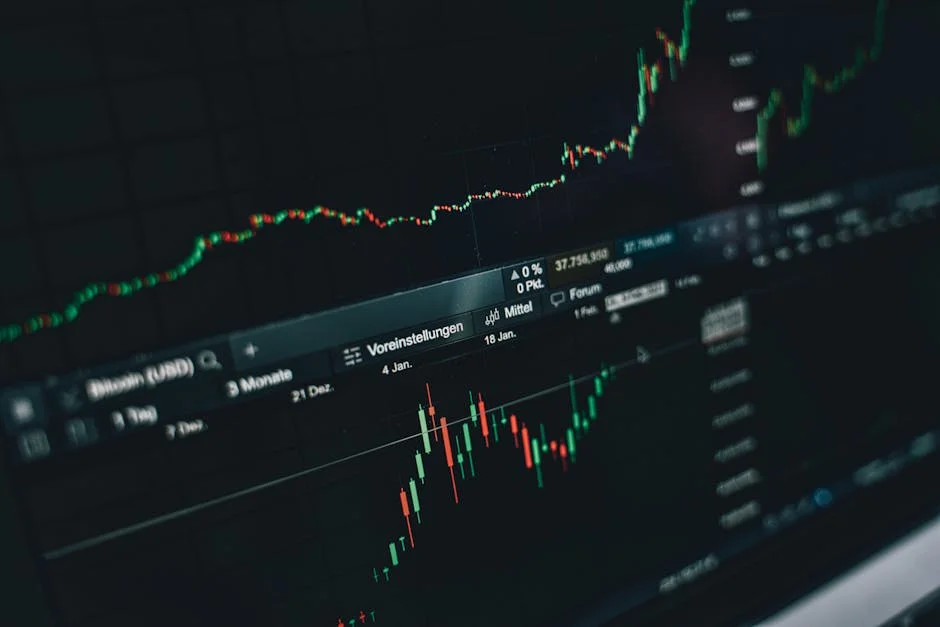
The difference of crypto and forex starts with what is being traded and why the market exists. Forex (foreign exchange) is the global marketplace for exchanging national currencies such as USD, EUR, JPY, and GBP. Those currencies are issued and supported by sovereign states and influenced by central banks, government policy, trade flows, interest-rate expectations, and macroeconomic stability. Crypto, by contrast, refers to digital assets—most commonly cryptocurrencies like Bitcoin and Ethereum—that rely on cryptographic systems and distributed networks to record ownership and transfer value. While both markets involve exchanging one asset for another and both can be traded for speculation or hedging, they are built on very different foundations: forex is rooted in the monetary systems of countries, and crypto is rooted in software protocols and network effects. That foundational difference affects everything else—liquidity, volatility, regulation, the role of intermediaries, and the way pricing responds to news.
Table of Contents
- My Personal Experience
- Understanding the difference of crypto and forex at a glance
- Market structure and participants: banks versus networks
- Trading hours and liquidity: 24/5 versus 24/7
- Volatility and price behavior: macro-driven versus reflexive cycles
- Regulation, oversight, and legal clarity
- Costs, spreads, and fee models
- Leverage and margin: similar tools, different risk profiles
- Fundamentals and catalysts: central banks versus protocols and adoption
- Expert Insight
- Custody, settlement, and counterparty risk
- Common strategies and how they translate across markets
- Comparison table: key differences in a practical format
- Tax, reporting, and accounting considerations
- Choosing between crypto and forex based on goals and personality
- Risk management differences that matter in real trading
- Final takeaways on the difference of crypto and forex
- Watch the demonstration video
- Frequently Asked Questions
- Trusted External Sources
My Personal Experience
When I first started trading, I assumed crypto and forex were basically the same—just different charts and different tickers. After a few months, the differences hit me fast. With crypto, I was watching prices move at odd hours and over weekends, and a single tweet or exchange outage could swing my position way more than I expected. In forex, the moves felt more tied to scheduled news like CPI or central bank decisions, and the spreads and liquidity were usually steadier during main sessions. I also noticed the “rules of the road” felt clearer in forex with my broker, while crypto sometimes depended on which exchange I used and what coins were even tradable that week. Crypto gave me bigger opportunities, but forex felt more structured—and that changed how I sized my trades and managed risk. If you’re looking for difference of crypto and forex, this is your best choice.
Understanding the difference of crypto and forex at a glance
The difference of crypto and forex starts with what is being traded and why the market exists. Forex (foreign exchange) is the global marketplace for exchanging national currencies such as USD, EUR, JPY, and GBP. Those currencies are issued and supported by sovereign states and influenced by central banks, government policy, trade flows, interest-rate expectations, and macroeconomic stability. Crypto, by contrast, refers to digital assets—most commonly cryptocurrencies like Bitcoin and Ethereum—that rely on cryptographic systems and distributed networks to record ownership and transfer value. While both markets involve exchanging one asset for another and both can be traded for speculation or hedging, they are built on very different foundations: forex is rooted in the monetary systems of countries, and crypto is rooted in software protocols and network effects. That foundational difference affects everything else—liquidity, volatility, regulation, the role of intermediaries, and the way pricing responds to news.

Both markets also share a common appeal: accessibility. Retail traders can open accounts quickly, use charting tools, and place orders in minutes. Yet the experience diverges because forex is typically accessed through regulated brokers offering leveraged contracts (often CFDs or spot FX accounts depending on jurisdiction), while crypto is often accessed through exchanges or brokers that custody assets, facilitate trades, and sometimes offer derivatives. The difference of crypto and forex becomes clearer when you look at market hours, price drivers, and infrastructure. Forex is highly integrated with global banking and corporate finance, with enormous daily turnover and deep liquidity in major pairs. Crypto trades continuously, including weekends, and its liquidity can be fragmented across exchanges and trading pairs. Understanding how these structural contrasts influence spreads, slippage, risk, and strategy is essential for anyone deciding where to allocate time and capital.
Market structure and participants: banks versus networks
A practical way to understand the difference of crypto and forex is to compare who moves the market and how transactions are routed. Forex is largely an over-the-counter (OTC) market. Trades occur through a network of banks, prime brokers, liquidity providers, electronic communication networks, and broker-dealers rather than a single centralized exchange. The biggest participants include central banks managing reserves, commercial banks facilitating international payments, multinational corporations hedging currency exposure, asset managers allocating across regions, and hedge funds pursuing macro or relative-value strategies. Retail traders usually interact with the market through a broker that streams prices sourced from liquidity providers. This structure tends to create very deep order books in major currency pairs and relatively stable execution during normal conditions. It also means that pricing is heavily influenced by institutional flows and macroeconomic events, such as interest-rate decisions, inflation data, employment reports, and geopolitical risk.
Crypto markets, while also featuring sophisticated players, are organized differently. Many crypto trades happen on centralized exchanges that match buyers and sellers on a visible order book, with prices varying slightly across venues due to fragmentation, liquidity differences, and local demand. There is also on-chain activity through decentralized exchanges (DEXs) that use automated market makers and liquidity pools instead of traditional order books. Crypto participants include retail traders, crypto-native funds, miners or validators, protocol treasuries, market makers, venture investors, and increasingly traditional institutions via ETFs, custodians, and regulated derivatives. A key difference of crypto and forex is that crypto markets are more sensitive to exchange-specific events—listing announcements, delistings, outages, proof-of-reserve concerns, and stablecoin liquidity—because venues themselves can be a source of risk. In forex, while broker risk exists, the market’s backbone is tied to the banking system and established settlement rails, which changes how counterparty and operational risk are assessed.
Trading hours and liquidity: 24/5 versus 24/7
Trading schedules are often the first lived experience of the difference of crypto and forex. Forex is commonly described as a 24-hour market, but it is more precisely a 24/5 market that follows the global business week. Liquidity rotates through sessions—Asia, Europe, and North America—with overlaps that tend to bring tighter spreads and higher volume. Weekends generally bring a pause in institutional activity and interbank settlement, so many brokers close or restrict trading. This rhythm matters because it shapes volatility patterns. For example, major economic releases often occur during London or New York hours, creating predictable windows of heightened movement. Liquidity is typically deepest in major pairs like EUR/USD, USD/JPY, and GBP/USD, while exotic pairs can have wider spreads and more erratic price action. During holidays or off-hours, even major pairs can experience thinner liquidity, leading to slippage.
Crypto trades continuously, including weekends and holidays, and that 24/7 nature can be both an advantage and a burden. On one hand, traders can react immediately to breaking news, protocol updates, regulatory announcements, or sudden risk-off sentiment. On the other hand, the absence of a “closed” period means risk management must account for overnight and weekend moves when staffing and liquidity may be lower. The difference of crypto and forex is visible during weekend gaps: forex often opens with gaps if major events occur while markets are closed, whereas crypto continuously reprices in real time. Liquidity in crypto can be deep for top assets on major venues, but it may still be less resilient than forex during stress. Sudden deleveraging, exchange outages, or stablecoin dislocations can cause rapid spread widening. Traders who value predictable liquidity conditions may prefer forex majors, while those who want continuous access may find crypto’s always-on market better aligned with their schedule.
Volatility and price behavior: macro-driven versus reflexive cycles
Volatility is a defining element of the difference of crypto and forex. Forex majors usually exhibit lower day-to-day volatility compared with many cryptocurrencies. That lower volatility is not the same as low risk; forex traders frequently use leverage, which amplifies small price changes into meaningful profit or loss. Still, the underlying currency pairs often move within ranges influenced by interest-rate differentials, inflation expectations, trade balances, and risk sentiment. When major macro events occur—central bank surprises, financial crises, geopolitical escalations—forex can become extremely volatile, but those episodes are often tied to identifiable catalysts and policy responses. Price behavior can reflect mean reversion around policy expectations or trend persistence when rate differentials widen.
Crypto volatility tends to be higher and can be driven by a mix of fundamentals, liquidity, and narrative. Network upgrades, protocol vulnerabilities, regulatory signals, and adoption milestones matter, but so do social sentiment, market positioning, and reflexive feedback loops where price rises attract more buyers, which pushes price further, and vice versa. The difference of crypto and forex shows up in how quickly regimes can change. Crypto can move from calm to chaotic within hours due to liquidations in leveraged derivatives, sudden shifts in stablecoin confidence, or a large holder moving funds. Forex is not immune to cascades, but the market’s depth and the anchoring effect of central bank policy can dampen extremes in major pairs. Traders should treat volatility as a product feature: crypto may offer larger moves but demands stricter position sizing, while forex may offer smoother movement but often relies on leverage and precise risk controls to make returns meaningful.
Regulation, oversight, and legal clarity
Another major difference of crypto and forex is the regulatory landscape. Forex has decades of regulatory frameworks in many jurisdictions. Brokers are typically licensed, client funds may be segregated, marketing and leverage limits may apply, and reporting standards are established. While regulation varies by country, the market generally benefits from clearer rules about who can offer products, how trades are executed, and what disclosures are required. This does not remove risk—fraudulent brokers and high-risk products exist—but it gives traders a more standardized baseline for evaluating counterparties. In many places, dispute resolution mechanisms and enforcement actions have a long history, which can improve confidence in the market’s plumbing.

Crypto regulation is evolving and can be inconsistent across borders. Some jurisdictions treat certain tokens as securities, others as commodities, and others as novel digital assets with bespoke frameworks. Exchanges may be regulated in one country and lightly supervised or offshore in another. This difference of crypto and forex impacts practical decisions such as where you can legally trade, what leverage is available, what tax reporting looks like, and what consumer protections exist if an exchange fails. Even within the same jurisdiction, rules can shift as policymakers respond to market events like hacks, stablecoin failures, or systemic leverage. For traders, the key is to evaluate venue quality, custody arrangements, proof-of-reserves practices, and licensing status. In forex, the broker relationship is central; in crypto, the exchange and custody model can be equally central, and self-custody introduces another set of responsibilities and risks that most forex traders never face.
Costs, spreads, and fee models
Costs are a practical lens for the difference of crypto and forex because they directly affect profitability. In forex, the most visible cost is the spread—the difference between bid and ask—often very tight for major pairs, especially during liquid hours. Some accounts charge a wider spread with no explicit commission, while others offer raw spreads plus a commission per lot. Additional costs can include overnight financing or swap rates when holding leveraged positions, reflecting interest-rate differentials and broker markups. Slippage can occur during news events or thin liquidity. Because forex is often traded with leverage, financing costs and margin requirements become part of the cost structure and can meaningfully affect longer holding periods.
Crypto costs vary by venue and product. Spot exchanges typically charge maker/taker fees, and spreads can widen during volatility or on lower-liquidity pairs. Withdrawals may incur network fees, and on-chain transactions can be costly during congestion. Derivatives platforms add funding rates for perpetual futures, which can swing positive or negative depending on market positioning. The difference of crypto and forex is that crypto costs can be more multi-layered: you might pay trading fees, funding, and blockchain fees, and you may also face implicit costs from price fragmentation across exchanges. However, competition among large exchanges can keep headline trading fees low for liquid pairs. Traders should compare total cost of ownership: for forex, spreads plus swaps; for crypto, fees plus funding plus custody and transfer considerations. A strategy that looks profitable in backtesting can fail in live trading if these friction costs are underestimated.
Leverage and margin: similar tools, different risk profiles
Leverage is central to many traders’ experience, and it highlights the difference of crypto and forex in both availability and consequences. Forex brokers often offer leverage that can be high, though many regulators cap it for retail clients. Because major currency pairs typically move in smaller increments, leverage is used to make returns meaningful, but it also increases the chance of rapid losses and margin calls. Margin requirements, stop-out levels, and negative balance protection (where applicable) shape the risk. In addition, forex pricing is generally robust, but sharp moves can occur during flash crashes, surprise central bank actions, or geopolitical shocks, potentially causing gaps and slippage that bypass stop-loss orders.
Crypto leverage exists too, often through perpetual futures and other derivatives, and it can be extremely high on some platforms. The difference of crypto and forex is that crypto’s higher underlying volatility can make high leverage far more dangerous. Liquidation engines, insurance funds, and auto-deleveraging mechanisms can create complex outcomes during rapid moves. Funding rates can also penalize crowded trades and add a carrying cost that changes day by day. While forex margin trading is typically mediated by broker terms and regulatory standards, crypto derivatives can vary widely by platform, and risk controls are not uniform. Traders should think of leverage as a volatility multiplier: a position size that feels manageable in forex could be reckless in crypto. Conservative leverage, strict stops, and awareness of liquidation price are essential in both markets, but the margin-for-error can be thinner in crypto due to faster and larger price swings.
Fundamentals and catalysts: central banks versus protocols and adoption
What moves price is one of the most meaningful aspects of the difference of crypto and forex. Forex catalysts are often scheduled and macroeconomic: central bank meetings, inflation prints, labor market reports, GDP growth, and policy statements. Even when surprises happen, traders can map likely scenarios and probabilities around known events. Interest-rate differentials and expectations can dominate trends for months, and capital flows respond to relative growth prospects and risk appetite. A currency can strengthen because yields rise, because the economy is resilient, or because investors seek safety. The logic is not always clean, but the variables are well known, and the institutions involved—central banks and governments—have established mandates and communication strategies.
Expert Insight
Crypto trades on decentralized, always-on markets with higher volatility and faster sentiment shifts, while forex is a regulated, liquidity-rich market driven by macroeconomic data and central bank policy. Tip: Match your strategy to the market—use tighter position sizing and predefined stop-loss levels for crypto, and plan forex trades around economic calendars and interest-rate decisions. If you’re looking for difference of crypto and forex, this is your best choice.
Crypto pricing can vary across exchanges and is influenced by network events (upgrades, hacks, on-chain flows), whereas forex pricing is typically more uniform across major brokers and reacts strongly to geopolitical and economic releases. Tip: For crypto, choose reputable exchanges, track liquidity and fees, and avoid trading during thin order books; for forex, focus on major pairs, monitor spreads during news, and avoid holding oversized positions through high-impact announcements. If you’re looking for difference of crypto and forex, this is your best choice.
Crypto catalysts include protocol upgrades, regulatory developments, exchange listings, security incidents, and adoption milestones such as integration into payment systems or institutional products. Network metrics—hash rate, staking participation, active addresses, fees, and developer activity—can matter, but narrative often plays a larger role than in forex. The difference of crypto and forex is that crypto assets can behave like a blend of technology, commodity, and speculative instrument, and their “fundamentals” can be harder to anchor to conventional valuation models. Stablecoins and on-chain liquidity can also become catalysts: a change in confidence toward a major stablecoin can ripple across the entire market. Traders who enjoy macro calendars may prefer forex. Traders who follow technology roadmaps, tokenomics, and market structure may find crypto more intuitive, but they must accept that information quality can vary and that rumors can move prices quickly.
Custody, settlement, and counterparty risk
Custody and settlement processes reveal a less obvious but critical difference of crypto and forex. In retail forex, traders typically do not take delivery of currency in a bank account; instead, they trade contracts with their broker, and profits and losses are settled in the account’s base currency. The main risks revolve around broker solvency, execution quality, and regulatory protections. Settlement infrastructure in institutional forex is mature, with systems for payment-versus-payment and established banking rails. While systemic events can stress the system, the market’s backbone is tied to regulated financial institutions with long-standing risk controls.
| Aspect | Crypto | Forex |
|---|---|---|
| Market hours & liquidity | Trades 24/7; liquidity varies widely by coin and exchange. | Trades 24/5; generally deeper liquidity in major currency pairs. |
| Volatility | Typically higher price swings; larger risk and potential returns. | Usually lower volatility in major pairs; moves often driven by macro data. |
| Regulation & custody | Regulation differs by country; assets held via wallets/exchanges (custody risk). | More established regulation in many regions; traded via brokers with standardized infrastructure. |
Crypto introduces unique custody choices. You can hold assets on an exchange (custodial), in a personal wallet (self-custody), or with a regulated custodian. Each option changes the risk profile. The difference of crypto and forex is that crypto allows direct bearer-style ownership: if you control the private keys, you control the funds, but you also bear responsibility for security, backups, phishing resistance, and operational discipline. Keeping funds on an exchange can simplify trading but adds counterparty risk—exchange hacks, mismanagement, insolvency, or withdrawal freezes. On-chain settlement can be fast and transparent, but it can also be irreversible, and mistakes can be costly. Forex traders rarely worry about sending funds to the wrong address or losing keys, while crypto traders must treat operational security as part of the investment process. Understanding these realities helps traders decide whether they want the convenience of custodial trading or the autonomy of self-custody.
Common strategies and how they translate across markets
Strategies can look similar at a high level—trend following, mean reversion, breakout trading, carry trades, and arbitrage—but the difference of crypto and forex changes how they behave in practice. In forex, trend strategies often revolve around macro cycles and interest-rate trends; a currency with rising yields can trend strongly against a low-yield currency. Range trading can be effective during stable policy periods, while breakout trading often clusters around scheduled announcements. Carry trading—earning interest-rate differentials—has a long history in forex, though it comes with crash risk during sudden risk-off events. Because liquidity is deep in majors, execution can be relatively consistent for many retail sizes, and technical levels can be widely watched.

In crypto, trend strategies can be powerful because of strong momentum phases, but reversals can be violent. Mean reversion can work in liquid pairs, yet liquidation cascades can push price far beyond historical bands. The difference of crypto and forex is that crypto also offers unique strategy categories: on-chain arbitrage between DEXs and centralized exchanges, yield strategies tied to staking or lending (with smart contract and counterparty risk), and basis trades between spot and futures influenced by funding rates. Some forex-style approaches, like carry, have analogs in crypto through funding capture, but the risks differ because funding rates can flip quickly and platform risk matters. A trader moving between markets should avoid copy-pasting position sizing or stop distances. Instead, calibrate to realized volatility, liquidity at the time of day, and the specific microstructure of the venue.
Comparison table: key differences in a practical format
Seeing the difference of crypto and forex side by side can help translate abstract concepts into operational choices. The table below compares typical features traders evaluate: market access, tools, costs, and perceived reliability. “Ratings” are presented as a practical, experience-based score for retail suitability in common scenarios, not as an official measurement. Costs are described as typical ranges rather than fixed numbers because fees and spreads vary by broker, exchange, jurisdiction, and account tier. Use the comparison as a starting point, then verify details with the specific provider you plan to use, including regulation status, fee schedules, and risk disclosures.
It is also useful to treat “price” as the cost of participation rather than the asset’s price. Forex often has low visible trading costs in majors but may include financing charges and broker markups. Crypto can have competitive trading fees but adds potential blockchain fees and funding costs in derivatives. The difference of crypto and forex is rarely a single factor; it is the combination of volatility, costs, custody, and regulation that determines which market fits a trader’s goals. A long-term investor who wants direct ownership may prefer crypto with self-custody, while a short-term trader who values deep liquidity and stable execution may gravitate to forex majors. Many traders choose a blended approach, allocating risk across both markets while keeping strategies and risk controls distinct.
| Name | Features | Ratings | Price |
|---|---|---|---|
| Forex (Major Pairs) | Deep liquidity, 24/5 sessions, macro-driven catalysts, tight spreads, broker-based access, common use of leverage | 4.6/5 | Typical costs: very low spreads in majors; commissions on raw accounts; overnight swap/financing may apply |
| Forex (Exotic/Minor Pairs) | Higher spreads, more sensitivity to local politics and liquidity, can gap during risk events, less consistent execution | 3.9/5 | Typical costs: wider spreads; higher slippage risk; financing still applies on leveraged holds |
| Crypto (Spot on Major Exchanges) | 24/7 trading, exchange order books, variable liquidity by token, custody choices, potential withdrawal/network fees | 4.2/5 | Typical costs: maker/taker fees; spreads vary; blockchain fees for transfers/withdrawals |
| Crypto (Perpetual Futures) | High leverage availability, funding rates, liquidation mechanisms, fast markets during volatility, platform risk considerations | 3.8/5 | Typical costs: trading fees + funding payments/receipts; liquidation and slippage risk during spikes |
| Crypto (DeFi / DEX Trading) | On-chain settlement, self-custody, AMM pools, smart contract risk, MEV/slippage considerations, composable strategies | 3.6/5 | Typical costs: swap fees + network gas; slippage; potential additional costs from routing and MEV |
Tax, reporting, and accounting considerations
Taxes and reporting rules can materially affect net returns, and they emphasize a practical difference of crypto and forex that many traders only confront after a profitable year. Forex taxation depends on jurisdiction and the specific product traded—spot FX, CFDs, futures, or options. Some regions treat gains as capital gains, others as income, and some have special rules for regulated futures contracts. Brokers often provide statements that summarize realized profit and loss, financing charges, and sometimes tax documents that align with local requirements. Recordkeeping is still the trader’s responsibility, but the ecosystem is mature, and many traders can reconcile activity with standard brokerage statements and widely supported accounting tools.
Crypto tax treatment can be more complex because each transaction may be a taxable event depending on local rules: selling crypto for fiat, swapping one token for another, spending crypto, and sometimes receiving staking rewards or airdrops. The difference of crypto and forex is that crypto activity may span multiple wallets, exchanges, and chains, making cost basis tracking and reconciliation challenging. On-chain transactions are transparent but not automatically “categorized” for tax purposes; you may need software to label transfers, trades, fees, and income events. Derivatives add another layer because funding, realized PnL, and fees may be reported differently by each platform. Traders should plan ahead: choose a consistent cost basis method where allowed, keep records of deposits and withdrawals, and export trade history regularly. Because rules evolve, staying updated with local guidance or consulting a professional can prevent unpleasant surprises and ensure that performance comparisons between crypto and forex are made on an after-tax basis.
Choosing between crypto and forex based on goals and personality
The difference of crypto and forex becomes most actionable when tied to personal goals. If the objective is to trade around macroeconomic releases with tight spreads and deep liquidity, forex majors often fit well. Traders who enjoy interpreting central bank language, yield curves, and economic calendars may find forex rewarding because the narrative is anchored to policy and data. Forex also suits traders who prefer a mature broker ecosystem, standardized platforms, and a market where extreme moves are less frequent in normal conditions. That said, leverage can make forex risky, so the “calmer” reputation should not be mistaken for safety. Risk management, position sizing, and an understanding of financing costs are essential.

Crypto may suit traders and investors who want exposure to a new financial and technological ecosystem, who value 24/7 access, and who are comfortable with faster market cycles. The difference of crypto and forex is that crypto often demands a broader skill set: understanding exchange risk, custody options, tokenomics, and the mechanics of on-chain transfers. It may also appeal to those who want to hold assets directly and potentially participate in staking or governance, though those activities introduce additional risks. Some traders thrive in crypto because volatility offers opportunity, while others find that constant price movement and weekend risk create stress and impulsive decisions. A balanced approach is possible: use forex for macro-driven trades and crypto for a smaller, carefully sized allocation that acknowledges higher volatility and operational considerations. The best choice is the one that matches your time availability, risk tolerance, and interest in the underlying drivers.
Risk management differences that matter in real trading
Risk management is where the difference of crypto and forex becomes most consequential. In forex, position sizing often revolves around pip value, lot size, and the distance to stop-loss levels. Because volatility is usually lower in major pairs, stops can be tighter, but news spikes can still trigger slippage. Traders commonly watch scheduled events and may reduce exposure ahead of central bank announcements or key data releases. Correlations also matter: multiple USD-based positions can unintentionally concentrate risk. Additionally, leverage means that a small adverse move can consume margin quickly, so prudent traders use conservative leverage and define maximum drawdown limits.
Crypto risk management must incorporate additional layers: exchange risk, weekend moves, and sudden volatility bursts. The difference of crypto and forex is that stop-loss orders can behave differently depending on venue liquidity and whether the market is experiencing liquidation cascades. A stop may fill far from the trigger price during fast moves, and some tokens can experience abrupt liquidity gaps. Traders often reduce risk by focusing on the most liquid assets, limiting leverage, and avoiding holding oversized positions during uncertain regulatory headlines or major protocol events. Operational controls also matter: using strong security practices, enabling withdrawal whitelists, and keeping only necessary funds on trading venues can reduce catastrophic loss risk. In both markets, the most sustainable edge often comes from avoiding large mistakes rather than chasing the biggest wins. A disciplined approach—predefined risk per trade, scenario planning, and consistent review—can help traders adapt to whichever market they choose.
Final takeaways on the difference of crypto and forex
The difference of crypto and forex is ultimately about foundations and trade-offs: state-issued currencies traded through a mature, bank-centered system versus digital assets traded through exchanges and networks that are still evolving. Forex tends to offer deeper liquidity in majors, more standardized regulation in many regions, and volatility that is often more closely tied to macro data and central bank policy. Crypto offers 24/7 access, direct ownership possibilities, technology-driven catalysts, and often higher volatility that can amplify opportunity and risk. Costs, leverage, custody, and taxation all behave differently across the two markets, so choosing between them should be based on operational comfort, risk tolerance, and the kind of analysis you enjoy doing. With clear goals and disciplined risk controls, traders can navigate either market—or combine them thoughtfully—while keeping the difference of crypto and forex in mind when sizing positions, selecting venues, and setting expectations.
Watch the demonstration video
In this video, you’ll learn the key differences between crypto and forex trading, including how each market works, what drives price movements, typical volatility, trading hours, liquidity, and regulation. You’ll also see the main risks and opportunities of both, helping you decide which market better fits your goals, strategy, and risk tolerance. If you’re looking for difference of crypto and forex, this is your best choice.
Summary
In summary, “difference of crypto and forex” is a crucial topic that deserves thoughtful consideration. We hope this article has provided you with a comprehensive understanding to help you make better decisions.
Frequently Asked Questions
What is the main difference between crypto and forex?
Crypto trading focuses on digital assets like Bitcoin that run on blockchain-based networks, while forex trading involves buying and selling national currencies—such as EUR/USD—within the global foreign exchange market. In short, the **difference of crypto and forex** comes down to what you trade (tokens vs. currencies) and where those markets operate (blockchain ecosystems vs. the traditional FX market).
Which market is more regulated: crypto or forex?
One major **difference of crypto and forex** is regulation: forex trading is typically overseen by licensed brokers and strict financial authorities, while crypto rules can vary dramatically from one country or exchange to another and are often far less consistent.
Are crypto and forex markets open the same hours?
Crypto markets run 24/7, including weekends. Forex runs 24 hours on weekdays but typically closes on weekends.
Which is more volatile: crypto or forex?
One key **difference of crypto and forex** is volatility: crypto markets often experience bigger, faster price swings, while major forex pairs are typically more stable—though they can still spike sharply when major news or economic data hits.
How does liquidity differ between crypto and forex?
Forex is widely considered the most liquid market in the world, particularly for major currency pairs where trades are filled quickly and spreads are typically tight. In contrast, crypto liquidity varies a lot by coin and exchange, and it can be much thinner—making price moves sharper and increasing the chance of slippage. This is a key **difference of crypto and forex** traders should keep in mind.
How do trading costs compare in crypto vs forex?
Forex trading costs are typically built into the spread or charged as a commission, with major currency pairs often offering very tight spreads. In contrast, crypto trading usually involves exchange fees plus the spread, and you may also pay blockchain network fees when transferring or withdrawing funds—one key **difference of crypto and forex** that can affect your overall costs.
? Looking for more info about difference of crypto and forex? Follow Our Site for updates and tips!

Trusted External Sources
- Forex Trading vs Crypto Trading: What Is the Difference and Which …
As of Jun 5, 2026, many traders find forex markets more stable and generally easier for entering and exiting positions, although the profit potential is often more modest than in crypto—highlighting a key **difference of crypto and forex** in terms of volatility, liquidity, and risk.
- Forex vs Crypto: Key Differences Explained | IG International
The forex market operates largely within formal, well-established, and heavily regulated financial systems. In contrast, cryptocurrencies function in a more decentralized and less formal environment, which can make them more volatile and unpredictable—highlighting a key **difference of crypto and forex** in how each market is structured and overseen.
- Forex Trading vs Crypto Trading: Key Differences for Beginners
As of Dec 2, 2026, one of the biggest points in the **difference of crypto and forex** is trading availability: crypto markets run **24/7**, while the forex market typically operates **24 hours a day, five days a week (24/5)**. Another key distinction is **liquidity**, which can vary widely—forex is generally deeper and more consistently liquid, while crypto liquidity often depends on the specific coin and exchange.
- Forex vs. crypto: Which to choose? – Fiat Republic
As of Oct 7, 2026, financial markets offer a wide range of platforms where people trade and speculate on currency values. Among the most talked-about areas are traditional foreign exchange and digital assets, and understanding the **difference of crypto and forex** can help traders choose the market that best fits their goals, risk tolerance, and preferred trading style.
- Whats the difference between forex trading and crypto trading?
As of Nov 7, 2026, the **difference of crypto and forex** is pretty clear: forex tends to be steadier, cheaper to trade, and heavily shaped by specific trading sessions, while crypto moves faster, stays open 24/7, and can be a lot more volatile and unpredictable. The good news is that technical analysis can work in both markets—so the better choice comes down to your risk tolerance, schedule, and trading style.