Forex exchange for beginners starts with a simple idea: currencies are traded against each other, and their relative prices move every second based on global supply and demand. When you exchange money to travel, you participate in a tiny slice of the same process that banks, corporations, governments, hedge funds, and retail traders engage in every day. The foreign exchange market, often shortened to “forex,” is not a single building or a centralized exchange. It’s a network of participants connected electronically, quoting prices and executing trades around the clock during weekdays. Because it’s decentralized, the experience of trading depends heavily on the broker you choose, the platform you use, and your ability to interpret pricing. The most common way prices are shown is as currency pairs, such as EUR/USD or USD/JPY. The first currency is the “base,” the second is the “quote,” and the price tells you how much of the quote currency is needed to buy one unit of the base currency. If EUR/USD is 1.0800, one euro costs 1.08 U.S. dollars. That quote is not a static number; it is the current balance of buyers and sellers, shifting with every new order and every piece of information the market absorbs.
Table of Contents
- My Personal Experience
- Understanding Forex Exchange for Beginners: What the Market Really Is
- How Currency Pairs, Quotes, and Pricing Work in Practice
- Market Participants and Why Prices Move
- Choosing a Broker, Platform, and Account Type Safely
- Key Forex Terminology: Pips, Lots, Leverage, Margin, and Spread
- Trading Sessions, Liquidity, and Volatility: When the Market Behaves Best
- Fundamental Analysis Basics: Interest Rates, Inflation, and Economic Calendars
- Technical Analysis Basics: Trends, Support and Resistance, and Indicators
- Expert Insight
- Risk Management for New Traders: Position Sizing, Stops, and Survival
- Common Beginner Mistakes and How to Avoid Them
- Building a Simple Trading Plan and Practice Routine
- Managing Psychology: Discipline, Patience, and Realistic Expectations
- Costs, Taxes, and Recordkeeping: Treating Trading Like a Business
- Next Steps: A Practical Path for Forex Exchange for Beginners
- Watch the demonstration video
- Frequently Asked Questions
- Trusted External Sources
My Personal Experience
When I first got curious about forex, I assumed it was basically like buying a stock and waiting, but I quickly learned it’s more about exchanging one currency for another and understanding why the rate moves. I started with a demo account because I didn’t trust myself with real money yet, and even then I got humbled—spreads, leverage, and news spikes made my “easy” trades look messy fast. What helped most was keeping it simple: I focused on one major pair, watched how it reacted around the same times each day, and wrote down why I entered and exited instead of guessing. Once I finally went live, I used tiny position sizes and treated the first month like tuition, aiming to protect my account more than to make a big win. If you’re looking for forex exchange for beginners, this is your best choice.
Understanding Forex Exchange for Beginners: What the Market Really Is
Forex exchange for beginners starts with a simple idea: currencies are traded against each other, and their relative prices move every second based on global supply and demand. When you exchange money to travel, you participate in a tiny slice of the same process that banks, corporations, governments, hedge funds, and retail traders engage in every day. The foreign exchange market, often shortened to “forex,” is not a single building or a centralized exchange. It’s a network of participants connected electronically, quoting prices and executing trades around the clock during weekdays. Because it’s decentralized, the experience of trading depends heavily on the broker you choose, the platform you use, and your ability to interpret pricing. The most common way prices are shown is as currency pairs, such as EUR/USD or USD/JPY. The first currency is the “base,” the second is the “quote,” and the price tells you how much of the quote currency is needed to buy one unit of the base currency. If EUR/USD is 1.0800, one euro costs 1.08 U.S. dollars. That quote is not a static number; it is the current balance of buyers and sellers, shifting with every new order and every piece of information the market absorbs.

For someone new, the market can feel intimidating because it moves quickly and uses specialized terms. Yet the core mechanism is consistent: you buy a currency pair if you believe the base currency will strengthen relative to the quote currency, and you sell if you believe it will weaken. Profit and loss are measured in small increments, often called “pips,” and the use of leverage can magnify both gains and losses. Unlike stock markets that open and close on a single country’s schedule, forex trading follows global time zones—liquidity rises and falls as major financial centers open in Asia, Europe, and North America. This continuous flow creates frequent opportunities but also demands discipline, especially for newcomers who may overtrade. Forex exchange for beginners becomes manageable when you treat it as a structured skill: learn how quotes work, understand what moves prices, practice risk control, and develop a repeatable process rather than chasing excitement. The goal early on is not to predict every move; it is to build a foundation that helps you make decisions with clear logic, consistent sizing, and realistic expectations.
How Currency Pairs, Quotes, and Pricing Work in Practice
To get comfortable with forex exchange for beginners, it helps to break down currency pairs into their functional parts and see how pricing impacts your decisions. Each pair has a base currency and a quote currency, and the price expresses the value of one unit of the base in terms of the quote. For example, GBP/USD at 1.2700 means one British pound equals 1.27 U.S. dollars. If the price rises to 1.2800, the pound has strengthened relative to the dollar; if it falls to 1.2600, the pound has weakened. This relationship is the entire “game” of forex: relative strength and relative weakness. Pairs are often categorized as majors (involving USD and heavily traded currencies like EUR, GBP, JPY, CHF, CAD, AUD, NZD), minors (major currencies without USD), and exotics (a major paired with a less-liquid emerging market currency). Beginners often start with majors because spreads are typically tighter and execution is more reliable, which matters when you are learning and your strategy may rely on small price movements.
Pricing is also shaped by the bid and ask, which represent the price to sell (bid) and the price to buy (ask). The difference between them is the spread, and it’s a built-in transaction cost. If EUR/USD shows 1.0799/1.0801, the spread is 0.0002, or 2 pips in many quote formats. That spread matters because your trade starts slightly negative: buying at the ask and selling at the bid means you need price to move in your favor just to break even. Another key detail is how pips and pipettes work. Most major pairs are quoted to four decimal places, and one pip is typically the fourth decimal place (0.0001). Some brokers show a fifth decimal place; that extra digit is a pipette (0.00001). Pairs involving JPY are often quoted with two decimals, so a pip is commonly 0.01. Understanding these units helps you calculate risk, position size, and potential profit. Forex exchange for beginners becomes far less confusing when you can look at a quote, identify the spread, know what a pip is worth for your position, and translate a price move into real currency impact on your account.
Market Participants and Why Prices Move
Prices in forex exchange for beginners are not random; they are the visible result of many participants responding to incentives, constraints, and information. The largest players are commercial banks and liquidity providers that quote two-way prices and facilitate transactions. Multinational corporations also participate when they convert revenue, pay suppliers, hedge future costs, or manage cash flows in multiple currencies. Central banks can be decisive participants because their policies influence interest rates and money supply, and they can intervene directly in currency markets when they want to stabilize or shift exchange rates. Investment funds, including hedge funds and asset managers, take positions based on macroeconomic themes, relative value models, and portfolio hedging needs. Retail traders—individuals using online brokers—are smaller in aggregate than institutions, but they contribute to overall volume and, in certain moments, can amplify short-term moves through crowd behavior. When you understand who is trading and why, you can interpret price action with more clarity instead of treating every spike as a mystery.
The most consistent drivers of currency movement are interest rate expectations, inflation trends, economic growth differentials, and risk sentiment. If a country’s central bank is expected to raise rates, its currency often strengthens because higher yields can attract capital, though the relationship is not always linear and can be “priced in” ahead of the actual decision. Inflation matters because it shapes real returns and influences central bank policy. Employment data, GDP releases, business activity surveys, and consumer spending figures all feed into expectations about growth and policy. Risk sentiment is another major force: when investors are optimistic, they may seek higher-yielding or growth-linked currencies; when fear rises, they may move into perceived safe havens. Geopolitical events, commodity price changes (especially for commodity-linked currencies), and sudden shifts in market positioning can also move prices quickly. For forex exchange for beginners, the practical takeaway is to respect that the chart reflects more than technical patterns: it reflects expectations and reactions. Even if you focus on technical analysis, having a basic awareness of what the market is focused on—central bank meetings, major economic releases, and global risk events—helps you avoid being surprised by volatility that was actually scheduled or widely anticipated.
Choosing a Broker, Platform, and Account Type Safely
Forex exchange for beginners often succeeds or fails based on the quality and safety of the trading setup, long before strategy becomes the main factor. A broker is your gateway to the market, providing pricing, order execution, leverage settings, and account management. The most important starting point is regulation and jurisdiction. A reputable broker is typically supervised by a recognized financial authority, with clear rules about client fund segregation, reporting, and dispute resolution. While regulation does not eliminate risk, it reduces the chance of unethical practices and offers more transparency. Beyond regulation, compare execution quality, spreads, commissions, and any hidden fees such as inactivity charges or withdrawal costs. A broker offering extremely high leverage with unusually low requirements may seem attractive, but it can push beginners into oversized trades that blow up accounts quickly. Reliable customer support, clear documentation, and stable platform performance matter more than flashy promotions.
Platform choice affects how you place orders, analyze charts, and manage trades. Many brokers offer popular platforms like MetaTrader or proprietary web-based systems. For forex exchange for beginners, the best platform is one you can operate confidently: placing market orders, limit orders, stop orders, and setting stop-loss and take-profit levels without confusion. Consider whether the platform supports one-click trading (useful but risky if you misclick), whether it offers robust charting, and whether it provides risk tools like position size calculators. Account types also vary: standard accounts often embed costs in the spread, while “raw spread” or ECN-style accounts may charge commissions but offer tighter spreads. Beginners should prioritize clarity of costs and consistent execution. Another practical decision is base currency of the account, as it affects conversion fees and how you mentally track performance. Finally, test everything on a demo first, then start live with a small amount that you can afford to lose. This transition reveals differences between simulated fills and real execution, including slippage during fast markets. Forex exchange for beginners becomes safer when the broker is credible, the platform is familiar, and the account settings encourage disciplined risk rather than oversized bets.
Key Forex Terminology: Pips, Lots, Leverage, Margin, and Spread
Forex exchange for beginners becomes much easier once core terminology is understood in practical terms. A “pip” is a standard unit of price movement, and it helps traders communicate moves without repeating long decimals. If EUR/USD moves from 1.0800 to 1.0810, that’s 10 pips. Pips matter because profit and loss calculations are built on them. “Lot size” describes trade volume. In many platforms, a standard lot is 100,000 units of the base currency, a mini lot is 10,000, and a micro lot is 1,000. Some brokers also offer nano lots. Lot size influences how much each pip is worth in your account currency. For a beginner, micro lots are often a sensible way to participate while keeping risk small, because a small price move doesn’t translate into a large account swing. The “spread” is the difference between bid and ask, and it is effectively a cost you pay to enter and exit. Tight spreads are typically found in the most liquid pairs during active sessions, while spreads can widen during low liquidity or major news events.

Leverage and margin are where many newcomers get into trouble. Leverage allows you to control a larger position with a smaller amount of capital. Margin is the portion of your funds set aside as collateral to support that leveraged position. If you have 1:30 leverage, you might control $30,000 of currency with $1,000 of margin, depending on the pair and broker rules. The appeal is obvious: small moves can generate meaningful returns. The danger is equally obvious: small moves against you can cause large losses, and if your account equity falls below required levels, you may face a margin call or forced liquidation. Forex exchange for beginners should treat leverage as a tool to be minimized until skills are proven. A simple approach is to pick a maximum percentage of account risk per trade—many disciplined traders use small fractions—and then calculate position size accordingly rather than maxing out what margin allows. Also learn “swap” or “rollover,” which is the interest adjustment for holding positions overnight; it can be positive or negative based on rate differentials. When you understand pips, lots, spread, leverage, and margin as a single connected system, you can design trades that are sized logically rather than emotionally.
Trading Sessions, Liquidity, and Volatility: When the Market Behaves Best
Forex exchange for beginners improves when you understand that the market’s behavior changes throughout the day. Because forex is global, trading activity follows the sun: the Asian session begins, then Europe, then North America, with some overlap periods where liquidity increases significantly. Liquidity refers to how easily you can enter and exit trades near the displayed price. High liquidity usually means tighter spreads and smoother execution, while low liquidity can lead to wider spreads and more erratic price jumps. For major pairs, liquidity often peaks during the overlap between London and New York, when a large portion of global volume is active. This matters because many beginner strategies fail not because the idea is wrong, but because execution costs and slippage eat the edge when liquidity is thin. If you trade during quiet hours, the same chart pattern can behave differently, with false breakouts and wider spreads making stops easier to hit.
Volatility is the size and speed of price movement. Beginners sometimes assume more volatility is always better because it creates opportunity. In reality, volatility is a double-edged sword: it can help a trade reach a profit target quickly, but it can also trigger stop-losses in seconds, especially during news releases. Certain pairs have characteristic volatility profiles, and certain time windows are more active. For example, pairs involving JPY may move more during Asian hours, while EUR and GBP pairs often become more active during the European open. U.S. data releases can sharply move USD pairs. Forex exchange for beginners benefits from matching strategy to market conditions: range-based approaches often perform better during quieter periods, while breakout or trend approaches may need active sessions. A practical routine is to check the economic calendar, note high-impact events, and decide whether to avoid trading during those minutes or to trade with adjusted risk. Learning the rhythm of sessions helps you pick times when spreads are reasonable, price action is readable, and your personal schedule supports focused decision-making rather than rushed clicks.
Fundamental Analysis Basics: Interest Rates, Inflation, and Economic Calendars
Forex exchange for beginners does not require a degree in economics, but a basic fundamental framework helps you avoid trading blindly. Fundamental analysis in forex focuses on the forces that influence a country’s currency value over time: interest rates, inflation, growth, employment, and policy credibility. Interest rates are central because they affect the yield investors can earn holding assets denominated in that currency. When markets expect a central bank to raise rates, the currency may strengthen ahead of the decision because traders position early. Inflation matters because it erodes purchasing power and pushes central banks to tighten policy, though persistent inflation can also hurt growth and confidence. Growth indicators such as GDP, industrial production, and business surveys influence expectations about future policy and capital flows. Employment data is especially market-moving for some currencies, because it provides clues about wage pressure, consumer strength, and the likelihood of policy changes. None of these indicators work in isolation; markets react to how the data compares to expectations and how it changes the narrative.
The economic calendar is a practical tool that lists scheduled releases and events: central bank announcements, press conferences, inflation reports, employment figures, and more. For forex exchange for beginners, the calendar helps in two ways. First, it prevents accidental exposure to sudden volatility. A trade that looks stable can become chaotic when a high-impact release hits, spreads widen, and price gaps occur. Second, it provides context for why a pair is trending or reversing. If a currency is strengthening for weeks, it might be driven by a shift in rate expectations; if it suddenly reverses after a central bank meeting, it may be because guidance disappointed. Beginners can use a simple method: identify the next major events for the currencies you trade, note consensus expectations, and decide whether your trade horizon is short-term (where news can dominate) or longer-term (where broader policy trends matter). Even if you primarily use charts, fundamentals often explain why certain technical levels break or hold. Understanding the “why” doesn’t guarantee correct predictions, but it improves discipline and reduces the urge to invent stories after the fact.
Technical Analysis Basics: Trends, Support and Resistance, and Indicators
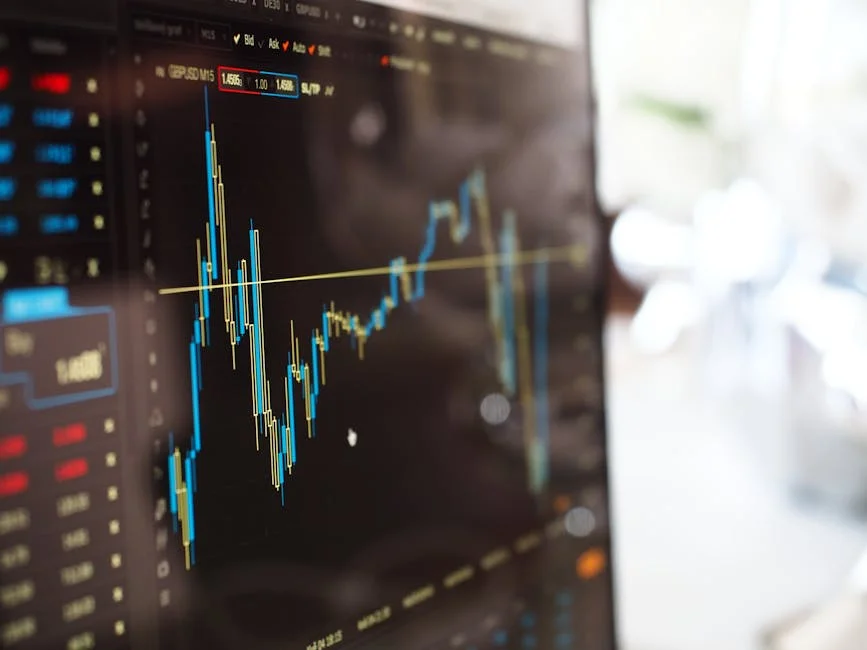
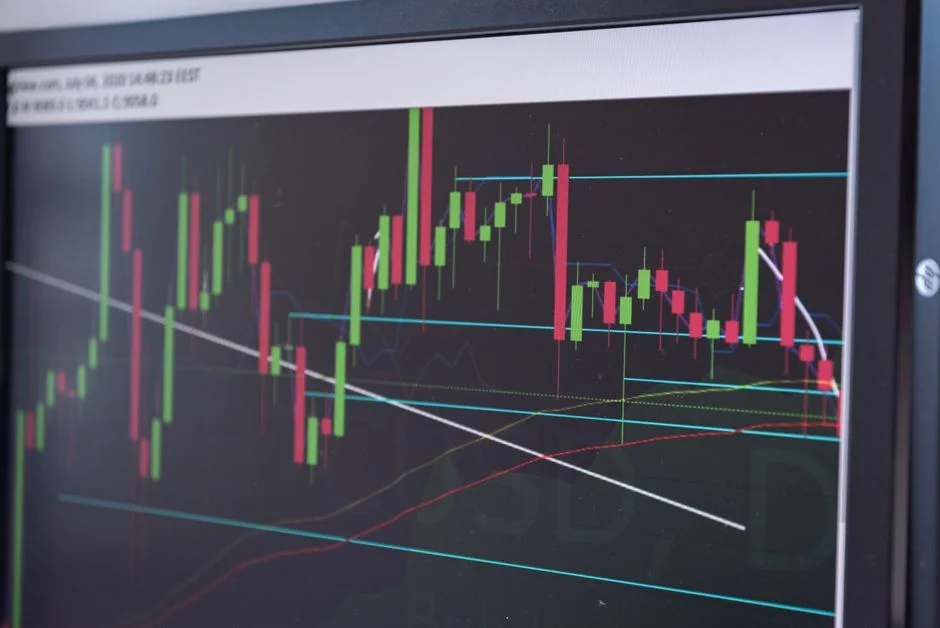
Technical analysis is popular in forex exchange for beginners because it offers a visual way to structure decisions. The basic premise is that price reflects all known information and that patterns in price behavior can repeat due to human psychology and market structure. A foundational skill is recognizing trend direction. An uptrend generally forms higher highs and higher lows, while a downtrend forms lower highs and lower lows. Trend identification matters because many strategies perform better when aligned with the dominant direction; buying in an uptrend and selling in a downtrend can improve probabilities compared to constantly trying to catch reversals. Support and resistance are also core ideas: support is an area where buying has historically emerged, while resistance is an area where selling has historically appeared. These levels are not perfect lines; they are zones where order flow tends to cluster. Beginners often improve by drawing fewer, more meaningful levels rather than cluttering charts with dozens of lines.
| Option | Best for beginners | Pros | Watch-outs |
|---|---|---|---|
| Spot Forex (trading currency pairs) | Learning how FX pricing, pips, and spreads work with small position sizes | High liquidity; many major pairs; easy to start with demo accounts; 24/5 market access | Leverage can magnify losses; spreads/commissions vary by broker; overnight swap/rollover fees may apply |
| Forex CFDs (broker-based contracts) | Practice short-term trading with flexible sizing and built-in platforms | Go long or short easily; often low minimums; wide instrument access in one account | Counterparty risk to broker; fees can include spreads + financing; not available/regulated the same in all countries |
| FX via ETFs/Index Funds (currency exposure) | Longer-term exposure without active trading | Simpler risk management; no margin required in many cases; can be held in standard brokerage accounts | Less precise control over entry/exit; may not track spot perfectly; fund fees and market-hours limits |

Expert Insight
Start by mastering the basics of currency pairs and risk control: focus on one or two major pairs (like EUR/USD) and use a demo account to practice placing market, limit, and stop orders. Keep risk per trade small—typically 1% or less of your account—and always set a stop-loss before you enter. If you’re looking for forex exchange for beginners, this is your best choice.
Build a simple, repeatable routine: trade only during the most liquid sessions for your chosen pair, check an economic calendar to avoid surprise volatility around major news, and write down every trade with your entry, exit, and reason. Review your journal weekly to spot patterns, cut impulsive trades, and refine one strategy at a time. If you’re looking for forex exchange for beginners, this is your best choice.
Indicators can help, but they should support a plan rather than replace thinking. Moving averages can smooth price and help identify trend direction or dynamic support and resistance. The Relative Strength Index (RSI) can highlight momentum and potential overbought or oversold conditions, though those terms can be misleading in strong trends where “overbought” can persist. MACD, stochastic oscillators, and volatility tools like ATR can also be useful when you understand what they measure. For forex exchange for beginners, the key is to avoid stacking many indicators that all derive from the same price data, creating false confidence. A cleaner approach is to combine a simple trend filter, a clear entry trigger, and a risk rule. Candlestick patterns can provide entry cues, but they work best when paired with context: where they occur relative to support, resistance, or trend structure. Backtesting and replay tools can help you see how a setup behaves across different market conditions. Technical analysis is not about predicting with certainty; it’s about defining when you will act, where you will exit if wrong, and how you will manage the trade if right.
Risk Management for New Traders: Position Sizing, Stops, and Survival
Risk management is the part of forex exchange for beginners that determines whether you stay in the game long enough to learn. Many beginners focus on finding the “best” entry and ignore sizing, but sizing is what controls damage when a trade fails. A practical risk rule is to risk only a small percentage of your account on a single trade, using a stop-loss that reflects the chart structure rather than an arbitrary number. If your stop is too tight, normal market noise can take you out; if it’s too wide, your position size should be smaller to keep risk consistent. Position sizing connects the stop distance (in pips) to the amount you are willing to lose (in account currency). This turns trading from guessing into controlled decision-making. When you size correctly, no single trade can ruin you, and you can think more clearly because you are not emotionally attached to one outcome.
Stops and exits deserve as much planning as entries. A stop-loss should be placed where your trade idea is invalidated, not where it “feels” comfortable. Take-profit levels can be set at logical areas such as prior highs/lows, key support/resistance zones, or measured move targets, but flexibility is important. Some traders scale out, taking partial profits and letting the remainder run with a trailing stop. For forex exchange for beginners, the priority is consistency: choose one or two exit methods and apply them the same way for enough trades to judge results. Also consider risk in terms of correlation. If you take multiple trades that are essentially the same USD bet, you can unintentionally multiply risk. Another survival principle is to avoid revenge trading after losses. Losses are normal; what destroys accounts is increasing size to “get it back” quickly. Keep a maximum daily loss limit and stop trading when it’s hit. Over time, good risk management turns trading from an emotional rollercoaster into a business-like process where outcomes are shaped by probabilities rather than impulse.
Common Beginner Mistakes and How to Avoid Them
Forex exchange for beginners often goes off track due to a handful of predictable mistakes. One major issue is overleveraging, where a trader uses the maximum position size allowed by margin instead of sizing based on risk tolerance and stop distance. Overleverage makes normal market fluctuations feel catastrophic, leading to premature exits, panic decisions, and blown accounts. Another common mistake is strategy-hopping: switching methods after a few losses without understanding whether the losses are normal variance or a sign of a flawed approach. Every strategy has drawdowns. Without a sufficient sample size, it’s impossible to know whether a method has an edge. Beginners also frequently ignore transaction costs. Spreads, commissions, and slippage can turn a marginal strategy into a losing one, especially if you trade very short timeframes where targets are small relative to costs. Trading during illiquid hours or around high-impact news without a plan can magnify these problems.
Emotional errors are just as damaging. Many newcomers chase trades after a move has already happened, entering late because they fear missing out. Others close winning trades too early because they want to “lock in” profit, while letting losing trades run because they hope the market will come back. This creates a negative expectancy pattern: small wins and large losses. Forex exchange for beginners becomes more stable when you commit to predefined rules: entry criteria, stop placement, target logic, and maximum risk. Another mistake is not keeping records. Without a journal, you can’t identify whether losses come from poor setups, poor execution, or poor discipline. It also helps to avoid trading too many pairs at once. Start with one or two major pairs so you can learn their behavior, average volatility, and response to news. Finally, don’t confuse activity with progress. Taking more trades does not mean learning faster; deliberate practice—reviewing charts, replaying sessions, and analyzing mistakes—builds skill more reliably than constant clicking.
Building a Simple Trading Plan and Practice Routine
A structured plan is the bridge between theory and consistent execution in forex exchange for beginners. A simple trading plan defines what you trade, when you trade, and how you manage risk. Start with the instruments: choose one or two liquid major pairs. Define the timeframe you will use for analysis and execution, such as analyzing on the 4-hour chart and entering on the 1-hour chart, or analyzing on the 1-hour chart and entering on the 15-minute chart. Specify the market condition you prefer: trend-following, range trading, or breakout trading. Then define your setup in observable terms. For example, a trend setup might require price above a moving average, a pullback to a support zone, and a bullish confirmation candle. The more specific your criteria, the easier it is to execute without hesitation. Include rules for when not to trade, such as during major news releases, when spreads widen beyond a threshold, or when you are tired or distracted.

Practice should be deliberate, not random. Begin with a demo account to learn platform mechanics and to test whether you can follow rules without emotional pressure. Then move to a small live account to experience real psychology and execution, keeping risk tiny while you adapt. Forex exchange for beginners benefits from a weekly routine: review higher timeframe structure on the weekend, mark key levels, note scheduled economic events, and create a watchlist of scenarios. During the week, focus on executing only your plan’s setups. After each session, journal trades with screenshots and notes: why you entered, whether you followed rules, how you felt, and what you would improve. Track metrics that matter, such as average risk per trade, win rate, average win versus average loss, and maximum drawdown. Avoid obsessing over daily profit; focus on process metrics like rule adherence. Over time, you can refine the plan by adjusting one variable at a time—entry trigger, stop placement, or session selection—so you can attribute changes in performance to a specific tweak. A plan doesn’t need to be complex; it needs to be clear, testable, and repeatable.
Managing Psychology: Discipline, Patience, and Realistic Expectations
The psychological side of forex exchange for beginners is often underestimated, yet it is where many accounts fail. Trading triggers deep emotions because money is tied to self-worth, security, and control. When a trade moves against you, the urge to avoid being wrong can lead to moving stops, adding to losing positions, or refusing to exit. When a trade moves in your favor, the urge to protect gains can lead to closing too early, preventing your winners from compensating for inevitable losses. Discipline is the ability to follow your plan even when emotions argue otherwise. Patience is the ability to wait for your setup rather than forcing trades out of boredom or anxiety. Both skills improve when risk is appropriately small; if a single trade outcome feels life-changing, your size is too large for your current emotional tolerance.
Realistic expectations are essential. Many marketing messages imply that forex trading is an easy path to quick wealth, but that mindset encourages reckless behavior. Forex exchange for beginners should be approached like learning a profession: progress is measured in months and years, not days. A healthy goal early on is consistency in execution—following rules, controlling risk, and avoiding major mistakes. Profitability can come later as a byproduct of skill and experience. It also helps to accept that uncertainty is permanent. Even the best setups fail, and even poor trades sometimes win. Your job is not to be right all the time; it is to manage a series of trades so that your winners, on average, outweigh your losers while keeping drawdowns survivable. Practical tools can help: pre-trade checklists, maximum trades per day, scheduled breaks, and automatic alerts instead of staring at charts. If you notice anger, fear, or euphoria driving decisions, step away. Trading is performance under uncertainty, and performance improves when your mind is calm, your process is clear, and your risk is controlled.
Costs, Taxes, and Recordkeeping: Treating Trading Like a Business
Forex exchange for beginners becomes more sustainable when you account for real-world frictions: costs, taxes, and documentation. Trading costs include spreads, commissions, overnight financing (swap), and slippage. Spreads and commissions are easy to see, but slippage is more subtle: during fast markets, your order may fill at a worse price than expected. Over time, these costs can significantly affect results, especially for frequent trading styles. Monitoring average spread by session and pair can help you choose more efficient trading windows. Swap can also matter if you hold positions overnight; some pairs have consistently negative carry costs, which can slowly drain performance if your strategy holds trades for days. Understanding these costs helps you set realistic targets and avoid strategies that look profitable on paper but fail net of friction.
Taxes depend on your country and the legal classification of your trading activity. Some jurisdictions treat forex gains as capital gains, others as ordinary income, and some have special rules for derivatives or contracts for difference. Because rules vary widely, it’s wise to consult a qualified tax professional and keep clean records from day one. Forex exchange for beginners should include recordkeeping habits: export trade history from your platform, track deposits and withdrawals, log fees, and maintain a trading journal that includes rationale and screenshots. This documentation helps in three ways: it supports tax reporting, it reveals performance patterns, and it protects you from self-deception. Many traders remember wins vividly and forget the small losses that add up. A record shows the truth. Treat trading as a business by setting monthly review sessions, calculating key statistics, and assessing whether your process is improving. When you see your results as data rather than as a verdict on your intelligence, you can make better decisions. This professional mindset is often the difference between a short-lived attempt and long-term progress.
Next Steps: A Practical Path for Forex Exchange for Beginners
Progress in forex exchange for beginners comes from stacking small, repeatable improvements rather than searching for a secret trick. Start by mastering the mechanics: how to read a quote, how spreads and pips affect outcomes, and how to place orders correctly. Choose a regulated broker, use a platform you can operate without mistakes, and begin with a demo to practice execution. Then transition to a small live account with micro positions so you can experience real emotions while keeping risk controlled. Build a simple plan around one market condition—trend or range—using a small set of tools you understand. Keep a journal, review trades weekly, and measure success by rule adherence and stable risk exposure rather than by short-term profit. Over time, refine your plan based on evidence, not hope, and protect your capital as your most valuable learning resource.
At the same time, respect the market’s complexity. Currencies are influenced by policy, global capital flows, and shifting expectations, so humility and patience are assets. Avoid overleverage, avoid chasing news without preparation, and avoid copying random signals without understanding the logic. If you commit to consistent practice, careful risk management, and honest review, forex exchange for beginners can evolve into a structured skill set where decisions are deliberate and outcomes are measured. The final goal is not constant excitement; it is controlled participation in a market that rewards preparation, discipline, and realistic expectations, making forex exchange for beginners a journey of competence rather than a gamble.
Watch the demonstration video
This video introduces the basics of forex trading for beginners, explaining how currency pairs work, what drives exchange rates, and key terms like pips, spreads, and leverage. You’ll learn how trades are placed, how to read simple charts, and practical risk-management tips to help you start trading more confidently and avoid common mistakes. If you’re looking for forex exchange for beginners, this is your best choice.
Summary
In summary, “forex exchange for beginners” is a crucial topic that deserves thoughtful consideration. We hope this article has provided you with a comprehensive understanding to help you make better decisions.
Frequently Asked Questions
What is forex trading?
Forex trading involves exchanging one currency for another—such as EUR/USD—with the goal of profiting from shifts in exchange rates. Because it takes place in a worldwide market that runs 24 hours a day during the workweek, it’s often seen as a flexible entry point for anyone exploring **forex exchange for beginners**.
How do currency pairs and quotes work?
In a currency pair, the first currency (the base) is priced using the second currency (the quote). For example, if EUR/USD is trading at 1.1000, it means 1 euro is worth 1.10 US dollars—an essential idea to understand in any **forex exchange for beginners**.
What is a pip and why does it matter?
A pip is the standard unit used to measure small price changes in currency pairs—typically 0.0001 for most major pairs. In **forex exchange for beginners**, understanding pips is essential because your profit or loss is determined by how many pips the market moves and the size of your trade.
What is leverage and what are the risks?
Leverage lets you control a larger position with a smaller deposit (margin). It can amplify gains and losses, and you can lose money quickly if the market moves against you. If you’re looking for forex exchange for beginners, this is your best choice.
What costs do beginners pay when trading forex?
Typical trading costs include the spread—the gap between the buy and sell price—plus commissions on certain account types. If you keep a trade open overnight, you may also pay (or sometimes receive) swap or financing charges after the daily rollover, which is an important concept to understand in any **forex exchange for beginners** guide.
How can beginners start trading forex safely?
Use a demo account first, risk a small percent per trade (e.g., 1–2%), always set a stop-loss, avoid high leverage, and trade a simple plan on a few major pairs. If you’re looking for forex exchange for beginners, this is your best choice.
? Looking for more info about forex exchange for beginners? Follow Our Site for updates and tips!

Trusted External Sources
- Foreign Exchange (Forex) Trading for Beginners | Charles Schwab
As of Jul 10, 2026, the forex market is traded nearly 24/7 across major financial centers worldwide. If you’re exploring **forex exchange for beginners**, here are four essential things to understand before you place your first trade.
- How to start forex trading – Saxo Bank
A practical way to begin **forex exchange for beginners** is to start by choosing a reputable broker, then practice with a demo account or a small live account to build confidence. As you go, focus on mastering the essentials—how pips and spreads work, what leverage really means, and how to manage risk—so you can trade with a clear plan instead of guesswork.
- Forex trading for beginners. Reddit help? : r/Forex_Reddit
Jan 5, 2026 … If you’re exploring **forex exchange for beginners**, platforms like MetaTrader 4 are a strong place to start, thanks to their intuitive layout and the wide range of built-in tools, tutorials, and support resources that make learning the basics much easier.
- How to Start Forex Trading: A Guide to Making Money With Forex
At its core, forex trading is about profiting from shifts in the value of one currency compared to another. When you expect one currency to strengthen against its pair, you buy; if you think it will weaken, you sell—aiming to benefit from the price movement either way. For anyone exploring **forex exchange for beginners**, it helps to start with the basics: currency pairs, how exchange rates move, and why global news and economic data can cause prices to rise or fall in seconds.
- Forex Trading for Beginners – Apps on Google Play
Start your trading journey with a friendly, risk-free simulator that makes learning stocks and **forex exchange for beginners** simple and enjoyable. Build confidence as you practice real-world strategies, learn faster, trade smarter, and have fun exploring how financial markets work.