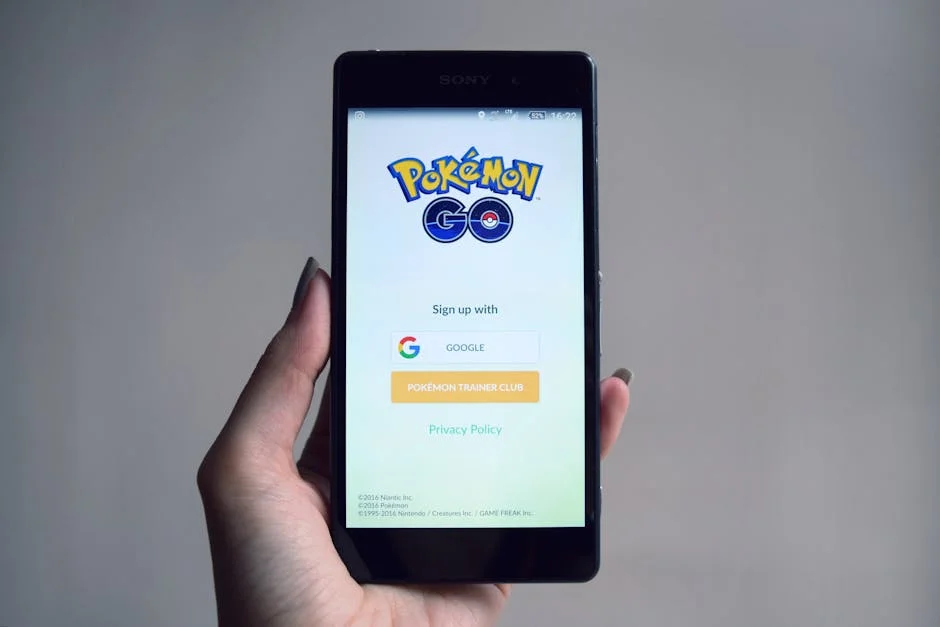
Spoofing in Pokemon Go refers to manipulating a device’s reported GPS location so the game believes a player is somewhere they are not. The concept sounds simple—change the location, then interact with nearby PokéStops, Gyms, and spawns as if you were physically present—but the reality is tied to how location-based games verify movement, measure distance, and protect competitive balance. Pokemon Go was designed around real-world exploration, meaning the core loop assumes a player’s avatar position is anchored to real geography and real travel. When someone uses spoofing in Pokemon Go, that assumption breaks, and the game’s economy of time, travel, and risk changes. Understanding why players seek it out helps explain why it remains a persistent topic in the community, even as enforcement systems and anti-cheat technologies evolve.
Table of Contents
- My Personal Experience
- Understanding spoofing in Pokemon Go and why it exists
- How location data works in Pokemon Go: GPS, sensors, and server-side checks
- Common methods people use for spoofing in Pokemon Go
- Why spoofing changes the game’s economy: raids, rare spawns, and resource farming
- Risks and penalties: bans, strikes, and long-term account damage
- How detection can work: movement anomalies, cooldown patterns, and client integrity
- Ethical and community impact: fairness, accessibility, and local ecosystems
- Expert Insight
- Legitimate alternatives to spoofing: features and strategies that reduce travel pressure
- Event play and regional content: why geography matters and how to approach it fairly
- Account health and safe play habits: avoiding false positives and staying consistent
- The long view: why spoofing persists and what could reduce demand
- Making an informed choice: balancing convenience, rules, and the player experience
- Watch the demonstration video
- Frequently Asked Questions
- Trusted External Sources
My Personal Experience
I’ll admit I tried spoofing in Pokémon GO for a short stretch when I couldn’t get out much—just nudging my location to hit a couple of gyms and spin stops from my couch. At first it felt harmless, like I was only “catching up” to friends who lived in busier areas, and the convenience was honestly addictive. But it started to get stressful fast: I was constantly watching cooldown timers, worried about rubber-banding, and second-guessing every jump because I didn’t want to trigger a strike. The fun part of the game—actually going for a walk and stumbling into random spawns—kind of disappeared, and I realized I was treating it like a chore. After a warning popped up on my account, I deleted the spoofing app and went back to playing normally. It was slower, sure, but it felt way better not having that anxiety hanging over every login. If you’re looking for spoofing in pokemon go, this is your best choice.
Understanding spoofing in Pokemon Go and why it exists
Spoofing in Pokemon Go refers to manipulating a device’s reported GPS location so the game believes a player is somewhere they are not. The concept sounds simple—change the location, then interact with nearby PokéStops, Gyms, and spawns as if you were physically present—but the reality is tied to how location-based games verify movement, measure distance, and protect competitive balance. Pokemon Go was designed around real-world exploration, meaning the core loop assumes a player’s avatar position is anchored to real geography and real travel. When someone uses spoofing in Pokemon Go, that assumption breaks, and the game’s economy of time, travel, and risk changes. Understanding why players seek it out helps explain why it remains a persistent topic in the community, even as enforcement systems and anti-cheat technologies evolve.

Many players are tempted by spoofing in Pokemon Go for practical reasons: limited mobility, remote living areas with few PokéStops, extreme weather, tight schedules, or safety concerns about traveling at night. Others are drawn by competitive motivations, such as chasing region-exclusive spawns, maximizing raid opportunities, or farming resources efficiently. There are also social drivers: joining friends in different cities, participating in events that are geographically distant, or keeping up with local raid groups that have moved on. Yet those motivations sit alongside the game’s rules, which generally prohibit falsifying location. Niantic’s position has been consistent: location manipulation is a form of cheating that undermines fair play. That tension—between accessibility desires and the integrity of a location-based competitive ecosystem—sits at the center of nearly every conversation about spoofing, including how it works, what risks it carries, and what alternatives might better serve players who feel locked out of the intended gameplay.
How location data works in Pokemon Go: GPS, sensors, and server-side checks
To grasp why spoofing in Pokemon Go is detectable, it helps to know how the game interprets movement. A phone’s location comes from multiple sources: GPS satellites, Wi‑Fi positioning, cell tower triangulation, Bluetooth beacons in some contexts, and internal sensors like accelerometers and gyroscopes. Pokemon Go doesn’t rely on a single signal; instead, it sees a stream of location updates, speed changes, and movement patterns. When a player walks, the reported coordinates typically drift in small, natural ways, reflecting normal GPS noise and sensor fusion. When a player rides a car or train, the game sees consistent directional movement with realistic speed ranges, often triggering distance limitations for egg hatching if the speed is too high. This mixture of signals creates a behavioral fingerprint that makes authentic movement look different from artificially injected location jumps.
On the server side, Pokemon Go can compare the timing and distance between location updates, cross-check your travel speed, and look for patterns that are statistically unlikely. Spoofing in Pokemon Go often involves abrupt “teleports” across long distances in short time windows, repeated jumps between hotspots, or perfectly straight movement at constant speeds that don’t match typical GPS drift. Even when spoofing tools attempt to simulate walking routes, the data can still look unnatural if it lacks the micro-variations of real movement or if it conflicts with other device indicators. Niantic can also evaluate account activity: catching Pokémon in one city, then spinning a PokéStop in another city minutes later, or participating in raids across multiple time zones in a way that doesn’t align with real travel. These checks don’t need to be perfect to create risk; they only need to identify anomalies at scale. That’s why discussions about spoofing frequently revolve around “cooldowns,” route simulation, and device-level modifications—because users try to make the location stream appear plausible, while anti-cheat systems evolve to spot exactly those tactics.
Common methods people use for spoofing in Pokemon Go
Players who attempt spoofing in Pokemon Go tend to choose from a few broad categories of methods, each with different levels of complexity and risk. One approach uses software that overrides location at the operating system level, feeding fake coordinates to apps. On Android, this can involve enabling developer options and selecting a mock location app, though modern versions of Pokemon Go and device security measures can make this less reliable than it once was. Another approach uses a tethered GPS tool: the phone is connected to a computer, and the computer application sends location changes to the device. This method is often marketed as “no root” or “no jailbreak,” but it still manipulates location services and can leave detectable traces, especially if movement patterns look unrealistic.
More invasive methods include rooting Android devices or jailbreaking iPhones to gain deeper control over system components, allowing certain tweaks and modules that can hide signs of location manipulation. Some users also rely on modified game clients—unofficial versions of the app with built-in teleporting, joystick movement, and automation features. These modified clients are widely considered among the riskiest options because they change the game code itself, which is easier for server-side systems to flag. The spoofing in Pokemon Go ecosystem also includes “joystick” tools for walking in place, route planners for simulated travel, and automation scripts for catching and spinning. Each step away from normal gameplay increases the chance of detection and sanctions, but it also increases convenience for the user. From an ethical and community perspective, these methods raise the stakes: while a player might justify occasional location changes to access a local park during extreme weather, the same toolset can be used to dominate gyms, snipe rare spawns, or farm resources at a scale that distorts the game’s economy for everyone else.
Why spoofing changes the game’s economy: raids, rare spawns, and resource farming
Pokemon Go is built around scarcity and distribution. Certain Pokémon are rare, certain items are earned through repeated exploration, and event bonuses are designed to reward participation over time. Spoofing in Pokemon Go can compress that time and remove the geographic constraints that create variety between communities. A player who can instantly jump to a dense city center can spin dozens of PokéStops in minutes, stockpile balls and berries, and maintain a steady stream of spawns. That can feel like “catching up,” especially for rural players, but it also creates a gap between those who play within the intended rules and those who don’t. The imbalance becomes more visible during limited-time events, where spoofers can hop between time zones or high-density areas to maximize encounters and shiny checks beyond what a normal travel schedule could support.

Raids amplify this effect. By using spoofing in Pokemon Go, a player can access raid lobbies in multiple regions, chase specific bosses repeatedly, and coordinate with remote groups at any hour. Even with Remote Raid Passes and other accessibility features, spoofing can still give an advantage by allowing a player to be “locally present” anywhere. That matters for gyms and local raid communities because it can skew gym control, reduce the value of local coordination, and undermine the sense of place that location-based games aim to create. The trading economy can also be affected: regionals and distance trades are meant to be special, but spoofing can flood an account with location diversity that was never earned through travel or community exchange. Over time, these distortions can reduce motivation for legitimate players, especially in smaller communities where a few spoofing accounts can dominate gyms, remove variety from local spawns by constant farming, and discourage newcomers who assume they can’t compete without bending the rules.
Risks and penalties: bans, strikes, and long-term account damage
Anyone considering spoofing in Pokemon Go should understand that enforcement is not limited to one-time bans; it can be gradual and account-impacting. Niantic has historically used a strike system that may include warnings, temporary suspensions, and eventual termination for repeated or severe violations. Even when a player avoids an immediate ban, the account can be flagged for further monitoring, which increases future risk. Penalties can also impact gameplay in less obvious ways, such as restricting spawns, disabling certain features, or limiting interactions for a period. The exact mechanics can change over time, but the broader point remains: spoofing is against the rules, and the consequences can extend beyond a short timeout. For players who have invested years into collections, medals, and paid items, the potential loss is significant.
There are also practical risks beyond game enforcement. Many spoofing in Pokemon Go methods require installing third-party tools, granting elevated permissions, or signing into modified apps. That introduces security and privacy concerns: account credentials can be stolen, devices can be exposed to malware, and personal data can be collected without clear consent. Even tools that appear reputable can change ownership, add unwanted components, or push risky updates. Rooting or jailbreaking can weaken the device’s security model, making it easier for other apps or attackers to exploit vulnerabilities. In addition, some spoofing setups can break normal phone functions, cause crashes, or interfere with other location-based services like maps, ride-sharing, or emergency location features. The risk calculus is not just “Will I get caught?” but also “What am I giving up in terms of device integrity, data protection, and account safety?” For many players, the more sustainable path is to use legitimate mechanics—like Remote Raids, event rotations, and community coordination—rather than adopting a spoofing workflow that can unravel years of progress in a single enforcement wave.
How detection can work: movement anomalies, cooldown patterns, and client integrity
Detection is often discussed in the community as if it were a single switch—spoof and get banned—but real systems tend to be probabilistic. Spoofing in Pokemon Go can be detected through patterns that don’t match human travel. Teleporting from one continent to another in minutes is an obvious signal, but there are subtler ones: repeated short jumps that perfectly align with spawn clusters, a consistent “joystick” pace for hours without natural stops, or movement that ignores roads and terrain. Cooldown behavior is another clue. Many spoofers follow community-made “cooldown charts” that recommend waiting a set time after traveling a given distance before catching or spinning again. While waiting can reduce certain soft-lock behaviors, rigid adherence to chart values can itself look artificial when repeated at scale, especially if the account demonstrates a pattern of precise travel-wait-interact cycles that rarely occur in organic play.
Client integrity matters too. Modified apps, injected libraries, and tampered binaries can be identified through signature checks, unusual network calls, or mismatched versions. Even when someone uses a “clean” official app, the environment it runs in may reveal anomalies: debugging flags, mock location settings, or system-level modifications. Niantic can also correlate server-side data with device and account characteristics, looking for clusters of suspicious behavior across many accounts that share similar tool fingerprints. Spoofing in Pokemon Go becomes especially risky when combined with automation—auto-catch routines, bot-like throw accuracy, or repeated interactions at inhuman speed. The more optimized the behavior becomes, the less it resembles a person casually playing while walking around. From a practical standpoint, this is why enforcement waves can feel unpredictable: the anti-cheat system may tolerate borderline anomalies for a while, then update thresholds or add new signals, causing many accounts to be actioned at once. For legitimate players, understanding these detection concepts can also help interpret local gym or raid oddities and report behavior appropriately without turning every unusual playstyle into an accusation.
Ethical and community impact: fairness, accessibility, and local ecosystems
Community reactions to spoofing in Pokemon Go are rarely uniform because players experience the game differently. In dense cities, spoofers can be an annoyance but may blend into the background of high activity. In suburban or rural areas, a single spoofer can reshape the entire local ecosystem by taking over gyms repeatedly, knocking defenders out instantly, and farming coins in a way that blocks legitimate players from participating. That can damage community trust, especially when local chat groups suspect certain accounts but can’t prove it. The result is often a chilling effect: fewer people want to invest time into gym defense or event coordination if the outcome feels predetermined by someone who isn’t physically present. Over time, that can reduce the social energy that makes Pokemon Go special, where meeting at a park for a raid or trading at a community day is part of the experience.
| Aspect | Spoofing in Pokémon GO | Playing Legit (No Spoofing) |
|---|---|---|
| How it works | Uses GPS manipulation (apps/tools) to fake your location and move virtually. | Uses your real GPS location and physical movement to play. |
| Pros / Convenience | Access raids, spawns, and events anywhere; saves travel time; easier farming. | Lower risk, consistent progression; supports local communities and real-world exploration. |
| Risks / Downsides | Violates Niantic terms; can trigger soft bans, strikes, or account termination; may require risky third-party installs. | Limited by real-world distance, weather, and schedule; fewer opportunities for remote/hard-to-reach content. |

Expert Insight
Before trying any spoofing method in Pokémon GO, read Niantic’s Terms of Service and weigh the risk: spoofing can trigger warnings, temporary suspensions, or permanent bans. If you still choose to proceed, reduce red flags by avoiding unrealistic jumps—stick to short, plausible movements and allow real-world travel time between locations. If you’re looking for spoofing in pokemon go, this is your best choice.
Protect your account and device by avoiding “free” downloads from unknown sources and never sharing your login details with third-party tools. Use a separate account for testing, keep your main account clean, and stop immediately if you receive an in-game warning to prevent escalating penalties. If you’re looking for spoofing in pokemon go, this is your best choice.
At the same time, accessibility arguments deserve careful consideration. Some players face mobility limitations, chronic illness, unsafe neighborhoods, or extreme climate conditions that make regular outdoor play difficult. For them, spoofing in Pokemon Go can feel like the only way to participate fully, especially if local infrastructure lacks PokéStops or if public transit is limited. Niantic has tried to address these gaps through features like Remote Raids, increased interaction distances at times, daily incense, and event design that spreads spawns more widely. Yet accessibility is not solved for everyone, and the temptation remains. The ethical tension often comes down to scale and intent: using location manipulation to quietly catch a few Pokémon at home versus using it to dominate gyms across a city or sell rare Pokémon and services. Even if the rules treat all spoofing as prohibited, communities tend to judge impact. A healthier long-term direction is for game design to reduce the pressure that pushes players toward cheating—better rural support, more inclusive mechanics, and event opportunities that don’t require travel—so players can stay within the rules without feeling excluded from the game’s best content.
Legitimate alternatives to spoofing: features and strategies that reduce travel pressure
For players considering spoofing in Pokemon Go because of distance or limited local activity, there are legitimate options that can meaningfully reduce the need to travel. Remote Raid Passes allow participation in raids without being physically present, especially when coordinated through friends lists and community groups. While remote damage adjustments and pass availability can vary, remote raiding remains a core way to access legendary and mega raids from home. Daily Adventure Incense can also help bring spawns to players who can take short walks, even in areas without many PokéStops. Incense, lures, and timed research are designed to deliver encounters in a controlled way, and with careful planning—saving premium items for events, stacking research encounters, and using weather boosts—players can progress without needing to jump across the map.
Resource management strategies can further reduce the perceived need for spoofing in Pokemon Go. If PokéStops are scarce, opening gifts consistently can supply balls and items, and building a friend network becomes a practical substitute for high-density stop farming. Adventure Sync can convert everyday movement—walking at work, pacing at home, or running errands—into egg distance and buddy candy, even when the game isn’t open. For gym coins, focusing on off-peak hours, coordinating with local players for fair rotations, and choosing less-contested gyms can help. In many areas, contributing to the Wayfarer ecosystem (where eligible) by submitting high-quality PokéStop nominations can gradually improve local gameplay for everyone, though it requires patience and adherence to guidelines. The key is that legitimate play often looks slower than spoofing, but it is sustainable and protects the account. It also preserves the local social fabric: trading, raiding, and gym play work best when people trust that others are participating on the same terms. For players who feel forced toward cheating, exploring these alternatives can restore a sense of progress without the constant worry of strikes, account loss, or compromised device security.
Event play and regional content: why geography matters and how to approach it fairly
Regional Pokémon and location-tied events are major reasons spoofing in Pokemon Go stays tempting. The idea of a creature that only appears on another continent can feel exciting, but it can also feel exclusionary to players who may never travel. Niantic has occasionally rotated regionals into global events, eggs, raids, or special research, which provides legitimate windows to obtain them without leaving home. Keeping an eye on seasonal announcements and event calendars helps players plan for these opportunities. Trading remains another intended solution: a player who travels can bring back regionals for friends, and long-distance trades can also support medal progress. These systems are designed to make geography meaningful while still giving communities ways to share content over time.
For ticketed live events, the pressure to spoofing in Pokemon Go can spike because the rewards are often unique: special spawns, boosted shinies, and exclusive research. However, live events are also where rules and enforcement tend to be strict, and accounts that manipulate location can face higher risk. A fair approach is to use official options when available, such as global event counterparts, citywide gameplay add-ons, or later releases of event-exclusive Pokémon through research. Planning can also help: saving coins or budget for a future event, coordinating with friends who attend in person, or prioritizing trades for key dex entries. The broader point is that Pokemon Go’s geography-based design is meant to create aspiration and community exchange, not a requirement to cheat. When players choose legitimate pathways—waiting for rotations, trading, and using global events—they reinforce the economy Niantic built and reduce the incentive for exploitative behaviors that harm local play. While patience can be frustrating in a fast-moving game, it protects long-term enjoyment and ensures that rare content retains its meaning without turning into a contest of who has the most effective location manipulation tools.
Account health and safe play habits: avoiding false positives and staying consistent
Even players who never attempt spoofing in Pokemon Go sometimes worry about false positives, especially when GPS is unstable or when traveling. While no system is perfect, consistent, normal play patterns reduce the chance of being flagged. Using the official app from trusted stores, keeping the operating system updated, and avoiding third-party overlays or automation tools helps maintain a clean environment. If GPS drift causes the avatar to jump around, turning off mock location settings, recalibrating location accuracy, and ensuring Wi‑Fi and Bluetooth scanning are configured appropriately can stabilize signals. Traveling legitimately—by car, train, or plane—can also produce suspicious-looking jumps if the game is left running. A practical habit is to close the game during long-distance travel and reopen it after arrival, allowing the location stream to reset naturally rather than showing rapid changes mid-transit.
Consistency also matters in how you interact with the game world. Rapidly spinning many PokéStops, catching at extreme speed, or switching between distant areas within minutes can resemble spoofing in Pokemon Go even if it occurs during real travel, especially if the device reports inconsistent data. Players who attend conventions, commute across large metro areas, or travel frequently can reduce confusion by allowing a little buffer time before high-intensity play after arriving somewhere new. If you use VPNs for privacy, note that VPNs generally affect IP routing rather than GPS, but unusual combinations of IP region and GPS region can sometimes look odd in broader fraud systems. The safest path is to keep gameplay aligned with real-world movement and avoid any tools that promise “enhanced” location control. For players who previously experimented with location tricks and want to return to legitimate play, the best approach is to stop all manipulation, uninstall questionable apps, and rebuild normal patterns over time. Account health in Pokemon Go is largely about predictability and authenticity: the more your location and actions look like a human walking around and playing at a reasonable pace, the less likely you are to be caught in the crossfire of anti-cheat systems designed to detect spoofing behavior.
The long view: why spoofing persists and what could reduce demand
Spoofing in Pokemon Go persists because the game’s most rewarding loops are tied to geography, density, and timing. Dense urban areas naturally provide more spawns, more raids, and more PokéStops, while rural areas can feel sparse. Events can amplify that disparity by rewarding high encounter volume, and competitive features like gym control can be dominated by players with more access to active locations. When a game ties progress to where you live and how easily you can move, some percentage of the player base will look for shortcuts. Enforcement can reduce the scale, but it rarely eliminates the underlying incentives. As long as the perceived gap between “what I can do legitimately” and “what others can do with tools” remains wide, the conversation around location manipulation will keep resurfacing.

Reducing demand for spoofing in Pokemon Go is more likely to come from design improvements than from purely punitive measures. Better rural gameplay—more ways to earn items, more consistent spawn baselines, and more accessible raid participation—would remove the feeling of being locked out. Continued support for remote-friendly features, fair event distribution across time zones, and systems that reward steady play over pure volume would also help. Community-building tools matter too: if it’s easier to find local raid partners, trade networks, and safe play spaces, the game becomes less dependent on teleporting to hotspots. None of this requires changing the core identity of Pokemon Go as a location-based game; it requires smoothing the edges that push players toward rule-breaking. For individual players, the long view is about protecting what makes the game enjoyable: the sense of discovery, the social moments, and the satisfaction of earning progress through real experiences. Spoofing can offer quick rewards, but it often replaces those rewards with anxiety about bans, distrust in local communities, and an arms race of tools versus detection. A healthier path—both for players and the game—comes from using legitimate mechanics, advocating for inclusive features, and keeping competition grounded in shared rules.
Making an informed choice: balancing convenience, rules, and the player experience
Every player weighs convenience differently, but the rules around spoofing in Pokemon Go are clear enough that the decision is ultimately about risk tolerance and personal values. On one side is the immediate benefit: access to more spawns, easier raids, faster resource farming, and the thrill of “traveling” anywhere. On the other side are the costs: possible strikes or bans, security exposure from third-party tools, and the impact on other players who are competing and collaborating locally. Even if someone believes their usage is harmless, the same behavior pattern can normalize cheating and make it harder for communities to maintain fair gym rotations and welcoming raid groups. The social aspect of Pokemon Go depends on trust—trust that when someone says they’re heading to a gym, they’re actually there, and trust that competition reflects effort rather than software advantages.
For players who feel stuck, it’s worth reframing the goal. Instead of chasing the maximum possible encounters through spoofing in Pokemon Go, focus on sustainable progress: building friendships for gifts and trades, using remote options to join raids, and timing premium items around events that provide the best returns. If safety or mobility is the core issue, prioritize play styles that fit your circumstances—short walks with incense, Adventure Sync, and local meetups in safe public spaces during daytime. If density is the issue, consider contributing to legitimate map improvements through approved nomination systems where available, or coordinating with local groups to identify underused gyms and stops. The game is at its best when progress feels earned and shared, not extracted through loopholes. Spoofing may promise freedom from geography, but it often trades that freedom for instability, both in account security and in community relationships. Keeping gameplay authentic preserves the long-term value of your account and the integrity of the world you share with other trainers, and that is ultimately why spoofing in Pokemon Go remains such a contentious choice.
Watch the demonstration video
In this video, you’ll learn what Pokémon GO spoofing is, how players use it to change their in-game location, and why it’s controversial. We’ll cover common spoofing methods, the risks of bans and account strikes, and how spoofing can impact fairness, raids, and the overall player experience. If you’re looking for spoofing in pokemon go, this is your best choice.
Summary
In summary, “spoofing in pokemon go” is a crucial topic that deserves thoughtful consideration. We hope this article has provided you with a comprehensive understanding to help you make better decisions.
Frequently Asked Questions
What is spoofing in Pokémon GO?
Spoofing is using tools (apps, GPS overrides, emulators, or modified clients) to fake your device’s location so the game thinks you’re somewhere else.
Is spoofing allowed in Pokémon GO?
No—**spoofing in pokemon go** breaks Niantic’s Terms of Service and Player Guidelines, and it can put your account at risk. Players caught doing it may receive a warning, face a temporary suspension, or even get permanently banned.
What are common signs someone is spoofing?
Red flags for **spoofing in pokemon go** include moving at impossible speeds, showing up in far-off locations within minutes, repeatedly having region-exclusive Pokémon, and quickly taking over gyms or joining raids in several widely separated areas as if you were everywhere at once.
What are the risks of spoofing?
Account penalties (strikes/ban), loss of access to events/features, increased security risk from third-party apps, and potential malware or data theft from unofficial tools.
How does Niantic detect spoofing?
Niantic relies on a mix of server-side verification and behavioral signals—like movement that’s physically impossible, device integrity red flags, or other suspicious app activity—to spot spoofing in pokemon go. The exact detection systems aren’t fully public, and they can evolve over time as Niantic updates its approach.
What are safe alternatives to spoofing if I can’t travel?
Make the most of Pokémon GO by jumping into Remote Raids, trading with local players, and showing up for in-game events whenever they’re available. Boost your encounters with Incense and Lures, explore nearby spots safely to find new spawns, and join community groups to coordinate raids and trades—so you can stay active and connected without relying on **spoofing in pokemon go**.
? Looking for more info about spoofing in pokemon go? Follow Our Site for updates and tips!

Trusted External Sources
- Pokémon GO Spoofing – The #1 Hub for Spoofers! – Reddit
Jul 11, 2026 … r/PokemonGoSpoofing: Pokémon Go Spoofing – The #1 Hub for Pokémon Go Android and iOS Spoofing!
- How do yall be spoofing ? AND get away with it – Facebook
Nov 13, 2026 — Spoofing is a deceptive tactic where a person or program disguises itself as a trusted source to mislead others into sharing sensitive information or taking harmful actions. You’ll often hear the term in many contexts, including **spoofing in pokemon go**, where players may fake their location to appear somewhere they’re not.
- How do I start Spoofing : r/PoGoAndroidSpoofing – Reddit
Jul 5, 2026 … Im a regular pokemon go user, my family is very into pokemon go, and I wanna start learning how to spoof, or create systems for farming xp, … If you’re looking for spoofing in pokemon go, this is your best choice.
- The Reason Spoofing Is Such A Big Problem – GO Hub Forum
Aug 22, 2026 … After Reading a lot of Pokémon go news you start to find a recurring theme, How pokemon go is unfair, and spoofers. The whole Pokémon go is … If you’re looking for spoofing in pokemon go, this is your best choice.
- How is spoofing detected? : r/PokemonGoSpoofing – Reddit
Mar 3, 2026 … Comments Section · use tethered GPS overrider software. · Use the official Pokemon Go game app. · Spoof only with the bot method. · Observe real- … If you’re looking for spoofing in pokemon go, this is your best choice.