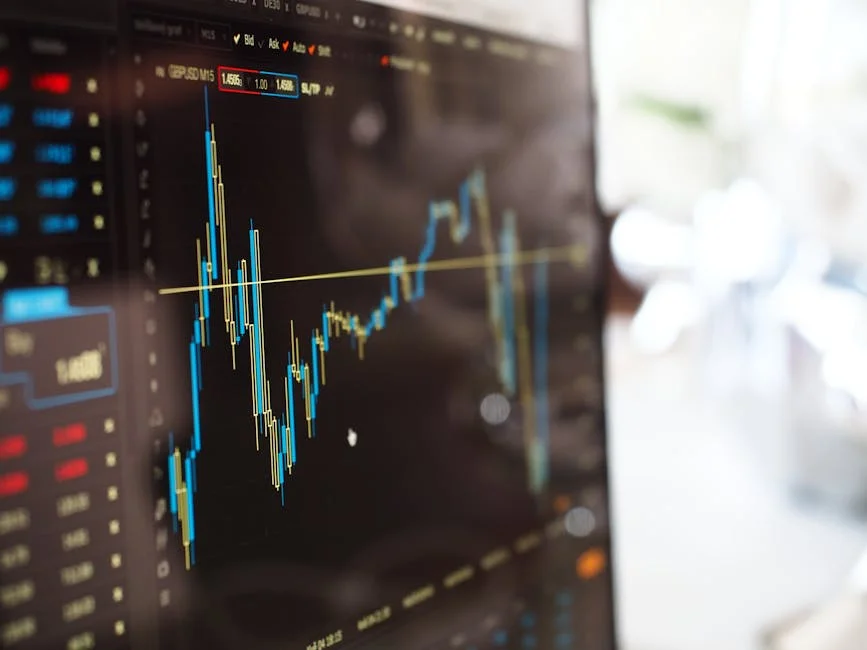
What is foreign exchange trading? It is the process of buying one currency while simultaneously selling another currency, with the goal of benefiting from changes in exchange rates. Unlike purchasing a stock that represents a share in a company, foreign exchange activity revolves around the relative value between two national currencies, such as the euro versus the US dollar or the British pound versus the Japanese yen. This market exists because the global economy constantly requires currency conversion: businesses import and export goods, travelers exchange money, governments manage reserves, and investors move capital between countries. Whenever money crosses borders, prices in one currency must be translated into another, and those translation rates fluctuate due to supply and demand. That constant need to convert currencies is what creates the liquidity and continuous price movement that traders seek. The “trading” part refers to taking positions based on expectations about whether a currency will strengthen or weaken relative to another, often using specialized platforms provided by brokers or financial institutions.
Table of Contents
- My Personal Experience
- Understanding What Is Foreign Exchange Trading and Why It Exists
- How Currency Pairs Work: Base, Quote, and the Meaning of a Price
- Market Participants: Banks, Corporations, Funds, and Retail Traders
- Trading Sessions and Liquidity: Why Forex Runs 24 Hours a Day
- What Moves Exchange Rates: Interest Rates, Inflation, Growth, and Sentiment
- How Trades Are Placed: Orders, Execution, and Common Position Types
- Leverage and Margin: The Powerful Tool That Amplifies Gains and Losses
- Costs and Pricing: Spreads, Commissions, Swaps, and Slippage
- Expert Insight
- Risk Management Essentials: Position Sizing, Stop-Losses, and Drawdowns
- Common Strategies and Analysis Styles: Technical, Fundamental, and Hybrid Approaches
- Choosing a Broker and Platform: Regulation, Safety, and Practical Features
- Realistic Expectations and the Learning Curve: Skills, Psychology, and Practice
- Foreign Exchange Trading Instruments Beyond Spot: Forwards, Futures, and Options
- Practical Examples of How a Currency Trade Is Structured and Measured
- Key Takeaways: Defining What Is Foreign Exchange Trading for Modern Traders
- Watch the demonstration video
- Frequently Asked Questions
- Trusted External Sources
My Personal Experience
I first heard about foreign exchange trading (forex) when a coworker mentioned he was “trading currencies” after work, and I assumed it was something only banks did. When I finally looked into it, I realized forex trading is simply buying one currency while selling another—like EUR/USD—trying to profit from small changes in exchange rates as economies, interest rates, and news shift. I opened a demo account and watched how quickly prices moved, even on quiet days, because the market runs nearly 24 hours during the week. The spreads and leverage were what surprised me most: it felt easy to place a trade, but it was just as easy to lose money if I didn’t manage risk. After a few weeks of tracking trades and reading about central bank announcements, I understood why people treat forex less like a side hustle and more like a skill that takes patience and discipline. If you’re looking for what is foreign exchange trading, this is your best choice.
Understanding What Is Foreign Exchange Trading and Why It Exists
What is foreign exchange trading? It is the process of buying one currency while simultaneously selling another currency, with the goal of benefiting from changes in exchange rates. Unlike purchasing a stock that represents a share in a company, foreign exchange activity revolves around the relative value between two national currencies, such as the euro versus the US dollar or the British pound versus the Japanese yen. This market exists because the global economy constantly requires currency conversion: businesses import and export goods, travelers exchange money, governments manage reserves, and investors move capital between countries. Whenever money crosses borders, prices in one currency must be translated into another, and those translation rates fluctuate due to supply and demand. That constant need to convert currencies is what creates the liquidity and continuous price movement that traders seek. The “trading” part refers to taking positions based on expectations about whether a currency will strengthen or weaken relative to another, often using specialized platforms provided by brokers or financial institutions.

Foreign exchange trading is widely known as “forex” or “FX,” and it is frequently described as the largest financial market in the world by daily turnover. Its scale is tied to its role as the plumbing of international commerce and finance: banks quote prices to each other, corporations hedge future payments, asset managers adjust currency exposure, and individual speculators attempt to profit from short-term trends. The market’s structure differs from many centralized exchanges because much of FX is traded over-the-counter, meaning pricing and execution occur through networks of banks, liquidity providers, and electronic venues rather than a single physical exchange. That decentralized structure contributes to round-the-clock activity from Monday through Friday, as trading follows the sun across major financial centers. Understanding what is foreign exchange trading also means recognizing that it is fundamentally a relative game: no currency is “up” or “down” in isolation; it moves in relation to another currency in a pair, and the reasons for those moves can range from interest-rate decisions to geopolitical shocks.
How Currency Pairs Work: Base, Quote, and the Meaning of a Price
To grasp what is foreign exchange trading at a practical level, it helps to understand currency pairs and how they are quoted. Every FX quote is expressed as a pair, such as EUR/USD, where the first currency is the base currency and the second is the quote currency. The price tells you how much of the quote currency is needed to buy one unit of the base currency. If EUR/USD is 1.0800, that means one euro costs 1.08 US dollars. When the quote rises, the base currency is strengthening relative to the quote currency; when it falls, the base currency is weakening. This paired structure is not just a formatting choice—it reflects the reality that exchanging currency always involves two sides. Even when someone says “the dollar is strong,” they usually mean “the dollar is strong versus a basket of other currencies,” and in actual transactions that strength shows up as moves in pairs like USD/JPY, GBP/USD, or USD/CHF.
Currency pairs are often grouped by liquidity and market conventions. Major pairs typically include the US dollar on one side and a heavily traded currency on the other, such as EUR/USD, USD/JPY, GBP/USD, AUD/USD, and USD/CAD. Cross pairs exclude the US dollar, such as EUR/GBP or EUR/JPY, and can behave differently because their movement reflects the interaction of two non-USD economies. Exotic pairs involve a major currency against a less-traded currency, such as USD/TRY or EUR/ZAR, and may have wider spreads and higher volatility. In foreign exchange trading, the price is also shaped by the bid and ask: the bid is what buyers can sell at, and the ask is what buyers can buy at. The difference between them is the spread, which is a key transaction cost. Understanding what is foreign exchange trading includes knowing that the “cost” of entering a trade is often embedded in that spread and that liquidity conditions can cause spreads to widen during news events or low-volume sessions.
Market Participants: Banks, Corporations, Funds, and Retail Traders
What is foreign exchange trading without the people and institutions that drive it? The FX market is an ecosystem where participants trade for different reasons. Large commercial and investment banks are central because they provide liquidity, quote two-way prices, and facilitate transactions for clients. Corporations participate because they have real business exposures: an importer may need to buy foreign currency to pay suppliers, while an exporter may receive foreign currency revenues and want to convert them into their home currency at favorable rates. Multinational companies often hedge expected cash flows using forwards or options to reduce uncertainty. Governments and central banks are participants too, not as profit-seeking traders in the usual sense, but as policy actors who may intervene to stabilize markets, influence inflation, or manage foreign reserves. Their statements and actions can reshape sentiment quickly, affecting exchange rates across multiple pairs.
Investment funds, including hedge funds, macro funds, and asset managers, trade currencies to express views on economic cycles, interest-rate differentials, and risk appetite. A fund might buy a currency with rising yields and sell one with falling yields, or it might use FX to hedge overseas equity and bond holdings. Retail traders—individuals trading through online brokers—are another layer of participation. Retail trading has grown due to accessible platforms, lower minimum deposits, and educational content, but it comes with challenges such as leverage, costs, and psychological pressure. In foreign exchange trading, the presence of diverse players means price movement reflects both “real economy” flows and speculative positioning. A currency can rise because a country’s exports surge, because a central bank signals tighter policy, or because investors collectively seek safe-haven assets during a crisis. Understanding what is foreign exchange trading includes recognizing that these motives can conflict, creating trends, reversals, and periods of choppy range-bound behavior.
Trading Sessions and Liquidity: Why Forex Runs 24 Hours a Day
What is foreign exchange trading in terms of timing? One of the most distinctive features of the FX market is that it operates nearly 24 hours a day from Monday morning in Asia to Friday evening in North America. This continuous schedule exists because currency exchange is required across global time zones, and because major financial centers open and close in sequence. Traders often describe the market through sessions: the Asian session (often associated with Tokyo, Hong Kong, and Singapore), the European session (with London as a key hub), and the North American session (with New York as a major center). Liquidity and volatility can vary by session. For example, pairs involving the Japanese yen may be more active during Asian hours, while EUR/USD often sees heavy activity during London and New York overlap. Those overlaps matter because when more participants are active, spreads can tighten and price movement can accelerate.
Liquidity refers to how easily a position can be opened or closed without causing a large price change. Highly liquid pairs tend to have smaller spreads and more consistent execution. Less liquid pairs, especially exotics, may experience wider spreads and more slippage, particularly around economic announcements. In foreign exchange trading, session dynamics also interact with news flow. Many high-impact data releases—employment reports, inflation readings, central bank decisions—are scheduled at specific times, often aligned with local market hours. That timing can concentrate volatility into predictable windows, even though the market never truly “stops” during the week. Understanding what is foreign exchange trading includes appreciating that the 24-hour nature can be a benefit for flexibility, but it can also tempt traders into over-monitoring charts. Successful participation often involves choosing the session and instruments that match a trader’s strategy, risk tolerance, and ability to manage positions responsibly.
What Moves Exchange Rates: Interest Rates, Inflation, Growth, and Sentiment
What is foreign exchange trading if not a way to take a position on how economies compare? Exchange rates respond to a mix of fundamental forces, with interest rates among the most influential. When a country’s central bank raises rates, its currency may attract more capital because investors can earn higher yields on deposits or bonds denominated in that currency. Conversely, rate cuts can reduce yield appeal. Inflation is another key driver because it affects purchasing power and can influence central bank policy. If inflation is persistently high, a central bank might tighten policy to cool demand, which could support the currency; however, if inflation undermines confidence or signals instability, the currency could weaken. Economic growth, employment conditions, and trade balances also matter. Strong growth can attract investment, but it can also widen trade deficits if imports rise faster than exports, which may pressure the currency depending on capital inflows and market expectations.

Beyond macro data, market sentiment and risk appetite can dominate, especially in times of uncertainty. Investors often treat certain currencies as “safe havens,” such as the US dollar, Japanese yen, or Swiss franc, because of perceived stability and liquidity. In risk-off environments—when fear rises—capital may flow into those currencies, strengthening them even if domestic data is not particularly strong. Commodity-linked currencies like the Australian dollar, Canadian dollar, or Norwegian krone may respond to shifts in commodity prices, global demand, and China-related growth expectations. Political developments, elections, fiscal policy changes, and geopolitical conflicts can also move FX markets quickly. In foreign exchange trading, expectations often matter as much as the data itself. If the market has already priced in a rate hike, the currency may not rise when the hike occurs; it may even fall if guidance is less hawkish than anticipated. Understanding what is foreign exchange trading means understanding that exchange rates are forward-looking and driven by relative expectations between two economies rather than isolated headlines.
How Trades Are Placed: Orders, Execution, and Common Position Types
What is foreign exchange trading in day-to-day practice? It typically involves using a trading platform to place orders on currency pairs. A trader can open a long position if they expect the base currency to appreciate against the quote currency, or a short position if they expect it to depreciate. Orders can be executed at the current market price (market orders) or triggered at specific levels (pending orders). Common pending orders include limit orders, which aim to buy below the current price or sell above it, and stop orders, which aim to buy above or sell below the current price to capture breakouts or manage risk. Execution quality depends on liquidity, volatility, and the broker’s routing. During calm conditions, fills may be close to expected prices; during fast markets, slippage can occur, resulting in fills at worse or occasionally better prices than requested.
Different position styles exist in foreign exchange trading, including scalping (very short-term trades seeking small moves), day trading (positions opened and closed within the same day), swing trading (holding for days to weeks), and longer-term macro positioning. Each approach uses different tools and time horizons. A scalper may focus on spreads, microstructure, and execution speed, while a swing trader may emphasize trend structure, support and resistance, and broader catalysts. Some traders rely on technical analysis, using charts and indicators to identify patterns and momentum. Others emphasize fundamental analysis, focusing on economic releases, central bank policy, and valuation. Many combine both, using fundamentals to set a directional bias and technicals to time entries and exits. Understanding what is foreign exchange trading includes knowing that the mechanics of placing orders are straightforward, but consistent results depend on discipline, a tested method, and careful attention to transaction costs and risk limits.
Leverage and Margin: The Powerful Tool That Amplifies Gains and Losses
What is foreign exchange trading for many retail participants is inseparable from leverage. Leverage allows a trader to control a larger position size than the cash they deposit, by using borrowed funds provided through margin. For example, with 30:1 leverage, a trader may control a $30,000 position with $1,000 of margin, depending on jurisdiction and broker rules. This structure can make currency trading accessible because exchange rate changes are often small in percentage terms; leverage magnifies the impact of those small moves on account equity. However, the same magnification applies to losses. A relatively minor adverse move can quickly erode margin, trigger a margin call, or force an automatic liquidation if the account falls below required levels. This is why leverage is often described as a double-edged sword and why many regulators limit maximum leverage for retail clients.
Margin is not a fee; it is a portion of funds set aside as collateral for open positions. The broker calculates required margin based on position size, leverage, and instrument characteristics. Free margin refers to funds available to open new positions or absorb losses. In foreign exchange trading, prudent risk control often means using far less than the maximum leverage available. Traders may size positions so that a stop-loss, if hit, results in a predefined percentage loss of account equity. That approach helps prevent a string of losing trades from causing irreparable damage. It also encourages planning rather than impulsive trading. Understanding what is foreign exchange trading includes understanding that leverage can create the illusion of easy profitability, especially when a few early trades go well. Sustainable participation requires treating leverage as an optional tool to be used carefully, not as a default setting. The goal is to remain solvent and consistent long enough for any edge—technical, fundamental, or behavioral—to play out over many trades.
Costs and Pricing: Spreads, Commissions, Swaps, and Slippage
What is foreign exchange trading without considering its costs is an incomplete picture. Every trade has friction, and those frictions can determine whether a strategy is viable. The most visible cost is the spread, the difference between bid and ask prices. In many retail accounts, the broker earns revenue primarily through the spread, offering “commission-free” trading while embedding costs in wider pricing. Other account types charge explicit commissions while offering tighter spreads, especially on major pairs. Beyond entry costs, there are holding costs known as swaps or rollover, which reflect the interest rate differential between the two currencies in a pair. If a trader holds a position overnight, the account may be credited or debited depending on the direction of the trade and prevailing rates. These financing adjustments can be small day-to-day but significant over weeks, particularly in pairs with large rate differentials.
Expert Insight
Foreign exchange (forex) trading is the buying and selling of currencies in pairs (like EUR/USD) to profit from changes in exchange rates. Start by focusing on a few major pairs with high liquidity, and always check the economic calendar so you know when interest-rate decisions, inflation reports, or jobs data could trigger sharp moves. If you’re looking for what is foreign exchange trading, this is your best choice.
Manage risk before chasing returns: decide your maximum loss per trade (for example, 1–2% of your account), place a stop-loss as soon as you enter, and size your position accordingly. Keep a simple trading journal that records your entry, exit, and reason for the trade so you can spot patterns and refine what works. If you’re looking for what is foreign exchange trading, this is your best choice.
Slippage is another practical cost, occurring when an order is filled at a different price than expected. Slippage can happen during high volatility, low liquidity, or when using market orders around news events. Some platforms offer tools like guaranteed stop-loss orders, but these may come with additional fees or wider spreads. In foreign exchange trading, costs also include the opportunity cost of tying up margin and the potential impact of execution delays. Strategies that target small profits per trade, such as scalping, are especially sensitive to spreads and slippage. Even swing strategies must account for rollover and the possibility that spreads widen during off-hours or market stress. Understanding what is foreign exchange trading includes learning to evaluate a broker’s pricing model, read contract specifications, and backtest strategies with realistic assumptions about costs. A method that looks profitable on a frictionless chart can become unprofitable once spreads, commissions, and financing are included.
Risk Management Essentials: Position Sizing, Stop-Losses, and Drawdowns
What is foreign exchange trading from a professional standpoint is largely the practice of risk management. Exchange rates can move quickly due to data surprises, central bank decisions, or sudden geopolitical headlines. Because of leverage, even modest volatility can have an outsized impact on account equity. Position sizing is the foundation: determining how large a trade should be relative to account size, volatility, and the distance to a stop-loss. Many traders limit the risk per trade to a small percentage of equity, such as 0.5% to 2%, to survive inevitable losing streaks. Stop-loss orders help define the maximum loss on a trade by closing the position if price reaches a level that invalidates the trade idea. While stops cannot guarantee an exact exit price during extreme gaps or illiquid moments, they provide structure and help prevent a small mistake from turning into a catastrophic loss.
| Aspect | Foreign Exchange (Forex) Trading | Stock Trading | Crypto Trading |
|---|---|---|---|
| What you trade | Currency pairs (e.g., EUR/USD), trading one currency against another. | Shares of companies (ownership stakes) listed on exchanges. | Digital assets/coins (e.g., BTC, ETH) traded against fiat or other crypto. |
| Market hours & access | Typically 24 hours a day, 5 days a week via global OTC market. | Set exchange hours (varies by country), with limited after-hours sessions. | 24/7 trading on exchanges worldwide. |
| Common drivers | Interest rates, inflation, central bank policy, macro data, geopolitics. | Earnings, company news, sector trends, broader market sentiment. | Network adoption, regulation, liquidity flows, risk sentiment, tech updates. |

Drawdown—the peak-to-trough decline in account value—is another key concept. In foreign exchange trading, a strategy can be profitable overall yet still experience significant drawdowns that test discipline. Planning for drawdowns means using realistic expectations, avoiding excessive leverage, and keeping enough capital to withstand volatility. Risk management also includes diversification across pairs or strategies, though diversification in FX can be tricky because many currencies correlate during risk-on or risk-off moves. Another critical element is event risk: major scheduled announcements and unexpected news can cause sharp moves and spread widening. Traders may reduce exposure ahead of key events, use wider stops with smaller position sizes, or avoid trading during certain releases. Understanding what is foreign exchange trading includes understanding that no entry signal can overcome poor risk control. Over time, consistent position sizing, a clear exit plan, and a commitment to protecting capital tend to matter more than finding the perfect indicator or predicting every market turn.
Common Strategies and Analysis Styles: Technical, Fundamental, and Hybrid Approaches
What is foreign exchange trading strategy-wise depends on the lens a trader uses to interpret price movement. Technical analysis focuses on historical price and volume-related proxies (since centralized volume is limited in spot FX), using chart patterns, trendlines, support and resistance, and indicators such as moving averages, RSI, or MACD. Technical traders may look for breakouts, pullbacks in a trend, mean reversion in ranges, or momentum shifts after key levels are breached. The appeal of technical methods is their adaptability across time frames and instruments, and the fact that they can be rules-based. However, technical signals can fail during news-driven spikes or regime changes, when volatility and correlations shift. Many traders address this by filtering signals with volatility measures or by avoiding trading during high-impact releases.
Fundamental analysis in foreign exchange trading examines economic conditions and policy expectations. Traders might compare inflation trajectories, labor market strength, fiscal stability, and central bank reaction functions to anticipate interest-rate differentials. They may also monitor leading indicators like PMIs, consumer confidence, and credit conditions. A fundamental view often plays out over longer horizons, but it can also guide short-term trades around catalysts. Hybrid approaches are common: a trader may develop a macro bias—bullish on a currency because of tightening policy expectations—then use technical levels to time entries, manage risk, and scale positions. Another hybrid style is sentiment and positioning analysis, using tools like COT reports, options-implied volatility, or risk reversals to gauge how crowded a trade might be. Understanding what is foreign exchange trading includes realizing that there is no single best strategy; effectiveness depends on the trader’s time availability, temperament, and ability to execute consistently under pressure. The most durable approaches tend to be simple, testable, and paired with strong risk controls.
Choosing a Broker and Platform: Regulation, Safety, and Practical Features
What is foreign exchange trading in the retail world often begins with selecting a broker, and that choice can shape the entire experience. Regulation is one of the first considerations. A regulated broker is subject to oversight regarding client fund segregation, reporting, and conduct standards, though rules vary by jurisdiction. Traders often look for regulators with strong enforcement and clear protections. Beyond regulation, traders consider execution model and transparency. Some brokers operate with dealing desks, while others provide access to external liquidity through STP/ECN-style routing; in practice, the details can be complex, and what matters is reliable execution, fair pricing, and clear disclosure. Platform stability is critical as well. A platform should provide accurate quotes, fast order placement, robust charting, and clear account metrics such as margin, swap rates, and open profit and loss.
Practical features matter in foreign exchange trading because small operational issues can become costly. Traders may want advanced order types, one-click trading, alerts, and mobile access. They may also evaluate whether the broker supports micro lots for precise position sizing, and whether it offers competitive spreads during the specific sessions they trade. Deposit and withdrawal reliability is another vital factor; delays or unclear fees can signal operational risk. Customer support quality matters during urgent issues such as platform outages or execution disputes. Some traders value additional tools like economic calendars, sentiment indicators, or integrated news feeds, but these should not substitute for a sound trading plan. Understanding what is foreign exchange trading includes recognizing that broker selection is not merely about the lowest spread advertised on a homepage; it is about the total trading environment—regulatory safeguards, execution reliability, transparent costs, and the ability to manage risk efficiently across different market conditions.
Realistic Expectations and the Learning Curve: Skills, Psychology, and Practice
What is foreign exchange trading for many newcomers is often presented as a fast path to profits, but realistic expectations are essential. Currency markets can be efficient, with prices reacting quickly to new information. That means consistent profitability typically requires a repeatable edge, rigorous risk control, and the patience to let probability work over many trades. The learning curve includes understanding market mechanics, building a method, and developing execution discipline. Many traders start by experimenting with demo accounts to learn how orders work and how spreads and swaps affect results. However, demo trading can differ emotionally from live trading because real money introduces fear, greed, and hesitation. A thoughtful transition often involves trading small sizes, focusing on process goals—such as following rules and journaling—rather than chasing short-term profit targets.
Psychology is a major factor in foreign exchange trading because the market provides constant feedback, and that feedback can trigger impulsive behavior. Common pitfalls include revenge trading after losses, overtrading during boredom, moving stop-losses to avoid being wrong, and increasing leverage after a winning streak. Building resilience often involves predefining risk, accepting uncertainty, and treating each trade as one of many. Journaling can help identify patterns in decision-making, such as taking trades outside of plan or trading during unsuitable sessions. Another key skill is scenario planning: considering what would invalidate a trade idea, what news could disrupt it, and how to respond if volatility increases. Understanding what is foreign exchange trading includes acknowledging that it is not only analytical; it is behavioral. Many strategies fail not because the idea is flawed, but because execution breaks down under stress. A sustainable approach emphasizes consistent routines, continuous learning, and a focus on long-term performance rather than short-term excitement.
Foreign Exchange Trading Instruments Beyond Spot: Forwards, Futures, and Options
What is foreign exchange trading is often associated with spot transactions, but currency exposure can be traded and managed through multiple instruments. Spot FX refers to the exchange of currencies for near-immediate settlement, commonly two business days for many pairs. Forwards are customized contracts to exchange currencies at a future date at a rate agreed upon today. They are widely used by corporations to hedge future payments or receipts, reducing uncertainty in budgeting and pricing. Futures are standardized contracts traded on centralized exchanges, offering transparency and regulated clearing. Currency futures can appeal to traders who prefer exchange-traded environments, centralized volume data, and standardized contract terms, though they may have different liquidity profiles compared to spot in certain pairs.

Options provide the right, but not the obligation, to buy or sell a currency pair at a specified price before a certain date. In foreign exchange trading, options can be used for hedging, for expressing directional views with defined risk, or for trading volatility itself. For example, a company concerned about a currency weakening might buy a put option to protect downside while keeping upside potential. Traders may use strategies like spreads or straddles to position for expected volatility around events. Options markets also produce implied volatility measures that can inform spot traders about market expectations for future movement. Understanding what is foreign exchange trading includes recognizing that the FX ecosystem is broader than clicking buy and sell on a spot chart. Different instruments offer different risk profiles, cost structures, and use cases, and sophisticated participants often combine them. Even if a retail trader primarily uses spot FX, knowing how forwards, futures, and options influence market flows can provide context for why certain levels hold, why volatility expands, or why price reacts sharply around hedging-related expiries.
Practical Examples of How a Currency Trade Is Structured and Measured
What is foreign exchange trading becomes clearer with concrete mechanics. Suppose a trader believes the euro will strengthen against the US dollar due to improving growth data in the euro area and a shift toward tighter policy expectations. They might buy EUR/USD, meaning they are long euros and short dollars. If EUR/USD rises from 1.0800 to 1.0900, the position gains because each euro now exchanges for more dollars. Profit and loss are typically measured in pips, a standardized unit of price movement. For many pairs, one pip is 0.0001, though for yen pairs it is often 0.01. The value of a pip depends on position size and the pair’s quote conventions. This is why position sizing tools are important: a 50-pip stop-loss has very different dollar risk depending on whether the trader is using a micro lot, a standard lot, or something in between.
Another example involves a carry-type idea, where a trader seeks to benefit from interest-rate differentials by buying a higher-yielding currency and selling a lower-yielding one, aiming to earn positive rollover while also seeking favorable price movement. In foreign exchange trading, carry can work during stable risk-on periods but can unwind violently when risk sentiment shifts. This illustrates how a trade has multiple drivers: price direction, financing, and volatility. Measuring performance should include all components—realized gains, unrealized swings, spreads paid, commissions, and swap. Traders often track metrics like win rate, average win versus average loss, expectancy, and maximum drawdown. Understanding what is foreign exchange trading includes understanding that a single winning trade does not validate a method, and a single losing trade does not invalidate it. What matters is whether the structure—entry, stop, target, and sizing—produces a positive expectancy over a sufficiently large sample, with risk kept within tolerable limits.
Key Takeaways: Defining What Is Foreign Exchange Trading for Modern Traders
What is foreign exchange trading at its core is participation in the global pricing of money, where currencies rise and fall relative to each other based on interest rates, inflation trends, growth expectations, risk sentiment, and shifting capital flows. The market’s scale and near-24-hour schedule make it accessible, but accessibility does not remove the need for skill. Currency pairs, spreads, and liquidity conditions define the practical environment, while leverage and margin determine how quickly results can compound or unravel. Costs such as spreads, commissions, swaps, and slippage shape real-world outcomes, and risk management—position sizing, stop placement, and drawdown control—often matters more than any single entry technique. Participants range from central banks and corporations to hedge funds and individual traders, each bringing different motives that interact to create trends, ranges, and sudden volatility.
For anyone seeking a clear definition, what is foreign exchange trading can be summarized as the disciplined practice of exchanging currencies with the intention of managing risk or generating returns from exchange rate movements, using tools that range from spot trades to forwards and options. Success tends to come from aligning a strategy with the right time horizon, choosing a reliable broker and platform, and maintaining consistent execution under pressure. The most practical mindset treats FX trading as a probabilistic endeavor rather than a prediction contest, where process, risk limits, and continuous improvement matter. By keeping leverage reasonable, accounting for all costs, and respecting the impact of news and sentiment, traders can approach the market with a structure that supports longevity. With that perspective, what is foreign exchange trading is not a mystery or a shortcut; it is a complex, liquid marketplace that rewards preparation, patience, and responsible decision-making.
Watch the demonstration video
In this video, you’ll learn what foreign exchange (forex) trading is and how currencies are bought and sold in pairs. It explains why exchange rates move, who participates in the market, and how traders aim to profit from price changes. You’ll also get a quick overview of key terms, risks, and common trading approaches. If you’re looking for what is foreign exchange trading, this is your best choice.
Summary
In summary, “what is foreign exchange trading” is a crucial topic that deserves thoughtful consideration. We hope this article has provided you with a comprehensive understanding to help you make better decisions.
Frequently Asked Questions
What is foreign exchange (forex) trading?
Foreign exchange trading involves buying one currency and selling another to take advantage of shifts in exchange rates, usually through popular currency pairs like EUR/USD. If you’re wondering **what is foreign exchange trading**, it’s essentially the process of speculating on how one currency will move relative to another in the global market.
How does forex trading work?
In the forex market, trades happen in currency pairs—you’re always buying one currency while selling another, with the goal of profiting if the exchange rate moves in your favor. If you’re wondering **what is foreign exchange trading**, it’s essentially this process of speculating on how one currency will rise or fall against another.
What are currency pairs and what do they represent?
A currency pair shows how much one currency is worth compared to another—answering, in part, **what is foreign exchange trading**. The first currency listed is the **base currency**, and the second is the **quote currency**, which tells you how much of the quote currency you need to buy one unit of the base currency.
Who participates in the forex market?
Participants include banks, central banks, corporations, hedge funds, institutional investors, and retail traders.
What moves forex prices?
Exchange rates are influenced by interest rates, inflation, economic data, geopolitical events, market sentiment, and central bank policy.
What are the main risks in forex trading?
Key risks include leverage magnifying losses, rapid price volatility, liquidity changes, gaps during news events, and broker/counterparty risk.
? Looking for more info about what is foreign exchange trading? Follow Our Site for updates and tips!

Trusted External Sources
- Triennial Survey shows global foreign exchange trading averaged …
Oct 27, 2026 … Trading in FX markets reached $7.5 trillion per day in April 2026, up 14% from 2026. Trading of OTC derivatives was $5.2 trillion per day, down 19% from 2026. If you’re looking for what is foreign exchange trading, this is your best choice.
- What is Forex Trading & How Does it Work – BofA Securities
The foreign exchange market—often called Forex—is a global, decentralized marketplace where currencies are bought and sold around the clock. If you’ve ever wondered **what is foreign exchange trading**, it’s simply the process of exchanging one currency for another in an effort to benefit from changes in exchange rates. This market helps set the value of each currency based on worldwide supply and demand, influenced by factors like economic data, interest rates, and geopolitical events.
- Foreign exchange turnover in April 2026
Sep 16, 2026 … Trading in FX markets reached $6.6 trillion per day in April 2026, up from $5.1 trillion three years earlier. · The US dollar retained its … If you’re looking for what is foreign exchange trading, this is your best choice.
- Digital Journeys: Freeing Foreign Exchange in Africa
Africa is working to simplify cross-border payments to make it easier for businesses and consumers to trade across the continent. As these new systems take shape, many people are also asking **what is foreign exchange trading** and how currency conversion affects the cost and speed of sending money from one African country to another.
- The global foreign exchange market in a higher-volatility environment
On Dec 5, 2026, fresh data from the 2026 Triennial Survey highlighted just how massive—and volatile—the currency market has become: global foreign exchange (FX) turnover surged to about **$7.5 trillion per day** in April 2026. If you’ve ever wondered **what is foreign exchange trading**, these figures offer a clear snapshot—it’s the nonstop global buying and selling of currencies at a scale that moves trillions daily.