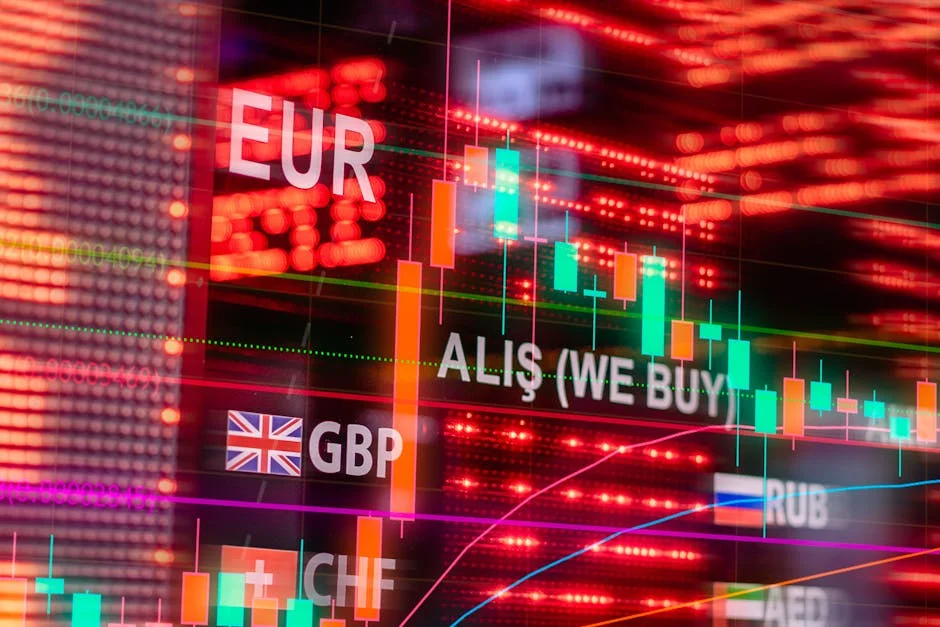
Learning how to trade forex starts with understanding what the market actually is: a global network where currencies are exchanged continuously by banks, funds, corporations, governments, and individual traders. Unlike stocks, there is no single centralized exchange. Trading activity flows through interbank venues and electronic communication networks, which is why currency prices can change every second across the trading week. When you place a trade, you are buying one currency while simultaneously selling another, expressed as a pair such as EUR/USD or USD/JPY. The first currency is the “base” and the second is the “quote.” If EUR/USD is 1.0850, it means one euro costs 1.0850 U.S. dollars. The goal is to profit from changes in that exchange rate, either by buying the pair (expecting it to rise) or selling the pair (expecting it to fall). Grasping these mechanics is essential because every decision—position size, stop loss placement, or strategy selection—depends on how pairs move and how fast they can move under pressure.
Table of Contents
- My Personal Experience
- Understanding How to Trade Forex and What Moves Currency Prices
- Choosing a Forex Broker, Platform, and Account Type
- How Currency Pairs, Pips, Lots, and Leverage Work
- Building a Forex Trading Plan You Can Actually Follow
- Reading Forex Charts: Trends, Ranges, and Market Structure
- Technical Analysis Tools That Traders Use (and How to Use Them Responsibly)
- Fundamental Analysis: Economic Data, Central Banks, and Risk Sentiment
- Expert Insight
- Entry and Exit Strategies: Turning Analysis into Executable Trades
- Risk Management and Position Sizing: Protecting Your Account First
- Developing the Right Trading Psychology and Routine
- Practice Methods: Demo Trading, Backtesting, and Forward Testing
- Common Forex Trading Mistakes and How to Avoid Them
- Putting It All Together: A Practical Workflow for How to Trade Forex
- Watch the demonstration video
- Frequently Asked Questions
- Trusted External Sources
My Personal Experience
When I first tried to learn how to trade forex, I made the classic mistake of jumping in after watching a few “easy pips” videos and I overleveraged a tiny account. The spreads and swap fees didn’t seem like a big deal until I started holding trades overnight and realized my “good idea” was slowly bleeding. What finally helped was treating it like a process: I opened a demo account, focused on one pair (EUR/USD), and only traded during the London–New York overlap so I wasn’t chasing random moves. I started using a simple plan—mark support and resistance on the 1-hour chart, wait for price to react, risk a fixed 1% per trade, and set my stop loss before I ever clicked buy or sell. I still lose trades, but keeping a journal with screenshots and notes showed me my biggest problem wasn’t the strategy—it was impatience and moving stops when I didn’t want to be wrong.
Understanding How to Trade Forex and What Moves Currency Prices
Learning how to trade forex starts with understanding what the market actually is: a global network where currencies are exchanged continuously by banks, funds, corporations, governments, and individual traders. Unlike stocks, there is no single centralized exchange. Trading activity flows through interbank venues and electronic communication networks, which is why currency prices can change every second across the trading week. When you place a trade, you are buying one currency while simultaneously selling another, expressed as a pair such as EUR/USD or USD/JPY. The first currency is the “base” and the second is the “quote.” If EUR/USD is 1.0850, it means one euro costs 1.0850 U.S. dollars. The goal is to profit from changes in that exchange rate, either by buying the pair (expecting it to rise) or selling the pair (expecting it to fall). Grasping these mechanics is essential because every decision—position size, stop loss placement, or strategy selection—depends on how pairs move and how fast they can move under pressure.

Currency prices are driven by a mix of macroeconomic forces, capital flows, and market expectations. Interest rates and central bank policy are among the strongest long-term drivers: higher yields tend to attract capital, which can strengthen a currency, while rate cuts or dovish guidance can weaken it. Inflation trends, employment data, GDP growth, and trade balances add layers of influence, but the market often reacts most to the difference between what was expected and what actually prints. Geopolitics, risk sentiment, and commodity prices can also matter; for example, oil prices frequently influence CAD, while iron ore and China demand can affect AUD. Liquidity and session timing play a role too: the London and New York overlap typically brings the most volume and sharper moves. Understanding how to trade forex means accepting that price is not just a number; it is the market’s collective forecast for relative economic strength and monetary policy. The more you treat currency movement as a response to incentives and surprises, the more structured your trade planning becomes.
Choosing a Forex Broker, Platform, and Account Type
A practical step in how to trade forex is selecting a broker that matches your goals, location, and risk tolerance. Regulation should be the first filter. A regulated broker in a reputable jurisdiction typically must meet capital requirements, segregate client funds, and provide clearer disclosures. That does not guarantee performance or protect you from losses, but it reduces operational risk compared to unregulated entities. Next, evaluate trading costs. Forex costs usually appear as spreads (the difference between bid and ask), commissions (especially on “raw spread” accounts), and overnight financing (swap or rollover). A broker with slightly higher spreads but strong execution can be better than one with advertised tight spreads that frequently slips or requotes. Execution quality matters most during news events or fast markets, when your stop loss may fill worse than expected. Also consider whether the broker offers negative balance protection, how margin calls are handled, and what order types are available.
Platform choice influences how effectively you can analyze, execute, and manage risk. Popular platforms include MetaTrader 4/5 and cTrader, while some brokers provide proprietary web and mobile platforms. Look for stable charting, reliable order placement, and the ability to set alerts, stop losses, take profits, and trailing stops. If you plan to automate, confirm support for expert advisors or algorithmic scripting, and test performance on a demo before using real funds. Account type also matters: standard accounts often bundle costs into the spread, while ECN or raw-spread accounts separate spread and commission, potentially lowering cost for active traders. Pay attention to minimum deposits and leverage limits, which vary by region and regulation. Learning how to trade forex becomes more manageable when your broker’s tools reduce friction rather than add it. A clean platform, transparent pricing, and strong support can prevent avoidable mistakes like trading the wrong lot size or misplacing a stop during a volatile move.
How Currency Pairs, Pips, Lots, and Leverage Work
To master how to trade forex, you need fluency in the market’s measurement system. The smallest common price increment is a pip for most pairs, typically the fourth decimal place (0.0001) for EUR/USD and the second decimal place (0.01) for JPY pairs. Many brokers also quote fractional pips (pipettes), providing more granular pricing. Your profit or loss depends on how many pips the price moves and the size of your position. Position size is usually measured in lots: a standard lot is 100,000 units of the base currency, a mini lot is 10,000, and a micro lot is 1,000. If you buy one standard lot of EUR/USD and the pair rises by 10 pips, the profit is much larger than if you bought a micro lot. This scaling is why beginners can participate with smaller accounts by using micro lots, controlling risk without needing large capital.
Leverage and margin are where many traders get into trouble, so they deserve careful attention. Leverage allows you to control a larger position than your cash balance would otherwise permit. For example, 30:1 leverage means you may control a position 30 times your account equity, subject to margin requirements. Margin is the portion of your account set aside as collateral for the trade. If the market moves against you, your equity declines, and if it falls too far, you can face a margin call or forced liquidation. Leverage is not inherently “bad,” but it amplifies outcomes; small price changes can create large gains or losses relative to your balance. A disciplined approach to how to trade forex uses leverage as a tool, not a target. Many experienced traders risk only a small percentage of equity per trade and choose leverage indirectly by selecting position size based on stop loss distance, not by maximizing exposure. Understanding pips, lots, and margin converts trading from guesswork into a controllable process.
Building a Forex Trading Plan You Can Actually Follow
A clear plan is the difference between experimenting and practicing how to trade forex with intent. A trading plan defines what you trade, when you trade, how you enter, how you exit, and how you manage risk when you are wrong. Start with your market universe: choose a small set of pairs that match your schedule and preferred volatility. Many traders begin with major pairs like EUR/USD, GBP/USD, USD/JPY, and AUD/USD because spreads are often lower and liquidity is higher. Then define your timeframe. If you can only check charts a few times a day, a swing approach on 4-hour or daily charts may fit better than fast intraday scalping. Your plan should also specify the conditions required to take a trade, such as trend direction, a support/resistance level, a pattern, or a volatility filter. The goal is to remove impulsive decisions and replace them with repeatable triggers.
Risk and trade management rules are the heart of any plan. Decide the maximum percentage of your account you are willing to risk per trade, the maximum total exposure across open trades, and the daily or weekly loss limit that forces you to stop trading and review. Include how you set stop losses: for example, beyond a swing high/low, outside a volatility band, or at a fixed multiple of the average true range. Define take profit logic as well, whether it is a fixed reward-to-risk ratio, partial profit taking, or trailing stops that follow a trend. A plan for how to trade forex should also cover routine tasks: checking the economic calendar, avoiding thin liquidity periods, recording trades, and reviewing performance. When your rules are written, you can test them, refine them, and eventually trust them under pressure. Without a plan, even a good strategy becomes inconsistent because execution changes with mood and recent results.
Reading Forex Charts: Trends, Ranges, and Market Structure
Chart reading is a practical skill that supports how to trade forex regardless of strategy. Price charts reflect supply and demand in real time, and your job is to interpret structure rather than memorize shapes. Start by identifying whether a pair is trending or ranging. An uptrend typically shows higher highs and higher lows, while a downtrend shows lower highs and lower lows. Ranges occur when price oscillates between relatively stable support and resistance. Many losses come from applying trend tactics in a range or range tactics in a trend. Market structure helps you avoid that mismatch. For example, if EUR/USD keeps making higher lows on the daily chart, selling into support repeatedly is usually a lower-probability idea unless there is a clear shift in structure. Use multiple timeframes to reduce noise: a higher timeframe can define the primary direction and key levels, while a lower timeframe can refine entries.

Support and resistance are not single lines but zones where orders tend to cluster. These zones often form around prior swing highs/lows, round numbers, and areas of heavy trading volume. When price approaches a zone, it may bounce, break, or briefly pierce and reverse (a false breakout). Candlestick behavior can help you read the reaction: long wicks may indicate rejection, while strong bodies closing beyond a level can indicate acceptance. Another aspect of structure is the concept of consolidation and expansion. Markets often compress into tighter ranges before breaking out into larger moves. If you are learning how to trade forex, focusing on structure keeps your analysis grounded in what price is actually doing rather than what you hope it will do. You can then align entries with the broader context: buying pullbacks in an uptrend, selling rallies in a downtrend, or trading defined range edges with clear invalidation points.
Technical Analysis Tools That Traders Use (and How to Use Them Responsibly)
Technical indicators can support how to trade forex, but they work best as decision aids, not as decision makers. Moving averages are among the most common tools because they help smooth price and highlight direction. A rising moving average can confirm an uptrend, while price repeatedly failing near a moving average can suggest resistance. However, moving averages lag; they describe what has happened, not what must happen next. Oscillators like RSI or Stochastic can help identify momentum shifts or potential overextended conditions, especially in ranges. Yet “overbought” does not mean “sell now,” and “oversold” does not mean “buy now.” In strong trends, oscillators can remain overbought or oversold for long periods. A more robust approach uses indicators to confirm a setup already supported by structure—such as buying a pullback to support when trend is up and momentum begins to turn back upward.
Volatility and risk tools are often more useful than signal tools. Average True Range can help you set stops and targets that reflect current market movement rather than arbitrary pip counts. Bollinger Bands can highlight periods of contraction that may precede expansion, but they should be interpreted with context: touches of the band can occur repeatedly in trends. Many traders also use pivot points or volume-derived levels where available, but spot forex volume is decentralized, so broker volume is only a proxy. The key to responsible indicator use in how to trade forex is limiting the number of inputs so they do not conflict. If your chart is crowded, you will find “reasons” to take almost any trade, which defeats discipline. Choose a small set of tools that answer specific questions: direction, momentum, and volatility. Then define rules for how those answers translate into action.
Fundamental Analysis: Economic Data, Central Banks, and Risk Sentiment
Fundamentals are a core component of how to trade forex because currencies are closely tied to interest rates, growth expectations, and capital flows. Central banks shape currency trends through policy rates, asset purchases, and forward guidance. When markets anticipate tightening, a currency can strengthen well before the rate hike occurs; when expectations shift, the reversal can be sharp. Key data releases such as inflation reports, labor market numbers, retail sales, and purchasing managers’ indices can alter those expectations quickly. Instead of reacting to every headline, many traders focus on a few high-impact events and track the market’s baseline expectations using consensus forecasts. The surprise factor—actual minus expected—often drives the immediate move, but longer-term direction depends on whether the data changes the policy outlook.
Expert Insight
Start with a simple, rule-based plan: trade one or two major pairs (like EUR/USD), define your setup (trend + pullback or breakout), and place your stop-loss before entering. Risk a fixed amount per trade—typically 1% or less of your account—so a losing streak doesn’t derail your capital. If you’re looking for how to trade forex, this is your best choice.
Use the economic calendar to avoid surprise volatility: reduce position size or stay flat around high-impact releases (rates, CPI, jobs) unless your strategy is built for news. After each trade, log entry, exit, time, and rationale, then review weekly to identify which conditions produce your best results and cut the rest. If you’re looking for how to trade forex, this is your best choice.
Risk sentiment is another major driver, especially for pairs tied to “risk-on” and “risk-off” behavior. In risk-off periods, capital may move toward perceived safe havens, often supporting USD, JPY, or CHF, while higher-yielding or growth-sensitive currencies may weaken. Commodity-linked currencies can respond to changes in global demand and commodity prices, creating additional layers of correlation. For traders learning how to trade forex, the economic calendar is essential. It helps you avoid placing trades right before high-volatility events if your strategy is not designed for it, and it helps you understand why a market may be quiet or suddenly explosive. Fundamental awareness does not require predicting every report; it requires knowing when conditions can change abruptly and positioning size and stops accordingly.
Entry and Exit Strategies: Turning Analysis into Executable Trades
Knowing how to trade forex means translating analysis into a precise entry and a planned exit. Entries should be tied to a specific reason that can be invalidated. For example, in a trend, a common approach is to wait for a pullback into a support zone and then enter when price shows confirmation—such as a strong rejection candle, a break of a minor structure level, or a momentum shift. In ranges, entries might occur near support with tight invalidation below the range, aiming for the opposite boundary. Breakout strategies focus on expansion: entering when price closes beyond a key level with supportive volume proxies or volatility expansion. Each approach can work, but only when the market environment matches the logic. A breakout plan in a choppy range can lead to repeated false starts; a mean-reversion plan in a strong trend can lead to catching falling knives.
| Approach | Best for | How it works (in practice) | Key tools | Main risk |
|---|---|---|---|---|
| Day trading | Active traders who want no overnight exposure | Open and close positions within the same day, targeting intraday moves around sessions, news, and key levels. | Economic calendar, intraday charts (5m–1h), support/resistance, ATR | Overtrading and news spikes causing slippage |
| Swing trading | Traders with limited screen time | Hold trades for days to weeks, aiming to capture larger trend legs or mean-reversion swings. | Daily/4h charts, trendlines, moving averages, risk/reward targets | Overnight gaps and swap/rollover costs |
| News/event trading | Traders who can react quickly to macro releases | Trade around scheduled announcements (e.g., CPI, NFP, central bank decisions) using pre-planned scenarios. | High-impact calendar, spreads monitor, pending orders, volatility filters | Widened spreads, whipsaws, and execution risk |

Exits deserve at least as much planning as entries because exits determine your distribution of wins and losses. A stop loss should be placed where your trade idea is wrong, not where the loss feels comfortable. That often means using structure: beyond a swing point, beyond a range boundary, or outside a volatility-based threshold. Take profit can be set at the next major level, at a measured move target, or at a fixed multiple of risk. Some traders scale out: they take partial profit at a first target and let the remainder run with a trailing stop. This can reduce emotional pressure and smooth results. For anyone practicing how to trade forex, consistency matters more than complexity. A simple entry with a clear stop and a realistic target, repeated under similar conditions, is easier to evaluate and improve than a constantly changing set of rules that cannot be measured.
Risk Management and Position Sizing: Protecting Your Account First
Risk management is the foundation of how to trade forex because no strategy wins all the time. Your goal is to survive losing streaks and remain able to take the next high-quality setup. A common approach is to risk a fixed percentage of your account per trade, such as 0.5% to 2%, depending on experience and volatility. This prevents any single trade from causing catastrophic damage. To apply it, you calculate position size based on your stop loss distance in pips and the pip value of the pair for your account currency. When the stop is wider due to volatility, your position size shrinks; when the stop is tighter, size can increase, within reason. This creates a consistent risk profile across different market conditions. It also removes the temptation to “go bigger” after a win or chase losses after a bad day.
Portfolio-level risk is equally important. If you hold multiple trades that are correlated—such as long EUR/USD and long GBP/USD—you may be doubling exposure to USD weakness without realizing it. Similarly, trading several JPY pairs in the same direction can concentrate risk. Setting a cap on total open risk and monitoring correlation reduces the chance that one macro event hits all positions at once. Another key element in how to trade forex is understanding slippage and gap risk. While gaps are less common in major forex pairs than in some markets, weekend gaps and sudden news spikes can cause stops to fill worse than expected. Keeping leverage moderate, using hard stops, and avoiding oversized positions around major announcements can reduce damage. Good risk management is not about avoiding losses; it is about making losses small enough that your edge, if you have one, can show up over many trades.
Developing the Right Trading Psychology and Routine
Trading performance is often limited by behavior rather than knowledge, so psychology is central to how to trade forex. Common emotional traps include fear of missing out, revenge trading, and overconfidence after a winning streak. These patterns usually show up as breaking rules: entering without confirmation, widening stops, removing stops, or increasing size impulsively. A practical solution is to build friction into your process. Use checklists before entry: trend context, level, trigger, stop placement, target, and position size. If one element is missing, the trade is skipped. Another method is to set time-based boundaries, such as stepping away after a certain number of trades or after a daily loss limit. This reduces the chance that emotional momentum drives decisions. A strong routine turns trading into a professional practice rather than a series of adrenaline-based reactions.
Journaling is one of the most effective tools for improving consistency in how to trade forex. Record not only entry, exit, and results, but also the reason for the trade, the market condition, and your emotional state. Over time, patterns become visible: perhaps losses cluster during certain sessions, or wins occur when you wait for a second confirmation. Include screenshots of charts at entry and exit to reduce hindsight bias. Another psychological factor is expectation management. Forex can be highly liquid, but it is not a guaranteed income stream. Thinking in probabilities helps: each trade is one of many, and your job is to execute your plan, not to force a win. When you focus on process metrics—rule adherence, quality of setups, and risk consistency—results tend to stabilize. That stability is often what traders mean when they talk about “discipline,” and it is a crucial part of long-term survival.
Practice Methods: Demo Trading, Backtesting, and Forward Testing
Skill in how to trade forex is built through structured practice, not random screen time. Demo trading can help you learn platform mechanics, order types, and how spreads behave, especially during session changes and news events. However, demo results can be misleading because emotional pressure is low. Treat demo trading as a training environment: follow your rules, size positions as if the money were real, and focus on execution quality. Backtesting is another method, where you apply your rules to historical data to estimate how the strategy might perform across different market regimes. Manual backtesting—scrolling charts and marking trades—teaches pattern recognition and helps refine rules. More advanced traders may use automated backtesting, but the risk of overfitting increases if you optimize parameters to match the past too perfectly.

Forward testing bridges the gap between backtesting and live trading. You trade the strategy in real time on a demo or small live account to see how it performs with real spreads, slippage, and your real decision-making. This step is often skipped, but it is critical because many strategies look good in hindsight and fall apart when signals are ambiguous. For anyone serious about how to trade forex, use a minimum sample size before drawing conclusions. Ten trades is noise; fifty to one hundred trades provides a more meaningful view of win rate, average win, average loss, and drawdowns. Track expectancy and risk-adjusted performance rather than focusing only on win percentage. A strategy can be profitable with a low win rate if winners are larger than losers, and it can fail with a high win rate if occasional losses are huge. Practice is most effective when it is measured, repeatable, and tied to clear rules.
Common Forex Trading Mistakes and How to Avoid Them
Many early losses come from avoidable errors rather than from the complexity of how to trade forex. Overleveraging is the most common. Traders see small pip moves and assume risk is low, but leverage converts small price movement into large equity swings. Another frequent mistake is inconsistent stop placement: using stops that are too tight for normal volatility leads to repeated stop-outs, while stops that are too wide relative to account size create unacceptable risk. Chasing trades after a move has already happened is another pattern; by the time the entry feels “safe,” the market may be extended and due for a pullback. Also common is ignoring the economic calendar. Even a technically perfect setup can fail when a major announcement hits and spreads widen or price whipsaws. Avoiding these mistakes is less about intelligence and more about having pre-commitment rules.
Strategy hopping can also derail progress. A trader tries one method for a week, experiences a normal losing streak, then switches to another method, never staying long enough to build skill or gather data. This creates a cycle where the trader is always a beginner. A better approach to how to trade forex is to choose one simple framework—trend pullbacks, range trading, or breakouts—then specialize in a few pairs and one or two timeframes. Another mistake is failing to account for transaction costs. Spreads and commissions can turn marginal strategies unprofitable, especially for very short-term trading. Finally, many traders neglect review. Without a weekly review of trades and rule adherence, the same mistakes repeat. Avoiding these issues does not require perfection; it requires humility, structure, and the willingness to reduce complexity until execution becomes consistent.
Putting It All Together: A Practical Workflow for How to Trade Forex
A workable workflow makes how to trade forex feel less overwhelming because it breaks the process into repeatable steps. Start the week by checking major economic events and central bank meetings that could affect your chosen pairs. Mark key support and resistance zones on higher timeframes, then define directional bias based on structure and macro context. Each day, scan for setups only during your chosen trading window to avoid overtrading. When a setup appears, run a checklist: market condition, level, trigger, stop location, target logic, and position size based on predefined risk. Place orders with protective stops immediately, and avoid moving stops farther away to “give the trade room.” If you use trailing stops or partial exits, apply them consistently according to rules rather than emotions. This structure reduces decision fatigue and keeps your results tied to your strategy rather than to impulse.
After trades close, document outcomes and quality. A trade can be a “good trade” even if it loses, if it followed rules and risk limits. Over time, this process builds confidence because you trust your execution. If performance is poor, adjust one variable at a time: entry trigger, stop logic, or the market conditions you trade, rather than changing everything at once. Most importantly, treat capital preservation as the priority. Profits are a byproduct of executing an edge repeatedly with controlled risk. That is the sustainable version of how to trade forex, and it is the approach that keeps you in the game long enough to learn, adapt, and improve. By combining market understanding, a reliable broker setup, clear rules, disciplined sizing, and steady review, you create a complete trading system that can evolve with experience while staying grounded in consistent process.
Watch the demonstration video
In this video, you’ll learn the fundamentals of trading forex, including how currency pairs work, what drives price movements, and how to read basic charts. It also covers essential risk management, common trading strategies, and practical tips for placing your first trades with more confidence and control. If you’re looking for how to trade forex, this is your best choice.
Summary
In summary, “how to trade forex” is a crucial topic that deserves thoughtful consideration. We hope this article has provided you with a comprehensive understanding to help you make better decisions.
Frequently Asked Questions
What is forex trading?
Forex trading is buying one currency and selling another as a pair (e.g., EUR/USD) to profit from exchange-rate movements.
How do I start trading forex?
Start by choosing a regulated broker you trust, then open and verify your account and add funds. Before risking real money, spend time practicing on a demo to learn the platform and test your strategy. Once you’re ready, begin with small trade sizes and follow a clear, disciplined plan—this is a practical approach to learning **how to trade forex**.
What are currency pairs, pips, and spreads?
In forex trading, currencies are always priced in pairs, showing how much of one currency you need to buy another. A pip is the standard unit used to measure tiny price changes—typically 0.0001 for most pairs—while the spread is the gap between the broker’s buy and sell prices and one of the main costs you’ll factor in when learning **how to trade forex**.
What is leverage and how risky is it?
Leverage allows you to control a much larger position with a relatively small amount of margin, which can magnify both profits and losses. When learning **how to trade forex**, it’s wise to start with lower leverage and set strict risk limits so a few bad moves don’t turn into a rapid drawdown.
How do I manage risk in forex trading?
When learning **how to trade forex**, focus on protecting your capital first: place stop-loss orders on every trade, risk only a small percentage of your account (typically 0.5–2%) per position, and size your trades based on how far your stop is from entry. Stay disciplined by avoiding overtrading, and keep an eye on major economic news releases that can quickly spike volatility.
Which strategies are common for beginners?
A practical approach to **how to trade forex** is to focus on simple trend-following or support-and-resistance setups on higher timeframes, then back your decisions with a trading journal and clear, consistent rules for entries, exits, and risk management.
? Looking for more info about how to trade forex? Follow Our Site for updates and tips!

Trusted External Sources
- How to start forex trading – Saxo Bank
A practical way to begin learning **how to trade forex** is to choose a reliable broker, start with a demo or small live account, and build a solid foundation in the essentials—like pips, spreads, leverage, and risk management—before scaling up.
- I want to get into forex and trading. What advice do you have? – Reddit
Mar 17, 2026 — If you’re new to the market and wondering **how to trade forex**, start by building a strong foundation in the basics—how currency pairs move, what drives prices, and how different sessions affect volatility. Just as importantly, learn risk management early: use sensible position sizing, set stop-loss levels, and avoid overleveraging so you can stay consistent while you gain experience.
- Learn How To Trade Forex with Trading Examples | IG International
Forex trading steps · Choose a currency pair to trade · Decide whether to ‘buy’ or ‘sell’ · Set your stops and limits · Open your first trade · Monitor your … If you’re looking for how to trade forex, this is your best choice.
- How To Trade Forex? – What is Spot Forex? – FOREX.com US
How to place a forex trade · Step 1: Decide on your FX pair to trade · Step 2: Log into platform and select your chosen FX pair · Step 3: Review in-depth … If you’re looking for how to trade forex, this is your best choice.
- Foreign Exchange (Forex) Trading for Beginners | Charles Schwab
As of July 10, 2026, the forex market continues to run nearly 24 hours a day as traders across the world buy and sell currencies in different time zones. If you’re exploring **how to trade forex**, it’s worth learning four key fundamentals first—when the market is most active, what moves currency prices, how leverage and risk work, and which tools can help you trade more confidently.