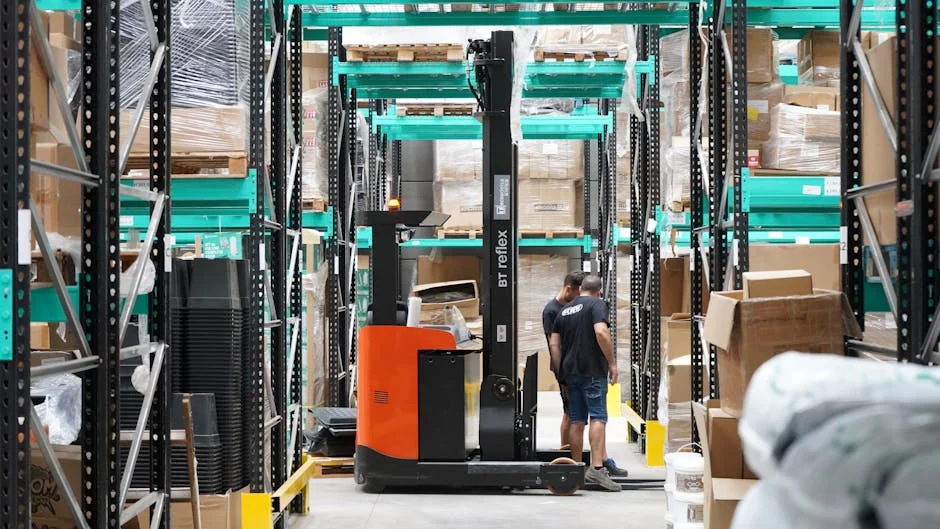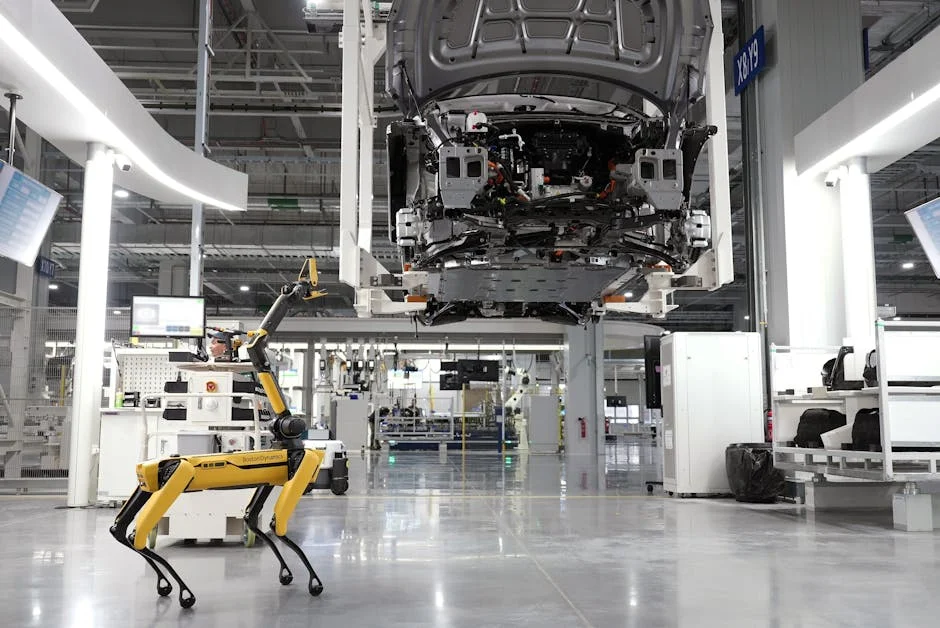
An automated factory is no longer a futuristic novelty reserved for massive corporations; it has become a practical operating model for manufacturers that want consistent output, predictable quality, and resilient production. The term can sound simple—machines doing work that people used to do—but modern automation is a layered system that blends robotics, sensors, software, and data-driven decision-making into one coordinated environment. In many plants, automation starts with specific processes such as packaging, palletizing, CNC machining, or inspection. Over time, those islands of automation connect through networks and shared data models so that information flows as smoothly as materials do. When that happens, the facility becomes less dependent on manual interventions and more capable of running stable shifts with fewer stoppages, fewer defects, and more transparent performance metrics.
Table of Contents
- My Personal Experience
- Understanding the Automated Factory: What It Really Means Today
- Core Technologies That Power an Automated Factory
- Designing Layouts and Material Flow for High-Performance Automation
- Robotics in the Automated Factory: From Single Cells to Full Lines
- Industrial IoT, Connectivity, and Data Foundations
- Quality Control and Traceability in an Automated Factory
- Workforce Roles, Skills, and Change Management
- Expert Insight
- Maintenance Strategies: From Preventive to Predictive
- Safety, Compliance, and Risk Reduction in Automated Environments
- Energy Efficiency and Sustainability Advantages
- Planning a Successful Implementation: From Pilot to Scale
- Measuring Performance: KPIs That Matter for Automated Operations
- The Future of the Automated Factory: Flexibility, AI, and Resilient Supply Chains
- Watch the demonstration video
- Frequently Asked Questions
- Trusted External Sources
My Personal Experience
Last summer I toured an automated factory where my cousin works, and it felt more like a quiet server room than the noisy plants I remembered from school trips. Robots on orange arms lifted metal parts off a conveyor with perfect timing, while cameras checked each piece and kicked the flawed ones onto a separate track. The only people on the floor were a few technicians with tablets, mostly watching dashboards and stepping in when a sensor got dirty or a gripper started slipping. What surprised me most was how much of the job was troubleshooting—my cousin said the hardest part isn’t running the line, it’s keeping it from stopping. When we left, my ears weren’t ringing, but I couldn’t stop thinking about how a whole shift’s worth of work was happening with barely anyone in the room.
Understanding the Automated Factory: What It Really Means Today
An automated factory is no longer a futuristic novelty reserved for massive corporations; it has become a practical operating model for manufacturers that want consistent output, predictable quality, and resilient production. The term can sound simple—machines doing work that people used to do—but modern automation is a layered system that blends robotics, sensors, software, and data-driven decision-making into one coordinated environment. In many plants, automation starts with specific processes such as packaging, palletizing, CNC machining, or inspection. Over time, those islands of automation connect through networks and shared data models so that information flows as smoothly as materials do. When that happens, the facility becomes less dependent on manual interventions and more capable of running stable shifts with fewer stoppages, fewer defects, and more transparent performance metrics.
What makes an automated factory distinct is not just the presence of robots on the shop floor, but the way the entire production system is orchestrated. A robot arm that loads a machine is helpful, yet the larger gains appear when scheduling, maintenance, quality control, inventory, and traceability are integrated. For example, a production line equipped with machine vision can catch defects early, while manufacturing execution systems (MES) can route lots intelligently based on work-in-progress conditions. Automated guided vehicles (AGVs) or autonomous mobile robots (AMRs) can deliver parts at the right time, reducing bottlenecks caused by material shortages. When these systems share data, managers can see the real state of production rather than relying on delayed reports. The result is an operation that can scale, adapt, and improve continuously, even when product variation increases and customer lead times shrink.
Core Technologies That Power an Automated Factory
The technologies inside an automated factory typically fall into several categories: mechanical automation (robots, conveyors, actuators), sensing and inspection (cameras, laser scanners, force sensors), control systems (PLCs, motion controllers), and supervisory software (SCADA, MES, industrial IoT platforms). Robotics is the most visible layer, but the less visible layers often determine whether automation truly delivers value. PLCs coordinate cycles with precise timing, safety systems enforce protective logic, and industrial networks—such as Ethernet/IP, PROFINET, EtherCAT, or OPC UA—move data between devices. Sensors provide feedback loops so equipment can adjust in real time. A well-designed control architecture makes it possible to add new stations or upgrade tooling without rewriting the entire system, which matters when product lines change.
Software has become the central nervous system of the automated factory. MES platforms track each order, batch, or serialized unit as it moves through the plant, enabling traceability for regulated industries and simplifying recalls when needed. SCADA solutions visualize machine states, alarms, and trends so operators can act quickly. Industrial IoT gateways collect data from legacy equipment and normalize it for analytics. Machine learning can detect anomalies in vibration, temperature, or motor current, predicting when a component will fail. Meanwhile, digital work instructions, e-kanban signals, and automated quality checks reduce reliance on tribal knowledge. The combination of hardware and software is what enables automation to move beyond repetitive tasks into adaptive operations that can handle variability, frequent changeovers, and higher product complexity.
Designing Layouts and Material Flow for High-Performance Automation
An automated factory succeeds or fails based on flow: the movement of parts, tools, people, and information. Layout design is therefore a strategic decision rather than a simple engineering exercise. Traditional layouts often evolved over years, with machines placed wherever space was available. Automation forces clearer choices. A line-based layout can maximize throughput for stable products, while a cellular layout can increase flexibility for high-mix production. Hybrid designs use modular cells connected by AMRs, allowing the plant to reconfigure as demand shifts. The goal is to reduce travel distance, eliminate unnecessary handling, and ensure that each station receives the right materials at the right moment without creating excess work-in-progress inventory.
Material handling is a major cost and a frequent source of inefficiency, so it is often one of the first targets in an automated factory initiative. Conveyors can move standardized cartons or pallets continuously, while AMRs can handle dynamic routing and variable endpoints. Automated storage and retrieval systems (AS/RS) can compress warehouse footprints and speed picking for production replenishment. Tooling and fixtures also affect flow: quick-change systems reduce downtime during changeovers, and standardized pallets allow consistent robot gripping. Even waste streams matter; scrap bins, rework lanes, and inspection hold areas should be designed so exceptions do not disrupt the main flow. When layout, handling, and scheduling are aligned, automation does not merely add speed—it creates stability and predictability across shifts and product variants.
Robotics in the Automated Factory: From Single Cells to Full Lines
Robots are often the flagship investment in an automated factory because they can replace repetitive, hazardous, or precision-critical tasks with consistent motion and controlled force. Industrial robots excel at welding, painting, machine tending, palletizing, and high-speed pick-and-place. Collaborative robots (cobots) can work near people when risk assessments and safety measures are properly implemented, making them useful for small-batch assembly, kitting, and packaging. The real payoff comes when robots are integrated with upstream and downstream equipment: a robot that picks parts from an infeed needs reliable part presentation, while a robot that loads a CNC machine benefits from in-process measurement to adjust offsets and maintain tolerances.
Scaling robotics from a single cell to a line requires attention to cycle time balancing, buffering, and fault recovery. A line where each station is tightly synchronized can achieve high throughput, but it can also be fragile if one station faults and stops everything. Many automated factory designs incorporate buffers, parallel stations, or recirculating conveyors to maintain output even when a station is down. Vision-guided robotics adds flexibility by allowing robots to locate parts that are not perfectly aligned, which can reduce fixture costs. End-of-arm tooling (EOAT) is another critical factor; modular grippers and quick-change couplers enable rapid adaptation to new products. When robotics is treated as part of a broader system—rather than a standalone machine—it becomes a platform for continuous improvement rather than a one-time upgrade.
Industrial IoT, Connectivity, and Data Foundations
Connectivity is the difference between isolated automation and a truly automated factory. Machines that run automatically but cannot share data often create blind spots: you may get output, yet you cannot easily explain why performance varies or where quality issues begin. Industrial IoT architectures solve this by collecting signals from PLCs, sensors, drives, and test equipment, then organizing them into usable context. Context matters because raw tags like “MotorCurrent_12” are not helpful until they are mapped to a specific asset, product, and time window. Standard protocols such as OPC UA support secure, structured data exchange across vendors, while edge computing reduces latency and keeps critical functions running even if cloud connectivity is interrupted.
Once data is accessible, the automated factory can shift from reactive management to proactive control. Real-time dashboards can show overall equipment effectiveness (OEE), scrap rates, and downtime reasons as they happen, not after the shift ends. Condition monitoring can identify early wear in bearings or gearboxes. Energy monitoring can reveal spikes tied to specific processes, supporting cost reduction and sustainability goals. Connectivity also enables remote support: engineers can troubleshoot alarms, review logs, and deploy configuration updates with appropriate access controls. However, connectivity must be designed with cybersecurity in mind. Network segmentation, role-based access, patch management, and secure authentication are essential. A connected plant that ignores security risks can face production disruptions that erase the gains of automation.
Quality Control and Traceability in an Automated Factory
Quality in an automated factory is built into the process rather than inspected at the end. Automated inspection systems—especially machine vision—can verify dimensions, surface defects, labeling, and assembly completeness at speeds that manual checks cannot match. In-line measurement tools such as laser micrometers, coordinate measurement machines (CMMs), and torque monitoring can confirm that each step meets specification. When integrated with MES, these measurements can be linked to serial numbers or lot codes, enabling traceability that supports warranty management and compliance. If a defect trend emerges, the system can flag it immediately, quarantine affected units, and prevent further processing until the root cause is addressed.
Traceability is increasingly valuable as supply chains become more complex and customers demand transparency. An automated factory can record which raw material batch went into each product, which machines performed each operation, which operator approved a changeover, and which test results were achieved. This level of detail reduces the scope of recalls and improves customer confidence. It also accelerates continuous improvement because engineers can correlate quality outcomes with process parameters such as temperature, pressure, feed rate, or tool wear. Automated quality does not mean “set it and forget it,” though. Inspection systems need calibration, lighting control, and periodic validation to avoid false rejects or missed defects. When quality engineering, maintenance, and production teams collaborate around a unified data trail, the plant becomes more capable of preventing defects rather than merely detecting them.
Workforce Roles, Skills, and Change Management
The automated factory changes work; it does not eliminate the need for people. As routine tasks become automated, human roles shift toward oversight, troubleshooting, improvement, and engineering support. Operators often become equipment technicians, responsible for startup checks, changeovers, first-piece verification, and responding to alarms. Maintenance teams need stronger skills in controls, sensors, pneumatics, servo systems, and industrial networking. Engineers must think in systems: how mechanical design, software logic, and process parameters interact to create stable output. Training becomes an ongoing requirement, not a one-time event, because automation platforms evolve and new products introduce new complexity.
Expert Insight
Start with a focused pilot line: map the highest-volume, most repetitive steps, then automate one bottleneck at a time. Define clear success metrics (cycle time, scrap rate, uptime) and standardize work instructions before scaling to avoid hard-coding inefficiencies. If you’re looking for automated factory, this is your best choice.
Build reliability into the system: implement preventive maintenance schedules, spare-parts kits for critical components, and real-time alerts for deviations in temperature, vibration, or throughput. Pair this with cross-training so operators can troubleshoot first-level issues and keep production moving during changeovers. If you’re looking for automated factory, this is your best choice.
Change management is frequently underestimated, yet it determines whether automation is embraced or resisted. People need clarity on how their work will change, what new skills are valued, and what career paths exist in a more automated environment. Standardized work remains important; in fact, it becomes more critical because the remaining manual tasks are often those that require judgment and careful execution. Visual management, clear escalation paths, and structured problem-solving methods such as A3 or 8D help teams respond consistently to issues. Cross-functional collaboration also increases: IT and OT teams must align on networks, security, and data governance, while production and engineering teams align on performance targets and product introduction plans. When the workforce is engaged early, the automated factory becomes a tool for safer work and higher-value roles rather than a source of uncertainty.
Maintenance Strategies: From Preventive to Predictive
Maintenance in an automated factory must be designed as a core operating system, because downtime can be more costly when production is tightly integrated. Traditional preventive maintenance schedules—based on hours or cycles—still matter for lubrication, filter changes, and wear part replacement. Yet automation enables more precise approaches. Sensors can track vibration, temperature, air pressure stability, and motor load, providing early warning signs of misalignment or component fatigue. This supports predictive maintenance, where interventions are timed based on condition rather than calendar intervals. Predictive strategies reduce unplanned stoppages and can also prevent secondary damage that occurs when a failing component stresses other parts of the machine.
| Aspect | Traditional Factory | Automated Factory |
|---|---|---|
| Production Efficiency | Manual handoffs and variable cycle times; slower changeovers. | Robotics and automated workflows enable faster, consistent throughput and rapid changeovers. |
| Quality & Consistency | Higher variability due to human-dependent processes and inconsistent inspection. | Inline sensors/vision systems and closed-loop controls improve repeatability and reduce defects. |
| Safety & Labor | More exposure to repetitive or hazardous tasks; labor-intensive operations. | Automation removes workers from high-risk tasks and shifts roles toward supervision, maintenance, and programming. |
Effective maintenance also depends on spare parts strategy, documentation, and disciplined troubleshooting. Critical spares such as servo drives, PLC modules, sensors, and pneumatic valves should be stocked based on risk and lead time. Digital documentation—wiring diagrams, parameter backups, and change logs—should be accessible and kept current. Root cause analysis is essential; repeatedly replacing the same sensor without addressing wiring noise, mechanical vibration, or misalignment will not stabilize the process. Many automated factory programs adopt reliability-centered maintenance (RCM) principles to prioritize assets that most affect safety, quality, and throughput. When maintenance is integrated with production planning, the plant can schedule service windows intelligently, reducing the friction between output goals and equipment health. This alignment turns maintenance from a cost center into a driver of uptime and consistent delivery.
Safety, Compliance, and Risk Reduction in Automated Environments
Safety is fundamental in an automated factory because high-speed motion, stored energy, and complex interactions can create serious hazards if not controlled. Modern safety systems rely on risk assessments, safety-rated PLCs, light curtains, interlocks, laser scanners, and safe motion functions that limit speed or torque in specific zones. Lockout/tagout procedures remain essential, but automation adds additional requirements such as verifying stored pneumatic pressure is vented, ensuring robot arms are in safe positions, and confirming that safety circuits are validated after changes. A strong safety culture includes training, clear signage, and consistent enforcement, but it also depends on engineering choices that design hazards out of the system where possible.
Compliance requirements vary by industry, yet traceability, validation, and documentation often become easier with automation—if the systems are designed correctly. Regulated sectors such as food, pharmaceuticals, and medical devices may require validated software, audit trails, and controlled access. Automotive and aerospace supply chains often demand rigorous quality records and process capability evidence. Cybersecurity is also a growing compliance concern: access control, secure remote connections, and incident response planning protect not only data but also physical operations. Safety and security intersect; a compromised controller can create unsafe behavior, and a safety system that is bypassed undermines risk controls. By integrating safety engineering, cybersecurity practices, and operational discipline, the automated factory can reduce incidents while maintaining high availability and consistent output.
Energy Efficiency and Sustainability Advantages
An automated factory can support sustainability goals by reducing waste, improving yield, and optimizing energy use. Automated dosing, cutting, and assembly systems can minimize material overuse and scrap. In-process inspection reduces the number of defective units that proceed through multiple value-adding steps, which saves both materials and energy. Automation also supports tighter process control: maintaining stable temperatures, pressures, and speeds reduces the variability that often causes rework or disposal. When production is predictable, plants can plan runs more efficiently, avoiding frequent startups and shutdowns that waste energy and increase wear.
Energy monitoring is a practical tool for sustainability in an automated factory. Submetering and connected drives can reveal which equipment consumes the most power and during which modes—idle, ramp-up, steady production, or cleaning cycles. With that insight, engineers can implement strategies such as automatic idle shutdown, optimized compressed air usage, variable frequency drive tuning, and peak demand management. Automation can also improve logistics efficiency by reducing internal transport and consolidating storage through AS/RS systems. Sustainability is not only about electricity; it includes water, chemicals, packaging, and emissions. By capturing process data and linking it to product output, the plant can calculate energy per unit, scrap per batch, and other sustainability KPIs that drive targeted improvements. Over time, these gains can strengthen competitiveness, especially when customers prioritize low-carbon and responsible manufacturing partners.
Planning a Successful Implementation: From Pilot to Scale
Implementing an automated factory approach is most successful when it follows a staged roadmap rather than a single disruptive overhaul. Many manufacturers start with a pilot line or a high-impact process where automation can quickly improve safety, quality, or throughput. The pilot should be chosen carefully: it needs measurable pain points, stable enough demand to justify investment, and a team capable of supporting the new system. During the pilot, it is important to define baseline metrics—cycle time, scrap rate, downtime categories, labor hours per unit—so improvements can be verified. A good pilot also establishes standards for controls architecture, naming conventions, data collection, and spare parts to prevent each new cell from becoming a unique one-off.
Scaling automation across the plant requires governance and cross-functional alignment. Procurement should standardize on preferred vendors and components where feasible. Engineering should maintain libraries of proven code and mechanical designs to reduce risk and accelerate deployment. IT and OT teams should agree on network segmentation, identity management, and patching responsibilities. Operations should define how changeovers, line clearance, and quality checks will be executed in the new environment. Financial planning is also key: automation investments can be evaluated not only through labor savings but also through reduced scrap, fewer customer returns, higher uptime, faster delivery, and improved capacity utilization. When the program is managed as a long-term capability build—rather than a one-time equipment purchase—the automated factory becomes a platform that can support new products, new volumes, and new business models with less disruption.
Measuring Performance: KPIs That Matter for Automated Operations
Performance measurement in an automated factory must go beyond counting units produced. Output is important, but it can hide problems such as excessive scrap, frequent micro-stoppages, or unstable cycle times. OEE is commonly used because it combines availability, performance, and quality into a single metric. However, OEE should be supported by deeper indicators: mean time between failures (MTBF), mean time to repair (MTTR), first pass yield (FPY), changeover time, and downtime Pareto categories. When these KPIs are captured automatically from machine states and quality systems, teams spend less time debating the numbers and more time improving the process.
Good KPI systems also reflect business priorities. For a make-to-order environment, schedule adherence and lead time may matter more than maximum throughput. For regulated products, audit readiness and traceability completeness can be critical. For high-mix assembly, changeover efficiency and error-proofing performance may drive profitability. Data governance is essential: definitions must be consistent, timestamps synchronized, and downtime reasons standardized. If operators find it hard to classify stops, the data becomes unreliable. Many plants combine automated state capture with guided input for stop reasons, supported by clear rules and training. With accurate KPIs, an automated factory can run structured improvement cycles—weekly loss reviews, targeted kaizen events, and engineering sprints—that steadily increase capacity and reduce cost per unit without sacrificing quality.
The Future of the Automated Factory: Flexibility, AI, and Resilient Supply Chains
The next stage of the automated factory is centered on flexibility and intelligence. Customers want more customization, shorter lead times, and frequent design updates. That pushes factories to handle higher product mix without losing efficiency. Modular automation—cells that can be rearranged, retooled, or replicated—supports this shift. Advanced vision systems can identify parts and adjust robot paths dynamically, reducing the need for dedicated fixtures. AI-based scheduling can respond to disruptions such as late materials, machine downtime, or urgent orders by recalculating plans quickly. Digital twins can simulate changes to layout, cycle time, or staffing before physical modifications are made, reducing risk and accelerating decision-making.
Resilience is also becoming a defining feature. Supply chain disruptions, labor constraints, and energy price volatility have increased the value of predictable and transparent operations. A well-connected automated factory can track inventory accurately, forecast maintenance needs, and provide real-time commitments to customers. It can also support distributed manufacturing strategies, where similar automated cells are deployed across multiple sites to reduce dependence on a single facility. As AI tools mature, they will likely enhance root cause analysis, process tuning, and anomaly detection, but they will not replace solid engineering fundamentals: stable mechanics, robust controls, disciplined maintenance, and a trained workforce. In the final balance, the automated factory remains a practical strategy for producing consistent quality at scale while staying adaptable in a market that rewards speed, reliability, and continuous improvement.
Watch the demonstration video
Discover how an automated factory operates from start to finish, where robots and smart machines handle assembly, packaging, and quality checks with speed and precision. The video explains key technologies like sensors, conveyors, and control systems, and shows how automation improves efficiency, consistency, and safety while reducing waste and downtime.
Summary
In summary, “automated factory” is a crucial topic that deserves thoughtful consideration. We hope this article has provided you with a comprehensive understanding to help you make better decisions.
Frequently Asked Questions
What is an automated factory?
An automated factory uses machines, sensors, and software (e.g., robots and control systems) to run production processes with minimal manual intervention.
Which processes are commonly automated in factories?
Material handling, assembly, welding, packaging, quality inspection (vision systems), and process control (PLC/SCADA) are frequently automated.
What are the main benefits of factory automation?
Higher throughput, more consistent quality, improved safety, reduced labor for repetitive tasks, better traceability, and lower long-term operating costs.
What technologies enable an automated factory?
Industrial robots, PLCs, SCADA/MES, IoT sensors, machine vision, conveyors/AGVs/AMRs, digital twins, and analytics/AI for optimization.
How do you measure ROI for automation projects?
Weigh the full costs—equipment, integration, and ongoing maintenance—against the benefits you can expect from an **automated factory**, such as lower labor expenses, reduced scrap, higher uptime, faster cycle times, and expanded production capacity.
What are common challenges when implementing automation?
Upfront capital cost, integration with legacy systems, workforce training, cybersecurity, change management, and ensuring reliability and maintainability.
? Looking for more info about automated factory? Follow Our Site for updates and tips!

Trusted External Sources
- Lights out (manufacturing) – Wikipedia
Lights-out manufacturing—often called a dark factory—refers to a production approach where goods are made with little to no human presence on the shop floor. In an **automated factory**, machines, robots, and connected control systems handle everything from assembly and inspection to material movement, allowing operations to run continuously, even when the lights are literally off.
- Automated Factory: what’s the point? : r/pyanodons – Reddit
Jul 24, 2026 … It’s for simplifying logistics. You don’t need to bring in fuel or out ash, you can shove a lot more in, and power is going to be cheep soon. If you’re looking for automated factory, this is your best choice.
- Lights out manufacturing – Maintmaster
Jan 27, 2026 — Lights-out manufacturing describes a fully automated production environment where machines handle most or all tasks with little to no human involvement. In an **automated factory**, this can mean round-the-clock operation, higher consistency, and fewer on-site staff needed to keep production moving.
- Can AI Deliver Fully Automated Factories? – Harvard Business Review
Aug 21, 2026 … In an **automated factory**, production runs like a well-rehearsed performance, coordinated by a connected web of advanced robots, smart machines, and real-time sensors—keeping lines moving smoothly while easing the strain of widespread labor shortages.
- Intel Automated Factory Solutions
Intel’s Automated Factory Solutions Software Suite can enhance your industrial automation with tools for simulation, optimization, and real-time operational …