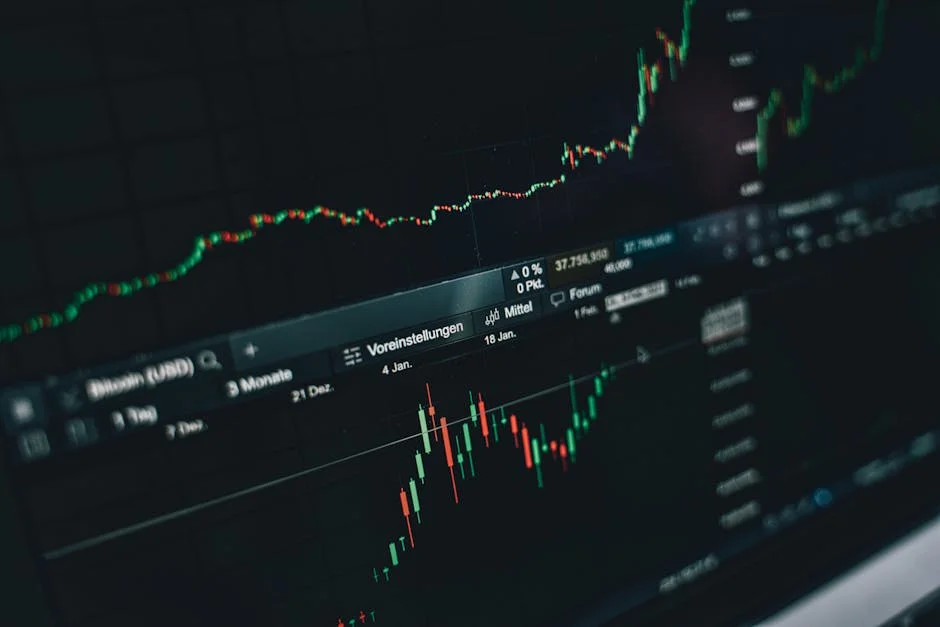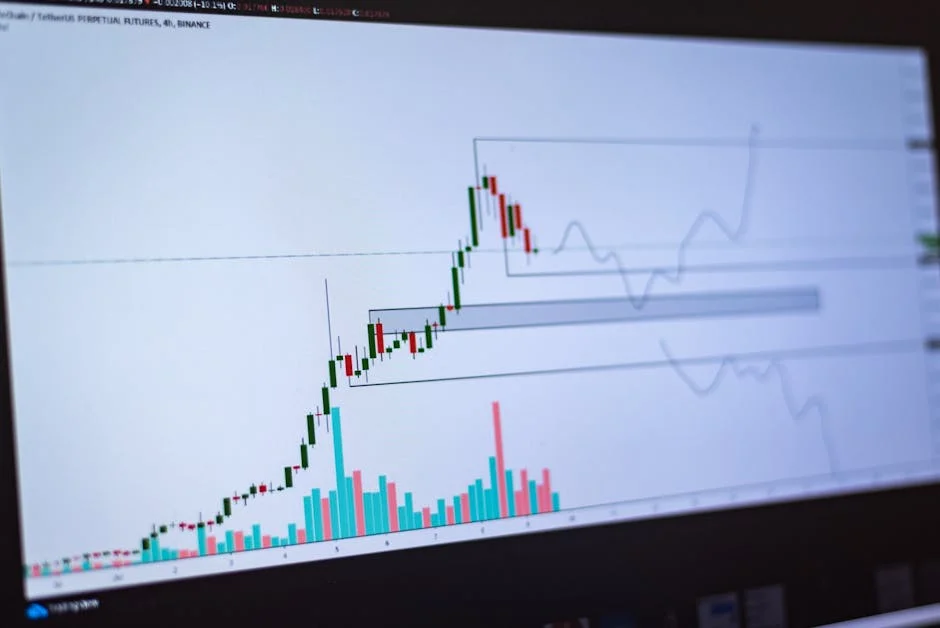
The phrase “forex market vs stock market” captures a comparison between two arenas that can look similar on the surface—both involve prices moving on charts, both attract short-term traders and long-term investors, and both are heavily influenced by news—yet the underlying instruments behave in fundamentally different ways. In the foreign exchange arena, you are dealing with currency pairs that represent relative value: one currency priced in another. A euro-dollar quote is not a standalone “asset” the way a company share is; it is a relationship between two economies, two interest-rate regimes, and two sets of capital flows. That relational nature means currency pricing often responds immediately to rate expectations, central-bank guidance, inflation surprises, and shifts in risk appetite. By contrast, equities represent ownership claims on businesses. A share price reflects not only macro conditions but also firm-specific performance, competitive advantages, management decisions, industry cycles, and valuation multiples. When comparing forex market vs stock market, the most important conceptual takeaway is that currency trading is usually about relative macroeconomics, while stock investing is frequently about corporate cash flows and growth prospects layered on top of macro forces.
Table of Contents
- My Personal Experience
- Understanding the Core Difference Between Currencies and Shares
- Market Structure: Decentralized FX vs Exchange-Traded Equities
- Trading Hours, Liquidity, and the Rhythm of Price Action
- Volatility Drivers: Central Banks vs Corporate Earnings
- Leverage, Margin, and Risk: Similar Tools, Different Outcomes
- Costs and Fees: Spreads, Commissions, and Hidden Friction
- Regulation, Safety, and Counterparty Considerations
- Strategy Fit: Day Trading, Swing Trading, and Long-Term Investing
- Expert Insight
- Diversification and Portfolio Construction Across Both Markets
- Tools, Data, and Research: What You Need to Analyze Each Market
- Comparison Table: Key Features Side by Side
- Psychology, Discipline, and Common Mistakes in Both Markets
- How to Choose Between Forex and Stocks Based on Your Goals
- Final Thoughts on Forex Market vs Stock Market Participation
- Watch the demonstration video
- Frequently Asked Questions
- Trusted External Sources
My Personal Experience
When I first started investing, I went straight into stocks because it felt more familiar—I could read earnings reports, follow products I actually used, and hold shares without watching the screen all day. Later I tried forex after seeing how “liquid” and “fast” it was, and the difference hit me immediately: currencies moved on headlines and interest-rate chatter that I didn’t fully understand, and the leverage made small mistakes feel huge. I remember placing what I thought was a conservative EUR/USD trade, only to get stopped out overnight by a surprise data release, while my stock positions barely reacted to the same news cycle. Forex taught me discipline and risk control faster than anything else, but I eventually realized I prefer the stock market’s slower pace and clearer long-term story—forex is something I only touch now when I have a specific macro view and a tight plan. If you’re looking for forex market vs stock market, this is your best choice.
Understanding the Core Difference Between Currencies and Shares
The phrase “forex market vs stock market” captures a comparison between two arenas that can look similar on the surface—both involve prices moving on charts, both attract short-term traders and long-term investors, and both are heavily influenced by news—yet the underlying instruments behave in fundamentally different ways. In the foreign exchange arena, you are dealing with currency pairs that represent relative value: one currency priced in another. A euro-dollar quote is not a standalone “asset” the way a company share is; it is a relationship between two economies, two interest-rate regimes, and two sets of capital flows. That relational nature means currency pricing often responds immediately to rate expectations, central-bank guidance, inflation surprises, and shifts in risk appetite. By contrast, equities represent ownership claims on businesses. A share price reflects not only macro conditions but also firm-specific performance, competitive advantages, management decisions, industry cycles, and valuation multiples. When comparing forex market vs stock market, the most important conceptual takeaway is that currency trading is usually about relative macroeconomics, while stock investing is frequently about corporate cash flows and growth prospects layered on top of macro forces.
Another core difference is what “value” means in each venue. In foreign exchange, there is no equivalent to a company’s earnings report that can permanently change the intrinsic value of a currency in the same direct way; currencies are backed by economies and policy credibility, and their “fair value” is contested among models such as purchasing power parity, interest rate parity, and balance-of-payments dynamics. In equities, analysts can debate intrinsic value using discounted cash flow models, comparable company multiples, and dividend discount methods, and those models can tie directly to measurable business outcomes. This distinction shapes how participants approach risk: currency traders may focus on event risk, leverage, and the probability distribution around data releases, while stock participants may focus on earnings durability, balance-sheet strength, and long-term competitive positioning. Seeing forex market vs stock market through this lens helps clarify why some strategies translate well across both—like disciplined risk management—while others do not, such as assuming that “cheap” always mean-reverts quickly in currencies the way undervalued stocks sometimes can over multi-year horizons.
Market Structure: Decentralized FX vs Exchange-Traded Equities
The market structure behind forex market vs stock market is one of the largest practical differences for real-world execution. Foreign exchange is primarily an over-the-counter network of banks, liquidity providers, brokers, and electronic communication venues rather than a single centralized exchange. Even though retail traders commonly access FX through a broker platform that looks like an exchange, the pricing and fills are typically derived from a pool of counterparties, and the quality of execution depends on the broker’s model, the depth of liquidity, and the speed of routing. This can create nuances like variable spreads, occasional requotes (depending on broker setup), and differences in pricing between providers, especially during volatile periods or around illiquid time windows. Meanwhile, stocks are generally traded on regulated exchanges with consolidated order books, standardized tick sizes, and public prints that contribute to widely recognized last-traded prices. When comparing forex market vs stock market, this centralized versus decentralized design affects transparency, order types, and the interpretation of volume data.
Equity markets tend to provide clearer visibility into market depth and transaction reporting, and many jurisdictions enforce robust rules for best execution and market surveillance. FX regulation exists, but the experience can differ widely by country and by broker. In the foreign exchange world, “volume” on a retail platform often represents tick volume or broker-specific flow rather than consolidated global volume, because there is no single tape. That does not mean FX analysis is inferior; it means traders must adapt their tools and expectations. On the equity side, exchange rules, listed company reporting requirements, and standardized corporate actions create a different kind of information environment. Corporate disclosures, earnings calls, insider transaction reporting, and analyst coverage can move individual stocks independently of the broader index. In FX, macro calendars and central-bank communication dominate. Understanding this structural contrast is essential in any forex market vs stock market decision, because it determines what data you can trust, how you measure liquidity, and how you design a strategy that remains robust when spreads widen or when order books thin out.
Trading Hours, Liquidity, and the Rhythm of Price Action
One reason the forex market vs stock market debate is so common is accessibility: foreign exchange is widely known for near-24-hour trading from Monday to Friday, following the global handoff from Asia to Europe to North America. That continuity can be attractive for people who want to trade around a day job or who prefer reacting to global news as it breaks. Liquidity in major currency pairs can be extremely deep during overlapping sessions, particularly the London–New York overlap, which often produces tight spreads and fast execution. However, that same around-the-clock nature can also amplify the temptation to overtrade, since there is almost always a chart moving somewhere. Stocks, in contrast, trade primarily during defined exchange hours, with pre-market and after-hours sessions that are typically thinner and potentially more volatile. For many participants, the fixed schedule of equities encourages more deliberate planning, while FX can encourage continuous monitoring.
Liquidity profiles also differ in a way that matters for slippage and transaction costs. Major currency pairs often have stable liquidity during peak hours, but liquidity can drop sharply around rollover, during holiday sessions, or when unexpected policy headlines hit. In equities, liquidity varies dramatically by company size and popularity: mega-cap shares and index ETFs can be very liquid, while small-cap stocks can have wide spreads and limited depth. The “rhythm” of price action differs as well. Stock indices can gap on overnight news because the exchange is closed; individual stocks can gap significantly on earnings. FX can gap too, especially after weekends or major surprises, but the continuous session reduces the frequency of gaps compared with equities. When weighing forex market vs stock market participation, it helps to match your availability and temperament to the market’s tempo: FX may suit those comfortable with macro-driven moves across time zones, while stocks may suit those who prefer structured sessions and company-specific catalysts.
Volatility Drivers: Central Banks vs Corporate Earnings
Volatility is often the deciding factor in the forex market vs stock market choice, but volatility is not a single concept. In foreign exchange, volatility is frequently driven by central-bank policy expectations, interest-rate differentials, inflation data, employment reports, and geopolitical risk. A single statement from a central banker can reshape the yield curve and move currency pairs sharply, especially when positioning is crowded. Because currencies are priced relative to each other, the same economic data can have different effects depending on what is happening in the counterpart economy. For example, a strong U.S. jobs number might boost the dollar if it implies higher rates, but the magnitude of the move depends on where European or Japanese policy expectations stand at the same time. This interdependence creates complex volatility patterns that can be rewarding for macro-oriented traders and challenging for those who prefer simpler narratives.
In the stock market, volatility often clusters around earnings releases, guidance updates, product announcements, regulatory decisions, and sector rotations. Broader indices respond to macro factors too—rates, inflation, growth expectations—but individual stocks can diverge wildly based on company-specific news. That idiosyncratic component is a defining difference in forex market vs stock market behavior. A currency pair rarely moves because of “company risk,” whereas a stock can drop 20% on a single earnings miss or a legal setback. For portfolio construction, this means equities can be diversified across industries and business models, potentially reducing risk through uncorrelated earnings streams, while FX diversification often requires understanding correlation regimes among currency blocs and how risk sentiment ties them together. Both markets can be volatile; the key is that the sources of volatility differ, so the research process and the timing of risk events differ as well.
Leverage, Margin, and Risk: Similar Tools, Different Outcomes
Leverage is central to many discussions about forex market vs stock market participation. Retail FX brokers often offer higher leverage than typical stock brokerage accounts, depending on jurisdiction. Higher leverage can make small currency movements meaningful, which is attractive for short-term strategies, but it also magnifies drawdowns and increases the probability of forced liquidation if risk controls are weak. In equities, leverage exists through margin accounts, options, and leveraged ETFs, but many long-term investors trade shares without leverage, relying on compounding and dividends. The practical result is that many retail FX accounts experience large swings relative to equity portfolios because position sizes are larger relative to account equity. That does not mean FX is inherently “more dangerous,” but it does mean the common usage patterns can be riskier if traders treat leverage as purchasing power rather than as a tool to optimize capital efficiency.
Margin mechanics also differ. In FX, margin is typically a performance bond, and positions are marked-to-market continuously with margin requirements that can change during volatility spikes. Financing costs are embedded in rollover or swap rates, reflecting interest-rate differentials between the two currencies. In equities, margin interest is usually explicit, and holding costs depend on broker rates and whether a stock is hard-to-borrow if shorting. Dividends, stock splits, and corporate actions add another layer for equity holders. When comparing forex market vs stock market, the decision should include a clear plan for position sizing, maximum loss per trade or per investment, and an understanding of how financing charges accumulate. A currency trade held for weeks can be meaningfully affected by carry, just as a leveraged stock position held for months can be affected by margin interest. In both cases, leverage can be used prudently, but the “default” leverage in retail FX can tempt overexposure if a trader lacks a strict risk framework.
Costs and Fees: Spreads, Commissions, and Hidden Friction
Transaction costs are a decisive part of forex market vs stock market outcomes, especially for frequent traders. In FX, the most visible cost is the spread, and some accounts also charge commissions. Tight spreads on major pairs can make short-term trading feasible, but spreads can widen significantly during news events, low-liquidity hours, or sudden risk-off moves. Additionally, rollover or swap fees can either cost or pay you depending on the direction of the trade and the interest-rate differential. Many traders underestimate how overnight financing can eat into returns, particularly when holding positions for extended periods in pairs with unfavorable carry. Slippage is another friction point; even a strategy that looks profitable in backtests can underperform if real-world fills occur at worse prices during fast moves. Execution quality and broker integrity therefore matter heavily in FX.
In equities, costs often come in the form of commissions (which may be zero at many brokers), exchange fees, and the bid-ask spread, which varies by liquidity. For investors, the bigger “cost” can be taxes, especially in jurisdictions where short-term capital gains are taxed more heavily than long-term gains. For stock traders using options, implied volatility and the bid-ask spread in options chains can represent a meaningful friction. Another subtle cost in equities is opportunity cost around trading halts, limit-up/limit-down mechanisms, and restricted short selling in certain conditions. Comparing forex market vs stock market costs requires looking beyond advertised commission rates and considering the full lifecycle of a position: entry, exit, holding period, financing, and the likelihood of adverse execution in volatile moments. A disciplined trader or investor should track all-in costs per trade and per month, because small frictions compound, and the compounding can be decisive over hundreds of transactions.
Regulation, Safety, and Counterparty Considerations
Regulation shapes the practical experience of forex market vs stock market participation in ways that are easy to overlook when focusing only on charts. Equities are typically traded through regulated exchanges with established clearing and settlement systems, and brokerage client protections can include segregation of client funds, investor compensation schemes, and detailed reporting requirements. Listed companies must meet disclosure standards, and regulators monitor for insider trading and market manipulation. None of this eliminates risk—stocks can still collapse, and fraud can still occur—but the framework is comparatively standardized. In FX, regulation varies widely across regions, and because the market is largely OTC, the counterparty relationship is more central: your broker’s financial strength, execution model, and compliance standards matter greatly. Choosing a reputable, well-regulated broker can reduce the risk of abusive practices, but it does not eliminate market risk.
Counterparty risk also manifests differently. In equities, if you own shares in a cash account at a reputable broker, your exposure is primarily to market risk and the broker’s operational integrity, with custody structures designed to protect client assets. In retail FX, you are usually trading contracts with your broker, often as CFDs or spot contracts, and the broker may internalize flow or hedge it externally. This can create conflicts of interest if the broker operates a dealing desk and manages risk in ways that affect execution. That is why many traders examine broker policies on slippage, order execution, and negative balance protection. When evaluating forex market vs stock market safety, it is wise to consider not only regulation but also practical protections: segregation of funds, audit history, complaint resolution mechanisms, and how the broker handles extreme volatility. A market can be liquid and efficient, yet still expose retail participants to avoidable operational risks if they choose poorly.
Strategy Fit: Day Trading, Swing Trading, and Long-Term Investing
Strategy selection is where the forex market vs stock market comparison becomes personal. FX is often associated with day trading and swing trading because currency pairs can trend or mean-revert within well-defined technical ranges, and macro events create repeated catalysts. Many FX strategies focus on technical analysis, rate differentials, and scheduled data releases, often with strict risk limits and frequent re-evaluation. Stocks, on the other hand, offer a wider spectrum of time horizons. Long-term investing in equities is supported by the possibility of business growth, reinvested profits, and dividends. Even for traders, equities provide diverse setups: earnings momentum, sector rotation, value re-rating, and event-driven opportunities. The “edge” in stocks can come from understanding a company or industry better than the market, while in FX the edge often comes from understanding policy expectations, positioning, and how the market tends to react to surprises relative to consensus.
| Aspect | Forex Market | Stock Market |
|---|---|---|
| What you trade | Currency pairs (e.g., EUR/USD) | Shares of individual companies (e.g., AAPL) |
| Market hours | 24 hours a day, 5 days a week (global sessions) | Set exchange hours (varies by country; limited daily sessions) |
| Liquidity & volatility | Generally very liquid; often tighter spreads on major pairs, can move quickly on news | Liquidity varies by stock; volatility depends on company and sector, wider spreads on less-traded names |
Expert Insight
If you prefer the forex market’s near-24/5 access and high liquidity, start by trading only the most liquid pairs (EUR/USD, USD/JPY) and cap leverage to a level you can withstand (e.g., risk no more than 1% per trade). Use a simple checklist before entering: confirm the day’s key economic releases, identify the dominant trend on a higher timeframe, and set a hard stop-loss based on recent volatility. If you’re looking for forex market vs stock market, this is your best choice.
If you lean toward the stock market for company-specific opportunities, focus on a small watchlist of high-quality, liquid names and trade around clear catalysts (earnings, guidance, sector news) rather than noise. Define your plan in advance: choose entry triggers (breakout or pullback), set a stop below a technical level that invalidates the thesis, and size positions so a single gap or earnings surprise won’t derail your portfolio. If you’re looking for forex market vs stock market, this is your best choice.
That said, both markets can support multiple approaches, and the best fit depends on your temperament and research style. If you enjoy macroeconomics, central-bank communication, and the interplay of yields and risk sentiment, FX may feel intuitive. If you prefer analyzing business models, competitive moats, and financial statements, equities may be more engaging. For many people weighing forex market vs stock market options, a hybrid approach can be sensible: use equities for long-term compounding and use FX selectively for tactical hedges or shorter-term opportunities. The key is not to force a style onto a market that does not reward it. For example, a long-term “buy and hold” approach in a single currency pair can be less straightforward because currencies do not have the same long-term upward drift associated with productive businesses; their returns can be dominated by cycles and carry. Conversely, ultra-high-frequency scalping in illiquid small-cap stocks can be difficult due to spreads and unpredictable gaps. Matching strategy to market microstructure is often more important than picking the “best” market in the abstract.
Diversification and Portfolio Construction Across Both Markets
Diversification is often cited in the forex market vs stock market conversation, but diversification behaves differently across these asset classes. In equities, diversification can be achieved by holding companies across sectors, geographies, and styles (growth, value, dividend, quality). Because company outcomes can be idiosyncratic, a diversified stock portfolio can reduce single-name risk substantially. Broad index funds and ETFs make this easy, which is one reason stock investing remains a cornerstone for long-term wealth-building. In FX, diversification is less about owning many pairs and more about understanding correlation regimes and exposure to common factors. Many currency pairs are tied to the U.S. dollar, and during risk-off periods correlations can converge, making “diversified” FX baskets behave like a single risk factor. Commodity-linked currencies may correlate with commodity prices; funding currencies may respond to carry trade unwinds; emerging-market currencies can respond to global liquidity conditions.
Portfolio construction can also involve using one market to hedge the other. For example, an investor with international stock exposure may use FX positions to hedge currency risk, especially when the base currency differs from the investment currency. Conversely, an FX trader might watch equity indices as a proxy for risk sentiment, adjusting exposure when correlations shift. The forex market vs stock market choice does not have to be exclusive; many sophisticated participants treat currencies as a risk management tool rather than only a speculative vehicle. Still, retail participants should be cautious: hedging can reduce volatility but can also cap gains or introduce additional costs through spreads and financing. A thoughtful approach is to define objectives first—growth, income, capital preservation, or tactical trading—and then select instruments accordingly. Stocks can provide growth through earnings expansion and dividends; FX can provide tactical opportunities and diversification when used with a clear understanding of macro drivers and correlation behavior.
Tools, Data, and Research: What You Need to Analyze Each Market
The research toolkit for forex market vs stock market differs in emphasis. For FX, economic calendars, central-bank meeting schedules, inflation prints, employment data, and bond yield curves are core inputs. Traders often track interest-rate expectations through futures or swaps, monitor speeches and minutes, and pay attention to global risk sentiment indicators. Technical analysis is popular in FX because many participants respond to similar levels, and because currencies often trade within ranges punctuated by macro-driven breakouts. Sentiment indicators, positioning data (such as COT reports), and options-implied volatility can also be valuable, especially for anticipating how the market may react to a surprise. Because FX is relative pricing, you also need a habit of comparing data across two economies rather than focusing on a single country in isolation.
Equity research is broader and can be deeper at the company level. Fundamental analysis may include revenue growth, margins, free cash flow, balance-sheet leverage, and valuation multiples. Sector analysis, competitive dynamics, and management quality matter. Earnings transcripts and guidance can be critical, as can macro inputs like rates and consumer demand. Technical analysis is also widely used in stocks, but it often interacts with company-specific catalysts such as earnings or product launches. Data availability can be richer in equities: filings, analyst estimates, institutional ownership, and corporate governance information. In the forex market vs stock market comparison, consider what kind of research you enjoy and what you can realistically maintain. If you cannot follow a steady stream of macro data, FX trading may feel like guessing around headlines. If you do not want to read financial statements or track earnings seasons, stock selection may feel overwhelming. Many participants simplify by using index funds for equities and focusing FX activity on a small set of major pairs with clear macro narratives.
Comparison Table: Key Features Side by Side
Choosing between forex market vs stock market participation becomes easier when the differences are organized into concrete dimensions such as liquidity, costs, typical leverage, and data transparency. The table below summarizes practical features that often matter to retail traders and investors, using approximate “ratings” as a simple directional guide rather than a promise of outcomes. Costs and execution can vary widely by broker, exchange, region, and instrument, so the goal is to compare typical conditions rather than edge cases. Use these categories to create a checklist: when you open an account, what are you paying in spreads or commissions, what protections exist, what hours can you trade, and what kinds of risks dominate your performance?
It also helps to interpret “price” in a realistic way. In FX, the “price” to participate is often the spread, any commission, and the financing cost of holding positions. In stocks, the “price” can be the commission (often low), the spread, and potentially platform fees or data fees for advanced tools. Taxes and dividend treatment can be a major swing factor in equities, while rollover can be a major swing factor in FX. If the forex market vs stock market decision is being made primarily on the idea that one is “cheaper,” it is worth calculating sample trades under your expected holding period and trade frequency, then comparing the all-in cost under calm conditions and under volatile conditions.
| Name | Features | Ratings | Price |
|---|---|---|---|
| Forex Market (Major Pairs) | 24/5 trading, high liquidity in majors, macro-driven moves, spreads + possible commissions, rollover financing | Liquidity: 5/5; Transparency: 3/5; Beginner friendliness: 3/5 | Typical cost: tight spreads in peak hours; financing cost/credit overnight |
| Stock Market (Large-Cap Shares) | Exchange-traded, company ownership, earnings catalysts, dividends, strong disclosures, variable liquidity by ticker | Liquidity: 4/5; Transparency: 5/5; Beginner friendliness: 4/5 | Typical cost: low/zero commissions at many brokers; spreads usually small in liquid names |
| Stock Market (Index ETFs) | Diversification in one instrument, long-term investing friendly, intraday tradable, often highly liquid | Liquidity: 5/5; Transparency: 5/5; Beginner friendliness: 5/5 | Typical cost: low spreads; small management fee (expense ratio) |
| Forex Market (Emerging Market Pairs) | Higher volatility, wider spreads, sensitive to global liquidity and political risk, potential for sharp gaps | Liquidity: 2/5; Transparency: 3/5; Beginner friendliness: 2/5 | Typical cost: wider spreads; higher carry/financing variability |
Psychology, Discipline, and Common Mistakes in Both Markets
Performance in forex market vs stock market participation often hinges less on picking the “right” market and more on behavior under uncertainty. FX’s high leverage and continuous session can intensify emotional decision-making: revenge trading after a loss, widening stops to avoid being wrong, or increasing size during a hot streak. Because currency pairs can move quickly on headlines, traders may develop the habit of reacting rather than planning. Stocks can trigger different psychological traps. Investors may fall in love with a company story, hold through deteriorating fundamentals, or chase momentum late in a cycle. Earnings gaps can produce regret and impulsive trades, and social media narratives can exaggerate confidence in single-name bets. Both markets punish the same weaknesses: poor position sizing, lack of a tested plan, and failure to accept small losses as part of the process.
Discipline looks similar across both arenas but must be adapted to the instrument. In FX, it often means respecting maximum leverage, avoiding trading during known liquidity traps unless your strategy is built for it, and understanding that a “small” move can be large in leveraged terms. In equities, it often means diversifying, avoiding excessive concentration, and being honest about whether you are investing or trading. A key difference in forex market vs stock market mistakes is that FX losses can accumulate quickly due to leverage and frequent trading, while stock losses can accumulate slowly through opportunity cost, holding declining businesses, or ignoring valuation. The practical solution is to define rules that are measurable: risk per trade, maximum drawdown, number of trades per week, and criteria for entering and exiting. Keeping a journal can help identify patterns like trading during fatigue or increasing size after losses. Markets do not adapt to your emotions; your process must be robust enough to withstand normal variance without forcing catastrophic decisions.
How to Choose Between Forex and Stocks Based on Your Goals
The most useful way to approach forex market vs stock market selection is to tie the market choice to a concrete goal and a realistic schedule. If the goal is long-term wealth accumulation with minimal day-to-day monitoring, diversified equity exposure—often through broad index funds—tends to align well with that objective because it harnesses business growth and dividends over time. If the goal is active trading with frequent opportunities and you enjoy macroeconomic analysis, FX can provide many setups across the week, especially in major pairs. If the goal is learning market mechanics and risk management, both markets can teach these skills, but the learning curve can be steeper in FX if leverage is used aggressively. A practical compromise is to start with smaller size, focus on process metrics, and treat early months as skill-building rather than income generation.
Constraints matter too. Time zones, work schedules, and the ability to concentrate during volatile windows should influence your decision. Someone who can only trade during U.S. evenings may find certain FX sessions more active than stock exchange hours, while someone who prefers a defined routine may prefer equities. Capital size also plays a role. Some people are attracted to FX because they believe smaller accounts can “grow faster,” but that is often a leverage illusion: higher leverage increases the probability of ruin if discipline is lacking. In the forex market vs stock market decision, it can be healthier to focus on sustainable returns and controlled drawdowns rather than on maximizing short-term gains. If you want exposure to both, consider separating accounts or allocating a percentage of capital to each with different rules—an investing bucket for stocks and a trading bucket for FX—so the objectives do not conflict. This separation can reduce the temptation to liquidate long-term holdings to fund short-term trades or to overtrade FX after a stock loss.
Final Thoughts on Forex Market vs Stock Market Participation
Choosing forex market vs stock market is less about which market is “better” and more about which set of risks, research demands, and time commitments fits your personality and objectives. Foreign exchange offers deep liquidity in major pairs, frequent macro catalysts, and flexible trading hours, but it also demands strict leverage control, comfort with policy-driven volatility, and careful attention to execution quality and financing costs. Stocks offer ownership in businesses, rich disclosure, dividends, and a powerful long-term compounding narrative, yet they can bring single-company blowups, earnings gaps, and the need to evaluate valuation and fundamentals. The best outcome usually comes from aligning strategy with structure: trade FX if you have a repeatable plan built for a decentralized, macro-driven arena, and invest or trade stocks if you prefer exchange transparency and company-level analysis. For many participants, a blended approach—using equities for long-term positioning and FX for tactical opportunities or hedging—can deliver a balanced way to engage with both worlds, provided risk limits are clear and the forex market vs stock market roles in the portfolio are not confused.
Watch the demonstration video
In this video, you’ll learn the key differences between the forex market and the stock market, including how each is traded, what drives price movements, typical trading hours, liquidity, and volatility. You’ll also see how leverage, costs, and risk compare—helping you decide which market better fits your goals, strategy, and experience level. If you’re looking for forex market vs stock market, this is your best choice.
Summary
In summary, “forex market vs stock market” is a crucial topic that deserves thoughtful consideration. We hope this article has provided you with a comprehensive understanding to help you make better decisions.
Frequently Asked Questions
What is the main difference between the forex market and the stock market?
Forex trades currency pairs in a decentralized global market, while stocks trade shares of companies on regulated exchanges.
Which market is more liquid: forex or stocks?
When comparing the **forex market vs stock market**, forex is typically more liquid thanks to its massive daily trading volume, which often leads to tighter spreads—especially on major currency pairs.
What are the typical trading hours for forex vs stocks?
Unlike stock exchanges, which operate only during set local trading hours that differ from country to country, the forex market vs stock market comparison highlights one major advantage: forex is open 24 hours a day, five days a week, letting traders respond to global events almost anytime.
How do volatility and risk compare between forex and stocks?
Both arenas can be volatile, but in the **forex market vs stock market** comparison, forex tends to move fast on major economic headlines—and those swings can feel even bigger when leverage is involved. Stocks, on the other hand, may stay relatively steady until a company-specific catalyst hits, when a single share can gap sharply on earnings, guidance, or breaking news.
Is leverage more common in forex trading than stock trading?
Yes—retail forex trading often comes with much higher leverage, whereas leverage in stocks is usually more limited and varies based on your broker’s policies and regulatory requirements. This is one of the key differences people weigh when comparing the **forex market vs stock market**.
What factors most influence prices in forex vs stocks?
In the **forex market vs stock market** comparison, currencies tend to move most in response to interest rates, inflation trends, key economic releases, and geopolitical developments, while stock prices are more heavily shaped by individual company earnings, future growth expectations, sector momentum, and overall market sentiment.
📢 Looking for more info about forex market vs stock market? Follow Our Site for updates and tips!

Trusted External Sources
- Forex vs stocks (swing/day trading) – Reddit
Dec 18, 2026 … Market size: The forex market is much larger than the stock market, with a daily trading volume of around $6 trillion, compared to the stock … If you’re looking for forex market vs stock market, this is your best choice.
- Forex Trading vs Stock Trading – Differences, Advantage
Forex and stocks may both offer opportunities for traders, but they operate in very different ways. In the **forex market vs stock market** comparison, forex stands out for its massive liquidity, frequent price swings, and near round-the-clock trading (24 hours a day, five days a week). It also typically provides access to higher leverage, which can amplify both gains and losses. Stocks, on the other hand, are tied to individual companies and often move based on earnings, news, and broader market sentiment—making the experience, risks, and strategies quite different from currency trading.
- Forex vs Stocks: What are the Key Differences? | Dukascopy Bank SA
On Oct 24, 2026, many traders compare the **forex market vs stock market** and quickly notice they function in very different ways. The forex market is a massive, decentralised global network that connects banks, brokers, and institutions to trade currencies around the clock, while the stock market is organised through regulated exchanges where investors buy and sell shares in specific companies during set trading hours.
- The global foreign exchange market in a higher-volatility environment
On Dec 5, 2026, shifting capital flows and heightened financial-market volatility—especially in currency trading—drew fresh attention from investors. Looking at how volatility moves across assets can help clarify what’s really driving price swings and risk sentiment, particularly when comparing the **forex market vs stock market**.
- The main differences between forex and stock trading – IG
The **forex market vs stock market** debate often comes down to a few key differences: trading volume, liquidity, fees, and how long you can trade each day. The forex market typically sees far higher daily volume, which can translate into deeper liquidity and tighter spreads, while stock trading costs and liquidity can vary widely by exchange and individual company. Another major contrast is trading hours—forex runs nearly 24 hours a day during the week, whereas most stock markets operate on set exchange hours.