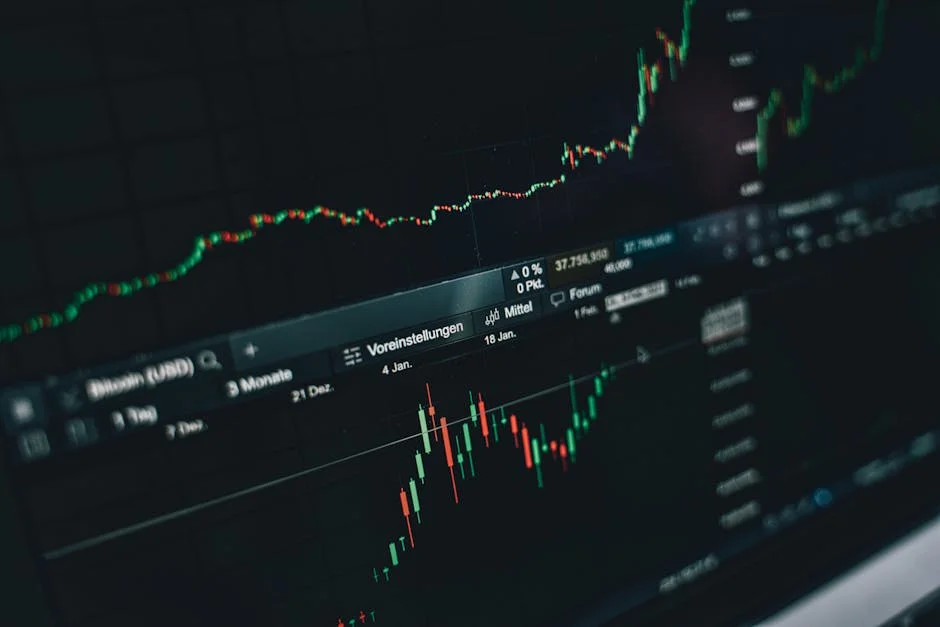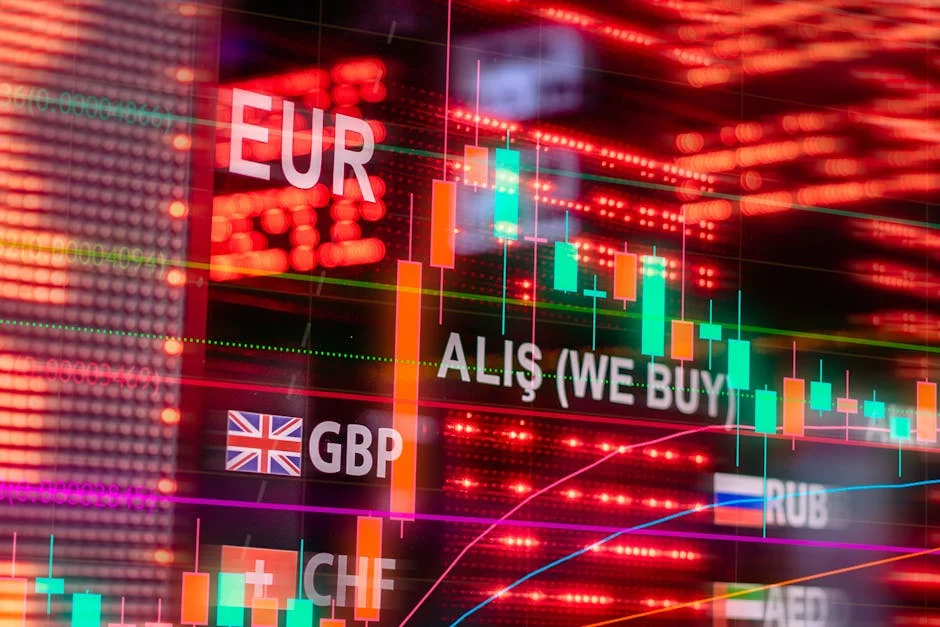
Forex and stock trading sit at the center of modern investing, yet they operate with different mechanics, participants, and risk profiles. Forex and stock markets both enable speculation and hedging, but they do so through distinct instruments: currency pairs in the foreign exchange market and shares of publicly listed companies in equity markets. The biggest structural contrast is that forex is largely an over-the-counter network of dealers and liquidity providers, while stock trading usually happens on regulated exchanges with centralized order books. This difference influences transparency, execution, fees, and even the rhythm of price movement throughout the day. Currency markets react instantly to macroeconomic shifts such as interest-rate expectations, inflation surprises, and geopolitical risk, while equities often blend macro forces with company-specific earnings, guidance, and sector trends. Understanding how these drivers interact helps traders choose strategies that fit their time horizon and tolerance for volatility.
Table of Contents
- My Personal Experience
- Understanding Forex and Stock Markets Side by Side
- Market Structure, Trading Hours, and Liquidity
- Volatility Profiles and What Moves Prices
- Leverage, Margin, and Capital Efficiency
- Costs: Spreads, Commissions, Swaps, and Taxes
- Risk Management Differences: Gaps, Stops, and News Shocks
- Strategy Styles: Day Trading, Swing Trading, and Investing
- Fundamental Analysis: Macro for Currencies, Business Quality for Equities
- Expert Insight
- Technical Analysis: Chart Behavior Across Forex and Stock Instruments
- Portfolio Building: Diversification, Correlation, and Hedging
- Choosing a Broker, Platform, and Tools for Both Markets
- Psychology and Discipline Across Forex and Stock Trading
- Common Mistakes and How to Avoid Them
- Putting It Together for Long-Term Skill Development
- Watch the demonstration video
- Frequently Asked Questions
- Trusted External Sources
My Personal Experience
I started trading stocks first because it felt more familiar—buying shares of companies I actually used—then I got curious about forex after seeing how quickly currency pairs could move. At the beginning I treated both like a shortcut to extra income, and I paid for it with a few impulsive trades, especially in forex where leverage made small mistakes feel huge. Over time I settled into a routine: I use stocks for slower, longer holds around earnings and broader market trends, and I only trade forex when I have a clear setup and a strict stop-loss. The biggest lesson for me wasn’t a strategy indicator—it was realizing that position sizing and patience matter more than being “right” on any single trade. If you’re looking for forex and stock, this is your best choice.
Understanding Forex and Stock Markets Side by Side
Forex and stock trading sit at the center of modern investing, yet they operate with different mechanics, participants, and risk profiles. Forex and stock markets both enable speculation and hedging, but they do so through distinct instruments: currency pairs in the foreign exchange market and shares of publicly listed companies in equity markets. The biggest structural contrast is that forex is largely an over-the-counter network of dealers and liquidity providers, while stock trading usually happens on regulated exchanges with centralized order books. This difference influences transparency, execution, fees, and even the rhythm of price movement throughout the day. Currency markets react instantly to macroeconomic shifts such as interest-rate expectations, inflation surprises, and geopolitical risk, while equities often blend macro forces with company-specific earnings, guidance, and sector trends. Understanding how these drivers interact helps traders choose strategies that fit their time horizon and tolerance for volatility.
Another key contrast between forex and stock opportunities is the way value is defined. A stock represents a claim on a business’s future cash flows; valuation frameworks can include revenue growth, margins, competitive advantage, and balance-sheet strength. A currency pair, by comparison, is a relative price between two economies, often shaped by rate differentials, capital flows, and risk sentiment. This means forex and stock analysis can overlap—both respond to growth expectations and liquidity conditions—but they also diverge in practical tools. Equity traders may focus on earnings seasons, dividends, buybacks, and corporate actions, while currency traders pay close attention to central bank meetings, yield curves, and cross-border trade dynamics. Many market participants combine both arenas to diversify: equities can provide long-term compounding when businesses grow, and currencies can offer tactical exposure to macro themes, hedging for international portfolios, or short-term momentum setups. Seeing the two markets as complementary rather than competing often leads to more balanced decision-making.
Market Structure, Trading Hours, and Liquidity
Forex and stock markets differ sharply in how and when liquidity appears. The foreign exchange market is typically open 24 hours a day from Monday to Friday, following the sun from Asia to Europe to North America. This continuous cycle creates frequent opportunities, but it also means price can move quickly during news events at any hour. Liquidity in forex tends to be deepest in major pairs like EUR/USD, USD/JPY, and GBP/USD, with tight spreads during overlapping sessions such as London–New York. Stock liquidity, on the other hand, concentrates during official exchange hours, with notable bursts at the open and close. While some brokers offer extended-hours equity trading, liquidity and spreads can be less favorable outside the main session. For traders, these timing and liquidity patterns matter because they impact slippage, spread cost, and the reliability of technical levels. A breakout in a highly liquid currency pair during peak hours can behave differently from a breakout in a thinly traded small-cap stock after hours.
The way orders are matched also shapes the experience across forex and stock venues. In equities, exchange-traded order books display bids and asks at multiple price levels, and regulatory frameworks often enforce best execution, market data rules, and reporting requirements. In forex, pricing is typically streamed by liquidity providers, and execution may occur through a dealing desk, ECN, or hybrid model depending on the broker. That can influence the consistency of spreads and the likelihood of requotes or partial fills. None of this automatically makes one market “better,” but it does mean traders should evaluate their broker’s model, the quality of price feeds, and the typical trading conditions for their chosen instruments. For example, a trader focusing on forex and stock strategies that rely on rapid entries and exits may prioritize low-latency execution and stable spreads, while an investor holding equities for months may care more about custody, corporate action processing, and dividend handling. Understanding structure and liquidity is a practical foundation for selecting tools and avoiding unpleasant surprises.
Volatility Profiles and What Moves Prices
Price drivers in forex and stock trading can overlap, but they often express themselves differently. Currencies frequently respond to interest-rate expectations, central bank communication, inflation data, labor market releases, and shifts in global risk appetite. When investors seek safety, flows may favor the U.S. dollar, Swiss franc, or Japanese yen, while “risk-on” phases can lift higher-yielding or commodity-linked currencies. Stocks, while influenced by the same macro environment, add layers of company-specific catalysts: earnings reports, product launches, management changes, litigation, regulatory updates, and mergers. That is why an index may drift calmly while a single company swings dramatically on guidance. Traders who understand both markets can interpret macro events through two lenses: a surprise rate cut might weaken a currency but also lift local equities due to cheaper financing, though the final outcome depends on why the cut occurred and how it affects growth expectations.
Volatility also behaves differently across forex and stock instruments. Major currency pairs often show smoother intraday movement than individual equities because their liquidity is immense and their drivers are broad macro factors rather than single-company events. Yet forex can spike sharply around high-impact data releases, especially when positioning is crowded. Stocks can gap overnight due to earnings, which can bypass stop-loss orders at expected prices. This gap risk is a defining characteristic of equities and can be both an opportunity and a hazard. Another nuance is that equity indices may have lower day-to-day volatility than many single stocks, making them more comparable to major forex pairs in some regimes. Traders choosing between forex and stock setups should match volatility to strategy: scalping and tight-stop approaches may struggle during news spikes in currencies, while swing trading equities through earnings season requires careful planning around event risk. Recognizing what moves each market helps set realistic expectations for drawdowns, win rates, and trade duration.
Leverage, Margin, and Capital Efficiency
Leverage is often central to how forex and stock traders approach capital allocation, but the typical leverage available and the risks it creates are not identical. Retail forex accounts frequently offer significant leverage, which can make small price movements meaningful in profit and loss terms. This can be attractive for short-term strategies, but it also increases the probability of rapid losses if position sizing is not disciplined. Equity trading may provide margin as well, yet leverage limits can be more conservative and vary by jurisdiction, broker, and the volatility of the security. Some traders use leveraged products—like CFDs where permitted, options, or margin loans—to amplify exposure, but each introduces its own cost structure and risk profile. The important point is that leverage is not free performance; it is a tool that magnifies both skill and mistakes. A trader who treats leverage as a substitute for edge often experiences unstable results.
Margin mechanics also differ in ways that matter for risk management across forex and stock positions. Forex margin is usually calculated based on the notional size of the currency position and the broker’s margin requirement, with floating profit and loss updating continuously. Equity margin can depend on initial and maintenance requirements, and brokers may impose higher requirements during volatile periods or around earnings. This can lead to forced liquidation if account equity falls below maintenance thresholds. For traders combining forex and stock exposures, correlation can become a hidden margin risk: a broad “risk-off” move might strengthen safe-haven currencies while equities drop, potentially offsetting or compounding losses depending on the portfolio mix. Capital efficiency is a legitimate goal, but it should be pursued with robust safeguards: conservative position sizing, awareness of event calendars, and stress tests that assume extreme moves. A practical approach is to decide maximum portfolio drawdown limits first, then scale leverage and position sizes so that even adverse scenarios remain survivable.
Costs: Spreads, Commissions, Swaps, and Taxes
Transaction costs in forex and stock trading take different forms, and understanding them can materially improve net performance. In forex, the spread—the difference between bid and ask—is a primary cost, sometimes combined with a commission on ECN-style accounts. Traders who hold positions overnight may also pay or receive swap (rollover) based on interest-rate differentials between the two currencies, adjusted by broker markups. This means that two trades with identical price movement can have different net outcomes depending on holding time and financing. Stocks often involve commissions (sometimes zero for certain markets), exchange fees, and the hidden cost of slippage. For longer-term equity investors, the spread might be less noticeable in large, liquid names, but it can be substantial in smaller stocks. Dividends can partially offset costs, while corporate actions can create additional considerations for accounting and settlement.
Taxes and reporting can further differentiate forex and stock results. Equity investors may face capital gains tax rates that vary by holding period, while dividends may be taxed differently depending on jurisdiction and whether dividends are qualified. Forex taxation can be complex, sometimes treated as ordinary income or subject to specific rules depending on country and account structure. Because rules vary widely, traders often consult a tax professional to avoid surprises. Cost awareness also extends beyond explicit fees: execution quality, re-quotes, and the ability to trade during volatile conditions can impact the true cost of trading. For anyone balancing forex and stock exposure, a simple best practice is to track “all-in” costs per trade and per month, including financing and any platform fees, then compare strategies on a net basis. A strategy that looks strong on gross returns can become mediocre after spreads, swaps, and slippage are included, especially for high-frequency approaches.
Risk Management Differences: Gaps, Stops, and News Shocks
Risk management is where many traders discover the most meaningful differences between forex and stock instruments. Stocks can gap significantly between sessions due to earnings, regulatory announcements, or broader market shocks, which can cause stop orders to fill at worse prices than expected. This gap risk is especially relevant for single-company equities, though indices can gap as well after major events. Forex trades can also experience slippage during news releases, but because the market is open continuously through the week, gaps are often smaller during normal conditions, with the notable exception of weekend gaps or extreme events. Still, currency markets can move violently when central banks surprise or when geopolitical headlines hit. The practical implication is that stop placement and position sizing must reflect the instrument’s behavior, not just a preferred risk percentage.
Another dimension is how news is scheduled and how it propagates through pricing. In forex, economic calendars clearly mark many high-impact events—rate decisions, CPI, payrolls—and spreads can widen around release time. In equities, earnings dates are known, but the content of earnings surprises is uncertain, and guidance can change the narrative instantly. Traders who work with both forex and stock positions often create a unified risk calendar, listing central bank meetings, major macro data, and key earnings for the equities they hold. They then decide whether to reduce exposure, hedge, or accept the event risk. Scenario planning helps: consider best case, base case, and worst case, and estimate how much the position could move before liquidity returns. A disciplined trader treats risk as a portfolio property rather than a single-trade feature, ensuring that correlated positions do not unintentionally multiply exposure to the same shock.
Strategy Styles: Day Trading, Swing Trading, and Investing
Different strategy styles can fit forex and stock markets in distinct ways. Day trading in forex is popular because of tight spreads in major pairs, deep liquidity, and frequent intraday trends driven by session flows and news. Scalpers and intraday traders may focus on breakout-and-retest patterns, mean reversion around liquidity zones, or momentum after data releases. Stock day trading can also be effective, particularly in highly liquid large-cap names or ETFs, but it often requires attention to market microstructure, opening auctions, and sector rotations. Stocks can provide strong intraday volatility in specific names, yet that volatility may come with wider spreads or halts during extreme moves. A trader choosing between forex and stock day trading should consider schedule, preferred volatility, and comfort with fast-moving news.
Swing trading and longer-term investing bring a different set of advantages. Equities can be well-suited to multi-week or multi-year holding periods because companies can compound value through earnings growth, dividends, and buybacks. Fundamental research—such as evaluating competitive position, revenue durability, and management quality—can provide an edge that persists longer than short-lived technical patterns. Forex swing trading can also work well when a macro theme plays out over months, such as a central bank hiking cycle or a sustained shift in commodity prices affecting a currency. However, carry costs (swap) and regime shifts can influence returns. Some market participants blend approaches: they build a core equity portfolio and use forex and stock index trades tactically to hedge or express macro views. The key is consistency: strategy choice should align with time availability, analytical strengths, and emotional tolerance for drawdowns and uncertainty.
Fundamental Analysis: Macro for Currencies, Business Quality for Equities
Fundamental analysis in forex and stock trading often starts with different questions. For currencies, a central framework is relative strength between economies: growth momentum, inflation dynamics, fiscal conditions, and—most importantly—monetary policy expectations. Interest-rate differentials can influence capital flows, and forward-looking markets constantly reprice probabilities of hikes or cuts. Traders monitor central bank statements, press conferences, and data trends to infer policy direction. Balance of payments, trade terms, and commodity exposure can also matter, especially for currencies linked to energy, metals, or agricultural exports. Because currencies are priced as pairs, the analysis is inherently comparative: bullishness on one currency is only meaningful relative to the other. This makes forex fundamental work both elegant and demanding, because it requires tracking two economic stories simultaneously.
| Aspect | Forex | Stocks |
|---|---|---|
| Market hours | 24 hours a day (Mon–Fri), global sessions | Set exchange hours (varies by country), limited pre/after-hours |
| Liquidity & volatility | Typically very high liquidity; price moves driven by macro/news | Liquidity varies by company; volatility can spike on earnings/company events |
| Leverage & costs | Often higher leverage available; costs mainly spreads/commissions | Lower leverage for most retail accounts; costs mainly commissions/fees and spreads |
Expert Insight
Align your forex and stock positions by tracking the same macro drivers: interest-rate expectations, inflation prints, and central-bank guidance. Before entering a trade, map how a stronger currency could pressure exporters or how a weaker currency could lift overseas earnings, then size positions so one market doesn’t unintentionally double your exposure to the same theme.
Manage risk with clear, pre-set rules: cap risk per trade (e.g., 0.5–1% of capital), place stops based on volatility (such as ATR) rather than guesswork, and avoid holding leveraged forex positions through major releases unless you’ve reduced size. Review correlations monthly—if your holdings move together, diversify by sector, region, or time horizon. If you’re looking for forex and stock, this is your best choice.
Equity fundamentals revolve around the economics of a business and the price paid for its future cash flows. Investors examine revenue growth, margins, unit economics, competitive advantages, and how management allocates capital. They also consider valuation multiples, discount rates, and the sustainability of returns on invested capital. Macro conditions still matter, because interest rates affect discounting and consumer demand, but company-level execution can dominate outcomes. For traders mixing forex and stock exposures, a useful bridge is to connect macro variables to corporate performance: a stronger domestic currency might reduce export competitiveness for some firms while lowering import costs for others; higher rates may pressure high-growth valuations while benefiting banks through net interest margins. This integrated thinking can prevent one-dimensional decisions, such as buying equities without considering currency headwinds for global earnings. Strong fundamental analysis does not guarantee profits, but it can improve trade selection and provide conviction to hold through normal volatility.
Technical Analysis: Chart Behavior Across Forex and Stock Instruments
Technical analysis is widely used in forex and stock trading, but chart behavior differs because of liquidity, session structure, and event risk. Forex charts in major pairs often show smoother trends and cleaner reactions to key levels during liquid hours, partly due to continuous trading and deep order flow. Support and resistance zones, moving averages, and trendlines can be effective when aligned with macro context and session timing. Stock charts, especially for individual companies, may display sharper gaps, more frequent volatility clusters around earnings, and idiosyncratic moves that ignore broader technical patterns. That does not make technical analysis useless in equities; it simply means that traders often incorporate event filters, volume analysis, and broader market regime checks. Index ETFs and highly liquid mega-cap stocks can behave more like forex majors, while small caps can be more erratic.
Volume is another difference that shapes technical interpretation. In equities, centralized exchanges provide transparent volume data, allowing traders to use volume profiles, accumulation/distribution concepts, and relative volume signals around breakouts. In spot forex, volume is decentralized, so many platforms show tick volume as a proxy, which can still be useful but is not identical to exchange-reported volume. Traders who rely heavily on volume-based indicators may find equities more straightforward for that style. Still, price action remains universal: market structure, volatility contraction and expansion, and the interaction of trend and mean reversion can be applied in both forex and stock environments. The best results usually come from adapting tools to the instrument rather than forcing a single template everywhere. A practical approach is to backtest or at least forward-test a setup separately on currencies and equities, because the same indicator settings may behave differently across markets.
Portfolio Building: Diversification, Correlation, and Hedging
Combining forex and stock exposure can improve diversification, but only if correlation is understood rather than assumed. Equities, especially broad indices, often correlate with global risk sentiment; during market stress, many stocks fall together. Currencies can offer diversification because some pairs act as risk barometers, while others serve as partial hedges. For example, during risk-off episodes, safe-haven currencies may strengthen, potentially offsetting equity drawdowns if positioned correctly. However, correlation is not stable; it changes with regimes. In some periods, a strong domestic currency can coincide with strong equities due to capital inflows, while in others, currency strength can hurt exporters and weigh on stock indices. A portfolio approach requires monitoring rolling correlations and being cautious about over-hedging, which can reduce upside without reliably limiting downside.
Hedging is where forex and stock tools can complement each other. Investors holding international equities may hedge currency exposure to reduce volatility in their home currency terms. Traders may also hedge a stock-heavy portfolio by taking positions in currency pairs sensitive to risk sentiment, or by using stock index products to reduce beta. The key is to define what is being hedged: portfolio value, cash flow needs, or short-term drawdown risk. Hedging also has costs—spreads, financing, and opportunity cost—so it is most effective when tied to a clear risk scenario rather than a vague desire for safety. Position sizing across asset classes should reflect notional exposure and volatility; a small forex position with leverage can carry more risk than a larger unleveraged equity position. Thoughtful allocation, periodic rebalancing, and clear constraints can turn a collection of trades into a coherent portfolio.
Choosing a Broker, Platform, and Tools for Both Markets
Practical execution depends heavily on broker quality, especially for traders active in forex and stock markets. For currencies, traders often evaluate spread stability, execution model (dealing desk vs ECN), swap rates, and the reliability of order handling during volatile news. For equities, they may prioritize market access, routing quality, corporate actions support, and the range of exchanges available. Regulation and client fund protection matter in both contexts. A broker that is excellent for forex may not offer competitive equity access, and vice versa, so some traders use separate providers. Platform choice also matters: charting tools, order types, and risk controls can influence results as much as strategy ideas. Features such as guaranteed stops (where offered), partial closes, OCO orders, and robust mobile execution can reduce operational errors.
Data and research tools can be tailored to each market’s needs. Forex traders benefit from economic calendars, real-time headline feeds, yield curve trackers, and central bank watchers. Equity traders often rely on earnings calendars, financial statements, analyst estimate trends, and sector heatmaps. For those managing forex and stock exposure together, a unified dashboard can be valuable: watchlists that include currency pairs, index ETFs, and key equities; alerts for volatility spikes; and a journal that records rationale, entry conditions, and post-trade outcomes. Journaling is not glamorous, but it is one of the fastest ways to identify whether losses come from poor analysis, weak execution, or inconsistent risk. Over time, the right tools reduce friction and help ensure that performance is driven by decision quality rather than platform limitations or avoidable mistakes.
Psychology and Discipline Across Forex and Stock Trading
Psychological pressures in forex and stock trading often show up differently, even for the same person. Forex’s 24-hour rhythm can tempt overtrading, revenge trading after a loss, or constantly checking charts at inconvenient times. The ability to use leverage easily can amplify emotional swings, because small market moves can create large profit-and-loss fluctuations. Stock trading introduces its own psychological traps: attachment to a company story, fear of missing out during hype cycles, and anxiety around earnings announcements. Long-term equity investors may struggle with patience when a solid business underperforms for a quarter or two, while short-term traders may struggle with the discipline to avoid holding through unpredictable events. Recognizing these tendencies helps traders set rules that protect them from themselves.
Discipline becomes easier when processes are explicit. Many successful traders define a limited set of setups, fixed risk per trade, and clear conditions for stepping aside—such as before major macro releases or during earnings. For those balancing forex and stock positions, it can help to separate “decision time” from “monitoring time.” For example, a trader might plan trades during specific hours, place alerts, and avoid impulsive entries outside the plan. Another helpful practice is to track performance by market type: separate metrics for currencies, equities, and indices can reveal where the real edge lies. If forex results are consistently better than stock results, or the reverse, capital can be allocated accordingly. Psychological resilience also comes from accepting uncertainty: no analysis can eliminate risk, so the goal is to manage exposure so that a normal losing streak does not cause catastrophic damage. Consistent routines, realistic expectations, and a focus on process over single outcomes tend to improve longevity.
Common Mistakes and How to Avoid Them
Several recurring mistakes appear among traders who jump between forex and stock opportunities without adapting their approach. One is assuming that a strategy that works on a currency pair will work unchanged on an individual stock. Stocks can gap, be halted, or move on company-specific news that has no analogue in major currency pairs. Another common error is ignoring financing and holding costs. In forex, swap can quietly erode returns on long-held positions, while in equities, margin interest and borrow fees for shorts can be significant. Traders also underestimate the impact of liquidity: a setup that looks clean on a chart can be expensive to trade if spreads widen or if order size moves the market. These practical factors can turn an apparently profitable approach into a losing one.
Avoiding mistakes starts with a checklist mindset. Before entering a trade, confirm the upcoming event calendar, typical spread behavior, and whether the instrument is prone to gaps. Define the invalidation level clearly and size the position so that the loss is tolerable even with slippage. For equities, confirm earnings dates and consider whether holding through the announcement is intentional or accidental. For currencies, note central bank speeches and data releases that can cause sudden repricing. Another frequent pitfall is over-diversification into too many symbols, which dilutes focus and makes it harder to manage risk during correlated moves. Concentration is risky, but excessive scattering can be just as harmful if it leads to shallow analysis and inconsistent execution. A focused watchlist, a repeatable process, and honest post-trade reviews help build competence in both forex and stock trading without falling into the trap of treating all markets as interchangeable.
Putting It Together for Long-Term Skill Development
Building lasting capability in forex and stock trading is less about finding a perfect indicator and more about developing repeatable decision-making under uncertainty. The most sustainable path usually involves selecting a small number of instruments, learning their behavior across different market regimes, and mastering risk controls before scaling size. Traders often benefit from specializing first—perhaps focusing on a handful of major currency pairs or a small basket of liquid stocks—then expanding once execution is consistent. This staged approach reduces cognitive load and makes journaling more meaningful, because patterns in mistakes and strengths become easier to spot. Over time, the goal is to move from reactive trading to planned trading, where entries, exits, and risk are defined before emotions enter the picture.
Forex and stock markets reward preparation, patience, and adaptability. When macro conditions shift—such as a change in inflation trends or a new rate cycle—currencies can reprice rapidly, while equities may rotate between sectors and styles. Traders who can connect these changes across markets often gain an advantage: a stronger currency can influence multinational earnings, and a falling equity market can shift risk sentiment that feeds back into currency demand. The most practical focus is on process: define setups, track performance net of all costs, and protect capital so that learning can continue through inevitable drawdowns. With that foundation, forex and stock trading can become complementary parts of a broader market skill set rather than isolated bets, and the ability to navigate both arenas can improve resilience when one market environment becomes less favorable.
Watch the demonstration video
In this video, you’ll learn the basics of forex and stock trading, including how each market works, what drives price movements, and the key differences in risk, liquidity, and trading hours. It also covers common strategies, essential terms, and practical tips to help you choose which market fits your goals and experience level.
Summary
In summary, “forex and stock” is a crucial topic that deserves thoughtful consideration. We hope this article has provided you with a comprehensive understanding to help you make better decisions.
Frequently Asked Questions
What’s the main difference between forex and stocks?
Forex involves trading currency pairs like EUR/USD in a global over-the-counter market, while stocks represent ownership stakes in companies bought and sold on regulated exchanges—together, **forex and stock** markets offer different ways to participate in global finance.
Which market is more liquid: forex or stocks?
Forex markets tend to be more liquid overall thanks to their enormous global trading volume, while many large-cap equities can also offer strong liquidity during regular market hours—making **forex and stock** trading appealing for traders who value quick entries and exits.
What are typical trading hours for forex vs. stocks?
Forex runs 24 hours a day, five days a week; stocks trade during specific exchange hours, with limited pre-market and after-hours sessions in some regions.
Is leverage higher in forex than in stocks?
In many cases, yes—**forex and stock** trading differ significantly when it comes to leverage. Forex brokers often provide much higher leverage, while leverage for stocks is usually lower and more strictly regulated, depending on your country, broker rules, and the type of account you use.
What moves prices in forex and stocks?
Forex is driven by interest rates, inflation, economic data, and geopolitical risk; stocks are influenced by company earnings, valuations, sector trends, and broader economic conditions.
Which is riskier: forex or stocks?
Both can be risky; forex risk is often amplified by leverage and rapid price moves, while stocks can gap on news and carry company-specific risk—risk depends on strategy and risk management. If you’re looking for forex and stock, this is your best choice.
📢 Looking for more info about forex and stock? Follow Our Site for updates and tips!

Trusted External Sources
- Forex vs stocks (swing/day trading) – Reddit
Dec 18, 2026 … The forex market is a global market for the trading of currencies, while the stock market is a marketplace for buying and selling company stocks … If you’re looking for forex and stock, this is your best choice.
- Forex Trading vs Stock Trading – Differences, Advantage
Forex trading often comes with significantly higher leverage than stock trading, which can make it appealing for traders looking to amplify smaller positions. In the U.S., retail traders may access leverage up to 50:1, while in Europe it’s typically capped at 30:1—so the rules can vary depending on where you trade and the broker you use. This is one of the key differences many people weigh when comparing **forex and stock** markets.
- Forex vs Stocks: What are the Key Differences? | Dukascopy Bank SA
Oct 24, 2026 … Stocks: Margin rates in stock trading are usually lower than in Forex. You can still trade on margin, but the leverage is less, which might feel … If you’re looking for forex and stock, this is your best choice.
- Forex Trading Online – No. 1 Forex Broker in the US* – FX Markets …
Forex vs. Stock Graphic (New for 2026): What is forex? Forex trading involves buying and selling global currencies, and it’s how individuals, businesses, and central banks exchange money across borders. In this updated guide to **forex and stock** markets, you’ll see how currency trading compares with stock investing, what drives price movements in each, and why traders choose one—or both—depending on their goals.
- The main differences between forex and stock trading – IG
One of the biggest differences between forex and stock trading is the sheer size of the forex market. Forex is estimated to trade around $6.6 trillion a day.