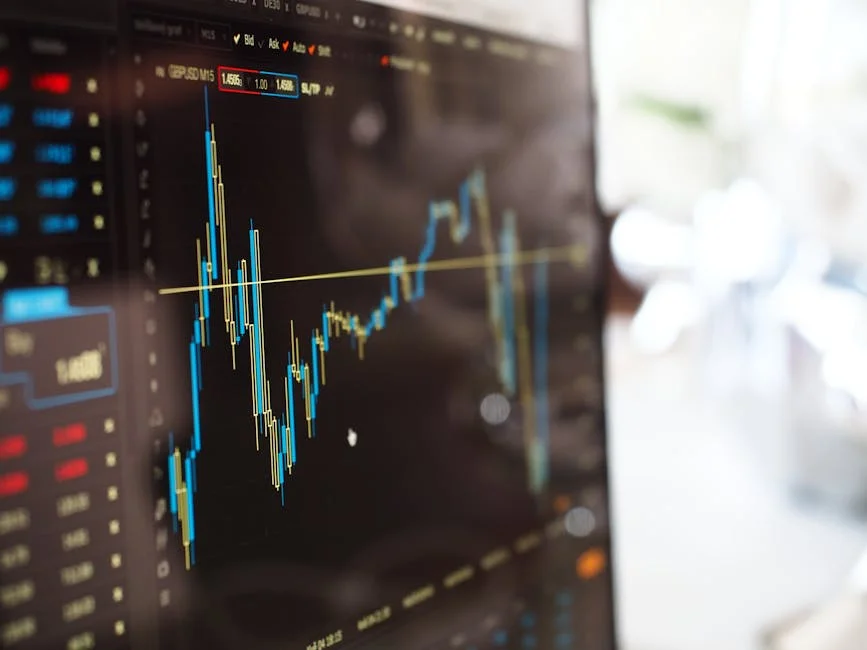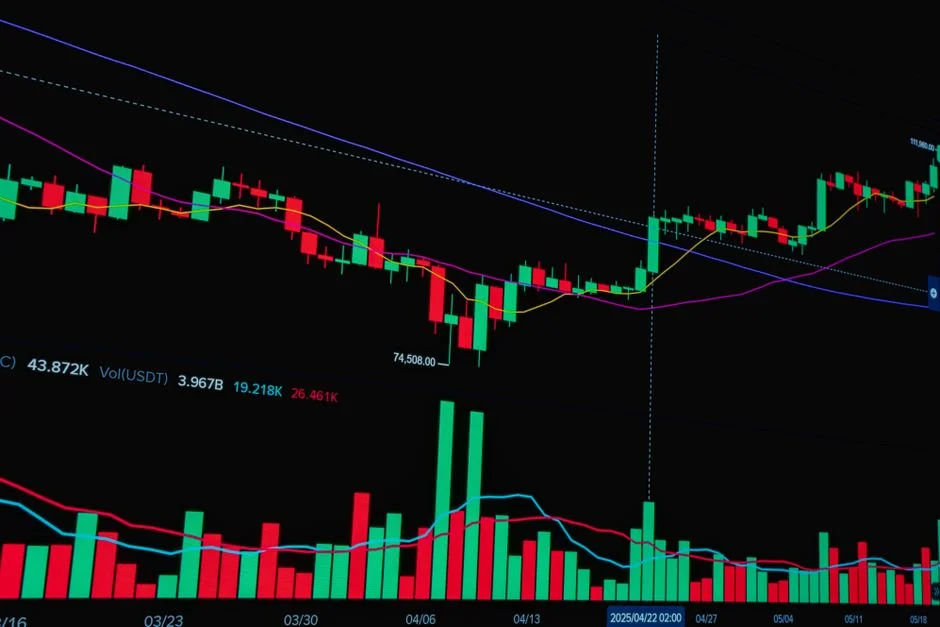
Learning how to trade for forex starts with understanding what the foreign exchange market actually is: a global network where currencies are exchanged in pairs and priced continuously as banks, funds, corporations, governments, and retail traders transact. Unlike a centralized stock exchange, forex trading happens over-the-counter through liquidity providers and electronic trading venues, which is why pricing can remain active nearly around the clock during the business week. When you buy a currency pair, you are simultaneously buying one currency and selling another, and the price reflects how much of the quote currency is needed to buy one unit of the base currency. For example, in EUR/USD, the euro is the base and the US dollar is the quote. If EUR/USD rises, the euro is strengthening relative to the dollar; if it falls, the euro is weakening relative to the dollar. This paired structure is the first conceptual shift for many beginners, because there is no “single” currency price in isolation—everything is relative.
Table of Contents
- Understanding how to trade for forex and what moves currency prices
- Choosing a forex broker, account type, and trading platform
- Building a forex trading foundation: pips, lots, leverage, and margin
- Picking currency pairs and understanding sessions, liquidity, and volatility
- Using technical analysis for forex trading: trends, ranges, and key levels
- Applying fundamental analysis: central banks, data releases, and sentiment
- Creating a forex trading plan: strategy rules, timeframes, and consistency
- Expert Insight
- Risk management for forex trading: stop-loss, position sizing, and drawdowns
- Order types and execution in forex trading: market, limit, stop, and pending orders
- Developing a forex trading routine: journaling, backtesting, and reviewing performance
- Common mistakes in forex trading and how to avoid them
- Putting it all together: a practical path for how to trade for forex with confidence
- Watch the demonstration video
- Trusted External Sources
Summary
In summary, “how to trade for forex” is a crucial topic that deserves thoughtful consideration. We hope this article has provided you with a comprehensive understanding to help you make better decisions.
Understanding how to trade for forex and what moves currency prices
Learning how to trade for forex starts with understanding what the foreign exchange market actually is: a global network where currencies are exchanged in pairs and priced continuously as banks, funds, corporations, governments, and retail traders transact. Unlike a centralized stock exchange, forex trading happens over-the-counter through liquidity providers and electronic trading venues, which is why pricing can remain active nearly around the clock during the business week. When you buy a currency pair, you are simultaneously buying one currency and selling another, and the price reflects how much of the quote currency is needed to buy one unit of the base currency. For example, in EUR/USD, the euro is the base and the US dollar is the quote. If EUR/USD rises, the euro is strengthening relative to the dollar; if it falls, the euro is weakening relative to the dollar. This paired structure is the first conceptual shift for many beginners, because there is no “single” currency price in isolation—everything is relative.

Price movement in forex trading comes from flows and expectations. Major drivers include interest rate differentials, inflation expectations, economic growth, geopolitical risk, trade balances, and central bank communication. When markets anticipate higher rates in one country compared with another, capital often seeks the higher yield, which can push the higher-yielding currency up. However, the relationship is not always linear; risk sentiment matters. In “risk-off” phases, capital may move into perceived safe-haven currencies even if yields are lower. Short-term moves can also be driven by positioning, liquidity conditions, or surprise data releases. Understanding these forces helps you avoid treating charts as random squiggles. Even if you prefer technical analysis, knowing why volatility expands around major events and why trends persist can improve timing and risk control. A practical way to internalize this is to keep an economic calendar, note which releases affect your chosen pairs, and compare the market’s expectation with the actual result and the follow-through. Over time, the habit turns forex trading from guesswork into a structured decision process anchored to how currencies respond to information. If you’re looking for how to trade for forex, this is your best choice.
Choosing a forex broker, account type, and trading platform
Broker selection shapes your entire experience of forex trading, including costs, execution quality, and risk protections. Start with regulation and reputation. A regulated broker is subject to oversight rules that can include capital requirements, segregation of client funds, and dispute processes. While regulation does not eliminate risk, it reduces the chances of abusive practices and can provide clearer recourse. Next, evaluate trading costs: spreads, commissions, swaps (overnight financing), and any non-trading fees such as inactivity charges or withdrawal costs. For active currency trading, small differences in spread and commissions compound quickly, particularly in high-frequency strategies. Execution quality matters too. Look for transparent policies on order types, slippage, and whether the broker operates a dealing desk or uses straight-through processing. No model is automatically “best,” but you should know how your orders are handled and how that might affect fills during volatile periods. If you’re looking for how to trade for forex, this is your best choice.
Account type and platform choice also influence how you trade. Many brokers offer standard, mini, or micro accounts, which affect position sizing and minimum trade increments. Beginners often benefit from micro-lot sizing because it allows meaningful practice with smaller exposure. Consider whether your broker offers a demo environment with realistic pricing and execution; demos are useful for learning platform mechanics, but they cannot fully replicate the psychology of real money. For platforms, MetaTrader (MT4/MT5), cTrader, and proprietary web platforms are common. Focus on stability, order management, charting tools, and the ability to set alerts and manage risk with stop-loss and take-profit orders. If you plan to use algorithmic tools, confirm the platform supports them and that your broker allows the strategy style you prefer. Also check available pairs: majors, minors, and exotics. Many new traders start with majors due to higher liquidity and typically tighter spreads. A disciplined broker selection process is one of the most overlooked steps in learning how to trade for forex, yet it can prevent avoidable friction that undermines performance.
Building a forex trading foundation: pips, lots, leverage, and margin
To trade confidently, you need a working grasp of the mechanics that translate price movement into profit and loss. A pip is typically the smallest standard price increment in a currency pair—often the fourth decimal place for most pairs (0.0001), though JPY pairs often use the second decimal place (0.01). Some brokers quote fractional pips (pipettes), providing more precise pricing. Lots represent trade size: a standard lot is commonly 100,000 units of the base currency, a mini lot 10,000, and a micro lot 1,000. Your profit or loss depends on how many pips the pair moves and your position size. Understanding pip value for the pair you trade is essential. For example, a 10-pip move on a micro lot is very different from a 10-pip move on a standard lot. Many platforms calculate this automatically, but you should still understand the relationship so you can plan risk per trade. If you’re looking for how to trade for forex, this is your best choice.
Leverage and margin are powerful but frequently misunderstood. Leverage allows you to control a larger position with a smaller amount of account equity. Margin is the portion of your funds set aside to maintain that leveraged position. High leverage can amplify returns, but it can also accelerate losses and trigger margin calls if the market moves against you. A practical approach is to think in terms of risk per trade rather than maximum position size. For instance, if you risk 1% of your account on a trade, your stop-loss distance and position size should be calculated so that a stop-out results in roughly a 1% loss, regardless of how much leverage is available. This keeps leverage as a tool for flexibility rather than an invitation to overexpose. Another key concept is free margin, which determines how much capacity you have to withstand adverse movement. In forex trading, many blow-ups happen not because the analysis was completely wrong, but because the position was too large relative to volatility. When learning how to trade for forex, treat leverage as optional, start small, and build position sizing habits that prioritize survival and consistency.
Picking currency pairs and understanding sessions, liquidity, and volatility
Pair selection is a strategic decision that affects spreads, volatility, and the type of moves you’ll face. Major pairs like EUR/USD, GBP/USD, USD/JPY, and USD/CHF tend to have deeper liquidity and narrower spreads, which can make them more forgiving for newer traders. Minors such as EUR/GBP or AUD/NZD can still be liquid but may behave differently due to regional economic drivers. Exotic pairs can have wider spreads and more abrupt gaps, which can complicate risk management. A sensible approach is to start with one or two majors and learn their “personality,” including typical daily range, reaction to news, and how they trend or mean-revert. Over-diversifying early can result in shallow understanding and inconsistent execution. If you’re looking for how to trade for forex, this is your best choice.

Time-of-day matters in forex trading because liquidity and volatility vary across the trading sessions: Asia, Europe, and North America. The London session often brings strong liquidity and directional movement, while the overlap between London and New York can be particularly active. The Asian session can be calmer for some pairs but more active for those tied to regional currencies. Liquidity affects spreads and slippage; during thin liquidity, spreads can widen and stop orders can fill at worse-than-expected prices. Volatility affects where you place stops and targets. If you trade during high-volatility windows, you may need wider stops and smaller position sizes to keep risk stable. If you trade during quieter periods, you may need tighter targets and more patience. Aligning your strategy with the session you can consistently trade is an underrated edge. If your schedule only allows late New York hours, forcing a London-breakout strategy may lead to frustration. Learning how to trade for forex includes matching pair selection and session timing to your lifestyle so you can execute consistently without chasing movement at random hours.
Using technical analysis for forex trading: trends, ranges, and key levels
Technical analysis in forex trading centers on reading price structure and identifying repeatable patterns in how markets move. A foundational skill is distinguishing between trending and ranging behavior. In an uptrend, price tends to make higher highs and higher lows; in a downtrend, lower highs and lower lows. Ranges occur when price oscillates between support and resistance without sustained directional follow-through. Many strategies fail because a trader uses a trend-following approach in a range or a mean-reversion approach in a strong trend. To avoid that mismatch, define simple rules for market type, such as using a moving average slope, swing structure, or an average true range threshold. The goal is not to predict every move, but to trade in harmony with the prevailing conditions. If you’re looking for how to trade for forex, this is your best choice.
Key levels are another central concept. Support and resistance can be drawn from prior swing highs and lows, round numbers, weekly opens, or areas where price repeatedly reacted. The best levels are not perfect lines but zones where order flow tends to cluster. Confirmation can come from price action such as rejection wicks, strong closes, or momentum shifts. Indicators can complement this, but they are best used as tools rather than crutches. For example, RSI can help spot momentum divergence, and moving averages can help define trend direction, yet price itself remains the primary signal. When placing trades, think in terms of invalidation: where must price go to prove your idea wrong? That point becomes a logical stop location, and your target can be set based on the next meaningful level or a measured move. In learning how to trade for forex, technical analysis becomes most useful when it is tied to disciplined execution: clear entry criteria, a defined stop, and a realistic profit objective based on market structure rather than hope.
Applying fundamental analysis: central banks, data releases, and sentiment
Fundamental analysis in forex trading is about understanding why a currency should strengthen or weaken over time and how new information changes expectations. Central banks are among the most influential forces because they guide interest rates and liquidity conditions. Traders watch policy decisions, meeting minutes, speeches, and forward guidance for clues about the path of rates. Even when a central bank does not change rates, the tone can shift markets if it signals future tightening or easing. Inflation data, employment figures, and growth indicators matter because they influence central bank decisions. For example, persistent inflation might push a central bank toward higher rates, potentially supporting the currency—unless markets fear growth damage, in which case risk sentiment could complicate the move. If you’re looking for how to trade for forex, this is your best choice.
Economic releases also create event risk, especially when the actual number diverges from consensus expectations. Non-farm payrolls, CPI, and GDP releases can produce sharp spikes, widen spreads, and cause slippage. A disciplined trader plans around this by reducing exposure, widening stops appropriately, or avoiding new entries just before high-impact news. Sentiment is the other half of the equation. In periods of stress, correlations can tighten and “risk-on/risk-off” flows can dominate. Commodity-linked currencies can respond to changes in oil or metals, while safe-haven flows can favor the USD, CHF, or JPY depending on the context. To integrate fundamentals without becoming overwhelmed, focus on a small set of drivers for your chosen pairs and track them consistently. Over time, you will recognize which data points truly move price and which are mostly noise. Learning how to trade for forex becomes more robust when you can combine a fundamental narrative with technical timing, rather than relying on either approach alone.
Creating a forex trading plan: strategy rules, timeframes, and consistency
A trading plan turns forex trading into a repeatable process. Without a plan, decisions are easily driven by emotion, headlines, or the last few candles on a chart. A solid plan defines your market universe (which pairs you trade), your preferred session, and the timeframes you use for analysis and execution. Many traders use a higher timeframe for context (daily or four-hour) and a lower timeframe for entries (one-hour or fifteen-minute), but the exact combination is less important than consistency. Your plan should specify what qualifies as a setup—such as a trend pullback to a moving average, a breakout-and-retest of a key level, or a range fade at defined boundaries. It should also define what disqualifies a setup, such as entering too close to major news or trading against a higher-timeframe trend. If you’re looking for how to trade for forex, this is your best choice.
| Approach | Best for | How it’s traded | Key advantages | Main risks / considerations |
|---|---|---|---|---|
| Spot Forex (CFDs/OTC via broker) | Active traders (day/swing) seeking flexibility and leverage | Buy/sell currency pairs (e.g., EUR/USD) through a margin account; positions can be long or short | High liquidity, tight spreads, 24/5 market access, easy shorting, small position sizing | Leverage amplifies losses, rollover/financing costs, broker/OTC counterparty risk, rapid volatility |
| Forex Futures (exchange-traded) | Traders wanting centralized pricing and regulated venues | Trade standardized contracts on exchanges; margin required; expiry/rollover applies | Transparent order book, regulated clearing, strong liquidity in majors, clear contract specs | Contract size may be less flexible, expiry/roll costs, margin calls, can be less liquid off-peak |
| FX Options | Hedgers and traders managing risk or volatility views | Buy/sell calls/puts on currency pairs; define strike and expiry; premiums paid/received | Defined risk for option buyers, strategic hedging, volatility-based strategies, asymmetric payoffs | Premium cost/time decay, complex pricing (volatility/greeks), liquidity varies, sellers can face large risk |

Expert Insight
Start with a simple, rule-based plan: choose one or two major pairs (like EUR/USD or GBP/USD), trade only during their most liquid sessions, and define your entry, stop-loss, and take-profit before placing any order. Risk a fixed small percentage per trade (commonly 0.5%–1%) and calculate position size from your stop distance so one loss can’t derail your account. If you’re looking for how to trade for forex, this is your best choice.
Build consistency through review and discipline: keep a trading journal that records the setup, timeframe, news context, and outcome, then look for patterns you can repeat or avoid. Before each session, check the economic calendar for high-impact releases and either reduce size, widen stops with smaller positions, or stay flat to avoid unpredictable volatility. If you’re looking for how to trade for forex, this is your best choice.
Rules for entries, exits, and trade management should be explicit. Define whether you enter with a market order or a limit order, where your stop-loss goes (structure-based, volatility-based, or a fixed pip distance), and how you set take-profit targets (next level, risk-reward ratio, trailing stop, or partial exits). Include position sizing rules so every trade risks a consistent fraction of your account. Also include behavioral rules: maximum number of trades per day, conditions for stopping after a losing streak, and a checklist to prevent impulsive entries. A plan is only valuable if you follow it, so keep it simple enough to execute under pressure. The best plans evolve through data: you test, track results, refine, and repeat. When learning how to trade for forex, a plan is the bridge between theory and performance, because it transforms scattered knowledge into a routine you can measure and improve.
Risk management for forex trading: stop-loss, position sizing, and drawdowns
Risk management is the difference between a trader who survives long enough to learn and a trader who flames out after a few volatile sessions. A stop-loss is a predefined exit that limits loss if the market moves against you. The stop should be placed where your trade idea is invalidated, not where it “feels comfortable.” If your stop is too tight relative to normal volatility, you may get stopped out repeatedly even when your direction is correct. If it’s too wide, you may risk too much for the potential reward. This is why position sizing matters: you can use a wider stop and still keep risk controlled by reducing trade size. Many traders choose a fixed percentage risk per trade—often 0.5% to 2%—and calculate lot size based on stop distance and pip value. This keeps losses predictable and prevents one trade from dominating your account equity curve. If you’re looking for how to trade for forex, this is your best choice.
Drawdown management is equally important. Even a strong forex trading strategy can experience losing streaks due to randomness, regime shifts, or execution errors. Plan for that reality. Decide your maximum acceptable daily loss and weekly loss, and stop trading when you hit it. This prevents a bad day from turning into a catastrophic one. Track your performance in terms of expectancy (average win minus average loss adjusted by win rate) and monitor whether changes in volatility or spread conditions are affecting outcomes. Also consider correlation risk: if you are long EUR/USD and long GBP/USD, you may be effectively doubling exposure to USD weakness. In that case, your total risk may be higher than it appears. A conservative approach is to cap total open risk across all trades and reduce size when trades are highly correlated. Learning how to trade for forex becomes much easier when your risk is controlled, because you can focus on process improvements rather than recovering from avoidable damage.
Order types and execution in forex trading: market, limit, stop, and pending orders
Execution details can make or break forex trading results, especially for short-term strategies. A market order fills at the best available price, which is convenient but can incur slippage during fast moves. A limit order seeks a better price than the current market, but it may not fill if price doesn’t reach it. A stop order triggers when price reaches a level, often used for breakout entries or protective stops. Many platforms also support stop-limit orders, which trigger at a level and then attempt to fill at a specified price range, potentially reducing slippage but increasing the chance of no fill. Pending orders allow you to plan trades in advance, reducing the temptation to chase price. However, they must be used with awareness of news risk, because a sudden spike can trigger an order and then reverse immediately. If you’re looking for how to trade for forex, this is your best choice.
Stop-loss and take-profit orders can be attached at entry, which helps enforce discipline. Some traders use trailing stops to lock in gains as price moves favorably, but trailing stops can also cut winners short in choppy markets. Partial profit-taking is another technique: closing part of the position at a first target and letting the remainder run toward a second target. This can smooth the equity curve but may reduce average win size. Pay attention to spread behavior: spreads often widen during illiquid periods and around major announcements, which can trigger stops unexpectedly if they are too tight. Also be aware of rollover or swap costs if you hold positions overnight; these can be positive or negative depending on rate differentials and broker policies. When learning how to trade for forex, mastering order types is not just a platform skill—it’s a way to express your strategy precisely, reduce emotional interference, and manage execution risk in real market conditions.
Developing a forex trading routine: journaling, backtesting, and reviewing performance
A routine is what turns occasional good trades into consistent results. Journaling is a core habit in forex trading because it captures not only what you traded, but why you traded it and how well you followed your rules. A useful journal includes screenshots of the chart at entry and exit, the setup type, the timeframe, the session, the news context, the entry method, stop and target placement, position size, and a brief note on emotions and decision quality. Over time, patterns emerge: perhaps your breakout trades work best during the London session, or your losses cluster when you deviate from your checklist. This is valuable information you can act on. Without a journal, you may repeat the same mistakes and blame the market rather than the process. If you’re looking for how to trade for forex, this is your best choice.
Backtesting and forward testing provide evidence for whether a strategy has an edge. Backtesting can be manual (scrolling through historical charts and recording setups) or systematic (coding rules and testing them across data). Manual testing teaches market behavior and improves pattern recognition, but it can be biased if rules are vague. Systematic testing can be more objective, but only if the rules are precise and the data is clean. Forward testing in a demo or small live account helps confirm that you can execute the strategy in real time. Performance review should focus on both outcomes and process: did you follow your plan, did you respect risk limits, did you avoid trading during prohibited news windows, and did you manage trades consistently? A trader can have a losing week while executing perfectly, and a winning week while making reckless decisions that will eventually backfire. Learning how to trade for forex is largely about building feedback loops that reward discipline and reveal which adjustments actually improve expectancy rather than just making you feel better.
Common mistakes in forex trading and how to avoid them
Many losses in forex trading come from predictable behavioral errors rather than complex market forces. Overleveraging is one of the most common. Traders see how little margin is required and assume they should use the maximum size available, but that approach often leads to rapid drawdowns and margin calls. Another mistake is moving stop-loss orders farther away to avoid being stopped out. This converts a planned small loss into an unplanned large one and breaks the logic of the trade. Revenge trading is also frequent: after a loss, a trader increases size or takes lower-quality setups to “get it back,” which typically compounds the damage. Chasing price after a move has already occurred can be equally harmful, because late entries often have poor risk-reward and are vulnerable to pullbacks. If you’re looking for how to trade for forex, this is your best choice.

Other pitfalls include strategy hopping and information overload. Switching strategies after a few losses prevents you from gathering enough data to know whether the approach works. At the same time, consuming endless indicators, signals, and opinions can paralyze decision-making. A better path is to choose one simple strategy aligned with your schedule, trade it consistently with controlled risk, and evaluate results over a meaningful sample size. Also watch for ignoring correlation: taking several trades that all depend on the same USD move can create hidden concentration. Finally, neglecting fundamentals around high-impact events can produce avoidable slippage and stop-outs. Avoidance tactics are straightforward: keep leverage modest, predefine risk per trade, use a checklist, limit trades per day, and review your journal weekly. Learning how to trade for forex becomes less stressful when you focus on eliminating unforced errors, because even small improvements in discipline can significantly improve long-term results.
Putting it all together: a practical path for how to trade for forex with confidence
A practical path to forex trading success is built from simple components executed consistently. Start by selecting one or two liquid currency pairs, a regulated broker with transparent costs, and a platform you can operate fluently. Define a strategy based on clear market conditions—trend continuation, range trading, or breakout setups—and write down objective entry and exit criteria. Then build a risk framework: fixed percentage risk per trade, structure-based stop-loss placement, and a limit on total open risk across correlated positions. Align your trading window with the session that best fits your schedule and the volatility profile you can handle. Use an economic calendar to avoid being surprised by major releases, and decide in advance whether you trade through news or step aside. When you execute trades, focus on process: correct size, correct stop placement, and adherence to the plan. This approach reduces emotional decision-making and makes results easier to analyze. If you’re looking for how to trade for forex, this is your best choice.
Progress comes from measurement and refinement, not from constant reinvention. Keep a trading journal, review it weekly, and look for the few changes that will deliver the biggest improvement—perhaps filtering out low-quality setups, adjusting stop placement to match volatility, or restricting trading to your best-performing hours. Expect drawdowns and losing streaks, and treat them as part of the probability distribution rather than personal failure. Most importantly, protect your capital so you can keep practicing; skill development requires time in the market under controlled risk. If you stay consistent with your plan and keep your learning loop active, confidence grows naturally because it is backed by evidence and repetition, not hope. That is the sustainable way to master how to trade for forex and keep improving as market conditions evolve.
Watch the demonstration video
In this video, you’ll learn the fundamentals of trading forex, including how currency pairs work, what drives price movements, and how to place your first trade. It also covers essential tools like charts, pips, and leverage, plus practical tips for managing risk and building a simple trading plan. If you’re looking for how to trade for forex, this is your best choice.
? Looking for more info about how to trade for forex? Follow Our Site for updates and tips!

Trusted External Sources
- I want to get into forex and trading. What advice do you have? – Reddit
Mar 17, 2026 … For new forex traders, my advice is to start with a solid education in the fundamentals of forex trading, including risk management and …
- How to start forex trading – Saxo Bank
How to trade forex: A step-by-step guide · 1. Choose a reliable forex broker · 2. Open and set up your trading account · 3. Learn forex basics · 4. Develop a … If you’re looking for how to trade for forex, this is your best choice.
- Foreign Exchange (Forex) Trading for Beginners | Charles Schwab
Jul 10, 2026 … The forex market is virtually traded around the clock across the globe. Learn four things you need to know about forex trading before …
- How to Trade Forex: Beginner’s Guide – Tastytrade
May 28, 2026 … How to trade forex on tastytrade: a step-by-step guide for beginners covering account setup, currency pairs, order types, …
- Get started with forex trading. – Charles Schwab
Learn how to get your forex account set up, trade forex on the industry-leading thinkorswim trading platforms, and access premium forex education.