Industrial automation solutions have moved from being a competitive advantage to a baseline expectation in manufacturing, logistics, utilities, and process industries. When customers demand faster turnaround, tighter tolerances, and transparent traceability, manual workflows and isolated machines struggle to keep pace. Automation connects equipment, people, and data into a coordinated system where production targets, quality standards, and safety requirements can be met consistently. The most effective industrial automation solutions do not simply replace human effort; they orchestrate repeatable processes, reduce variability, and create a real-time view of performance that enables faster decisions. In many plants, the first visible improvements come from fewer stoppages, cleaner changeovers, and more stable cycle times. Over time, the deeper value emerges as teams shift from reacting to problems to preventing them, using data to spot trends and standardize best practices across lines, cells, and even multiple sites.
Table of Contents
- My Personal Experience
- Why Industrial Automation Solutions Matter in Modern Operations
- Core Components: Controls, Sensors, Actuators, and Industrial Networks
- PLC, SCADA, DCS, and MES: Choosing the Right Control and Visibility Stack
- Robotics and Machine Vision for Flexible Production
- Safety, Compliance, and Risk Reduction by Design
- Cybersecurity for OT: Protecting Connected Automation Environments
- Data, IIoT, and Edge Computing: Turning Signals into Decisions
- Expert Insight
- Energy Efficiency and Sustainability Through Smarter Automation
- Implementation Strategy: From Assessment to Commissioning and Beyond
- Integration with ERP, Quality Systems, and Supply Chain for End-to-End Visibility
- Selecting Vendors and Partners: Engineering Depth, Support, and Lifecycle Fit
- Measuring ROI: KPIs That Prove Value and Guide Continuous Improvement
- Future Trends: AI, Digital Twins, and Modular Automation Architectures
- Watch the demonstration video
- Frequently Asked Questions
- Trusted External Sources
My Personal Experience
Last year I helped roll out an industrial automation solution on a small packaging line that had been running mostly on manual checks and a few aging relays. We added a compact PLC, photoelectric sensors for product detection, and a simple HMI so operators could change recipes without calling maintenance every time. The first week was rough—false triggers from dusty lenses and a conveyor speed mismatch caused random rejects—but once we tuned the sensor timing and cleaned up the wiring, downtime dropped noticeably. What surprised me most was how much of the “automation” work was actually about people: training operators to trust the alarms, documenting setpoints, and agreeing on what a real fault looks like. By the end of the month, we were hitting target throughput more consistently, and the team stopped dreading shift changeovers because the line settings were finally repeatable. If you’re looking for industrial automation solutions, this is your best choice.
Why Industrial Automation Solutions Matter in Modern Operations
Industrial automation solutions have moved from being a competitive advantage to a baseline expectation in manufacturing, logistics, utilities, and process industries. When customers demand faster turnaround, tighter tolerances, and transparent traceability, manual workflows and isolated machines struggle to keep pace. Automation connects equipment, people, and data into a coordinated system where production targets, quality standards, and safety requirements can be met consistently. The most effective industrial automation solutions do not simply replace human effort; they orchestrate repeatable processes, reduce variability, and create a real-time view of performance that enables faster decisions. In many plants, the first visible improvements come from fewer stoppages, cleaner changeovers, and more stable cycle times. Over time, the deeper value emerges as teams shift from reacting to problems to preventing them, using data to spot trends and standardize best practices across lines, cells, and even multiple sites.

Another reason industrial automation solutions matter is that they create a foundation for resilience. Supply chain disruptions, labor shortages, and energy cost volatility are easier to manage when production systems can flex quickly and provide accurate information. With robust automation, a facility can reconfigure recipes, reroute material flow, or alter schedules without losing control over quality and compliance. Operators and maintenance teams benefit from clearer alarms, better diagnostics, and safer interfaces, while managers gain reliable KPIs rather than estimates compiled after the fact. Automation also supports sustainability goals by reducing scrap, optimizing energy usage, and improving asset utilization. The result is a more predictable operation where capacity planning is grounded in real performance, not assumptions. When implemented thoughtfully, industrial automation solutions align engineering, operations, and IT around a shared set of data and controls that make continuous improvement practical rather than aspirational.
Core Components: Controls, Sensors, Actuators, and Industrial Networks
Industrial automation solutions are built from a set of core components that work together to sense conditions, make decisions, and execute actions. Sensors provide the raw signals—temperature, pressure, flow, vibration, proximity, vision, weight, and countless other measurements—that describe what is happening in a process or on a line. Actuators then convert control decisions into physical outcomes, such as opening a valve, moving a servo axis, starting a motor, or positioning a robotic end effector. Between sensing and action sits the control layer, typically implemented with PLCs, PACs, DCS controllers, motion controllers, safety controllers, or industrial PCs. These controllers run deterministic logic, handle interlocks, and coordinate sequences that ensure the system behaves as intended. In well-designed industrial automation solutions, each component is selected not only for performance but also for reliability, maintainability, and compatibility with the rest of the architecture.
Industrial networks and communication standards are the connective tissue that allows all of these components to function as a coherent system. Ethernet-based industrial protocols, fieldbuses, IO-link, and wireless options can all play a role, depending on environmental constraints and latency requirements. A packaging line may rely on high-speed motion networking and precise time synchronization, while a water treatment facility may prioritize long cable runs, rugged IO, and simple diagnostics. The network design influences troubleshooting speed, scalability, and cybersecurity posture. Segmentation, redundancy, and quality-of-service settings can make the difference between a stable plant network and one that collapses under broadcast storms or misconfigured devices. Industrial automation solutions also depend on proper electrical design—power distribution, grounding, shielding, and cabinet layout—to reduce noise and prevent intermittent faults. When these fundamentals are handled well, higher-level systems like SCADA, MES, and analytics can trust the data and deliver value without constantly compensating for unstable signals or unreliable device communications.
PLC, SCADA, DCS, and MES: Choosing the Right Control and Visibility Stack
Industrial automation solutions often begin with a decision about the control and visibility stack, because different industries and process characteristics favor different approaches. PLC-based control is common in discrete manufacturing and machine-centric applications, where fast cycle times, modular design, and straightforward sequencing are essential. A PLC can coordinate sensors, actuators, and motion systems with deterministic timing, and it can be replicated across multiple machines for standardization. SCADA systems then provide supervisory oversight, alarm management, historian integration, and operator visualization across cells or sites. For continuous processes like chemicals, refining, and large-scale utilities, DCS platforms are frequently preferred because they provide integrated control, redundancy, and process-centric engineering tools that scale across thousands of IO points. The best industrial automation solutions match the platform to the operational reality rather than forcing a one-size-fits-all architecture.
MES adds another layer of value by connecting production execution to business systems while enforcing process discipline. While PLCs and DCS handle real-time control, MES coordinates work orders, recipes, electronic batch records, labor tracking, equipment status, and quality checks. For regulated industries—food, beverage, pharmaceuticals, medical devices—MES can be a central element of traceability and compliance, ensuring every lot is produced under controlled conditions with documented evidence. Selecting between PLC/SCADA, DCS, and MES is rarely an either-or decision; industrial automation solutions typically combine them, defining clear boundaries for responsibilities and data flow. A practical approach is to identify which decisions must be made in milliseconds (controller), which actions need operator confirmation or monitoring (SCADA/HMI), and which functions govern production rules and traceability (MES). When boundaries are clear, integration becomes easier, downtime decreases, and teams spend less time arguing about which system “owns” a tag, an alarm, or a production record.
Robotics and Machine Vision for Flexible Production
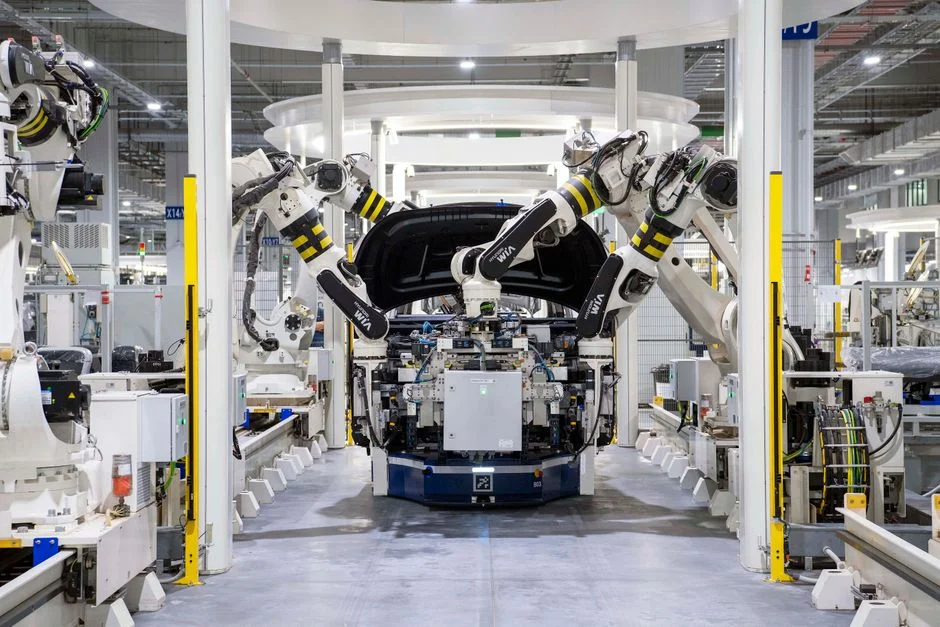
Robotics has become a cornerstone of industrial automation solutions because it enables flexible production without sacrificing throughput. Traditional fixed automation can be fast but brittle; it often requires significant retooling when product variants change. Robots—articulated, SCARA, delta, collaborative, and mobile—offer reprogrammable motion and adaptable end-of-arm tooling strategies. In assembly, robots can handle precise insertion, torqueing, and dispensing tasks while maintaining consistent quality. In packaging, robots can pick, place, case-pack, palletize, and depalletize with minimal changeover time. In material handling, autonomous mobile robots can move goods between workstations, reducing forklift traffic and improving safety. The real advantage of robotics within industrial automation solutions is not simply speed; it is the ability to maintain stable performance across multiple SKUs and shifting demand patterns.
Machine vision amplifies the value of robotics by enabling perception, inspection, and guidance. Vision systems can verify labels, read barcodes and data matrix codes, inspect surface defects, measure dimensions, and confirm assembly completeness. When paired with robots, vision supports random bin picking, part orientation correction, and dynamic adjustment to variations in incoming parts. Modern vision platforms use a combination of traditional image processing, 3D sensing, and AI-based classification to handle complex tasks that were previously impractical. This directly improves first-pass yield and reduces the cost of quality. For many manufacturers, vision-enabled industrial automation solutions also strengthen traceability by linking inspection results to serial numbers and storing images for audit and root-cause analysis. The key to success is engineering the lighting, optics, and mechanical presentation as carefully as the software, because consistent imaging conditions are essential for accurate decisions. Done correctly, robotics and vision reduce rework, prevent escapes, and allow lines to run at higher utilization with fewer unplanned stops.
Safety, Compliance, and Risk Reduction by Design
Safety is not an add-on; it is a design principle that must be embedded into industrial automation solutions from the earliest stages. Functional safety standards and risk assessments guide how hazards are identified and mitigated through guarding, safety-rated control systems, emergency stops, light curtains, interlocks, safe torque off, and safety PLC logic. A well-implemented safety architecture reduces the likelihood of injuries and protects equipment from damage during abnormal conditions. It also improves uptime because safety functions are predictable, diagnosable, and properly validated rather than improvised. In many facilities, frequent nuisance trips are a sign of poor safety design or inadequate commissioning. Industrial automation solutions that prioritize safety engineering typically result in clearer operating procedures, better lockout/tagout practices, and a stronger safety culture supported by reliable technology.

Compliance requirements add another layer of rigor, especially in regulated environments. Audit trails, electronic signatures, batch records, calibration management, and controlled change processes can be supported by automation systems when they are configured with governance in mind. For example, access control and role-based permissions can prevent unauthorized changes to recipes or setpoints. Historian data can provide evidence of process conditions, while alarms and event logs can demonstrate response and resolution. Industrial automation solutions can also enforce quality gates, ensuring that critical checks are completed before a product moves forward. The best approach balances control with usability; if systems become overly restrictive, teams may develop workarounds that undermine compliance. A practical compliance strategy includes standardized naming conventions, documentation discipline, validated backups, and change management workflows that align maintenance and engineering with quality assurance. When safety and compliance are built into the architecture, the operation becomes easier to manage, less risky, and more dependable under scrutiny from customers and regulators.
Cybersecurity for OT: Protecting Connected Automation Environments
As industrial automation solutions become more connected, cybersecurity becomes a central operational concern rather than an IT-only topic. OT environments often contain long-lived assets, legacy protocols, and systems that prioritize availability over frequent patching. At the same time, remote access, vendor support connections, and integration with enterprise systems increase the attack surface. A practical OT security program begins with asset inventory, network segmentation, and clear zoning and conduits that separate critical control functions from less-trusted networks. Firewalls, industrial DMZs, and strict remote access controls reduce exposure while preserving the ability to support operations. Security monitoring, including passive network detection tailored to industrial protocols, can identify anomalies without disrupting deterministic traffic. Industrial automation solutions should be designed so that a compromise of a workstation does not automatically imply compromise of controllers, safety systems, or critical recipes.
Identity and access management is another cornerstone. Shared passwords, unmanaged accounts, and unrestricted engineering access are common weaknesses that increase risk. Role-based access, multi-factor authentication for remote sessions, and auditable change logs help prevent accidental or malicious changes. Patch management must be handled carefully, with testing environments and coordinated downtime windows, but it cannot be ignored indefinitely. Backup and recovery planning is equally important; ransomware events demonstrate that the ability to restore systems quickly can determine whether a facility loses hours or weeks. Industrial automation solutions that include secure-by-design principles—least privilege, secure configuration baselines, and documented recovery procedures—support both resilience and compliance. The goal is not to make operations slower; it is to ensure that connectivity and data sharing do not create unacceptable risk. When cybersecurity is integrated into the lifecycle from design through maintenance, automation investments remain a source of stability rather than a vulnerability.
Data, IIoT, and Edge Computing: Turning Signals into Decisions
Industrial automation solutions generate enormous volumes of data, but value comes from turning raw signals into actionable decisions. IIoT approaches extend connectivity to devices that were previously isolated, enabling richer condition monitoring, production analytics, and remote diagnostics. Edge computing plays a key role by processing data close to the source, reducing latency and bandwidth demands while improving reliability when cloud connectivity is limited. For example, an edge gateway can aggregate sensor readings, normalize units, filter noise, and compute health indicators for motors and pumps. It can also run local models that detect anomalies in vibration or power consumption and trigger alerts before a failure occurs. By keeping time-critical decisions local, industrial automation solutions preserve deterministic control while still enabling broader optimization and reporting.
Expert Insight
Start with a focused automation audit: map the top 3 bottlenecks by downtime, scrap, or changeover time, then automate the highest-impact step first. Define clear success metrics (OEE, cycle time, first-pass yield) and run a short pilot to validate ROI before scaling across the line. If you’re looking for industrial automation solutions, this is your best choice.
Design for reliability and maintainability from day one: standardize on common PLC/HMI templates, sensors, and spare parts, and document I/O lists, network diagrams, and alarm priorities. Add condition monitoring on critical assets and schedule preventive actions based on runtime and vibration/temperature trends to reduce unplanned stops. If you’re looking for industrial automation solutions, this is your best choice.
Data architecture decisions determine whether analytics becomes a sustainable capability or a collection of one-off dashboards. Consistent tag naming, metadata management, and time synchronization are essential for correlating events across systems. Historians and modern time-series databases can store high-resolution data for troubleshooting and optimization, while event frameworks can capture states, batches, and alarms in a structured way. When data is contextualized—linked to product, shift, line, and recipe—it becomes far more useful for root-cause analysis and continuous improvement. Industrial automation solutions also benefit from standardized interfaces such as OPC UA and MQTT, which enable secure and scalable data exchange. The most successful programs focus on a few high-impact use cases first, such as reducing unplanned downtime, improving OEE, or lowering energy intensity per unit produced. As teams build trust in the data and refine their models, the organization can expand toward more advanced optimization and predictive maintenance without overwhelming operations with noise or unnecessary complexity.
Energy Efficiency and Sustainability Through Smarter Automation
Energy costs and sustainability targets have become primary drivers for industrial automation solutions, especially in energy-intensive sectors like metals, chemicals, food processing, and large-scale warehousing. Automation helps reduce waste by stabilizing processes and minimizing off-spec production, but it also enables direct energy optimization. Variable frequency drives, smart motor control, and coordinated start/stop strategies can reduce peak demand and improve overall efficiency. In thermal processes, better control of burners, steam systems, and heat exchangers can reduce fuel consumption while maintaining product quality. Compressed air systems, often overlooked, can be monitored for leaks and optimized for pressure setpoints and runtime. Industrial automation solutions can integrate energy meters and submetering to identify where consumption is concentrated and how it correlates with production states, enabling targeted improvements rather than broad mandates that are difficult to enforce.
| Solution | Best for | Key capabilities | Typical outcomes |
|---|---|---|---|
| PLC & SCADA Integration | Real-time machine control and plant-wide visibility | PLC programming, SCADA/HMI dashboards, alarms, historian, OPC UA/MQTT connectivity | Higher uptime, faster troubleshooting, consistent operations |
| Robotics & Motion Automation | High-throughput, repeatable tasks (pick-and-place, packaging, welding) | Industrial robots/cobots, vision guidance, servo motion control, safety interlocks | Improved throughput, better quality, reduced labor variability |
| IIoT, Analytics & Predictive Maintenance | Condition monitoring and data-driven optimization across assets | Sensors/edge gateways, data pipelines, anomaly detection, OEE tracking, CMMS integration | Fewer unplanned stops, lower maintenance costs, measurable efficiency gains |

Sustainability also includes material efficiency, water usage, and emissions monitoring. Automated dosing and blending can reduce overuse of ingredients and chemicals. Closed-loop control can improve yield in separation and filtration processes. Automated cleaning systems can reduce water and chemical consumption by optimizing cycles based on soil load and validated endpoints rather than fixed timers. When industrial automation solutions integrate environmental sensors and reporting, organizations can produce credible, auditable sustainability metrics that align with corporate reporting frameworks and customer requirements. Importantly, these systems can prevent sustainability from becoming a manual reporting burden by capturing data automatically at the source. The most durable sustainability gains come from embedding efficiency into standard operating conditions—setpoints, sequences, and interlocks—so that improvements persist across shifts and staffing changes. With good governance, energy and sustainability controls become part of everyday operations, not a special project that fades when priorities shift.
Implementation Strategy: From Assessment to Commissioning and Beyond
Successful industrial automation solutions depend on disciplined implementation, starting with a clear assessment of current performance and constraints. A thorough discovery phase maps the process, identifies bottlenecks, captures baseline downtime and quality data, and clarifies the business outcomes that matter most. This is also where requirements should be defined: throughput targets, changeover expectations, traceability needs, safety functions, environmental conditions, and integration points with existing systems. A common failure mode is jumping straight to equipment selection without aligning on operational realities such as maintenance capability, spare parts strategy, and operator training needs. Industrial automation solutions work best when stakeholders from operations, engineering, maintenance, quality, and IT contribute early, ensuring the design supports real workflows rather than idealized ones.
During design and build, standards and documentation are critical. Electrical schematics, network diagrams, IO lists, alarm philosophies, HMI standards, and code conventions reduce risk and speed troubleshooting. Factory acceptance testing validates functionality before equipment arrives on site, while site acceptance testing confirms performance in the real environment with real materials. Commissioning should include not only “does it run” checks but also validation of safety functions, alarms, interlocks, data collection, and recovery procedures. After go-live, the work continues: tuning, continuous improvement, and performance monitoring ensure the system delivers the expected ROI. Industrial automation solutions should include a support model—who owns backups, who can modify logic, how changes are approved, and how incidents are escalated. When lifecycle management is built into the plan, automation becomes a long-term capability rather than a one-time installation that slowly degrades as undocumented changes accumulate and expertise leaves the organization.
Integration with ERP, Quality Systems, and Supply Chain for End-to-End Visibility
Industrial automation solutions deliver far greater value when they connect production reality to planning and customer commitments. ERP systems manage orders, inventory, purchasing, and financials, but without timely shop-floor feedback they rely on assumptions. By integrating automation data—production counts, scrap, downtime reasons, consumption, and lot genealogy—organizations can improve schedule adherence and reduce inventory buffers. Real-time or near-real-time updates help planners respond to disruptions quickly, while accurate consumption data supports better material replenishment and reduces stockouts. Integration also helps align production with customer requirements, such as serialization, labeling rules, or country-specific compliance. Industrial automation solutions that bridge OT and business systems can reduce manual data entry, which lowers error rates and frees supervisors to focus on performance rather than paperwork.
Quality management systems also benefit from integration. Automated capture of critical process parameters, inspection results, and nonconformance events supports faster containment and more effective corrective actions. When a defect is detected, genealogy data can identify affected lots, raw materials, and time windows, reducing the scope of recalls or rework. Laboratory information systems can feed results back into production decisions, such as releasing a batch or adjusting process settings within validated limits. Supply chain visibility improves when shipping, warehousing, and production systems share consistent identifiers and status updates. For example, automated pallet labeling tied to batch records can speed receiving at downstream sites and reduce disputes. The key challenge is managing data consistency—units of measure, master data, and naming conventions—so that integrated systems speak the same language. Industrial automation solutions that include a strong data governance plan and robust interfaces can create an end-to-end view that improves service levels, reduces working capital, and supports continuous improvement across the entire value stream.
Selecting Vendors and Partners: Engineering Depth, Support, and Lifecycle Fit
Choosing the right partners is a strategic decision because industrial automation solutions are long-lived and often mission-critical. Beyond technical capability, organizations should evaluate a vendor’s ability to support the full lifecycle: design, build, commissioning, training, spare parts, and ongoing optimization. Engineering depth matters, including experience with similar processes, familiarity with relevant safety and compliance standards, and the ability to produce maintainable code and documentation. A strong partner will propose architectures that are scalable and secure, not just expedient for the initial project. They should also be transparent about tradeoffs, such as proprietary features that increase performance versus open standards that improve portability. Industrial automation solutions benefit from partners who can collaborate with internal teams rather than treating the project as a black box.

Support models and responsiveness should be clarified early. Downtime costs can be high, so service-level expectations, remote support options, and escalation paths need to be defined. Training is often underestimated; operators, maintenance technicians, and engineers require different levels of knowledge to keep systems running effectively. Spare parts strategy is another practical factor—standardized components and clear interchangeability reduce risk. It is also wise to evaluate how a vendor handles versioning, backups, and upgrades, because automation platforms evolve and security requirements change. Industrial automation solutions should be designed to accommodate future expansions, such as additional lines, new SKUs, or advanced analytics, without requiring a complete redesign. A partner who understands lifecycle fit will help establish standards, templates, and governance practices that make future projects faster and less risky. Ultimately, the best selection is one that balances technical excellence, operational realism, and long-term supportability.
Measuring ROI: KPIs That Prove Value and Guide Continuous Improvement
Industrial automation solutions should be justified and managed with measurable outcomes, not vague expectations. Common KPIs include OEE, throughput, first-pass yield, scrap rate, unplanned downtime, mean time to repair, changeover duration, and energy consumption per unit. The most meaningful metrics are those that connect directly to business performance: cost per unit, on-time delivery, customer complaints, and capacity utilization. Establishing a baseline before changes are made is essential; without it, improvements are hard to prove and teams may disagree about whether the project succeeded. Automation also enables more granular measurement, such as micro-stops, alarm frequency, and performance losses tied to specific states. Industrial automation solutions that include structured downtime reason codes and consistent event capture provide the data needed to target the biggest losses rather than chasing anecdotal issues.
ROI should include both hard and soft benefits. Hard benefits may include labor reallocation, reduced scrap, reduced rework, fewer warranty claims, and lower energy costs. Soft benefits include improved safety, better compliance posture, faster onboarding of new operators, and increased resilience to staffing changes. Many organizations also gain strategic flexibility, such as the ability to introduce new products faster or run smaller batch sizes economically. Continuous improvement becomes more effective when data is trusted and accessible, and when teams can test changes safely with proper rollback plans. Industrial automation solutions should be treated as evolving systems: periodic reviews, alarm rationalization, control tuning, and software maintenance can prevent performance drift. When measurement is embedded into daily management—shift reviews, weekly reliability meetings, and monthly performance reports—automation becomes a feedback engine that drives ongoing gains rather than a one-time capital project whose benefits gradually fade.
Future Trends: AI, Digital Twins, and Modular Automation Architectures
The next generation of industrial automation solutions is increasingly shaped by AI, simulation, and modular design. AI-based analytics can detect subtle patterns in machine behavior that precede failures, improving maintenance planning and reducing catastrophic breakdowns. In quality inspection, AI vision can classify defects that are difficult to define with traditional rules, though success still depends on good data, controlled imaging conditions, and ongoing model governance. Digital twins—virtual representations of machines, lines, or processes—can support design validation, operator training, and scenario testing without disrupting production. Simulation can help teams evaluate bottlenecks, buffer sizing, and scheduling strategies before making physical changes. When these tools are integrated with real operational data, they can become practical decision aids rather than theoretical models.
Modular automation architectures are also gaining momentum, enabling faster deployments and easier scaling. Standardized machine modules, reusable code libraries, and consistent data models reduce engineering effort and make it easier to replicate solutions across sites. Containerized edge applications and modern integration patterns can simplify deployment of analytics, monitoring, and connectivity services. At the same time, organizations must manage complexity carefully; adopting too many new technologies without governance can create fragmented systems that are hard to maintain. The most sustainable approach is to build on strong fundamentals—reliable controls, robust networks, clear standards, and disciplined change management—then layer advanced capabilities where they deliver measurable value. Industrial automation solutions will continue to evolve toward greater connectivity and intelligence, but long-term success will still depend on practical engineering, operator-centered design, and a lifecycle mindset that keeps systems secure, maintainable, and aligned with business goals. Industrial automation solutions remain the backbone of this transformation, linking physical operations to digital insight in a way that supports productivity, quality, and resilience.
Watch the demonstration video
Discover how industrial automation solutions can streamline production, improve quality, and reduce downtime. This video explains key technologies—such as PLCs, sensors, robotics, and SCADA/MES systems—and shows how they integrate to boost efficiency, enhance safety, and enable real-time monitoring and data-driven decision-making across modern manufacturing operations.
Summary
In summary, “industrial automation solutions” is a crucial topic that deserves thoughtful consideration. We hope this article has provided you with a comprehensive understanding to help you make better decisions.
Frequently Asked Questions
What are industrial automation solutions?
They bring together hardware and software—PLCs, sensors, robots, SCADA/MES platforms, and advanced control systems—to deliver **industrial automation solutions** that streamline manufacturing and process operations, boosting efficiency, improving quality, and enhancing safety.
Which processes are best suited for automation?
High-volume, repetitive, hazardous, or quality-critical tasks (e.g., assembly, packaging, palletizing, inspection, material handling) and stable process operations (e.g., batching, mixing, temperature/pressure control).
What technologies are typically included in an automation project?
Typical systems bring together PLC/PAC control with intuitive HMI and SCADA platforms, then add robotics and machine vision for smarter, faster production. They also rely on VFD and servo motion control, integrated safety systems, and robust industrial networks like EtherNet/IP and PROFINET. Tying it all together, data layers such as MES and IIoT turn these pieces into complete **industrial automation solutions** that improve visibility, performance, and reliability.
How do you estimate ROI for industrial automation?
Return on investment typically comes from lowering labor and scrap costs, increasing throughput, cutting downtime through better OEE, reducing energy use, and preventing costly safety incidents—then subtracting the total cost of ownership, including equipment, integration, maintenance, and training, for your **industrial automation solutions**.
How do automation solutions integrate with existing equipment and IT systems?
Integration typically uses industrial protocols (OPC UA, Modbus, MQTT) and gateways to connect legacy machines, then links production data to MES/ERP via APIs or middleware with proper data modeling and security controls. If you’re looking for industrial automation solutions, this is your best choice.
What are key cybersecurity and safety considerations?
Strengthen your **industrial automation solutions** by segmenting networks, enforcing least‑privilege access, and maintaining solid patching and backup routines. Enable secure remote access and continuous monitoring in line with **IEC 62443**. For safety, perform thorough risk assessments and implement safety PLCs or relays that meet **ISO 13849** and **IEC 62061** requirements.
? Looking for more info about industrial automation solutions? Follow Our Site for updates and tips!

Trusted External Sources
- Industrial Automation Solutions | Automation Services Provider
Based in Southern California, we deliver **industrial automation solutions** through expert industrial robot integration, custom automation design, and precision programming across a wide range of automation products.
- IAS-NC: Independent Systems Integrator NC
IAS is an independent, turnkey provider of **industrial automation solutions**, helping customers worldwide boost quality and productivity through innovative engineering and advanced technology.
- How to convince team to adopt industrial automation solutions? : r/PLC
As of March 11, 2026, I’m a controls engineer with eight years of experience at OEMs, where I’ve designed and delivered manufacturing and **industrial automation solutions**. I recently joined a company that’s actively expanding its automation offerings, and I’m excited to help shape what we build next.
- Industrial Automation | Honeywell
Honeywell Industrial Automation has a complete portfolio of products, software, solutions, and services to support your needs.
- Emerson Electric
Emerson’s Automation Solutions Optimize Performance · Our Industrial Technology · Serving Essential Industries · Emerson Pioneers AI-Enabled Automation Platform.