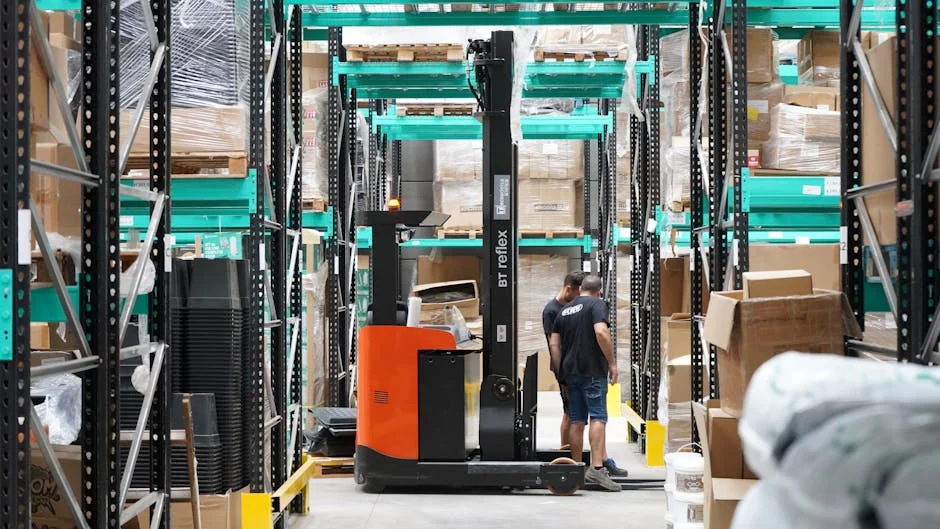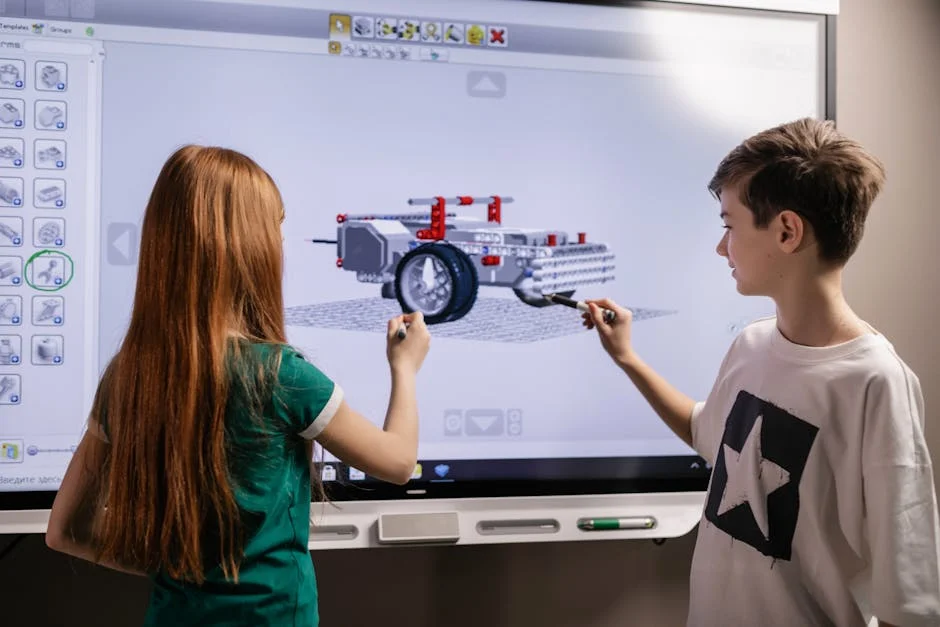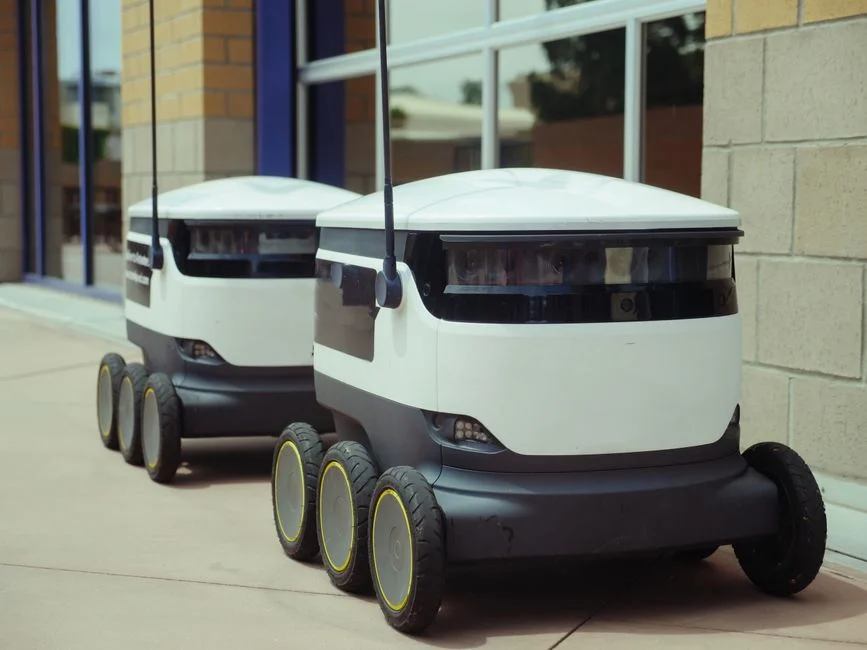
Autonomous mobile robots have moved from experimental pilots into everyday operations across warehouses, hospitals, manufacturing plants, and large commercial facilities. Their value is straightforward: they travel through real environments, make decisions about where to go next, and complete tasks without being tethered to fixed infrastructure like conveyors or rails. That flexibility matters when demand fluctuates, product lines change, or a building layout evolves. A fleet can be scaled up or down, routes can be adjusted in software, and new workflows can be introduced without ripping up concrete or shutting down a facility for weeks. For organizations under pressure to deliver faster, safer, and more reliably, these systems offer a practical way to increase throughput while reducing the strain on human teams who are often asked to walk miles per shift.
Table of Contents
- My Personal Experience
- Why Autonomous Mobile Robots Are Changing How Work Gets Done
- Core Capabilities: Navigation, Perception, and Decision-Making
- Types of Autonomous Mobile Robots and Common Payload Interfaces
- Key Components: Sensors, Compute, Power, and Safety Systems
- Warehouse and Distribution Center Use Cases That Deliver Measurable ROI
- Manufacturing Applications: Line Feeding, WIP Movement, and Flexible Automation
- Healthcare, Hospitality, and Campus Logistics: Moving Goods Where People Work
- Fleet Management and Software Integration: Orchestrating Work at Scale
- Expert Insight
- Deployment Planning: Mapping, Site Readiness, and Change Management
- Safety, Compliance, and Human-Robot Interaction in Shared Spaces
- Measuring Performance: KPIs, Bottlenecks, and Continuous Improvement
- Challenges and Practical Limitations to Plan For
- Future Trends: Smarter Autonomy, Better Interoperability, and Expanded Use Cases
- Selecting the Right Solution: Vendor Evaluation and Total Cost of Ownership
- Watch the demonstration video
- Frequently Asked Questions
- Trusted External Sources
My Personal Experience
I got my first real exposure to autonomous mobile robots during a pilot at our warehouse, when we brought in a small fleet of AMRs to move totes between picking zones and packing. On day one I assumed they’d be basically “set and forget,” but most of my time went into practical stuff—mapping the floor, labeling problem aisles, and figuring out why one robot kept hesitating near the dock where the lighting changed. After a week, the rhythm clicked: pickers stopped doing long walks, congestion dropped, and the robots quietly handled the boring shuttle runs. The biggest surprise was how human the rollout felt—training new hires to “drive around” the robots, tweaking routes after every layout change, and learning to trust that a machine would reroute itself when someone left a pallet in the wrong place.
Why Autonomous Mobile Robots Are Changing How Work Gets Done
Autonomous mobile robots have moved from experimental pilots into everyday operations across warehouses, hospitals, manufacturing plants, and large commercial facilities. Their value is straightforward: they travel through real environments, make decisions about where to go next, and complete tasks without being tethered to fixed infrastructure like conveyors or rails. That flexibility matters when demand fluctuates, product lines change, or a building layout evolves. A fleet can be scaled up or down, routes can be adjusted in software, and new workflows can be introduced without ripping up concrete or shutting down a facility for weeks. For organizations under pressure to deliver faster, safer, and more reliably, these systems offer a practical way to increase throughput while reducing the strain on human teams who are often asked to walk miles per shift.
Unlike earlier generations of automated guided vehicles that relied on magnets, tape, or embedded wires, autonomous mobile robots typically rely on onboard sensing and computation. They interpret the world using a combination of LiDAR, cameras, ultrasonic sensors, inertial measurement units, and wheel encoders, then fuse that data to localize themselves, avoid obstacles, and plan paths. That allows them to operate in dynamic spaces where people, carts, and pallets appear unpredictably. They also integrate with software systems—warehouse management, manufacturing execution, or hospital logistics—so tasks can be assigned intelligently. This combination of physical autonomy and digital connectivity is why many leaders see autonomous mobile robots less as “machines that move” and more as a platform for improving material flow, reducing non-value-added motion, and building resilience when staffing is tight or demand spikes unexpectedly.
Core Capabilities: Navigation, Perception, and Decision-Making
At the heart of autonomous mobile robots is the ability to understand where they are and how to reach a destination safely. Most deployments use simultaneous localization and mapping (SLAM) to build a map of the environment and continuously estimate position within it. LiDAR-based SLAM is common because it works in a wide variety of lighting conditions and provides accurate range measurements; camera-based visual SLAM may be used where rich visual features exist, though it can be more sensitive to glare, shadows, and seasonal changes in lighting. Many systems combine both, using sensor fusion to improve robustness. Localization accuracy directly affects how close a robot can approach a shelf, conveyor, or docking station, and it influences traffic behaviors like passing, yielding, and queueing. When a robot can reliably stop within a few millimeters at a charging dock or conveyor interface, it reduces failure rates and increases overall uptime.
Decision-making in autonomous mobile robots includes obstacle avoidance, path planning, speed control, and task execution. Robots must detect not only static obstacles like racks and walls but also dynamic ones such as people, forklifts, and other robots. They often use layered safety strategies: a global planner computes an efficient route across the map, while a local planner makes real-time adjustments to avoid hazards and maintain a safe distance. Speed and acceleration are tuned to the environment—slower in pedestrian-heavy corridors, faster in open aisles—while maintaining stability for the payload. Advanced deployments add traffic management, where a centralized fleet manager coordinates multiple units to reduce congestion, prevent deadlocks, and prioritize urgent tasks. The end result is a system that behaves predictably and safely, which is crucial for trust on the floor and for keeping operations flowing even during peak periods.
Types of Autonomous Mobile Robots and Common Payload Interfaces
Autonomous mobile robots come in several form factors, each designed around a specific way of moving goods or supporting work. Some are low-profile carriers that transport totes and cartons between zones. Others are pallet movers capable of lifting and transporting heavier loads, sometimes with integrated forks or lifting decks. There are also tugger-style robots that pull trains of carts, which can be an efficient way to move many items at once without needing a robot for every individual cart. In manufacturing, robots may carry bins of components to assembly stations, while in healthcare they can move linens, meals, pharmaceuticals, and waste through corridors and elevators. The “right” type depends on payload weight, handling requirements, aisle widths, floor conditions, and how frequently the workflow changes. A facility that frequently re-slots inventory might prefer flexible tote transport, while a high-volume pallet workflow may justify heavier-duty mobile platforms.
Payload interfaces are just as important as the base robot because they determine how the robot interacts with the rest of the operation. Some autonomous mobile robots use top modules such as conveyors, rollers, or belts to transfer goods automatically to and from fixed stations. Others use lift mechanisms to pick up carts or shelves, enabling a “goods-to-person” approach where the robot brings inventory directly to a worker. There are also specialized attachments for bins, racks, and temperature-controlled compartments. Docking standards, transfer heights, and mechanical tolerances have major implications for reliability: if a robot must align precisely to a station, the environment must support that precision with consistent floor quality and well-designed docking geometry. Selecting interfaces that match existing material handling equipment can reduce retrofit costs and shorten deployment timelines, while still preserving the flexibility that makes autonomous mobile robots attractive in the first place.
Key Components: Sensors, Compute, Power, and Safety Systems
The performance of autonomous mobile robots depends on the quality and integration of their hardware. Sensors provide the raw information needed for perception and localization. LiDAR offers accurate distance measurements and is often used for mapping and obstacle detection; cameras add semantic understanding, such as recognizing labels, doors, or human gestures; ultrasonic sensors can help with close-range detection where LiDAR has blind spots; and bump sensors provide a last line of defense. Compute hardware—often a mix of CPUs and GPUs or specialized accelerators—processes sensor data and runs algorithms for mapping, planning, and control. As AI capabilities expand, edge compute becomes more important, especially for tasks like human detection, pallet pocket alignment, or reading environmental cues that improve navigation reliability in cluttered spaces.
Power systems also shape real-world effectiveness. Battery chemistry, capacity, and charging strategy influence runtime, charging frequency, and fleet sizing. Many autonomous mobile robots use opportunity charging, where they autonomously dock for short charging sessions during idle moments, reducing the need for manual battery swaps and enabling 24/7 operation. The facility’s charging infrastructure must be planned to avoid bottlenecks, and charging locations should be placed to minimize deadhead travel. Safety is built into every layer: functional safety-rated sensors, emergency stop circuits, audible and visual alerts, and speed limits near people. Compliance with relevant safety standards and local regulations matters not only for legal reasons but also for operational acceptance. A robot that is technically capable but perceived as unpredictable will face resistance; clear safety behaviors, consistent signaling, and thoughtful route design help autonomous mobile robots become trusted co-workers rather than moving obstacles.
Warehouse and Distribution Center Use Cases That Deliver Measurable ROI
Warehouses and distribution centers were among the first mainstream adopters of autonomous mobile robots because travel time is one of the biggest hidden costs in fulfillment. Pickers often spend a large portion of their shift walking or pushing carts, which limits throughput and increases fatigue. Robots can reduce that waste by bringing totes to pickers, transporting completed orders to packing, or replenishing forward pick locations from reserve storage. In parcel and e-commerce environments, robots can also shuttle items between sortation points, helping smooth peaks without adding fixed conveyors. The flexibility of autonomous movement becomes especially valuable when SKU counts grow, order profiles change, or seasonal volume requires fast scaling. Instead of re-engineering the building, operators can add robots, adjust workflows, and re-map zones with limited downtime.
ROI typically comes from a combination of labor efficiency, throughput gains, and improved accuracy. When robots handle repetitive transport, workers can focus on higher-value tasks like picking, quality checks, or exception handling. That can increase lines picked per hour and reduce overtime during peak periods. Robots also bring predictability: tasks can be queued, prioritized, and tracked digitally, reducing lost inventory and improving cycle counting. In addition, autonomous mobile robots can operate during off-hours for replenishment or returns processing, turning idle time into productive time. Successful deployments pay attention to the full system: slotting strategy, pick path design, station ergonomics, and integration with the warehouse management system. When those pieces align, the robots become a force multiplier, enabling a facility to handle more orders with fewer disruptions and less dependence on hard-to-hire seasonal labor.
Manufacturing Applications: Line Feeding, WIP Movement, and Flexible Automation
Manufacturing environments benefit from autonomous mobile robots because production priorities change and material flow must adapt quickly. Traditional automation like conveyors or fixed AGVs can be effective in stable, high-volume lines, but many factories face mixed-model production, frequent changeovers, and short product lifecycles. Robots can transport components from the warehouse to the line, deliver kits to workstations, and move work-in-progress between cells without requiring permanent infrastructure. That supports lean manufacturing goals by reducing excess inventory at the line, enabling just-in-time deliveries, and minimizing the walking and forklift traffic that can introduce safety risks. When a line is rebalanced or a new cell is added, robot routes and missions can be updated in software rather than rebuilt physically.
Autonomous mobile robots also help address a common manufacturing challenge: balancing consistency with flexibility. A robot can follow standardized delivery schedules, scan barcodes or RFID tags for traceability, and confirm drop-offs digitally. That reduces the variability that comes with manual runs and helps ensure the right parts arrive at the right station in the correct quantity. Some deployments combine robots with automated storage systems, pick-to-light, or cobots at workstations, creating a more connected flow from inventory to assembly. The best results often come from clear material staging rules and well-designed handoff points, such as gravity racks, tugger docks, or conveyor transfers. By reducing the need for forklifts in pedestrian areas and lowering the risk of part shortages, autonomous mobile robots can raise overall equipment effectiveness and help production teams respond faster when customer demand shifts.
Healthcare, Hospitality, and Campus Logistics: Moving Goods Where People Work
Beyond industrial settings, autonomous mobile robots are increasingly used in hospitals, hotels, and large campuses where corridors, elevators, and multiple floors create complex logistics. In healthcare, staff time is precious, and non-clinical transport tasks can consume hours per shift. Robots can deliver linens, meals, sterile supplies, and medications, as well as remove waste and soiled materials, reducing cross-traffic and allowing nurses and support teams to focus on patient care. Many hospital-grade robots include secure compartments, access controls, and audit logs to support compliance and reduce the risk of loss. They must also navigate crowded hallways, interact with automatic doors, and call elevators—capabilities that require strong integration with building systems and careful attention to safety behaviors around patients and visitors.
In hospitality and commercial buildings, robots can support room service delivery, housekeeping supply runs, and back-of-house transport. On university or corporate campuses, they may move mail, packages, lab materials, or supplies between buildings. These environments introduce unique challenges: variable lighting, narrow passages, decorative surfaces, and frequent human interaction. Effective autonomous mobile robots in public settings emphasize polite navigation, clear signaling, and conservative speed profiles. They also need robust remote monitoring and rapid support workflows because downtime can disrupt service experiences. While the ROI is often calculated differently than in a warehouse—more about service quality, staff workload, and reliability than pure throughput—many organizations adopt robots to maintain consistent service levels despite staffing constraints and to reduce the physical burden of repetitive transport across large facilities.
Fleet Management and Software Integration: Orchestrating Work at Scale
A single robot can solve a small transport problem, but most real value comes from fleets coordinated by software. Fleet management systems assign missions, manage traffic, and optimize charging schedules. They also provide visibility: where each unit is, what it is carrying, how long tasks take, and where bottlenecks occur. That operational data can be turned into actionable improvements, such as relocating a staging area, adjusting priority rules, or adding a transfer station to reduce travel distance. Good fleet software prevents common multi-robot issues like deadlocks in narrow aisles, congestion near docks, or inefficient “empty” travel. It can also enforce geofencing and speed zones, slowing robots near pedestrian crossings or sensitive equipment while maintaining higher speeds in open areas. If you’re looking for autonomous mobile robots, this is your best choice.
| Aspect | Autonomous Mobile Robots (AMRs) | Automated Guided Vehicles (AGVs) |
|---|---|---|
| Navigation & Flexibility | Uses onboard sensors and SLAM to navigate dynamically around obstacles and changing layouts. | Follows fixed routes (tape, QR, magnets, or predefined paths) with limited adaptability to changes. |
| Deployment & Scalability | Typically faster to deploy; routes and tasks can be updated via software and fleet management tools. | Often requires infrastructure changes and route engineering; scaling may involve more setup effort. |
| Best-Fit Use Cases | High-mix, dynamic environments (warehouses, hospitals, manufacturing) needing flexible material movement. | Repetitive, predictable transport in stable layouts where fixed paths are acceptable. |
Expert Insight
Start with a tightly scoped route and workload: map a single, high-traffic loop, define clear pickup/drop-off points, and set measurable targets (cycle time, on-time delivery, and intervention rate). Validate performance across peak shifts before expanding to new areas, and keep floor markings, signage, and staging zones consistent to reduce navigation errors. If you’re looking for autonomous mobile robots, this is your best choice.
Design for reliability and uptime: standardize docking locations, enforce battery and charging rules, and schedule routine checks for wheels, sensors, and safety bumpers. Pair this with simple exception handling—clear “no-go” zones, a fast manual override process, and a log of recurring stoppages—so issues are resolved quickly and don’t repeat. If you’re looking for autonomous mobile robots, this is your best choice.
Integration is equally important. Autonomous mobile robots must receive work orders from upstream systems like WMS, ERP, MES, or hospital logistics platforms. They may also need to interface with conveyors, automatic doors, elevators, and safety systems. Integration methods vary: REST APIs, message queues, industrial protocols, or vendor-specific connectors. The goal is to make robot missions part of the normal operational flow rather than a separate island of automation. When integration is done well, tasks are triggered automatically by events—an order is released, a workstation requests replenishment, a bin is scanned empty—so robots respond in near real time. When integration is weak, organizations fall back on manual task creation, which limits scalability and can introduce errors. For long-term success, many teams treat the robot fleet as a software product: they monitor performance, manage updates, refine workflows, and continuously improve rules as the operation evolves.
Deployment Planning: Mapping, Site Readiness, and Change Management
Deploying autonomous mobile robots is less about “installing machines” and more about preparing an ecosystem where robots, people, and processes work together smoothly. Site readiness starts with the physical environment: floor quality, aisle widths, lighting, and the stability of landmarks used for localization. Reflective surfaces, glass walls, or frequently moved fixtures can complicate perception. Wi-Fi coverage is another foundational requirement because robots often rely on connectivity for task assignments, monitoring, and software updates, even if they can navigate locally without a network. Charging locations must be planned to avoid blocking traffic and to ensure robots can reach them without creating congestion. Transfer stations, docking points, and staging areas should be designed for repeatable alignment and safe human interaction.
Change management determines whether a technically sound deployment becomes a real operational win. Workers need clear guidance on how to interact with robots, where to walk, how to request assistance, and what to do when an exception occurs. Supervisors need dashboards and escalation paths so issues are handled quickly. Processes may need to be adjusted to take advantage of robotic transport; otherwise, robots simply automate inefficiency. For example, if pick stations are poorly placed or replenishment rules are inconsistent, robots may spend too much time waiting or making unnecessary trips. Training should cover not only safety but also the “why” behind the workflow so teams understand how robots reduce walking, improve consistency, and support better service. When staff feedback is incorporated—such as adjusting routes around busy intersections—acceptance rises and performance improves. Successful rollouts often start with a contained use case, prove reliability, then expand in phases with measurable milestones. If you’re looking for autonomous mobile robots, this is your best choice.
Safety, Compliance, and Human-Robot Interaction in Shared Spaces
Safety is a primary concern wherever autonomous mobile robots operate near people. Modern systems use multiple layers of protection: safety-rated scanners define protective fields that trigger slowdowns or stops, while additional sensors provide redundancy and improve detection of low-contrast or irregular objects. Robots also use audible signals, lights, and on-screen indicators to communicate intent—turning, stopping, yielding, or reversing—so people can predict movement. Designing routes that minimize crossing points with pedestrians can significantly reduce risk. In busy facilities, dedicated robot lanes or one-way aisles can improve both safety and throughput, though they may require operational discipline. Importantly, safety is not only about preventing collisions; it also includes ergonomics and workload distribution, reducing the repetitive strain and fatigue that lead to injuries over time.
Compliance involves adhering to relevant standards and conducting risk assessments appropriate to the application. Requirements vary by region and industry, and they may include functional safety certifications, workplace regulations, and internal policies for operating equipment in shared environments. Many organizations implement safety validation during commissioning: speed tests, stop distance verification, obstacle detection checks, and scenario-based drills. Human-robot interaction should be designed to reduce ambiguity. If a robot yields at crossings, it should do so consistently. If it needs a person to clear a path, it should request help clearly and provide a simple way to resolve the issue. Some operations add visual cues on the floor or signage at intersections to guide behavior. When autonomous mobile robots behave in predictable, conservative ways and people understand the rules of engagement, shared spaces can remain efficient without sacrificing safety or creating frustration.
Measuring Performance: KPIs, Bottlenecks, and Continuous Improvement
To get sustained value from autonomous mobile robots, organizations track performance with clear metrics tied to operational goals. Common KPIs include mission completion time, on-time delivery rate to workstations, robot utilization, average travel distance per task, docking success rate, and the frequency and duration of exceptions. In warehouses, metrics may connect to order cycle time, lines per hour, and packing station throughput. In manufacturing, teams may focus on line-side stockouts, WIP lead time, and the percentage of deliveries completed within takt time windows. In hospitals, measures might include delivery punctuality, staff time saved, and service reliability across shifts. Data from robots can be granular, showing where delays occur and which locations generate frequent stops, making it possible to improve processes with evidence rather than guesswork.
Bottlenecks often emerge at handoff points rather than on the robot’s route. A docking station that is slightly misaligned, a conveyor that intermittently faults, or a staging area that becomes cluttered can ripple through the fleet and reduce overall throughput. Continuous improvement may involve redesigning docking geometry, adding buffer locations, adjusting mission priorities, or changing how work is released from upstream systems. Fleet analytics can also inform facility layout decisions, such as relocating high-frequency destinations closer together or creating satellite staging areas to reduce travel. Another key lever is exception handling: when a robot stops due to an obstacle, how quickly is it resolved, and is the root cause addressed? Over time, mature operations treat autonomous mobile robots as part of a broader operational excellence program, using data to refine workflows, balance labor, and keep performance stable even as volume, SKU mix, or staffing levels change.
Challenges and Practical Limitations to Plan For
Autonomous mobile robots are powerful, but they are not magic. Some environments remain difficult: highly reflective floors, constantly changing layouts, areas with heavy dust or moisture, and tight spaces with unpredictable human traffic can reduce navigation reliability. Payload stability is another limitation; robots can move quickly, but if the load is tall, top-heavy, or loosely packed, speed must be reduced to avoid shifting. Floor transitions, ramps, and elevator thresholds can also create mechanical challenges, especially for heavier payloads. Connectivity issues can affect dispatching and monitoring, even if the robot can continue a mission locally. Additionally, integration complexity is often underestimated. Connecting robots to WMS or MES systems requires careful data modeling, error handling, and testing to ensure that tasks are created correctly and exceptions do not cascade into operational confusion.
There are also organizational challenges. If processes are inconsistent—items left in aisles, staging rules ignored, or stations frequently blocked—robots will stop more often, and staff may blame the technology rather than the underlying discipline. Maintenance planning is essential: wheels wear, sensors need cleaning, and batteries degrade. A preventive maintenance schedule and spare parts strategy help avoid avoidable downtime. Cybersecurity should be addressed from the start, including network segmentation, access controls, and update policies, because robots are connected devices operating in critical facilities. Finally, expectations must be realistic. Autonomous mobile robots can significantly reduce walking and improve flow, but they rarely eliminate the need for people; instead, they change where human effort is applied. Organizations that treat the deployment as a partnership between technology and operations—rather than a replacement for process design—tend to achieve better results and smoother scaling.
Future Trends: Smarter Autonomy, Better Interoperability, and Expanded Use Cases
The future of autonomous mobile robots is shaped by improvements in perception, learning, and system interoperability. As sensors become more capable and cost-effective, robots will better understand complex scenes, distinguishing between a person who is crossing, a cart that is parked temporarily, and a pallet that has shifted into an aisle. More sophisticated models can enable smoother navigation behaviors, reducing unnecessary stops while maintaining conservative safety margins. On the software side, advances in simulation and digital twins allow teams to test routes, traffic rules, and station placement virtually before making changes in a live facility. That reduces deployment risk and shortens the time between identifying a bottleneck and implementing a validated solution. Better battery technology and charging methods will further increase uptime, enabling smaller fleets to handle the same workload through improved utilization.
Interoperability is another major direction. Many operations want mixed fleets and the freedom to add new robot types without being locked into a single vendor ecosystem. Emerging standards and better API practices can make it easier to integrate autonomous mobile robots with facility systems, traffic management layers, and analytics platforms. In parallel, use cases are expanding beyond transport into hybrid workflows where robots manipulate items using lift tables, conveyors, or robotic arms, bridging the gap between mobile and stationary automation. As these capabilities mature, robots can support more complex tasks like automated putaway, dynamic replenishment, and intelligent returns handling. Even with these advances, long-term success will still depend on fundamentals: safe behavior in shared spaces, reliable docking and handoffs, strong integration, and disciplined operations. When those pieces come together, autonomous mobile robots become a durable competitive advantage rather than a short-lived experiment.
Selecting the Right Solution: Vendor Evaluation and Total Cost of Ownership
Choosing among autonomous mobile robots requires a structured evaluation that goes beyond headline specifications. Payload capacity and top speed matter, but so do navigation reliability, docking accuracy, safety certification, and the maturity of fleet management. A pilot should reflect real operating conditions: peak traffic, typical clutter, and the full range of payloads. It’s also important to assess how the robots handle exceptions—blocked paths, failed transfers, low battery events, network interruptions—because day-to-day performance is defined by recovery behavior as much as by normal operation. Software capabilities should be reviewed with the same rigor as hardware: task prioritization, traffic control, analytics, role-based access, and integration tooling. If the vendor provides a strong simulation environment or proven integration connectors, that can reduce implementation time and improve long-term agility.
Total cost of ownership includes more than purchase price. Subscription fees, support plans, spare parts, battery replacements, and on-site service all affect long-term economics. So does the internal cost of ownership: who will administer the fleet, maintain maps, manage updates, and troubleshoot issues? Facilities should consider whether they need 24/7 support, how quickly a technician can be on-site, and what the vendor’s track record is for software updates and backward compatibility. Scalability is another key factor: a solution that works with five robots may struggle with fifty if traffic management is weak or integration is brittle. A well-chosen system fits the operation’s constraints, aligns with IT and safety policies, and offers a clear path to expansion. When selection is done carefully, autonomous mobile robots can deliver consistent gains year after year, adapting as workflows change rather than becoming obsolete when the next operational shift arrives.
Watch the demonstration video
In this video, you’ll learn how autonomous mobile robots (AMRs) navigate and operate in real-world environments. It explains the sensors and software they use to map spaces, avoid obstacles, and plan routes, plus how they handle tasks like transporting goods. You’ll also see key benefits, limitations, and common applications in warehouses, hospitals, and factories.
Summary
In summary, “autonomous mobile robots” is a crucial topic that deserves thoughtful consideration. We hope this article has provided you with a comprehensive understanding to help you make better decisions.
Frequently Asked Questions
What is an autonomous mobile robot (AMR)?
An autonomous mobile robot is a self-navigating machine that uses onboard sensors and intelligent software to map its surroundings, plan efficient routes, and steer around obstacles—without relying on fixed tracks or predefined paths. This is why **autonomous mobile robots** can move flexibly and safely through dynamic environments.
How do AMRs navigate and avoid obstacles?
They combine sensors (e.g., LiDAR, cameras, IMU) with mapping/localization (SLAM) and path-planning algorithms to detect changes and reroute in real time.
What’s the difference between AMRs and AGVs?
Automated Guided Vehicles (AGVs) usually stick to fixed routes—following tape, markers, or other predefined paths—whereas **autonomous mobile robots** can navigate dynamically, adjusting in real time to obstacles and changes in the facility layout.
What are common applications of AMRs?
Material transport in warehouses and factories, goods-to-person picking support, hospital logistics (linen/meds), and last-meter delivery within facilities.
What infrastructure is required to deploy AMRs?
Usually reliable Wi-Fi, mapped/defined operating areas, charging stations, and safe traffic rules; minimal physical modifications compared to fixed automation.
How is safety handled with AMRs around people?
To operate safely, they rely on redundant sensors, configurable speed and zone limits, emergency stop functions, and safety-rated controllers—and many **autonomous mobile robots** are engineered to comply with standards such as ISO 3691-4.
📢 Looking for more info about autonomous mobile robots? Follow Our Site for updates and tips!

Trusted External Sources
- Mobile robots (AMRs) – ABB
Autonomous Mobile Robots (AMRs) are cutting-edge transport robots specifically designed to move loads autonomously in a diverse range of industries, …
- Autonomous mobile robots for exploratory synthetic chemistry – PMC
On Nov 6, 2026, researchers unveiled a modular autonomous platform for exploratory synthetic chemistry, where **autonomous mobile robots** seamlessly connect an automated synthesis system with two analytical instruments to streamline experimentation and accelerate discovery.
- Automated & Autonomous Mobile Robots | Robotnik®
Autonomous mobile robots offer a robust technological tool transforming automation in logistics, manufacturing, inspection, agriculture, and retail.
- Autonomous mobile robotics (AMR) in logistics and production
Autonomous mobile robots enable a significant increase in efficiency in warehouse and production environments. They automate transport and logistics processes.
- ETHx: Autonomous Mobile Robots | edX
This course introduces the essential concepts and algorithms needed to build **autonomous mobile robots** that can navigate and operate independently in complex, real-world environments.