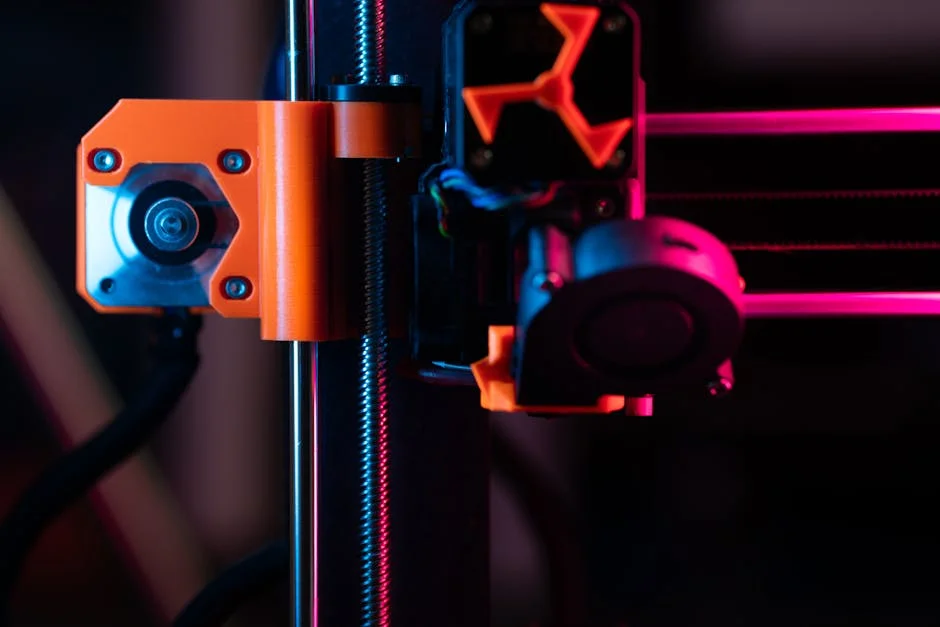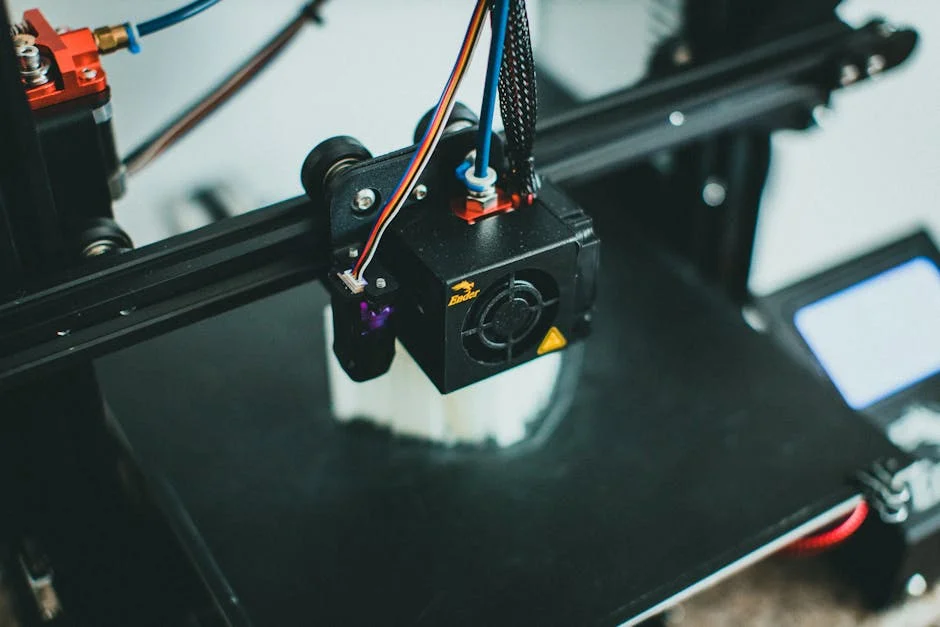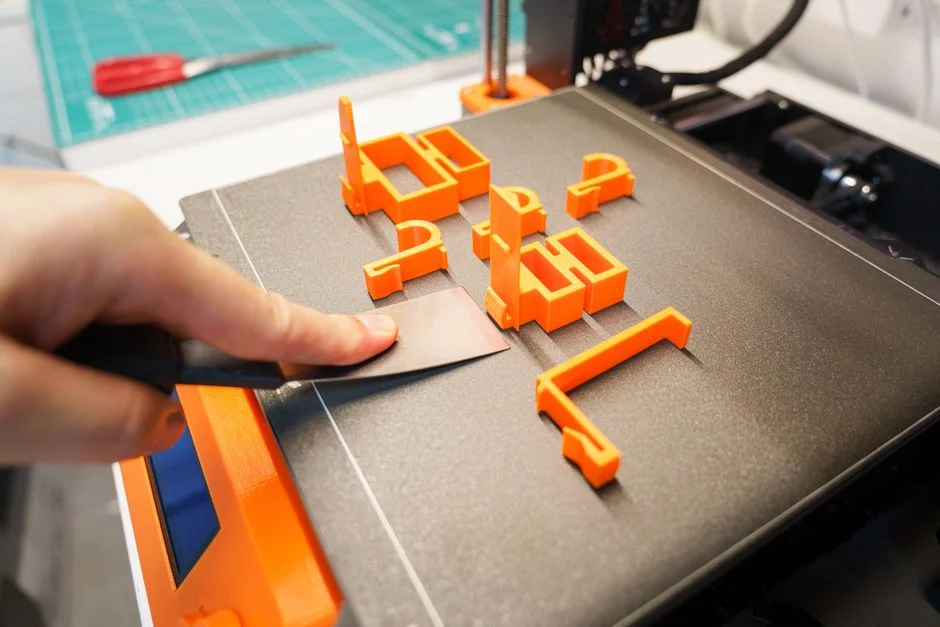
A large 3d print bed is more than a bigger rectangle of heated metal or glass; it changes what kinds of objects can be produced, how reliably they can be produced, and how a print workflow is organized from start to finish. When people compare printers, they often focus on nozzle size, maximum temperature, or motion system, but the build plate is the stage where every tolerance stack-up becomes visible. A larger platform expands the printable envelope, allowing full-scale prototypes, tall functional parts, wide enclosures, cosplay pieces, jigs, and fixtures that would otherwise require slicing into multiple sections. At the same time, expanding the build surface increases the likelihood of uneven temperature distribution, bed flatness issues, and mechanical sag if the printer’s frame and gantry are not engineered for the extra span. That means the phrase “large” should be interpreted as a combination of dimensions, stability, and the ability to keep the first layer consistent across the entire surface. A printer can advertise a generous X and Y, but if the far corners drift out of level or the heater can’t maintain uniform heat, the practical build area may be much smaller than the spec sheet implies.
Table of Contents
- My Personal Experience
- Understanding What a Large 3D Print Bed Really Means
- Key Benefits of Scaling Up Build Area for Real-World Projects
- Trade-Offs: What Gets Harder as the Bed Gets Bigger
- Choosing the Right Bed Surface for Reliable Adhesion at Scale
- Bed Leveling, Mesh Compensation, and Why Precision Matters More on Big Plates
- Thermal Management: Heat-Up Time, Uniformity, and Material Behavior
- Mechanical Considerations: Frame Rigidity, Motion Systems, and Bed Support
- Slicing and Print Planning for Big Jobs Without Surprises
- Expert Insight
- Managing Warping, Shrinkage, and First-Layer Failures Across the Whole Plate
- Productivity and Cost: Material Use, Time, and Risk Management
- Practical Use Cases: When Bigger Build Plates Deliver Clear Value
- Maintenance, Upgrades, and Long-Term Reliability for Large Platforms
- How to Decide if a Large Build Plate Fits Your Space and Workflow
- Getting Consistent Results: A Simple Routine That Scales With Bed Size
- Watch the demonstration video
- Frequently Asked Questions
- Trusted External Sources
My Personal Experience
The first time I used a large 3D print bed, I didn’t realize how much it would change my workflow until I tried printing a full-size enclosure in one piece instead of slicing it into panels. Watching that huge first layer go down was equal parts exciting and stressful—any tiny leveling issue felt like it would waste hours of filament. I ended up spending an extra evening dialing in the mesh bed leveling and slowing the first layer way down, but it paid off. The print ran overnight, and in the morning I had a single, solid part with no seams to sand or align. It also taught me that a bigger bed isn’t automatically easier; it just makes your setup and patience matter a lot more.
Understanding What a Large 3D Print Bed Really Means
A large 3d print bed is more than a bigger rectangle of heated metal or glass; it changes what kinds of objects can be produced, how reliably they can be produced, and how a print workflow is organized from start to finish. When people compare printers, they often focus on nozzle size, maximum temperature, or motion system, but the build plate is the stage where every tolerance stack-up becomes visible. A larger platform expands the printable envelope, allowing full-scale prototypes, tall functional parts, wide enclosures, cosplay pieces, jigs, and fixtures that would otherwise require slicing into multiple sections. At the same time, expanding the build surface increases the likelihood of uneven temperature distribution, bed flatness issues, and mechanical sag if the printer’s frame and gantry are not engineered for the extra span. That means the phrase “large” should be interpreted as a combination of dimensions, stability, and the ability to keep the first layer consistent across the entire surface. A printer can advertise a generous X and Y, but if the far corners drift out of level or the heater can’t maintain uniform heat, the practical build area may be much smaller than the spec sheet implies.
Because a large 3d print bed invites bigger jobs, it also changes the cost of failure. A small print that lifts at the corner is an annoyance; a multi-day print covering most of the plate can be a significant loss of time and material. That pushes users to care more about bed leveling strategy, surface selection, thermal management, and environmental control than they might on a compact machine. It also shifts how slicing settings are chosen: brims, rafts, first-layer speed, and extrusion width can become more critical when the first layer spans hundreds of millimeters. Even the way you position parts matters more, because different regions of a large build plate can behave slightly differently due to heater zoning, airflow, or gantry alignment. Understanding what “large” implies helps set realistic expectations: it’s not only about printing bigger, but about creating a stable, repeatable foundation for any job that uses a broad footprint.
Key Benefits of Scaling Up Build Area for Real-World Projects
The most obvious advantage of a large 3d print bed is the ability to fabricate objects at a scale closer to their final use case, which can dramatically reduce assembly time and improve structural integrity. Printing a single-piece enclosure for electronics, for example, eliminates seam lines and weak points created by gluing or bolting smaller panels together. For functional parts, fewer joints mean fewer opportunities for misalignment, vibration, or loosening over time. In prototyping, being able to print a full-size handle, bracket, or housing allows better ergonomic validation and more accurate fit checks against other components. The design loop becomes faster because you can evaluate the full geometry without planning for split lines, alignment keys, or post-processing to hide seams. Large-format capability is also useful for tooling: jigs, drill guides, assembly fixtures, and templates often need to match the dimensions of the product they support, and a bigger platform makes it feasible to create those aids in one piece.
A second benefit is throughput. Even if you rarely print a single huge part, a large 3d print bed makes batching more efficient. Instead of running four separate prints for four parts, you can place them all at once and let the machine run overnight, reducing setup time and hands-on labor. This is especially valuable for small businesses producing short runs, makers preparing sets of parts for a project, or educators printing multiple student models. Batching also helps when each print requires warming the bed, purging the nozzle, and verifying the first layer; doing that once for a full plate can be more efficient than repeating it for many separate jobs. However, batching introduces its own planning: collision avoidance during travel moves, consistent cooling across the plate, and strategies like sequential printing versus “all at once.” When managed well, the larger surface becomes a scheduling asset, allowing a printer to function like a mini production tool rather than a single-part prototype device.
Trade-Offs: What Gets Harder as the Bed Gets Bigger
Going to a large 3d print bed increases the number of variables that can undermine first-layer success. Heat distribution becomes harder because the heater must cover a wider area, and the edges may cool faster than the center, especially in open-frame printers. Even a few degrees of difference can change adhesion behavior for materials like ABS, ASA, nylon blends, and some PETG formulations. Flatness and rigidity are also more challenging: a plate that is perfectly adequate at 220 mm may show measurable warp at 350–500 mm unless it’s thicker, supported well, or compensated with probing and mesh leveling. The gantry and motion system must maintain consistent nozzle-to-bed distance across longer travel, and any small tilt, belt stretch, or wheel wear is amplified at the extremes. These factors don’t make large-format printing impossible; they simply mean that a bigger platform demands a more disciplined approach to calibration and maintenance.
Print time and risk scale up too. A large 3d print bed invites large objects, and large objects often require long runtimes. Long prints increase exposure to power interruptions, filament tangles, nozzle clogging, and gradual drift in bed adhesion. They also magnify the consequences of minor slicing mistakes like insufficient top layers or weak infill patterns. For wide prints, thermal contraction can create corner lift and internal stress, and for tall prints, vibrations and resonance can show up as ringing or layer shifts. You may need to consider an enclosure, a more robust power supply, better cable management, and higher-quality components like all-metal hotends or hardened nozzles depending on your material goals. The practical takeaway is that large-format capability is a system-level feature: the bed, the frame, the electronics, and the workflow all need to be aligned to capitalize on the extra area without turning every big job into a troubleshooting session.
Choosing the Right Bed Surface for Reliable Adhesion at Scale
A large 3d print bed puts bed surface performance under a spotlight because adhesion must be consistent not only in the middle but also at the far edges and corners. Common surfaces include PEI (smooth or textured), glass, spring steel sheets, and specialized coatings. PEI on spring steel has become popular because it balances adhesion and release; textured PEI can reduce visible first-layer artifacts and improve grip for materials like PLA and PETG, while smooth PEI can provide a glossy finish and strong bonding when properly cleaned. On a large plate, spring steel’s flexibility also makes part removal easier, which matters when prints span much of the surface and can be difficult to pry off without stressing the frame or risking injury. Glass can be flat and visually appealing, but it can also be heavy, slow to heat, and more prone to edge temperature differences on large heaters. If the heater struggles, the center may be perfect while the edges remain slightly cooler, which can cause adhesion failures on wide prints.
Cleaning and preparation practices become more important as the bed area grows. Oils from fingerprints, residue from adhesives, and dust can create localized adhesion failures that only show up in certain regions of a large 3d print bed. A disciplined routine—using isopropyl alcohol for daily cleaning and occasional deeper cleaning with mild soap and water for PEI—helps keep performance consistent. Some users rely on adhesive aids like glue stick, hairspray, or specialized bed adhesives, especially for challenging materials or when printing large footprints. These can be helpful, but they should be applied evenly to avoid creating patches of different adhesion strength across the plate. When the print covers a broad area, uneven adhesion can lead to internal stress as one corner holds tighter than another, potentially increasing warp. The best approach is to match surface type to material and prioritize repeatability: a surface that behaves predictably across the entire build area is often more valuable than one that offers extreme adhesion only in the center.
Bed Leveling, Mesh Compensation, and Why Precision Matters More on Big Plates
With a large 3d print bed, tiny inconsistencies in height become meaningful because the nozzle traverses a wider plane. Manual leveling can work, but it becomes more time-consuming and more sensitive to mechanical changes like thermal expansion, frame racking, or slight knocks during part removal. Automatic bed leveling (ABL) or probing systems—inductive, capacitive, BLTouch-style, or nozzle-based sensors—are often the difference between routine success and constant first-layer frustration. Mesh bed leveling, which measures multiple points and compensates for curvature, is particularly valuable on big platforms where perfect flatness is hard to achieve. Even if the plate is manufactured to tight tolerances, mounting stress, clip placement, and heater expansion can introduce subtle waves. A good mesh allows the printer to “follow” the surface, maintaining a consistent first-layer squish from one corner to the other.
Calibration practices should be scaled up alongside the bed. For a large 3d print bed, it’s worth running a first-layer test that spans the full build area, not just a small square in the center. Large single-layer patterns, corner-to-corner lines, or multi-zone adhesion tests reveal whether the mesh is accurate and whether the bed heats evenly. Z-offset tuning becomes more sensitive too: a small offset error might be tolerated on a small bed, but on a larger platform it can translate into corners that are too close (causing rough extrusion and potential clogs) or too far (causing poor adhesion). It also helps to consider how the bed is supported. Three-point mounting can reduce stress compared to four-point systems, and thicker plates can resist warping. Finally, remember that probing repeats best when the nozzle and bed are clean and at printing temperature; thermal expansion changes geometry, so leveling cold and printing hot can lead to mismatches, especially across a bigger surface.
Thermal Management: Heat-Up Time, Uniformity, and Material Behavior
Thermal performance is a defining feature of any large 3d print bed. Bigger plates generally require more power to reach temperature and to maintain it, particularly in cooler rooms or near drafts. Heat-up time affects workflow, but uniformity affects quality. If the center of the bed is at 60°C while the edges hover at 50–55°C, PLA might still print fine, but PETG, ABS, and ASA can show edge lifting, especially on long, flat parts. Some large printers use higher-wattage AC heaters with solid-state relays to improve heat-up speed and maintain stable temperatures. Others use segmented heaters or insulation under the bed to reduce heat loss. Insulation can be a cost-effective upgrade, helping the heater keep edges closer to target temperature, and reducing power consumption during long prints. The goal is to create a stable thermal field so the first layer behaves the same no matter where it is placed.
Material choice intersects with bed size because thermal contraction scales with part dimensions. A large 3d print bed makes it tempting to print wide ABS panels, but ABS shrinks and can warp aggressively without an enclosure and controlled airflow. ASA behaves similarly but offers better UV resistance. PETG can stick strongly, sometimes too strongly, and large PETG prints may require careful surface choice or a release layer to prevent damage to PEI. PLA is generally forgiving, but very large PLA prints can still lift if the room is cold or if the bed cools unevenly. Cooling strategy matters as well: strong part cooling can improve bridges and overhangs, but it can also create temperature gradients that encourage warping on big footprints. Balancing bed temperature, enclosure conditions, and fan settings becomes more important as the build area grows, because the physics of large parts amplify the effects of uneven heating and uneven cooling.
Mechanical Considerations: Frame Rigidity, Motion Systems, and Bed Support
A large 3d print bed places higher demands on the printer’s mechanics, especially if the bed moves in the Y-axis (bedslinger designs). A heavier bed carrying a large glass plate or thick aluminum tooling plate has more inertia, which can limit acceleration and increase the chance of ringing or layer shifts if the frame is not rigid. CoreXY and gantry-style designs often handle larger platforms more gracefully because the bed may move only in Z, reducing the mass that must be thrown back and forth during printing. Regardless of architecture, longer belts, wider spans, and heavier components increase the need for quality bearings, proper belt tension, and a frame that resists twisting. If the gantry droops slightly at one side, the nozzle-to-bed distance can vary across the width, making the first layer inconsistent. This is why dual Z motors, synchronized Z belts, or sturdy linear rails become more common as build volume increases.
Bed support and mounting strategy are also critical on a large 3d print bed. A thin plate supported only at the corners may sag in the middle when heated, while a thick plate can resist deformation but adds weight and increases heat-up time. Some setups use cast aluminum tooling plates for better flatness and stability, and others rely on spring steel sheets over a magnetic base to combine flatness with easy part removal. Cable management becomes more important too, because a larger machine has longer wire runs and more movement; poorly routed bed heater cables can fatigue and fail over time. Vibration control matters as well: a larger frame can act like a tuning fork if not braced properly, and that can show up as surface artifacts. Choosing a printer with a proven mechanical design—or upgrading bracing, rails, and supports—helps ensure that the extra bed area translates into usable, repeatable print space rather than a zone of inconsistent results at the extremes.
Slicing and Print Planning for Big Jobs Without Surprises
Slicing for a large 3d print bed involves decisions that are less noticeable on small parts. First-layer settings are foundational: a slightly wider first-layer line width, a slower first-layer speed, and a carefully tuned Z-offset can stabilize adhesion across a broad footprint. Brims are often more effective than rafts for large flat parts because they increase edge grip without adding as much post-processing, but the brim width should be chosen based on material and geometry. For very large ABS or ASA prints, a generous brim combined with an enclosure can make the difference between success and corner lift. Infill and wall strategy also matter: large objects can accumulate internal stress as they cool, and overly dense infill can increase shrink forces. Using more perimeters and moderate infill, or selecting infill patterns that distribute stress (such as gyroid), can improve dimensional stability. Layer height choices also influence risk: thicker layers can reduce print time, but they increase extrusion volume per second, which can challenge hotend throughput and cooling on long continuous paths.
| Feature | Why it matters for a large 3D print bed | What to look for |
|---|---|---|
| Build volume & usable area | Determines the maximum part size you can print; larger beds can lose usable space due to clips, no-go zones, and calibration margins. | Stated XYZ build volume, plus “usable” area after exclusions; check maximum Z at typical speeds and with your preferred build surface. |
| Bed leveling & flatness | Big beds are harder to keep flat; small height errors become large print failures across the surface. | Auto bed leveling (ABL) with mesh compensation, rigid bed support (3-point preferred), thick/heated plate, and a proven flatness spec or user reports. |
| Heating performance & temperature uniformity | Large surfaces take longer to heat and can have hot/cold zones, affecting adhesion, warping, and material choices. | High-wattage heater, insulated underside, even heat map/uniformity claims, fast warm-up times, and stable temps at 60–110°C (or higher if needed). |
Expert Insight
On a large 3D print bed, prioritize first-layer consistency: run a full-bed mesh leveling routine, then verify with a single-layer “bed map” test that reaches all corners. If any area shows poor adhesion, adjust Z-offset in tiny increments and re-check only that region before starting long prints.
Reduce warping and edge lift by controlling heat and airflow across the entire surface: preheat the bed for 10–15 minutes to stabilize temperature, add a wide brim or mouse ears on large footprints, and keep cooling fans low for the first few layers. For tall or wide parts, consider an enclosure or draft shield to prevent uneven cooling across the bed. If you’re looking for large 3d print bed, this is your best choice.
Placement and orientation on a large 3d print bed should be intentional rather than simply centered. If you know the edges run cooler, you might keep warp-prone parts closer to the middle or raise bed temperature slightly while controlling cooling. If you are batching, consider travel paths: moving across a full plate increases stringing risk and can knock over tall thin parts if adhesion is marginal. Some slicers offer “seam painting” and travel avoidance features that become more valuable when there are many parts spread across a big surface. Support strategy also scales: supports for large overhangs can consume significant filament and time, so optimizing orientation to minimize support can save hours. For large functional prints, adding chamfers, fillets, and gradual transitions can reduce stress concentrations and improve printability. The best results come from treating large-format printing as a planning exercise: you’re not only generating toolpaths, you’re managing heat, time, material behavior, and mechanical limits over a long run.
Managing Warping, Shrinkage, and First-Layer Failures Across the Whole Plate
Warping is one of the most common challenges associated with a large 3d print bed, not because the bed causes warping, but because larger parts create larger thermal gradients and higher shrink forces. The edges of a wide part cool faster and contract, pulling upward against the adhesion layer. Even with a heated build surface, airflow in the room can cool one side more than the other, leading to asymmetric lift. Practical mitigation starts with controlling the environment: an enclosure reduces drafts and keeps ambient temperature stable, which is especially valuable for ABS, ASA, nylon, and polycarbonate blends. Bed temperature needs to be high enough to keep the first layers above the glass transition threshold long enough to relieve stress, but not so high that the material stays soft and deforms. Adhesion aids can help, but they should be used as part of a system that includes correct Z-offset, clean surfaces, and appropriate first-layer settings.
Design and process tweaks can further stabilize large prints on a large 3d print bed. Adding mouse ears or corner tabs can distribute peel forces at corners, and using a brim can increase the adhesion perimeter without changing the part itself. Adjusting fan settings—often reducing part cooling for the first several layers—helps prevent early contraction from pulling edges up. For materials like PETG, the challenge may be too much adhesion rather than too little, and a release layer or lower bed temperature can prevent damage to the surface when removing a large footprint. For PLA, warping is usually manageable, but very large flat panels can still curl if printed in a cool room or if the bed has cold zones. If the machine supports it, using a bed mesh and validating it with a full-bed first-layer test can eliminate localized “too high/too low” zones that masquerade as warping. The overall aim is consistency: when the entire plate behaves predictably, large parts become routine rather than stressful.
Productivity and Cost: Material Use, Time, and Risk Management
A large 3d print bed can be a productivity multiplier, but it also shifts cost considerations. Bigger prints consume more filament, and the waste from a failed large job is proportionally higher. This makes filament quality and storage more important: moisture in hygroscopic materials like nylon, TPU, and some PETG can cause bubbling, weak layers, and poor surface finish, turning a long print into scrap near the end. Many users adopt dry boxes, filament dryers, and more disciplined spool handling once they start running extended prints. Time becomes a budget too. A printer tied up for 30–60 hours on a single large part can block other work, so planning print queues and using batching strategically can improve overall throughput. Some users prefer to print multiple medium parts at once to use the bed efficiently without committing to a single massive risk.
Risk management features become more valuable with a large 3d print bed because long runtimes increase exposure to interruptions and gradual failures. Power-loss recovery can prevent total loss during brief outages, though it is not perfect for every material and can leave a visible seam. Filament runout sensors help avoid printing air for hours, and remote monitoring can catch problems early, especially if the printer is in another room. Nevertheless, the most reliable risk control is process discipline: confirm the first layer across the entire area, ensure the spool feeds smoothly, verify that the nozzle is clean, and avoid starting a multi-day job when you cannot check it during the early layers. For businesses, it can be worth calculating the “all-in” cost of a large print, including machine time and opportunity cost, and deciding whether splitting the model into smaller segments might be more economical even if the bed can handle it. The extra capacity is best used when it reduces assembly, improves strength, or increases output enough to justify the longer single-run commitment.
Practical Use Cases: When Bigger Build Plates Deliver Clear Value
There are specific scenarios where a large 3d print bed delivers immediate, tangible value. One is full-size prototyping for product development: printing an appliance panel, a vehicle interior trim mockup, a large ergonomic grip, or a sizable housing allows designers and engineers to evaluate fit, feel, and mounting geometry without compromise. Another is fabrication of workshop aids: router templates, drill jigs, alignment fixtures, and assembly guides often need to match real-world dimensions, and printing them in one piece improves accuracy. Cosplay, prop making, and set design also benefit because helmets, armor plates, and large decorative elements can be printed with fewer seams, reducing finishing time and improving durability. For makers building robots, drones, or custom machines, larger structural components can be printed as single parts, reducing the need for fasteners and improving rigidity if the design is optimized for printing.
A large 3d print bed also shines in low-volume manufacturing where batching matters. Small businesses producing organizers, brackets, signage, or custom accessories can lay out dozens of parts across the plate, reducing per-part labor. Educational and lab environments can print multiple student projects simultaneously, making better use of limited machine availability. Even for home users, the ability to print a full drawer insert, a large planter, or a replacement panel without splitting can be a major convenience. However, value comes from matching the printer to the task. If the most common jobs are small mechanical parts, a huge platform might be underutilized and slower to heat, while if the goal is large enclosures or wide panels, the extra area can be transformative. The best indicator is whether larger single-piece prints reduce post-processing, assembly complexity, and error-prone alignment steps enough to offset the increased need for careful calibration and thermal control.
Maintenance, Upgrades, and Long-Term Reliability for Large Platforms
Maintaining a printer with a large 3d print bed requires attention to parts that experience higher loads or longer travel. Belts may need more frequent inspection for wear and tension consistency, especially on machines with long belt paths. Wheels or linear bearings should be checked for play, and rails should be kept clean to avoid binding across long moves. The bed surface itself will need ongoing care: PEI can glaze over time and may require a light scuff with fine abrasive pads (used carefully) to restore adhesion, while textured surfaces can accumulate residue in the texture if adhesives are overused. Heater wiring and strain relief deserve special focus because repeated movement and heat cycles can fatigue cables; ensuring proper routing, flexible cable chains, and secure connectors reduces the risk of intermittent heating or sensor errors that can ruin big prints.
Common upgrades for a large 3d print bed are aimed at consistency and control. Adding insulation under the heater can improve temperature stability and reduce heat-up time. Upgrading to a higher-quality build plate, such as a cast aluminum tooling plate with a spring steel sheet, can improve flatness and reduce the need for constant leveling. Enclosures, whether commercial or DIY, can dramatically improve results for warp-prone materials by stabilizing ambient temperature and blocking drafts. On the electronics side, a better probe, improved firmware tuning for mesh leveling, and more accurate bed temperature sensing can tighten first-layer reliability. Some users add chamber temperature monitoring, additional filtration for enclosed printing, or better part cooling ducts designed to distribute airflow evenly across a wider print area. The long-term goal is to make the large format feel routine: when the machine is maintained and tuned, the extra bed space becomes dependable capacity rather than an occasional novelty.
How to Decide if a Large Build Plate Fits Your Space and Workflow
Choosing a printer with a large 3d print bed should start with practical constraints: physical footprint, noise, ventilation, power requirements, and where the machine will live. Larger printers take up more bench space and often require additional clearance for bed movement, doors, or enclosures. They may also produce more heat, especially when running high bed temperatures for extended periods, which can affect room comfort and require ventilation planning for materials that emit stronger odors. Power draw can be higher as well; some large beds use AC heaters that need careful installation and safe grounding. Workflow considerations matter: if you frequently swap filaments, remove large parts, or clean the surface, you’ll want easy access around the machine. If you plan to print materials like ABS or ASA, an enclosure and stable environment are more important, and that may influence where the printer can be placed.
It also helps to evaluate how often you truly need the extra area versus how often you will benefit from batching. A large 3d print bed is worthwhile when it reduces assembly, improves strength, or increases output per run, but it can be less appealing if most prints are small and you value quick heat-up and compact storage. Consider your typical part dimensions, not just the occasional dream project. If you regularly need parts longer than 250–300 mm, or you routinely print sets of parts that could fill a larger plate, the upgrade can pay off in time saved and reduced handling. If your needs are mixed, a balanced approach is to prioritize reliability features—good bed leveling, stable frame, quality surface—so the larger platform is truly usable. When the decision is grounded in workflow realities, the larger build area becomes a practical tool rather than a spec-sheet trophy.
Getting Consistent Results: A Simple Routine That Scales With Bed Size
Consistency on a large 3d print bed comes from repeating a few high-impact checks before committing to long jobs. Start with surface hygiene: remove dust and oils, and keep your cleaning method consistent so adhesion behavior is predictable. Heat soak the bed long enough for the entire plate to stabilize; on larger heaters, the surface can take extra time to equalize, even after the sensor reads target temperature. Verify the Z-offset with a test line or small pattern, then run a full-bed first-layer test periodically to confirm that mesh compensation is still accurate. Pay attention to the edges and corners during this test, because that is where drift or temperature differences show up first. If you see systematic issues—like one side always being slightly too close—inspect gantry alignment, Z synchronization, and bed mounting. These checks take minutes and can prevent multi-hour failures.
During printing, manage the environment and the spool path. Keep airflow stable, especially if the printer is near a window, vent, or fan; drafts can create localized cooling that matters more on wide parts. Ensure the filament feeds smoothly with minimal friction, because long prints amplify the impact of a snag or tangle. Use slicer settings that respect the scale: slower first layers, adequate brim when needed, and cooling tuned to material and geometry. For especially large footprints, consider printing a smaller “adhesion validation” piece in the same area of the plate before starting the full job, particularly if the printer has been idle or recently serviced. Over time, these habits turn large-format printing into a routine process rather than a gamble. When the machine is dialed in, a large 3d print bed becomes a reliable foundation for ambitious, practical, and repeatable production.
Watch the demonstration video
In this video, you’ll learn how a large 3D print bed can expand what you’re able to make—printing bigger parts, batching multiple models at once, and reducing the need for splitting and assembling prints. It also covers key setup tips like bed leveling, adhesion, and managing warping for reliable results.
Summary
In summary, “large 3d print bed” is a crucial topic that deserves thoughtful consideration. We hope this article has provided you with a comprehensive understanding to help you make better decisions.
Frequently Asked Questions
What qualifies as a large 3D print bed?
In most cases, a **large 3d print bed** starts at around **300×300 mm** and up—common sizes include **300×300**, **350×350**, and **400×400 mm**—though what counts as “large” really depends on the kinds of parts you typically print.
What are the main benefits of a large 3D print bed?
With a **large 3d print bed**, you can print bigger parts in a single piece, avoid weak seams that can split models, and batch-print multiple items at once to cut down the time spent on each part.
What are common downsides of large-bed printers?
With a **large 3d print bed**, you’ll typically see longer heat-up times and higher power consumption, along with a greater risk of warping on bigger prints. It also puts more demands on the machine itself—meaning you’ll want a rigid frame and precise bed leveling to keep those large parts printing cleanly and consistently.
How do I prevent warping on a large print bed?
For more reliable prints, use a heated bed and add an enclosure when the material calls for it—especially if you’re working with a **large 3d print bed** where temperature consistency matters. Pick the right build surface and adhesion method (like PEI, glue stick, or a brim/raft), keep drafts away from the printer, and fine-tune your first-layer settings to lock in a strong start.
Do large print beds require special leveling or calibration?
Yes—when you’re working with a **large 3d print bed**, even tiny amounts of tilt or unevenness get amplified across the surface. That’s why features like mesh bed leveling (ABL), a rigid gantry, and reliable Z-offset and first-layer calibration become even more critical for consistent, high-quality prints.
What bed surface works best for large 3D print beds?
Spring steel with PEI is a popular all-round choice for easy part removal; glass can be very flat but may need adhesives; textured vs smooth depends on desired finish and material. If you’re looking for large 3d print bed, this is your best choice.
📢 Looking for more info about large 3d print bed? Follow Our Site for updates and tips!

Trusted External Sources
- Best large build size printers? : r/3Dprinting – Reddit
large 3d print bed: Oct 8, 2026 … Best 3D printer for projects around 600x600x600 (large bed), with a … How big of a 3d printer should i get to print 3d helmets for costumes?
- What is the best large bed 3D printer for beginners? – Facebook
May 13, 2026 … Elegoo Neptune 4 Max and Qidi Plus 4 are popular recommendations for large bed 3D printers with relatively good support. Mike Lej. I like my … If you’re looking for large 3d print bed, this is your best choice.
- Why No Love for Large Beds? : r/3Dprinting – Reddit
Aug 14, 2026 … 77 votes, 136 comments. I’ve been in the resin 3D printing game for years now and ever since the days of the Elegoo Mars with an abysmally … If you’re looking for large 3d print bed, this is your best choice.
- Bambu Lab H2S Large Format 3D Printer | Fast. Precise. Full Color
With its generous 340mm × 320mm × 340mm build volume, the H2S delivers the biggest print area in the Bambu Lab lineup—giving you a **large 3d print bed** that lets you bring your vision to life in a single, seamless print.
- Recommendations for an enclosed printer with a larger bed size
As of Nov 10, 2026, explore our top picks for the best large 3D printers for wide-format projects—especially if you need a **large 3d print bed** for bigger, more ambitious prints. We also cover the best materials for 3D printing jewelry, share standout ideas for unique 3D-printed gifts for special occasions, and answer common questions to help you get the best results from your printer.