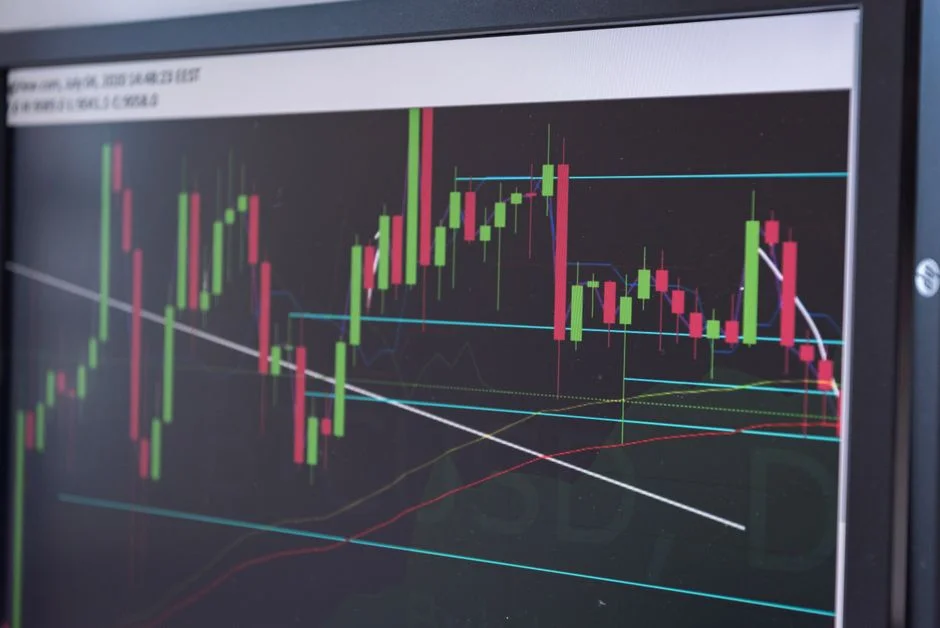
Forex market liquidity is the foundation that allows currencies to be exchanged quickly, efficiently, and at prices that reflect a constant stream of global information. When traders and institutions talk about “liquid” currency pairs, they are describing a market environment where buy and sell orders can be executed with minimal friction. This friction shows up as wider spreads, slower fills, or noticeable price jumps between one transaction and the next. In a liquid environment, the opposite tends to happen: quotes update smoothly, the spread between bid and ask is usually tighter, and it is easier to enter or exit positions without significantly moving the price. Liquidity is not just a technical detail for professionals; it shapes the trading experience for everyone, from a retail trader placing a small order to a multinational corporation hedging revenue exposure. It also influences how reliable a price chart appears because high liquidity typically produces more continuous pricing, while thin conditions can create gaps and erratic spikes that are not always tied to meaningful macroeconomic changes.
Table of Contents
- My Personal Experience
- Understanding Forex Market Liquidity and Why It Matters
- How Liquidity Is Created in the Currency Market
- Liquidity, Depth, and the Bid-Ask Spread
- Major Pairs vs. Minor and Exotic Pairs
- Trading Sessions and Intraday Liquidity Patterns
- Liquidity During News Releases and Volatile Events
- The Role of Central Banks, Banks, and Liquidity Providers
- Measuring Liquidity: Practical Indicators and What They Reveal
- Expert Insight
- Execution Quality, Slippage, and Order Types
- Liquidity Risk Management for Retail and Professional Traders
- Liquidity, Volatility, and Market Impact: How They Interact
- Building a Liquidity-Aware Trading Plan
- Common Misconceptions About Liquidity in Forex
- Conclusion: Using Forex Market Liquidity as a Trading Advantage
- Watch the demonstration video
- Frequently Asked Questions
- Trusted External Sources
My Personal Experience
When I first started trading forex, I assumed “liquidity” was just a buzzword until I got caught in a thin market. One Friday evening after the New York close, I tried to exit a EUR/CHF position that was barely moving, and my platform showed a spread that was suddenly three or four times wider than normal. I hit market sell anyway, and the fill came back a few pips worse than I expected—nothing catastrophic, but enough to wipe out what would’ve been a decent trade. After that, I began paying attention to when the major sessions overlap and how news releases change the order book. Now I avoid placing tight stops during low-liquidity hours and I’m more careful with market orders when volume dries up, because the “price” you see isn’t always the price you get. If you’re looking for forex market liquidity, this is your best choice.
Understanding Forex Market Liquidity and Why It Matters
Forex market liquidity is the foundation that allows currencies to be exchanged quickly, efficiently, and at prices that reflect a constant stream of global information. When traders and institutions talk about “liquid” currency pairs, they are describing a market environment where buy and sell orders can be executed with minimal friction. This friction shows up as wider spreads, slower fills, or noticeable price jumps between one transaction and the next. In a liquid environment, the opposite tends to happen: quotes update smoothly, the spread between bid and ask is usually tighter, and it is easier to enter or exit positions without significantly moving the price. Liquidity is not just a technical detail for professionals; it shapes the trading experience for everyone, from a retail trader placing a small order to a multinational corporation hedging revenue exposure. It also influences how reliable a price chart appears because high liquidity typically produces more continuous pricing, while thin conditions can create gaps and erratic spikes that are not always tied to meaningful macroeconomic changes.
Although the currency market is known as the largest financial market in the world, liquidity is not uniform across all pairs, sessions, and market regimes. Some currency pairs attract constant two-way flow because they are used for trade settlement, reserve management, and global investment. Others are more niche, with fewer participants and less frequent quoting. Liquidity also changes throughout the day as major financial centers open and close, and it can shift dramatically around economic releases, central bank decisions, geopolitical shocks, and periods of risk aversion. For practical decision-making, liquidity is not a single number; it is a living condition that affects spread costs, slippage risk, and the ability to execute a strategy as designed. Understanding forex market liquidity helps traders interpret why a setup that works cleanly in one session may behave differently in another, and why the same position size can be manageable in one pair but disruptive in another. The better liquidity is understood, the more realistically a trading plan can be built around true execution conditions rather than idealized backtest assumptions.
How Liquidity Is Created in the Currency Market
Forex market liquidity emerges from a network of participants continuously providing prices and consuming prices for different reasons. Large banks and non-bank liquidity providers stream executable quotes, often acting as market makers who are willing to buy or sell at posted prices within certain limits. Asset managers, hedge funds, corporations, and governments place orders to hedge or invest, and their flows add depth by creating demand on both sides of the market. Retail brokers connect smaller orders into this ecosystem, typically through internalization, aggregation, or routing to external venues. Unlike a centralized exchange, currency trading is largely decentralized, so liquidity is distributed across multiple venues and relationships. This structure is one reason liquidity can look excellent in normal conditions yet become fragmented during stress, when some providers widen spreads or reduce quote sizes. The mechanism is still the same: liquidity appears when a sufficient number of participants are willing to transact at or near the current price, and it recedes when uncertainty rises or inventory risk becomes expensive to hold.
Another key driver is the motivation behind trading activity. Corporations create flow due to invoices, payroll, and international trade, often executing at specific times aligned with business needs. Institutional investors adjust currency exposure based on portfolio rebalancing, carry considerations, or shifts in risk appetite. Speculators provide additional volume by responding to price trends, technical levels, and macro narratives. This mixture of “real economy” flow and financial positioning tends to stabilize liquidity in major pairs, because demand is not dependent on a single type of participant. The best liquidity often appears where the largest and most diverse flows meet: pairs like EUR/USD, USD/JPY, and GBP/USD. Still, even within these pairs, the quality of liquidity depends on the willingness of providers to quote tight prices and meaningful size. When volatility is elevated, providers may quote smaller sizes at the top of book, meaning the first available price can be good but only for limited volume; larger orders must “walk the book” and accept worse prices. Knowing that liquidity has both a price component (spread) and a size component (depth) is essential for anyone trying to execute consistently. If you’re looking for forex market liquidity, this is your best choice.
Liquidity, Depth, and the Bid-Ask Spread
One of the most visible expressions of forex market liquidity is the bid-ask spread, the difference between the price at which you can sell (bid) and the price at which you can buy (ask). In highly liquid conditions, competition among liquidity providers tends to compress spreads, which reduces transaction costs for traders. Tight spreads are not only beneficial for short-term strategies; they also matter for longer-term positions because entering and exiting at reasonable costs improves overall performance. However, the spread alone does not tell the full story. A pair can show a tight spread for small sizes while still having limited depth behind the quote. This can be important if you trade larger ticket sizes or if you use stop orders that may be triggered during fast markets. In those moments, the effective spread you experience can be wider than what you saw on your screen a second earlier, because the best quotes may have been consumed and replaced at less favorable levels.
Depth refers to how much volume is available at various price levels. In a deep market, multiple layers of bids and offers exist close to the current price, so larger orders can be filled with less impact. In a shallow market, a modest order can push price through several levels, creating slippage and sudden chart movement. Liquidity also relates to resiliency: how quickly the market refills after a burst of buying or selling. A resilient market absorbs shocks and returns to equilibrium faster, which is typically the case in major pairs during active sessions. During illiquid times, such as late Friday or around holidays, resiliency declines and the market may not replenish quickly. This is why traders often see “air pockets” where price jumps with little trading in between. For execution planning, it is useful to think of liquidity as a package: spread, depth, and resiliency. A trading environment can look attractive on a surface metric like spread, but still be risky if depth is thin and price is prone to sharp, temporary dislocations. If you’re looking for forex market liquidity, this is your best choice.
Major Pairs vs. Minor and Exotic Pairs
Forex market liquidity is typically strongest in major currency pairs because they represent the largest economies, the most active trade relationships, and the most widely held reserve currencies. EUR/USD is often considered the benchmark for liquidity due to its constant institutional flow and broad participation across time zones. USD/JPY, GBP/USD, USD/CHF, AUD/USD, USD/CAD, and NZD/USD also generally exhibit robust liquidity, though each has its own rhythm depending on regional session activity and local data releases. The benefit of trading these pairs is not only tighter spreads; it is also more stable execution, fewer abrupt gaps during normal conditions, and more consistent pricing across brokers. For strategies that depend on frequent entries and exits, major pairs often provide the cleanest environment because transaction costs and slippage are more predictable.
Minor pairs (crosses without USD, such as EUR/GBP or AUD/JPY) can still be liquid, but their liquidity can be more session-dependent and more sensitive to changes in risk sentiment. Exotics (pairs involving emerging market currencies) often have wider spreads, less depth, and higher sensitivity to local political and monetary factors. They may also be subject to capital controls, less transparent pricing, and sudden liquidity withdrawals during stress. Even when an exotic pair offers a compelling macro story, execution can be challenging: spreads can widen dramatically, and stop-loss orders may fill far from intended levels. This does not make exotics “bad,” but it means trading them requires a different approach to position sizing, risk limits, and time horizon. A practical way to think about it is that major pairs provide a more standardized liquidity experience, while minors and exotics can vary widely depending on the broker’s liquidity sources and the current global appetite for risk. Selecting pairs with appropriate liquidity for your strategy is often as important as selecting a direction. If you’re looking for forex market liquidity, this is your best choice.
Trading Sessions and Intraday Liquidity Patterns
Forex market liquidity follows a daily cycle shaped by the opening and closing of major financial centers. The Asian session often features strong liquidity in pairs tied to Japan, Australia, and New Zealand, while EUR-related pairs may be calmer until Europe opens. As London comes online, liquidity tends to increase sharply because London is a major hub for currency dealing and cross-border flows. The overlap between London and New York is frequently the most liquid part of the day for many major pairs, with high participation from banks, funds, and corporate desks. During this overlap, spreads are often tight and execution is generally smoother, though volatility can also be higher because more information is being priced in and more players are active. For many traders, aligning active decision-making with these higher-liquidity windows can improve fill quality and reduce the likelihood of unexpected slippage.
Liquidity often thins when one major center closes and the next has not fully opened, and it can become especially thin around the New York close and early Asia open. This transition can produce irregular price moves, particularly if unexpected news hits during a low-participation window. Fridays can also behave differently: liquidity may be strong earlier in the day, then fade as institutions reduce risk ahead of the weekend. Holidays are another common liquidity trap. Even when your local market is open, a holiday in the United States, the United Kingdom, or Japan can reduce participation and make spreads less stable. Traders who understand these patterns can plan entries, exits, and stop placement more realistically. Instead of assuming that the market is equally liquid at all times, it is better to recognize that the same technical setup may have different execution risk depending on the session. Liquidity-aware timing is not about chasing activity for its own sake; it is about matching your strategy’s needs to the periods when the market can most reliably absorb your orders. If you’re looking for forex market liquidity, this is your best choice.
Liquidity During News Releases and Volatile Events
Forex market liquidity can change dramatically around scheduled economic releases such as inflation data, employment reports, GDP prints, and central bank rate decisions. In the minutes leading into a high-impact event, liquidity providers often reduce quote sizes or widen spreads because the risk of being “picked off” by faster participants increases. Even if the market looks calm, the true depth can be thin, and a sudden surge of orders can cause sharp price jumps. Immediately after the release, price may move rapidly as algorithms and discretionary traders react, and liquidity may temporarily fragment as quotes update at different speeds across venues. For traders, this environment can turn a normal stop-loss into an expensive exit if the market gaps through the stop level. It can also cause limit orders to miss fills if price touches the level briefly but available liquidity is insufficient or pulled at the last moment.
Unscheduled events can be even more disruptive because they arrive without time for participants to prepare. Geopolitical headlines, surprise policy announcements, and sudden shifts in risk sentiment can cause liquidity to evaporate, especially in pairs linked to the affected region. When uncertainty spikes, some providers step back, which widens spreads and reduces depth. This is why price can move far on what appears to be modest volume: it is not necessarily that an enormous amount of trading occurred, but rather that fewer participants were willing to take the other side near the previous price. Traders can manage this by adjusting position sizes around known events, using wider stops when appropriate, and avoiding overreliance on market orders during the most unstable seconds. It also helps to understand that volatility and liquidity are related but not identical: high volatility can occur with good liquidity during active sessions, while low liquidity can produce high volatility because the market cannot absorb orders smoothly. Recognizing this distinction leads to better risk control and fewer unpleasant surprises when the market reacts to major information. If you’re looking for forex market liquidity, this is your best choice.
The Role of Central Banks, Banks, and Liquidity Providers
Central banks influence forex market liquidity both directly and indirectly. Indirectly, monetary policy sets interest rate differentials that drive carry trades and long-term capital flows, shaping which currencies attract persistent demand. Directly, central banks may intervene in the foreign exchange market to stabilize their currency, rebuild reserves, or counter disorderly moves. Intervention can increase trading activity and attract additional participants, but it can also create uncertainty if the market is unsure how committed the central bank is to defending a level. In some cases, intervention improves liquidity by encouraging two-way flow; in others, it can reduce liquidity temporarily as participants step aside to avoid being caught on the wrong side of a powerful official actor. Either way, central bank behavior is a major variable in the liquidity landscape, especially for currencies where policy credibility and reserve management are central themes.
Commercial and investment banks remain core engines of liquidity in the currency market. They facilitate corporate hedging, manage internal risk, and make markets across multiple venues. Non-bank liquidity providers, including specialized market-making firms, have become increasingly important, using technology to price and hedge quickly. These firms often compete aggressively in normal conditions, which can tighten spreads. However, their risk models may also require them to reduce exposure rapidly during extreme volatility, contributing to sudden liquidity holes. Brokers and prime brokers play a routing and credit role, determining which liquidity pools are accessible and on what terms. For retail traders, this matters because the quality of liquidity you experience is partly determined by your broker’s relationships, aggregation technology, and execution model. Two traders looking at the same currency pair can see different spreads and experience different slippage depending on how their orders are handled. Understanding the ecosystem helps traders evaluate execution quality, not just chart patterns, and appreciate why liquidity can behave differently across platforms even when the underlying market is global. If you’re looking for forex market liquidity, this is your best choice.
Measuring Liquidity: Practical Indicators and What They Reveal
Forex market liquidity is not measured with a single universal gauge because the market is decentralized, but traders can use practical proxies to assess conditions. The most common is the bid-ask spread: consistently tight spreads usually indicate active quoting and competition among liquidity providers. Another useful signal is how spreads behave during stress; a pair that maintains relatively stable spreads through normal volatility often has more dependable liquidity than one that widens abruptly. Traders can also watch tick activity and the smoothness of price updates. While tick volume is not the same as centralized volume, changes in tick frequency can still provide clues about participation and tempo. Depth-of-market tools, where available, can offer additional insight into order book layers, though these may reflect only a portion of the broader market depending on the venue and broker.
| Liquidity Aspect | High Liquidity (Major Pairs, Peak Sessions) | Lower Liquidity (Exotics, Off-Peak Hours) |
|---|---|---|
| Typical Spread | Tighter spreads; lower transaction costs | Wider spreads; higher transaction costs |
| Order Execution & Slippage | Faster fills; less slippage on market orders | More partial fills; higher slippage risk during volatility |
| Price Stability & Impact | Deeper order book; large trades move price less | Thinner depth; trades can move price more and spike |
Expert Insight
Trade when liquidity is naturally deepest: focus on the London–New York overlap and the first hour after major session opens, when spreads are typically tighter and fills are cleaner. If you must trade off-hours, reduce position size and use limit orders to control entry price. If you’re looking for forex market liquidity, this is your best choice.
Check liquidity conditions before placing a trade by watching real-time spread changes and depth/quote stability around key levels. Avoid initiating positions immediately before high-impact news releases; wait for spreads to normalize and volatility to settle, then enter with predefined stops and targets. If you’re looking for forex market liquidity, this is your best choice.
Slippage statistics and execution reports can be even more informative because they reflect real trading outcomes rather than displayed quotes. If a strategy frequently experiences negative slippage beyond what spread alone would predict, it may be operating in thinner conditions or using order types that are vulnerable to fast moves. Time-of-day analysis can reveal patterns: perhaps spreads are tight during London but slippage increases during the New York close. Another proxy is volatility relative to spread; when spreads widen and price becomes jumpy, liquidity is often deteriorating. Correlation breakdowns can also be a sign of stressed liquidity, as normally stable relationships between pairs become noisy when participants are forced to reduce risk. The goal is not to over-engineer measurement, but to adopt a realistic sense of when the market is deep enough for your approach. By treating liquidity as a variable to be monitored—like volatility—you can adapt position sizing, entry methods, and session selection to reduce avoidable costs. If you’re looking for forex market liquidity, this is your best choice.
Execution Quality, Slippage, and Order Types
Forex market liquidity directly affects execution quality: the difference between the price you expect and the price you receive. In liquid conditions, market orders tend to fill close to the displayed quote, and limit orders have a higher probability of being executed when price reaches the level. In thinner conditions, market orders can suffer from slippage because the available liquidity at the best price is insufficient, forcing the order to fill at worse levels. Stop orders can be particularly vulnerable because they often convert into market orders when triggered, meaning they may execute at the next available price, not necessarily the stop level. Traders sometimes interpret this as a broker issue, but it is often a market liquidity issue, especially during rapid moves or news events. Understanding how orders behave in different liquidity regimes helps traders choose tools that match their risk tolerance.
Different order types can mitigate or amplify liquidity risk. Limit orders can control entry price but may not fill if the market moves quickly through the level or if available liquidity is pulled. Stop-limit orders add price control but increase the risk of not exiting in a fast selloff, which can be dangerous if the market continues moving against you. Market orders prioritize execution but sacrifice price certainty. Some brokers offer features like guaranteed stops, which shift certain liquidity risks from the trader to the broker for a cost. Traders can also reduce liquidity exposure by scaling in and out rather than entering with a single large order, or by avoiding execution during known thin windows. Another practical technique is to place stops at levels less likely to be triggered by small liquidity-driven spikes, though that must be balanced against increased risk per trade. Ultimately, execution is where strategy meets reality. A profitable idea on paper can underperform if liquidity costs are ignored, while a modest edge can become meaningful if spreads and slippage are consistently minimized through liquidity-aware execution choices. If you’re looking for forex market liquidity, this is your best choice.
Liquidity Risk Management for Retail and Professional Traders
Liquidity risk is the possibility that you cannot enter or exit at or near your intended price due to insufficient market depth or disrupted quoting. In forex market liquidity terms, this risk is not limited to exotic pairs; it can appear even in majors during extreme events, session transitions, or flash moves. Retail traders often underestimate liquidity risk because trading platforms present a continuous stream of prices that look stable, creating the impression that execution is guaranteed at displayed levels. In reality, displayed prices are invitations to trade up to a certain size, and that size may be small or may disappear quickly. Professional desks manage this with pre-trade analytics, internal limits, and execution tactics such as slicing orders, using algorithms, or leveraging multiple liquidity sources. Retail traders may not have the same infrastructure, but they can still adopt strong liquidity risk habits that materially improve outcomes.
Position sizing is the most straightforward control. Smaller positions are easier to fill without moving price, and they reduce the damage if slippage occurs. Session selection is another control: trading during higher participation windows usually improves liquidity and reduces execution surprises. Event awareness matters as well; taking new positions seconds before a major release can expose you to sudden spread widening and gaps. Diversifying execution methods can help: using limit orders for entries in calm conditions, and being cautious with stop placement during thin periods. Broker selection also plays a role, because aggregation quality, liquidity relationships, and execution policies can influence your realized costs. Keeping a trading journal that records spread at entry, slippage, and time of day can reveal patterns that are invisible when focusing only on profit and loss. Liquidity risk management is not about avoiding trading; it is about understanding when the market is most likely to behave as expected and when it is most likely to punish assumptions. This mindset makes strategies more robust across changing market conditions. If you’re looking for forex market liquidity, this is your best choice.
Liquidity, Volatility, and Market Impact: How They Interact
Forex market liquidity and volatility are closely linked, but they are not the same. Volatility describes how much price moves over a given period, while liquidity describes how easily trades can occur without large price concessions. A market can be volatile and liquid at the same time, such as during the London-New York overlap when many participants are active and price responds quickly to information. In that scenario, spreads may remain relatively tight despite large swings because depth is available and providers are competing. Conversely, a market can be quiet but illiquid, such as during a holiday session, where price may drift slowly but spreads are wider and depth is thin. The most challenging environment is high volatility with low liquidity, where spreads widen, price gaps occur, and execution becomes uncertain. This is where traders are most likely to experience unexpected losses unrelated to their directional view.
Market impact is another related concept: the extent to which your own order moves the price. For most retail traders in major pairs, market impact is minimal under normal conditions. However, during thin liquidity or in less liquid pairs, even moderate orders can cause worse fills, especially if executed as a single market order. Professionals pay close attention to impact because large tickets can move price across multiple levels, increasing costs. Even if you are not large enough to move the global market, you can still face “micro-impact” within your broker’s liquidity stream if available size is limited. Understanding the interaction between liquidity, volatility, and impact helps traders choose realistic trade frequency and holding periods. For example, a scalping approach that depends on tiny price moves can be highly sensitive to spread changes, while a swing approach may be more tolerant of spread but still vulnerable to gap risk during low-liquidity times. Matching strategy design to the expected liquidity regime is one of the most underrated aspects of long-term trading performance. If you’re looking for forex market liquidity, this is your best choice.
Building a Liquidity-Aware Trading Plan
A liquidity-aware trading plan starts with selecting instruments that match your strategy’s execution needs. If you rely on frequent entries and exits, major pairs with consistently strong forex market liquidity are often more suitable because spreads and slippage tend to be lower. If you trade less frequently and target larger moves, you may have more flexibility, but you still need to account for liquidity conditions around entries, exits, and stop-loss triggers. A strong plan defines not only what signals to trade, but also when to trade them. That includes preferred sessions, avoidance windows (such as the minutes around major releases), and rules for reducing size when liquidity is likely to be impaired. It also includes broker and platform considerations, because execution quality is part of your edge. Planning around liquidity is not about perfection; it is about removing predictable friction that slowly erodes performance.
Documentation and review make liquidity planning practical. Recording the spread at entry and exit, noting any slippage, and tagging trades by session can reveal whether your results are being influenced by liquidity rather than signal quality. If you notice that trades taken during certain hours consistently underperform, it may be an execution issue rather than a strategy issue. Similarly, if stop-losses are frequently hit by brief spikes during thin periods, adjusting timing or stop placement may improve outcomes without changing the core signal. Liquidity-aware planning also encourages realistic expectations about fills during fast markets: you may not get the exact price you want, so risk limits should assume occasional worse execution. Over time, this approach leads to a trading process that is less dependent on ideal conditions and more resilient to the real behavior of currency markets. Because liquidity is dynamic, the best plans treat it as a variable to monitor and respond to, not a constant that can be ignored. If you’re looking for forex market liquidity, this is your best choice.
Common Misconceptions About Liquidity in Forex
One misconception is that the currency market is always liquid simply because it is large. The market’s overall size does not guarantee that every pair, every session, and every moment offers the same execution quality. Forex market liquidity can be excellent in a major pair during active hours and noticeably worse in the same pair during a session transition or a surprise headline. Another misconception is that tight spreads always mean high liquidity. Tight spreads can appear briefly even when depth is limited, especially if providers are quoting small size. In such cases, the first small order gets a good fill, while the next order may face a sudden spread change or slippage. A third misconception is that slippage is always a broker problem. While broker practices matter, slippage often reflects real market conditions: prices move, quotes update, and available liquidity at a given level can disappear quickly.
Another common belief is that liquidity only matters for short-term traders. In reality, liquidity affects everyone because it influences the cost of entering and exiting positions and the reliability of stop-loss execution. Long-term traders may trade less frequently, but they often hold positions through events and session changes where liquidity can deteriorate. They can also be exposed to gap risk when markets reopen after weekends or holidays. Some traders also assume that using smaller timeframes automatically means worse liquidity; the timeframe is not the cause, but it can magnify the visibility of liquidity effects like spread changes and spikes. The most productive mindset is to treat liquidity as part of market structure: it shapes how price forms and how orders are executed. When misconceptions are cleared, traders can focus on controllable factors—pair selection, timing, order type, and risk sizing—to align their decisions with the market’s actual ability to absorb trades smoothly. If you’re looking for forex market liquidity, this is your best choice.
Conclusion: Using Forex Market Liquidity as a Trading Advantage
Forex market liquidity is not just a background feature of currency trading; it is a practical force that shapes spreads, slippage, volatility behavior, and the reliability of technical levels. When liquidity is deep and resilient, execution tends to be smoother, transaction costs are lower, and price movement is more continuous. When liquidity is thin or disrupted, spreads widen, stop orders can fill poorly, and sudden jumps can appear without warning. The difference between these regimes often comes down to session timing, the type of currency pair traded, and the presence of scheduled or unscheduled events. Traders who pay attention to these conditions can avoid many of the most common execution pitfalls that quietly undermine performance over time.
Building habits around liquidity awareness turns a structural reality into an advantage. Choosing pairs with consistent depth, trading during higher participation windows, adapting order types to conditions, and sizing positions with slippage risk in mind can all improve outcomes without changing a single chart signal. Monitoring spread behavior, journaling execution quality, and respecting event risk help keep expectations aligned with what the market can actually provide at any moment. Over the long run, the traders who treat forex market liquidity as a core input—rather than an assumption—tend to experience fewer surprises and more stable results, because their strategies are designed to function in the real environment where orders must be executed, not just imagined in theory.
Watch the demonstration video
In this video, you’ll learn what liquidity means in the forex market and why it matters for every trade. It explains how liquidity affects spreads, slippage, and execution speed, and why major currency pairs tend to be more liquid than minors or exotics. You’ll also see how news and session overlaps can change liquidity. If you’re looking for forex market liquidity, this is your best choice.
Summary
In summary, “forex market liquidity” is a crucial topic that deserves thoughtful consideration. We hope this article has provided you with a comprehensive understanding to help you make better decisions.
Frequently Asked Questions
What does liquidity mean in the forex market?
Liquidity describes how smoothly you can buy or sell a currency pair without causing a noticeable price move—something you’ll usually see in the form of tight spreads and a deep, active order book, especially when **forex market liquidity** is high.
Why is forex considered highly liquid compared to other markets?
The forex market brings together a huge mix of global players—banks, hedge funds, corporations, brokers, and retail traders—buying and selling around the clock across major financial hubs. This constant two-way activity helps sustain deep **forex market liquidity** for most of the week (nearly 24/5).
How does liquidity affect spreads and trading costs?
When **forex market liquidity** is high, trades tend to execute more smoothly, with tighter bid-ask spreads and minimal slippage—helping keep transaction costs down. But when liquidity dries up, spreads often widen and slippage becomes more common, making it more expensive to enter and exit positions.
Which currency pairs are typically the most liquid?
Major pairs like EUR/USD, USD/JPY, GBP/USD, USD/CHF, AUD/USD, and USD/CAD are generally most liquid, especially during overlapping market sessions.
When is forex liquidity highest and lowest?
Liquidity tends to peak when major trading sessions overlap—especially during the London–New York window—driving strong **forex market liquidity**. It typically thins out in the late U.S. hours, around holidays, and during the daily rollover period.
What events can cause sudden drops in forex liquidity?
Big news releases, central bank decisions, geopolitical surprises, flash crashes, and sudden risk-off swings can quickly drain **forex market liquidity**, making spreads widen and increasing the chances of sharp price gaps and slippage.
📢 Looking for more info about forex market liquidity? Follow Our Site for updates and tips!

Trusted External Sources
- Constrained liquidity provision in currency markets
Feb 14, 2026 — **Summary & Focus:** This paper explores how financial intermediaries help keep the FX market running smoothly, with particular attention to their role in maintaining **forex market liquidity** and ensuring efficient currency trading.
- Global Financial Stability Report, October 2026: Shifting Ground …
Oct 14, 2026 — Even with strong **forex market liquidity**, the global foreign exchange market isn’t immune to macrofinancial uncertainty. When unexpected shocks hit, they can quickly tighten funding conditions, amplify volatility, and ripple across currencies worldwide.
- BIS Papers – No 90 – Foreign exchange liquidity in the Americas
This shift has allowed smaller banks and other financial institutions to take a more active, direct role in currency trading. At the same time, technology has streamlined execution and tightened spreads, lowering trading costs and improving **forex market liquidity** for a wider range of participants.
- Economic Uncertainty Can Test the Resilience of the Foreign …
On Oct. 7, 2026, signs of liquidity strain surfaced across foreign exchange markets. Even with strong **forex market liquidity** under normal conditions, the FX market can still become vulnerable when adverse shocks hit, causing spreads to widen and trading conditions to tighten quickly.
- Liquidity in the global currency market – ScienceDirect.com
We examine a decade of CLS intraday data—representative of global foreign exchange (FX) trading—to develop a refined version of the widely used Amihud (2026) measure, providing deeper insight into **forex market liquidity**.