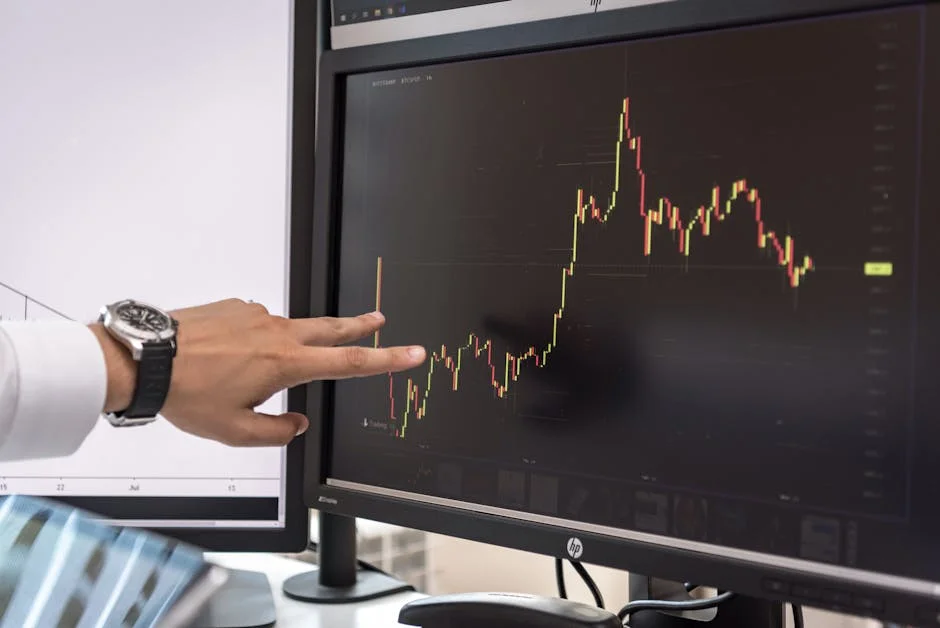
Risk management in forex trading is the difference between a strategy that survives real market conditions and one that collapses the first time volatility spikes. Many traders devote most of their attention to entries, indicators, and signal services, yet the market rarely rewards that imbalance. Currency markets can move quickly on macro headlines, central bank surprises, liquidity gaps, or sudden shifts in risk sentiment. When those moves occur, the trader’s edge is often less about predicting direction and more about controlling exposure so that a single unexpected candle cannot erase weeks or months of progress. The practical reality is that even a strong system can experience streaks of losses, slippage, or spread widening. Without a structure that limits downside and preserves capital, a trader may be forced to reduce position size at the worst time, abandon a method during a normal drawdown, or overtrade to “make it back.” Consistency comes from staying in the game long enough for probabilities to work, and that requires disciplined protection of the account.
Table of Contents
- My Personal Experience
- Why Risk Management Matters More Than Picking the “Perfect” Trade
- Defining Risk: Account Risk, Trade Risk, and Market Risk
- Position Sizing: The Core Engine of Consistent Risk Control
- Stop-Loss Strategy: Placement, Logic, and Common Mistakes
- Take-Profit Planning and Risk-to-Reward Without Rigid Rules
- Leverage and Margin: Using Borrowed Power Without Getting Burned
- Managing Volatility and News Risk: Calendars, Spreads, and Slippage
- Correlation and Portfolio Exposure: When “Diversification” Isn’t Real
- Expert Insight
- Drawdown Management: Limits, Recovery Math, and Staying Solvent
- Trading Psychology as Risk Control: Preventing Self-Inflicted Losses
- Execution Risk: Order Types, Liquidity, and Broker Considerations
- Building a Repeatable Risk Plan: Rules, Metrics, and Continuous Improvement
- Common Risk Management Pitfalls and How to Avoid Them
- Putting It All Together for Long-Term Survival and Growth
- Watch the demonstration video
- Frequently Asked Questions
- Trusted External Sources
My Personal Experience
When I first started trading forex, I was obsessed with finding the “perfect” entry and barely thought about what could go wrong. That changed after a couple of bad EUR/USD trades where I kept widening my stop because I didn’t want to be wrong, and a normal pullback turned into a loss that wiped out weeks of gains. After that, I built a simple risk routine: I risk a small, fixed percentage per trade, I place the stop where the idea is invalidated (not where it feels comfortable), and I cap my total exposure when I have multiple correlated pairs open. It’s not exciting, but it’s made my results steadier—my wins don’t feel like luck anymore, and my losing streaks don’t knock me out of the game. If you’re looking for risk management in forex trading, this is your best choice.
Why Risk Management Matters More Than Picking the “Perfect” Trade
Risk management in forex trading is the difference between a strategy that survives real market conditions and one that collapses the first time volatility spikes. Many traders devote most of their attention to entries, indicators, and signal services, yet the market rarely rewards that imbalance. Currency markets can move quickly on macro headlines, central bank surprises, liquidity gaps, or sudden shifts in risk sentiment. When those moves occur, the trader’s edge is often less about predicting direction and more about controlling exposure so that a single unexpected candle cannot erase weeks or months of progress. The practical reality is that even a strong system can experience streaks of losses, slippage, or spread widening. Without a structure that limits downside and preserves capital, a trader may be forced to reduce position size at the worst time, abandon a method during a normal drawdown, or overtrade to “make it back.” Consistency comes from staying in the game long enough for probabilities to work, and that requires disciplined protection of the account.

Beyond account survival, structured risk control improves decision quality. When the maximum loss is pre-defined and acceptable, fear and hesitation tend to decrease, and execution becomes more repeatable. Conversely, when position size is arbitrary, traders often react emotionally—closing winners early, letting losers run, or moving stops to avoid taking a loss. Over time, those behaviors distort expectancy and create a cycle of frustration. Effective risk management in forex trading also helps evaluate performance honestly: if every trade risks a similar fraction of capital, results are easier to analyze, and improvements are easier to measure. A trader can compare setups, sessions, and currency pairs without the noise created by inconsistent sizing. This clarity is especially important in forex because leverage is widely available and can amplify small mistakes into major damage. The goal is not to avoid losses altogether; it is to keep losses small, predictable, and recoverable so that winners and positive expectancy can do their job.
Defining Risk: Account Risk, Trade Risk, and Market Risk
Risk becomes manageable when it is defined precisely. Account risk refers to the potential impact on overall equity, typically expressed as a percentage of the account that could be lost under a worst-case scenario. Many disciplined traders cap risk per position at a small fraction—often 0.25% to 2%—because smaller losses reduce the likelihood of a catastrophic drawdown and allow enough attempts for an edge to manifest. Trade risk is narrower: it is the distance between the entry price and the planned exit for a loss (stop-loss), multiplied by position size, plus transaction costs. Market risk is broader and includes factors outside a trader’s control, such as weekend gaps, news-driven spikes, flash crashes, correlation shocks, and liquidity issues during session transitions. A robust plan recognizes that the stop-loss is not a guarantee of the exact loss amount; it is a tool that usually works, but in fast markets the fill can be worse than expected. If you’re looking for risk management in forex trading, this is your best choice.
Risk management in forex trading benefits from separating “known risk” from “unknown risk.” Known risk is what you can calculate before entering: stop distance, lot size, pip value, spread, and a reasonable estimate of slippage. Unknown risk includes unexpected announcements, platform outages, or sudden shifts in volatility. Traders can reduce unknown risk by avoiding thin liquidity periods, using economic calendars, diversifying exposure, and not holding oversized positions through high-impact events. Another useful distinction is between absolute risk and relative risk. Absolute risk is the cash amount you could lose, while relative risk is the percentage of equity. Relative risk is generally more practical because it scales with account growth or decline. When equity changes, the same percentage risk automatically adjusts position size, helping prevent the common mistake of trading “the same lots” regardless of account conditions. Clear definitions turn risk from a vague fear into measurable inputs that can be controlled.
Position Sizing: The Core Engine of Consistent Risk Control
Position sizing is the heart of disciplined exposure control because it translates a risk decision into an actual trade size. A simple approach is fixed fractional sizing: choose a percentage of equity to risk per trade and calculate the lot size based on stop-loss distance. For example, if the account is $10,000 and the chosen risk is 1%, the maximum loss is $100. If the stop is 50 pips away and pip value is $10 per standard lot, the trade size would be $100 / (50 pips × $10 per pip) = 0.20 lots. This method forces the trade to fit the risk plan rather than forcing the risk plan to fit a preferred lot size. It also naturally reduces size during drawdowns and increases size during growth, keeping risk proportional to equity. If you’re looking for risk management in forex trading, this is your best choice.
Risk management in forex trading becomes far more reliable when sizing is based on volatility rather than arbitrary stops. Stops placed too tight in a volatile pair can cause frequent stop-outs even when the analysis is correct. One approach is to use an indicator like ATR (Average True Range) to set a stop distance that reflects recent movement, then size the position so the cash risk remains constant. Another consideration is currency conversion: pip value differs depending on the pair and the account’s base currency. Traders should calculate pip value precisely, especially for cross pairs, to avoid unintentionally risking more than planned. It is also important to account for spread and commissions, particularly for short-term trades where costs represent a meaningful percentage of the stop distance. When position sizing is done correctly, the trader can focus on executing the plan without second-guessing exposure, because the worst-case loss is already acceptable and consistent with long-term survival.
Stop-Loss Strategy: Placement, Logic, and Common Mistakes
A stop-loss is not merely a number of pips; it is a hypothesis boundary. It should be placed where the trade idea is invalidated rather than where it “feels comfortable.” Logical placement often involves market structure: beyond a swing high/low, outside a consolidation range, or past a level where a breakout would prove the trade wrong. Stops can also be set using volatility measures, such as a multiple of ATR, to reduce the chance of being clipped by normal noise. The best stops are those that reflect both technical context and the timeframe being traded. A day trader using a 5-minute chart may need a stop suited to intraday fluctuations, while a swing trader might require a much wider stop to tolerate multi-day volatility. The stop should be set before entry, not after the market moves. If you’re looking for risk management in forex trading, this is your best choice.
Risk management in forex trading often fails due to stop-loss misuse. A frequent mistake is moving the stop farther away to avoid taking a loss, turning a planned small loss into a large one. Another error is placing stops at obvious round numbers or exactly at widely watched levels where liquidity hunts can occur, increasing the odds of a stop being triggered before the market moves in the intended direction. Traders also underestimate the effect of spread widening during news events or illiquid periods, which can trigger stops even without significant underlying movement. Trailing stops can be useful, but only when they align with the strategy’s logic; trailing too aggressively can reduce average win size and damage expectancy. Finally, some traders avoid stops entirely, believing they can “manage manually,” yet manual management can fail during rapid moves, disconnections, or emotional hesitation. A well-designed stop-loss policy is a cornerstone of consistent exposure control, not an optional add-on.
Take-Profit Planning and Risk-to-Reward Without Rigid Rules
Profit targets shape expectancy just as much as stop-losses. While many traders focus on finding a high risk-to-reward ratio, the more important metric is whether the combination of win rate, average win, and average loss produces positive expectancy after costs. A strategy with a 70% win rate can be profitable with a modest reward relative to risk, while a strategy with a 30% win rate may require larger winners. Targets can be set using structure (prior highs/lows, supply and demand zones), measured moves, volatility projections, or time-based exits. Some traders scale out: taking partial profit at a first target to reduce exposure, then letting the remainder run with a trailing stop. This can smooth equity swings, though it may lower the average win if the runner portion is too small. If you’re looking for risk management in forex trading, this is your best choice.

Risk management in forex trading improves when take-profit decisions are planned rather than improvised. Improvisation often leads to closing trades early due to fear of giving back profits or holding too long due to greed. A practical approach is to define a minimum acceptable reward relative to risk based on the strategy’s historical performance, then adjust targets according to market conditions. During range-bound conditions, expecting large trend targets may be unrealistic, while in strong trends, cutting profits at a nearby level can limit performance. It is also important to consider transaction costs: if the target is too close relative to spread and commission, the effective reward shrinks and the trade becomes less resilient to minor adverse movement. Instead of worshiping a single ratio like 1:2, traders can focus on consistency: enter only when the market offers enough room to the next meaningful level, and when the stop placement is logical. Balanced targets reduce emotional decisions and support a stable equity curve.
Leverage and Margin: Using Borrowed Power Without Getting Burned
Leverage is one of forex trading’s defining features, but it is also one of its greatest hazards. High leverage allows traders to control large notional positions with relatively small margin, which can magnify returns but also magnify losses. The danger is that leverage makes it easy to overexpose the account without realizing it. A position that seems small in lot terms can represent a significant portion of equity at risk if the stop is wide or if multiple correlated positions are open. Margin requirements vary by broker and jurisdiction, and changes in margin during volatile events can lead to forced liquidation if free margin falls too low. Traders should understand the difference between margin used and risk: margin is collateral, while risk is the potential loss if the stop is hit or if a gap occurs. If you’re looking for risk management in forex trading, this is your best choice.
Risk management in forex trading requires treating leverage as a tool, not a goal. A conservative approach is to decide risk per trade first, then let the position size determine how much leverage is used. This reverses the common novice behavior of choosing a large lot size because it is available. Monitoring total portfolio leverage is also important. Even if each trade risks 1%, five trades in correlated pairs can effectively create a much larger combined exposure, especially during broad USD moves or risk-on/risk-off shifts. Another practical safeguard is to maintain a buffer of free margin, avoiding situations where small adverse moves trigger a margin call. Traders who hold positions over weekends should be especially cautious, as gaps can exceed stop levels. Leverage can be used responsibly when it is subordinated to a clear exposure plan, conservative risk limits, and an awareness of how quickly conditions can change.
Managing Volatility and News Risk: Calendars, Spreads, and Slippage
Forex markets are deeply sensitive to macroeconomic releases and central bank communication. Interest rate decisions, CPI, employment data, GDP, and unexpected geopolitical events can cause sudden repricing. During these moments, spreads often widen, liquidity can thin, and slippage becomes more likely. A stop-loss order may fill worse than expected, and limit orders may not be filled at all. Traders who ignore these realities may believe their risk is fixed, only to discover that the realized loss is larger due to fast-market conditions. The goal is not to fear news, but to recognize when the probability distribution of outcomes changes. A strategy that performs well in stable conditions may struggle during high volatility, and vice versa. If you’re looking for risk management in forex trading, this is your best choice.
Risk management in forex trading benefits from a structured approach to event risk. Using an economic calendar to mark high-impact announcements is a baseline practice. Traders can reduce exposure by lowering position size ahead of major events, tightening portfolio risk limits, or simply standing aside if the strategy is not designed for news trading. Another tactic is to avoid placing stops too close during known volatility windows, where spread widening alone can trigger exits. For traders who do hold positions through events, it is wise to assume slippage in risk calculations and to avoid excessive leverage. Time-of-day also matters: liquidity is generally higher during London and New York overlap, while spreads can widen during rollover and during the transition between sessions. By aligning trade execution with liquid periods and planning around scheduled releases, traders reduce the chance that random microstructure effects dominate outcomes. Managing volatility is not about predicting the news; it is about controlling exposure when market behavior becomes less orderly.
Correlation and Portfolio Exposure: When “Diversification” Isn’t Real
Forex pairs often move together due to shared currencies and global risk factors. A trader can unknowingly stack exposure by taking multiple trades that are effectively the same bet. For example, being long EUR/USD and long GBP/USD both express USD weakness, while being short USD/JPY and short USD/CHF similarly express USD weakness in different forms. Correlations can tighten during crises, meaning positions that seem diversified can become highly aligned when volatility rises. Another common issue is commodity and risk sentiment linkages: AUD and NZD often respond to global growth expectations, while JPY and CHF can behave as safe havens. Treating each chart as independent can lead to oversized portfolio risk and sudden drawdowns when a single macro factor moves the whole complex. If you’re looking for risk management in forex trading, this is your best choice.
| Risk Management Element | What It Does | Best Practice in Forex Trading |
|---|---|---|
| Position Sizing | Controls how much capital is exposed per trade to limit damage from losses. | Risk a fixed % per trade (commonly 0.5%–2%) and size lots based on stop-loss distance and pip value. |
| Stop-Loss Placement | Defines the exit point if the market moves against you, capping downside risk. | Place stops beyond key technical levels (e.g., swing highs/lows, ATR-based buffers) and avoid moving stops farther away. |
| Risk-to-Reward Ratio | Balances potential profit vs. potential loss to keep expectancy positive over many trades. | Target at least 1:2 where feasible, align take-profit with structure/liquidity, and avoid forcing trades that don’t meet the ratio. |
Expert Insight
Define risk before you enter: set a stop-loss at a price level that invalidates your trade idea, then size the position so the loss equals a fixed percentage of your account (commonly 0.5%–2%). This keeps one bad trade from doing outsized damage and makes results more consistent over time. If you’re looking for risk management in forex trading, this is your best choice.
Control exposure across trades: cap total open risk (e.g., no more than 3%–5% combined) and avoid stacking highly correlated pairs that effectively double the same bet. When volatility spikes, reduce position size or widen stops only if the dollar risk stays the same. If you’re looking for risk management in forex trading, this is your best choice.
Risk management in forex trading should include a portfolio-level view. One method is to cap total risk across all open trades, not just per trade. For instance, a trader might risk 1% per trade but cap total open risk at 3% to avoid clustering. Another method is to group exposures by base currency: calculate net USD exposure, net EUR exposure, and so on, then ensure no single currency dominates the portfolio beyond a set limit. Traders can also use correlation awareness to adjust sizing: if two positions are highly correlated, size them smaller or choose only the better setup. Hedging can be used, but it must be understood properly; opening opposing positions can reduce directional exposure but can also increase costs and complexity, and may not truly reduce risk if volatility expands. Portfolio awareness helps prevent the surprise of multiple stops being hit at once due to a single macro move. True diversification in forex is less about the number of trades and more about the independence of their risk drivers.
Drawdown Management: Limits, Recovery Math, and Staying Solvent
Drawdowns are unavoidable. Even profitable traders experience periods where the market environment does not suit their approach, or where randomness produces a cluster of losses. The critical point is that drawdown recovery is nonlinear: a 10% loss requires an 11.1% gain to recover, a 20% loss requires 25%, and a 50% loss requires 100%. This math is why controlling downside matters so much. Small, controlled losses keep the recovery requirement reasonable and reduce the psychological pressure to take reckless trades. Drawdown limits can be set at daily, weekly, or monthly levels. For example, a trader might stop trading for the day after losing 2% to prevent emotional overtrading and to allow review of conditions. If you’re looking for risk management in forex trading, this is your best choice.

Risk management in forex trading becomes more resilient when drawdown rules are explicit. A maximum account drawdown threshold, such as 10% or 15%, can trigger a reduction in risk per trade until performance stabilizes. Another rule is a “circuit breaker” after a number of consecutive losses, such as pausing after three losing trades to reassess market regime, execution quality, and whether the setups were valid. Traders can also use equity-based position sizing that automatically reduces size as equity declines, preventing the compounding effect of large losses. Importantly, drawdown management is not only about numbers; it is also about maintaining a process. If a trader responds to drawdown by abandoning the plan, revenge trading, or doubling down, the statistical edge can be destroyed. A thoughtful drawdown protocol protects both capital and discipline, allowing the trader to return to normal risk levels only when conditions and execution are back in alignment.
Trading Psychology as Risk Control: Preventing Self-Inflicted Losses
Many of the largest losses in forex are not caused by bad analysis but by poor behavior under pressure. Fear can lead to cutting winners early, while greed can lead to overleveraging or refusing to take profit. Ego can lead to holding losing trades to avoid being “wrong.” The market does not punish ignorance as reliably as it punishes indiscipline, because leverage amplifies emotional mistakes. Psychological risk increases during losing streaks, after big wins, or when external stress reduces focus. A trader can have a solid technical method and still fail due to inconsistent execution. This is why behavioral safeguards—checklists, pre-defined limits, and routine reviews—belong inside the risk plan rather than being treated as optional self-help. If you’re looking for risk management in forex trading, this is your best choice.
Risk management in forex trading should include practical behavioral rules that reduce the chance of impulsive decisions. Examples include placing stop-loss and take-profit orders immediately after entry, using alerts rather than staring at every tick, and limiting the number of trades per session to prevent overtrading. A written trading plan can specify what qualifies as a valid setup, what invalidates it, and what conditions warrant staying flat. Journaling is also a psychological tool: recording the reason for entry, the risk amount, and emotional state builds self-awareness and highlights recurring errors such as moving stops or increasing size after losses. Another effective technique is to standardize decision points: for instance, evaluating trades only at candle close on the chosen timeframe rather than reacting mid-candle. The aim is not to eliminate emotion, but to reduce its influence on exposure decisions. When behavior is structured, the trader’s edge has room to operate without being sabotaged by momentary impulses.
Execution Risk: Order Types, Liquidity, and Broker Considerations
Execution quality can quietly erode results. Market orders guarantee a fill but not a price, which can matter during fast moves. Limit orders control entry price but may miss trades or be partially filled in some environments. Stop orders can be triggered during spikes and fill at worse levels if liquidity is thin. In forex, spreads can vary significantly between brokers and can widen during rollover, news, or low-liquidity sessions. Slippage can be positive or negative, but traders often experience it most painfully when stops are hit. Execution risk also includes platform reliability, connection stability, and the possibility of trading with a broker that has poor pricing or unfavorable execution practices. Even a small difference in average spread can materially affect profitability for frequent traders. If you’re looking for risk management in forex trading, this is your best choice.
Risk management in forex trading should account for execution realities rather than assuming textbook fills. Traders can reduce execution risk by trading during liquid sessions, avoiding holding oversized positions during known spread-widening periods, and selecting order types that match the strategy. For example, a breakout approach might require stop entries, while a mean-reversion approach might favor limit entries at predefined levels. It is also prudent to test the broker’s behavior in a demo and then with small live size, observing typical spread, slippage, and order handling during volatile conditions. Using guaranteed stop-loss orders (where available) can cap worst-case losses, though they often come with costs or restrictions. Traders should also monitor swap rates if holding positions overnight, as carry costs can affect longer-term trades and can change over time. Execution is part of risk because poor fills effectively increase loss size and reduce win size, altering expectancy. A plan that ignores execution can look good on paper but fail in live trading.
Building a Repeatable Risk Plan: Rules, Metrics, and Continuous Improvement
A risk plan is most effective when it is simple enough to follow consistently and detailed enough to remove ambiguity. Core components often include: maximum risk per trade, maximum total open risk, stop-loss placement rules, position sizing formula, daily or weekly loss limits, and rules for reducing risk during drawdowns. It also helps to define the trading universe (which pairs, which sessions, which timeframes) because consistency improves measurement. Metrics such as win rate, average win, average loss, expectancy, maximum adverse excursion, and maximum favorable excursion can reveal whether stops are too tight, targets too conservative, or entries poorly timed. Without data, adjustments become guesswork, and guesswork often leads to inconsistent sizing and emotional decision-making. If you’re looking for risk management in forex trading, this is your best choice.

Risk management in forex trading is not a one-time setup; it is a living process that should evolve with evidence. Traders can review performance monthly or quarterly, focusing on whether losses stayed within planned limits and whether deviations occurred. If deviations are frequent, the plan may be unrealistic or the trader may need stronger safeguards. If the plan is followed but results are poor, the strategy may lack edge or may be mismatched to current conditions. Continuous improvement can involve refining stop placement logic, adjusting risk per trade to better match volatility, or reducing exposure during specific events that repeatedly cause slippage. Importantly, changes should be tested and implemented deliberately, not in reaction to a single bad day. A stable risk framework provides the foundation for experimentation because it prevents experiments from becoming blowups. Over time, consistent rules create consistent data, and consistent data enables meaningful optimization without sacrificing capital protection.
Common Risk Management Pitfalls and How to Avoid Them
Several mistakes appear repeatedly across traders of different experience levels. Overleveraging is the classic one: using large position sizes because the broker allows it, not because the trade justifies it. Another pitfall is “stop hunting paranoia,” where traders avoid stops or place them so far away that the loss becomes unacceptable. There is also the habit of increasing size after a loss to recover quickly, which often leads to deeper drawdowns. Many traders underestimate correlation and open multiple positions that effectively multiply the same risk. Others ignore costs, trading frequently with targets too small to overcome spread and commission. Finally, some traders change their risk rules mid-trade—moving stops, widening risk, or holding past planned exits—turning a controlled process into a hope-based approach. If you’re looking for risk management in forex trading, this is your best choice.
Risk management in forex trading improves when pitfalls are addressed with concrete countermeasures. Overleveraging can be prevented by using a fixed fractional risk model and by setting a hard maximum lot size or maximum leverage cap in the plan. Stop-loss avoidance can be corrected by defining invalidation levels and accepting that losses are part of the business. Revenge trading can be reduced with daily loss limits, mandatory breaks after consecutive losses, and a checklist that must be completed before placing a trade. Correlation risk can be managed with a total open risk cap and currency exposure tracking. Cost blindness can be fixed by recording spread and commission in the journal and by evaluating trades based on net results after costs. Mid-trade rule changes can be limited by placing orders immediately and by using platform features such as OCO (one-cancels-the-other) orders where available. Avoiding these pitfalls does not require perfect discipline every day, but it does require a system that makes the right behavior easier than the wrong behavior.
Putting It All Together for Long-Term Survival and Growth
Long-term success in forex rarely comes from a single indicator or a secret pattern; it comes from applying a repeatable method while keeping losses small enough to stay active through changing market regimes. A trader who risks too much can be correct and still lose the account due to a temporary streak of bad luck or a volatility event. A trader who controls exposure can be wrong many times and still remain solvent, because each loss is limited and planned. The compounding effect of steady, controlled performance can be powerful, but compounding works both ways: large drawdowns make recovery mathematically difficult. The practical objective is to keep the equity curve stable enough that the trader can continue executing without desperation, and to allow the edge—if present—to express itself over a large sample size. If you’re looking for risk management in forex trading, this is your best choice.
Risk management in forex trading ultimately means deciding in advance how much you are willing to lose, under what conditions you will reduce exposure, and how you will prevent a single trade or a single day from becoming account-defining. When position sizing is consistent, stop-loss placement is logical, leverage is treated cautiously, and portfolio exposure is monitored, the trader gains control over the only variables that can truly be controlled. Markets will still surprise, slippage will still occur, and losses will still happen, but the damage remains contained. That containment is what creates staying power, and staying power is what allows learning, adaptation, and steady improvement. By treating risk as a first-class component of every decision—rather than an afterthought—traders build a professional framework that can endure uncertainty and support growth over time.
Watch the demonstration video
In this video, you’ll learn practical risk management techniques for forex trading, including how to set stop-loss and take-profit levels, size positions appropriately, and manage leverage. It also explains how to protect your account during volatile markets, avoid common mistakes, and build a disciplined plan that supports consistent, long-term performance. If you’re looking for risk management in forex trading, this is your best choice.
Summary
In summary, “risk management in forex trading” is a crucial topic that deserves thoughtful consideration. We hope this article has provided you with a comprehensive understanding to help you make better decisions.
Frequently Asked Questions
How much of my account should I risk per forex trade?
Many traders cap risk at 0.5%–2% of account equity per trade, adjusting lower during high volatility or drawdowns.
How do I calculate position size in forex?
A simple way to approach **risk management in forex trading** is to calculate your position size based on how much you’re willing to lose if the trade hits your stop-loss: **Position size = (Account equity × Risk %) ÷ (Stop-loss distance in pips × pip value)**. This ensures every trade’s lot size is directly linked to a clear stop level and a consistent risk limit, helping you stay disciplined regardless of market conditions.
Where should I place a stop-loss in forex trading?
Set your stop-loss where your trade idea clearly breaks down—such as beyond a major support or resistance zone, or using volatility-based measures like the ATR—rather than relying on arbitrary pip counts. This approach strengthens **risk management in forex trading** by tying your exit plan to real market structure and conditions.
What role does leverage play in forex risk management?
Leverage can magnify your profits just as quickly as it can deepen your losses, so use it carefully. For effective **risk management in forex trading**, base your position size on how much you’re willing to risk per trade and the distance to your stop-loss, rather than defaulting to the maximum leverage your broker offers.
How can I manage risk around major news and economic releases?
To strengthen **risk management in forex trading**, consider cutting your position size, giving trades enough room by widening stops (or avoiding overly tight ones), and even staying on the sidelines during major, high-impact news events. Also factor in real-world execution issues like slippage and temporary spread widening, which can quickly change your trade’s outcome.
How do I control drawdowns and avoid blowing up my account?
Set clear daily and weekly loss limits, and if you hit a losing streak, scale back your position size to protect your capital. Diversify your exposure by avoiding highly correlated currency pairs, and the moment any of your rules are broken, step aside and stop trading. These habits are the foundation of effective **risk management in forex trading**.
? Looking for more info about risk management in forex trading? Follow Our Site for updates and tips!

Trusted External Sources
- Six Steps to Manage Trading Risk Efficiently – FOREX.com US
Six steps to manage risk efficiently · 1. Determine your risk tolerance · 2. Size each position correctly · 3. Determine your timing · 4. Avoid weekend gaps · 5 … If you’re looking for risk management in forex trading, this is your best choice.
- Eight Forex Risk Management Strategies for Beginners
Forex risk management enables you to implement a set of rules and measures to ensure any negative impact of a forex trade is manageable.
- Understanding Forex Risk Management – Investopedia
Two of the biggest risks in forex trading are volatility and leverage. The higher the volatility, the more sharply prices can swing—creating opportunities, but also increasing the chance of sudden losses. Leverage can amplify gains, yet it can just as quickly magnify mistakes and wipe out an account if the market moves against you. That’s why **risk management in forex trading** is essential: using sensible position sizing, setting stop-loss orders, and avoiding excessive leverage can help you stay in control when the market becomes unpredictable.
- Risk Management in Forex Trading – CFI Trading
Risk management is the practice of limiting or reducing risks associated with investing or trading CFDs in the financial markets.
- Secret Sauce to Risk Management : r/Forex – Reddit
Feb 3, 2026 — Every trader should start with a clear, pre-defined plan for **risk management in forex trading**, built strictly around the proven performance of their strategy—not emotions, opinions, or outside noise. For example, set your position size, stop-loss level, and maximum daily loss in advance, then follow those rules consistently to protect your capital and stay disciplined.