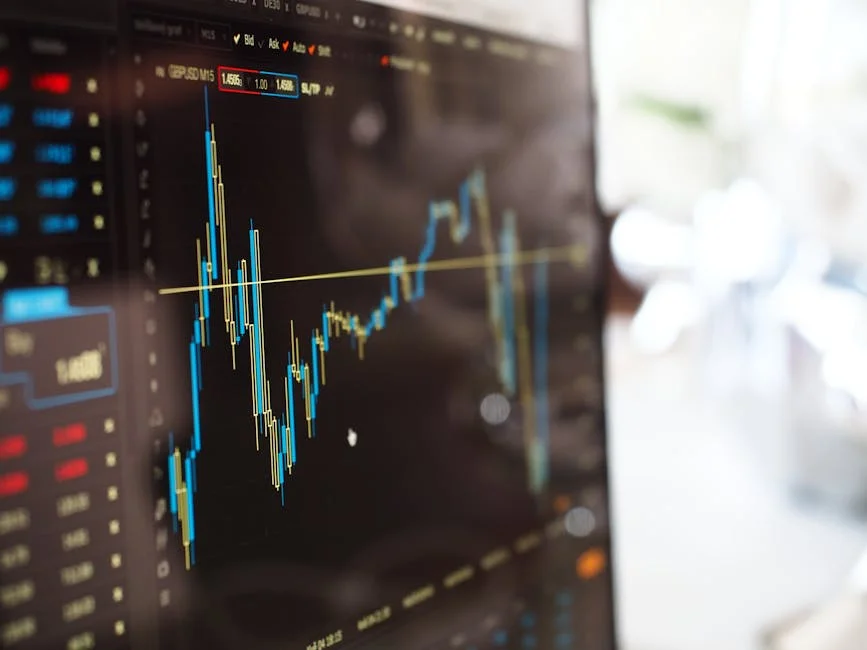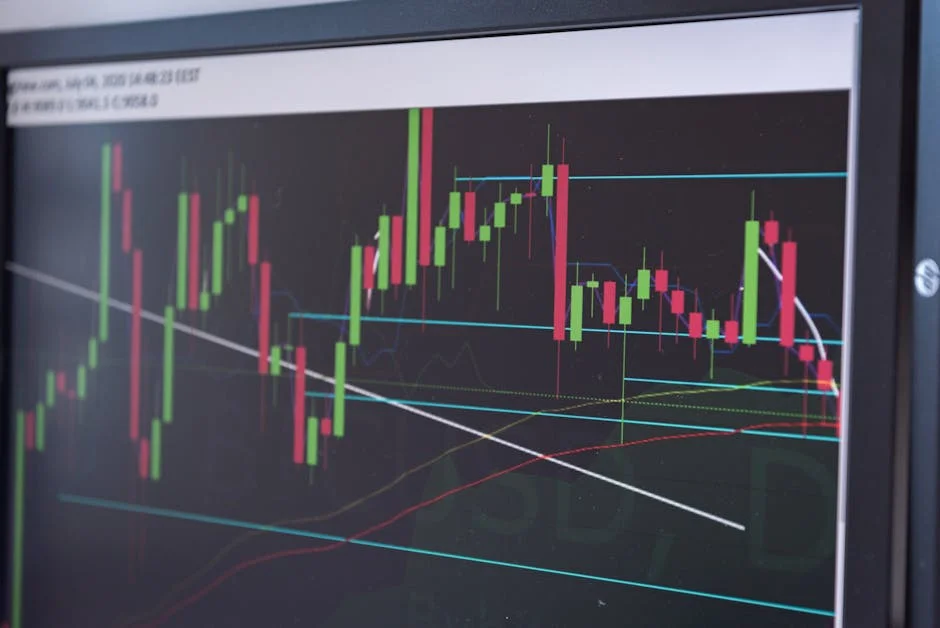
Learning how to trade in the forex market starts with understanding what the market actually is and why it behaves differently from stocks or commodities. Forex, short for “foreign exchange,” is where currencies are bought and sold in pairs, such as EUR/USD or GBP/JPY. The price you see on a chart is the exchange rate between those two currencies, and every movement reflects shifting demand and supply driven by global trade, investment flows, interest rate expectations, and risk sentiment. Unlike centralized exchanges, currency trading is decentralized and runs through a network of banks, liquidity providers, brokers, and electronic trading venues. That structure creates deep liquidity during active sessions, but it also means conditions can vary by broker, account type, and the time of day. To trade currencies effectively, it helps to think in probabilities rather than certainty: a trade is a bet on how one economy, central bank, or risk environment will perform relative to another.
Table of Contents
- My Personal Experience
- Understanding What It Means to Trade in the Forex Market
- How Currency Pairs, Quotes, and Pips Work
- Choosing a Forex Broker and Trading Platform
- Building a Trading Plan That Matches Your Lifestyle and Risk Tolerance
- Understanding Leverage, Margin, and Position Sizing
- Core Order Types and Practical Trade Execution
- Technical Analysis Essentials: Structure, Trends, and Key Levels
- Fundamental Analysis: Interest Rates, Inflation, and Economic Releases
- Expert Insight
- Developing a Strategy: Scalping, Day Trading, and Swing Trading
- Risk Management: Protecting Capital and Staying in the Game
- Trading Psychology: Discipline, Patience, and Managing Emotions
- Practicing with Demo Accounts and Transitioning to Live Trading
- Common Mistakes to Avoid When Trading Forex
- Building a Sustainable Routine: Analysis, Execution, and Review
- Putting It All Together for Long-Term Growth
- Watch the demonstration video
- Frequently Asked Questions
- Trusted External Sources
My Personal Experience
When I first started trading forex, I treated it like a quick way to make money and paid for it—jumping into EUR/USD on a five‑minute chart with no plan, moving my stop loss when price went against me, and overleveraging because the small margin made it feel “safe.” After a few painful weeks, I scaled back and built a simple routine: I picked one or two pairs, checked the economic calendar for high‑impact news, marked key support and resistance on the daily chart, and only took trades that matched my setup on the one‑hour. I also set a fixed risk per trade (usually 1%), placed my stop where the idea was clearly wrong, and stopped trading for the day after two losses. The biggest change wasn’t finding a magic indicator—it was learning to manage risk and emotions, because once I did that, my results became steadier and the market stopped feeling like pure chaos. If you’re looking for how to trade in the forex market, this is your best choice.
Understanding What It Means to Trade in the Forex Market
Learning how to trade in the forex market starts with understanding what the market actually is and why it behaves differently from stocks or commodities. Forex, short for “foreign exchange,” is where currencies are bought and sold in pairs, such as EUR/USD or GBP/JPY. The price you see on a chart is the exchange rate between those two currencies, and every movement reflects shifting demand and supply driven by global trade, investment flows, interest rate expectations, and risk sentiment. Unlike centralized exchanges, currency trading is decentralized and runs through a network of banks, liquidity providers, brokers, and electronic trading venues. That structure creates deep liquidity during active sessions, but it also means conditions can vary by broker, account type, and the time of day. To trade currencies effectively, it helps to think in probabilities rather than certainty: a trade is a bet on how one economy, central bank, or risk environment will perform relative to another.

Forex is often described as a 24-hour market, but it’s more accurate to say it follows the global business day as trading passes from Sydney to Tokyo to London and then New York. Each session has distinct characteristics. London and New York overlap is typically the most liquid period for major pairs, while Asian hours can be calmer for some pairs and more active for JPY or AUD-related crosses. Volatility is not “good” or “bad” by itself; it’s an input that affects position sizing, stop placement, and strategy selection. A trader who wants stable conditions might focus on major pairs during peak liquidity, while another might prefer breakouts around economic releases. Building a foundation means learning how quotes work (bid/ask), how spreads and commissions affect results, and how leverage magnifies both profits and losses. With those basics clear, the next steps become practical: selecting a broker, choosing a platform, building a plan, and practicing disciplined execution. If you’re looking for how to trade in the forex market, this is your best choice.
How Currency Pairs, Quotes, and Pips Work
Before placing any order, it’s essential to understand the language of currency pairs. A forex quote always contains a base currency and a quote currency. In EUR/USD, the euro is the base and the U.S. dollar is the quote. If EUR/USD is trading at 1.0850, it means one euro costs 1.0850 dollars. When the pair rises, the base currency is strengthening relative to the quote currency; when it falls, the base is weakening. This relationship is the core of how to trade in the forex market because every trade is relative: you are simultaneously buying one currency and selling another. That’s also why macro factors matter so much—interest rates, inflation, growth, and geopolitical risk often change the perceived attractiveness of holding one currency versus another.
Most pairs move in increments called pips. For many major pairs, a pip is the fourth decimal place (0.0001). For JPY pairs, it’s typically the second decimal place (0.01). Some brokers quote fractional pips (“pipettes”), which can affect how you calculate spreads and short-term costs. Pip value depends on pair, lot size, and account currency. Understanding pip value is not optional; it’s how you translate a chart idea into real risk. A 20-pip stop can be tiny or huge depending on your position size. New traders often focus on “how many pips” they might make, but the more professional approach is focusing on how much account equity is at risk and whether the trade fits your plan. Once you can comfortably read quotes, calculate pip value, and understand the impact of the spread, you can evaluate whether a strategy has a realistic edge after costs—an overlooked step that separates casual speculation from structured trading. If you’re looking for how to trade in the forex market, this is your best choice.
Choosing a Forex Broker and Trading Platform
Broker selection shapes your costs, execution quality, and overall experience. A reliable broker should be regulated in a credible jurisdiction, publish clear fee structures, and provide transparent information about spreads, commissions, and swap/rollover rates. Regulation does not guarantee perfection, but it improves accountability and client protections. Look for segregation of client funds, clear policies for negative balance protection where available, and a stable operating history. Execution matters too: fast, consistent fills and minimal slippage are especially important if your approach relies on short-term entries. If you plan to trade during news events, be aware that spreads can widen and execution can change; some brokers handle this better than others. Reading the fine print about margin requirements, stop-out levels, and order types can prevent unpleasant surprises when markets move quickly. If you’re looking for how to trade in the forex market, this is your best choice.
Your platform is the interface for analysis and execution, and it should match your style. Many traders use MetaTrader 4/5, cTrader, or a broker’s proprietary platform. What matters is not the brand name but the toolset: stable charting, reliable order management, and access to the markets you intend to trade. Check whether the platform supports one-click trading, advanced order types (stop, limit, stop-limit), trailing stops, and alerts. If you want to automate, confirm that the platform supports algorithmic trading and that your broker permits it. Mobile trading can be useful for monitoring and emergency management, but serious analysis is often easier on desktop. In practical terms, learning how to trade in the forex market is easier when your platform makes risk controls obvious—showing margin usage, pip value, and potential loss at the stop level—so you can make decisions based on numbers rather than hope.
Building a Trading Plan That Matches Your Lifestyle and Risk Tolerance
A trading plan is a set of rules that defines what you trade, when you trade, and how you control risk. Without it, decisions are likely to be driven by emotion, social media noise, or random chart patterns. A strong plan starts with constraints: available time, preferred sessions, and realistic goals. If you can only watch charts for an hour a day, a high-frequency scalping approach is a poor fit, regardless of how exciting it looks. If you work during the London session, swing trading on higher timeframes may be more practical. The plan should specify the instruments you will focus on—often a small list of major pairs is best initially—along with the timeframes you will use for analysis and entries. Consistency matters because it allows you to measure performance and refine your edge based on comparable trades. If you’re looking for how to trade in the forex market, this is your best choice.
Risk rules are the heart of the plan. Define a maximum percentage of account equity you risk per trade, a daily or weekly loss limit, and conditions that require you to stop trading and review. Many experienced traders risk a small fraction per trade because longevity is the advantage; surviving losing streaks is part of the game. The plan should include entry criteria (what must be true before you buy or sell), exit criteria (where you take profit, where you cut losses), and trade management rules (whether you move stops, scale out, or let the trade run). Writing these rules forces clarity and reduces impulsive decisions. Anyone can place trades; mastering how to trade in the forex market means repeating a process that you can evaluate, backtest, and improve over time, even when results fluctuate in the short run.
Understanding Leverage, Margin, and Position Sizing
Leverage is one of the most misunderstood features of forex. It allows you to control a larger position with a smaller amount of capital, but it does not change the underlying risk of the market; it changes how quickly your account can be impacted by price moves. Margin is the portion of your account set aside to support open positions. If losses reduce your equity too far relative to required margin, you may face a margin call or automatic liquidation depending on the broker’s policies. This is why traders who focus only on “getting more buying power” often experience abrupt account drawdowns. Leverage should be treated as a tool, not a target. The goal is to select position sizes that fit your risk per trade and your stop-loss distance, not to maximize exposure. If you’re looking for how to trade in the forex market, this is your best choice.

Position sizing ties everything together: account size, risk percentage, stop distance, and pip value. A straightforward method is to decide how much you are willing to lose if the stop is hit—say 1% of equity—then calculate the lot size that matches that risk given the stop in pips. This approach makes your risk consistent across trades, even when volatility changes. It also helps you avoid the common mistake of using the same lot size on every trade regardless of conditions. When volatility increases, stops often need to be wider; if you keep the lot size constant, your risk increases without you noticing. Proper sizing keeps you in control. Getting comfortable with these calculations is central to how to trade in the forex market because a strategy with a modest edge can fail if position sizes are reckless, while a simple approach can survive and grow if risk is managed with discipline.
Core Order Types and Practical Trade Execution
Order types determine how you enter and exit the market. A market order fills immediately at the best available price, which is useful when you prioritize execution over precision. A limit order instructs the broker to fill at a specific price or better; it’s often used to buy on pullbacks or sell on rallies. A stop order triggers when price reaches a level, commonly used for breakout entries or for stop-loss placement. Many platforms also offer stop-limit orders, which add constraints on slippage by requiring the fill to occur within a specified range after the trigger. Each order type has trade-offs. Market orders can slip during fast moves; limit orders may not fill if price turns early; stop orders can trigger during volatility spikes. Understanding these mechanics helps you avoid frustration and align execution with strategy. If you’re looking for how to trade in the forex market, this is your best choice.
Practical execution also includes considering spreads, liquidity, and timing. A good-looking setup can become a poor trade if the spread is unusually wide or if an economic release is seconds away. Some traders avoid trading directly into major news, while others specialize in it with strict rules and smaller size. Managing open positions requires attention to stop placement and take-profit logic. Stops should be placed where your trade idea is invalidated, not where you “feel comfortable,” while still considering normal market noise. Take-profit levels can be fixed, based on structure, or dynamic using trailing techniques. Trade execution is where theory meets reality, and it’s a major part of how to trade in the forex market because even a well-researched idea can be undermined by poor entries, oversized positions, or failure to account for transaction costs.
Technical Analysis Essentials: Structure, Trends, and Key Levels
Technical analysis is the study of price action and market structure to anticipate possible future movements. It is widely used in forex because currencies often trend for extended periods due to macro themes, while also respecting key levels where large orders cluster. Start with structure: identify swing highs and swing lows, and determine whether the market is making higher highs and higher lows (uptrend) or lower highs and lower lows (downtrend). Range conditions occur when price oscillates between support and resistance without clear directional progress. This classification matters because strategies behave differently depending on regime. Breakout approaches tend to perform better when volatility expands and trends form, while mean-reversion approaches often do better in stable ranges with well-respected boundaries. If you’re looking for how to trade in the forex market, this is your best choice.
Key levels can be drawn from previous highs/lows, round numbers, session highs/lows, and areas where price consolidated before moving strongly. Instead of treating levels as exact lines, many traders view them as zones, because price often overshoots slightly before reversing or continuing. Indicators can help, but they should support structure rather than replace it. Moving averages can help define trend direction or dynamic support/resistance, while ATR can help estimate normal volatility for stop placement. The goal is clarity: define what you need to see to enter, and what would prove you wrong. Developing a repeatable chart process is part of how to trade in the forex market because it reduces overtrading and helps you avoid chasing random moves that don’t fit your framework.
Fundamental Analysis: Interest Rates, Inflation, and Economic Releases
Fundamentals drive longer-term currency valuation and can also cause short-term volatility. Central banks are especially important because interest rate expectations influence capital flows. When a central bank is expected to raise rates, its currency often strengthens as investors anticipate higher yields, though the relationship is not always linear because markets price expectations in advance. Inflation, employment, GDP growth, and consumer activity can shift those expectations. For example, persistent inflation may push a central bank toward tighter policy, while weakening growth may lead to rate cuts or stimulus. Understanding the macro backdrop helps you avoid trading against powerful themes without a clear reason. It also helps you select which pairs are most likely to trend, because trends often emerge when monetary policy paths diverge. If you’re looking for how to trade in the forex market, this is your best choice.
Expert Insight
Start with a clear plan: choose one or two currency pairs, trade only during their most liquid sessions, and define your entry, stop-loss, and take-profit levels before placing the order. Keep risk per trade small (e.g., 1% or less of your account) and size positions based on the distance to your stop-loss, not on how confident you feel. If you’re looking for how to trade in the forex market, this is your best choice.
Build discipline with a simple routine: track every trade in a journal (setup, timeframe, reason, outcome) and review weekly to spot patterns you can repeat or avoid. Focus on high-probability moments—like trading with the prevailing trend after a pullback—and avoid major news releases unless your strategy is designed for volatility. If you’re looking for how to trade in the forex market, this is your best choice.
Economic calendars are practical tools for timing. High-impact releases—such as CPI, Non-Farm Payrolls, central bank rate decisions, and press conferences—can cause spreads to widen and price to move sharply. Some traders reduce exposure ahead of these events; others wait for the initial spike and trade the post-news direction once spreads normalize. The key is having rules. If you don’t have a tested news strategy, randomly trading releases is usually more gambling than analysis. Fundamentals also include risk sentiment: in “risk-off” environments, safe-haven currencies can strengthen while higher-yield or growth-linked currencies weaken. Integrating macro awareness into your routine improves how to trade in the forex market because it gives context to technical setups and helps you understand when a chart pattern is supported by broader forces or likely to fail due to upcoming catalysts.
Developing a Strategy: Scalping, Day Trading, and Swing Trading
A strategy is a structured method for finding trades with a potential edge. Scalping aims for small, frequent moves and relies heavily on tight spreads, fast execution, and strict discipline. Day trading involves opening and closing trades within the same day, often focusing on session trends, breakouts, or mean reversion around key levels. Swing trading holds positions for days to weeks, seeking larger moves driven by macro themes and multi-day trends. Each style has different psychological demands and risk profiles. Scalpers must accept many small outcomes and maintain focus; swing traders must tolerate overnight risk, swap costs, and larger drawdowns in pips while keeping risk controlled in account terms. If you’re looking for how to trade in the forex market, this is your best choice.
| Approach | Best for | How it works (in practice) | Key tools | Main risks |
|---|---|---|---|---|
| Technical (chart-based) trading | Short- to medium-term traders who prefer clear entry/exit signals | Identify trends, support/resistance, and setups (e.g., breakouts or pullbacks), then place orders with predefined stop-loss and take-profit levels. | Price charts, indicators (MA/RSI/MACD), candlestick patterns, risk/reward rules | False breakouts, overtrading, ignoring news-driven volatility |
| Fundamental (news & macro) trading | Traders who follow economic releases and central bank policy | Trade currency pairs based on interest-rate expectations, inflation, employment data, and central bank guidance; often around scheduled events. | Economic calendar, central bank statements, yield/interest-rate tracking, sentiment analysis | Sudden spikes/slippage during news, misreading policy signals, event risk |
| Carry trade (rate-differential) strategy | Longer-term traders seeking to benefit from interest-rate differentials | Go long a higher-yielding currency and short a lower-yielding one, aiming to earn rollover/swap while managing price movement risk. | Swap/rollover rates, interest-rate outlook, trend filters, position sizing | Sharp reversals in risk sentiment, funding currency rallies, rate changes reducing carry |

Regardless of style, a robust strategy includes: market selection, setup definition, entry trigger, stop placement logic, profit-taking method, and rules for when not to trade. For example, a simple trend strategy might require alignment of higher timeframe trend, a pullback to a support zone, and a confirmation candle before entry. A range strategy might require price to reach a boundary, show rejection, and offer a defined stop beyond the zone. The most important element is testability. If you can’t describe it clearly, you can’t evaluate it. Strategy development is central to how to trade in the forex market because trading outcomes improve when decisions are based on a repeatable playbook rather than moment-to-moment emotions or the latest opinion online.
Risk Management: Protecting Capital and Staying in the Game
Risk management is what keeps a trader solvent long enough for skill and edge to matter. It includes position sizing, stop-loss usage, correlation awareness, and limits on total exposure. Correlation is often overlooked: trading multiple pairs that move similarly can multiply risk without you noticing. For example, being long EUR/USD and long GBP/USD may effectively concentrate exposure against the U.S. dollar. If the dollar strengthens broadly, both positions can lose at the same time. A risk-aware trader monitors overall portfolio exposure, not just individual trades. Another key concept is expectancy: even good strategies have losing streaks, and the goal is to make sure a normal losing streak does not cause catastrophic damage. This is why many traders cap risk per trade and also cap risk per day or week. If you’re looking for how to trade in the forex market, this is your best choice.
Stop-loss placement should be logical and consistent. Stops placed too tight can lead to frequent small losses and frustration; stops placed too wide can create poor reward-to-risk profiles unless position size is adjusted. Managing open trades also matters: moving stops to break even too early can reduce losses but can also cut off winners. There is no universal rule; the right approach depends on strategy behavior and testing. Equally important is recognizing when conditions change. If spreads widen abnormally, volatility spikes, or you are emotionally reactive, reducing size or stepping aside can be a smart risk decision. Mastering how to trade in the forex market is less about finding a “perfect” setup and more about consistently controlling downside so that the upside has room to compound over time.
Trading Psychology: Discipline, Patience, and Managing Emotions
Psychology is often the difference between a trader who has a good plan and a trader who follows it. Fear can cause early exits, missed entries, or refusal to take valid trades after a loss. Greed can lead to overleveraging, moving take-profit targets unrealistically far, or adding to losing positions without a plan. Impatience shows up as overtrading—taking marginal setups because you want action. A practical solution is to reduce decision load by using checklists. Before entering, confirm your setup criteria, confirm the risk amount, and confirm that the trade makes sense given upcoming news and current spreads. If any item fails, the trade is skipped. This turns discipline into a process rather than a personality trait. If you’re looking for how to trade in the forex market, this is your best choice.
Another psychological tool is journaling with honesty. Record not just the entry and exit, but also the reason for the trade, the emotions present, and whether the trade followed the plan. Over time, patterns emerge: maybe losses cluster when trading late at night, or after a winning streak, or during news events. Those patterns can be corrected with specific rules. It also helps to separate self-worth from outcomes. A losing trade can be a good trade if it followed the plan and risk was controlled; a winning trade can be a bad trade if it was reckless. Internalizing this idea supports long-term growth. Understanding how to trade in the forex market includes learning how to think like a risk manager and process-driven operator, not like a gambler seeking emotional highs from unpredictable wins.
Practicing with Demo Accounts and Transitioning to Live Trading
Demo trading is valuable when used correctly. It helps you learn the platform, practice order placement, and test whether you can follow rules without hesitation. However, demo results can be misleading because emotions are muted when no real money is at risk. A trader might hold losers longer or take larger sizes on demo than they would live. To make demo practice meaningful, treat it as a simulation: use realistic position sizes, apply the same risk limits you intend to use live, and trade only the sessions you can consistently trade. Track results in a journal and focus on process metrics such as rule adherence and error frequency, not just profit. If the goal is to build consistency, a smaller number of well-executed trades is more useful than a high volume of random experimentation. If you’re looking for how to trade in the forex market, this is your best choice.
Transitioning to live trading should be gradual. Many traders start with a small account or a micro-lot account to experience real emotions while keeping financial risk low. This phase is less about making income and more about proving you can execute under pressure. Slippage, spread changes, and the psychological weight of real losses can reveal weaknesses not seen in demo. Consider setting a milestone such as “100 trades with 95% rule adherence” before increasing size. Keep risk per trade small until you have evidence of consistency. This approach supports sustainable progress and is a practical part of how to trade in the forex market because it respects the reality that execution under real conditions is a skill that must be trained, not assumed.
Common Mistakes to Avoid When Trading Forex
Many losses come from avoidable mistakes rather than bad luck. Overleveraging is the most common: using too much size relative to account equity so that normal market noise becomes account-threatening. Another frequent error is trading without a stop-loss or moving the stop further away to avoid being wrong. That behavior can turn a manageable loss into a large drawdown. Chasing price is also common—entering after a move has already happened because of fear of missing out. This often leads to buying near the top or selling near the bottom, especially in volatile conditions. A more professional approach is to predefine entry zones and accept that missing a trade is better than taking a low-quality entry. If you’re looking for how to trade in the forex market, this is your best choice.

Other mistakes include ignoring costs such as spreads, commissions, and swap fees, especially for strategies that trade frequently or hold positions overnight. Trading too many pairs can also dilute focus and increase correlation risk. Many traders also change strategies too quickly, abandoning an approach after a small sample of trades without proper testing. Consistency requires patience: a strategy should be evaluated over a meaningful number of trades and across varying conditions. Finally, relying heavily on signals without understanding context can create dependency and confusion when signals conflict. Building skill means learning why a trade is being taken. Avoiding these pitfalls strengthens how to trade in the forex market because it keeps your learning curve efficient and prevents the kind of large losses that discourage traders before they develop real competence.
Building a Sustainable Routine: Analysis, Execution, and Review
A sustainable routine turns trading from reactive clicking into a structured practice. Start by defining when you analyze markets and when you trade. For example, a swing trader might do top-down analysis once per day, mark levels, set alerts, and then wait. A day trader might review the economic calendar, mark overnight highs/lows, and prepare for the London open with specific scenarios. The routine should include pre-trade checks: spreads, upcoming news, and whether the market is trending or ranging. It should also include post-trade review: screenshots, notes on execution quality, and whether rules were followed. Over time, this routine becomes a feedback loop that improves decision-making and reduces random behavior. If you’re looking for how to trade in the forex market, this is your best choice.
Review is where progress becomes measurable. Track key metrics such as win rate, average win versus average loss, maximum drawdown, and rule adherence. If your average loss is larger than your average win, you may need to adjust exits, entries, or stop placement. If you’re profitable but experiencing large drawdowns, position sizing may be too aggressive. If you have a decent strategy but inconsistent results, the issue may be psychological or procedural rather than analytical. A routine also includes rest: fatigue increases impulsive decisions and reduces attention to detail. Sustainable performance comes from consistency, not intensity. When the daily process is clear and repeatable, how to trade in the forex market becomes less mysterious and more like any other skill-based profession—plan, execute, measure, and refine.
Putting It All Together for Long-Term Growth
Long-term growth in forex comes from stacking small advantages: solid market knowledge, a broker and platform you trust, a strategy you can explain and test, and risk controls that keep you in the game. Progress tends to be nonlinear. Some months will be strong, others flat or negative, even with good execution. The goal is to build a process that remains stable across those periods. Focus on what you can control: preparation, position sizing, entry quality, and emotional discipline. Keep your universe of pairs small until you understand their behavior across sessions and news cycles. Use alerts and levels to reduce screen time and avoid impulsive trades. When you adjust your strategy, change one variable at a time so you can identify what actually improved results. If you’re looking for how to trade in the forex market, this is your best choice.
It also helps to define what success means for your situation. For some, it’s steady supplemental returns; for others, it’s building a track record over years. Unrealistic expectations encourage overtrading and excessive leverage. A realistic approach treats trading as a probability business: you aim to execute a positive-expectancy method repeatedly while controlling losses. Over time, that combination can compound. The practical skills—reading pairs, placing orders correctly, managing margin, and reviewing performance—become habits. With patience and discipline, learning how to trade in the forex market becomes a structured craft built on risk management, clear decision rules, and continuous improvement rather than guesswork.
Watch the demonstration video
In this video, you’ll learn the fundamentals of trading the forex market—from how currency pairs work and what drives price movements to reading charts, choosing a strategy, and managing risk. It also covers key concepts like leverage, spreads, and common beginner mistakes, helping you build a practical foundation for placing smarter trades. If you’re looking for how to trade in the forex market, this is your best choice.
Summary
In summary, “how to trade in the forex market” is a crucial topic that deserves thoughtful consideration. We hope this article has provided you with a comprehensive understanding to help you make better decisions.
Frequently Asked Questions
What is forex trading?
Forex trading is buying one currency and selling another in pairs (e.g., EUR/USD) to profit from exchange-rate movements.
How do I start trading forex?
To get started with **how to trade in the forex market**, pick a reputable, regulated broker, open and fund your account, and spend some time practicing on a demo platform to build confidence. Once you’re comfortable, begin with small trades and follow a simple, proven strategy you’ve tested, focusing on consistency and risk control as you learn.
What are currency pairs and pips?
A currency pair simply shows the value of one currency compared to another, helping you see what you’re buying and what you’re selling. Price changes are tracked in pips—tiny increments (usually 0.0001 for most pairs)—which traders use to measure market movement and calculate potential gains or losses when learning **how to trade in the forex market**.
What is leverage and margin in forex?
Leverage allows you to control a much larger position with a smaller amount of money, while margin is the deposit your broker requires to open and maintain that trade. Because both can magnify profits as well as losses, understanding them is essential when learning **how to trade in the forex market**—and they should always be used with care.
How do I manage risk when trading forex?
When learning **how to trade in the forex market**, focus on smart risk management: risk only a small percentage on each trade (around 1–2%), always place a stop-loss to limit downside, size your positions appropriately, avoid excessive leverage, and follow your trading plan consistently.
Which analysis methods are used in forex trading?
Traders use technical analysis (charts/indicators), fundamental analysis (economic data/central banks), and sentiment/positioning to guide entries and exits.
? Looking for more info about how to trade in the forex market? Follow Our Site for updates and tips!

Trusted External Sources
- How to start forex trading – Saxo Bank
How to trade forex: A step-by-step guide · 1. Choose a reliable forex broker · 2. Open and set up your trading account · 3. Learn forex basics · 4. Develop a … If you’re looking for how to trade in the forex market, this is your best choice.
- The global foreign exchange market in a higher-volatility environment
As of Dec 5, 2026, the global FX market offers a fascinating bird’s-eye view of long-term trends. Although more than 50 currencies are traded worldwide, most trading activity is concentrated in a handful of major pairs—an essential insight for anyone learning **how to trade in the forex market**.
- Foreign Exchange (Forex) Trading for Beginners | Charles Schwab
As of July 10, 2026, the forex market continues to run nearly 24 hours a day as currencies are traded across major financial centers worldwide. If you’re wondering **how to trade in the forex market**, it’s worth first understanding four essentials—when the market is most active, what drives currency price movements, how leverage and risk management work, and which trading strategies fit your goals—before placing your first trade.
- Global FX trading hits $9.6 trillion per day in April 2026 and OTC …
Sep 30, 2026 … The survey showed that FX swaps remained the most traded instrument, with average daily turnover rising to $4 trillion in April 2026 – up 5% … If you’re looking for how to trade in the forex market, this is your best choice.
- I want to get into forex and trading. What advice do you have? – Reddit
For new forex traders, the best place to begin is with a strong foundation in the basics—especially how currencies move, what drives exchange rates, and why risk management matters. If you’re learning **how to trade in the forex market**, focus first on building a simple, repeatable approach, practicing on a demo account, and setting clear rules for position sizing and stop-losses before risking real money.