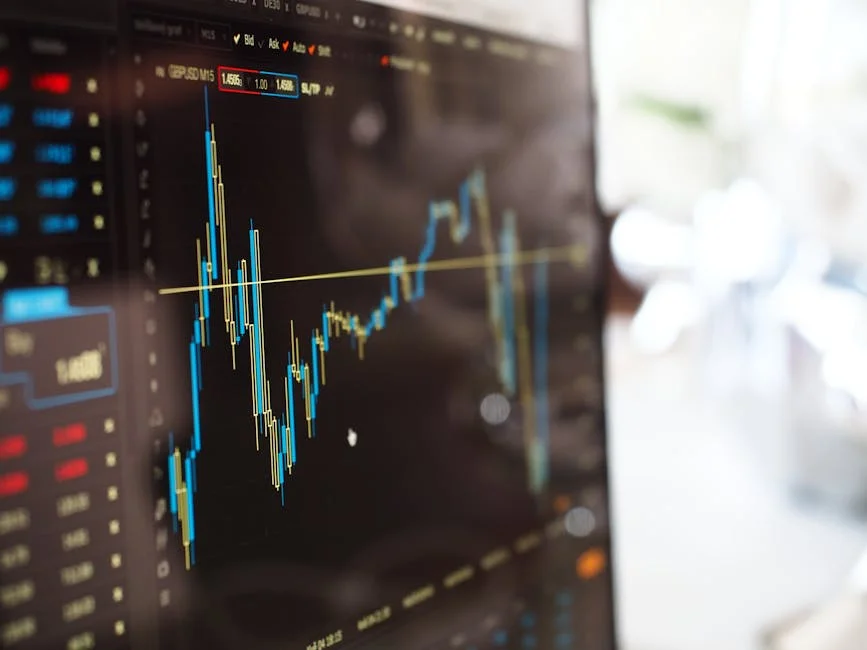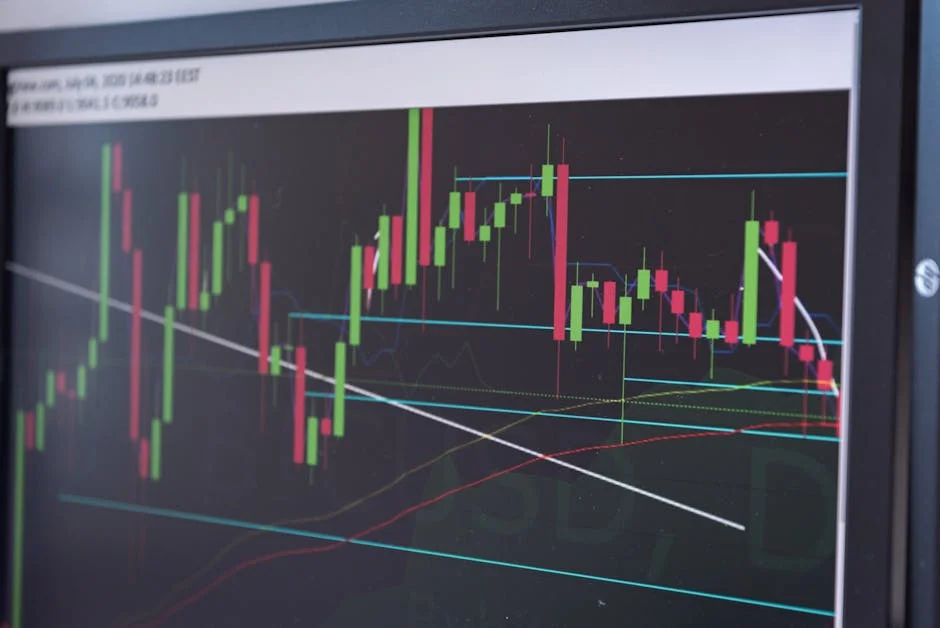
To define forex in a way that feels practical rather than abstract, it helps to start with what people actually do when they “use” it. Forex is short for “foreign exchange,” and it refers to the conversion of one currency into another. That conversion happens constantly: when a tourist exchanges dollars for euros at an airport kiosk, when a company pays a supplier in a different country, or when a bank hedges its exposure to a currency move. The forex market is the global network—made up of banks, brokers, corporations, funds, and individual traders—where those currency exchanges are priced and executed. Unlike a single centralized stock exchange, forex is decentralized and operates across time zones, which is why it can function almost continuously from Monday to Friday. When people try to define currency trading, they often picture retail trading platforms, charts, and quick trades, but the underlying reality is broader: most forex activity is driven by international commerce, investment flows, and risk management needs. Even when a retail trader places a small order, that order sits in the same global ecosystem of prices and liquidity that institutions influence. The core concept remains simple: one currency is exchanged for another at an agreed price, and that price changes as supply and demand shift.
Table of Contents
- My Personal Experience
- Understanding How People Define Forex in Everyday Terms
- What the Forex Market Is and Why It Exists
- Currency Pairs, Exchange Rates, and Quotation Conventions
- Major, Minor, and Exotic Pairs: How the Market Is Organized
- Key Participants: Banks, Corporations, Funds, and Retail Traders
- What Moves Exchange Rates: Economics, Policy, and Expectations
- Forex Trading vs. Currency Exchange: The Difference in Intent
- Expert Insight
- Common Forex Instruments: Spot, Forwards, Futures, Swaps, and Options
- Leverage, Margin, and Risk: What Newcomers Miss When They Define Forex
- Regulation, Brokers, and Market Integrity in Forex
- Practical Uses of Forex for Businesses and Investors
- How Technology and Liquidity Shape Modern Forex
- Putting It All Together: A Clear Way to Define Forex
- Watch the demonstration video
- Frequently Asked Questions
- Trusted External Sources
My Personal Experience
When I first tried to “define forex” for myself, I realized it’s basically the global market where currencies are exchanged—like trading dollars for euros, but on a massive scale that runs almost nonstop during the week. I got interested after noticing how exchange rates changed when I traveled, and I wanted to understand why my money was worth more in one country than another. Once I started reading and watching the charts, it clicked that forex prices move because of supply and demand driven by things like interest rates, inflation, and economic news. I opened a small demo account at first, and seeing how quickly a currency pair could shift made me respect how liquid and risky the market can be, even though the concept sounds simple at the start.
Understanding How People Define Forex in Everyday Terms
To define forex in a way that feels practical rather than abstract, it helps to start with what people actually do when they “use” it. Forex is short for “foreign exchange,” and it refers to the conversion of one currency into another. That conversion happens constantly: when a tourist exchanges dollars for euros at an airport kiosk, when a company pays a supplier in a different country, or when a bank hedges its exposure to a currency move. The forex market is the global network—made up of banks, brokers, corporations, funds, and individual traders—where those currency exchanges are priced and executed. Unlike a single centralized stock exchange, forex is decentralized and operates across time zones, which is why it can function almost continuously from Monday to Friday. When people try to define currency trading, they often picture retail trading platforms, charts, and quick trades, but the underlying reality is broader: most forex activity is driven by international commerce, investment flows, and risk management needs. Even when a retail trader places a small order, that order sits in the same global ecosystem of prices and liquidity that institutions influence. The core concept remains simple: one currency is exchanged for another at an agreed price, and that price changes as supply and demand shift.

To define forex clearly, it also helps to understand that currencies are always quoted relative to each other. A single currency does not have an absolute “price” the way a product might; instead, it has an exchange rate against another currency. That is why forex is commonly presented as currency pairs like EUR/USD or USD/JPY. If EUR/USD is 1.1000, it means one euro costs 1.10 US dollars. If that rate rises, the euro is strengthening relative to the dollar; if it falls, the euro is weakening relative to the dollar. This paired structure is central to foreign exchange markets and explains why traders speak about “buying” one currency while “selling” another at the same time. It also explains why forex affects everyday life, even for people who never open a trading account: exchange rates influence imported goods, travel costs, corporate profits, inflation trends, and interest-rate decisions. When someone says they want to define forex as a market, they are describing the continuous process of price discovery for currency exchange rates, powered by global participants responding to economic data, policy decisions, and shifting expectations.
What the Forex Market Is and Why It Exists
To define forex as a market structure, it is the venue—mostly electronic—where currencies are exchanged to facilitate global activity. The reason it exists is straightforward: different countries use different currencies, and global trade would be far less efficient without a mechanism to convert one into another at transparent, widely accepted rates. When a European business imports raw materials priced in US dollars, it needs to obtain dollars; when a US investor buys Japanese shares, they may need yen; when an airline buys fuel priced in dollars but earns revenue in many currencies, it must manage conversion risk. The forex market solves these needs by providing liquidity and price quotes across currency pairs. Over time, the market also became a place where participants manage risk (hedging) and express views on economic conditions (speculation). These functions are not separate; they are interlinked. A corporation hedging next quarter’s revenue may trade in the same currency pair that a hedge fund is speculating on after a central bank announcement. Together, these actions create the flow that sets exchange rates.
To define forex in terms of “how it works,” it helps to recognize that most transactions occur over-the-counter (OTC). That means trades are negotiated through networks of banks and liquidity providers rather than matched on one centralized exchange. Prices are still highly competitive because major participants stream quotes and compete for order flow. Technology has made this process faster and more accessible, allowing smaller institutions and individuals to participate through brokers that connect to liquidity sources. The continuous nature of the market is also a defining feature: because financial centers open and close around the world—Asia, Europe, North America—currency trading can occur nearly 24 hours a day during weekdays. This is different from many stock markets, which have fixed daily sessions. The market’s primary purpose remains functional—enabling conversion and settlement—but the modern foreign exchange ecosystem also supports sophisticated strategies such as hedging interest-rate exposure, managing international portfolios, and balancing multi-currency cash flows. A complete way to define forex includes all these roles: conversion, liquidity provision, risk transfer, and global price discovery.
Currency Pairs, Exchange Rates, and Quotation Conventions
To define forex through its basic building block, focus on the currency pair. Every forex quote includes two currencies: the “base” currency and the “quote” currency. In EUR/USD, EUR is the base and USD is the quote. The exchange rate tells you how much of the quote currency is needed to buy one unit of the base currency. This structure is not a detail; it is the foundation of how foreign exchange markets communicate value. When EUR/USD moves from 1.1000 to 1.1200, it means the euro has appreciated against the dollar, because it now takes more dollars to buy one euro. If it drops to 1.0800, the euro has depreciated. Traders, companies, and banks interpret these changes differently depending on their goals, but the math stays the same. Understanding this convention helps avoid confusion when people discuss “strength” or “weakness” in a currency. It also explains why news headlines about the “dollar rising” might correspond to USD/JPY rising but EUR/USD falling, since the dollar’s position in each pair differs.
To define forex quoting more precisely, it also includes how prices are displayed and measured. Traditionally, many pairs are quoted to four decimal places (for example, 1.1057), while yen pairs are often quoted to two decimal places (for example, 155.32). The smallest standard increment is called a “pip,” which is typically 0.0001 for most pairs and 0.01 for yen pairs. Some platforms also show fractional pips for tighter pricing. Another convention is the bid and ask (or offer) price: the bid is the price at which the market buys the base currency (you sell), and the ask is the price at which the market sells the base currency (you buy). The difference is the spread, which can vary depending on liquidity, volatility, and the broker’s pricing model. These conventions matter because they influence transaction costs and execution. Even if someone wants to define forex only as “currency exchange,” the practical reality is that exchange happens through these pair structures, quotation formats, and trading costs. Knowing the conventions makes the market less mysterious and helps connect the idea of a moving “exchange rate” to the actual prices participants transact at.
Major, Minor, and Exotic Pairs: How the Market Is Organized
To define forex by its most commonly traded instruments, market participants often categorize currency pairs into majors, minors, and exotics. Major pairs typically include the US dollar and one other widely traded currency, such as EUR/USD, GBP/USD, USD/JPY, USD/CHF, AUD/USD, NZD/USD, and USD/CAD. These pairs generally have high liquidity, narrower spreads, and deep participation from banks and institutions. The reason these pairs dominate is not popularity alone; it reflects the size of the economies involved, the role of the dollar in global trade and reserves, and the heavy volume of cross-border investment in these currencies. When people describe the foreign exchange market as “the most liquid,” much of that liquidity is concentrated in major pairs, especially EUR/USD and USD/JPY. For many participants, majors are the default instruments for hedging and trading because pricing is competitive and execution is usually smooth, even at larger sizes.

To define forex pair categories further, minor pairs (sometimes called crosses) do not include the US dollar, such as EUR/GBP, EUR/JPY, or GBP/JPY. These can still be very liquid, but spreads may be slightly wider than majors, and price moves can reflect regional dynamics more strongly. Exotic pairs combine a major currency with a currency from an emerging or smaller economy, such as USD/TRY, USD/ZAR, or EUR/THB. Exotics can offer distinct opportunities but often come with higher spreads, greater volatility, and sensitivity to political risk, capital controls, or sudden policy changes. This categorization matters because it shapes expectations about cost, speed, and risk. A clean way to define forex as a tradable marketplace must acknowledge that not all currency pairs behave similarly. Liquidity varies, economic drivers differ, and the same headline can produce very different reactions across pair types. By understanding majors, minors, and exotics, the structure of currency trading becomes clearer: it is a single global market, but it is not uniform across all instruments.
Key Participants: Banks, Corporations, Funds, and Retail Traders
To define forex in real-world terms, it is essential to understand who participates and why. At the top of the liquidity chain are large commercial and investment banks that quote prices, facilitate transactions, and manage vast currency exposures. These institutions operate dealing desks, algorithmic execution systems, and risk-management frameworks that allow them to provide liquidity across many pairs. Central banks also play a pivotal role, although not always as day-to-day liquidity providers. They set monetary policy, influence interest rates, and sometimes intervene directly in currency markets to stabilize conditions or achieve policy goals. Corporations participate for operational reasons: paying invoices, receiving foreign revenues, and hedging future cash flows. Asset managers and pension funds trade currencies as part of global portfolio allocation, where currency exposure can meaningfully affect returns. Hedge funds and proprietary trading firms may trade currencies more actively, seeking to profit from macroeconomic trends, interest-rate differentials, or short-term price patterns.
To define forex participation at the individual level, retail traders access the market through brokers that provide trading platforms and connectivity to liquidity sources. Retail trading is a visible part of the modern foreign exchange landscape, but it is smaller than institutional flows in aggregate. Even so, retail activity can be significant during certain times and in certain pairs, and it contributes to overall market dynamics. The motivations also differ: while a corporation may hedge a known exposure, a retail trader may take a directional view on a currency’s strength based on economic releases or technical analysis. Brokers themselves can operate under different models—some route orders to external liquidity providers, while others internalize flow under market-making structures. These distinctions affect spreads, execution, and conflicts of interest, so they are part of a robust attempt to define forex as a trading environment rather than a simplified concept. Ultimately, the foreign exchange market is a network of participants with varied goals, all interacting through prices that move in response to changing expectations and global conditions.
What Moves Exchange Rates: Economics, Policy, and Expectations
To define forex beyond the mechanics of exchanging currencies, it is necessary to explain what makes exchange rates change. Currency prices move because market participants collectively reprice the relative attractiveness of holding one currency versus another. Interest rates are a primary driver: when a country offers higher yields, its currency can become more attractive, all else equal, because investors may seek better returns on cash and fixed-income assets. Inflation matters because it erodes purchasing power and influences central bank decisions. Economic growth trends, employment data, wage growth, trade balances, and productivity can all affect expectations about future policy and investment flows. Political stability and fiscal policy also influence confidence. In some cases, commodity prices can shape currency values, especially for countries whose exports are heavily linked to oil, metals, or agricultural products. These drivers do not operate in isolation; markets often react to the difference between expectations and reality. A strong jobs report may strengthen a currency if it increases the probability of tighter policy, but it could weaken it if markets were already positioned for an even stronger outcome.
To define forex price behavior accurately, it is also important to emphasize that exchange rates are forward-looking. Traders and investors do not wait for policy to change; they often price in anticipated moves well in advance. This is why central bank communication—statements, press conferences, meeting minutes—can move currencies even without an immediate rate change. Risk sentiment is another factor: during periods of global stress, investors may seek perceived safe-haven currencies, while during periods of optimism they may shift into higher-yielding or growth-linked currencies. Market structure and positioning can amplify moves, as stop-loss orders, option hedging, and leveraged positions interact with news. A practical way to define forex is to see it as a marketplace for pricing relative economic prospects and policy paths across countries. Exchange rates become a kind of scoreboard for shifting expectations—imperfect and sometimes volatile, but deeply connected to how capital flows around the world.
Forex Trading vs. Currency Exchange: The Difference in Intent
To define forex in a way that avoids confusion, it helps to separate “currency exchange” from “forex trading,” even though both involve converting currencies. Currency exchange is typically transactional and need-based: a traveler converts money for a trip, or a business converts receipts to pay expenses. The goal is not to profit from exchange rate changes, but to obtain the needed currency at a reasonable cost. Forex trading, by contrast, is usually speculative or tactical. A trader opens a position in a currency pair with the intention of benefiting from changes in the exchange rate. This can be short-term, such as intraday trading around economic releases, or longer-term, such as positioning for a multi-month shift in interest-rate policy. The tools and costs can be different as well. A traveler might pay a wide spread at a kiosk, while a trader might seek tight spreads and low commissions through a broker. A company might use forward contracts to lock in a rate, while a trader might use spot positions or options to express a view.
Expert Insight
Forex (foreign exchange) is the global marketplace where currencies are bought and sold in pairs (like EUR/USD), with prices reflecting how much of one currency is needed to buy another. To define it clearly in practice, always state the pair, the base vs. quote currency, and what a move in the rate means for purchasing power. If you’re looking for define forex, this is your best choice.
When evaluating a forex quote, check the spread and the session liquidity before acting, since tighter spreads and higher volume typically reduce trading costs. Also, set a specific risk limit per trade (for example, a fixed percentage of your account) and place a stop-loss at a level that matches your plan, not your emotions. If you’re looking for define forex, this is your best choice.
To define forex trading as it occurs on platforms, it usually involves the spot market (where prices reflect near-immediate settlement conventions) or derivatives like forwards, futures, swaps, and options. Retail platforms often present “spot forex” as a leveraged product, where traders can control a larger position with a smaller deposit, which increases both potential gains and potential losses. That leverage element is one reason trading differs sharply from simple currency exchange: it introduces margin requirements, liquidation risk, and a need for disciplined risk management. The distinction matters because people sometimes define forex only by what they see advertised—fast-moving charts and short-term trades—while ignoring the broader purpose of foreign exchange in global finance. A balanced definition recognizes both: forex is the system for exchanging currencies, and it is also a market where participants may trade those currencies to hedge risk or seek returns, using instruments and practices tailored to their intent.
Common Forex Instruments: Spot, Forwards, Futures, Swaps, and Options
To define forex instruments properly, it is not enough to mention “buying and selling currency.” The foreign exchange market includes several contract types designed for different needs. Spot forex refers to transactions priced for near-term settlement (commonly described as two business days for many pairs, though conventions vary). Spot prices are what most people watch on charts because they represent the current market rate. Forwards are agreements to exchange currencies at a future date at a predetermined rate, often customized between counterparties. Corporations use forwards to reduce uncertainty about future cash flows, such as locking in the cost of paying overseas suppliers. Futures are standardized contracts traded on exchanges, offering transparency and centralized clearing; they are often used by institutions and some active traders, particularly where exchange-traded structure is preferred. Swaps involve exchanging currencies and then reversing the exchange later, commonly used by banks and institutions to manage funding and liquidity across currencies.
| Aspect | Forex (Foreign Exchange) | Stocks | Crypto |
|---|---|---|---|
| What it is | A global marketplace where currencies are exchanged in pairs (e.g., EUR/USD). | Ownership shares in a company traded on stock exchanges. | Digital assets traded on blockchain-based networks. |
| How prices move | Driven by interest rates, inflation, economic data, central banks, and geopolitics. | Driven by company performance, earnings, sector trends, and broader market sentiment. | Driven by adoption, network activity, liquidity, regulation, and market sentiment. |
| Market structure & hours | Decentralized (OTC) market operating 24 hours a day, 5 days a week. | Centralized exchanges with set trading hours (varies by country/exchange). | Mostly exchange-based trading available 24/7 worldwide. |

To define forex options, they provide the right—but not the obligation—to exchange currency at a specified rate before or at a certain date. Options are widely used for hedging because they can protect against adverse moves while preserving upside, though they come with a premium cost. Options markets also influence spot movements through hedging activity by dealers, especially around popular strike levels and expiries. Each instrument serves a different combination of flexibility, cost, and risk. A company with predictable payments might prefer forwards for certainty, while a portfolio manager might use futures for efficient exposure, and a trader might use spot for simplicity and liquidity. A strong way to define forex is to include this toolkit: foreign exchange is not one product but a set of interconnected markets where participants choose instruments based on timing, risk tolerance, regulatory preferences, and operational needs. Recognizing these instruments also helps explain why exchange rates can react to more than just “buyers and sellers” in the spot market—derivatives positioning and hedging flows can matter as well.
Leverage, Margin, and Risk: What Newcomers Miss When They Define Forex
To define forex responsibly, especially from the perspective of trading, it is important to address leverage and margin. Many retail forex accounts allow traders to control large positions with a relatively small amount of capital posted as margin. For example, with 30:1 leverage, a trader might control a $30,000 position with $1,000 in margin (exact rules vary by jurisdiction and broker). This structure can make forex trading feel accessible, but it also magnifies outcomes: a small move in the exchange rate can produce a large percentage gain or loss relative to the margin posted. Margin is not a fee; it is a performance bond. If losses reduce account equity below required levels, a broker may issue a margin call or automatically close positions to prevent further losses. This can happen quickly during volatile periods, especially around major economic announcements or unexpected geopolitical events. The speed and size of moves are not constant, so risk is not just about being “right” on direction; it is about position sizing, volatility, and the ability to withstand adverse movement.
To define forex risk beyond leverage, consider additional factors such as spreads widening during illiquid times, slippage during fast markets, and overnight financing costs (often called swap or rollover) for holding positions beyond a trading day. These costs can change the economics of a trade, particularly for strategies that hold positions for weeks or months. Correlation risk also matters: traders who hold multiple positions may unknowingly concentrate exposure to the same underlying driver, such as the US dollar or global risk sentiment. Risk management tools—stop-loss orders, take-profit orders, hedging with options, and diversification—exist, but they do not eliminate risk. A complete definition of foreign exchange markets acknowledges that currency prices can gap, liquidity can thin out, and policy shocks can override technical levels. For anyone trying to define forex as an opportunity, it is equally accurate to define forex as a domain where disciplined controls and realistic expectations are essential, because the same liquidity and leverage that attract participants can also accelerate losses.
Regulation, Brokers, and Market Integrity in Forex
To define forex as a retail-accessible market, brokers and regulation are central. Retail traders typically do not interact directly with major banks; they place orders through brokers that provide trading platforms, pricing, and custody of margin funds. The quality of that experience depends on the broker’s regulatory status, execution model, and transparency. In many countries, forex brokers must be licensed and meet capital, reporting, and conduct standards set by financial regulators. These rules can include limits on leverage, requirements for segregating client funds, risk warnings, and complaint-handling processes. Regulation cannot guarantee profits or prevent all disputes, but it can reduce the likelihood of abusive practices and provide channels for recourse. When people define forex based on advertising alone, they may miss these structural realities. Choosing a well-regulated broker is part of participating safely in currency trading, because it affects how orders are executed, how funds are protected, and how conflicts of interest are managed.
To define forex broker models, two broad categories are often discussed: agency-style routing (where orders are passed through to external liquidity providers) and market-making (where the broker may act as the counterparty). In practice, there are hybrids, and labels can be used inconsistently, so the more useful approach is to evaluate execution quality, disclosures, and historical reliability. Key details include how spreads are formed, whether commissions apply, whether negative balance protection exists, and what happens during extreme volatility. Market integrity also depends on data quality and pricing. Because forex is decentralized, there is no single official “last price” the way an exchange provides for stocks; instead, brokers and data vendors provide prices derived from their liquidity sources. That does not mean prices are arbitrary, but it does mean small differences can exist across venues, especially in fast markets. A robust way to define forex includes this institutional layer: the foreign exchange market is global and liquid, but retail access is mediated through brokers and governed by local rules, and those details shape costs, risks, and overall trust.
Practical Uses of Forex for Businesses and Investors
To define forex as more than a trading arena, consider how it supports daily financial operations for businesses and long-term investors. Companies engaged in international trade face currency risk whenever revenue and costs occur in different currencies. A US-based exporter selling goods in euros may earn more dollars if the euro strengthens, but less if it weakens. That uncertainty can complicate budgeting, pricing, and profitability. Many firms use hedging strategies—such as forwards or options—to reduce this risk and stabilize cash flows. Even companies that do not directly trade overseas can have indirect exposure through supply chains, commodity pricing, and competition with foreign producers. Investors also face currency considerations when holding international assets. A US investor who buys European stocks is exposed not only to the stocks’ performance but also to EUR/USD movements, which can amplify or offset returns when converted back to dollars. For global portfolios, currency exposure can be a meaningful driver of volatility and performance.
To define forex in the context of investment strategy, currencies can function as diversifiers, hedges, or tactical positions. Some investors hedge foreign currency exposure to reduce volatility, while others leave it unhedged to potentially benefit from diversification. Currency hedging decisions can depend on interest-rate differentials, valuation views, and risk tolerance. Additionally, some institutional strategies treat currencies as an asset class, using carry trades (seeking yield differentials), momentum strategies (following trends), or value approaches (betting on mean reversion based on purchasing power). These strategies are not guaranteed, and they can perform differently across economic cycles. Still, they demonstrate why it is incomplete to define forex only as short-term speculation. Foreign exchange markets are embedded in real economic activity and long-horizon investment decisions, influencing how businesses set prices, how investors allocate capital, and how risks are managed across borders.
How Technology and Liquidity Shape Modern Forex
To define forex in today’s environment, technology is inseparable from market function. Electronic trading platforms, algorithmic execution, and high-speed connectivity allow prices to update in milliseconds and enable participants to route orders efficiently. This has increased transparency and competition in many segments of the market, often resulting in tighter spreads for highly liquid pairs during normal conditions. It has also changed how liquidity is provided. Instead of relying only on human dealers, much of the quoting and order matching is handled by algorithms designed to manage inventory, respond to volatility, and optimize execution. Retail trading platforms present simplified interfaces—charts, one-click trading, and account analytics—but behind those screens is a complex chain of liquidity providers, pricing engines, and risk controls. Understanding this helps clarify why execution can vary between brokers and why conditions can change during major news events, when algorithms may widen spreads or reduce quote size to manage risk.

To define forex liquidity, it refers to how easily a currency pair can be traded without causing large price changes. Liquidity is typically strongest during overlapping market sessions, such as when London and New York are both open, and it can be thinner during holidays or late-session hours. Liquidity affects spreads, slippage, and the reliability of stop orders. It also interacts with volatility: during sudden events, liquidity can evaporate temporarily, leading to sharp moves and gaps. Technology can improve access, but it cannot eliminate fundamental constraints when many participants rush to adjust positions at the same time. Another technological factor is data: economic calendars, real-time news feeds, and analytics tools help participants interpret information quickly, which can make reactions to data releases faster and more synchronized. A complete attempt to define forex should include these modern realities: the foreign exchange market is a high-speed, globally connected system where liquidity is dynamic, and where technology influences pricing, execution, and risk in ways that were far less pronounced in earlier decades.
Putting It All Together: A Clear Way to Define Forex
To define forex in a complete and usable way, it is the global marketplace and financial system for exchanging one currency for another, where exchange rates are continuously determined by supply, demand, and expectations about economies and policy. It exists to support international trade, travel, investment, and cross-border payments, and it also enables hedging and speculative trading through instruments such as spot transactions, forwards, futures, swaps, and options. Currencies are quoted in pairs, prices reflect relative value, and costs show up through spreads, commissions, and financing rates. The market is decentralized, operating across time zones with participation from central banks, commercial banks, corporations, funds, and retail traders. Exchange rates move in response to interest rates, inflation, growth, risk sentiment, political developments, and the gap between what markets expect and what actually occurs. Technology and regulation shape how participants access liquidity and how trades are executed, especially for retail accounts where leverage and margin can amplify both gains and losses.
To define forex in a sentence that remains accurate across all these details: it is the mechanism by which the world prices and transfers value between national currencies. That definition stays true whether the context is a company locking in a future payment rate, an investor hedging a global portfolio, a central bank signaling its policy path, or a trader taking a short-term position in a currency pair. The more clearly foreign exchange is understood as both a practical utility and a financial market, the easier it becomes to interpret why exchange rates matter, how currency pairs are priced, and what risks come with participating. Even without placing a single trade, understanding how people define forex helps explain everyday outcomes—why imported goods become more expensive, why travel budgets change, and why global events can ripple through prices in ways that show up in ordinary consumer costs and business decisions.
Watch the demonstration video
In this video, you’ll learn what forex is and how the foreign exchange market works. We’ll define forex as the global marketplace where currencies are bought and sold, explain why exchange rates change, and show how people and businesses use forex for travel, trade, and investing.
Summary
In summary, “define forex” is a crucial topic that deserves thoughtful consideration. We hope this article has provided you with a comprehensive understanding to help you make better decisions.
Frequently Asked Questions
What is forex?
Forex (foreign exchange) is the global marketplace for buying and selling currencies.
What does “forex” stand for?
Forex is short for “foreign exchange,” meaning the exchange of one currency for another.
What is the forex market used for?
It’s used to convert currencies for trade, travel, investing, and managing currency risk.
How does forex trading work?
Traders buy one currency and sell another as a pair, aiming to profit from changes in the exchange rate.
What is a currency pair in forex?
A currency pair quotes the value of one currency against another, such as EUR/USD.
Is the forex market open all the time?
It runs 24 hours a day on weekdays, following major financial centers across time zones.
? Looking for more info about define forex? Follow Our Site for updates and tips!

Trusted External Sources
- What is Forex and Why Trade It? – FOREX.com US
Forex trading is the buying and selling of currencies from around the world, powering everything from international shopping and business deals to central bank and government transactions. If you want to **define forex**, think of it as the global marketplace where currencies are exchanged so money can move across borders quickly and efficiently.
- What is Forex (FX) Trading and How Does it Work? | IG International
Forex trading, also known as foreign exchange or FX trading, is the conversion of one currency into another.
- What is the SDR? – International Monetary Fund
To **define forex** in this context, it helps to understand the role of the SDR. The Special Drawing Right (SDR) is an international reserve asset created by the International Monetary Fund (IMF) to support global liquidity. It isn’t a traditional currency you can spend in stores; instead, it’s a reserve instrument used mainly by governments and central banks, and its value is based on a basket of major currencies that make up official foreign exchange reserves worldwide.
- Everything you need to know about forex – Saxo Bank
If you’re trying to **define forex**, it helps to start with the basics: forex trading is the buying and selling of currencies in the global foreign exchange market (often called **forex** or **FX**). It’s a worldwide marketplace where individuals, banks, and institutions trade currency pairs—and in many cases, related products like currency derivatives—based on changing exchange rates.
- Whether a Foreign Exchange Dealer is a Currency Dealer … – FinCEN
On Mar 18, 2026, our regulations **define forex** by clarifying that a “currency dealer or exchanger” includes any person or business that buys, sells, or exchanges currency as part of their regular operations.