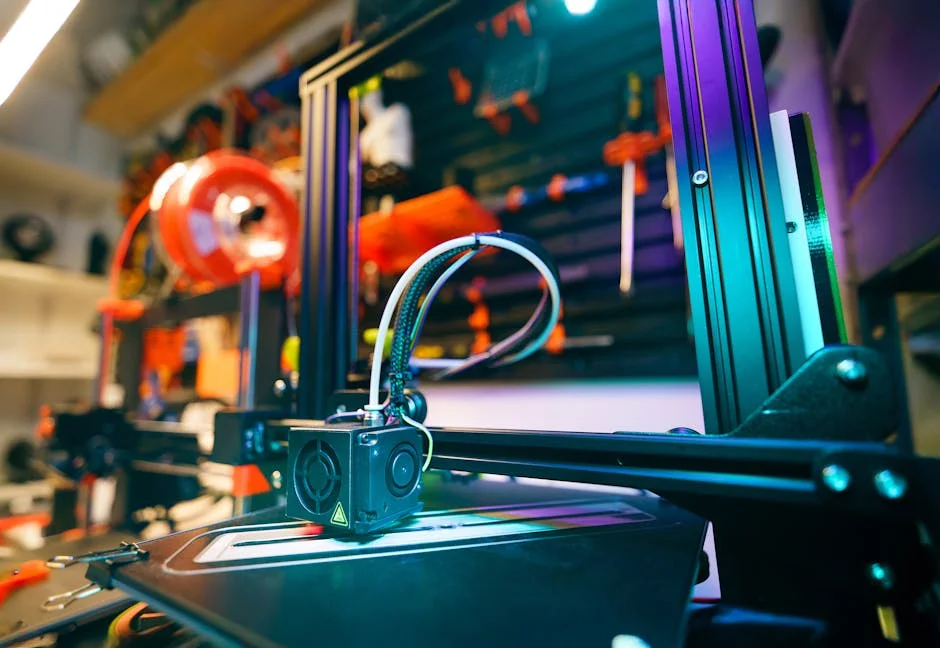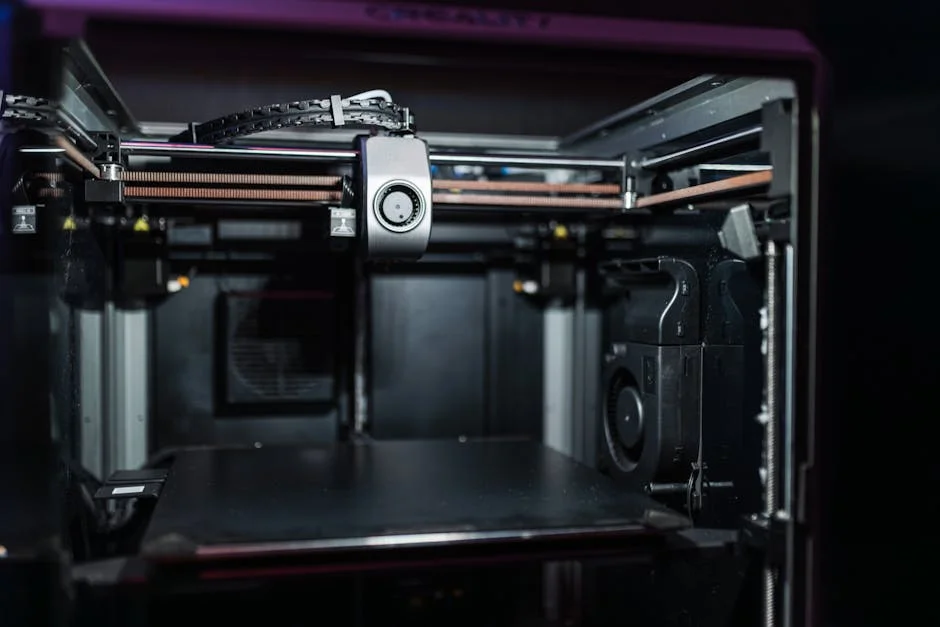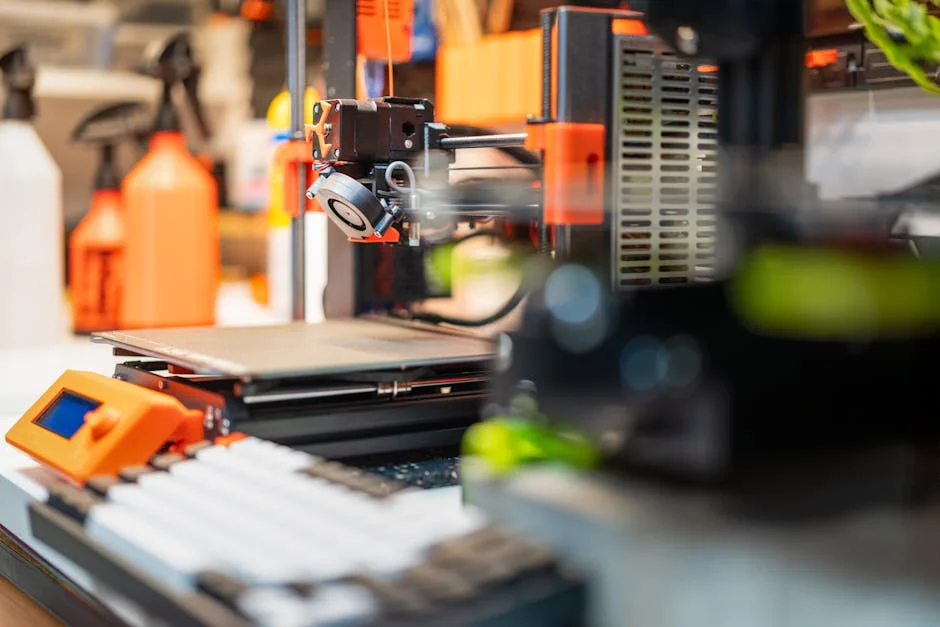
The prusa 3d printer has earned a reputation for being one of the most dependable and user-friendly machines in the desktop additive manufacturing world, and that reputation is rooted in practical details rather than marketing gloss. People gravitate to Prusa machines because they tend to behave like tools instead of projects: you can assemble them, calibrate them, and then repeatedly produce parts with predictable dimensional accuracy and surface quality. That matters whether you’re printing functional jigs for a workshop, making replacement parts for appliances, prototyping enclosures for electronics, or producing small-batch products. A big part of the appeal is how the ecosystem is designed to reduce friction. The hardware, firmware, and slicing profiles are tuned to work together, which means you spend less time chasing mysterious print artifacts and more time refining geometry, tolerances, and material selection. Even experienced makers who enjoy tinkering often want a printer that can be relied on during crunch time; Prusa’s machines are frequently chosen as the “known good” baseline when results need to be repeatable.
Table of Contents
- My Personal Experience
- Why the Prusa 3D Printer Has Become a Benchmark in Desktop Printing
- Key Models and Product Lines: Choosing the Right Prusa Machine
- Build Quality, Reliability, and the Practical Meaning of “Set and Forget”
- Calibration and First-Layer Success: The Foundation of Consistent Prints
- Slicer Workflow and Profiles: Getting the Most from PrusaSlicer and Alternatives
- Material Compatibility: PLA, PETG, ASA, Nylon, and Specialty Filaments
- Print Quality Factors: Surface Finish, Dimensional Accuracy, and Strength
- Speed, Noise, and Everyday Usability in Home and Office Settings
- Expert Insight
- Maintenance and Longevity: Keeping a Prusa Running for Years
- Common Upgrades and Accessories: What’s Worth It and What’s Optional
- Use Cases: From Prototyping and Education to Small-Batch Manufacturing
- Troubleshooting Print Issues: Practical Diagnosis Without Guesswork
- Value, Total Cost of Ownership, and What You’re Really Paying For
- Getting Started the Right Way: Habits That Lead to Better Results Fast
- Frequently Asked Questions
My Personal Experience
I bought a Prusa i3 MK3S+ after getting tired of constantly tinkering with a cheaper printer, and the difference was obvious from the first weekend. The assembly took me a few hours with the online manual open on my laptop, and I remember feeling oddly proud when the first calibration print came out clean instead of spaghetti. What surprised me most was how “set it and forget it” it became—auto bed leveling and the filament sensor saved a couple of prints when I got distracted and a spool snagged. I still had to learn the basics (dialing in PETG, keeping the PEI sheet clean, and not over-tightening things), but it stopped feeling like a science project and started feeling like a tool I could rely on for brackets, organizers, and little replacement parts around the house. If you’re looking for prusa 3d printer, this is your best choice.
Why the Prusa 3D Printer Has Become a Benchmark in Desktop Printing
The prusa 3d printer has earned a reputation for being one of the most dependable and user-friendly machines in the desktop additive manufacturing world, and that reputation is rooted in practical details rather than marketing gloss. People gravitate to Prusa machines because they tend to behave like tools instead of projects: you can assemble them, calibrate them, and then repeatedly produce parts with predictable dimensional accuracy and surface quality. That matters whether you’re printing functional jigs for a workshop, making replacement parts for appliances, prototyping enclosures for electronics, or producing small-batch products. A big part of the appeal is how the ecosystem is designed to reduce friction. The hardware, firmware, and slicing profiles are tuned to work together, which means you spend less time chasing mysterious print artifacts and more time refining geometry, tolerances, and material selection. Even experienced makers who enjoy tinkering often want a printer that can be relied on during crunch time; Prusa’s machines are frequently chosen as the “known good” baseline when results need to be repeatable.

Another reason the prusa 3d printer stands out is that it has historically balanced openness with polish. The community around Prusa tends to be large, active, and technically capable, which leads to a steady stream of printable upgrades, troubleshooting guides, and material profiles. At the same time, the out-of-box experience is more refined than many hobby-level competitors: automatic bed leveling workflows, consistent extrusion systems, and strong documentation reduce the learning curve for beginners. That combination—community-driven innovation alongside a stable platform—helps explain why Prusa printers show up in classrooms, engineering labs, design studios, and home workshops. When you evaluate printers by “time to reliable part,” not just by speed claims or feature lists, the Prusa approach becomes easy to understand: optimize for consistent first layers, stable temperatures, and predictable filament handling so that prints can run unattended with fewer surprises.
Key Models and Product Lines: Choosing the Right Prusa Machine
When buyers compare a prusa 3d printer lineup, the decision often comes down to your preferred printing technology, desired build volume, and tolerance for hands-on maintenance. Prusa is best known for its FDM/FFF printers that use filament, particularly the i3-style machines that became staples in the maker community. These models are typically chosen for functional prototyping and durable parts because filament materials like PETG, ASA, and nylon blends can offer strong mechanical properties. In parallel, Prusa’s resin (MSLA) offerings appeal to users who prioritize fine detail, smooth surfaces, and small intricate geometries, such as miniatures, dental models, or jewelry patterns. Each technology has tradeoffs: filament printing is generally cleaner and more forgiving for large functional parts, while resin printing demands more post-processing and safety habits but can deliver exceptional detail.
Picking the right prusa 3d printer also involves thinking about workflow, not just print quality. For example, if you print mostly mechanical brackets, tool holders, and fixtures, a filament-based model with strong part cooling control and reliable bed adhesion will likely serve you well. If you run long prints overnight, features like filament runout detection, power-loss recovery, and stable first-layer performance can be more valuable than raw speed. On the other hand, if your output is primarily display pieces or tiny components with crisp textures, resin may be the more appropriate path, even though it adds steps like washing, curing, and careful handling of uncured resin. Many users end up with both: an FDM prusa 3d printer for robust parts and a resin machine for high-detail components. The “right” choice is the one that matches your typical projects, your tolerance for maintenance, and the space you have for ventilation and post-processing.
Build Quality, Reliability, and the Practical Meaning of “Set and Forget”
Reliability is where a prusa 3d printer often justifies its price in real-world terms. Many desktop printers can produce a good-looking sample print after careful tuning, but the daily experience is what separates a dependable machine from a frustrating one. Prusa’s design priorities tend to emphasize stable motion systems, consistent extrusion, and firmware features that prevent small mistakes from turning into wasted hours. A rigid frame reduces ringing and dimensional drift, well-chosen bearings and rods help maintain smooth movement over time, and thoughtful cable management reduces intermittent faults. Even seemingly minor details—like how the filament path is constrained or how the bed surface is engineered for repeatable adhesion—can determine whether you trust the printer to run while you focus on other tasks.
For many owners, “set and forget” with a prusa 3d printer doesn’t mean zero maintenance; it means the maintenance is predictable and the machine tells you what it needs. You still clean the bed, occasionally lubricate motion components, and keep an eye on nozzle condition, but you’re less likely to be constantly re-leveling, re-flashing, or re-wiring. This matters when you print multi-part assemblies where tolerances stack up: if one part comes out 0.3 mm off because extrusion is inconsistent, the whole assembly may fail. A printer that produces consistent wall thickness and accurate hole sizing across weeks and months becomes a tool you can design around. That confidence changes how you work: you can iterate faster, you can standardize settings for certain materials, and you can schedule prints without babysitting. In practical terms, reliability is not a single feature; it’s the sum of thousands of small engineering choices that reduce variability.
Calibration and First-Layer Success: The Foundation of Consistent Prints
One of the most common reasons new users struggle with any prusa 3d printer—or any FDM machine—is first-layer inconsistency. The first layer is where adhesion is established, and it sets the stage for dimensional accuracy and surface finish. Prusa’s approach typically combines sensor-based bed leveling with guided calibration routines, helping users dial in the live Z offset so the nozzle-to-bed distance is correct. Too high and you get poor adhesion with gaps between lines; too low and you get over-squish, elephant’s foot, and potential nozzle clogs from back pressure. The best results come from understanding what you see: a good first layer looks like slightly flattened strands that touch edge to edge without ridges or transparent gaps. Learning to interpret that visual feedback turns calibration from a mystery into a controlled process.
Beyond the live Z adjustment, consistent results on a prusa 3d printer depend on bed cleanliness, temperature stability, and sensible print speeds for the first layer. Even a perfectly calibrated nozzle height can fail if the sheet is contaminated with skin oils, dust, or residue from adhesives. Many users adopt a simple habit: wipe with appropriate cleaner, avoid touching the print area, and use the correct bed temperature for the filament. Temperature matters because adhesion is partly about polymer behavior near its glass transition; too cool and corners lift, too hot and the base can become overly soft leading to dimensional distortion. First-layer speed is another lever: slower extrusion gives the filament time to wet the surface and form a bond, especially with tricky materials. When these factors align, you stop thinking of the first layer as a gamble and start treating it as a repeatable setup step. That repeatability is a major reason people stick with Prusa hardware for long-term projects.
Slicer Workflow and Profiles: Getting the Most from PrusaSlicer and Alternatives
A prusa 3d printer is closely associated with PrusaSlicer, and for good reason: well-tuned profiles can be the difference between average prints and excellent prints. A slicer converts your model into toolpaths, and every decision—layer height, perimeters, infill type, cooling strategy, and retraction—affects strength, time, and appearance. PrusaSlicer profiles are often calibrated to match the printer’s motion system, extrusion characteristics, and common filaments. That means you can choose a material profile and a quality preset and get results that are “close to optimal” without starting from scratch. For many users, that reliability is a productivity multiplier, because it reduces the number of test prints required when switching between PLA for quick prototypes and PETG for functional parts.

Advanced users of a prusa 3d printer often take advantage of features like variable layer height, modifier meshes, and per-object settings. Variable layer height lets you use thicker layers in low-detail regions for speed while preserving fine detail on curves and text by using thinner layers where it matters. Modifier meshes allow you to reinforce screw bosses with extra perimeters, increase infill density under load-bearing regions, or change print orientation strategies without splitting the model. Per-object settings become especially powerful when printing multiple items at once: you can slow down a tall thin part to reduce wobble while printing a shorter block at normal speed. Even if you prefer other slicers, the logic remains the same: start from known-good profiles, change one parameter at a time, and validate with small calibration objects. The strongest workflow is one where you can predict how a settings change will influence the part, rather than relying on trial and error.
Material Compatibility: PLA, PETG, ASA, Nylon, and Specialty Filaments
Material choice is where a prusa 3d printer can shift from being a hobby device to a serious fabrication tool. PLA is popular because it prints easily, holds detail well, and is forgiving with cooling and adhesion. For prototypes, enclosures, and decorative parts, PLA is often enough. PETG is a common step up when you need more toughness, better heat resistance, and improved layer bonding, though it can be stringier and more sensitive to retraction tuning. ASA and ABS are chosen for higher temperature performance and outdoor durability, but they demand better control of drafts and thermal contraction; an enclosure or controlled environment can make these materials far more reliable. Nylon and nylon composites introduce even more strength and wear resistance, but they require dry storage and careful printing conditions because moisture absorption can quickly degrade print quality.
To get dependable results from a prusa 3d printer across these materials, it helps to think in terms of a “material system” rather than a single spool. Dry filament prints better, period, and a simple dry box or filament dryer can be one of the most impactful upgrades you make. Bed surfaces and adhesion strategies should also match the polymer: what works for PLA on a smooth sheet may not be ideal for PETG, and some materials can bond too aggressively to certain surfaces if you don’t use the right temperature or release method. Specialty filaments like carbon-fiber blends, glow-in-the-dark, or metal-filled options can open up interesting applications, but they can also be abrasive, wearing down brass nozzles faster. Hardened steel or other wear-resistant nozzles become worthwhile if you print abrasives regularly. When you treat materials as a deliberate choice—based on mechanical needs, heat exposure, UV exposure, and finish requirements—you can achieve professional-grade outcomes on a desktop platform.
Print Quality Factors: Surface Finish, Dimensional Accuracy, and Strength
Print quality on a prusa 3d printer is a combination of mechanical precision, thermal control, and slicing strategy. Surface finish is influenced heavily by layer height, extrusion consistency, and cooling. Thin layers can make curved surfaces look smoother, but they increase print time and may highlight minor inconsistencies if the filament diameter varies or if the nozzle accumulates residue. Cooling is another major variable: too little cooling can cause drooping on bridges and soft edges on overhangs, while too much cooling can reduce layer adhesion for certain materials and cause warping. The best approach is material-specific: PLA generally likes more cooling, PETG often needs moderate cooling, and ASA/ABS typically prefer minimal cooling in a draft-free environment. Understanding these relationships helps you choose settings that match your goals, whether you prioritize cosmetics or mechanical performance.
Dimensional accuracy and strength also require deliberate choices on a prusa 3d printer. Hole sizing, for instance, is affected by extrusion width, perimeter order, and cooling; holes often print slightly undersized because of how molten plastic behaves. You can compensate by designing with clearance, using slicer hole compensation, or drilling to final size. Strength depends on layer adhesion, perimeter count, and the direction of forces relative to layer lines. A part can be strong in the XY plane and weak in Z if loaded in a way that peels layers apart. Increasing temperature slightly, reducing excessive cooling, and using more perimeters can improve strength more reliably than simply increasing infill. Infill primarily supports top surfaces and resists compression; perimeters often carry the real loads. When you align the design with the printing process—orienting parts to place layer lines in favorable directions and adding fillets to reduce stress concentrations—you can produce components that perform far beyond what casual observers expect from “plastic prints.”
Speed, Noise, and Everyday Usability in Home and Office Settings
People often ask whether a prusa 3d printer is “fast,” but speed is best understood as a balance of motion capability, extrusion limits, and how much quality you’re willing to trade for time. Faster printing can introduce ringing, reduced corner sharpness, and inconsistent extrusion if the hotend can’t melt filament at the required rate. Prusa machines tend to focus on reliable, repeatable motion and predictable results rather than chasing headline speeds that only work in ideal conditions. For everyday usability, the more important metric is how often prints complete successfully at reasonable speeds without constant tuning. A printer that finishes a 10-hour job reliably is often more valuable than one that can theoretically do it in 6 hours but fails intermittently due to vibration, thermal issues, or filament feeding problems.
| Model | Best for | Key strengths |
|---|---|---|
| Prusa MINI+ | Beginners, small parts, budget setups | Compact footprint, reliable prints, strong community support |
| Original Prusa i3 MK4 | All‑around home/pro users needing dependable daily printing | Excellent print quality, easy maintenance, broad material compatibility |
| Prusa XL | Large builds and multi‑material production workflows | Big build volume, scalable toolhead options, designed for higher throughput |

Expert Insight
Start with a clean first layer: wash the build plate with warm water and dish soap, avoid touching the surface, then run the built-in first-layer calibration and adjust Live-Z in small steps until lines are slightly squished and fully connected. If you’re looking for prusa 3d printer, this is your best choice.
Improve reliability by printing a simple temperature tower for each new filament and saving the best profile; then keep the extruder path consistent by checking idler tension, cleaning the drive gear, and drying filament (especially PETG/nylon) to prevent stringing and under-extrusion. If you’re looking for prusa 3d printer, this is your best choice.
Noise and general livability also matter, especially if your prusa 3d printer is located in a home office, classroom, or shared workspace. Stepper motor drivers, fan quality, and mechanical resonance all contribute to perceived noise. Even if a printer is not painfully loud, a high-pitched fan or a repetitive motion sound can become distracting over long periods. Many users address this by placing the printer on a stable surface, using vibration-damping feet, and ensuring fans are clean and unobstructed. Enclosures can reduce noise while also improving thermal stability for materials like ASA, but you’ll want to consider airflow and electronics cooling. Usability is also shaped by small daily interactions: how easy it is to load filament, how clear the on-screen prompts are, how quickly you can swap build plates, and how straightforward it is to resume after a pause. These “little things” add up to a workflow that either encourages experimentation or makes printing feel like a chore.
Maintenance and Longevity: Keeping a Prusa Running for Years
A prusa 3d printer can run for years with consistent performance if you treat maintenance as routine rather than emergency repair. Regular tasks include cleaning the build surface, checking belt tension, lubricating smooth rods or linear guides as recommended, and inspecting the nozzle for wear or residue buildup. Over time, even high-quality components experience normal wear: nozzles gradually widen, PTFE components can degrade from heat cycling, and fans may accumulate dust that reduces cooling efficiency. The key is to catch these issues early, because many print quality problems start subtly—slightly rougher surfaces, small under-extrusion events, or increased stringing—before they become obvious failures. Keeping a simple maintenance log can help if multiple people use the printer, ensuring that changes in output can be correlated with nozzle swaps, firmware updates, or filament changes.
Longevity with a prusa 3d printer also depends on using materials and settings that respect the machine’s limits. Abrasive filaments can be fantastic for stiffness and appearance, but they can shorten nozzle life quickly. High-temperature materials may require more careful thermal management and, in some cases, upgraded components designed for sustained heat. Filament quality matters more than many expect: inconsistent diameter, poor winding, or excessive moisture can cause jams and extrusion instability that look like mechanical problems but are actually material issues. Storage is part of maintenance too; keeping hygroscopic filaments sealed and dry prevents many frustrating failures. Finally, firmware and slicer updates can improve performance, but it’s wise to update intentionally—especially in a production environment—so you can validate that profiles and behavior remain consistent. With these habits, many owners find that their printer becomes a stable fixture in their workflow rather than a device they constantly troubleshoot.
Common Upgrades and Accessories: What’s Worth It and What’s Optional
Owners of a prusa 3d printer often enjoy customizing, but not every upgrade is equally valuable. Some accessories improve reliability and print quality immediately, while others are more about convenience. A filament dryer or dry box is one of the most universally useful additions, especially if you print PETG, nylon, or flexible materials. Swappable nozzles or a selection of nozzle sizes can also expand capability: a larger nozzle can dramatically reduce print time for big functional parts, while a smaller nozzle can improve detail for text and fine features. Additional build plates or sheets can make workflow smoother because you can remove a finished plate, start the next print on a spare, and clean the first plate when convenient. Good lighting near the printer and a simple set of tools—flush cutters, hex keys, a deburring tool, and calipers—also improve day-to-day experience more than many flashy mods.
Other upgrades for a prusa 3d printer are situational. An enclosure can be transformative if you print ASA/ABS regularly or if you need to reduce drafts, but it adds complexity and requires you to think about air filtration and electronics cooling. Camera monitoring can be helpful for long prints, especially if you want time-lapses or remote checks, but it won’t fix underlying reliability issues; it simply helps you catch problems earlier. Aftermarket parts that change the extrusion path or cooling system can offer benefits, yet they can also introduce new variables that make troubleshooting harder. If your goal is consistent output, it’s often best to master the stock configuration first, then change one thing at a time with clear goals and test prints. The most “worth it” upgrades are the ones that reduce failure rates, improve material handling, or make maintenance easier without adding unnecessary complexity.
Use Cases: From Prototyping and Education to Small-Batch Manufacturing
A prusa 3d printer fits into a wide range of real-world use cases because it can produce accurate parts with common engineering plastics and can do so repeatedly. In product development, it’s frequently used for rapid prototyping of housings, brackets, fixtures, and ergonomic models. Designers can validate fit and feel, engineers can test assembly clearances, and teams can iterate quickly without waiting for outsourced machining or injection molding. In education, a reliable printer is less about printing novelty items and more about enabling learning: students can explore design constraints, material behavior, and mechanical concepts by creating tangible objects. Teachers benefit from predictable printing because classroom schedules are unforgiving; a machine that completes prints consistently is far more valuable than one that demands constant tuning.

Small-batch manufacturing is another area where a prusa 3d printer can shine, especially for niche products, custom tools, and on-demand parts. While FDM printing is not always the cheapest per part compared to mass production, it can be extremely cost-effective when volumes are low, designs change frequently, or customization is a selling point. Makers produce camera accessories, workshop organizers, cosplay parts, robotics brackets, and specialty adapters with surprisingly professional results, particularly when designs are optimized for printing. Jigs and fixtures are also a major productivity booster in workshops: custom drill guides, alignment tools, and assembly aids can be printed overnight and used the next day. The key to success in these use cases is consistency—knowing that the printer will deliver the same dimensions and strength characteristics across runs—so you can standardize processes and avoid rework.
Troubleshooting Print Issues: Practical Diagnosis Without Guesswork
Even a prusa 3d printer will occasionally produce a failed print, and the fastest way to recover is to diagnose systematically rather than changing five settings at once. Many common issues have recognizable signatures. Poor bed adhesion often shows up as corners lifting or the print sliding; the usual causes are incorrect Z offset, a dirty build surface, or incorrect first-layer temperature and speed. Stringing is frequently tied to filament moisture, retraction settings, and travel temperature; drying the filament can sometimes outperform any slicer tweak. Under-extrusion may be caused by partial nozzle clogs, heat creep, a worn drive gear, or filament with inconsistent diameter. Layer shifts can point to belt tension issues, collisions from warped parts, or overly aggressive acceleration settings. When you treat symptoms as clues, you can narrow causes quickly and avoid turning a simple fix into a prolonged tuning session.
A productive troubleshooting mindset for a prusa 3d printer also includes controlled testing. If you suspect temperature issues, print a temperature tower using the same filament and compare bridging, overhang quality, and stringing across temperature steps. If you suspect extrusion calibration problems, use a simple single-wall cube to measure wall thickness and compare to expected extrusion width. If you suspect mechanical looseness, check pulleys, grub screws, belt alignment, and whether the hotend or bed has play. Document changes so you can revert if needed. It’s also helpful to isolate variables: test with a known-good filament, use a standard profile, and keep the model simple. Many “mystery” problems end up being moisture in filament, a contaminated bed, or a nozzle that has reached the end of its useful life. The goal is not to eliminate all failures forever; it’s to reduce the time between noticing a problem and restoring dependable output.
Value, Total Cost of Ownership, and What You’re Really Paying For
Evaluating the value of a prusa 3d printer is easiest when you consider total cost of ownership rather than the sticker price alone. A cheaper printer can look attractive upfront, but if it demands frequent replacement parts, constant recalibration, or long troubleshooting sessions, the hidden cost shows up as wasted filament, lost time, and delayed projects. Prusa machines tend to compete on the idea that a printer should be a reliable platform with strong documentation, mature firmware, and well-maintained slicing profiles. Those elements reduce friction, especially for users who want to design and produce parts rather than continuously tune hardware. For businesses and educators, reduced downtime can be worth more than the initial price difference, because the printer becomes part of a workflow that has deadlines and expectations.
Consumables and operating costs also shape how a prusa 3d printer fits your budget. Filament is the primary ongoing cost for FDM printing, and quality filament often pays for itself through reduced clogs and more consistent output. Nozzles, build surfaces, and occasional replacement components are normal wear items, and budgeting for them prevents surprises. Electricity usage is usually modest, but long prints and high bed temperatures add up over time. There’s also the cost of space and environment: if you print materials that require enclosure or ventilation, you may invest in filters, enclosures, or dedicated work areas. Ultimately, the value proposition comes down to predictability. If the machine produces consistent parts with minimal fuss, you can plan projects confidently, keep iteration cycles short, and spend more time on design improvements rather than printer babysitting.
Getting Started the Right Way: Habits That Lead to Better Results Fast
Success with a prusa 3d printer often comes from a few simple habits that prevent the most common failures. Start with a known-good filament and a standard profile, then focus on first-layer quality before experimenting with advanced settings. Keep the build surface clean and handle it by the edges to avoid transferring oils. Learn what a good extrusion line looks like on the first layer and don’t hesitate to adjust live Z in small increments until the pattern is consistent. Store filament properly, especially PETG, nylon, and flexible materials, because moisture can turn an otherwise perfect profile into a stringy, brittle mess. When you change something—new filament brand, new nozzle size, new build plate—make a small test print first so you can confirm behavior before committing to a long job.
As your confidence grows, the prusa 3d printer becomes more than a machine you operate; it becomes a process you can refine. Use calipers to measure critical dimensions and feed that knowledge back into your design tolerances. Keep a shortlist of proven settings for each material you use regularly, including temperatures, cooling preferences, and typical retraction behavior. If you print functional parts, orient models to maximize strength where loads occur, and use perimeters strategically rather than relying solely on high infill. Build a small library of calibration prints that you can run quickly when something feels off. With these habits, you’ll spend less time troubleshooting and more time producing parts that fit, function, and look the way you intended. When approached this way, a prusa 3d printer rewards you with the kind of consistency that makes desktop fabrication genuinely practical for everyday work.
Summary
In summary, “prusa 3d printer” is a crucial topic that deserves thoughtful consideration. We hope this article has provided you with a comprehensive understanding to help you make better decisions.
Frequently Asked Questions
Which Prusa 3D printer should I choose (MINI+, MK4, XL)?
MINI+ is best for smaller prints and lower cost, MK4 is the general-purpose choice for most users, and XL is for large-format, multi-tool printing and higher throughput.
Do Prusa printers come assembled or as kits?
Many models come either fully assembled or as a kit, including the popular **prusa 3d printer**. Choosing a kit can save you money and help you learn how the machine works, while a pre-assembled unit gets you printing faster with minimal setup.
What materials can a Prusa 3D printer print?
Common materials include PLA and PETG, but with the right setup—especially a good enclosure—many people using a **prusa 3d printer** also print flexible TPU and step up to tougher filaments like ABS/ASA and even certain nylons.
What slicer should I use with a Prusa printer?
PrusaSlicer is the go-to choice for a **prusa 3d printer** because it comes dialed in with reliable, well-tested profiles right out of the box. That said, you can absolutely use other slicers too—as long as you take the time to properly set up your printer and filament settings for accurate, consistent results.
How do I improve first-layer adhesion on a Prusa printer?
Before you start a print on your **prusa 3d printer**, give the build plate a quick clean (isopropyl alcohol works great), then double-check your first-layer calibration and Z-offset so the filament lays down smoothly. Make sure you’re using the right sheet or plate type for your material, and confirm that both the bed and nozzle temperatures are set to the filament’s recommended range for the best adhesion and consistency.
What routine maintenance does a Prusa 3D printer need?
To keep your **prusa 3d printer** running smoothly, regularly wipe down the rods and bearings, make sure the belts are properly tensioned, and check the nozzle and extruder gears for any buildup. It also helps to keep the build plate clean for reliable adhesion, and to install firmware updates whenever they’re recommended.
? Looking for more info about prusa 3d printer? Follow Our Site for updates and tips!