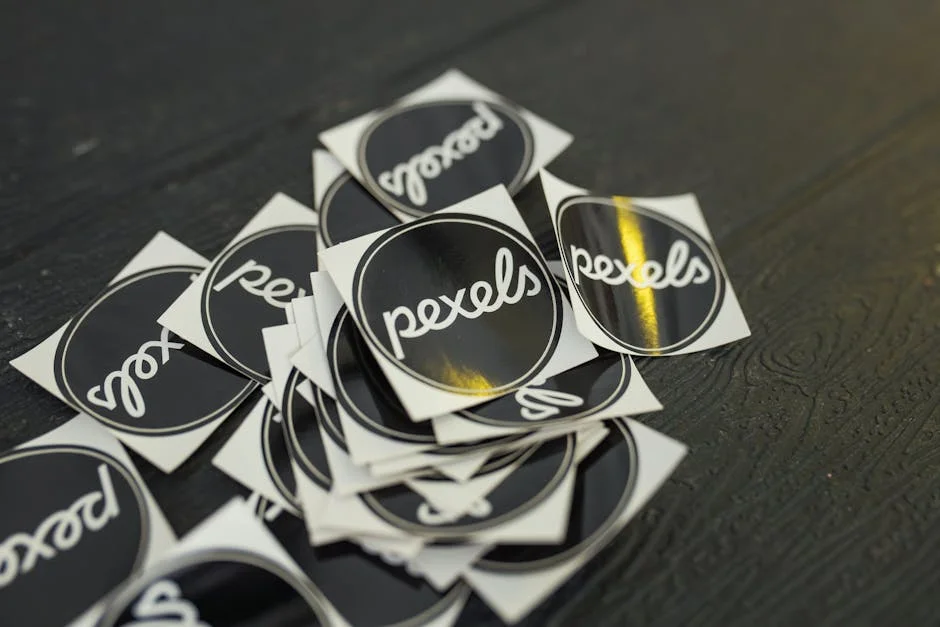
Custom sticker printing has become one of the most flexible tools for modern branding, product labeling, event promotion, and personal expression because it sits at the intersection of design, manufacturing, and everyday usability. A sticker is small, but it travels: it moves from a shipping box to a laptop, from a storefront window to a water bottle, from a conference badge to a car bumper. That mobility creates repeated impressions at a cost that is often lower than many other promotional formats. The strongest advantage is that customization can be tightly aligned with a purpose. A product label requires legibility, compliance, and durability; a giveaway sticker needs instant visual appeal and a “keep it” factor; a safety decal must withstand abrasion, chemicals, and UV light. When a business or creator chooses custom sticker printing, they are essentially choosing a mini billboard that can be engineered for a specific environment, audience, and lifecycle. That engineering includes shape, size, adhesive type, material, lamination, and ink technology. The result can be anything from a premium brand mark on a matte vinyl sticker to a short-run seasonal label printed in bright colors that stands out on shelves. Because the barrier to entry is low, stickers also support experimentation: brands can test designs, track response, and iterate quickly without the large commitments of packaging redesigns or signage production. The same agility helps creators, clubs, and schools produce limited editions, fundraiser packs, and event merchandise with minimal overhead.
Table of Contents
- My Personal Experience
- Understanding Custom Sticker Printing and Why It Matters
- Choosing Materials: Vinyl, Paper, Polyester, and Specialty Films
- Adhesives and Use Cases: Permanent, Removable, and Specialty Tacks
- Printing Methods: Digital, Offset, Screen, and Hybrid Approaches
- Design Preparation: Color, Bleed, Safe Zones, and File Formats
- Cut Styles and Finishes: Die-Cut, Kiss-Cut, Sheets, and Rolls
- Durability Considerations: Waterproofing, UV Resistance, and Scratch Protection
- Expert Insight
- Branding and Marketing Uses: Packaging, Promotions, and Community Building
- Ordering Strategy: Quantities, Sampling, Proofs, and Budget Control
- Common Mistakes to Avoid: Readability, Overdesign, and Misaligned Expectations
- Sustainability and Responsible Choices in Sticker Production
- Final Thoughts on Getting the Best Results
- Frequently Asked Questions
My Personal Experience
I recently ordered custom sticker printing for a small batch of products I sell at local markets, and I didn’t realize how many little choices would matter until I started the process. I uploaded my design thinking it was “good enough,” but the proof showed my thin lines would get lost, so I tweaked the file and bumped up the contrast. I went with a matte finish and a kiss-cut sheet because I wanted them easy to peel and not too shiny under indoor lights. When the stickers arrived, the colors were slightly warmer than my screen, but they still looked clean and professional, and the adhesive held up on jars and packaging without curling at the edges. It cost a bit more than I expected, but seeing my logo on everything instantly made my setup feel more legit.
Understanding Custom Sticker Printing and Why It Matters
Custom sticker printing has become one of the most flexible tools for modern branding, product labeling, event promotion, and personal expression because it sits at the intersection of design, manufacturing, and everyday usability. A sticker is small, but it travels: it moves from a shipping box to a laptop, from a storefront window to a water bottle, from a conference badge to a car bumper. That mobility creates repeated impressions at a cost that is often lower than many other promotional formats. The strongest advantage is that customization can be tightly aligned with a purpose. A product label requires legibility, compliance, and durability; a giveaway sticker needs instant visual appeal and a “keep it” factor; a safety decal must withstand abrasion, chemicals, and UV light. When a business or creator chooses custom sticker printing, they are essentially choosing a mini billboard that can be engineered for a specific environment, audience, and lifecycle. That engineering includes shape, size, adhesive type, material, lamination, and ink technology. The result can be anything from a premium brand mark on a matte vinyl sticker to a short-run seasonal label printed in bright colors that stands out on shelves. Because the barrier to entry is low, stickers also support experimentation: brands can test designs, track response, and iterate quickly without the large commitments of packaging redesigns or signage production. The same agility helps creators, clubs, and schools produce limited editions, fundraiser packs, and event merchandise with minimal overhead.

Beyond marketing, custom sticker printing plays a practical role in organization and communication. Warehouses use durable barcode labels and color-coded stickers for inventory; offices use asset tags; healthcare settings rely on clear identification and instruction labels; and small manufacturers use batch, lot, and compliance information stickers to keep operations accurate. The “custom” part is not only about aesthetics but also about function: the right adhesive prevents peeling on textured surfaces, and the right material resists moisture in refrigerated or outdoor conditions. Even within creative communities, sticker production has evolved into a reliable medium for artists who want a tangible product that is easy to ship, easy to display, and easy to collect. A well-produced sticker feels like a product, not a throwaway. That perception depends on printing accuracy, color consistency, cut precision, and finishing. When those details are handled well, stickers become a high-value touchpoint that communicates professionalism. When handled poorly, they can do the opposite—misaligned cuts, dull colors, and curling edges can undermine trust. Understanding the fundamentals of sticker materials, print methods, and finishing options helps ensure the final result matches the message you want to send.
Choosing Materials: Vinyl, Paper, Polyester, and Specialty Films
Material selection is one of the biggest determinants of success in custom sticker printing because it dictates durability, texture, color appearance, and how the sticker behaves over time. Vinyl is often the most popular choice for general-purpose stickers because it balances flexibility, water resistance, and strong color reproduction. A quality vinyl sticker can handle light outdoor exposure, frequent handling, and mild abrasion, especially when paired with lamination. Vinyl also conforms better to curved surfaces than many paper options, making it suitable for bottles, helmets, toolboxes, and laptops. Paper stickers, by contrast, can be excellent for indoor use, short-term promotions, packaging seals, and price labels where moisture exposure is limited. Paper can also offer a warmer, more natural feel—especially kraft paper—creating a handmade or eco-forward impression. However, without protective coatings, paper is less tolerant of water, oils, and friction, so it’s best chosen with realistic expectations about lifespan. Polyester (often PET) sits in a different category: it is tough, dimensionally stable, and resistant to tearing, making it a strong candidate for equipment labels, warning decals, and applications that need higher temperature or chemical resistance. If the sticker must remain readable for months or years, polyester-based labels often outperform basic paper stocks.
Specialty films expand what custom sticker printing can achieve visually and functionally. Clear film stickers can create a “printed on” look for glass jars, windows, and sleek packaging, but they require careful design to ensure contrast; a white ink underbase may be needed to prevent colors from looking transparent or washed out. Holographic, glitter, and metallic films add attention-grabbing effects that work well for limited editions, promotional drops, and brand moments where sparkle and reflectivity are part of the appeal. Matte versus gloss is another material-adjacent decision that affects how colors are perceived. Gloss tends to make colors pop and can look more vibrant under bright light, while matte feels more modern and reduces glare, often improving readability for text-heavy designs. Textured films and soft-touch laminates can add a premium feel, though they may slightly mute colors. When selecting a material, it helps to think about the environment (indoor, outdoor, refrigerated, high-touch), the surface (smooth, textured, curved), and the desired emotional tone (playful, minimal, luxury, industrial). The right stock can make a small sticker feel like a high-end product, while the wrong stock can cause early peeling, fading, or scuffing that makes the design look older than it is.
Adhesives and Use Cases: Permanent, Removable, and Specialty Tacks
Adhesive choice is often underestimated in custom sticker printing, yet it determines whether the sticker stays put, peels cleanly, or fails in ways that frustrate customers. Permanent adhesives are designed for long-term attachment and are commonly used for product labels, shipping labels (when appropriate), equipment identification, and outdoor decals. They bond strongly to many surfaces, and some versions are formulated for plastics, metals, painted surfaces, and low-energy materials like certain polyethylenes. The trade-off is that removal can leave residue or damage delicate surfaces. Removable adhesives are designed to peel off cleanly, which makes them ideal for temporary promotions, event stickers, window decals, seasonal packaging, and situations where the end user might want to reposition or remove the sticker later. A removable sticker can still be durable, but it is not meant to survive the same abuse as a permanent industrial label. Repositionable adhesives sit between these categories, allowing a sticker to be moved shortly after application without losing tack. For wall graphics, for example, a low-tack adhesive can prevent paint pull and reduce the risk of tearing drywall paper.
Specialty adhesives address challenging environments. Freezer-grade adhesives can maintain bond strength in cold temperatures and resist condensation, which is critical for food packaging, frozen goods, and cold-chain logistics. High-tack adhesives help on textured or powder-coated surfaces where standard adhesives might not fully contact the material. Static cling is a non-adhesive option for smooth glass or acrylic surfaces, useful for temporary window messaging; it avoids residue but requires clean, flat surfaces and is not suited for long-term outdoor use. The practical way to choose is to define the sticker’s “job.” If the job is to brand a laptop, a durable vinyl sticker with a standard permanent adhesive and laminate is usually ideal. If the job is to run a weekend sale on a storefront window, a removable window sticker or cling may be better. If the job is to label chemical containers, then adhesive and material must be compatible with exposure risks. A strong design can still fail if the adhesive is wrong: corners lift, edges collect dust, and the sticker looks worn quickly. Aligning adhesive type with surface energy, temperature range, and expected handling is one of the most important steps in delivering a sticker that feels reliable and professional. If you’re looking for custom sticker printing, this is your best choice.
Printing Methods: Digital, Offset, Screen, and Hybrid Approaches
The printing method used in custom sticker printing affects color accuracy, cost efficiency, turnaround time, and the range of effects available. Digital printing is widely used today because it supports short runs, fast production, and easy customization. For brands running multiple versions—different flavors, scents, or limited editions—digital workflows allow variable data, quick proofing, and consistent output without the setup costs of traditional plates. Digital also handles complex gradients and full-color imagery well, making it a strong choice for illustrative designs, photo-based stickers, and detailed artwork. Offset printing, while less common for small sticker jobs, can be cost-effective for very large runs and is known for high-quality color reproduction. It typically requires more setup and is less flexible for frequent design changes, but it can be excellent when a brand needs hundreds of thousands of identical labels with tight color control. Screen printing remains valuable for certain sticker applications because it lays down thicker ink, can produce strong opacity, and works well with specialty inks. For example, a bold spot color on a dark substrate or an opaque white on clear film can be more robust with screen techniques, depending on the printer’s capabilities.

Hybrid approaches combine methods to capture the benefits of each. A common example is digital printing for full-color imagery paired with screen-printed white ink or spot varnish effects. Some production lines also integrate digital printing with inline finishing, such as lamination and precision cutting, to streamline output. When choosing a method, it helps to consider not only the design but also the end use. If the sticker will be outdoors, UV-resistant inks and protective laminates become more important than the printing method alone. If the sticker must match a brand’s Pantone colors precisely across multiple print runs, you may want a workflow that supports spot color matching and robust calibration. If the sticker includes fine text, barcodes, or QR codes, resolution and sharpness matter; modern digital printers can be excellent here, but quality varies by equipment and operator expertise. The best results come from aligning the production method with the sticker’s purpose: high-volume product labeling may prioritize consistency and unit cost, while artist sticker drops may prioritize vibrant color, unique finishes, and quick turnaround. Knowing the strengths and limitations of each method helps avoid surprises, like slight color shifts, unexpected banding in gradients, or insufficient opacity on clear materials. If you’re looking for custom sticker printing, this is your best choice.
Design Preparation: Color, Bleed, Safe Zones, and File Formats
Great results in custom sticker printing start with disciplined design preparation. Stickers are small, so every millimeter matters: a slightly off-center cut or a missing bleed can turn a clean design into something that looks amateur. Bleed is the extra artwork that extends beyond the cut line, ensuring that when the sticker is trimmed there are no unprinted edges. A common bleed range is around 1/8 inch (about 3 mm), though requirements vary by vendor and cutting method. Safe zones are the opposite concept: keep essential text, logos, and critical details away from the edge so that minor cutting tolerances don’t clip important elements. If a sticker has a border, it is especially important to consider alignment tolerance; thin borders can make small shifts obvious. Many designers avoid borders or make them thick enough that minor variation is less noticeable. Resolution is equally important. Artwork should typically be prepared at 300 DPI at final print size for raster elements. Vector files are ideal for logos, icons, and typography because they scale cleanly and ensure crisp edges.
Color management is another major factor. Screens display color in RGB light, while printing uses CMYK inks (and sometimes additional inks like white or metallic). A design that looks neon-bright on a monitor can look duller in print if it relies on colors outside the CMYK gamut. Converting thoughtfully, using printer profiles when available, and choosing realistic color values helps. For brand-critical colors, specifying Pantone references and requesting a proof can reduce risk, though not every print workflow supports exact spot matching. File formats matter, too. PDF is a common delivery format because it can preserve vectors, fonts, and layout, but it must be exported correctly with bleed and crop marks if required. AI and EPS are useful for vector-heavy designs, while high-quality PNG or TIFF can work for raster artwork if properly sized and color-managed. Transparent backgrounds should be handled carefully: a transparent PNG might look right on-screen but may need a defined white ink layer for clear material. If the sticker has a die-cut shape, a separate cut path layer is usually required, often defined as a spot color named according to the printer’s guidelines. Proper file setup reduces back-and-forth, speeds production, and prevents costly reprints. The payoff is a sticker that looks intentional—sharp text, clean edges, and colors that match expectations. If you’re looking for custom sticker printing, this is your best choice.
Cut Styles and Finishes: Die-Cut, Kiss-Cut, Sheets, and Rolls
The way a sticker is cut and delivered influences both user experience and production efficiency in custom sticker printing. Die-cut stickers are cut all the way through the sticker material and backing, producing individual stickers in custom shapes. They feel premium, are easy to hand out, and work well for branding moments where presentation matters. Kiss-cut stickers are cut through the sticker layer but not through the backing, leaving the sticker on a larger sheet or on a backing shape. Kiss-cutting is ideal for sticker sheets, planner stickers, and sets where multiple designs are grouped together. It also allows intricate shapes to be cut without the sticker becoming too delicate to handle. Sheets are convenient for small batches, hand application, and retail packs. Rolls, on the other hand, are often preferred for high-volume labeling and automated application. If stickers will be applied by a label applicator machine, roll direction, core size, and winding orientation become critical specifications. Even for manual application, rolls can be faster for large quantities, and they store efficiently.
Finishes add both protection and personality. Lamination is one of the most common upgrades, adding a clear protective layer that resists scratching, moisture, and fading. Gloss laminate boosts vibrancy, while matte laminate reduces glare and can feel more refined. Soft-touch laminates provide a velvety feel that can elevate premium packaging labels, though they may show fingerprints depending on the formulation. Spot UV adds a glossy highlight to specific areas, creating contrast on matte surfaces and drawing attention to logos or key design elements. Embossing and debossing can add tactile depth, though they are more specialized and may increase cost and lead time. For safety and industrial use, overlaminates can be engineered for chemical resistance and outdoor exposure. The choice of finish should reflect both the environment and the brand’s aesthetic. A children’s product might benefit from bright gloss and rounded corners, while a minimalist skincare label might look best with matte film and subtle typography. Rounded corners are also practical: they reduce edge lifting and improve durability, especially on high-touch items. By choosing the right cut style and finish, a sticker becomes easier to apply, more durable in real life, and more aligned with the experience you want customers to have when they see and touch it. If you’re looking for custom sticker printing, this is your best choice.
Durability Considerations: Waterproofing, UV Resistance, and Scratch Protection
Durability is a deciding factor for many custom sticker printing projects, especially when stickers are expected to live on water bottles, vehicles, outdoor signage, or frequently handled products. Waterproofing is not just about the material; it includes ink type and protective layers. A vinyl film may resist water, but if the ink is not properly protected, it can scuff or fade. Lamination is often the key to creating a truly water-resistant sticker that stands up to washing, rain, and condensation. For bottles and tumblers, a laminated vinyl sticker can handle splashes and gentle hand washing, but dishwasher heat and detergents can still be harsh; if dishwasher durability is required, it’s important to specify that upfront because it may require specialized materials and adhesives. UV resistance matters for anything exposed to sunlight. Without UV protection, colors can fade, especially reds and certain bright tones. UV-resistant inks and laminates slow this process significantly, extending the life of the sticker outdoors.
| Option | Best for | Key benefits |
|---|---|---|
| Die-Cut Custom Stickers | Brands needing a precise, custom shape | Cut to any outline, premium look, great for logos and product labeling |
| Kiss-Cut Sticker Sheets | Bulk orders and easy distribution | Multiple designs per sheet, simple peel, cost-effective for giveaways and packaging |
| Clear Vinyl Custom Stickers | Minimalist designs and window/packaging use | Transparent background, clean “no-label” appearance, durable and water-resistant |

Expert Insight
Choose the right material and finish for where the sticker will live: vinyl with a laminate for outdoor use, waterproof options for bottles, and matte finishes to reduce glare on packaging. Before ordering, request a small proof set to test adhesion, scratch resistance, and color accuracy in real conditions. If you’re looking for custom sticker printing, this is your best choice.
Design with print realities in mind: add a 2–3 mm bleed, keep important text at least 2–3 mm inside the cut line, and use high-contrast colors for readability at small sizes. If you’re using custom shapes, include a clear cut path and avoid ultra-thin details that can tear during weeding or application. If you’re looking for custom sticker printing, this is your best choice.
Scratch protection is equally important for stickers placed on laptops, phone cases, skateboards, helmets, and packaging that rubs against other items during shipping. A protective laminate helps prevent scuffs and keeps the surface looking new longer. Abrasion resistance can also be influenced by the finish: some matte laminates hide minor scratches better than high-gloss surfaces, while gloss can sometimes show scuffing more clearly under certain lighting. Temperature swings can stress adhesives and materials, causing edge lifting if the sticker expands and contracts differently than the surface it’s applied to. For automotive decals, higher-grade vinyl and adhesives designed for outdoor conditions are recommended, along with proper surface preparation before application. Chemical resistance is another durability category that matters for industrial labels and some household products. Exposure to oils, cleaners, alcohol, or solvents can degrade inks and adhesives if not specified. In those cases, polyester materials, specialized overlaminates, and appropriate adhesives can maintain legibility and adhesion. Durability choices impact cost, but they also impact brand perception. A sticker that peels within a week sends an unintended message about quality. A sticker that still looks great months later becomes a quiet endorsement every time someone sees it. If you’re looking for custom sticker printing, this is your best choice.
Branding and Marketing Uses: Packaging, Promotions, and Community Building
Custom sticker printing is a powerful branding tool because it can be integrated into packaging and marketing in ways that feel organic rather than intrusive. On packaging, stickers can serve as primary labels for jars, bottles, and boxes, or as secondary elements like tamper seals, thank-you seals, or limited-edition callouts. A small “seasonal flavor” sticker can help a brand refresh inventory without reprinting full packaging. For startups and small batches, stickers can function as a flexible packaging layer: plain boxes become branded shipping materials with a single label, and generic containers become retail-ready with a well-designed product sticker. This flexibility is especially useful when product lines evolve quickly. Promotional stickers also work as low-cost inserts that increase customer delight. A well-made sticker in an order can turn a routine delivery into a moment of connection, and customers often place stickers on personal items, extending brand reach in a way that feels voluntary and positive.
Stickers also help build community. Bands, cafes, gyms, nonprofits, and online creators often use sticker drops as a recognizable piece of culture—something supporters collect and share. A consistent sticker style can become part of a brand’s identity, like a signature mascot, typography, or color palette that fans recognize instantly. For events, stickers can replace or supplement traditional handouts. Instead of a flyer that gets discarded, a sticker is more likely to be kept. For street teams and grassroots marketing, stickers are compact and easy to distribute, though placement should always respect local laws and property rights. In retail settings, stickers can be used for shelf talkers, window promotions, and product category markers. QR code stickers can connect physical spaces to online content such as menus, product registration, how-to videos (without embedding them), or review pages. When designed thoughtfully, a sticker becomes both a functional tool and a brand artifact. The best results come from aligning the sticker’s message with a clear call to action, whether that’s “scan,” “try,” “new,” “limited,” or simply a strong visual identity that customers want to display. With the right materials and finish, a promotional sticker doesn’t feel like an ad; it feels like a piece of the brand people can own. If you’re looking for custom sticker printing, this is your best choice.
Ordering Strategy: Quantities, Sampling, Proofs, and Budget Control
Planning the order is where custom sticker printing becomes a business decision rather than just a design choice. Quantity affects price per unit, but it should also reflect real usage. Ordering too few can lead to frequent reorders and inconsistent batches, while ordering too many can tie up budget and storage space, especially if the design is time-sensitive. For product labels, it helps to forecast based on production runs and expected sales. For promotional stickers, consider distribution channels: in-store handouts, event tables, shipping inserts, or influencer kits all consume inventory differently. Sampling is a smart approach when the sticker has performance requirements. A small test batch lets you evaluate adhesion on real surfaces, check color accuracy under different lighting, and confirm that the finish matches the brand’s feel. If the sticker is meant for a curved container, test it on that exact container, including refrigeration or moisture exposure if relevant. The cost of a sample run is usually far lower than the cost of a full reprint caused by a preventable mistake.

Proofing is another area where careful planning saves money. Digital proofs help confirm layout, cut lines, and text accuracy, but they can’t always guarantee color appearance because screens vary. If color matching is critical—particularly for brand logos or regulated label elements—a printed proof or press proof can be worth the added time and expense. Budget control also involves selecting the right combination of features. A premium laminate and specialty film may be perfect for a limited-edition drop, but unnecessary for a short-term indoor label. Conversely, choosing the cheapest option for an outdoor decal can lead to fading and peeling that costs more in replacements and reputation. Shipping and lead time should be considered early, especially around seasonal peaks when production queues fill up. If stickers are needed for an event, build in buffer time for revisions and shipping delays. Finally, think about how the stickers will be used operationally. Rolls might be more expensive upfront than sheets, but they can reduce labor time for applying labels, which matters at scale. A good ordering strategy balances unit cost, performance, and workflow efficiency, ensuring that the stickers support the business rather than creating extra friction. If you’re looking for custom sticker printing, this is your best choice.
Common Mistakes to Avoid: Readability, Overdesign, and Misaligned Expectations
Many disappointments in custom sticker printing come from avoidable mistakes that happen before the file ever reaches production. One common issue is readability. Stickers are often viewed quickly and from a distance, so tiny text, low-contrast color choices, and overly intricate details can reduce impact. A label might look beautiful on a large screen but become illegible when scaled to a small container. Prioritizing hierarchy—brand name, product name, key benefit, required information—helps ensure the sticker communicates effectively. Another mistake is ignoring the real surface. A sticker designed for a smooth glass jar may not adhere well to textured paper packaging or a powder-coated metal bottle unless the adhesive and material are chosen accordingly. Similarly, clear stickers can look elegant, but if the container color varies, the design may lose contrast and look inconsistent across products. Planning for background color and, when needed, adding a white ink layer can prevent that washed-out effect.
Overdesign can also reduce effectiveness. Too many fonts, too many effects, and too many messages can make the sticker feel chaotic. Stickers benefit from strong, simple visuals and intentional whitespace. If the goal is brand recognition, a clean logo sticker may outperform a dense collage of information. Misaligned expectations about color are another frequent problem. Neon-like colors, very bright blues, and certain greens can shift when printed in CMYK, and metallic effects require special materials or foils rather than standard inks. It’s better to plan for print realities than to hope the printer will “make it match” a backlit display. Cutting and border issues are also common: thin borders and tight margins can reveal small tolerances in cutting. Designing with adequate bleed and safe zones, and avoiding hairline borders, improves the final look. Finally, durability expectations should be realistic. A basic paper sticker without laminate is not meant for outdoor exposure or wet conditions. Matching the sticker’s construction to its environment prevents early wear that can make a brand look careless. Avoiding these mistakes doesn’t require perfection; it requires clarity about the sticker’s job and a design that supports that job. If you’re looking for custom sticker printing, this is your best choice.
Sustainability and Responsible Choices in Sticker Production
Sustainability in custom sticker printing is complex because stickers combine materials, adhesives, inks, liners, and shipping. Still, there are responsible choices that can reduce environmental impact without sacrificing quality. One approach is right-sizing: printing the quantities you actually need and designing stickers that serve multiple purposes can reduce waste. For example, a single versatile brand sticker can be used as a package seal, a promo insert, and a retail giveaway, reducing the number of separate SKUs. Material selection also matters. Paper stocks, especially those with recycled content or FSC-certified sources, can be a better fit for short-term indoor uses where durability demands are low. Some printers offer eco-friendlier inks or water-based options depending on the production method. However, it’s important to balance sustainability goals with performance. If a sticker fails quickly and must be replaced, the net impact can be worse than choosing a more durable material that lasts. For long-life applications, a high-quality film sticker that stays in place and remains legible can be the more responsible choice over time.
Liners and backing waste are another consideration. Many stickers are produced with silicone-coated release liners that are not easily recyclable in standard curbside programs. Some suppliers offer liner recycling programs or alternative liner materials, though availability varies by region. Packaging and shipping practices also influence footprint; consolidated shipments, minimal packaging, and local production can help. Design choices can support responsible production as well. Using fewer specialty effects can simplify manufacturing, while still achieving a premium look through strong typography and color discipline. If the sticker is for packaging, consider whether it can replace additional printed inserts or external packaging elements, reducing overall material use. Transparency with customers can be beneficial too: if you choose paper labels for eco reasons, communicate appropriate care instructions so users understand limitations, such as avoiding moisture or heavy abrasion. Sustainability isn’t a single checkbox in sticker production; it’s a set of trade-offs that should align with the sticker’s purpose, expected lifespan, and the values of the brand. Thoughtful decisions at the planning stage can reduce waste, control costs, and still deliver a sticker that customers are proud to use and share. If you’re looking for custom sticker printing, this is your best choice.
Final Thoughts on Getting the Best Results
Custom sticker printing delivers the best value when design, materials, adhesive, and finishing are treated as one system rather than separate decisions. A beautiful design needs the right substrate to look and feel premium, the right adhesive to stay put on the intended surface, and the right protective finish to withstand real-world handling. When those pieces align, stickers become more than decoration: they become product labels that build trust, promotional items that customers actually keep, and brand assets that travel into daily life. Paying attention to practical details—bleed, safe zones, color management, and proofing—prevents the common issues that lead to reprints or disappointment. Matching the cut style and delivery format to how stickers will be applied also matters, whether that means individual die-cut stickers for giveaways, kiss-cut sheets for sets, or rolls for efficient labeling. These choices don’t have to be complicated, but they do need to be intentional, especially when the stickers represent a brand on packaging or in public spaces.
Strong outcomes also come from realistic expectations and smart testing. If a sticker must survive outdoors, choose durable film materials, UV protection, and a laminate that resists abrasion. If it’s a short-term indoor promotion, you can often save budget with simpler materials and removable adhesives. If brand color accuracy is critical, plan for proofs and communicate clearly about Pantone targets and acceptable variation. Most importantly, treat stickers as a customer touchpoint: the feel of the finish, the ease of peeling the backing, and the way the edges hold up over time all shape how people perceive quality. Done well, custom sticker printing is a scalable tool that supports marketing, operations, and creativity at once, offering a practical way to make a message visible, portable, and memorable.
Summary
In summary, “custom sticker printing” is a crucial topic that deserves thoughtful consideration. We hope this article has provided you with a comprehensive understanding to help you make better decisions.
Frequently Asked Questions
What file format should I upload for custom sticker printing?
For the best results with **custom sticker printing**, upload a vector file like a PDF, AI, or EPS whenever possible. If you’re using a PNG instead, make sure it’s high-resolution (300 DPI) and sized to the final print dimensions. Also, remember to embed your fonts or convert all text to outlines to ensure everything prints correctly.
What’s the difference between die-cut and kiss-cut stickers?
Die-cut stickers are trimmed all the way through the sticker and backing, creating a clean cut in the exact shape you want. Kiss-cut stickers, on the other hand, slice only the sticker layer while keeping the backing intact—making them easier to peel and perfect for convenient **custom sticker printing**.
Can you print white ink or metallic colors?
Many providers of **custom sticker printing** can lay down white ink to help designs pop on dark or clear materials, while metallic effects are usually achieved with specialty foils or metallic films. Be sure to request a proof so you can confirm the final look before production.
Are custom stickers waterproof and UV resistant?
Laminated vinyl stickers are water-resistant and more UV-resistant, making them a great choice for outdoor use. For indoor, dry surfaces, paper stickers are often the better fit—and with **custom sticker printing**, you can choose the material that matches exactly where and how you’ll use them.
How do I choose the right sticker material and finish?
Vinyl stickers are built to last, while paper options are a great choice when you’re keeping costs down. For finishes, gloss delivers bold, vibrant color, matte cuts down on glare for a softer look, and clear is perfect for a sleek “no-label” effect on smooth surfaces—making it easy to choose the right combo for your **custom sticker printing** needs.
What are typical turnaround times and minimum order quantities?
Most orders for **custom sticker printing** are completed within 3–7 business days, plus shipping time, and many vendors also offer rush turnaround if you’re on a tight deadline. Minimum order quantities depend on the supplier, but they typically start somewhere between 25 and 100 stickers.
? Looking for more info about custom sticker printing? Follow Our Site for updates and tips!