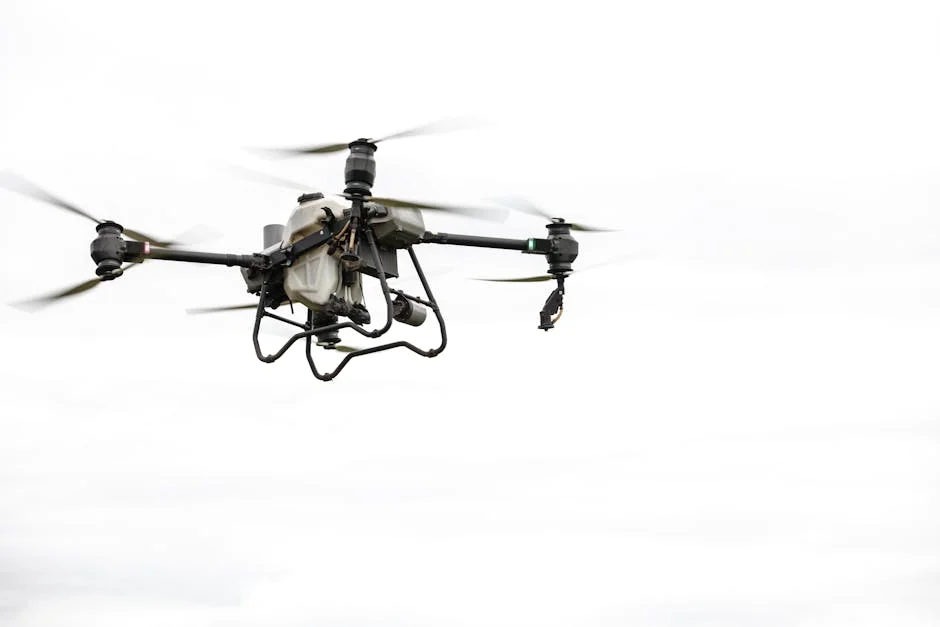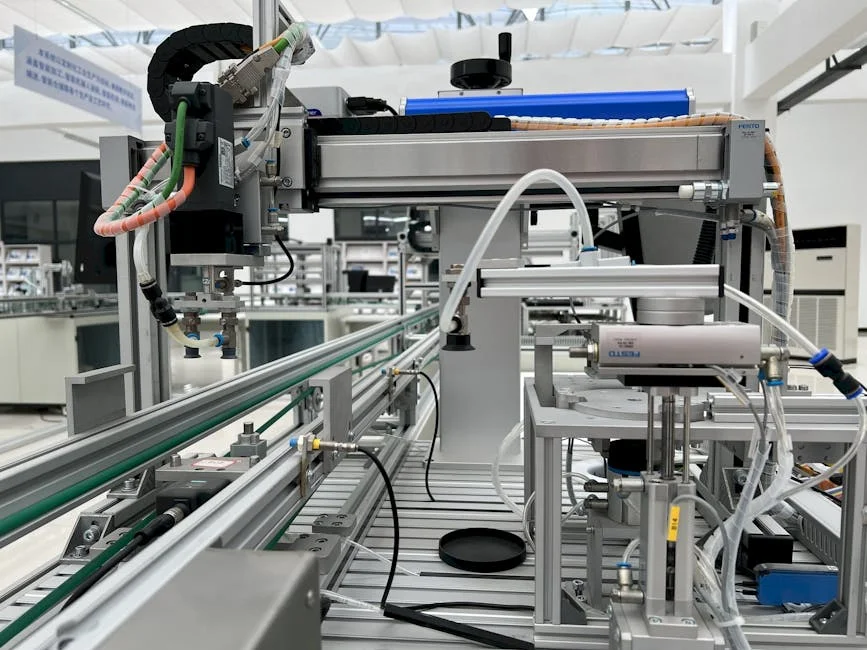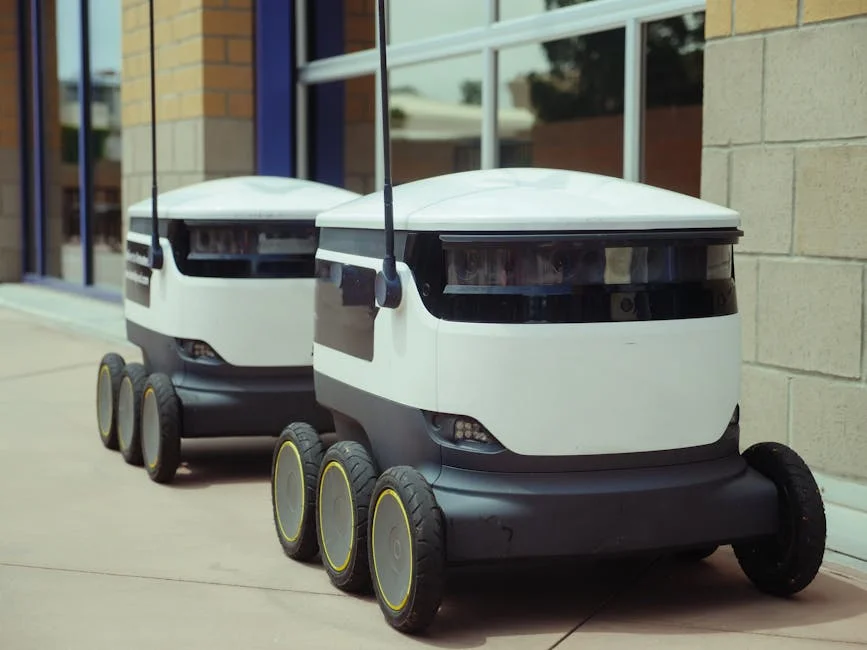
Autonomous mobile robots are reshaping how physical work gets done in dynamic environments where people, equipment, and inventory constantly move. Unlike fixed automation that performs one repetitive action in a fenced area, these machines navigate through changing spaces, make routing decisions, and complete tasks without requiring a dedicated track or permanent markers. The phrase “autonomous” is not just marketing; it describes systems that perceive surroundings using sensors, interpret that data with onboard computing, and then act safely and predictably. Many facilities first encounter autonomous mobile robots through warehouse transport—moving totes, pallets, or carts between receiving, storage, and packing. Yet their impact extends to manufacturing lines, hospitals, retail backrooms, and even outdoor yards where traditional automation struggles. The core value is flexibility: when a layout changes, a robot fleet can often be remapped in software rather than rebuilt with conveyors. This adaptability makes automation practical for operations facing seasonality, fast product changes, or frequent reconfiguration.
Table of Contents
- My Personal Experience
- Understanding Autonomous Mobile Robots and Why They Matter
- Core Technologies That Enable Navigation, Perception, and Decision-Making
- Types of Autonomous Mobile Robots and Common Use Cases
- Warehouse and Distribution Center Applications: Throughput Without More Footsteps
- Manufacturing and Assembly Lines: Flexible Material Flow for Changing Products
- Healthcare, Hospitality, and Campus Logistics: Quiet Automation in Public Spaces
- Fleet Management, Task Orchestration, and Integration with Business Systems
- Safety, Standards, and Human-Robot Interaction in Shared Environments
- Expert Insight
- Implementation Strategy: From Site Survey to Pilot to Scale
- Measuring ROI: Productivity, Quality, Safety, and Operational Resilience
- Challenges and Limitations: Where Autonomous Mobile Robots Need Support
- Future Trends: Smarter Autonomy, Better Interoperability, and Expanded Environments
- Choosing the Right Solution: Practical Criteria for Real-World Operations
- Building Long-Term Success with Autonomous Mobile Robots
- Frequently Asked Questions
My Personal Experience
Last year I got to work alongside an autonomous mobile robot in our warehouse during a pilot rollout, and it changed my day-to-day more than I expected. The robot would map the aisles on its own, then shuttle totes from receiving to the packing stations while we focused on sorting and quality checks. The first week was bumpy—its lidar kept getting confused by shrink-wrap glare and it would pause awkwardly when someone left a pallet jack half in the lane—but the vendor tuned the safety zones and we learned to keep pathways clear. What surprised me most was how quickly it became “normal”: you’d hear a soft beep behind you, step aside without thinking, and it would glide past and dock itself to charge. By the end of the month our walking miles dropped noticeably, and even the skeptics admitted it was nice to spend less time hauling and more time fixing the problems humans are actually good at catching. If you’re looking for autonomous mobile robots, this is your best choice.
Understanding Autonomous Mobile Robots and Why They Matter
Autonomous mobile robots are reshaping how physical work gets done in dynamic environments where people, equipment, and inventory constantly move. Unlike fixed automation that performs one repetitive action in a fenced area, these machines navigate through changing spaces, make routing decisions, and complete tasks without requiring a dedicated track or permanent markers. The phrase “autonomous” is not just marketing; it describes systems that perceive surroundings using sensors, interpret that data with onboard computing, and then act safely and predictably. Many facilities first encounter autonomous mobile robots through warehouse transport—moving totes, pallets, or carts between receiving, storage, and packing. Yet their impact extends to manufacturing lines, hospitals, retail backrooms, and even outdoor yards where traditional automation struggles. The core value is flexibility: when a layout changes, a robot fleet can often be remapped in software rather than rebuilt with conveyors. This adaptability makes automation practical for operations facing seasonality, fast product changes, or frequent reconfiguration.

To understand what sets autonomous mobile robots apart, it helps to compare them to earlier generations of automated guided vehicles (AGVs). AGVs typically follow wires, magnetic tape, QR codes, or reflectors and may stop when something blocks their route. Modern mobile platforms fuse lidar, cameras, inertial measurement, wheel odometry, and sometimes ultrasonics to localize and plan motion in real time. They can navigate around obstacles, dynamically reroute, and coordinate with other robots through a fleet manager. That does not mean they are “free roaming” in a reckless way; safety standards and engineered speed limits remain central. The practical outcome is a tool that can be deployed faster and scaled more smoothly than many fixed systems. As labor markets tighten and customer expectations for speed rise, companies seek reliable ways to move materials without adding walking time, forklift traffic, or manual cart pushing. In that context, autonomous mobile robots become a strategic lever for productivity, safety, and throughput, especially when paired with well-designed processes and clear performance metrics.
Core Technologies That Enable Navigation, Perception, and Decision-Making
Autonomous mobile robots rely on a stack of technologies that work together: sensing, localization, mapping, planning, and control. Sensing is the robot’s ability to capture data about its environment, often using 2D or 3D lidar to detect obstacles and measure distances. Cameras may support visual markers, object recognition, or barcode reading, while depth sensors can improve detection in cluttered spaces. An inertial measurement unit provides acceleration and rotation data, helping stabilize localization when wheels slip or floors change. Wheel encoders estimate distance traveled, but because drift accumulates, the robot corrects its position by matching sensor observations to a map. This process—simultaneous localization and mapping (SLAM) or localization against a prebuilt map—lets the robot know where it is, which is essential for safe motion and accurate pickup and drop-off. The sophistication of this stack determines whether a robot can handle narrow aisles, reflective surfaces, glass walls, or mixed lighting conditions without frequent human intervention.
Once location is known, planning and control take over. Global planning selects a route from point A to point B, considering constraints like one-way lanes, restricted zones, and traffic rules. Local planning continuously adjusts motion to avoid people, forklifts, and unexpected obstructions. Control algorithms translate planned paths into motor commands while maintaining stability, smooth turns, and safe stopping distances. Fleet management adds another layer: it assigns tasks, balances workload, coordinates right-of-way, and prevents congestion. In advanced deployments, a robot fleet manager integrates with warehouse management systems (WMS), manufacturing execution systems (MES), or hospital logistics software. That integration turns a robot from a moving platform into a responsive service: tasks can be created automatically based on inventory events, production schedules, or replenishment triggers. Because autonomous mobile robots operate in human spaces, safety-rated components and functional safety design are critical. Emergency stop circuits, safety lidar fields, speed reductions near crossings, and audible/visual alerts are engineered to comply with local regulations and standards. The best results come when technology choices match the environment rather than chasing the most complex sensor suite available.
Types of Autonomous Mobile Robots and Common Use Cases
Autonomous mobile robots come in several categories, each optimized for different payloads, workflows, and facility constraints. Some are low-profile “tugger” units that pull carts in a train, replacing manual cart pushing over long distances. Others are pallet movers capable of lifting and transporting standard pallets, often designed to operate in aisles where forklifts also travel. There are tote-handling robots that move bins between goods-to-person stations and storage zones, and there are mobile conveyors that act as flexible, on-demand extensions of a line. In manufacturing, top modules can include lifts, rollers, or turntables to interface with machines. In healthcare, robots may carry linens, meals, pharmaceuticals, or waste, using secure compartments and access controls. Retail and micro-fulfillment operations use mobile platforms to replenish shelves or shuttle orders to packing. The variety exists because the “right” robot is determined by the unit load, the pickup interface, the floor conditions, and how tightly the robot must integrate with people and other equipment.
Use cases typically fall into transport, sequencing, and service tasks. Transport is the most common: moving raw materials to production, finished goods to staging, or returns to inspection. Sequencing involves delivering parts in the correct order to support just-in-time assembly, reducing line-side inventory and freeing space. Service tasks include emptying scrap bins, delivering tools, or running mail and supplies across campuses. A key design decision is whether robots operate point-to-point or as part of a closed-loop milk-run. Point-to-point is flexible but can create traffic peaks if many tasks trigger simultaneously. Milk-runs are predictable and can simplify right-of-way rules, but they may be less responsive during surges. Another distinction is whether robots interact directly with shelving, carts, or pallets (requiring consistent mechanical interfaces) versus relying on human-assisted loading. Many operations start with human-assisted pickup and drop-off to reduce complexity, then progressively automate interfaces with docking stations, lifts, or automated storage systems. This staged approach helps teams learn how autonomous mobile robots behave in real conditions while generating early productivity gains.
Warehouse and Distribution Center Applications: Throughput Without More Footsteps
Warehouses are natural environments for autonomous mobile robots because a large share of labor is spent walking, searching, and transporting. When pickers travel long distances between zones, order cycle time expands and fatigue increases. By introducing robots to handle transport—moving picked totes to packing, replenishment from reserve to forward pick, or returns to sorting—facilities can reduce non-value-added travel. The most successful deployments map workflows carefully: robots should not simply replicate inefficient paths; they should enable new process designs such as zone picking with automated consolidation, goods-to-person stations, or dynamic replenishment. In a typical setup, a WMS generates transport tasks when a tote is completed, when a pick location falls below minimum, or when inbound pallets need to be moved to putaway. A fleet manager then assigns tasks based on robot location, battery level, and traffic conditions. This coordination makes robot utilization a measurable KPI rather than a vague promise.
Distribution centers also benefit from improved safety and space utilization. Forklifts are effective but introduce risk where pedestrian traffic is high. Mobile platforms can reduce forklift miles by taking over routine pallet shuttling in pedestrian-heavy areas, leaving forklifts for high lifts or long-haul moves. Because autonomous mobile robots can follow narrower paths and execute consistent docking, they can enable denser layouts, especially around packing and sorting where space is expensive. Another advantage is scalability during peak seasons: instead of hiring and training large temporary teams, operations can add robots or extend operating hours. That said, the bottleneck often shifts: if packing capacity, label printing, or carrier pickup is constrained, robots will queue and utilization will drop. Planning for end-to-end flow is essential. Charging strategy also matters in high-throughput warehouses; opportunity charging during short idle windows can keep fleets running without long downtime, but it must be managed so that charging stations do not become new congestion points. When designed well, autonomous mobile robots become a reliable “material movement layer” that keeps goods flowing even as order profiles and SKU counts evolve.
Manufacturing and Assembly Lines: Flexible Material Flow for Changing Products
Manufacturing environments increasingly face shorter product life cycles, higher customization, and more frequent line reconfiguration. Fixed conveyors can be productive, but they are expensive to modify and can lock a plant into a layout that no longer fits demand. Autonomous mobile robots provide an alternative: a flexible transport network that can be reprogrammed when a line moves or when a new cell is added. Common manufacturing tasks include delivering components to workstations, moving work-in-process between cells, hauling finished goods to quality inspection, and supplying packaging materials. The robots can follow traffic rules that mirror lean manufacturing principles: keep aisles clear, deliver only what is needed, and reduce line-side inventory. In some cases, robots can support kitting processes by transporting kits to assembly points, then returning empties for replenishment. This can reduce clutter and improve ergonomics, especially where parts are small and numerous.

Integration is often the defining challenge in manufacturing. Machines may require precise handoffs, interlocks, or confirmation signals to ensure that a robot arrives at the correct time and that the cell is ready. This is where industrial communication protocols, digital I/O, and standardized docking become important. A robot may need to align within millimeters to a lift table, a roller conveyor, or a machine portal. For heavier loads, stability and floor condition become critical; joints, ramps, and debris can affect localization and payload handling. Safety requirements are also more complex when robots interact with collaborative workspaces, weld cells, or high-temperature zones. Plants typically establish “robot corridors” or shared aisles with speed limits, visual markings, and designated crossing points. When managed well, autonomous mobile robots can reduce the need for forklifts inside production areas, lowering noise and improving visibility. They also support continuous improvement: route changes can be tested in software, and performance data can reveal where material flow is slowing. Over time, the plant gains a modular logistics layer that adapts as product mix and volume shift.
Healthcare, Hospitality, and Campus Logistics: Quiet Automation in Public Spaces
Hospitals and large campuses have complex internal logistics that run 24/7: delivering meals, medications, linens, lab specimens, and supplies while removing waste and soiled materials. Autonomous mobile robots fit well because they can operate quietly, follow predictable routes, and reduce the burden on clinical staff whose time is better spent on patient care. In healthcare, the value is not only labor savings; it is also consistency and traceability. A robot can perform scheduled deliveries reliably and log completion times, which helps departments plan staffing and inventory. Security features such as locked compartments, badge access, and audit trails support sensitive items. Some robots integrate with elevators and automatic doors, requiring coordination with building management systems and strict safety validation. Navigation in hospitals can be challenging due to glossy floors, glass walls, and frequent corridor congestion, so robust perception and conservative speed profiles matter.
Hospitality, airports, and corporate campuses use similar concepts for back-of-house logistics. Robots can move room service trays, housekeeping supplies, or maintenance parts, reducing staff travel time across large properties. In airports, mobile platforms can support baggage handling in restricted zones or move supplies behind security. The human factors in public spaces are different from warehouses: people may be unfamiliar with robots, and the environment can be unpredictable. Therefore, clear signaling, polite navigation behavior, and thoughtful route design become essential. Facilities often start with low-risk tasks—such as linen transport at night or supply runs along service corridors—then expand as confidence grows. Reliability and uptime are crucial; if a robot blocks a corridor or fails to complete a delivery, the operational disruption can outweigh the benefits. Successful deployments emphasize service-level agreements, remote monitoring, and rapid on-site support. When implemented with care, autonomous mobile robots can reduce repetitive transport work, improve infection-control workflows by limiting cross-traffic, and provide a scalable logistics backbone for institutions that never truly “close.”
Fleet Management, Task Orchestration, and Integration with Business Systems
A single robot can be useful, but the real operational shift happens when multiple autonomous mobile robots work as a coordinated fleet. Fleet management software assigns tasks, prevents traffic jams, and ensures that robots share resources like narrow aisles, charging stations, and docking points. It can implement rules such as “no passing,” “yield at intersections,” or “one robot per zone,” depending on the facility’s layout and safety requirements. Task orchestration connects robot activity to business events. For example, when an order is waved in the WMS, the system can automatically request a robot to deliver empty totes to pickers; when a tote is completed, another request sends it to packing; when packing finishes, a robot moves it to shipping. In manufacturing, an MES can trigger part deliveries based on takt time or consumption signals. This orchestration reduces manual dispatching and helps keep flow consistent even during demand spikes.
Integration is often where projects succeed or struggle. Many facilities have a mix of legacy software, customized workflows, and informal processes. A robot deployment benefits from clear interfaces: APIs, message queues, or middleware that translates between systems. Data quality matters too; if location IDs, inventory status, or task priorities are inconsistent, robots may be sent to the wrong place or arrive at the wrong time. Another consideration is multi-vendor environments. Some sites run different robot types for different tasks, and coordinating them requires either a unified fleet manager or well-defined zones and handoff points. Cybersecurity is also increasingly important because robots are networked devices with access to operational data and sometimes building controls. Role-based access, network segmentation, and secure update practices reduce risk. Finally, analytics turns fleet operations into actionable insight: heat maps of traffic, average docking times, idle rates, and exception causes. With that data, teams can refine routes, adjust staffing, and improve station design. Mature operations treat autonomous mobile robots not as gadgets but as a managed service layer integrated into core systems and governed by measurable performance targets.
Safety, Standards, and Human-Robot Interaction in Shared Environments
Safety is the non-negotiable foundation for autonomous mobile robots operating around people. Modern systems use safety-rated lidar, redundant braking, emergency stop circuits, and carefully designed speed and separation monitoring. They create protective fields around the robot—slowing down when a person enters a warning zone and stopping when someone gets too close. However, safety is not just about sensors; it is also about predictable behavior. People need to understand what a robot will do at an intersection, how it signals a turn, and when it will yield. Visual indicators, audible alerts, and consistent route rules reduce confusion. Facilities often add floor markings, signage, or designated crossing points to make interactions more intuitive. Training for staff is essential, not only for operators but for anyone who shares the space, including cleaners, contractors, and temporary workers. The goal is a workplace where robots feel like a normal part of traffic rather than an unpredictable obstacle.
| Aspect | Autonomous Mobile Robots (AMRs) | Why it matters |
|---|---|---|
| Navigation & adaptability | Use sensors and onboard intelligence to map, localize, and reroute dynamically around obstacles. | Enables operation in changing environments with minimal fixed infrastructure. |
| Deployment & integration | Typically faster to deploy; can integrate with WMS/MES/ERP and fleet management software. | Speeds time-to-value and supports scalable automation across sites. |
| Safety & collaboration | Designed to work alongside people with safety-rated sensing, speed control, and stop functions. | Improves workplace safety while maintaining throughput in shared spaces. |

Expert Insight
Start with a tightly defined route and workload: map a single high-traffic loop, standardize pickup/drop-off points, and add clear floor markings or signage so people and robots share space predictably. Track a few metrics from day one—on-time deliveries, blocked-path incidents, and average mission time—to decide where to expand next. If you’re looking for autonomous mobile robots, this is your best choice.
Design for uptime, not just deployment: set a charging strategy (opportunity charging vs. scheduled charging), keep spare consumables on hand (wheels, bumpers, sensors), and establish a quick “reset” checklist for operators. Pair this with routine housekeeping—clear clutter, manage cable runs, and enforce no-parking zones near doors and intersections—to reduce stoppages and improve throughput. If you’re looking for autonomous mobile robots, this is your best choice.
Compliance with relevant standards and regulations should be addressed early. Depending on region and application, requirements may involve industrial truck safety, machinery directives, functional safety, and risk assessments that consider the full workflow. A thorough risk assessment evaluates hazards such as pinch points during docking, load stability, blind corners, and interactions with forklifts. Mitigation can include speed limits, one-way lanes, mirrors at intersections, or physical barriers in high-risk zones. Maintenance and inspection procedures also contribute to safety: worn wheels can affect stopping distance, and misaligned sensors can create blind spots. Human factors extend to workflow design. If a process encourages people to step in front of a robot to “make it stop,” that is a design failure, not a user failure. Stations should be arranged so that loading and unloading happen from safe sides, with clear space for the robot to approach and depart. When the environment, behavior rules, and training align, autonomous mobile robots can improve overall safety by reducing manual cart pushing, lowering forklift traffic, and providing consistent, monitored movement across the facility.
Implementation Strategy: From Site Survey to Pilot to Scale
Deploying autonomous mobile robots successfully requires disciplined preparation rather than rushing to install hardware. A site survey typically evaluates floor conditions, aisle widths, door thresholds, Wi-Fi coverage, lighting, and traffic patterns. It also identifies process candidates with clear metrics: travel distance, time spent transporting, injury risk, and variability in demand. The best early projects target repetitive transport with stable pickup/drop-off points, because that allows the robot to deliver measurable gains without excessive integration complexity. During design, teams define routes, parking areas, charging strategy, and right-of-way rules. They also decide how tasks will be created—manual calls, button presses, barcode scans, or automated triggers from business systems. A pilot phase then validates assumptions: docking accuracy, cycle time, obstacle handling, and staff acceptance. Importantly, the pilot should measure not only robot performance but also the surrounding process, because bottlenecks often appear at handoff stations rather than on the route itself.
Scaling from pilot to production introduces new considerations: peak traffic, exception handling, and operational ownership. Exception handling defines what happens when a robot encounters a blocked aisle, a closed door, or a missing cart. Clear escalation paths—remote support, on-site responders, or automatic rerouting—prevent small issues from becoming major disruptions. Operational ownership determines who monitors the fleet, who approves map changes, and who maintains the robots. Some facilities adopt a robotics “center of excellence” model, while others embed responsibility in maintenance or warehouse operations. Change management is also critical. If workers fear job loss or find robot interactions frustrating, adoption will stall. Communicating goals, involving frontline staff in station design, and showing how robots reduce tedious work can improve acceptance. Finally, scaling benefits from standardization: consistent docking fixtures, consistent location naming, and repeatable integration patterns. With these in place, adding more autonomous mobile robots becomes a capacity decision rather than a new engineering project each time. A thoughtful rollout turns early wins into a durable automation program that can expand across sites and evolve with business needs.
Measuring ROI: Productivity, Quality, Safety, and Operational Resilience
Return on investment for autonomous mobile robots is often framed as labor savings, but a more complete view includes productivity, quality, safety, and resilience. Productivity gains come from reducing travel time, smoothing material flow, and enabling workers to focus on value-added tasks such as picking, packing, assembly, or patient care. Quality improvements can arise from fewer handling errors, less damage, and more consistent delivery timing. Safety benefits include reduced manual pushing and pulling, fewer forklift-pedestrian interactions, and better visibility of transport activity through system logs. Resilience is increasingly important: when labor availability fluctuates or demand spikes unexpectedly, a robot fleet can stabilize operations by providing predictable baseline capacity. Quantifying these benefits requires baseline measurements. Before deployment, capture travel distances, task times, throughput, overtime, and incident rates. After deployment, track the same metrics along with robot-specific indicators such as missions per hour, average wait time at stations, and percentage of tasks completed without intervention.
Costs should also be evaluated realistically. Beyond hardware and software, there are costs for integration, site preparation, training, and ongoing support. Charging infrastructure, spare parts, and periodic maintenance need to be included in total cost of ownership. Some organizations prefer robots-as-a-service pricing to align cost with usage and reduce upfront capital expense, while others purchase equipment outright for long-term savings. ROI timelines vary by use case: simple transport in a stable warehouse may pay back quickly, while complex manufacturing integration may take longer but deliver strategic flexibility. A common mistake is to assume that robots will instantly run at high utilization. Early phases often involve learning, route tuning, and process adjustments. Therefore, ROI models should include ramp-up periods and planned continuous improvement. Another factor is opportunity cost: if a facility delays automation, it may miss growth opportunities due to capacity constraints. When measured thoughtfully, autonomous mobile robots can justify themselves not only as cost reducers but as enablers of faster fulfillment, safer operations, and scalable growth.
Challenges and Limitations: Where Autonomous Mobile Robots Need Support
Autonomous mobile robots are powerful, but they are not magic. They operate best in environments with reasonably consistent floors, clear navigation paths, and defined pickup/drop-off interfaces. Poor housekeeping—loose shrink wrap, stray pallets, or cluttered aisles—can cause frequent stops and reduce throughput. Highly reflective surfaces, glass walls, and busy intersections can challenge perception, especially if lighting changes dramatically. Payload variability is another limitation: if loads are unstable, overhanging, or exceed rated capacity, docking and transport become risky. Facilities sometimes underestimate the importance of standardizing carts, pallets, and station heights. A robot that must handle many different mechanical interfaces may require more complex top modules and more tuning. Network reliability can also matter; while robots typically have onboard autonomy, fleet coordination and task updates depend on stable connectivity. Dead zones can lead to delays and mission failures unless mitigated with better coverage or offline-safe behaviors.

Operationally, the biggest challenge is often exception management. Real facilities have surprises: a door is wedged open, a temporary display blocks a corridor, a forklift parks in a no-stop zone, or a cart is missing. If every exception requires a technician, the program will struggle. Designing processes that reduce exceptions—clear staging rules, visual management, and disciplined parking—can be more valuable than adding extra robots. Another limitation is that mobile robots usually do not replace all material handling equipment. Forklifts, conveyors, and manual carts may still be needed for certain tasks, and coordinating mixed traffic requires planning. There are also organizational challenges: ownership between IT and operations, change control for maps and routes, and training for new hires. Some companies over-automate too soon, attempting complex interactions before mastering basic transport. A better approach is progressive automation: start with robust, repeatable missions, then add complexity such as automated loading, elevator integration, or multi-floor routing. Recognizing limitations does not diminish the value of autonomous mobile robots; it clarifies what must be engineered in the environment and in the workflow so the robots can deliver consistent performance day after day.
Future Trends: Smarter Autonomy, Better Interoperability, and Expanded Environments
The next phase of autonomous mobile robots will likely be defined by improved interoperability, richer perception, and more capable manipulation. Interoperability means fleets that can coordinate across vendors and across robot types, reducing lock-in and enabling best-of-breed choices for different tasks. As standards and APIs mature, business systems will be able to request logistics services without caring which robot brand fulfills the mission. Perception is also advancing: better 3D sensing, improved understanding of human intent, and more robust operation in challenging lighting or reflective conditions. This can reduce false stops and allow smoother navigation in crowded spaces. At the same time, safety engineering will remain conservative, focusing on predictable behavior and validated performance rather than risky speed increases. Another trend is the combination of mobility with manipulation: mobile platforms equipped with arms or specialized end-effectors to pick items, open doors, or load machines. While this is more complex than transport, it could unlock automation in areas where human labor is currently required for handoffs.
Expansion into new environments is also underway. Outdoor-capable platforms are improving, with better weather resistance, terrain handling, and localization that does not rely on perfectly structured interiors. Yard logistics, campus deliveries, and industrial sites with mixed indoor/outdoor routes are becoming more feasible. Energy management will evolve as well, with faster charging, improved battery health monitoring, and smarter scheduling that reduces downtime. On the software side, simulation and digital twins are gaining adoption, allowing teams to test routes, fleet sizes, and station placement virtually before deploying changes. This reduces risk and accelerates continuous improvement. Finally, the labor story will mature: rather than a simple replacement narrative, many organizations will treat autonomous mobile robots as force multipliers that help retain workers by removing the most repetitive transport tasks and making roles more ergonomic. As these trends converge, robot deployments will look less like isolated projects and more like standard infrastructure—similar to how warehouses once adopted barcode scanners and then could not imagine operating without them. Organizations that build strong process discipline and integration capabilities now will be best positioned to benefit from the next generation of autonomy.
Choosing the Right Solution: Practical Criteria for Real-World Operations
Selecting autonomous mobile robots should start with operational requirements rather than feature checklists. Payload type and weight, travel distance, aisle width, floor condition, and interaction points determine the platform class. If the main task is towing carts, prioritize hitch reliability, turning radius, and cart standardization. If the task is pallet movement, evaluate lift stability, fork interface compatibility, and performance on ramps or dock plates. For tote transport, consider docking precision and station ergonomics. Navigation capability should match the environment: facilities with frequent layout changes may benefit from mapping tools that support rapid updates and version control. Battery strategy is another selection factor; high-throughput sites may need opportunity charging and easily accessible charging stations. Service and support matter as much as hardware. Response time for on-site issues, availability of spare parts, and remote monitoring capabilities can determine whether a fleet meets service levels during peak operations.
Software integration should be evaluated early with real workflows. A vendor demo that shows a robot moving in a clean test area is not the same as a production integration with WMS or MES triggers, exception handling, and KPI reporting. Ask how tasks are created, how priorities are managed, how the system handles blocked routes, and how it logs mission outcomes. Also consider cybersecurity practices, user access controls, and update policies. For human-robot interaction, evaluate signaling clarity, behavior at intersections, and how the robot handles close passes in narrow aisles. Request references in similar industries and, when possible, visit sites where fleets operate at scale. Finally, ensure the deployment plan includes process changes: staging rules, cart standards, and training. The best autonomous mobile robots deliver results when paired with disciplined operations. A careful selection process reduces surprises and builds a foundation for expansion, allowing the fleet to grow from a few routes to a facility-wide logistics network that keeps improving over time.
Building Long-Term Success with Autonomous Mobile Robots
Long-term success comes from treating autonomous mobile robots as an evolving operational capability rather than a one-time installation. After initial go-live, the focus should shift to stability, continuous improvement, and measurable outcomes. Stability means consistent mission completion, predictable station behavior, and clear ownership for monitoring and maintenance. Continuous improvement means using fleet analytics to reduce wait times, redesigning stations to improve docking, and refining traffic rules as volumes change. It also means periodically revisiting the process map: once robots remove travel time, new bottlenecks may appear in scanning, packing, or replenishment. Teams that keep optimizing can often achieve more value than the initial business case predicted, because the fleet becomes a platform for process innovation. Training should be ongoing, especially in facilities with turnover or seasonal staffing. New employees need to understand how to work around robots safely, how to request tasks, and how to handle exceptions without improvising unsafe shortcuts.
Scaling across multiple sites requires standardization and governance. Standard docking fixtures, standardized cart designs, consistent location naming conventions, and repeatable integration patterns make it easier to replicate success. Governance defines who can change routes, how updates are tested, and how performance is reported. It also defines what “good” looks like: target mission success rates, acceptable stop frequencies, and service-level metrics for deliveries. As organizations mature, they often expand the scope of autonomous mobile robots beyond transport into sequencing, line-side replenishment, and more complex interactions with automated storage or production equipment. The most resilient programs plan for change: facility expansions, SKU growth, and new customer requirements. When the robots, software, and processes are designed with flexibility in mind, the operation can adapt without major capital rebuilds. Ultimately, autonomous mobile robots deliver their greatest value when they become a dependable layer of everyday logistics—quietly moving materials, reducing wasted motion, and supporting safer, faster, more scalable operations from the first mission to the thousandth, with autonomous mobile robots remaining central to that transformation.
Summary
In summary, “autonomous mobile robots” is a crucial topic that deserves thoughtful consideration. We hope this article has provided you with a comprehensive understanding to help you make better decisions.
Frequently Asked Questions
What is an autonomous mobile robot (AMR)?
An AMR is a robot that navigates and performs tasks in dynamic environments with minimal human intervention, using onboard sensors and software to make decisions in real time.
How do AMRs navigate without fixed tracks or markers?
They typically use SLAM (simultaneous localization and mapping) with sensors like LiDAR, cameras, and IMUs to map surroundings, localize themselves, and plan safe paths.
What’s the difference between AMRs and AGVs?
Unlike traditional AGVs that stick to predefined routes guided by tape, wires, or floor markers, **autonomous mobile robots** can navigate dynamically—adjusting their paths in real time, avoiding obstacles as they appear, and working smoothly even when layouts or workflows change.
What are common applications for AMRs?
Material transport in warehouses and factories, goods-to-person picking support, hospital logistics (linen/meds), inventory scanning, and last-meter delivery within facilities.
How safe are AMRs around people?
AMRs use safety-rated sensors, obstacle detection, speed limiting, and emergency stops; deployment should follow relevant safety standards and a site risk assessment.
What infrastructure is needed to deploy AMRs?
Successful deployments usually depend on a few basics: reliable Wi‑Fi (or private LTE/5G), clean and clearly marked floors, well-defined traffic rules, designated charging locations, and—when required—smooth integration with WMS/MES to keep autonomous mobile robots moving efficiently and safely.
? Looking for more info about autonomous mobile robots? Follow Our Site for updates and tips!