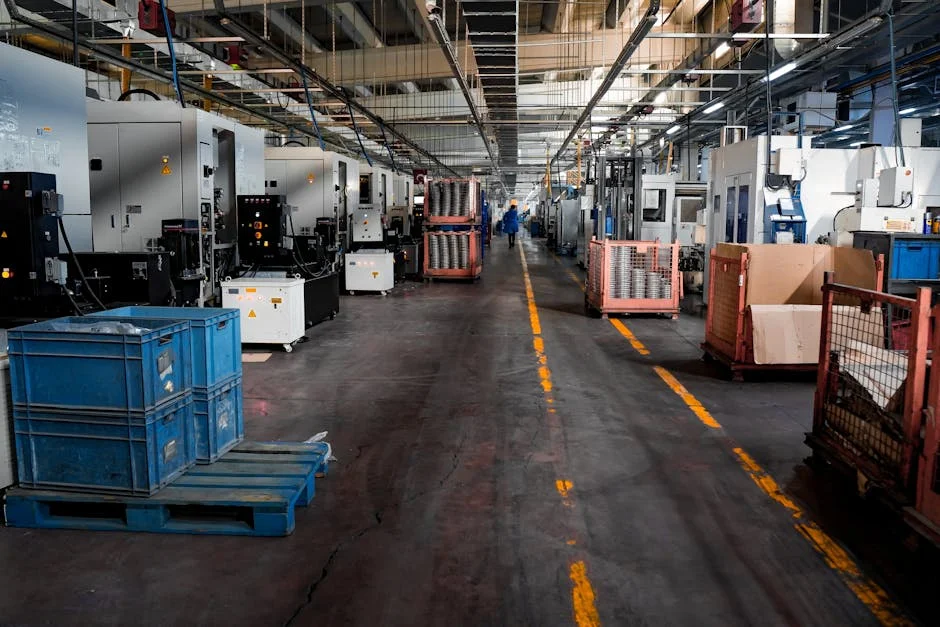
Manufacturing and AI are increasingly linked because factories now operate as data-rich environments where every machine, conveyor, and workstation can produce signals that reveal performance, quality, and risk. When sensors, control systems, and enterprise applications generate streams of information, artificial intelligence becomes a practical tool rather than a futuristic concept. Many plants already capture production counts, downtime reasons, scrap rates, energy usage, and maintenance logs, yet those datasets often sit in separate systems and remain underused. AI changes that dynamic by turning fragmented data into predictions and recommendations that operators and engineers can act on. Instead of relying solely on historical averages and manual checks, teams can use AI models to forecast bottlenecks, detect anomalies, and fine-tune processes in near real time. The value is not limited to large enterprises; mid-sized manufacturers can also benefit when they focus on a few high-impact use cases and build a reliable data foundation.
Table of Contents
- My Personal Experience
- The new relationship between manufacturing and AI
- Data foundations that make AI work on the shop floor
- Predictive maintenance and reliability engineering enhanced by AI
- Computer vision for quality inspection and defect prevention
- Process optimization, yield improvement, and AI-driven control
- Supply chain planning, forecasting, and inventory reduction with AI
- Robotics, cobots, and intelligent automation in modern plants
- Expert Insight
- Digital twins, simulation, and virtual commissioning using AI
- Workforce transformation, skills, and human-centered AI adoption
- Cybersecurity, data governance, and responsible AI in manufacturing
- Implementation roadmap: from pilot to scaled value across sites
- Future trends shaping manufacturing and AI over the next decade
- Frequently Asked Questions
My Personal Experience
When I started working on the production floor at a small parts manufacturer, “AI” sounded like something for tech companies, not a place with oil-stained gloves and aging CNC machines. That changed when we piloted a simple machine-learning tool that watched sensor data from a few critical presses and flagged patterns that usually showed up a day or two before a breakdown. At first the maintenance team didn’t trust it—neither did I—but after it correctly warned us about a bearing issue that would’ve stopped a whole shift, people began paying attention. What surprised me most was that it didn’t replace anyone; it just made the experienced techs faster at deciding what to check first. We still had false alarms and we had to clean up a lot of messy data, but over a couple months our unplanned downtime dropped enough that the plant manager stopped calling weekend overtime “normal.” If you’re looking for manufacturing and ai, this is your best choice.
The new relationship between manufacturing and AI
Manufacturing and AI are increasingly linked because factories now operate as data-rich environments where every machine, conveyor, and workstation can produce signals that reveal performance, quality, and risk. When sensors, control systems, and enterprise applications generate streams of information, artificial intelligence becomes a practical tool rather than a futuristic concept. Many plants already capture production counts, downtime reasons, scrap rates, energy usage, and maintenance logs, yet those datasets often sit in separate systems and remain underused. AI changes that dynamic by turning fragmented data into predictions and recommendations that operators and engineers can act on. Instead of relying solely on historical averages and manual checks, teams can use AI models to forecast bottlenecks, detect anomalies, and fine-tune processes in near real time. The value is not limited to large enterprises; mid-sized manufacturers can also benefit when they focus on a few high-impact use cases and build a reliable data foundation.

At the same time, manufacturing and AI require a practical mindset because production is constrained by physics, safety, compliance, and tight margins. A model that looks impressive in a lab is not automatically useful on a shop floor where network outages happen, sensors drift, and operators need explanations they can trust. Successful deployments usually blend AI with established methods such as statistical process control, lean manufacturing, and reliability engineering. The best results come when AI supports people rather than replacing them: planners gain better forecasts, maintenance crews get earlier warnings, and quality teams locate root causes faster. This partnership can raise throughput, reduce scrap, shorten lead times, and improve on-time delivery, but only if models are governed, monitored, and continually updated as products, tooling, and suppliers change. The modern factory is therefore becoming both a physical production system and a continuously learning system.
Data foundations that make AI work on the shop floor
Manufacturing and AI efforts succeed or fail based on data quality, context, and accessibility. Factories typically have multiple layers of systems: PLCs and SCADA at the control level, historians that store time-series signals, MES platforms that track work orders and routing, and ERP systems that manage inventory, purchasing, and finance. Each layer speaks a different language and uses different identifiers for machines, parts, batches, and shifts. AI needs a coherent picture that connects process variables to outcomes such as yield, cycle time, and customer returns. That requires consistent tagging, time synchronization, and master data management so that a model can understand what happened, when it happened, and under which conditions. Without that context, even advanced algorithms will output correlations that cannot be trusted or reproduced.
Building a usable data foundation often begins with a clear definition of “good” data in manufacturing terms: calibrated sensors, traceable lot and serial information, accurate downtime codes, and disciplined operator inputs. It also involves handling messy realities such as missing values, manual overrides, and recipe changes. Many plants benefit from creating a unified data layer that maps equipment, process steps, and product structures into a common model, sometimes called an asset hierarchy or digital thread. From there, data pipelines can feed AI training and inference while respecting latency and reliability needs. Edge computing is frequently important because some manufacturing and AI use cases require millisecond decisions near machines, while others can run in the cloud for deeper analysis. A balanced architecture ensures that high-frequency signals are processed close to the source while aggregated metrics and model management occur centrally. This foundation is not glamorous, but it is the difference between a pilot that impresses and a system that scales across lines and sites.
Predictive maintenance and reliability engineering enhanced by AI
One of the most established applications of manufacturing and AI is predictive maintenance, where models estimate the likelihood of equipment failure and recommend intervention before breakdowns occur. Traditional preventive maintenance relies on schedules—replace bearings every certain number of hours, lubricate at fixed intervals, inspect monthly. While this approach reduces risk, it also creates unnecessary downtime and parts replacement when equipment is still healthy. AI-based predictive maintenance uses sensor data such as vibration, temperature, current draw, acoustic signatures, oil analysis, and operational context like load and speed. By learning normal behavior patterns and detecting subtle deviations, AI can identify early warning signs that humans might miss. This enables maintenance teams to plan repairs during planned downtime, order parts ahead of time, and avoid catastrophic failures that damage adjacent components.
Effective reliability programs combine AI with domain knowledge. For instance, an anomaly detection model might flag a motor as unusual, but a reliability engineer helps interpret whether the pattern indicates misalignment, bearing wear, electrical imbalance, or process-induced stress. In manufacturing and AI deployments, the best systems integrate with CMMS workflows so alerts become actionable work orders with recommended checks and safety steps. They also incorporate feedback loops: when technicians confirm a fault or find no issue, that outcome is recorded to refine the model. Over time, plants can move from reactive firefighting to condition-based maintenance, improving OEE and lowering spare parts inventory. However, predictive maintenance should be scoped carefully; not every asset warrants advanced monitoring. High-criticality equipment, bottleneck machines, and assets with expensive downtime usually provide the strongest return. When implemented with governance and clear thresholds, AI improves reliability without overwhelming teams with false alarms.
Computer vision for quality inspection and defect prevention
Computer vision has become a major driver of manufacturing and AI adoption because cameras are relatively inexpensive and visual inspection is common across industries. Many products require checks for surface defects, dimensional accuracy, label placement, solder quality, weld integrity, or packaging completeness. Human inspection can be inconsistent due to fatigue, lighting variation, and subjective judgment. Vision-based AI systems can classify defects with high repeatability, and they can operate at line speed without slowing production. With proper lighting, optics, and image acquisition design, AI models can detect scratches, dents, contamination, missing components, incorrect assembly, and print defects that would otherwise slip through. This helps reduce customer complaints, warranty claims, and rework costs.
Beyond sorting good versus bad parts, manufacturing and AI vision systems can support process improvement by identifying patterns in defect occurrence. When defects are tagged by time, station, tool, or material batch, quality teams can trace issues to root causes such as worn tooling, misfed components, or upstream variation. Vision outputs can also feed closed-loop control: if a model detects a drift in bead width during dispensing, parameters can be adjusted before scrap accumulates. Practical deployment requires careful dataset curation, including representative samples across shifts, suppliers, and seasonal lighting conditions. It also demands a plan for model drift when new product variants or packaging designs are introduced. Many manufacturers succeed by combining rule-based checks with AI classification, using rules for simple measurements and AI for complex textures and irregular defects. The result is a scalable inspection approach that improves both detection and learning across the plant.
Process optimization, yield improvement, and AI-driven control
Manufacturing and AI can unlock significant value through process optimization, especially in operations where small parameter changes impact yield, throughput, or energy use. Examples include injection molding, heat treatment, chemical processing, semiconductor steps, food production, and any environment with recipes and setpoints. Historically, engineers tune processes using designed experiments, control charts, and experience, then lock in “best known” settings. AI adds the ability to model nonlinear relationships among many variables at once, capturing interactions that are difficult to see with manual analysis. By training on historical batches, AI can predict outcomes such as defect probability, cycle time, or mechanical properties based on inputs like temperature profiles, pressure curves, humidity, material lot, and machine condition.
Once a predictive model is validated, manufacturing and AI systems can recommend optimal setpoints or parameter ranges for a given product and context. In some cases, AI can be embedded in advanced process control, adjusting variables in real time while respecting safety and quality constraints. A practical approach is to start with decision support: provide operators with recommended adjustments and confidence ranges, and require confirmation before changes are applied. This builds trust and provides a record of human oversight. Over time, plants may adopt semi-autonomous control where AI suggests changes within pre-approved limits, while alarms trigger human review. Yield improvement often comes from reducing variation, not just shifting averages. AI helps identify which variables drive variation and which are merely correlated. The key is disciplined experimentation, strong measurement systems, and continuous monitoring so models remain aligned with real-world behavior as tools wear, suppliers change, and new product variants appear.
Supply chain planning, forecasting, and inventory reduction with AI
Manufacturing and AI extend beyond the factory walls into planning and supply chain operations. Demand forecasting is notoriously challenging when markets are volatile, product lifecycles are short, and promotions or macroeconomic shifts create sudden changes. Traditional forecasting methods may struggle with sparse data, intermittent demand, and complex seasonality. AI models can incorporate broader signals such as customer order patterns, lead-time variability, pricing changes, and external indicators to produce more responsive forecasts. Better forecasts improve production scheduling, reduce overtime and expediting, and lower the risk of stockouts that interrupt customer fulfillment.
Inventory is another area where manufacturing and AI can deliver measurable benefits. Excess inventory ties up cash and hides process problems, while insufficient inventory causes line stoppages and missed deliveries. AI-driven inventory optimization can recommend safety stock levels based on service targets, supplier reliability, transit times, and demand uncertainty. It can also help identify which SKUs drive complexity and where standardization could reduce variability. In multi-site environments, AI can support network optimization by suggesting where to produce which items, considering capacity, changeover costs, and logistics. The best outcomes come when planning teams integrate AI recommendations into S&OP processes with clear accountability and exception management. Rather than replacing planners, AI provides a more granular view of risk and opportunity, allowing humans to focus on strategic decisions, supplier development, and customer priorities.
Robotics, cobots, and intelligent automation in modern plants
Robotics has long been present in manufacturing, but manufacturing and AI are accelerating the shift from fixed automation to flexible automation. Traditional industrial robots excel at repetitive tasks in structured environments, such as welding, painting, or palletizing. However, they often require extensive programming and fixturing, making changeovers expensive. AI-enhanced robotics can improve adaptability through perception, learning, and motion planning. With computer vision and force sensing, robots can handle variable part positions, identify components in bins, and adjust to minor variations without constant reprogramming. This is particularly valuable in high-mix, low-volume production where flexibility is essential.
| Use case | Traditional manufacturing approach | AI-enabled approach | Typical impact |
|---|---|---|---|
| Predictive maintenance | Fixed-interval servicing and reactive repairs based on breakdowns | Sensor + machine-learning models predict failures and schedule maintenance by condition | Less unplanned downtime, longer asset life, lower maintenance cost |
| Quality inspection | Manual sampling and rule-based checks; issues found late in the line | Computer vision detects defects in real time and flags root-cause signals | Higher yield, faster detection, reduced scrap and rework |
| Production planning & scheduling | Spreadsheet/ERP-driven planning with static assumptions and limited what-if analysis | AI optimizes schedules using demand, constraints, and live shop-floor data | Improved throughput, better on-time delivery, lower WIP inventory |

Expert Insight
Start by instrumenting critical machines and processes with reliable data capture (cycle time, scrap, downtime reasons) and standardize definitions across shifts. Use this baseline to target one high-impact bottleneck—then run a 30-day improvement sprint with clear metrics and daily reviews. If you’re looking for manufacturing and ai, this is your best choice.
Build a closed-loop quality system by linking inspection results to specific lots, tools, operators, and process settings, and trigger immediate containment when trends drift. Pair this with preventive maintenance based on condition signals (vibration, temperature, power draw) to reduce unplanned stops and stabilize throughput. If you’re looking for manufacturing and ai, this is your best choice.
Collaborative robots, or cobots, represent another way manufacturing and AI can raise productivity while improving ergonomics and safety. Cobots can assist workers with tasks such as screwdriving, dispensing, inspection, and material handling, reducing repetitive strain and enabling consistent cycle times. AI can help cobots understand intent, detect anomalies, and optimize movement paths. Still, successful automation requires thoughtful process design: clear task boundaries, reliable part presentation, and robust safety assessments. It also requires workforce engagement, since operators often know where automation will help most and where it will create new bottlenecks. When AI-driven robotics is deployed with realistic expectations and ongoing support, it can increase throughput, reduce defects, and make manufacturing roles more sustainable by shifting people toward supervision, problem-solving, and improvement work.
Digital twins, simulation, and virtual commissioning using AI
Digital twins are increasingly important in manufacturing and AI because they provide a structured way to model machines, lines, and entire plants. A digital twin can represent physical assets, process flows, and control logic, allowing teams to simulate performance under different scenarios. When AI is added, the twin can become more than a static model; it can learn from operational data and improve its predictive accuracy over time. For example, a production line twin might simulate how different staffing levels, changeover strategies, and maintenance windows affect throughput and WIP. Engineers can test “what-if” scenarios without disrupting production, which is especially valuable when capacity is tight.
Virtual commissioning is another area where manufacturing and AI can reduce risk and shorten time to ramp. By validating control logic and robot paths in a simulated environment, teams can identify collisions, timing issues, and integration problems before equipment arrives on the floor. AI can help optimize line balancing, buffer sizing, and scheduling rules by exploring many combinations quickly. It can also support energy modeling to evaluate how different operating modes affect consumption and peak demand charges. The practical benefit is faster launches, fewer surprises, and a smoother handoff from engineering to operations. The most effective programs keep twins aligned with reality by continuously updating parameters from live data, ensuring that simulations remain credible as equipment ages and processes evolve.
Workforce transformation, skills, and human-centered AI adoption
Manufacturing and AI change job content as much as they change technology stacks. Operators, technicians, and engineers increasingly interact with dashboards, alerts, and guided workflows that are informed by AI. This does not eliminate the need for human judgment; it raises the premium on problem-solving, process understanding, and cross-functional collaboration. A technician responding to an AI maintenance alert still needs to verify conditions, follow lockout/tagout procedures, and decide whether to stop a line. A quality engineer reviewing AI-driven inspection results must decide whether a pattern indicates a real shift or a measurement artifact. Plants that invest in training and communication tend to see better adoption because employees understand how AI supports their goals rather than threatening them.
Human-centered design is essential in manufacturing and AI deployments. Alerts must be actionable, not noisy. Recommendations should include context such as recent changes in material lots, tooling, or environmental conditions. Interfaces should be designed for the realities of the shop floor: gloves, noise, limited time, and the need for quick comprehension. Change management also matters because AI can alter responsibilities across maintenance, production, IT, and quality. Clear ownership for models, data pipelines, and response procedures prevents confusion. Many manufacturers build “translator” roles—people who understand both operations and data science—to ensure that use cases are scoped correctly and that models are evaluated with the right metrics. When workforce development is treated as part of the project rather than an afterthought, AI becomes a tool that strengthens operational excellence and makes manufacturing careers more resilient.
Cybersecurity, data governance, and responsible AI in manufacturing
As manufacturing and AI systems connect machines, sensors, and enterprise platforms, cybersecurity becomes a core operational risk. Plants that once relied on isolated networks now adopt remote monitoring, cloud analytics, and vendor access for support. Each connection can expand the attack surface, making it essential to implement segmentation, identity management, patching policies, and continuous monitoring. AI systems also depend on data integrity; if sensor streams are manipulated or mislabeled, models can produce incorrect recommendations that affect quality and safety. Therefore, data governance is not only about analytics accuracy, but also about protecting the integrity of production decisions.
Responsible AI practices are equally important in manufacturing and AI because model outputs can influence safety, compliance, and customer satisfaction. Governance should define who approves models, how they are validated, and how they are monitored for drift. Audit trails should record which model version generated a recommendation and what data it used, especially in regulated industries such as medical devices, aerospace, and automotive. Explainability matters because operators and engineers need to understand why a model is flagging a condition, particularly when a shutdown or quarantine decision has cost implications. Bias can also appear in unexpected ways, such as a vision model performing better on parts from one supplier due to training data imbalance. Addressing these issues requires disciplined documentation, periodic revalidation, and clear escalation paths when models behave unexpectedly. With strong cybersecurity and governance, AI can be scaled confidently without compromising safety or trust.
Implementation roadmap: from pilot to scaled value across sites
Scaling manufacturing and AI requires an implementation roadmap that prioritizes value, feasibility, and long-term maintainability. Many organizations start with a pilot, but pilots often fail to scale because they are built as one-off experiments with ad hoc data extraction and limited operational ownership. A more reliable approach is to select one or two use cases that have clear economic impact—scrap reduction, downtime reduction, or faster changeovers—then build them on a repeatable architecture. This includes standardized data connectors, a consistent asset hierarchy, and MLOps practices for versioning, deployment, and monitoring. Early wins matter, but they should be designed as templates for additional lines and plants.
Cross-functional collaboration is the practical engine of manufacturing and AI programs. Operations defines the problem and success metrics, engineering provides process context, IT ensures secure connectivity, and data science builds and validates models. Procurement and finance help quantify benefits in a way that supports investment decisions. A strong roadmap also includes ongoing support: who responds to model alerts, how issues are triaged, and how improvements are rolled out without disrupting production. It is common to establish a center of excellence that sets standards and shares reusable components, while empowering site teams to adapt solutions locally. Over time, manufacturers can develop a portfolio of AI applications that share data infrastructure and governance, reducing marginal cost for each new deployment. When the roadmap is grounded in operational realities and measured outcomes, AI becomes a compounding advantage rather than a series of disconnected experiments.
Future trends shaping manufacturing and AI over the next decade
Several trends will shape manufacturing and AI in the coming years, starting with the maturation of edge AI. As hardware becomes more capable and energy efficient, more inference will happen directly on machines and local gateways, reducing latency and dependence on continuous cloud connectivity. This will expand use cases such as real-time defect detection, adaptive control, and safety monitoring. Another trend is the rise of multimodal AI that can combine time-series sensor data, images, maintenance notes, and operator logs into a unified understanding of what is happening on the line. This is particularly valuable in root-cause analysis, where the answer often lies across multiple data types and systems.
Manufacturing and AI will also be influenced by sustainability requirements and energy constraints. AI can optimize energy usage by scheduling high-load processes during off-peak hours, detecting compressed air leaks, and tuning equipment for efficient operation without sacrificing quality. Regulatory and customer expectations around traceability and transparency will push manufacturers to improve digital threads, making it easier to connect raw materials to finished goods and to document process conditions. Finally, AI will increasingly be embedded into industrial software platforms rather than deployed as standalone tools, which can reduce integration burden but may increase vendor dependency. Manufacturers that build strong internal capabilities in data governance, model validation, and operational change management will be best positioned to benefit from these trends. The long-term winners will treat AI as an operational discipline that continuously improves how factories run, keeping manufacturing and AI tightly aligned with safety, quality, and customer value.
Summary
In summary, “manufacturing and ai” is a crucial topic that deserves thoughtful consideration. We hope this article has provided you with a comprehensive understanding to help you make better decisions.
Frequently Asked Questions
How is AI used in manufacturing today?
Common uses include predictive maintenance, visual quality inspection, demand and production forecasting, process optimization, and robotics/cobot guidance.
What manufacturing data is needed to get value from AI?
Common data inputs span sensor and IIoT time-series streams, machine and event logs, quality inspection measurements, images and video from the line, MES/ERP production records, and detailed maintenance histories—all aligned with consistent timestamps and clear labels to support manufacturing and ai initiatives.
What are the main benefits of AI in manufacturing?
In **manufacturing and ai**, smart systems help cut unplanned downtime, boost yield and product quality, increase throughput, and reduce scrap and energy consumption—while also enabling faster root-cause analysis and more confident, data-driven decisions.
What challenges should manufacturers expect when adopting AI?
Key hurdles in **manufacturing and ai** often come down to messy or incomplete data, the difficulty of connecting new tools to legacy systems, and models that lose accuracy over time as conditions change. On top of that, teams must navigate cybersecurity and IP exposure, manage organizational change and adoption, and clarify ROI expectations—along with who ultimately owns the results and accountability for outcomes.
How do you choose a good first AI project in a factory?
Start with a high-cost, frequent problem with available data and clear metrics (e.g., downtime reduction or defect rate), and run a time-boxed pilot that can scale across lines or plants. If you’re looking for manufacturing and ai, this is your best choice.
How do you deploy and maintain AI models on the shop floor?
Adopt strong MLOps practices to keep your systems reliable over time: version your data and models, continuously monitor performance and drift, retrain as conditions change, and validate every update against safety and quality standards. Then deploy through edge or cloud architectures with dependable integration to PLC and MES—an approach that helps manufacturing and ai work together smoothly at scale.
? Looking for more info about manufacturing and ai? Follow Our Site for updates and tips!