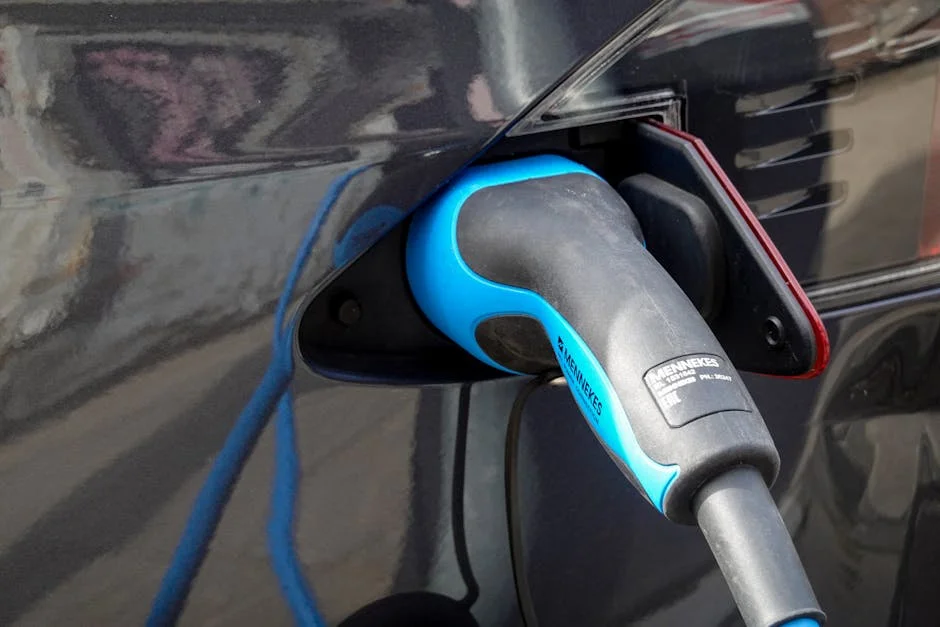
The phrase “cost to charge electric car vs gas” gets tossed around as if it’s a single number, but the reality depends on where you live, how you drive, what you pay for electricity, and how much gasoline costs in your region. The most useful way to compare the two is to translate everything into a cost per mile (or per 100 miles) and then layer in real-world factors like seasonal efficiency changes, charging habits, and the difference between home charging and public fast charging. Drivers tend to focus on the sticker price of fuel—dollars per gallon or cents per kilowatt-hour—yet the vehicle’s efficiency is what converts those prices into day-to-day spending. A gas car rated at 30 mpg may be inexpensive to buy, but if your commute is long and fuel prices are high, your monthly fuel expense can dwarf small differences in purchase price. Likewise, an EV with great efficiency can be remarkably cheap to run when charged at home, but relying heavily on DC fast chargers can raise operating costs closer to gasoline, especially in areas with expensive peak-time electricity.
Table of Contents
- My Personal Experience
- Understanding the Real Cost to Charge Electric Car vs Gas
- How to Calculate Cost Per Mile for Electricity and Gasoline
- Home Charging Costs: The Most Common EV Advantage
- Public Charging Costs: Level 2 vs DC Fast Charging
- Gasoline Costs: More Than Just the Pump Price
- Efficiency Differences: Miles per kWh vs Miles per Gallon
- Seasonal and Weather Impacts on Charging and Fuel Costs
- Expert Insight
- Time-of-Use Rates, Demand Charges, and Smart Charging Strategies
- Maintenance and Ownership Costs That Affect the Comparison
- Side-by-Side Cost Scenarios for Different Driver Profiles
- Comparison Table: Typical Energy Costs and Features by Fueling Option
- Hidden Costs and Common Mistakes When Comparing EV Charging to Gas
- Practical Takeaways: When EV Charging Is Cheaper and When Gas Can Compete
- Frequently Asked Questions
My Personal Experience
After switching from my old Corolla to a used electric hatchback, the cost difference between charging and buying gas surprised me more than the driving experience. With gas, I was regularly dropping $45–$60 to fill up every week and a half, and it always felt like the price jumped overnight. Now I plug in at home most nights and my electric bill has gone up roughly $25–$35 a month, even with a few longer trips mixed in. I did get caught once relying on a fast charger on the highway—paying per kWh there made it feel a lot closer to gas prices—but day to day, charging at home is noticeably cheaper and way more predictable than watching the pump total climb. If you’re looking for cost to charge electric car vs gas, this is your best choice.
Understanding the Real Cost to Charge Electric Car vs Gas
The phrase “cost to charge electric car vs gas” gets tossed around as if it’s a single number, but the reality depends on where you live, how you drive, what you pay for electricity, and how much gasoline costs in your region. The most useful way to compare the two is to translate everything into a cost per mile (or per 100 miles) and then layer in real-world factors like seasonal efficiency changes, charging habits, and the difference between home charging and public fast charging. Drivers tend to focus on the sticker price of fuel—dollars per gallon or cents per kilowatt-hour—yet the vehicle’s efficiency is what converts those prices into day-to-day spending. A gas car rated at 30 mpg may be inexpensive to buy, but if your commute is long and fuel prices are high, your monthly fuel expense can dwarf small differences in purchase price. Likewise, an EV with great efficiency can be remarkably cheap to run when charged at home, but relying heavily on DC fast chargers can raise operating costs closer to gasoline, especially in areas with expensive peak-time electricity.

Another reason the “cost to charge electric car vs gas” comparison can feel confusing is that gasoline pricing is relatively consistent: you pay at the pump and you’re done. Electricity pricing is more layered. Many utilities use time-of-use rates, meaning off-peak charging at night can cost far less than charging during the day. Some households have tiered pricing where the marginal cost rises after you exceed a baseline. Apartment dwellers may face flat fees, bundled parking electricity, or pay higher public charging rates. There’s also the efficiency side: EVs tend to be most efficient in moderate temperatures and at city speeds, while internal combustion engines often waste fuel in stop-and-go traffic. That means the best-case scenario for an EV can be dramatically cheaper than gas, while the worst-case scenario can be “only a bit cheaper” or, in rare cases, similar. The most honest comparison combines typical electricity rates, realistic charging behavior, and your driving profile, then converts that into a monthly and annual number you can actually budget against.
How to Calculate Cost Per Mile for Electricity and Gasoline
To compare the cost to charge electric car vs gas in a way that matches your life, start with a cost-per-mile calculation. For an EV, the formula is straightforward: (price per kWh) ÷ (miles per kWh) = cost per mile. If your electricity rate is $0.15/kWh and your EV averages 3.5 miles/kWh, the energy cost is about $0.043 per mile (4.3 cents). Multiply by 1,000 miles and you get roughly $43. If you prefer “per 100 miles,” multiply by 100: about $4.30 per 100 miles. For a gas car, it’s (price per gallon) ÷ (miles per gallon). At $3.50/gal and 30 mpg, that’s about $0.117 per mile (11.7 cents), or $11.67 per 100 miles. Even before considering maintenance differences, that’s a meaningful operating cost gap. The key is to use your own numbers: your local utility’s rate (including delivery charges and taxes) and your real-world EV efficiency, not just the EPA label.
Real-world conditions complicate the math but don’t invalidate it. EV efficiency changes with temperature, speed, tires, and driving style. If you drive mostly highway at 75 mph, you might see 2.7–3.2 miles/kWh instead of 3.5–4.0. In winter, cabin heat can reduce efficiency further. On the gas side, short trips, idling, and cold starts can significantly reduce mpg. The best practice is to build a range: a “typical” scenario and a “worst reasonable” scenario. For example, if electricity is $0.22/kWh and your EV averages 3.0 miles/kWh, your cost is about 7.3 cents per mile. If gasoline is $4.20/gal and your car averages 26 mpg, that’s about 16.2 cents per mile. This approach keeps the cost to charge electric car vs gas comparison grounded: it shows you what happens when prices move, when seasons change, and when your driving pattern shifts. It also helps you decide whether paying extra for a more efficient EV trim, better tires, or home charging equipment will pay back over time.
Home Charging Costs: The Most Common EV Advantage
For many households, the biggest reason the cost to charge electric car vs gas favors electric is simple: home charging is usually cheaper than public charging and far cheaper than gasoline on a per-mile basis. When you charge at home, you typically pay a residential electricity rate that can range from about $0.10/kWh in low-cost regions to $0.30/kWh or more in high-cost areas. Even within a single city, your effective rate may change depending on time-of-use schedules. If your utility offers off-peak discounts, plugging in overnight can cut charging costs substantially. For example, an EV that uses 30 kWh to drive 100 miles would cost $3.00 per 100 miles at $0.10/kWh, $4.50 at $0.15/kWh, and $9.00 at $0.30/kWh. Those numbers can still compare favorably to gasoline, but the spread shows why understanding your home rate matters as much as the vehicle’s efficiency.
Home charging also reduces “convenience costs” that aren’t directly visible in dollars per kWh. If you can start each day with a full battery, you avoid detours to gas stations and minimize the need for higher-priced fast charging. This changes the cost to charge electric car vs gas in practical budgeting terms: fewer unpredictable spikes. It also allows you to plan around your utility’s cheapest hours, effectively turning your driveway or garage into a low-cost fueling station. For renters or condo owners, the economics can still work, but it depends on access. A dedicated Level 2 charger can increase charging speed and make off-peak charging easier, yet the hardware and installation can add upfront cost. Even so, many drivers find that the monthly savings compared with gasoline can offset equipment costs over time, especially for higher-mileage commuters. The strongest scenario for EV savings is a driver who charges mostly at home, uses off-peak rates, and drives enough miles for the per-mile difference to add up meaningfully across the year.
Public Charging Costs: Level 2 vs DC Fast Charging
Public charging changes the cost to charge electric car vs gas because pricing is often higher and less predictable than residential electricity. Level 2 public chargers may bill per kWh, per hour, or via a session fee, and the effective price can vary based on how fast your vehicle accepts power. If a charger bills by time and your EV charges slowly, you may pay more per kWh than the posted rate seems to imply. DC fast charging is typically the most expensive electricity many drivers will buy, and it can range widely by network, location, and time. In some markets, fast charging can approach or even exceed the per-mile cost of gasoline, particularly if you’re paying $0.45–$0.65/kWh and driving a larger EV that averages closer to 2.2–2.8 miles/kWh on highway trips. That doesn’t make EV ownership a bad deal; it means the savings story depends on the mix of home charging versus public charging.

Fast charging still offers value because it solves a different problem: time. On road trips, many drivers accept a higher energy price in exchange for speed and convenience. When you compare cost to charge electric car vs gas for travel, it helps to separate “daily driving” from “trip charging.” Daily driving often leans heavily toward home rates, while road trips lean toward fast chargers. A realistic monthly budget might include 80–95% home charging and 5–20% public charging depending on lifestyle. If you’re an apartment resident without reliable home charging, your cost profile may tilt toward public stations, and then the EV-versus-gas gap narrows. Still, even frequent public charging can be competitive if local gasoline is expensive or if you use membership discounts, workplace charging, or off-peak public pricing. The practical takeaway is that public charging is a variable you can manage: choosing slower chargers when you have time, avoiding peak pricing, and using route planning to minimize expensive sessions can keep your electric fueling cost closer to the lower end of the range.
Gasoline Costs: More Than Just the Pump Price
Gasoline seems simple—dollars per gallon—but the cost to charge electric car vs gas comparison becomes clearer when you recognize how many factors push gas costs upward over time. Fuel prices can swing significantly with season, regional supply constraints, refinery outages, and broader market changes. A driver who budgets based on last month’s pump price can be surprised when prices rise quickly, especially during travel season. Gas vehicles also have a wider spread in real-world mpg than many drivers expect. Short trips, traffic, cold weather, aggressive acceleration, and high-speed highway driving can all reduce mpg. A vehicle rated at 30 mpg might deliver 24–27 mpg in a typical mixed commute, turning a seemingly reasonable fuel budget into a noticeably higher monthly expense. This variability makes gasoline spending harder to “optimize” compared with electricity, where time-of-use and home charging create more opportunities to lock in a low effective rate.
When comparing cost to charge electric car vs gas, it’s also helpful to think about the time cost and the behavioral cost. Gas stations are ubiquitous, but they still require a dedicated stop, and those stops add up. Many drivers underestimate how often they refuel and how much they spend annually because purchases are fragmented. Meanwhile, the gasoline price you see at the sign is only part of the operating cost picture. Gas vehicles have additional consumables tied to the drivetrain—oil changes, transmission service, engine air filters, spark plugs, and emissions-related repairs as the car ages. Those aren’t “fuel,” but they are part of what many people mentally lump into “running the car.” EVs aren’t maintenance-free, but they generally shift spending away from engine-related service. If you want a pure energy comparison, stick to cents per mile for gas and electricity. If you want a household budget comparison, acknowledge that gasoline’s volatility and the associated service cadence can make the gas option feel more expensive and less predictable, especially for high-mileage drivers who are most sensitive to per-mile costs.
Efficiency Differences: Miles per kWh vs Miles per Gallon
A fair cost to charge electric car vs gas comparison requires understanding efficiency metrics. Gas cars are measured in miles per gallon, while EVs are often expressed as miles per kWh or kWh per 100 miles. The relationship is straightforward: higher miles per kWh means lower electricity cost per mile, and higher mpg means lower gasoline cost per mile. But EV efficiency can vary more dramatically with speed because aerodynamic drag rises quickly as you go faster, and EVs are so efficient at lower speeds that the relative penalty at higher speeds is noticeable. That’s why many EVs shine in city driving where regenerative braking recaptures energy, while highway driving—especially above 70 mph—can reduce range and increase cost per mile. Gas cars also lose efficiency in city traffic, but they don’t recapture braking energy, and they waste fuel at idle, which can make them particularly inefficient for stop-and-go commutes.
Vehicle size and shape matter as much as the powertrain. A compact EV might average 4.0 miles/kWh in mild weather, while a large electric SUV might average 2.3–2.8. On gasoline, a small sedan might achieve 35–40 mpg, while a large SUV may sit around 18–24 mpg. When comparing cost to charge electric car vs gas, you should compare similar vehicle classes to avoid misleading conclusions. A compact EV versus a full-size gas SUV is not a like-for-like match. If you compare a compact EV to a compact gas car, electricity often wins clearly when charging at home. If you compare a large EV SUV relying on fast charging to a highly efficient hybrid, the gap may narrow. Efficiency also influences how sensitive you are to energy price swings. A very efficient EV can remain cheap even with higher electricity rates, while a less efficient EV is more exposed to expensive fast charging. The same principle applies to gas: a high-mpg hybrid is more resilient when gas prices spike than a low-mpg truck.
Seasonal and Weather Impacts on Charging and Fuel Costs
Weather can change the cost to charge electric car vs gas in ways that surprise first-time EV drivers. Cold temperatures reduce battery efficiency and increase energy use for cabin heat, battery conditioning, and denser air resistance. That means an EV may consume more kWh per mile in winter, raising the per-mile electricity cost even if your utility rate stays the same. If your EV typically uses 28 kWh per 100 miles in mild weather but rises to 36 kWh per 100 miles in winter, your cost per 100 miles increases by about 29%. At $0.18/kWh, that’s the difference between $5.04 and $6.48 per 100 miles. The cost increase is real, but it’s often still competitive with gasoline, especially if gas prices are high. Preconditioning while plugged in, using seat heaters instead of blasting cabin heat, and parking in a garage can reduce winter energy use.
| Item | Electric Car (Charging) | Gas Car (Fueling) |
|---|---|---|
| Typical cost per “full tank” equivalent | Often lower and varies by kWh rate (home charging usually cheapest) | Often higher and varies by gas price per gallon |
| Cost per mile (energy) | Generally lower; depends on efficiency (mi/kWh) and electricity price | Generally higher; depends on MPG and gas price |
| Price volatility & where you pay | More stable at home rates; public fast charging can cost more | More volatile; primarily paid at gas stations |

Expert Insight
Calculate your real per-mile cost before comparing electric vs gas: multiply your electricity rate (kWh price) by your car’s kWh/100 miles, then divide by 100. Compare that to gas by dividing your local price per gallon by your vehicle’s mpg. This quick math shows whether home charging beats the pump in your area and helps you spot when a fuel-price swing changes the advantage. If you’re looking for cost to charge electric car vs gas, this is your best choice.
Lower charging costs by shifting energy use, not just shopping for cheaper stations: charge at home during off-peak hours (or enroll in a time-of-use plan) and set a charge schedule so the car pulls power when rates are lowest. For road trips, pre-plan fast-charging stops and cap charging to the fastest portion (often up to about 80%) to reduce time-based fees and avoid paying a premium for slow top-offs. If you’re looking for cost to charge electric car vs gas, this is your best choice.
Gas cars also suffer in winter. Cold starts, longer warm-up periods, winter-blend fuel, and increased idling can reduce mpg. In hot weather, air conditioning can lower mpg as well. The key difference is that EV efficiency swings are more visible because drivers track range closely, while gas drivers often don’t notice mpg changes until they refuel more frequently. For the cost to charge electric car vs gas comparison, it’s best to plan for seasonal variation rather than assume a single average number year-round. If you live in a region with harsh winters, you may want to budget a higher winter electricity spend and consider whether your home charging setup allows you to preheat the cabin without draining the battery. If you road-trip in winter, fast charging sessions can be longer and sometimes more frequent, which can increase travel costs. Still, many drivers find that even with winter penalties, the annual average remains favorable for electricity—especially when most charging happens at home and off-peak rates are available.
Time-of-Use Rates, Demand Charges, and Smart Charging Strategies
Electricity pricing structures can strongly influence the cost to charge electric car vs gas. Time-of-use plans reward charging when the grid is less busy, often late evening through early morning. If your utility offers an EV-specific plan, off-peak rates can be dramatically lower than peak rates. A household paying $0.28/kWh during peak hours might pay $0.12–$0.16/kWh off-peak. That difference can cut your per-mile cost nearly in half. Smart charging—either through the vehicle’s scheduling features or a connected home charger—lets you automatically start charging when rates drop. This isn’t just about saving money; it also reduces grid strain and can align with cleaner energy generation in some regions. By contrast, gasoline pricing rarely offers a comparable “schedule it and save” advantage. You can hunt for cheaper stations, but the savings are usually small compared with the potential spread between peak and off-peak electricity.
Some drivers encounter more complex pricing such as tiered rates, where consuming more electricity pushes you into a higher-cost bracket. In that scenario, adding an EV can increase your marginal rate unless you switch plans or adjust usage. That’s why it’s important to calculate the incremental cost of EV charging rather than assuming your average household rate. Demand charges are more common in commercial settings than residential, but they matter for fleet operators and workplaces offering charging. For households, the best approach is to check your utility bill for the actual cents per kWh including fees and taxes, then test whether an EV plan would lower your effective rate. These tactics can improve the cost to charge electric car vs gas comparison without changing vehicles: charging at night, avoiding unnecessary fast charging, using preconditioning while plugged in, and keeping tires properly inflated to reduce consumption. Over a year, small per-kWh savings can translate into meaningful reductions in total transportation spending, especially for commuters who drive 12,000–20,000 miles annually.
Maintenance and Ownership Costs That Affect the Comparison
Although the phrase cost to charge electric car vs gas sounds like it’s only about energy, many people make the decision based on the total cost of ownership. EVs often have lower routine maintenance because they don’t require oil changes, and they typically have fewer moving parts in the drivetrain. Brake wear can be reduced thanks to regenerative braking, though tires can wear faster on some EVs due to higher torque and weight. Gas vehicles have predictable maintenance schedules that include oil and filter changes, and as mileage climbs, additional items can appear: spark plugs, belts, exhaust components, and emissions sensors. These costs vary by model and how long you keep the vehicle, but they can influence whether the monthly savings from electricity translate into a meaningful long-term advantage.
Insurance, registration fees, and taxes can also shift the balance. Some regions add EV registration fees to replace lost fuel tax revenue, while others offer incentives or reduced fees. Gas vehicles effectively pay road taxes through fuel purchases, so a driver who spends a lot on gas is also paying more in fuel taxes. Electricity for home charging is typically taxed differently, and public charging may include added fees. When comparing cost to charge electric car vs gas, it’s useful to keep the energy comparison clean (cents per mile), then separately compare ownership costs like maintenance and fees. That way, you avoid confusing a high insurance premium for a particular EV model with the underlying advantage of cheaper electricity per mile. A practical budgeting approach is to estimate annual energy cost for each option, then add an annual maintenance reserve based on typical service schedules. The result often shows that EVs can offer lower operating costs even if their upfront price is higher, but it also highlights scenarios where a very efficient hybrid can compete closely, especially if electricity is expensive or home charging isn’t available.
Side-by-Side Cost Scenarios for Different Driver Profiles
Driver profile matters more than most people expect when evaluating cost to charge electric car vs gas. Consider three simplified profiles: a low-mileage urban driver (8,000 miles/year), an average commuter (12,000–15,000 miles/year), and a high-mileage driver (20,000+ miles/year). The higher your mileage, the more the per-mile difference matters. If an EV saves 6 cents per mile compared with a gas car, that’s about $480/year at 8,000 miles, $720–$900/year at 12,000–15,000 miles, and $1,200/year at 20,000 miles. Those savings can be enough to offset home charger installation or a higher monthly payment, depending on your financing and the vehicles compared. If you drive less, the savings are still real, but they may not be the deciding factor compared with convenience, charging access, or purchase price.
Charging access can flip the narrative. A commuter with home charging and off-peak rates might achieve very low electricity costs. An apartment resident relying on DC fast charging could pay much more per kWh and might see a smaller advantage over gasoline. Meanwhile, a driver who can charge at work for free or at a subsidized rate may see the cost to charge electric car vs gas swing heavily in favor of electric. Another factor is vehicle choice: a compact EV compared with a midsize gas sedan usually looks great on cost per mile, while a large electric SUV compared with a high-mpg hybrid can be closer. The most accurate method is to run your own scenario: estimate your miles per year, estimate your charging mix (home vs public), apply realistic electricity prices, then compare against your actual mpg and local gas prices. This keeps the comparison grounded in how you actually live rather than in headline averages that may not match your situation.
Comparison Table: Typical Energy Costs and Features by Fueling Option
Seeing the cost to charge electric car vs gas in a structured format helps clarify tradeoffs without pretending every driver will pay the same. The table below uses common fueling options rather than specific vehicle models, because your final cost depends on the EV’s efficiency and the gas car’s mpg. Ratings are general “value for typical drivers” scores based on price stability, convenience, and average cost per mile potential. Prices are example ranges that vary by region, utility plan, and station/network pricing. For a fair comparison, treat these as planning numbers and substitute your local rates to calculate your true cost per mile.

One useful way to read the table is to focus on what you can control. Home charging tends to offer the best chance of consistently low operating cost, while DC fast charging is the most convenient for trips but can be the most expensive way to buy electricity. Gasoline is widely available and quick, but it is exposed to price swings and can be costly per mile for lower-mpg vehicles. If your goal is to minimize monthly transportation spending, the “Features” column highlights strategies like off-peak scheduling and membership discounts that can improve the cost to charge electric car vs gas outcome without changing your driving habits dramatically.
| Name | Features | Ratings | Price (Typical) |
|---|---|---|---|
| Home Level 2 Charging (Off-Peak) | Scheduled overnight charging; lowest typical electricity rates; high convenience for daily driving | 4.8/5 | $0.10–$0.18 per kWh |
| Home Level 2 Charging (Flat/Average Rate) | Simple billing; predictable; may be higher if utility has tiers or no EV plan | 4.4/5 | $0.14–$0.30 per kWh |
| Public Level 2 Charging | Good for workplaces and errands; pricing may be per kWh or per hour; slower than DC fast | 3.9/5 | $0.20–$0.40 per kWh (or time-based) |
| DC Fast Charging (Pay-As-You-Go) | Fastest charging; best for road trips; highest typical electricity price | 3.6/5 | $0.35–$0.65 per kWh |
| DC Fast Charging (Membership/Off-Peak Discounts) | Potential per-kWh discounts; may include session fees; requires planning and network coverage | 3.8/5 | $0.28–$0.55 per kWh (+ possible fees) |
| Gasoline (Regular Unleaded) | Fast refueling; wide availability; price volatility; cost depends heavily on mpg | 4.0/5 | $3.00–$5.00 per gallon |
Hidden Costs and Common Mistakes When Comparing EV Charging to Gas
Many comparisons of cost to charge electric car vs gas go wrong because they ignore losses and fees. EV charging is not 100% efficient: some energy is lost as heat in the charging equipment and the battery. Home charging losses are often in the range of roughly 5–15% depending on temperature, charging speed, and equipment. That means if your car adds 60 kWh of battery energy, you might have drawn 63–69 kWh from the wall. If you only look at the car’s displayed consumption, you may underestimate your electric bill impact. Public networks may add session fees, idle fees, or higher prices during busy times. Some stations price per minute, which can penalize cars that charge more slowly or taper earlier. These details don’t eliminate EV savings, but they can narrow the gap, and they explain why two EV owners in the same city can report very different charging costs.
Another mistake is comparing the cheapest possible electricity price to the most expensive gasoline price (or vice versa). A balanced cost to charge electric car vs gas analysis uses realistic averages: what you usually pay for electricity at home, and what you usually pay for fuel at stations you actually use. It also helps to use the same driving conditions. If you compare an EV’s city efficiency to a gas car’s highway mpg, you’re mixing apples and oranges. Finally, some drivers forget to account for charging behavior. If you frequently charge to 100% and let the car sit at a high state of charge, you might not change your cost much, but you could affect long-term battery health. If you regularly rely on DC fast charging for convenience, your per-mile electricity cost will rise. The best approach is to track one month of real data: miles driven, kWh purchased (from your utility bill or charger app), and total dollars spent. Do the same for gasoline over a comparable month. That real-world snapshot often provides a clearer answer than any national average and helps you make decisions—like installing a Level 2 charger or switching to an EV-friendly rate plan—that improve your ongoing operating costs.
Practical Takeaways: When EV Charging Is Cheaper and When Gas Can Compete
In most scenarios, the cost to charge electric car vs gas favors electric when you can charge primarily at home, especially on off-peak rates, and when you drive enough miles for the per-mile savings to accumulate. The advantage is strongest for efficient EVs, moderate driving speeds, and regions with reasonable electricity prices and higher gasoline prices. Even with seasonal efficiency drops, many drivers still see lower annual fueling costs with electricity. The convenience of waking up to a charged vehicle can also reduce reliance on higher-priced public charging, keeping your “fuel” budget stable. If you’re comparing an EV to a conventional gas vehicle with average mpg, the per-mile energy cost gap is often substantial. If you’re comparing an EV to a high-mpg hybrid, the gap can narrow, but home charging still tends to be competitive, particularly when gasoline prices rise.
Gas can compete more closely in a few specific situations: if your electricity rate is very high, if you lack home charging and rely heavily on DC fast charging, if you drive mostly high-speed highway miles in a less efficient EV, or if you’re comparing against a very efficient hybrid in an area with relatively low gasoline prices. Those cases don’t invalidate the cost to charge electric car vs gas advantage; they simply make it more dependent on your charging plan and your vehicle choice. The most reliable way to decide is to calculate your personal cents-per-mile for both options using your local prices, then sanity-check it with one month of real data once you start driving. When the numbers are built from your own utility rate, your own mpg, and your own charging mix, the comparison becomes less about debate and more about budgeting. Ultimately, the cost to charge electric car vs gas is a moving target, but for many drivers who can charge at home, electricity remains one of the most consistently economical ways to power daily transportation.
Summary
In summary, “cost to charge electric car vs gas” is a crucial topic that deserves thoughtful consideration. We hope this article has provided you with a comprehensive understanding to help you make better decisions.
Frequently Asked Questions
Is it cheaper to charge an electric car than to buy gas?
In most cases, yes—charging at home is cheaper per mile than filling up with gasoline. Still, the **cost to charge electric car vs gas** can vary a lot depending on your local electricity rates, current gas prices, and how efficient your EV (and the gas vehicle you’re comparing it to) is.
How do I compare EV charging cost per mile to gas cost per mile?
To compare the **cost to charge electric car vs gas**, calculate each vehicle’s cost per mile. For an EV, take the kWh used per 100 miles, divide by 100 to get kWh per mile, then multiply by your electricity rate per kWh. For a gas car, divide the price per gallon by the vehicle’s MPG to get the cost per mile. Once you have both per-mile figures, you can directly see which option is cheaper to drive.
What does it cost to fully charge an electric car at home?
To estimate the **cost to charge electric car vs gas**, multiply your battery size (in kWh) by your electricity rate ($/kWh), then add about **5–15% extra** to account for charging losses. For example, a **70 kWh** battery at **$0.15/kWh** costs **about $10.50** before losses (and roughly **$11–$12** after losses).
Is public fast charging cheaper than gas?
Not always—the **cost to charge electric car vs gas** depends on where and how you power up. In some areas, DC fast charging can cost about the same as (or even more than) driving on gas per mile, while charging at home is usually the most affordable option.
What factors most affect EV charging cost vs gas cost?
The **cost to charge electric car vs gas** depends on several real-world factors, including your local electricity prices (especially time-of-use rates), current gas prices, your vehicle’s efficiency (kWh per mile or MPG), weather and driving speed, charging losses, and whether you typically charge at home or rely on public chargers.
When can an EV cost more to “fuel” than a gas car?
If electricity is expensive, you rely heavily on high-priced fast chargers, or you compare against a very efficient gas car with cheap fuel, the per-mile cost gap can shrink or flip. If you’re looking for cost to charge electric car vs gas, this is your best choice.
? Looking for more info about cost to charge electric car vs gas? Follow Our Site for updates and tips!