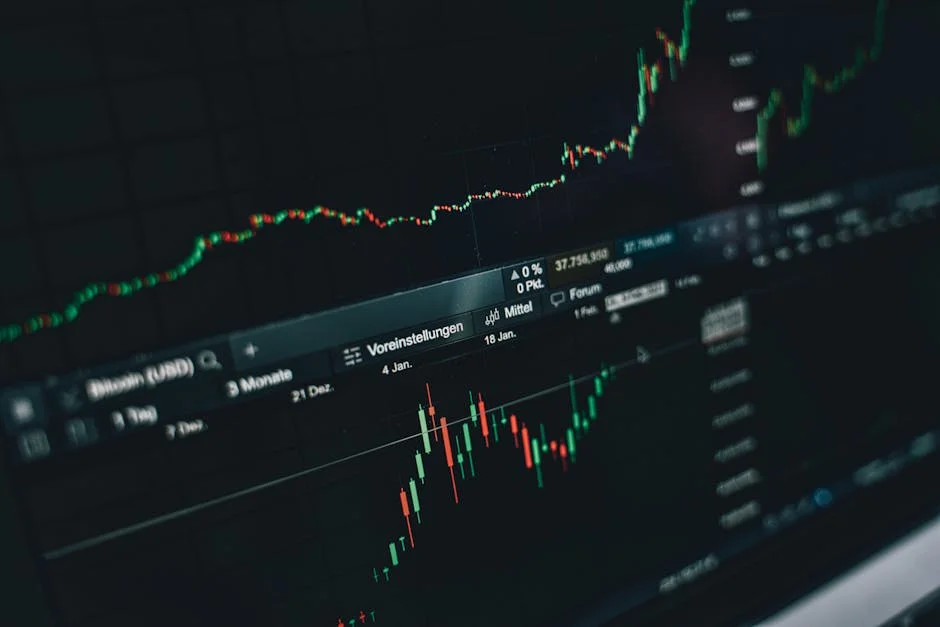
Forex and stock market activity often moves in parallel because both reflect how investors price risk, growth, inflation, and central bank policy. When traders feel optimistic, they may buy equities, high-yield currencies, and growth-sensitive assets, while selling safer currencies such as the U.S. dollar, Japanese yen, or Swiss franc. When fear rises, flows can reverse: capital shifts into defensive stocks, cash, and reserve currencies. This relationship is not fixed, though. Forex and stock market prices respond to different drivers at different speeds, and those drivers can dominate for weeks or months. Equities frequently react to earnings expectations, sector rotation, and corporate balance sheets, while currencies react to interest rate differentials, trade balances, and changes in monetary policy. Yet the two markets are deeply linked through global capital flows. A multinational company’s profits depend on exchange rates, and a currency’s strength depends on foreign appetite for a nation’s assets, including its stocks.
Table of Contents
- My Personal Experience
- Understanding the Relationship Between Forex and Stock Market
- Market Structure and Trading Mechanics: How Each Market Operates
- Macro Drivers: Interest Rates, Inflation, and Central Banks
- Economic Data and Sentiment: What Moves Prices Day to Day
- Correlation and Divergence: When Currencies and Equities Move Together or Apart
- Capital Flows, Global Allocation, and the Role of Institutional Investors
- Expert Insight
- Risk Management Across Forex and Stock Market Positions
- Strategies That Combine Forex and Stock Market Signals
- Regional Case Studies: United States, Europe, and Emerging Markets
- Common Mistakes Traders Make When Comparing Forex and Stock Market
- Building a Balanced Approach for Long-Term Investors and Active Traders
- Watch the demonstration video
- Frequently Asked Questions
- Trusted External Sources
My Personal Experience
I got into the stock market first, buying a few blue-chip shares through my brokerage and feeling pretty confident because the moves were slow enough to understand. Then I tried forex after seeing how “liquid” and “fast” it was, and that’s where I learned what volatility really feels like—one CPI release wiped out a week of steady gains in minutes. I started over with smaller position sizes, set hard stop-losses, and stopped trading around major news until I actually knew what I was doing. Over time I realized I prefer stocks for longer-term holds and using forex only for short, planned trades, because the 24-hour market can mess with your sleep and your discipline if you let it. The biggest change wasn’t my strategy—it was accepting that protecting my account matters more than being right on any single trade. If you’re looking for forex and stock market, this is your best choice.
Understanding the Relationship Between Forex and Stock Market
Forex and stock market activity often moves in parallel because both reflect how investors price risk, growth, inflation, and central bank policy. When traders feel optimistic, they may buy equities, high-yield currencies, and growth-sensitive assets, while selling safer currencies such as the U.S. dollar, Japanese yen, or Swiss franc. When fear rises, flows can reverse: capital shifts into defensive stocks, cash, and reserve currencies. This relationship is not fixed, though. Forex and stock market prices respond to different drivers at different speeds, and those drivers can dominate for weeks or months. Equities frequently react to earnings expectations, sector rotation, and corporate balance sheets, while currencies react to interest rate differentials, trade balances, and changes in monetary policy. Yet the two markets are deeply linked through global capital flows. A multinational company’s profits depend on exchange rates, and a currency’s strength depends on foreign appetite for a nation’s assets, including its stocks.
Even the way participants use these markets creates meaningful overlap. Global funds hedge currency risk when buying international shares, and those hedges can become large enough to influence the currency itself. At the same time, a sudden currency move—caused by a central bank surprise, a geopolitical shock, or a commodity price spike—can ripple into equity indices by changing import costs, export competitiveness, and inflation expectations. Forex and stock market correlations also shift across regimes: during calm periods, investors may focus on company fundamentals and sector trends; during crises, macro factors dominate and correlations can rise sharply. Understanding that the linkage is dynamic helps traders and investors avoid simplistic assumptions and build a more resilient approach to risk management, position sizing, and diversification.
Market Structure and Trading Mechanics: How Each Market Operates
The forex market is an over-the-counter network of banks, brokers, liquidity providers, and electronic platforms where currencies trade nearly 24 hours a day, five days a week. Prices are quoted in pairs, such as EUR/USD or USD/JPY, and every trade simultaneously buys one currency and sells another. Liquidity is typically deepest in major pairs, with tight spreads during active sessions like London and New York. Unlike a centralized exchange, forex pricing can vary slightly across venues, though arbitrage keeps differences small for actively traded pairs. Leverage is commonly available, which can amplify gains but also magnify losses; this makes risk controls essential. Because trading is continuous across time zones, forex can react instantly to breaking macro news, central bank statements, and geopolitical events, sometimes producing sharp gaps when liquidity is thin, such as around market opens or unexpected headlines. If you’re looking for forex and stock market, this is your best choice.

Stocks, by contrast, usually trade on centralized exchanges with defined hours, standardized listing requirements, and transparent order books. A stock represents an ownership stake in a company, and its price reflects expectations about revenue, margins, competitive positioning, and broader economic conditions. While after-hours trading exists in many regions, liquidity is typically concentrated during regular sessions. The stock market also includes indices, exchange-traded funds, and derivatives like options and futures, which allow investors to express views on sectors or the broader economy. Compared with forex, equities are more directly influenced by micro-level events such as earnings reports, mergers, lawsuits, and product launches. However, the forex and stock market ecosystems overlap through multinational exposure and global funds allocating capital across regions. Understanding these structural differences clarifies why currencies can respond faster to monetary policy while equities may react more strongly to company-specific developments.
Macro Drivers: Interest Rates, Inflation, and Central Banks
Interest rates are a core driver of currency valuation because they influence the return investors can earn holding assets denominated in a given currency. When a central bank raises rates, all else equal, the currency may strengthen as global capital seeks higher yields. This mechanism is central to forex pricing through concepts like carry trades and interest rate differentials. Inflation matters because it shapes real yields and expectations for future policy moves. If inflation is hot and a central bank is expected to tighten aggressively, the currency can rise; if inflation erodes purchasing power without a credible policy response, the currency can weaken. In practice, markets often move on expectations rather than the actual rate decision. Forward guidance, press conferences, and economic projections can matter as much as the headline rate. Forex and stock market participants both track these signals, but the transmission differs: currencies often react immediately, while equities may digest the implications for growth and corporate earnings over days or weeks.
Equities respond to rates through discounting and financing conditions. Higher interest rates can reduce the present value of future cash flows, which tends to pressure high-growth stocks with profits expected far in the future. Higher rates also increase borrowing costs for companies and consumers, potentially slowing demand. At the same time, certain sectors like banks may benefit from rising rates depending on the yield curve and loan demand. Inflation affects equities through input costs, wage pressures, and pricing power. A company that can pass costs to customers may hold margins better than one exposed to commodity inputs or intense competition. The forex and stock market connection becomes clear when policy shifts alter both currency strength and equity valuations. For example, a tightening cycle may boost a currency while weighing on domestic stocks, especially rate-sensitive sectors. In other periods, strong growth can lift equities and attract foreign capital, supporting the currency simultaneously.
Economic Data and Sentiment: What Moves Prices Day to Day
High-impact economic releases can move currencies and equities within minutes, particularly when results diverge from consensus expectations. In forex, labor market data, inflation prints, central bank minutes, and purchasing manager surveys often trigger fast repricing of rate expectations. A stronger-than-expected jobs report can push yields higher and lift the currency, while also influencing equity futures based on how traders interpret the growth versus inflation trade-off. Sometimes “good news is bad news” for stocks if it implies tighter policy ahead. Conversely, weak data can weaken a currency if it reduces expected yield advantage, while equities may rally if investors anticipate easing. This push-pull dynamic is a hallmark of forex and stock market interactions during periods when monetary policy is the dominant narrative.

Sentiment indicators also play a large role. Risk-on periods—characterized by tightening credit spreads, rising equities, and demand for higher-yielding currencies—can persist as long as volatility remains contained. Risk-off periods can be triggered by geopolitical events, financial stress, or sudden changes in policy expectations. In such moments, traders often buy safe-haven currencies and sell equities, though the exact pattern can vary by region and context. For example, the U.S. dollar can behave as both a safe haven and a growth currency depending on global conditions and relative policy. The forex and stock market link is therefore best understood through a framework that combines data surprises, positioning, and narrative shifts. Traders who monitor both markets can often detect early signals: a currency breaking out on rate expectations may foreshadow equity sector rotation, while a sharp equity sell-off may signal a coming shift toward defensive currency positioning.
Correlation and Divergence: When Currencies and Equities Move Together or Apart
Correlation between currencies and equities is not constant, and assuming it is can lead to poor decisions. At times, a country’s stock index can rise alongside its currency, reflecting foreign inflows and improving growth prospects. This is common when global investors allocate to a region for structural reasons, such as productivity gains, reform momentum, or attractive valuations. In that setting, forex and stock market performance can reinforce each other: a stronger currency increases foreign investor returns in their home currency, attracting additional capital. However, the relationship can flip when currency strength becomes a headwind for exporters. If an economy relies heavily on exports, a rising currency can hurt corporate earnings, causing equities to lag or fall even while the currency climbs. Understanding the economic structure of a market—export share, commodity dependence, and sensitivity to global demand—helps explain these shifts.
Divergence also occurs when policy expectations differ between markets. A central bank may signal rate hikes that support the currency, while equities drop because tighter financial conditions reduce growth expectations. Alternatively, a currency can weaken due to lower rates, while equities rally because cheaper financing and improved liquidity boost risk appetite. In emerging markets, currency weakness can be particularly damaging to stocks if companies have foreign-currency debt, because repayment costs rise as the local currency falls. In developed markets, multinational companies may benefit from a weaker domestic currency that boosts overseas earnings when translated back home. The forex and stock market relationship is therefore best viewed as conditional: it depends on policy, growth, trade exposure, and whether investors are prioritizing yield, safety, or earnings. Rather than treating correlation as a fixed statistic, many professionals track rolling correlations and interpret them alongside macro context and positioning.
Capital Flows, Global Allocation, and the Role of Institutional Investors
Large institutional investors—pension funds, sovereign wealth funds, insurance companies, and global asset managers—shape both currency and equity trends through allocation decisions. When a fund increases exposure to foreign stocks, it typically needs to buy the local currency to settle trades, which can create upward pressure. Some investors hedge that currency exposure using forwards or options, and the hedge ratio can vary with volatility, interest rate differentials, and investment horizon. These hedging flows can be substantial, particularly for markets like Japan, the euro area, and the United States, where cross-border holdings are large. As a result, forex and stock market moves can be linked through a feedback loop: equity inflows support a currency, a stronger currency improves unhedged returns, and that can attract additional equity demand. The reverse can happen during risk-off episodes when funds reduce exposure and repatriate capital.

Expert Insight
Define your risk before entering any trade: set a stop-loss level, size positions so a single loss costs no more than 1–2% of your account, and avoid overleveraging—especially in forex where small moves can have outsized impact. If you’re looking for forex and stock market, this is your best choice.
Trade the calendar, not the headlines: track key economic releases (rates, inflation, jobs) for forex and earnings/guidance for stocks, then wait for confirmation (breakout with volume or a clear trend resumption) instead of chasing the first spike. If you’re looking for forex and stock market, this is your best choice.
Rebalancing is another underappreciated driver. Many funds follow rules-based mandates to maintain target weights across regions and asset classes. After a strong equity rally, funds may sell equities and buy bonds or cash to rebalance, which can influence currency demand as well. Month-end and quarter-end hedging adjustments are known to cause currency moves that appear disconnected from news. This is one reason forex can sometimes move sharply late in the month without a clear catalyst. The forex and stock market connection is also visible in index inclusion events and benchmark changes. When a country is added to a major equity index, passive funds must buy its shares, which can boost both the stock market and the currency. Understanding these flow mechanics helps traders avoid overreacting to price moves that are driven by positioning and institutional processes rather than fundamental shifts.
Risk Management Across Forex and Stock Market Positions
Risk management looks different in forex compared with equities because of leverage, continuous trading hours, and the nature of currency pairs. In forex, a position is inherently relative: being long EUR/USD is both long euros and short dollars, so exposure is tied to two economies and two central banks. Position sizing often uses pip value, volatility measures like ATR, and maximum drawdown limits. Because leverage can be high, small price moves can materially affect account equity. Stop-loss placement must account for volatility spikes around major data releases. Traders also monitor correlation between pairs to avoid unintended concentration, such as holding multiple positions that all depend on U.S. dollar weakness. The forex and stock market overlap becomes important when a portfolio contains both assets, since a macro shock can hit them simultaneously and increase overall risk.
| Aspect | Forex Market | Stock Market |
|---|---|---|
| What you trade | Currency pairs (e.g., EUR/USD) based on exchange rates | Shares of publicly listed companies (e.g., AAPL) |
| Trading hours & liquidity | Typically 24/5 with very high liquidity in major pairs | Exchange-specific hours; liquidity varies by company and exchange |
| Leverage & risk | Often higher leverage available; price moves can be amplified | Usually lower leverage (depending on broker/region); company-specific risks (earnings, news) |
In equities, risk is often managed through diversification, sector allocation, and the use of options or index hedges. Single-stock risk can be mitigated with position limits and by avoiding excessive exposure to one industry. However, during broad market sell-offs, correlations between stocks can rise, reducing the benefit of diversification. That is when macro hedges, such as index puts or defensive allocations, become more relevant. Currency risk also matters for stock investors who hold foreign shares or funds: unhedged exposure can add volatility and sometimes dominate equity returns. A strong foreign stock performance can be offset by an unfavorable currency move, and vice versa. Integrating forex and stock market risk management means measuring exposures in a common framework—such as value-at-risk, scenario analysis, or stress tests—and considering how policy shocks, commodity moves, and geopolitical events could impact both markets at once.
Strategies That Combine Forex and Stock Market Signals
Many professionals use cross-market signals to improve timing and context. For example, a sharp move in bond yields can lead currency moves, and those currency moves can foreshadow equity sector rotation. If a currency strengthens on rising yields, it may signal expectations of tighter policy, which can pressure rate-sensitive equities while benefiting financials. Another approach is to watch commodity-linked currencies—such as the Australian dollar or Canadian dollar—as proxies for global demand and commodity cycles. When these currencies strengthen alongside rising equity indices, it can reflect improving risk appetite. When they weaken while stocks remain elevated, it can hint at underlying fragility. The forex and stock market relationship can also be used to validate breakouts: an equity index making new highs while the local currency collapses may indicate capital flight or inflation concerns, whereas simultaneous strength can suggest healthier inflows.
Pairs trading and hedged positioning are also common. An investor bullish on a country’s stocks but concerned about currency weakness might buy the equity index and hedge the currency exposure with a forward or by shorting the currency against a stable counterpart. Conversely, a trader might express a view on relative growth by combining equity and currency positions, such as long a country’s equities and long its currency when expecting strong growth and tightening policy. Options can refine these strategies by defining risk and allowing asymmetric exposure. The key is to avoid forcing a narrative: forex and stock market signals can conflict for valid reasons, such as divergent sector composition or different investor bases. A disciplined approach uses cross-market data as inputs, not as guarantees, and relies on clear invalidation points, position sizing rules, and awareness of event risk.
Regional Case Studies: United States, Europe, and Emerging Markets
The United States often sits at the center of forex and stock market dynamics because the U.S. dollar is the primary reserve currency and U.S. equities dominate global benchmarks. When global risk appetite is strong, capital frequently flows into U.S. stocks for growth exposure, which can support the dollar through demand for U.S. assets. Yet the dollar can also weaken during strong risk-on phases if investors borrow dollars to fund carry trades into higher-yielding markets. The outcome depends on relative yield, fiscal outlook, and global liquidity conditions. U.S. multinational-heavy indices can be sensitive to dollar strength because overseas earnings translate into fewer dollars when the currency rises. This creates periods where a stronger dollar coincides with softer equity performance, especially for sectors with large foreign revenue shares.
In Europe, the relationship can be shaped by the euro’s role as a funding currency at times, the region’s export exposure, and the policy stance of the European Central Bank. A weaker euro can benefit exporters and support certain equity segments, while a stronger euro can tighten financial conditions and weigh on earnings translations. Emerging markets add complexity because currency stability is often a prerequisite for sustained equity inflows. When an emerging market currency depreciates sharply, inflation can rise and central banks may be forced to hike rates, which can hurt growth and stocks. Conversely, a stable or strengthening currency can attract foreign investors seeking diversification and higher growth. The forex and stock market connection in emerging economies is frequently more direct because external financing conditions and dollar liquidity matter more. Monitoring external balances, foreign reserves, and debt composition becomes essential when evaluating both currency and equity risk in these regions.
Common Mistakes Traders Make When Comparing Forex and Stock Market
A frequent mistake is assuming that one market “must” lead the other in a predictable way. Sometimes currencies lead because they reprice policy expectations quickly; other times equities lead because they reflect forward-looking growth assumptions. Another mistake is treating headline correlation as stable and building positions that implicitly rely on it. Correlations can flip quickly when the dominant driver changes from growth to inflation, from liquidity to geopolitics, or from earnings to recession risk. Traders also underestimate the impact of positioning and liquidity. A crowded trade can unwind violently in forex due to leverage, and that can spill into equities through risk parity and volatility targeting strategies that reduce exposure when volatility rises. The forex and stock market link becomes most dangerous when many participants hold similar positions and need to exit simultaneously.
Another common error is ignoring currency exposure in international equity investing. Buying foreign stocks without considering exchange rates can produce disappointing results even when the companies perform well. Conversely, a favorable currency move can mask weak equity selection and create false confidence. Costs and execution also differ: forex spreads can be tight, but rollover and financing costs matter; equities involve commissions, bid-ask spreads, and sometimes taxes or withholding on dividends. Event risk is often misunderstood as well. Earnings surprises can gap stocks at the open, while central bank decisions can move currencies instantly during liquid hours. Traders who participate in both markets need an event calendar that includes macro releases, central bank meetings, earnings seasons, and geopolitical deadlines. Treating forex and stock market trading as separate worlds is a recipe for blind spots; treating them as identical is equally risky.
Building a Balanced Approach for Long-Term Investors and Active Traders
A balanced approach begins with clarity about goals and time horizon. Long-term investors may use equities as the primary growth engine and treat currencies mainly as a risk factor to manage through diversification and selective hedging. Hedging can reduce volatility but may also reduce returns, especially when interest rate differentials make hedging costly. Some investors hedge partially, increasing hedge ratios when volatility rises or when a currency appears overvalued. Active traders, on the other hand, may seek opportunities in both markets, using forex for macro expression and equities for thematic or company-specific trades. The key is consistency: a trader who uses technical analysis in forex and fundamentals in stocks should still maintain a unified risk framework, ensuring that exposures do not inadvertently concentrate around the same macro factor, such as U.S. dollar weakness or falling yields. The forex and stock market connection should inform portfolio construction, not dictate it.

Practical integration can include watching a small set of cross-market indicators: government bond yields, credit spreads, volatility indices, commodity benchmarks, and key currency pairs. These provide context for whether markets are pricing growth, inflation, or stress. From there, position sizing and risk limits should reflect the reality that shocks can hit multiple assets at once. Diversification should be genuine, not superficial; holding many positions that all depend on the same “risk-on” outcome is not true diversification. Finally, performance review should separate skill from environment. A profitable period might result from a tailwind like falling rates or a weak dollar, and recognizing that helps prevent overconfidence. Over time, a disciplined process that respects how forex and stock market forces interact can improve decision quality, reduce avoidable drawdowns, and make returns more repeatable across different market regimes.
Watch the demonstration video
In this video, you’ll learn the basics of both the forex and stock markets, including how each one works, what drives price movements, and the key differences in trading hours, liquidity, and risk. It also covers common strategies, essential terms, and practical tips to help you start analyzing and trading more confidently.
Summary
In summary, “forex and stock market” is a crucial topic that deserves thoughtful consideration. We hope this article has provided you with a comprehensive understanding to help you make better decisions.
Frequently Asked Questions
What’s the difference between forex and the stock market?
Forex trades currency pairs (e.g., EUR/USD) in a global OTC market, while stocks trade shares of companies on exchanges. Forex is typically 24/5 and more leveraged; stocks have set exchange hours and represent ownership in firms. If you’re looking for forex and stock market, this is your best choice.
Which is more volatile: forex or stocks?
Both can be volatile, but forex often has frequent small moves with high leverage, while stocks can gap sharply on earnings/news. Volatility depends on the specific pair/stock, time frame, and market conditions. If you’re looking for forex and stock market, this is your best choice.
What are the main factors that move forex and stock prices?
The **forex and stock market** move for different reasons, but both are shaped by the bigger economic picture. Forex prices tend to react most to interest rates, inflation, central bank decisions, key economic reports, and geopolitical tensions. Stock prices, on the other hand, are usually influenced by company earnings and forecasts, valuations, sector momentum, and broader conditions like economic growth and the interest-rate environment.
Can I trade both forex and stocks with the same strategy?
Some approaches (trend following, mean reversion, risk management rules) can transfer, but execution differs due to market hours, liquidity, spreads/commissions, and catalysts like earnings for stocks and macro releases for forex. If you’re looking for forex and stock market, this is your best choice.
How does leverage differ in forex vs stocks?
Forex brokers often offer higher leverage than stock brokers, which can amplify gains and losses quickly. Stock margin is usually lower and varies by regulation, broker, and the asset’s risk profile. If you’re looking for forex and stock market, this is your best choice.
What are the key costs in forex and stock trading?
When trading **forex and stock market** instruments, it’s important to understand the typical costs involved. In forex, expenses usually come from the spread, possible commissions depending on your account type, and overnight swap or financing charges for holding positions. In stock trading, costs may include any commissions or platform fees, the bid-ask spread, and margin interest if you’re borrowing funds to trade.
? Looking for more info about forex and stock market? Follow Our Site for updates and tips!

Trusted External Sources
- Forex vs stocks (swing/day trading) – Reddit
Dec 18, 2026 … The forex market is open 24/7 and is typically traded on margin, while the stock market has specific trading hours and does not usually involve … If you’re looking for forex and stock market, this is your best choice.
- Forex Trading vs Stock Trading – Differences, Advantage
Forex trading often comes with significantly higher leverage than stock trading. In the U.S., retail traders may be able to use leverage of up to 50:1, while in Europe it’s typically capped at 30:1—one of the key differences many people notice when comparing the **forex and stock market**.
- Trading stocks or forex? – Reddit
Aug 24, 2026 — When it comes to day and swing trading in the **forex and stock market**, forex often stands out for its flexibility, high liquidity, and near-24/5 access. That said, it isn’t without drawbacks—traders may face wider spreads at certain times, and the risk of dealing with questionable brokers or scams can be higher than in traditional stock trading.
- Forex vs Stocks: What are the Key Differences? | Dukascopy Bank SA
Oct 24, 2026 … Stocks: Margin rates in stock trading are usually lower than in Forex. You can still trade on margin, but the leverage is less, which might feel … If you’re looking for forex and stock market, this is your best choice.
- Forex Trading Online – No. 1 Forex Broker in the US* – FX Markets …
Forex trading is the buying and selling of currencies from around the world, enabling individuals, businesses, central banks, and governments to exchange money for international trade, travel, and investment. For anyone exploring the **forex and stock market**, understanding how currency values move can offer valuable insight into global economic trends and financial opportunities.