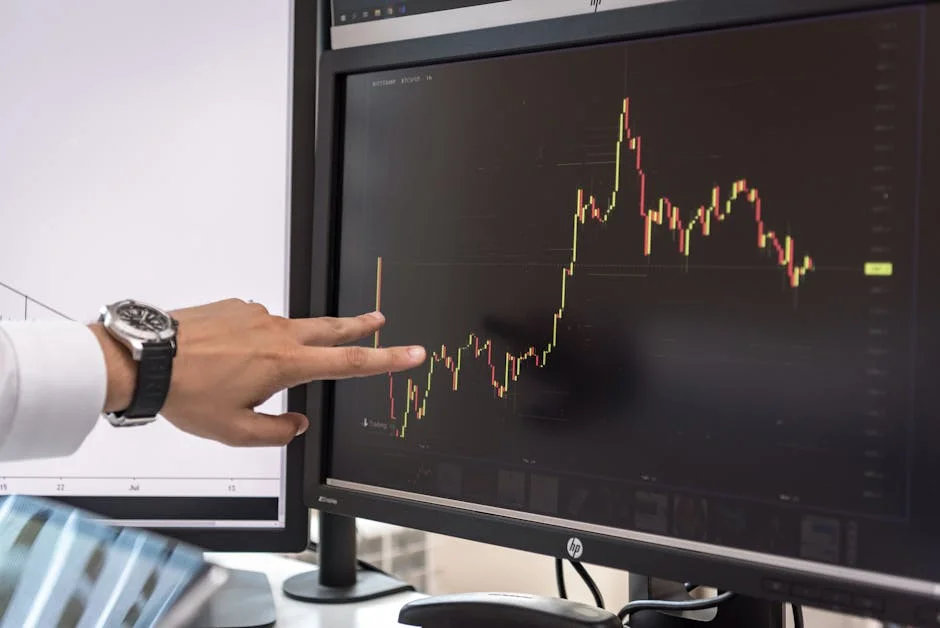
Forex and risk management belong together because currency markets can move quickly, leverage can magnify both gains and losses, and a single undisciplined decision can erase months of progress. Foreign exchange trading attracts participants for its liquidity, 24-hour access, and the availability of margin, but those same features can encourage oversized positions and impulsive behavior. When traders focus only on entries, indicators, or “best pairs,” they often underestimate the simple arithmetic of drawdowns: losing 20% requires a 25% gain to break even, losing 50% requires a 100% gain, and the curve becomes increasingly steep as losses deepen. The practical purpose of managing risk in FX is not to eliminate uncertainty; it is to control exposure so that any single loss remains small enough to be recoverable without emotional decision-making. That means defining risk per trade, evaluating potential loss in account currency, and ensuring that position sizing aligns with a plan rather than a feeling. It also means anticipating the ways the market can surprise you: gaps around major events, slippage during fast moves, and sudden volatility spikes in thin sessions.
Table of Contents
- My Personal Experience
- Understanding Forex and Risk Management as the Core of Trading Survival
- Why Currency Market Structure Makes Risk Control Non-Negotiable
- Position Sizing: Turning Risk Limits into Practical Trade Decisions
- Stop-Loss Design: Protecting Capital Without Being Randomly Stopped Out
- Leverage and Margin: The Hidden Accelerator of Drawdowns
- Risk-to-Reward and Expectancy: Measuring Whether a Strategy Deserves Capital
- Correlation, Concentration, and Portfolio Exposure in FX
- Expert Insight
- Volatility Regimes and Event Risk: Adapting Controls to Market Conditions
- Psychological Risk: Discipline, Overtrading, and the Cost of Emotional Decisions
- Risk Management Tools: Orders, Alerts, Hedging, and Protective Techniques
- Building a Personal Risk Plan: Rules, Limits, and Consistent Review
- Common Risk Mistakes in FX and How to Prevent Them
- Putting It All Together for Long-Term Consistency
- Watch the demonstration video
- Frequently Asked Questions
- Trusted External Sources
My Personal Experience
When I first started trading forex, I was focused on getting the direction right and barely thought about risk. A couple of early wins made me overconfident, and I began increasing my position size without a clear plan. Then one volatile news release moved the market against me in minutes, and I watched a week’s worth of gains disappear because I didn’t have a stop-loss in place. That loss forced me to treat risk management as the main job: I started risking a fixed small percentage per trade, setting stops before I entered, and avoiding trades around major announcements unless I had a specific strategy. My results didn’t become perfect overnight, but my equity curve stopped swinging wildly, and I finally felt like I could stay in the game long enough to actually learn. If you’re looking for forex and risk management, this is your best choice.
Understanding Forex and Risk Management as the Core of Trading Survival
Forex and risk management belong together because currency markets can move quickly, leverage can magnify both gains and losses, and a single undisciplined decision can erase months of progress. Foreign exchange trading attracts participants for its liquidity, 24-hour access, and the availability of margin, but those same features can encourage oversized positions and impulsive behavior. When traders focus only on entries, indicators, or “best pairs,” they often underestimate the simple arithmetic of drawdowns: losing 20% requires a 25% gain to break even, losing 50% requires a 100% gain, and the curve becomes increasingly steep as losses deepen. The practical purpose of managing risk in FX is not to eliminate uncertainty; it is to control exposure so that any single loss remains small enough to be recoverable without emotional decision-making. That means defining risk per trade, evaluating potential loss in account currency, and ensuring that position sizing aligns with a plan rather than a feeling. It also means anticipating the ways the market can surprise you: gaps around major events, slippage during fast moves, and sudden volatility spikes in thin sessions.

Forex and risk management also require understanding that currency prices reflect a complex mix of interest rate expectations, macroeconomic data, political developments, and shifting risk sentiment. Unlike markets where a single company’s fundamentals dominate, FX pairs are relative instruments: EUR/USD is the euro versus the dollar, and both sides have their own drivers. This relative nature can make “obvious” trades less obvious, especially when correlations shift or when central bank messaging changes. A risk-first mindset treats every trade as a probability distribution rather than a prediction. Even a high-quality setup can fail due to a headline, an unexpected data print, or a liquidity vacuum. By building rules for maximum exposure, stop placement, and trade frequency, traders can prevent a normal losing streak from turning into a catastrophic drawdown. Over time, consistent risk control becomes a competitive edge because it keeps you in the game long enough for skill, experience, and statistical advantage to compound.
Why Currency Market Structure Makes Risk Control Non-Negotiable
The structure of the foreign exchange market shapes how forex and risk management should be applied. FX is largely decentralized, traded over-the-counter through banks, liquidity providers, and electronic venues, with brokers aggregating pricing for retail traders. This can produce differences in spreads, execution speed, and slippage across brokers, especially during volatile periods. Risk management in this environment means accounting for transaction costs and execution uncertainty as part of your strategy, not as an afterthought. A tight stop may look mathematically attractive in backtests, but if the spread widens during a news spike or if slippage occurs, that stop can be triggered earlier than expected. Similarly, holding positions through rollover and swap can introduce carrying costs that accumulate, changing the true risk-reward profile. Traders who ignore these microstructure details may believe they are risking 1% per trade, but in practice they may be risking more due to poor fills, variable spreads, or unplanned exposure around illiquid times.
Market sessions and liquidity cycles also matter. London and New York overlaps often produce higher liquidity and smoother execution, while late New York and early Asia can be thinner, with wider spreads and more erratic price behavior. Effective exposure control includes selecting trading windows that match your approach, and adjusting size or stop distance when liquidity is lower. Forex and risk management also include respecting event risk: central bank decisions, inflation releases, employment reports, and unexpected geopolitical developments can cause rapid repricing. Even if you do not trade the news, you can still be impacted if you hold positions during these events. A structured plan might reduce position size before high-impact events, use wider stops with smaller size, hedge selectively, or avoid trading altogether during certain releases. The key is that the market’s structure and timing influence the real-world distribution of outcomes, so risk controls must be designed for live conditions rather than idealized charts.
Position Sizing: Turning Risk Limits into Practical Trade Decisions
Position sizing is where forex and risk management becomes measurable. Instead of thinking in lots first, disciplined traders think in account risk first: how much of the account is acceptable to lose if the stop is hit? Common risk limits range from 0.25% to 2% per trade depending on experience, strategy volatility, and account size, but the specific number matters less than consistency. Once a risk limit is chosen, position size is calculated from stop distance and pip value. For example, if a trader risks $100 on a trade and the stop is 50 pips away, the trader can risk $2 per pip. The lot size is then selected so that each pip movement equals approximately $2. This approach prevents “revenge sizing” after losses and prevents oversized trades after a win. It also forces honest planning: a stop that is too tight may require a position size that becomes impractical due to spread and volatility, while a stop that is too wide may shrink position size to the point where the trade is not worth taking.
Another important layer is accounting for pair-specific pip values and quote conventions. A pip on USD/JPY is not the same as a pip on EUR/USD when measured in account currency, and cross pairs can add complexity when your account is denominated in a different currency than the quote. Forex and risk management improves when traders use calculators or broker tools that convert pip value into account currency before placing an order. This reduces hidden errors, especially when trading pairs like GBP/JPY, EUR/AUD, or USD/CAD. It also helps align risk across instruments so that “one trade” means the same potential loss regardless of the pair. Over time, standardized sizing makes performance analysis clearer because winners and losers reflect edge and execution rather than inconsistent exposure. The practical goal is simple: every trade should be a controlled bet, not a variable gamble.
Stop-Loss Design: Protecting Capital Without Being Randomly Stopped Out
Stop-loss placement is often misunderstood because traders treat stops as a purely technical line on a chart rather than a component of forex and risk management. A stop is not a prediction that price “should not” go there; it is a predefined point where the trade thesis is considered invalid or where the risk becomes unacceptable. Good stops are placed where the market structure suggests your idea is wrong: beyond a swing high or low, outside a range boundary, or past a volatility threshold. Randomly tight stops may improve the theoretical reward-to-risk ratio, but they can also increase the chance of being stopped out by normal noise. That noise is not random in the sense that it is influenced by liquidity, order flow, and volatility patterns. A stop that fails to account for average true range, spread, and session volatility can lead to many small losses that add up, even if the broader directional bias is correct.

Forex and risk management also includes the decision of whether to use hard stops (placed with the broker) or mental stops (executed manually). Hard stops provide protection against sudden spikes, platform issues, and emotional hesitation, while mental stops require discipline and fast execution, and they can fail during high volatility. Many traders prefer hard stops for safety, especially when holding positions during news or outside active monitoring hours. Trailing stops can be useful, but they should follow a rule tied to structure or volatility rather than being moved impulsively. Another critical rule is never widening a stop to avoid a loss unless the position size is reduced or the trade plan explicitly allows for scaling and re-evaluation. Widening a stop increases risk, often right when emotions are highest, and it can convert a controlled loss into an account-damaging event. A well-designed stop strategy balances protection with realism, ensuring that losses are limited while allowing the trade enough room to work.
Leverage and Margin: The Hidden Accelerator of Drawdowns
Leverage is a defining feature of retail FX, and it is a primary reason forex and risk management must be treated as a first-class skill. Leverage allows a trader to control a large notional position with a small amount of margin, but it does not reduce risk; it changes how quickly risk materializes. A small percentage move in the underlying pair can translate into a large percentage change in account equity when leverage is high. Many traders confuse “available leverage” with “recommended leverage.” Brokers may offer 30:1, 100:1, or higher depending on jurisdiction, but responsible traders often use far less effective leverage based on their position sizing rules. Effective leverage is the ratio of total position notional to account equity, and keeping it modest can prevent margin calls, forced liquidations, and emotional decision-making during volatility spikes.
Margin management is also about understanding how multiple positions interact. If a trader opens several trades that are correlated, the combined exposure can behave like one oversized trade. Forex and risk management requires tracking aggregate risk: total risk if all stops are hit, total notional exposure, and margin utilization. High margin utilization reduces flexibility and increases the chance that a temporary adverse move triggers a margin call even if stops are set. It also increases psychological pressure, which can lead to poor decisions like closing winners too early or removing stops. A practical safeguard is to set rules for maximum concurrent risk, such as a cap on total open risk at 3% to 6% of the account and a cap on margin usage. Another safeguard is to stress-test positions for worst-case scenarios, such as a sudden 100-pip move during a surprise headline, and to ensure the account can absorb it without catastrophe. Used conservatively, leverage can be a tool; used carelessly, it is an accelerant for drawdowns.
Risk-to-Reward and Expectancy: Measuring Whether a Strategy Deserves Capital
Risk-to-reward ratios are often presented as a shortcut to profitability, but forex and risk management is better served by focusing on expectancy: the average amount you expect to gain or lose per trade over a large sample. Expectancy depends on win rate, average win size, average loss size, and costs like spread and commission. A strategy with a 40% win rate can be profitable if winners are much larger than losers, and a strategy with a 70% win rate can still lose money if losses are large and winners are small. Many traders chase high reward-to-risk targets without considering market conditions or their ability to hold trades through pullbacks. If a trader routinely exits early due to fear, the planned reward-to-risk ratio becomes irrelevant because realized outcomes differ from the plan. The solution is to track real performance and adjust targets and stops based on how trades actually behave in live conditions.
Forex and risk management also includes recognizing the impact of transaction costs on expectancy. A strategy that targets 10 pips with a 2-pip spread is giving up 20% of the gross target to costs before considering slippage, which can be significant during fast markets. On higher timeframes, costs may be less significant, but swap and rollover can matter for multi-day holds. Another subtle factor is partial profits: taking partials can reduce variance and smooth equity curves, but it can also reduce average win size if done too early. The goal is not to find a “perfect” ratio but to build a coherent system where stops, targets, and trade management align with the pair’s volatility and the strategy’s edge. Measuring expectancy over at least dozens, ideally hundreds, of trades provides a realistic view of whether the approach deserves more allocation or needs refinement.
Correlation, Concentration, and Portfolio Exposure in FX
Because currencies are interconnected, forex and risk management must extend beyond single-trade decisions into portfolio exposure. Many pairs share components, and those shared components create correlation. If you are long EUR/USD and long GBP/USD, you may be heavily exposed to USD weakness rather than two independent opportunities. If you are long EUR/JPY and long GBP/JPY, you may be concentrated in JPY weakness and risk-on sentiment. Correlations can strengthen during crises, meaning positions that looked diversified can suddenly move together. This is especially important when traders open multiple positions with small individual risk, believing they are safe, but the combined exposure can behave like a single large bet. Concentration can also occur through macro themes, such as being broadly positioned for higher U.S. interest rates across multiple USD pairs.
Expert Insight
Define risk before you enter: set a stop-loss at a price level that invalidates your trade idea, then size the position so the loss equals a fixed percentage of your account (commonly 0.5%–2%). This keeps one bad trade from derailing your plan and makes performance easier to measure. If you’re looking for forex and risk management, this is your best choice.
Control exposure to volatility: avoid stacking correlated positions (e.g., multiple USD-heavy pairs) and reduce size or step aside around high-impact news releases if spreads and slippage can spike. Use a simple checklist—maximum open risk, correlation check, and event calendar—before placing each trade. If you’re looking for forex and risk management, this is your best choice.
Managing correlation involves setting limits on exposure to a single currency and to a single theme. Forex and risk management frameworks often include rules like “no more than X% total risk tied to one currency” or “no more than Y% risk on correlated positions.” Another approach is to treat correlated trades as one basket and size them down accordingly. Traders can also reduce concentration by mixing timeframes or strategies, though that adds complexity. Correlation is not static, so it helps to monitor rolling correlations or at least stay aware of macro regimes. For example, during periods when interest rate differentials dominate, pairs may respond strongly to yield changes; during risk-off shocks, safe-haven flows can override other drivers. The practical takeaway is that diversification in FX is less about the number of trades and more about the independence of the underlying drivers. Without portfolio-level limits, a trader can follow rules perfectly on each trade and still face a large drawdown when a shared factor moves sharply.
Volatility Regimes and Event Risk: Adapting Controls to Market Conditions
Volatility is not constant, and forex and risk management improves when traders adapt to volatility regimes rather than assuming yesterday’s conditions will persist. Periods of calm can be followed by sharp spikes due to central bank surprises, geopolitical events, or sudden shifts in risk sentiment. If position sizing and stop distances are not adjusted, a strategy that works in stable conditions can be overwhelmed in turbulent ones. A volatility-aware trader may use indicators like ATR, implied volatility proxies, or simple range analysis to set stop distances and targets that reflect current conditions. When volatility rises, stops often need to be wider to avoid noise, which implies smaller position size to keep risk constant. When volatility falls, stops can be tighter and size can increase, still within risk limits, but only if spreads and execution quality remain favorable.
| Risk Management Element | Purpose in Forex Trading | Practical Example |
|---|---|---|
| Position Sizing | Limits how much capital is exposed per trade to control drawdowns. | Risk 1% of a $10,000 account ($100) by adjusting lot size to match stop-loss distance. |
| Stop-Loss & Take-Profit | Defines exit points to cap losses and lock in gains, reducing emotional decisions. | Set a 30-pip stop-loss and a 60-pip take-profit to target a 1:2 risk-to-reward ratio. |
| Leverage & Margin Control | Prevents overexposure and margin calls by keeping leverage at manageable levels. | Use 5:1 leverage instead of 20:1 to reduce the impact of volatility on account equity. |

Event risk deserves special attention because it can create discontinuous moves. Forex and risk management plans commonly define rules for high-impact events: whether to close positions, reduce size, hedge, or avoid initiating new trades shortly before releases. Central bank rate decisions, CPI, employment data, and unexpected political headlines can move pairs dozens or hundreds of pips in seconds. Even with stops, slippage can occur, causing losses larger than planned. This is not a reason to fear the market; it is a reason to be realistic about worst-case outcomes. Traders who hold positions through major events should consider reduced leverage, wider stops with smaller size, or options-based hedges if available. Another practical technique is to avoid clustering multiple positions that are all sensitive to the same event, such as holding several USD trades into a U.S. CPI release. Adapting to regimes and respecting event risk can dramatically reduce the probability of extreme drawdowns.
Psychological Risk: Discipline, Overtrading, and the Cost of Emotional Decisions
Even a technically sound plan can fail if psychology undermines execution, which is why forex and risk management is also about behavior. Common psychological risks include overtrading after a loss, increasing size to “make it back,” closing winners too early, and letting losers run in the hope they will recover. These behaviors are often triggered by stress, fatigue, or unrealistic expectations. The currency market’s constant availability can intensify these issues because there is always another candle, another pair, and another potential setup. A risk-aware trader builds constraints that reduce the chance of emotional spirals, such as limiting the number of trades per day, enforcing a maximum daily loss, and requiring a checklist before entry. These guardrails prevent a single bad session from turning into a week of damage.
Forex and risk management also benefits from pre-commitment: deciding in advance how you will respond to common scenarios. For example, if you experience three consecutive losses, do you stop trading for the day? If you hit a certain drawdown threshold, do you reduce risk per trade? If you feel the urge to revenge trade, do you step away for a set period? These rules shift decision-making from the emotional moment to a calmer planning stage. Another psychological tool is journaling with specific metrics: whether the trade followed the plan, whether the stop or target was respected, and what emotions were present. Over time, patterns emerge, such as losses clustering during certain hours or after certain life stressors. Managing these human variables can be as impactful as refining technical setups. The market will always be uncertain, but your process does not have to be.
Risk Management Tools: Orders, Alerts, Hedging, and Protective Techniques
Practical tools can strengthen forex and risk management when they are used systematically. Stop-loss and take-profit orders are foundational, but there are also stop-limit orders, trailing stops, and time-based exits. Alerts can reduce screen time and help avoid impulsive entries by notifying you only when price reaches a planned zone. Some traders use OCO (one-cancels-the-other) orders to bracket the market, especially around breakout levels, so that execution is automatic and risk is predefined. Time-based stops can be effective for strategies that rely on momentum; if price does not move as expected within a set period, the trade is closed to free capital and reduce opportunity cost. Another tool is scaling: entering in parts to reduce timing risk, or scaling out to lock in partial profits while leaving a portion to run. These techniques can reduce variance, but they must be tested because they can also reduce average win size if misapplied.
Hedging is a more advanced technique and should be approached carefully. Forex and risk management sometimes includes hedging exposure with correlated pairs, options, or partial offset positions, but hedging can also create complexity and additional costs. For retail spot traders, “hedging” by opening opposing positions in the same pair may simply lock in a loss while paying extra spread and swap, depending on broker rules. A more thoughtful approach is to reduce risk directly by cutting position size or tightening exposure before events. If options are available, buying a protective option can cap downside while allowing upside participation, but option pricing and liquidity must be understood. Another protective technique is to maintain a buffer of unused margin and to avoid holding oversized positions over weekends when gaps can occur. Tools are most effective when they serve a clear purpose: limiting loss size, reducing execution risk, or enforcing discipline. Used without a plan, tools can become another source of randomness.
Building a Personal Risk Plan: Rules, Limits, and Consistent Review
A personal risk plan translates principles into daily practice, making forex and risk management repeatable rather than aspirational. The plan should define risk per trade, maximum open risk, maximum daily loss, maximum weekly loss, and conditions that trigger a pause or a reduction in size. It should also define which pairs you trade, which sessions you trade, and which events you avoid. For example, a trader might risk 0.5% per trade, cap total open risk at 2%, stop trading for the day after a 1.5% loss, and reduce risk to 0.25% after a 5% drawdown until performance stabilizes. The plan should also specify how stops are set, how targets are chosen, and whether partial profits are taken. This reduces decision fatigue and prevents “rule shopping” where traders change methods midstream to avoid discomfort.
Review is where forex and risk management becomes a learning system. A weekly review can track metrics like average risk taken, adherence to rules, largest loss, slippage frequency, and performance by pair and session. If losses are consistently larger than planned, the issue may be stop execution, spread widening, or trading during volatile events. If win rate is fine but profitability is poor, the issue may be early exits or unfavorable reward-to-risk realized in practice. A monthly review can include stress testing: how the strategy performed during high-volatility days, how correlated positions behaved, and whether risk limits were respected. The goal is not perfection but continuous calibration. Markets evolve, and a plan that worked in one regime may need adjustment in another, but changes should be based on data and controlled experimentation. A strong risk plan turns trading into a process with feedback loops rather than a sequence of isolated gambles.
Common Risk Mistakes in FX and How to Prevent Them
Many of the most damaging mistakes come from small rule breaks that compound. One common error is inconsistent sizing: risking 0.5% on one trade, then 3% on the next because it “looks better.” This undermines forex and risk management because it increases variance and makes results difficult to interpret. Another frequent mistake is moving stops farther away to avoid being wrong, which increases loss size and can create a cycle of denial. Traders also underestimate the impact of trading costs, especially when scalping with small targets, and they may not account for spread widening during low liquidity or news. Holding too many correlated positions is another hidden risk, creating a portfolio that is effectively a single macro bet. Finally, many traders neglect the operational side: platform outages, internet disruptions, and execution quality can all turn a manageable risk into a larger loss if contingencies are not planned.

Prevention is largely procedural. Forex and risk management improves when traders use checklists and automation where appropriate: pre-calculated position sizes, predefined order templates, and alerts for major economic releases. Setting a maximum loss per day and honoring it is one of the simplest ways to avoid emotional spirals. Another powerful safeguard is to reduce size when performance deteriorates rather than increasing it. This keeps drawdowns shallow and preserves confidence. Traders can also prevent correlation overload by tracking currency exposure and limiting total risk per currency. Keeping a trading journal that records whether each trade followed the plan creates accountability and shows which mistakes are recurring. Over time, the biggest edge often comes not from discovering a new indicator but from eliminating the handful of behaviors that cause outsized losses. The market does not require you to be right all the time, but it does require you to control how wrong you can be.
Putting It All Together for Long-Term Consistency
Consistency in trading comes from repeating good decisions across many trades, and that is exactly what forex and risk management is designed to support. When you size positions based on predefined risk, place stops where the trade idea is invalidated, respect leverage limits, and control portfolio concentration, you reduce the likelihood that a single surprise event or a short losing streak will end your progress. This does not mean trading becomes easy or that losses disappear; it means losses become planned, bounded, and emotionally tolerable. With that foundation, traders can focus on improving entries, refining trade management, and understanding macro drivers without constantly fighting the fear of ruin. The market rewards persistence and adaptability, but persistence is only possible if capital is protected through disciplined exposure control.
Over time, the most practical advantage is psychological clarity. When your downside is defined, you can execute more calmly, avoid impulsive changes, and evaluate performance with honesty. A well-structured approach also makes it easier to scale responsibly: increasing size only after a large enough sample of consistent results and only within the same risk framework. The aim is not to find a way to avoid uncertainty, but to build a process that thrives despite it. Forex and risk management, applied consistently, turns trading from a stressful guessing game into a structured business of probabilities where survival and steady improvement come first.
Watch the demonstration video
In this video, you’ll learn how forex trading works and why risk management is essential for long-term success. It breaks down key concepts like leverage, position sizing, stop-loss placement, and managing drawdowns, helping you protect your capital while making more disciplined trading decisions in fast-moving currency markets. If you’re looking for forex and risk management, this is your best choice.
Summary
In summary, “forex and risk management” is a crucial topic that deserves thoughtful consideration. We hope this article has provided you with a comprehensive understanding to help you make better decisions.
Frequently Asked Questions
What is risk management in forex trading?
Risk management is a practical framework of rules and tools designed to protect your capital and keep losses under control—through smart position sizing, well-placed stop-loss orders, and clear limits on overall exposure. In **forex and risk management**, these habits are essential for staying consistent and resilient in constantly changing markets.
How much should I risk per trade in forex?
Many traders choose to risk around 0.5%–2% of their account equity on each trade, but the ideal amount varies based on your strategy, how much drawdown you can comfortably handle, and how consistent your results are—making **forex and risk management** a personal balancing act rather than a one-size-fits-all rule.
What is position sizing and why does it matter?
Position sizing is the process of deciding how many lots or units to trade by factoring in your stop-loss distance and the amount you’re willing to risk on each trade. In **forex and risk management**, this approach helps keep potential losses consistent from one trade to the next, so no single position can derail your account.
How do stop-loss orders help manage forex risk?
A stop-loss order automatically closes your position when the market hits a preset price, helping you limit losses, stay calm during sudden swings, and avoid impulsive choices—an essential tool in **forex and risk management**.
How does leverage increase risk in forex?
Leverage can turbocharge your returns, but it can just as quickly amplify losses—meaning even small market moves may trigger big swings in your account balance, margin calls, or sudden drawdowns if your position size is too aggressive, which is why **forex and risk management** go hand in hand.
What is drawdown and how can I control it?
Drawdown refers to the drop from your account’s highest equity point to its lowest before it recovers. In **forex and risk management**, you can keep drawdowns under control by reducing risk per trade, spreading exposure across different pairs or strategies, placing firm stop-loss orders, and enforcing clear daily or weekly loss limits to prevent small setbacks from turning into major declines.
? Looking for more info about forex and risk management? Follow Our Site for updates and tips!

Trusted External Sources
- Managing Foreign Exchange Rate Risk: Capacity Development for …
Dated Aug 2, 2026, this paper highlights practical, proven approaches to **forex and risk management** in developing countries, explaining how institutions can identify foreign-currency exposures early and use appropriate financial instruments to reduce volatility and protect budgets.
- Supervisory guidance for managing risks associated with the …
On Feb 15, 2026, updated guidance on managing settlement risk in foreign exchange transactions was released, building on earlier recommendations and reflecting how the market has evolved since the original FX settlement risk framework was introduced. The 2026 publication highlights practical steps institutions can take to strengthen controls, improve payment-versus-payment processes, and reinforce **forex and risk management** practices to reduce exposure during settlement.
- Eight Forex Risk Management Strategies for Beginners – IG Group
Forex risk management enables you to implement a set of rules and measures to ensure any negative impact of a forex trade is manageable.
- Supervisory Guidance for Managing Settlement Risk in Foreign …
Sep 27, 2026 … Introduction · 1. Foreign exchange (FX) settlement risk is the risk of loss when a bank in a foreign exchange transaction pays the currency it … If you’re looking for forex and risk management, this is your best choice.
- What is FX risk? 4 critical FAQs for treasury to succeed. – Kyriba
FX risk management is a strategy used by companies to avoid or minimize potential losses that could result from fluctuations in exchange rates. It involves …