Finding a good entry level 3d printer is less about chasing the cheapest machine and more about choosing a tool that makes learning enjoyable instead of frustrating. Beginners often discover that the first weeks of printing involve a mix of excitement and troubleshooting: leveling a bed, learning slicer settings, understanding why a part warped, or figuring out how to remove supports cleanly. A truly beginner-friendly machine reduces the number of variables you must fight at once. That typically means consistent extrusion, a stable frame, a heated bed that holds temperature, and a workflow that doesn’t demand advanced mechanical skills. The best starter models also have strong community support, because when you hit a snag—like stringing, elephant’s foot, or under-extrusion—you want proven solutions and profiles that others have already tested. “Entry level” shouldn’t mean disposable; it should mean approachable, safe, and capable of producing parts you’re proud to show.
Table of Contents
- My Personal Experience
- What “Good Entry Level 3D Printer” Really Means for Beginners
- Core Features That Separate a Great Starter Printer from a Headache
- Choosing Between FDM and Resin as a Beginner
- Build Volume, Speed, and Quality: Setting Realistic Expectations
- Ease of Assembly and Calibration: The Beginner Experience Matters
- Material Compatibility: PLA First, Then PETG and TPU Without Drama
- Software and Slicer Support: Profiles, Firmware, and Learning Curve
- Expert Insight
- Reliability, Maintenance, and Spare Parts: Owning the Machine Long Term
- Safety, Noise, and Home Placement: Practical Considerations for Beginners
- Budget and Value: What You Actually Need to Spend
- Practical Print Goals for New Owners: Projects That Build Skill Fast
- How to Evaluate a Good Entry Level 3D Printer Before You Buy
- Final Thoughts on Picking the Right Good Entry Level 3D Printer
- Watch the demonstration video
- Frequently Asked Questions
- Trusted External Sources
My Personal Experience
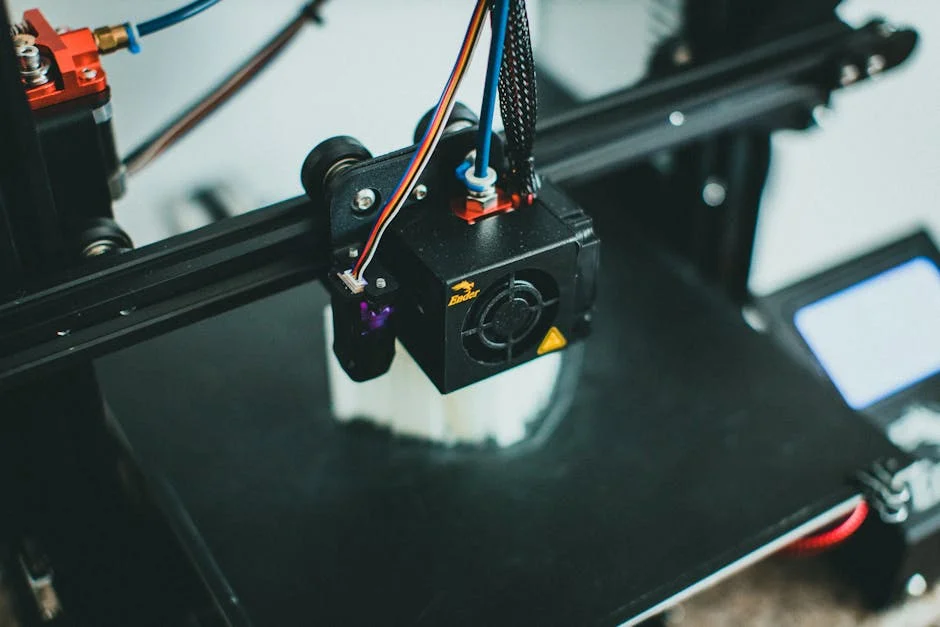
When I started looking for a good entry level 3D printer, I didn’t want anything fancy—I just wanted something that would actually print without turning into a weekend-long troubleshooting project. I ended up buying an Ender 3-style machine because it was affordable and had tons of tutorials, and that community support honestly mattered more than I expected. The first few prints were rough (I learned the hard way that bed leveling isn’t “set it once and forget it”), but after swapping to stronger bed springs and taking the time to dial in the first layer, it became pretty reliable for basic PLA parts. What I liked most was that it taught me the fundamentals without costing a fortune, and once I got past the initial learning curve, I was printing simple brackets and organizers that I actually use around the house.
What “Good Entry Level 3D Printer” Really Means for Beginners
Finding a good entry level 3d printer is less about chasing the cheapest machine and more about choosing a tool that makes learning enjoyable instead of frustrating. Beginners often discover that the first weeks of printing involve a mix of excitement and troubleshooting: leveling a bed, learning slicer settings, understanding why a part warped, or figuring out how to remove supports cleanly. A truly beginner-friendly machine reduces the number of variables you must fight at once. That typically means consistent extrusion, a stable frame, a heated bed that holds temperature, and a workflow that doesn’t demand advanced mechanical skills. The best starter models also have strong community support, because when you hit a snag—like stringing, elephant’s foot, or under-extrusion—you want proven solutions and profiles that others have already tested. “Entry level” shouldn’t mean disposable; it should mean approachable, safe, and capable of producing parts you’re proud to show.

It also helps to define what “good” means for your goals. If you want functional brackets, organizers, and workshop jigs, you’ll value dimensional accuracy, repeatability, and the ability to print tougher materials like PETG. If you want miniatures or display models, you may prioritize fine layer heights, good cooling, and reliable retraction. If you’re printing with kids at home, noise, safety features, and enclosed designs may matter more than raw speed. The important point is that a beginner printer should grow with you: easy enough to start today, but not so limited that you feel forced to upgrade after a month. A capable starter machine supports common filaments, has a decent build volume, uses widely available nozzles and parts, and doesn’t lock you into proprietary consumables. When those boxes are checked, a good entry level 3d printer becomes a learning platform rather than a constant repair project.
Core Features That Separate a Great Starter Printer from a Headache
The most important features in a good entry level 3d printer tend to be boring on the spec sheet but transformative in daily use. First is bed leveling and first-layer reliability. Whether the printer uses manual knobs with a solid bed surface or an automatic bed leveling sensor, the goal is the same: consistent nozzle-to-bed distance across the entire plate. New users often mistake “auto-leveling” as a magic button; in reality it’s a probing system that compensates for slight bed variations, and it still benefits from a reasonably trammed bed. A printer that makes first layers easy—through a stable build plate, a good texture (PEI is popular), and clear on-screen guidance—saves hours of failed prints. Next is a rigid frame and smooth motion system. A wobbly gantry or loose V-wheels can cause ringing, layer shifts, or inconsistent surfaces. For beginners, a machine that holds its calibration and doesn’t constantly drift out of square is worth far more than a slightly larger build volume.
Extrusion reliability is another key divider. Look for a well-designed extruder (Bowden or direct drive) with consistent filament grip and a hotend that can maintain temperature accurately. Many newcomers start with PLA, but quickly want PETG for tougher parts or TPU for flexible components. A direct drive setup tends to handle flexible filaments more easily, while a Bowden system can still work well if tuned and paired with quality tubing and fittings. Cooling matters too: a good part-cooling fan and duct improve overhangs and bridging, which makes beginner prints look dramatically better without complex tuning. Finally, consider quality-of-life features that reduce friction: a filament runout sensor, power-loss recovery (useful in areas with unstable power), a decent user interface, and quiet stepper drivers. None of these are strictly required, but together they turn a starter printer into something you’ll actually enjoy using instead of dreading the next print attempt. If you’re looking for good entry level 3d printer, this is your best choice.
Choosing Between FDM and Resin as a Beginner
When people ask for a good entry level 3d printer, they usually mean an FDM (filament) printer because it’s cleaner, cheaper per print, and better for functional parts. FDM printers melt plastic filament and lay it down in layers; they’re excellent for brackets, organizers, enclosures, replacement parts, and prototypes you can drill or screw into. They also offer larger build volumes at lower cost, and the materials are widely available. PLA is beginner-friendly, prints at relatively low temperatures, and produces minimal odor compared to other plastics. PETG adds durability and heat resistance, and TPU enables flexible prints. With FDM you’ll learn foundational skills like slicer settings, bed adhesion, supports, and the relationship between speed, temperature, and quality. For a first machine, that learning curve is manageable, especially when the printer is mechanically sound and has a strong community around it.
Resin printers (SLA/MSLA) can also be “entry level,” but they demand more safety and post-processing discipline. Resin excels at tiny details—miniatures, jewelry prototypes, dental models—because its layer resolution and surface finish can be exceptional. The tradeoff is handling liquid resin, wearing gloves, ventilating the area, washing prints in solvent, and curing them under UV light. Spills and fumes are real concerns in a casual home environment. Resin printing also has consumable costs beyond resin itself: gloves, paper towels, filters, and cleaning solution. If your priority is fine detail and you can dedicate a safe workspace, a beginner resin machine can be a strong choice. But for most households seeking a good entry level 3d printer that’s versatile and family-friendly, an FDM printer remains the easiest path to consistent, practical results with less mess and fewer safety hurdles.
Build Volume, Speed, and Quality: Setting Realistic Expectations
A good entry level 3d printer should have a build volume that matches what you actually plan to make. Many beginners think bigger is automatically better, but larger printers can introduce more complexity: bigger beds take longer to heat, larger frames can amplify vibration, and long travel moves increase the chance of minor alignment issues showing up as artifacts. A common sweet spot is a mid-size bed that fits most household projects—organizers, phone stands, replacement knobs, small enclosures—without taking over your desk. If you truly need large parts, it can be smarter to print in sections and assemble, especially early on. Splitting models teaches useful skills like adding alignment pins, choosing adhesives, or using mechanical fasteners. That approach often produces better results than pushing a beginner machine to the edge of its capabilities.
Speed is another area where marketing can mislead. Yes, modern printers can print faster than older designs, but speed is only valuable if the printer can maintain quality and reliability. Beginners benefit more from consistent prints than from shaving an hour off a long job. A stable motion system, good input shaping (if available), and sensible acceleration settings matter more than top advertised speed. Layer height also plays a big role: printing at 0.2 mm layers is often the best balance between detail and time for everyday parts, while 0.12–0.16 mm can look smoother but takes longer. The key is understanding that “quality” is a combination of hardware, filament, and slicer settings. A good entry level 3d printer gives you room to tune without requiring constant mechanical fixes, so improvements come from learning rather than fighting the machine. When expectations are realistic, even an affordable printer can produce professional-looking parts.
Ease of Assembly and Calibration: The Beginner Experience Matters
One of the fastest ways to identify a good entry level 3d printer is to look at how quickly a new user can go from unboxing to a successful first print. Some printers arrive fully assembled, while others come as partial kits. Fully assembled units reduce intimidation and limit the chance of beginner assembly errors, but they may cost more. Partial assembly can still be beginner-friendly if the instructions are clear, hardware is labeled, and critical alignments are pre-set at the factory. The danger is a kit that assumes you already know how to square a frame, tension belts, or troubleshoot wiring. For a first printer, fewer assembly steps usually means fewer early failures that feel mysterious. A smooth start builds confidence and helps you focus on learning the printing process rather than diagnosing whether the Z axis is binding because a lead screw is misaligned.

Calibration is where many people either fall in love with the hobby or abandon it. A beginner printer should provide straightforward tools: guided bed tramming, a repeatable Z-offset process, and an interface that doesn’t hide important settings behind confusing menus. Automatic mesh probing can be extremely helpful, but it should be paired with a bed surface that holds adhesion well—textured PEI or a quality spring steel sheet can make first layers far less stressful. It also helps when the printer supports standard slicers and has community-tested profiles, because dialing in temperature and retraction from scratch can be overwhelming. A good entry level 3d printer doesn’t eliminate calibration entirely, but it makes each adjustment predictable. When you change something—like nozzle temperature or first-layer speed—you should see a logical result, not random behavior. That predictability is the foundation of a satisfying beginner experience.
Material Compatibility: PLA First, Then PETG and TPU Without Drama
Most beginners start with PLA, and a good entry level 3d printer should print PLA beautifully with minimal tuning. That means stable hotend temperatures, reliable cooling, and a bed surface that grips without needing messy adhesives. PLA is forgiving, but it still reveals problems quickly: poor cooling shows up as droopy overhangs, inconsistent extrusion shows up as gaps or rough walls, and a poorly leveled bed shows up immediately in the first layer. Once PLA becomes routine, many users want PETG for stronger, more heat-resistant parts. PETG is slightly trickier: it can string, it prefers a clean but not overly sticky bed surface, and it often benefits from slower first layers and careful Z-offset to avoid fusing too aggressively to certain plates. A beginner-friendly machine should have a heated bed that reaches PETG temperatures reliably and a hotend that can handle the required heat without drifting.
TPU is where the printer’s extruder design matters. Direct drive extruders generally feed flexible filament with fewer issues, while Bowden setups can still print TPU but may require slower speeds and careful retraction settings. If you anticipate printing phone cases, gaskets, vibration feet, or wearable parts, it’s worth considering a starter printer that can handle TPU without constant jams. Also consider nozzle and hotend longevity. Standard brass nozzles are fine for PLA and PETG, but abrasive filaments—like glow-in-the-dark or carbon fiber blends—wear them quickly. A printer that uses common nozzle formats makes it easy to upgrade to hardened steel later. The point isn’t to buy every upgrade on day one; it’s to choose a good entry level 3d printer that doesn’t block your path as your material needs expand. A machine that comfortably prints PLA today and can grow into PETG and TPU tomorrow offers better long-term value than one that feels “maxed out” immediately.
Software and Slicer Support: Profiles, Firmware, and Learning Curve
Even the most mechanically solid good entry level 3d printer can feel difficult if the software experience is poor. Beginners benefit from printers that work well with popular slicers like Cura, PrusaSlicer, OrcaSlicer, or the manufacturer’s streamlined option—provided it’s stable and regularly updated. The best scenario is when a printer has well-tuned community profiles that produce good results out of the box. A profile isn’t just a convenience; it sets sensible defaults for temperature, speed, retraction, acceleration, and cooling. That gives you a known baseline, and when something goes wrong you can troubleshoot systematically instead of wondering whether ten settings are off at once. Firmware features also matter. A clear, responsive screen, accurate temperature control, and reliable endstop behavior reduce confusion. If the printer supports modern calibration tools—like input shaping or pressure advance—those can be explored later, but they shouldn’t be mandatory to get acceptable prints.
Expert Insight
Choose an entry-level 3D printer with reliable auto bed leveling, a removable flexible build plate, and strong community support; these features cut setup time and make first prints far less frustrating. Before buying, confirm it can print common materials like PLA easily and that replacement nozzles, beds, and parts are readily available. If you’re looking for good entry level 3d printer, this is your best choice.
Start with a simple calibration routine: print a first-layer test, then adjust Z-offset and bed temperature until lines are smooth and slightly squished without gaps. Keep early projects small and practical—use a 0.2 mm layer height, moderate speeds, and dry, quality PLA—to build confidence before attempting larger or more detailed models. If you’re looking for good entry level 3d printer, this is your best choice.
Connectivity is another consideration. Printing from an SD card or USB drive is simple and reliable, which is why it remains common. Wi-Fi printing can be convenient, but it adds complexity: network setup, firmware compatibility, and occasional connection quirks. For beginners, the best setup is the one that doesn’t interrupt printing. If remote monitoring is important, many users add a camera and a small server later, but that’s optional. What matters most is that the slicer-to-printer pipeline is predictable: you slice a model, the printer reads it correctly, and the print starts without surprises. Documentation and community tutorials also play a huge role. A good entry level 3d printer typically has abundant guides for common tasks like setting Z-offset, changing nozzles, cleaning the bed, and tuning retraction. When software, profiles, and documentation align, a beginner gains momentum quickly and spends more time making useful objects than wrestling with configuration.
Reliability, Maintenance, and Spare Parts: Owning the Machine Long Term
A good entry level 3d printer should be maintainable by a normal person with basic tools. All 3D printers require some upkeep: cleaning the bed, checking belt tension, occasionally replacing a nozzle, and keeping the motion system free of dust. The difference is whether these tasks are straightforward or feel like surgery. Beginner-friendly designs use standard fasteners, accessible wiring, and common replacement parts. If a printer uses proprietary hotends, unusual nozzles, or hard-to-source belts, downtime becomes expensive and frustrating. Look for a machine with a healthy ecosystem: readily available build plates, hotend parts, fans, thermistors, and extruder gears. Even if you never need major repairs, knowing that parts are easy to find reduces anxiety and makes the purchase feel safer.
| 3D Printer | Why it’s good for beginners | Typical price range | Best for | Watch-outs |
|---|---|---|---|---|
| Creality Ender 3 V3 SE | Fast setup, auto bed leveling, solid print quality for the money | $180–$260 | Budget-friendly first printer and learning the basics | More tuning/maintenance than premium “set-and-forget” options |
| Prusa MINI+ | Excellent reliability, great documentation, strong community support | $430–$550 | Stress-free PLA/PETG printing with consistent results | Smaller build volume; higher upfront cost |
| Bambu Lab A1 mini | Very easy to use, fast, high-quality prints with minimal tinkering | $250–$350 | Beginner-friendly “plug-and-print” experience | Smaller build volume; more reliance on ecosystem/software |

Reliability also depends on quality control and design maturity. A printer with a strong track record tends to have fewer “mystery” issues, and when something does happen, the fixes are known. Community forums, Discord groups, and user-made troubleshooting guides can be as valuable as the printer itself. It’s also worth thinking about the kind of maintenance you’re comfortable with. Some people enjoy tinkering and upgrading; others want an appliance-like experience. A good entry level 3d printer can serve both types if it’s stable out of the box and upgradeable later. For example, you might start with stock settings and later add a better nozzle, a different build surface, or improved cooling. The point is to avoid a machine that forces upgrades just to function. When maintenance is predictable and parts are accessible, you’ll keep printing consistently—and consistency is what turns a beginner into a confident maker.
Safety, Noise, and Home Placement: Practical Considerations for Beginners
Choosing a good entry level 3d printer also means thinking about where it will live. Many first-time owners place the printer on a desk in a bedroom, home office, or shared family area. In those spaces, noise and vibration matter. Quiet stepper drivers, stable feet, and a rigid frame can make the difference between a pleasant background hum and an annoying rattle that disrupts work or sleep. Enclosures can reduce noise and help with temperature stability, but they also introduce considerations like heat buildup around electronics and the need for ventilation. If you plan to print mostly PLA, an open-frame printer is often fine, but if you want to print materials that benefit from warmth and draft protection, an enclosure can improve consistency. Beginners should also consider how easy it is to keep the area clean, because filament scraps, purge lines, and tiny support pieces accumulate quickly.
Safety is not optional. Hotends and heated beds reach temperatures that can burn skin, and moving parts can pinch. A beginner-friendly machine should have sensible protections: thermal runaway protection in firmware, a power supply with appropriate certifications, and cable management that reduces snagging. If children or pets are around, an enclosed design or a placement strategy that limits access is important. Ventilation is another factor. PLA is generally low-odor, but printing still releases ultrafine particles, and some filaments smell more strongly. A well-ventilated room or a filtered enclosure can help, especially if printing for long hours. A good entry level 3d printer supports safe habits by being predictable—less chance of a failed print turning into a spaghetti mess that wraps around the hotend, and fewer electrical or thermal surprises. When the printer fits your home environment, you’ll use it more often and feel comfortable running longer jobs without constant worry.
Budget and Value: What You Actually Need to Spend
Budgeting for a good entry level 3d printer should include more than the sticker price. Many beginners buy the printer and forget the essentials: filament, basic tools, and a few spare consumables. A realistic starter kit includes at least one or two quality filament spools, a set of hex keys, flush cutters, a scraper (used carefully), tweezers, and isopropyl alcohol or another recommended cleaner for the bed surface. It’s also wise to keep spare nozzles on hand, because nozzle clogs or wear eventually happen. None of these items are extremely expensive, but together they affect the true cost of ownership. Spending slightly more on a printer that reduces failed prints can actually be cheaper over time, because failed prints waste filament and hours of your time.
Value also comes from avoiding “false economy.” A very cheap machine can be tempting, but if it arrives with poor documentation, inconsistent components, or weak support, you may spend weeks troubleshooting instead of printing. That’s not only frustrating; it can push beginners out of the hobby entirely. On the other hand, the most expensive beginner printer isn’t automatically the best fit. A good entry level 3d printer is one that matches your goals with minimal friction. If you want reliable household parts, prioritize a stable frame, good bed surface, and strong community profiles over flashy extras. If you want to explore different materials, prioritize a capable hotend and extruder. If you want a quiet machine for a shared space, prioritize noise control and stability. When you align the budget with your real needs, you end up with a printer that feels like a smart purchase rather than an ongoing project you didn’t sign up for.
Practical Print Goals for New Owners: Projects That Build Skill Fast
Once you have a good entry level 3d printer, the best way to improve quickly is to print objects that teach one new concept at a time. Start with simple functional models that don’t require supports: cable clips, drawer organizers, small trays, and basic brackets. These prints help you practice first-layer adhesion, wall count, infill choices, and dimensional fit. For example, printing a simple box with a lid teaches tolerance: you’ll learn how different materials shrink slightly and how slicer settings like horizontal expansion can affect fit. Moving up, try prints that introduce bridging and overhangs, such as a small hook or a stand with angled features. You’ll learn how cooling and speed affect clean edges. If you’re interested in mechanical parts, print a basic hinge or a gear set designed for FDM printers; these models reveal how layer orientation and perimeters influence strength.
Calibration prints are useful, but they can become a trap if you run them endlessly without applying what you learn. A more satisfying approach is to alternate: one practical object, then one small test to refine a specific issue you noticed. If a bracket looks stringy, print a small retraction test. If the bottom of a part flares, adjust first-layer settings and print a thin square to confirm. If corners lift, experiment with bed temperature, brim settings, and cleaning the build plate. A good entry level 3d printer makes these adjustments meaningful because the machine behaves consistently. Over time, you’ll build a personal set of proven settings for PLA and PETG that you can reuse. The confidence from printing useful items—things you actually install, gift, or use daily—keeps motivation high and turns “beginner” into “capable” surprisingly fast.
How to Evaluate a Good Entry Level 3D Printer Before You Buy
Evaluating a good entry level 3d printer before purchase is easiest when you focus on evidence rather than promises. Look for long-term user reviews that show prints made after weeks or months, not just unboxing impressions. Pay attention to common failure points: do owners mention frequent clogs, inconsistent bed leveling, warped beds, or fragile wiring? Check whether replacement parts are easy to source and whether the manufacturer provides firmware updates and clear documentation. Community size matters more than many beginners realize. A printer with thousands of active users will have better troubleshooting resources, more slicer profiles, and more printable upgrades. Also consider whether the printer uses standard components. Standard nozzles, widely available build plates, and common hotend designs reduce risk, because you’re not dependent on a single supplier for every small fix.

It’s also smart to think about the “first week experience.” Does the printer come with a reliable test file and clear setup steps? Is the interface easy to understand? Are there safety certifications and proper thermal protections? If possible, look for photos of the printer’s internal wiring and cable management—messy wiring can be a warning sign. Another practical check is the manufacturer’s support responsiveness: do they answer questions, provide replacement parts when needed, and maintain a knowledge base? A good entry level 3d printer doesn’t need to be perfect, but it should have a clear path to success for beginners: stable hardware, sane defaults, and a support ecosystem that helps you learn instead of leaving you stranded. When you evaluate with these criteria, you’re more likely to buy a machine that prints reliably and makes the hobby rewarding from the start.
Final Thoughts on Picking the Right Good Entry Level 3D Printer
The best purchase is the one that matches your space, your projects, and your patience for tinkering. A printer that’s quiet and stable may be ideal for a home office, while a more open and upgradeable design might suit someone who enjoys hands-on learning. Prioritize first-layer reliability, a rigid frame, dependable extrusion, and strong slicer support, because those factors determine whether you spend evenings printing useful parts or troubleshooting failures. Don’t underestimate the value of a large user community and readily available spare parts; those are the safety nets that keep a beginner moving forward. When you choose with your real priorities in mind—materials you want to print, the size of objects you need, and how much maintenance you’re comfortable doing—you set yourself up for steady progress and better results. If you’re looking for good entry level 3d printer, this is your best choice.
Most importantly, remember that a good entry level 3d printer is the one that helps you build momentum. If it encourages experimentation without punishing you for every small mistake, you’ll learn faster and enjoy the process more. Start with quality PLA, keep the bed clean, make small changes one at a time, and print practical projects that keep your motivation high. With a thoughtful choice and a little routine maintenance, your first machine can remain useful long after you’re no longer a beginner, and the good entry level 3d printer you pick today can become the reliable workhorse you rely on for years.
Watch the demonstration video
In this video, you’ll learn what makes a good entry-level 3D printer and which features matter most for beginners. It breaks down key factors like print quality, ease of setup, reliability, build volume, and must-have upgrades—helping you choose a printer that fits your budget and avoids common first-time frustrations. If you’re looking for good entry level 3d printer, this is your best choice.
Summary
In summary, “good entry level 3d printer” is a crucial topic that deserves thoughtful consideration. We hope this article has provided you with a comprehensive understanding to help you make better decisions.
Frequently Asked Questions
What makes a 3D printer “good” for beginners?
Easy setup, reliable bed leveling, stable firmware, good community support, and consistent print quality with minimal tuning.
Should I choose an assembled printer or a kit as my first 3D printer?
For the easiest, most hassle-free start with a **good entry level 3d printer**, go with an assembled model—you’ll be printing sooner and dealing with fewer setup headaches. Pick a kit only if you’re excited to learn the hardware side and don’t mind spending extra time on assembly, tuning, and troubleshooting.
What features should I prioritize in a good entry-level 3D printer?
Look for features like auto bed leveling (or a simple, reliable manual leveling system), a heated bed for better first-layer adhesion, a direct-drive extruder or a well-tuned Bowden setup, a sturdy rigid frame to reduce vibrations, and replacement parts that are easy to find—these are exactly what you want in a **good entry level 3d printer**.
Which filament is best for beginners?
PLA is often the best material to begin with because it prints easily, resists warping, and delivers reliable results on a **good entry level 3d printer** with only minimal tweaks to your settings.
How much should I budget for a good entry-level 3D printer?
Typically $200–$500 for a reliable beginner printer; also budget for filament, basic tools, and occasional replacement parts.
What common beginner problems should I expect and how can I avoid them?
First-layer adhesion problems, uneven bed leveling, and clogged nozzles are some of the most common 3D printing headaches—even with a **good entry level 3d printer**. To avoid them, start with a clean build surface, dial in your first-layer calibration, store filament in a dry place, and stick to a proven slicer profile that’s known to work with your machine.
? Looking for more info about good entry level 3d printer? Follow Our Site for updates and tips!

Trusted External Sources
- Best budget friendly beginner 3D printer? : r/3Dprinting – Reddit
As of July 7, 2026, the Kingroon KP3S Pro V2 (around $250–$300) stands out as a **good entry level 3d printer** thanks to its rigid cantilever design (single Z-axis), smooth linear rails, and support for Klipper firmware for faster, more precise printing. If you’re considering it, it’s worth checking out a review video to see how it performs in real-world use.
- What is a good budget-friendly starter 3D printer for a beginner?
May 29, 2026 … Bambu p1p or p1s or the 1x carbon if money is not an obstacle. These are medium level printers. These machines will allow your child to expand … If you’re looking for good entry level 3d printer, this is your best choice.
- My list of best 3D printers for beginners : r/AdditiveManufacturing
Mar 1, 2026 … My list of best 3D printers for beginners · 1. FLASHFORGE Adventurer 5M: · 2. Bambu Lab A1: · 3. Bambu Lab P1S 3D Printer: · 4. Creality K2 … If you’re looking for good entry level 3d printer, this is your best choice.
- What is the best entry level 3D printer for printing parts? – Facebook
Jan 26, 2026 … This is my favorite printer. The Trident 300. Always in use and always working. Does a lot of different materials. Heats quickly. Good for mid … If you’re looking for good entry level 3d printer, this is your best choice.
- what is the best 3D printer for a beginner? : r/3dprinter – Reddit
May 27, 2026 … If you just want to 3d print, then the Bambu Labs A1 mini is a great place to start as it’s a very reliable, low-cost unit that mostly just works. If you’re looking for good entry level 3d printer, this is your best choice.