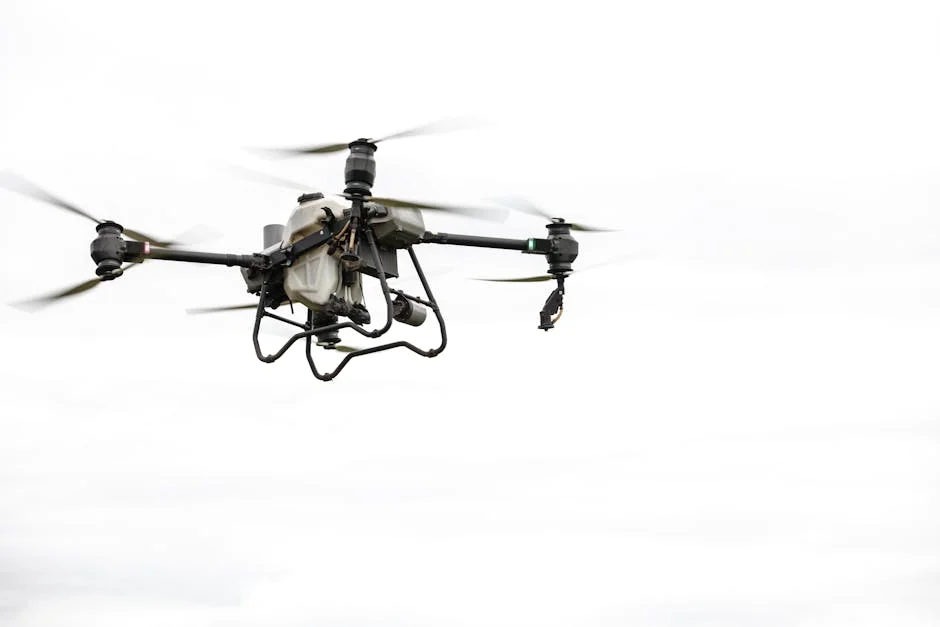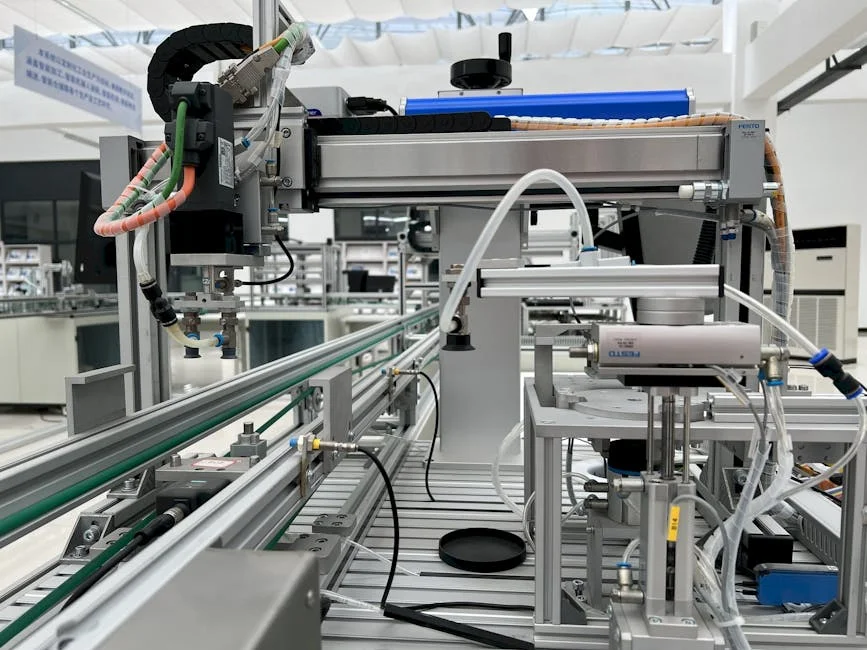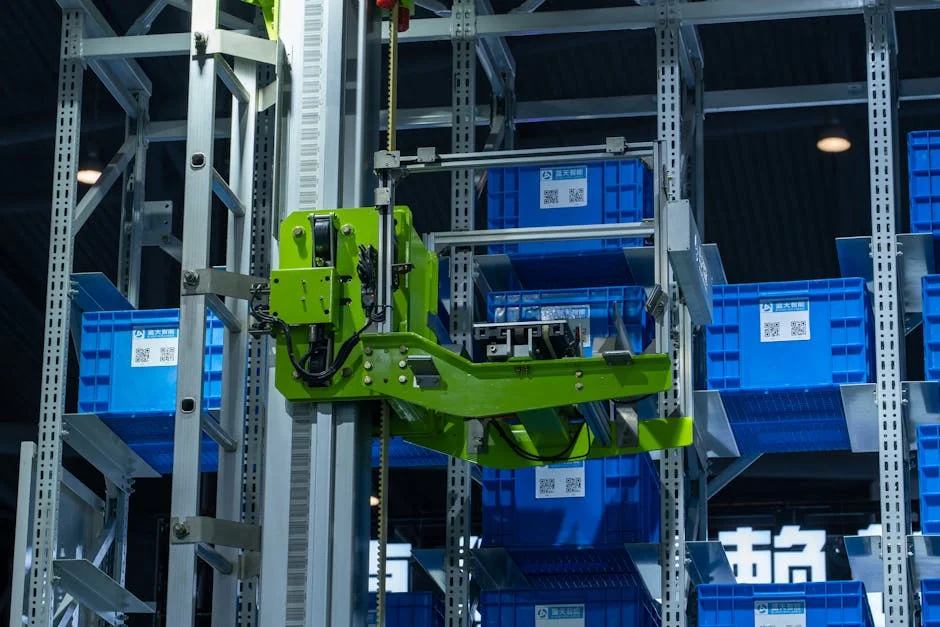
An agv robot is a mobile platform designed to move materials through a facility with minimal human intervention, following a defined route or reacting to its environment depending on the navigation method. In practical terms, it replaces repetitive, time-consuming internal transport tasks—moving pallets from receiving to storage, delivering components to assembly, or transferring finished goods to staging. The appeal of an agv robot is that it can deliver consistent movement patterns, predictable cycle times, and improved safety outcomes compared with ad-hoc forklift traffic. In many operations, internal logistics is a hidden bottleneck: production lines wait for parts, pickers walk too far, and staging areas become congested. By shifting transport to automated vehicles, facilities can separate “movement work” from “value work,” allowing people to focus on tasks that require judgment, dexterity, or customer-facing decisions. The technology is not new, but it has become far more accessible because sensors, computing, and fleet control software have matured, while integration with warehouse management systems has become easier and more standardized.
Table of Contents
- My Personal Experience
- Understanding the AGV Robot and Why It Matters in Modern Facilities
- Core Components and How an AGV Robot Is Built
- Navigation Methods: From Fixed Paths to Flexible Autonomy
- Common Types of AGV Robot Used in Warehousing and Manufacturing
- Key Use Cases: Material Transport, Kitting, and Line Feeding
- Safety, Standards, and Human-Robot Interaction on the Floor
- Fleet Management Software and Integration with WMS/MES
- Expert Insight
- Facility Readiness: Layout, Floors, Traffic, and Process Discipline
- Cost, ROI Drivers, and How to Model the Business Case
- Implementation Roadmap: From Pilot to Scaled Deployment
- Maintenance, Reliability, and Operational Metrics That Keep Performance High
- Future Trends: Smarter Perception, Interoperability, and End-to-End Automation
- Watch the demonstration video
- Frequently Asked Questions
- Trusted External Sources
My Personal Experience
The first time I worked with an AGV robot was during a warehouse rollout at my last job, and I honestly underestimated how much the little details mattered. On day one it kept stopping in the same aisle, and we assumed the navigation was broken—turns out a pallet was consistently parked a few inches outside the marked zone, just enough to trigger its safety sensors. Once we tightened up the floor tape, cleaned up the traffic rules, and trained the team to treat the AGV lanes like real “roads,” everything smoothed out. What surprised me most was how quickly people went from skeptical to protective of it, especially after it started handling the repetitive runs and we could focus on exceptions and quality checks instead of pushing carts all shift.
Understanding the AGV Robot and Why It Matters in Modern Facilities
An agv robot is a mobile platform designed to move materials through a facility with minimal human intervention, following a defined route or reacting to its environment depending on the navigation method. In practical terms, it replaces repetitive, time-consuming internal transport tasks—moving pallets from receiving to storage, delivering components to assembly, or transferring finished goods to staging. The appeal of an agv robot is that it can deliver consistent movement patterns, predictable cycle times, and improved safety outcomes compared with ad-hoc forklift traffic. In many operations, internal logistics is a hidden bottleneck: production lines wait for parts, pickers walk too far, and staging areas become congested. By shifting transport to automated vehicles, facilities can separate “movement work” from “value work,” allowing people to focus on tasks that require judgment, dexterity, or customer-facing decisions. The technology is not new, but it has become far more accessible because sensors, computing, and fleet control software have matured, while integration with warehouse management systems has become easier and more standardized.

It helps to differentiate an agv robot from other mobile automation terms. Traditional AGVs followed fixed guides such as magnetic tape or embedded wires, while newer vehicles can use laser reflectors, natural feature navigation, visual markers, or hybrid approaches. Some buyers use “AMR” to describe robots that dynamically plan routes and avoid obstacles with more autonomy. In real facilities, the line between the categories is increasingly blurred: a modern agv robot may incorporate advanced obstacle detection, flexible routing, and cloud-connected fleet management while still being deployed in predictable, repeatable workflows. What remains constant is the business goal: reliable, scalable movement of materials with strong safety behavior and clear operational metrics. When deployed thoughtfully, these vehicles become part of a broader material flow strategy, linking receiving, storage, kitting, production, and shipping into a system that can be measured and improved. The result is not just fewer manual trips, but a more stable operation that can adapt to demand spikes, staffing variability, and space constraints.
Core Components and How an AGV Robot Is Built
Although models vary by payload and application, an agv robot typically shares a common architecture: a chassis and drive system, a power subsystem, onboard control electronics, safety sensors, navigation sensors, and an interface for payload handling. The chassis must balance rigidity with serviceability, because fleets often run multiple shifts and downtime is expensive. Drive systems can be differential, omnidirectional, or steering-based; the choice affects turning radius, floor wear, and how precisely the vehicle can dock at a conveyor or workstation. Payload handling can be as simple as a flat deck for carts and totes, or as complex as lift tables, pallet forks, tugger hitches, conveyor top modules, and robotic load transfer mechanisms. Many facilities choose a standardized vehicle platform with interchangeable top modules, so the same agv robot can be repurposed as needs evolve. This modularity reduces long-term risk and makes it easier to scale.
Power and charging design are equally important. Most fleets use lithium-ion batteries for fast charging and long cycle life, though lead-acid still appears in cost-sensitive deployments. Charging can be manual, opportunity-based at parking points, or fully automated via contact plates or wireless systems. The battery strategy influences fleet size: opportunity charging can reduce the number of vehicles needed but requires disciplined traffic planning and well-placed charge locations. Onboard computing runs navigation, safety logic, and communications with the fleet manager. Safety sensors often include safety-rated lidar, bumpers, e-stops, and audible/visual alerts, and the vehicle’s safety controller enforces speed limits, stop zones, and protective fields. Navigation sensors vary widely: laser scanners referencing reflectors, cameras reading markers, inertial measurement units, wheel encoders, and 3D sensors for mapping. Together, these components determine how accurately an agv robot can localize, how smoothly it drives, and how reliably it can operate in mixed traffic with people and manual equipment.
Navigation Methods: From Fixed Paths to Flexible Autonomy
Navigation is the defining characteristic that shapes how an agv robot behaves in a facility. Classic guidance methods such as magnetic tape, colored lines, or embedded wires offer simplicity and predictable behavior, which can be ideal for stable routes in clean environments. These approaches are often fast to validate and can be easier for teams that want a clear, visible “robot lane.” The tradeoff is change management: if the route needs to be modified, physical work on the floor is required, and the layout becomes less flexible. Laser reflector navigation uses a lidar sensor to detect retroreflective targets installed in the building; it provides reliable positioning and can be updated through software when routes change, as long as reflector coverage remains adequate. Natural feature navigation, sometimes called SLAM-based navigation, uses onboard sensors to recognize walls, pillars, racks, and other features to localize without reflectors. This can reduce infrastructure needs and support faster layout changes, particularly in dynamic warehouses.
Facilities often end up using hybrid navigation because real environments have imperfect conditions: seasonal racking changes, temporary staging, dust, lighting variations, and moving obstacles. A hybrid agv robot might use natural features for general localization while relying on fiducial markers or reflectors for high-precision docking at conveyors and work cells. Beyond localization, route planning and traffic management determine throughput. Some systems use fixed paths with controlled passing points; others allow dynamic rerouting around blocked aisles. The “best” method depends on operational priorities: if you need deterministic travel times for a production line, more structured routing can be beneficial. If you need resilience to congestion and frequent layout changes, flexible navigation and dynamic routing can reduce stoppages. Regardless of method, good navigation design includes clear speed zones, safe pedestrian interfaces, and robust recovery behaviors when the robot encounters unexpected obstacles. That planning is what turns navigation technology into dependable daily performance.
Common Types of AGV Robot Used in Warehousing and Manufacturing
The term agv robot covers a family of vehicle types optimized for different loads and workflows. Tugger-style vehicles pull carts in trains, making them effective for high-volume repetitive routes such as milk runs from a supermarket area to multiple production lines. Unit-load vehicles carry pallets or containers on a deck or via integrated lifting mechanisms, suitable for moving goods between receiving, storage, and outbound staging. Fork-style vehicles can pick up and place pallets at different heights, sometimes replacing certain forklift moves in aisles designed for automation. Conveyor-top models integrate with fixed conveyors to enable automated transfers, often used in sortation or packaging lines. There are also compact vehicles designed for tote transport and goods-to-person replenishment, where the emphasis is on maneuverability and safe operation around pick stations.

Selection should start with the load and the interface points rather than the vehicle marketing category. For example, if pallets are exchanged at floor level, a simple deck AGV may be sufficient; if pallets must be placed into racking, a reach-capable vehicle or a different automation approach may be required. If the workflow involves frequent stops at multiple lines, a tugger train can reduce traffic compared with many single-load trips. The floor condition, aisle widths, and turning space also influence whether a differential drive or omnidirectional agv robot is more practical. Even the packaging type matters: unstable loads may need smoother acceleration profiles and better load sensing, while sensitive components may require low-vibration travel and controlled docking. By mapping the actual material flow—where loads originate, where they need to go, how often, and what constraints exist—teams can match the vehicle type to measurable objectives like cycle time, throughput, and safety performance.
Key Use Cases: Material Transport, Kitting, and Line Feeding
One of the strongest applications for an agv robot is repetitive point-to-point transport where human drivers add little value beyond moving items. In warehouses, that might mean transferring pallets from receiving to reserve storage, moving replenishment pallets to pick faces, or transporting completed pallets to a stretch wrapper and then to outbound staging. In manufacturing, it often includes line feeding: delivering components, subassemblies, and packaging materials to workstations on a schedule. When a line stops because parts are missing, the cost of downtime can exceed the cost of transport labor, so the operational value of reliable delivery is high. Kitting is another common use case: an agv robot can bring kit carts from a kitting area to assembly cells and return empties, reducing walking and keeping aisles clearer for people. These workflows benefit from predictable routes, frequent trips, and clear pickup/drop-off locations that can be standardized for docking.
More advanced deployments connect multiple steps into a closed-loop system. For example, an agv robot can deliver raw materials to a cell, take away finished goods to inspection, then move approved items to packaging, and finally bring packaged goods to shipping. Each segment can be measured and optimized, and exceptions can be routed to manual handling when needed. Facilities with variable demand often use dynamic dispatching based on real-time signals: a workstation requests a delivery, the fleet manager assigns the nearest available vehicle, and the system updates inventory movement records automatically. This reduces the reliance on radio calls and informal “go find a pallet” behavior. The key to sustainable results is designing the process around stable handoff points and clear ownership: who stages loads, who confirms readiness, and how errors are handled. When these details are defined, the agv robot becomes a dependable internal logistics layer rather than a novelty that works only under ideal conditions.
Safety, Standards, and Human-Robot Interaction on the Floor
Safety is central to any agv robot deployment because these vehicles operate in shared environments with pedestrians, forklifts, and fixed equipment. Modern vehicles use safety-rated sensors to create protective fields that slow or stop the robot when an obstacle is detected. The configuration of these fields is not arbitrary: it must reflect stopping distance, speed, load mass, and floor conditions. Many facilities also implement physical and visual controls such as marked pedestrian crossings, designated robot lanes, mirrors at blind corners, and warning lights. Training matters as much as hardware. Operators and pedestrians need consistent expectations about how the vehicle behaves at intersections, how it signals turns or stops, and what to do if it blocks an aisle. A well-designed system reduces surprises, because surprises are what lead to unsafe workarounds.
Compliance frameworks vary by region, but the general principles include risk assessment, validation of safety functions, and documented operating procedures. A responsible deployment includes a site survey, hazard analysis, and testing under realistic conditions: wet floors, low lighting, high traffic, and peak-season congestion. Human factors deserve special attention. If people perceive the agv robot as unpredictable or overly cautious, they may step into its path to “force” it to stop, or they may park items in its travel lane because it seems like unused space. Good interaction design discourages these behaviors through clear signaling and sensible routing. It also helps to provide easy ways for staff to request assistance, report issues, and temporarily reroute traffic when maintenance or unusual tasks occur. When safety is treated as an operational design problem rather than a checklist, the result is smoother flow, fewer near misses, and stronger acceptance from the workforce.
Fleet Management Software and Integration with WMS/MES
A single agv robot can automate a small loop, but most facilities see the real benefits when multiple vehicles are coordinated by fleet management software. The fleet manager assigns tasks, optimizes routes, manages traffic rules, and balances charging needs. It can also enforce priorities—ensuring a production line delivery happens before a low-urgency transfer to storage—and prevent deadlocks at narrow aisles or intersections. Dispatch logic can be simple (first available vehicle) or sophisticated (closest vehicle with sufficient battery, minimal congestion route, and required attachment). The software also collects operational data: trip counts, idle time, blocked events, charging cycles, and exception reasons. These metrics make it possible to improve processes with evidence rather than anecdotes.
| Type | Navigation & Guidance | Best For |
|---|---|---|
| Magnetic/QR-guided AGV | Follows floor tape, magnetic strips, or QR codes; predictable routes with fixed infrastructure. | Stable, repeatable transport lanes in warehouses and production lines with minimal layout changes. |
| Laser (LiDAR) AGV | Uses LiDAR reflectors or mapped features to localize; reliable in larger facilities with defined paths. | High-accuracy point-to-point movement where routes are semi-fixed but may need occasional updates. |
| AMR (Autonomous Mobile Robot) | SLAM-based navigation with dynamic obstacle avoidance; reroutes in real time without floor guides. | Flexible intralogistics, mixed-traffic environments, and operations with frequent layout changes. |

Expert Insight
Start by mapping your material flow and bottlenecks, then choose an AGV navigation method (magnetic tape, QR, laser, or SLAM) that matches how often routes change; pilot one high-volume lane first to validate throughput, traffic rules, and docking accuracy before scaling. If you’re looking for agv robot, this is your best choice.
Design for reliability and safety: standardize pickup/drop-off interfaces, add clear floor markings and right-of-way rules, and set preventive maintenance triggers based on battery health, wheel wear, and sensor cleanliness to reduce unplanned downtime. If you’re looking for agv robot, this is your best choice.
Integration is where automation becomes part of the business system rather than an isolated tool. When an agv robot moves inventory, systems like WMS (warehouse management system) and MES (manufacturing execution system) should reflect that movement to maintain accurate location and status. Integration can be achieved through APIs, message queues, or middleware, and it should include confirmation steps so that the digital record matches the physical reality. For example, a task might be created when a pallet is received and scanned; the fleet manager assigns a vehicle; the vehicle confirms pickup via sensor or operator scan; and the WMS updates the pallet’s location when drop-off is confirmed. Exception handling is equally important: what happens if the drop location is blocked, the barcode is unreadable, or the load is missing? Clear exception workflows prevent small issues from cascading into inventory inaccuracies. Over time, integrated systems enable more advanced strategies such as dynamic replenishment, automated line-side supermarkets, and real-time production pacing based on material availability.
Facility Readiness: Layout, Floors, Traffic, and Process Discipline
Successful automation depends on the environment being ready for repeatable machine behavior. For an agv robot, that starts with the floor: it needs to be reasonably flat, clean enough for traction and sensor reliability, and maintained to avoid potholes or debris that can trigger stops. Aisle widths and turning radii must match the vehicle’s footprint and the load overhang. Intersections should be designed to minimize blind corners and conflict points with forklifts. If forklifts must cross robot paths, clear right-of-way rules and signage help reduce hesitation and sudden maneuvers. Staging areas should be defined so pallets and carts do not drift into travel lanes. These readiness items are not “nice to have”; they directly affect uptime. Many blocked events are not caused by robot faults but by inconsistent staging, temporary clutter, or process drift over time.
Process discipline is the less visible but more decisive factor. Pickup and drop-off points should be standardized with clear physical cues, such as floor markings, guides, or docking fixtures. Loads should be presented in a consistent orientation and condition; damaged pallets and trailing shrink wrap can cause failures that look like robot problems but are actually packaging problems. If humans must interact—loading totes, attaching carts, confirming readiness—those steps must be designed to be quick and unambiguous. It also helps to define “no-go” areas and temporary detours for maintenance, construction, or seasonal reconfiguration. Many sites create an internal ownership model: operations owns daily performance and staging discipline, maintenance owns first-line troubleshooting, and engineering owns change control for routes and integrations. With that structure, the agv robot becomes a stable part of operations rather than a fragile system that only specialists can touch.
Cost, ROI Drivers, and How to Model the Business Case
The financial case for an agv robot typically combines labor savings, safety improvements, throughput gains, and quality benefits. Labor savings are the most obvious: fewer forklift hours spent on repetitive moves, reduced overtime during peak demand, and lower reliance on temporary labor. However, strong ROI often comes from less visible drivers such as reduced line stoppages, fewer picking delays, and lower damage rates. If manual transport causes frequent congestion or misplacement of materials, automation can stabilize flow and reduce the cost of firefighting. Safety benefits can be meaningful too, especially in sites with high forklift traffic and tight aisles; fewer interactions between pedestrians and heavy equipment can reduce incident risk and associated costs. When these factors are quantified realistically, the business case becomes less about replacing people and more about increasing operational reliability.
A solid model starts with baseline data: number of trips per shift, average travel distance, load/unload time, congestion delays, and current labor cost. Then define the automated process: expected vehicle speed, docking time, number of vehicles, charging strategy, and exception rate. Include non-recurring costs such as site preparation, integration, training, and change management, plus recurring costs such as maintenance, software licensing, and battery replacement. It is also wise to model scenarios: what if volume grows 20%, what if the layout changes, what if a vehicle is down? Fleet sizing should account for peak conditions, not just averages, because the cost of missed deliveries can be high. Many facilities also value the ability to redeploy staff to higher-value tasks, which can be reflected as avoided hiring rather than immediate headcount reduction. The best business cases connect the agv robot deployment to operational KPIs—order cycle time, line uptime, inventory accuracy—so leadership can evaluate success beyond a simple payback period.
Implementation Roadmap: From Pilot to Scaled Deployment
Rolling out an agv robot fleet works best as a structured program rather than a one-time purchase. A pilot phase should be carefully scoped: select a route or workflow with stable demand, clear pickup/drop points, and manageable traffic complexity. Define success criteria such as completed missions per hour, on-time delivery rate, number of blocked events, and safety performance. During the pilot, teams validate not only the vehicle but also the surrounding process: staging discipline, scan steps, and exception handling. The pilot should also test how the system behaves during real-world variability—shift changes, breaks, cleaning cycles, and peak inbound bursts. Documentation created during the pilot becomes the foundation for scaling: standard work instructions, maintenance routines, and change control procedures for updating routes and software.
Scaling introduces new challenges: more intersections, more diverse loads, and more dependence on integration. It is common to expand in waves, adding routes or vehicles once performance is stable. Each wave should include a readiness checklist: updated maps, verified docking points, trained staff, and validated safety zones. Change management is critical because people adapt their habits around the new traffic patterns. Clear communication about what is changing, why it is changing, and how to report issues reduces resistance and speeds adoption. It also helps to establish a support model with defined response times and spare parts availability. Over time, as the fleet grows, optimization becomes a continuous activity: adjusting speed zones, improving dispatch rules, adding passing points, and refining charging locations. A mature deployment treats the agv robot system as operational infrastructure—like conveyors or racking—requiring ongoing tuning to match evolving business needs.
Maintenance, Reliability, and Operational Metrics That Keep Performance High
Like any industrial equipment, an agv robot fleet needs preventive maintenance and clear accountability to sustain uptime. Maintenance tasks include inspecting wheels and drive components, checking sensor cleanliness and alignment, verifying safety device function, monitoring battery health, and keeping firmware and software versions controlled. Many issues that cause downtime are preventable: debris wrapped around wheels, worn casters, misadjusted bumpers, or dirty sensors in dusty environments. Establishing daily and weekly checks helps catch these early. It is also useful to standardize spare parts—wheels, sensors, charging contacts—so repairs can be completed quickly. If the fleet is critical to production flow, consider redundancy in fleet sizing or a contingency plan for manual transport during rare extended outages.

Operational metrics turn reliability into something measurable. Common indicators include mission success rate, average mission duration, blocked time per mission, number of safety stops, charging time, and mean time between failures. A rising blocked-time trend often signals process drift: staging encroaching on lanes, new pallet sizes, or seasonal congestion. A spike in safety stops might indicate changed lighting conditions affecting sensors, or new pedestrian behaviors around a workstation. Battery metrics can reveal whether opportunity charging locations are well placed or whether vehicles are queuing for chargers. The most effective teams review these metrics with both operations and maintenance, because many “robot problems” are actually workflow problems, and many workflow issues can be solved by small route adjustments or clearer staging. Continuous improvement can include adding buffers at pickup points, improving load stability, refining dispatch priorities, or adjusting traffic rules at a busy intersection. With disciplined measurement, the agv robot fleet becomes more efficient over time instead of slowly degrading as the facility changes.
Future Trends: Smarter Perception, Interoperability, and End-to-End Automation
The evolution of the agv robot is increasingly shaped by better perception, richer data, and more open integration. Sensors are improving in their ability to handle reflective surfaces, changing lighting, and complex environments, which reduces false stops and improves confidence in mixed traffic. Fleet software is becoming more adaptive, using real-time congestion signals and predictive charging strategies to maintain throughput. There is also growing interest in interoperability—standard ways for vehicles, conveyors, doors, elevators, and building systems to communicate. When an agv robot can request an automatic door to open, call an elevator, or coordinate with a conveyor zone controller, routes become more direct and facilities can automate multi-floor or multi-zone flows without heavy custom coding. Cybersecurity and access control are also more prominent as fleets become connected assets that must be managed like other IT-enabled systems.
Another trend is tighter coupling between mobile transport and upstream/downstream automation. A mobile vehicle that can dock precisely to a conveyor, a palletizer, or a robotic cell enables end-to-end material flow with fewer manual touches. Some operations combine mobile robots with vision-based identification, allowing vehicles to verify load presence, read labels, and detect damaged pallets before moving them. Digital twins and simulation tools are also becoming more practical, letting teams model new routes, fleet sizes, and traffic rules before making changes on the floor. Even with these advances, the fundamentals remain decisive: clean processes, clear handoffs, and disciplined change control. Technology can reduce friction, but it cannot fully compensate for chaotic staging or inconsistent packaging. Facilities that pair strong operational design with modern capabilities will get the most value, because the agv robot will be deployed as a coherent system rather than a collection of gadgets. In that context, the agv robot continues to be one of the most impactful tools for improving internal logistics, stabilizing production, and building a safer, more predictable facility.
Watch the demonstration video
In this video, you’ll learn what an AGV (Automated Guided Vehicle) robot is, how it navigates through warehouses and factories, and the key components that make it work. You’ll also see common AGV types, typical tasks like material transport, and the main benefits—improved efficiency, safety, and reliable automation. If you’re looking for agv robot, this is your best choice.
Summary
In summary, “agv robot” is a crucial topic that deserves thoughtful consideration. We hope this article has provided you with a comprehensive understanding to help you make better decisions.
Frequently Asked Questions
What is an AGV robot?
An **agv robot** (Automated Guided Vehicle) is a mobile robot designed to transport materials around a facility, navigating reliably by following predefined routes using tools like floor markers, digital maps, and onboard sensors.
How do AGVs navigate?
Common navigation methods for an **agv robot** include magnetic tape tracks, QR codes or reflector markers, laser-based SLAM, vision-guided steering, and natural feature mapping—often paired with safety sensors for reliable, collision-free operation.
What are typical AGV applications?
AGVs are used for pallet transport, cart towing, line-side delivery, warehouse replenishment, and moving work-in-progress between production stations.
AGV vs AMR: what’s the difference?
AGVs usually stick to fixed routes or predefined guidance, while an AMR navigates more independently—using onboard mapping to plan the best path in real time and smoothly reroute around obstacles. In many facilities, an **agv robot** is ideal for predictable, repeatable transport, whereas AMRs shine when layouts and conditions change frequently.
What safety features do AGVs use?
To keep people and equipment safe, an **agv robot** typically relies on a mix of safety-rated LiDAR scanners, protective bumpers, emergency stop buttons, speed limiting, warning lights and sounds, and zone-based logic that automatically slows down or stops the vehicle when needed.
What should be considered when implementing AGVs?
When choosing an **agv robot**, focus on the payload it needs to carry and the throughput you expect, along with how your routes are laid out and whether your floors can support smooth, reliable travel. You’ll also want a solid plan for traffic management, an efficient charging strategy, seamless integration with your WMS/MES/ERP systems, and dependable ongoing maintenance and support to keep operations running without interruptions.
? Looking for more info about agv robot? Follow Our Site for updates and tips!

Trusted External Sources
- AMR vs AGV: Key Differences Explained – Mobile Industrial Robots
AGV stands for Automated Guided Vehicle, while AMR means Autonomous Mobile Robot. Although both are used to move materials around warehouses and factories, there’s a key difference in how they navigate: an **agv robot** typically follows fixed routes guided by wires, magnetic tape, or QR codes, whereas an AMR can interpret its surroundings, plan its own path, and reroute in real time to avoid obstacles and adapt to changing conditions.
- Automated guided vehicle – Wikipedia
An automated guided vehicle—often called an **agv robot**—is a mobile machine designed to move materials through a facility by following fixed routes. Unlike an autonomous mobile robot (AMR), which can navigate more freely, an AGV typically travels along predefined paths such as painted lines, magnetic strips, or embedded wires in the floor, keeping its movement predictable and consistent.
- Mobile Robots & Cobots – FANUC America
Automated Guided Vehicles (AGVs) and Autonomous Mobile Robots (AMRs) deliver flexible automation exactly where and when you need it. By combining an **agv robot** with a robotic arm on a mobile platform, you can handle picking, placement, and material transport in one streamlined workflow—reducing manual effort, improving consistency, and keeping operations moving smoothly.
- AMR vs AGV – Vecna Robotics
AMRs deliver greater flexibility, scalability, and overall performance than traditional AGVs. Using advanced sensors and onboard intelligence, they continuously locate themselves, map their surroundings, and adjust their routes in real time—so they can navigate dynamic environments smoothly, avoid obstacles, and keep operations moving efficiently. In contrast, an **agv robot** typically follows fixed paths and requires more setup when workflows change.
- Robots for Smarter Warehousing | Automated Warehouse Robotics
SEER Robotics, Build your own robot fleet within days!Maximize productivity with Robots robotics & AGV robots for seamless warehouse automation.