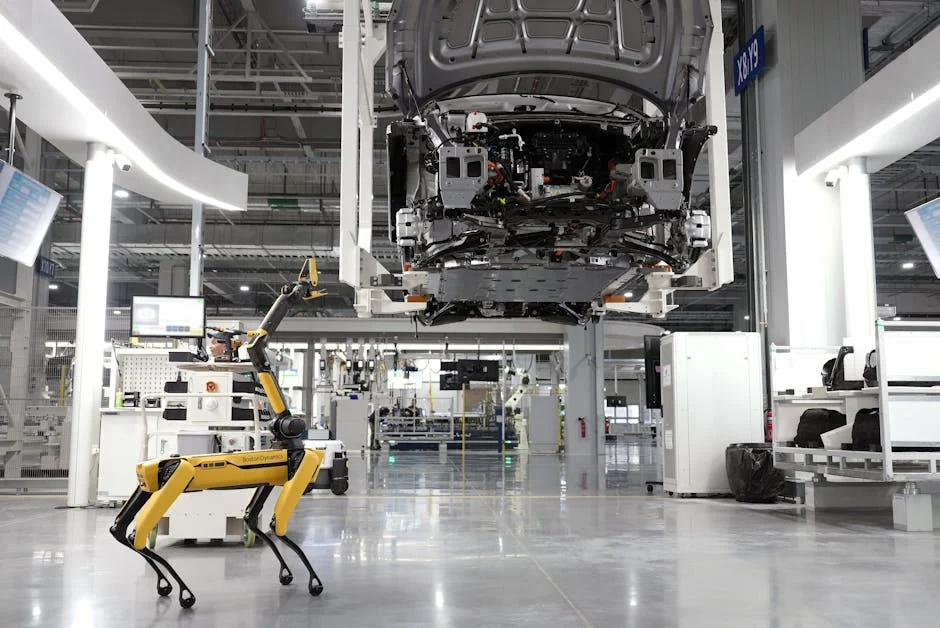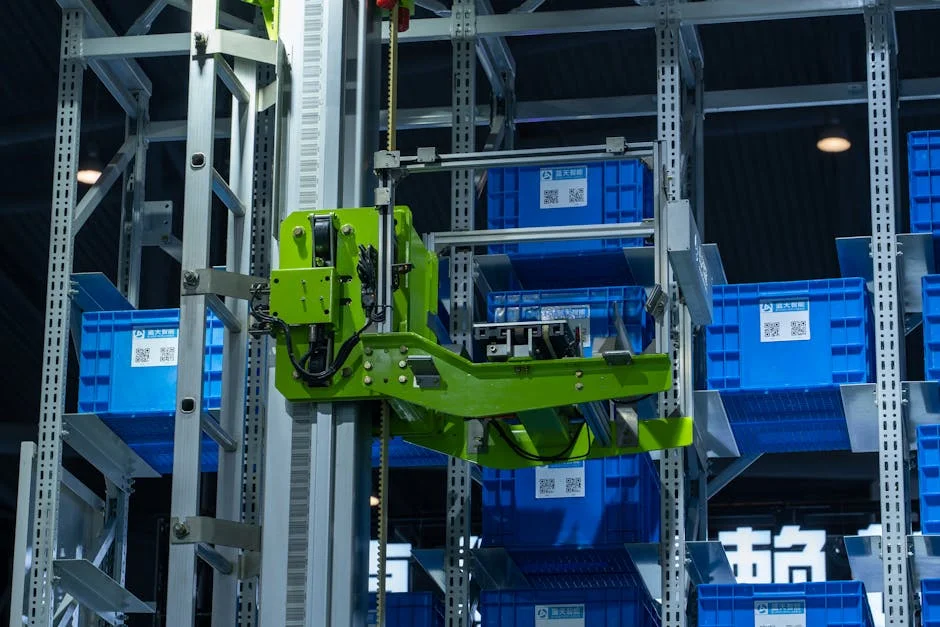
An agv robot is a driverless vehicle designed to move materials autonomously through a facility, following defined routes, responding to traffic rules, and integrating with production or warehouse systems. Unlike traditional forklifts or tugger carts that rely on human operators, an agv robot uses onboard controllers, sensors, and navigation references to travel from pickup to drop-off points with consistent repeatability. This predictability is a major reason many operations teams evaluate automated guided vehicles when they face rising throughput demands, labor constraints, or safety targets. The basic concept sounds simple—move items from A to B—but the operational impact can be substantial because internal transport is often the hidden constraint that limits the performance of receiving, storage, kitting, assembly, and shipping. When internal logistics flows are stabilized, downstream processes become easier to schedule, inventory becomes more accurate, and service levels become more reliable.
Table of Contents
- My Personal Experience
- Understanding the AGV Robot and Why It Matters in Modern Operations
- Core Components and How an AGV Robot Works Day to Day
- Navigation Technologies: From Fixed Guidance to Flexible Autonomy
- Safety Design and Human Interaction in Shared Spaces
- Types of AGV Robot Platforms and Typical Use Cases
- Integration with WMS, MES, ERP, and Shop Floor Controls
- Facility Design Considerations: Layout, Traffic, and Material Presentation
- Performance Metrics: Throughput, Utilization, and Service Levels
- Expert Insight
- Implementation Roadmap: From Discovery to Go-Live and Continuous Improvement
- Maintenance, Reliability, and Lifecycle Planning
- Cost Drivers, ROI Logic, and Common Budget Pitfalls
- Industry Applications: Manufacturing, Warehousing, Healthcare, and Beyond
- Future Trends: Smarter Fleet Coordination, Better Sensing, and Scalable Automation
- Choosing the Right AGV Robot Partner and Building Internal Readiness
- Watch the demonstration video
- Frequently Asked Questions
- Trusted External Sources
My Personal Experience
The first time I worked with an AGV robot was during a busy shift at our warehouse, when we were trying to cut down on the constant back-and-forth trips with pallet jacks. I remember being skeptical, but after a quick walkthrough on the tablet interface, it was surprisingly straightforward—set the pickup point, confirm the drop-off zone, and it would glide off on its own, stopping politely whenever someone stepped into its path. The biggest adjustment was learning to keep aisles clear and not leave stray shrink wrap on the floor, because even small debris could slow it down or trigger a safety stop. After a week, the AGV became part of the routine, and I noticed my feet hurt less at the end of the day because I wasn’t hauling loads across the building as often. It wasn’t perfect—once it got confused by a temporary stack of cartons and called for assistance—but overall it made the workflow calmer and more predictable.
Understanding the AGV Robot and Why It Matters in Modern Operations
An agv robot is a driverless vehicle designed to move materials autonomously through a facility, following defined routes, responding to traffic rules, and integrating with production or warehouse systems. Unlike traditional forklifts or tugger carts that rely on human operators, an agv robot uses onboard controllers, sensors, and navigation references to travel from pickup to drop-off points with consistent repeatability. This predictability is a major reason many operations teams evaluate automated guided vehicles when they face rising throughput demands, labor constraints, or safety targets. The basic concept sounds simple—move items from A to B—but the operational impact can be substantial because internal transport is often the hidden constraint that limits the performance of receiving, storage, kitting, assembly, and shipping. When internal logistics flows are stabilized, downstream processes become easier to schedule, inventory becomes more accurate, and service levels become more reliable.

Even though the term “AGV” has been used for decades, the modern agv robot is far more adaptable than earlier generations. Today’s systems commonly combine route guidance with obstacle detection, fleet coordination, and interfaces to warehouse management systems (WMS) or manufacturing execution systems (MES). Some models are designed as low-profile carriers that move pallets, others as tuggers pulling trains of carts, and others as fork-style vehicles that lift loads from the floor or from racking. The value is not only labor replacement; it is also the standardization of material movement. When transport tasks are standardized, the facility can be designed around predictable timing and predictable replenishment, which reduces last-minute expediting and reduces the amount of buffer inventory needed at workstations. That said, successful deployments require careful attention to layout, load characteristics, process timing, and exception handling, because an autonomous transport system is only as effective as the processes it supports.
Core Components and How an AGV Robot Works Day to Day
The typical agv robot is built around a vehicle chassis, a drive system, a steering mechanism (or differential steering), and a control stack that interprets navigation inputs and executes motion commands. The vehicle may carry loads on a deck, on forks, with a conveyor top, or by towing carts. Power is usually provided by lead-acid or lithium batteries, and charging can be manual, opportunity-based, or automated through docking stations. The control stack includes safety-rated controllers, motor drives, and communication modules for fleet management. Onboard sensors—such as laser scanners, ultrasonic sensors, bumpers, and cameras—are used to detect obstacles and enforce safe stopping distances. While a simple system might follow fixed markers, modern vehicles typically rely on more flexible navigation methods that can be updated digitally to match changing routes or seasonal layouts.
On a normal shift, tasks are generated when a production line needs replenishment, when a pallet is ready to leave a stretch wrapper, or when a receiving door needs empty pallets delivered. The agv robot receives a mission through a fleet manager that balances priorities and assigns work based on vehicle location, battery state, and traffic conditions. The vehicle travels along a planned path, slowing at intersections, yielding to other vehicles, and stopping when sensors detect a person, a forklift, or unexpected debris. At pickup, it may align precisely with a load using fiducials, reflectors, or vision-based alignment. At drop-off, it confirms placement and reports completion back to the host system, which updates inventory or production status. The best systems treat transport as a closed loop: each move is confirmed, exceptions are logged, and the operation gains traceability that is hard to achieve with manual moves. This traceability becomes particularly valuable when audits, recalls, or customer compliance requirements demand proof of where material was moved and when.
Navigation Technologies: From Fixed Guidance to Flexible Autonomy
Navigation is the defining capability of an agv robot, and the chosen method shapes both performance and long-term flexibility. Classic guidance options include magnetic tape, embedded wires, or floor markers, which provide a stable reference but can be time-consuming to modify when routes change. These fixed approaches can still be effective in highly repetitive environments with stable layouts, such as point-to-point transport between a warehouse and a production line that rarely moves. In contrast, laser navigation uses reflectors placed on walls or columns to triangulate position, offering more flexibility because route changes are handled via software updates rather than physical changes to the floor. Natural feature navigation, sometimes called SLAM-based navigation, uses onboard sensors to map the environment and localize using existing structural features, which can reduce infrastructure requirements and shorten deployment time in some facilities.
Each approach has trade-offs that should be evaluated against the operating reality. A busy warehouse with frequent re-slotting might benefit from a navigation approach that supports rapid route edits, temporary detours, and dynamic speed adjustments. A high-precision manufacturing environment might prioritize repeatable docking and tight positional accuracy, which can influence whether reflectors, QR markers, or specialized docking targets are used. The navigation system also affects how the agv robot behaves at intersections, in narrow aisles, and around pedestrian crossings. Facilities with mixed traffic often require tuned behaviors: slow zones near break rooms, audible alerts near blind corners, and enforced right-of-way rules. When these details are treated as part of the navigation design rather than afterthoughts, the result is smoother throughput and fewer nuisance stops. The most effective projects include a realistic assessment of floor conditions, lighting, dust, and seasonal changes, because these factors can influence sensor performance and localization stability over time.
Safety Design and Human Interaction in Shared Spaces
Safety is central to any agv robot deployment because the vehicle operates near people, racks, conveyors, and other equipment. Modern AGVs are designed with layered safety features: safety-rated laser scanners create protective fields that slow or stop the vehicle when an object enters a defined zone, mechanical bumpers provide a last-resort stop, and audible/visual indicators communicate motion and turning. Speed is typically governed by zone rules, and vehicles may slow automatically in high-traffic areas. Beyond the hardware, safety also depends on how well the routes and work areas are designed. Clear pedestrian walkways, marked crossings, and predictable vehicle paths reduce surprise interactions. Many facilities also add mirrors, signage, and floor markings to improve sightlines and create a shared “traffic language” that both people and vehicles follow.
Human interaction is not only about preventing collisions; it is also about minimizing disruption to work. If the agv robot stops too often due to conservative sensor settings, it can create bottlenecks and frustration. If it moves too aggressively, it can create anxiety and noncompliance behaviors, such as people stepping into vehicle paths to “force” a stop. The best implementations balance protective field tuning with operational realism, using data from early runs to refine speed profiles, stop distances, and intersection behaviors. Training matters as well. Teams should understand what the vehicle will do when it detects a person, how to request a move, how to respond to alarms, and how to keep routes clear. Clear escalation paths for exceptions—spilled stretch wrap, fallen cartons, blocked aisles—help maintain both safety and productivity. When safety and usability are engineered together, the AGV becomes a predictable coworker rather than an obstacle.
Types of AGV Robot Platforms and Typical Use Cases
The term agv robot covers multiple vehicle forms, each suited to specific material handling needs. Tugger AGVs pull one or more carts and are common for milk-run replenishment in manufacturing, where components are delivered on a schedule and empties are returned. Unit-load AGVs carry pallets or large bins on a deck and are often used between palletizing cells, stretch wrappers, and staging lanes. Fork-style AGVs can pick from the floor and sometimes from racking, supporting putaway and retrieval tasks in warehouses with consistent pallet quality. Some vehicles include conveyor tops to interface with fixed conveyors, enabling automatic transfer without human intervention. There are also specialized platforms designed for heavy loads, long materials, or custom fixtures, such as coil handling or automotive body transport, where stability and precise routing are critical.

Use case selection should start with the load and the handoff points. Pallet quality, load stability, and consistent dimensions influence which platform will be reliable. If pallets are frequently damaged or loads are irregular, a fork-style vehicle may need enhanced sensing and stricter inbound quality controls. If the goal is to reduce forklift traffic in pedestrian-heavy zones, a tugger agv robot can consolidate many small deliveries into fewer trips, reducing congestion and improving safety. In e-commerce or high-mix distribution, unit-load vehicles can shuttle pallets between reserve storage and decanting, while conveyor-top vehicles can feed sortation systems. The best use cases are those with repeatable routes, stable pickup/drop-off definitions, and measurable pain points such as excessive travel time, frequent line starvation, or inconsistent staging. When the use case is too ambiguous—“move things wherever needed”—the project often struggles because autonomous systems require clear rules and defined interfaces to perform consistently.
Integration with WMS, MES, ERP, and Shop Floor Controls
A key differentiator for a modern agv robot is how well it integrates with the software ecosystem that already runs the facility. When the AGV fleet manager communicates with a WMS, missions can be generated automatically based on inventory tasks like putaway, replenishment, or wave picking. When integrated with an MES, the AGV can respond to real-time production signals: deliver the next kit when a station completes a cycle, remove finished goods when a buffer reaches a threshold, or prioritize urgent work orders. ERP integration can also play a role in aligning transport capacity with planning, though many sites prefer to keep real-time execution at the WMS/MES layer. The goal of integration is to reduce manual dispatching, eliminate phone calls and radio requests, and ensure that material movement is synchronized with system-of-record data.
Integration also enables better exception handling and traceability. If a drop-off location is full, the fleet manager can reroute to an alternate staging lane and notify the host system. If a vehicle cannot complete a pickup due to a missing pallet, the system can log the exception, prompt an operator to intervene, and prevent downstream processes from waiting blindly. Data from the agv robot—such as mission times, dwell times at pickup, and stop events—can be fed into analytics tools to identify bottlenecks. Over time, this data-driven approach improves slotting decisions, staffing plans, and layout changes. Successful integration projects define message standards, timeouts, and ownership of each decision: which system assigns priority, which system confirms completion, and which system triggers replenishment. Without these definitions, automation can create confusion rather than clarity, especially when multiple systems attempt to control the same flow.
Facility Design Considerations: Layout, Traffic, and Material Presentation
Deploying an agv robot is as much a facility design project as it is a technology purchase. A route that looks feasible on a CAD drawing can behave differently once real traffic, pallet overhang, and human movement are considered. Aisle widths, turning radii, floor flatness, and dock plate transitions all influence performance. Intersections deserve special attention because they concentrate risk and delays; designing clear right-of-way rules and providing adequate sightlines can prevent frequent stops. Staging areas should be sized for peak conditions, not average conditions, because a single blocked drop zone can cascade into mission queues and line starvation. Many facilities also benefit from dedicated “AGV lanes” or at least clearly marked corridors where pedestrians understand that vehicles have priority, reducing unpredictable interactions.
Material presentation is another common success factor. For example, if a fork-style agv robot must pick pallets from the floor, the pallets should be squared, consistent, and placed within defined pickup rectangles. If carts are towed, the carts need standardized hitch heights, well-maintained casters, and stable loads that won’t shift on corners. If the system interfaces with conveyors, the transfer height and alignment must be controlled, and sensors should confirm load presence to avoid jams. Small details—like stretch wrap tails, loose labels, or damaged pallet boards—can create nuisance faults that erode confidence in the system. Many teams find that an AGV project becomes a catalyst for broader operational discipline: standard work for staging, 5S improvements, and clearer ownership of housekeeping. When the environment is prepared intentionally, the AGV fleet operates with fewer interventions and delivers the consistent cycle times that justify the investment.
Performance Metrics: Throughput, Utilization, and Service Levels
Measuring the value of an agv robot requires metrics that reflect both productivity and reliability. Common measures include completed moves per hour, average mission time, on-time delivery to production points, and vehicle utilization. Utilization should be interpreted carefully: very high utilization can indicate that the fleet is undersized and has no buffer for peaks, battery charging, or unexpected detours. Many operations target a utilization level that leaves headroom for variability while still achieving labor savings. Another important metric is dwell time at pickup and drop-off. If vehicles spend excessive time waiting for a pallet to be staged or for a dock to clear, the issue may be process discipline rather than fleet size. Tracking stop events—how often vehicles stop for obstacles and for how long—can reveal whether routes are placed in congested areas or whether housekeeping needs improvement.
| AGV Robot Type | Best For | Key Advantages |
|---|---|---|
| Tow/Tractor AGV | High-volume material movement with carts or trailers across fixed routes | High payload capacity; efficient for long-distance transport; simple fleet scaling |
| Unit Load AGV | Transporting pallets, bins, or totes between workstations and storage areas | Stable load handling; integrates well with conveyors and WMS; repeatable point-to-point delivery |
| Forklift AGV | Pallet pickup/drop-off, rack servicing, and dock-to-stock workflows | Automates forklift tasks; reduces labor and safety risk; supports higher lift heights and precision placement |
Expert Insight
Start by mapping your material flow and selecting an AGV navigation method that matches the environment: use magnetic tape or QR codes for stable, repeatable routes, and laser/SLAM navigation for layouts that change. Validate the choice with a short pilot on your highest-frequency lane to confirm throughput, stopping accuracy, and traffic behavior before scaling. If you’re looking for agv robot, this is your best choice.
Design for reliability and safety from day one: standardize pickup/drop-off fixtures, keep aisle widths and turning radii consistent, and add clear right-of-way rules at intersections. Track battery health and charge strategy (opportunity charging vs. swap) and set simple KPIs—on-time deliveries, mission success rate, and average wait time—to spot bottlenecks and tune routes quickly. If you’re looking for agv robot, this is your best choice.
Service levels matter especially in manufacturing, where the cost of a missed delivery can be a line stop. For line-side replenishment, a tugger agv robot may run on a timed loop, and the key metric becomes adherence to the schedule and the number of times a station is at risk of running out. In warehousing, service levels can be tied to shipping cutoffs and trailer departure times. Some teams also measure “touchless moves,” meaning moves completed without human intervention, because the true benefit of automation is not only fewer labor hours but also fewer interruptions and fewer chances for error. When metrics are set up properly, the operation can tune fleet rules—priority queues, zone speeds, charging strategies—to improve outcomes without adding vehicles. Over time, performance data helps justify expansion to additional routes, additional buildings, or new vehicle types, because decisions are grounded in observed constraints rather than assumptions.
Implementation Roadmap: From Discovery to Go-Live and Continuous Improvement
Implementing an agv robot fleet typically follows a staged roadmap that reduces risk and builds internal capability. Early discovery includes process mapping, route definition, load analysis, and a candid review of constraints such as narrow aisles, uneven floors, and mixed traffic. Simulation or digital twin tools may be used to estimate fleet size and predict congestion points, but on-site validation is essential. During design, the team defines pickup/drop-off interfaces, safety zones, traffic rules, and integration messages. Infrastructure—charging stations, reflectors, markers, Wi-Fi coverage, and staging fixtures—is installed and tested. Before go-live, acceptance testing should include not only “happy path” missions but also realistic exceptions: blocked aisles, missing pallets, depleted batteries, and high pedestrian traffic. Training should cover operators, supervisors, maintenance, and IT support, because the system will touch each group in different ways.

Go-live is smoother when scope is controlled. Many operations start with a limited set of routes or a single shift, then expand once stability is proven. A hypercare period with daily reviews helps address early issues quickly: sensor tuning, map refinements, and process adjustments at staging points. After stabilization, continuous improvement becomes the main lever for value. The fleet manager’s data can reveal chronic delays at specific doors or work cells, prompting layout tweaks or revised standard work. Battery strategies can be refined to reduce mid-shift charging interruptions. If the facility changes—new racks, new production cells, seasonal overflow—the navigation maps and traffic rules should be updated through a controlled change process to avoid unplanned downtime. The most successful teams treat the agv robot system as a living part of operations, not a one-time installation. That mindset ensures the automation continues to deliver benefits even as volumes, SKUs, and customer expectations evolve.
Maintenance, Reliability, and Lifecycle Planning
Like any industrial asset, an agv robot requires structured maintenance to sustain performance. Preventive maintenance typically includes checking wheels and tires for wear, inspecting drive components, cleaning sensors, verifying safety scanner function, and reviewing battery health. Lithium batteries reduce some maintenance burdens compared to lead-acid, but they still require monitoring, proper charging practices, and occasional replacement planning. Software maintenance is equally important: firmware updates, cybersecurity patches, and configuration backups protect the fleet from avoidable downtime. Many sites also keep critical spares on hand—wheels, sensors, charging contacts—so that minor failures do not become multi-day outages. The maintenance plan should align with operational realities: a 24/7 operation may need maintenance windows and redundancy in fleet sizing to allow vehicles to be serviced without disrupting throughput.
Reliability is influenced by both the vehicle design and the environment. Dust, humidity, temperature swings, and floor debris can reduce sensor performance and increase mechanical wear. If an agv robot operates in freezer environments or outdoors between buildings, specialized components and enclosures may be necessary. Reliability also depends on disciplined operations: keeping routes clear, presenting loads consistently, and avoiding ad hoc changes that confuse navigation references. Lifecycle planning should consider not only the expected service life of the vehicles but also the evolution of software platforms and integration methods. A fleet manager that integrates via modern APIs can be easier to adapt as WMS or MES systems change. Planning for scalability—additional vehicles, new routes, new buildings—helps avoid repainting the entire solution into a corner. When maintenance, reliability engineering, and lifecycle strategy are addressed upfront, the AGV program becomes a dependable utility rather than a fragile experiment.
Cost Drivers, ROI Logic, and Common Budget Pitfalls
The cost of an agv robot project includes more than the vehicles themselves. Key drivers include the fleet manager software, navigation infrastructure, charging stations, safety accessories, integration development, commissioning, and ongoing support. Facility modifications—such as widening aisles, adding guardrails, improving floors, or redesigning staging areas—can be significant, but they often deliver broader benefits beyond the AGV program. ROI calculations typically compare the automated system against current labor costs for transport tasks, factoring in shift coverage, turnover, training, and the productivity variability of manual moves. However, labor replacement is only one component. Reduced product damage, fewer safety incidents, improved inventory accuracy, and more consistent production uptime can be meaningful financial contributors, especially when line stoppages are expensive.
Budget pitfalls often appear when assumptions are too optimistic or when scope is not defined tightly enough. Underestimating integration complexity is common; even a “standard” WMS interface can require site-specific logic for priorities, location constraints, and exception workflows. Another pitfall is underestimating the cost of making the environment “AGV-ready,” particularly when pallet quality, housekeeping, or staging discipline is weak. Some teams also underestimate the importance of internal ownership: without a trained superuser and a maintenance plan, the operation may rely too heavily on vendor support, increasing downtime and service costs. Fleet sizing is another area where mistakes can be expensive; too few vehicles leads to missed service levels, while too many vehicles increases capital cost and can create congestion. A realistic ROI model includes sensitivity analysis for peak volumes, route blockages, and growth, ensuring the agv robot investment remains justified even when conditions change.
Industry Applications: Manufacturing, Warehousing, Healthcare, and Beyond
Manufacturing remains one of the most common environments for an agv robot because material movement is repetitive and timing is critical. In automotive and electronics plants, AGVs deliver components to line-side supermarkets, remove empties, and move work-in-process between cells. In food and beverage, AGVs can move pallets between packaging, cold storage, and staging, though sanitation and temperature requirements add design constraints. Warehousing applications include moving pallets between receiving, reserve storage, and shipping, as well as feeding automated palletizers or sortation systems. In high-throughput operations, AGVs can reduce forklift congestion and improve safety by standardizing traffic patterns and reducing the number of ad hoc trips.

Healthcare and service environments also use AGV concepts, though often with smaller vehicles and different priorities. Hospitals may deploy autonomous carts to deliver linens, meals, medications, and waste, focusing on traceability and infection control. Airports and large campuses can use guided vehicles for baggage, mail, or supplies movement. In these settings, the human interaction model is especially important because the vehicles operate in public or semi-public corridors with unpredictable traffic. Regardless of industry, the most successful applications share common traits: defined pickup and drop-off points, stable load presentation, and clear operational ownership. When those conditions are met, an agv robot can become a dependable backbone for internal logistics, freeing skilled staff to focus on higher-value tasks that require judgment, dexterity, and customer interaction.
Future Trends: Smarter Fleet Coordination, Better Sensing, and Scalable Automation
The evolution of the agv robot market is shaped by improvements in sensing, compute, and software orchestration. Fleet coordination is becoming more sophisticated, with better traffic management, dynamic rerouting, and predictive mission assignment based on upstream signals. As facilities deploy more automation—robotic palletizers, AS/RS systems, automated packaging lines—the AGV fleet increasingly acts as the connective tissue that keeps material flowing between islands of automation. Better sensing and perception can reduce nuisance stops and improve navigation in mixed environments, while improved cybersecurity practices are becoming essential as vehicles connect to corporate networks and cloud analytics platforms. Standardized interfaces and modern APIs can also reduce the friction of integrating AGVs with multiple host systems, enabling staged rollouts and faster expansion.
Scalability is another major trend. Operations want to start small—one route, one shift, one building—then expand without re-engineering the entire system. This pushes vendors and integrators to deliver modular designs: reusable pickup/drop-off templates, configurable safety zones, and standardized exception workflows. Battery and charging technologies will continue to influence uptime, with more opportunity charging and smarter energy management that schedules charging during low-demand windows. At the same time, operational discipline remains the foundation; even the most advanced agv robot will struggle in an environment with inconsistent staging, damaged pallets, and uncontrolled congestion. The future points toward tighter alignment between facility design, digital process control, and autonomous transport, where the AGV is not a standalone project but part of an integrated strategy for resilient, data-driven operations.
Choosing the Right AGV Robot Partner and Building Internal Readiness
Selecting an agv robot solution is not only about comparing vehicle specs; it is about choosing a partner whose engineering approach fits the facility’s constraints and the organization’s maturity. Key evaluation points include proven references in similar environments, clarity on navigation and safety methods, and transparency about integration responsibilities. The ability to support commissioning, training, and long-term maintenance is often more important than minor differences in top speed or payload. It is also wise to assess how the fleet manager handles priorities, congestion, and exceptions, because these behaviors determine real-world throughput. A solution that looks strong in a demo can disappoint if it cannot handle blocked drop zones, shifting production priorities, or mixed pedestrian traffic. Contract structure matters as well, including service level agreements, spare parts availability, and the process for software updates.
Internal readiness is equally important. A successful program typically has an operations owner who defines standard work and a technical owner who manages configuration, integration coordination, and vendor communication. Maintenance teams need training and time to adopt preventive routines. IT teams need to ensure network coverage, security policies, and system monitoring. Supervisors need tools to manage exceptions without bypassing the system. When these roles are defined, the agv robot becomes a stable part of daily operations rather than a special project that only a few people understand. The long-term payoff is a facility that can scale throughput with less disruption, using data from the AGV system to continuously improve flow. With the right partner and disciplined internal ownership, the agv robot can deliver consistent, measurable value while supporting safer and more predictable material handling across the operation.
Watch the demonstration video
In this video, you’ll learn what an AGV (Automated Guided Vehicle) robot is and how it navigates to move materials safely and efficiently. It explains common guidance methods, key components like sensors and controllers, and typical uses in warehouses and factories. You’ll also see the benefits, limitations, and basic safety considerations of AGV systems. If you’re looking for agv robot, this is your best choice.
Summary
In summary, “agv robot” is a crucial topic that deserves thoughtful consideration. We hope this article has provided you with a comprehensive understanding to help you make better decisions.
Frequently Asked Questions
What is an AGV robot?
An **agv robot** is a mobile, self-guided vehicle designed to move materials from one place to another along preset routes, using navigation methods such as magnetic tape, QR codes, or laser-based guidance.
How does an AGV navigate in a facility?
Typical approaches include line-following using tape or embedded wire, QR codes or marker-based routing, laser SLAM, and natural feature navigation—all coordinated through a fleet management system to keep each **agv robot** moving efficiently and safely.
What are AGVs used for?
In warehouses and factories, an **agv robot** can efficiently transport pallets, carts, bins, and individual parts—supporting everything from inbound receiving and line feeding to WIP movement and outbound shipping.
How is an AGV different from an AMR?
Traditional AGVs usually travel along fixed, pre-programmed routes, while an **agv robot** with AMR-style autonomy can navigate more intelligently—adjusting its path in real time and steering around obstacles for greater flexibility.
What safety features do AGVs have?
They equip each **agv robot** with safety scanners, protective bumpers, emergency stop buttons, speed limits, warning lights and sounds, and zone control—so it can detect people or obstacles in its path and automatically slow down or stop when needed.
What factors affect AGV cost and ROI?
Major factors to consider include the **agv robot**’s payload capacity and travel speed, the navigation method it uses, any facility changes required, the size of the fleet you’ll deploy, how smoothly it integrates with your WMS/MES/ERP systems, the charging approach you choose, and the labor savings and throughput improvements you expect to achieve.
? Looking for more info about agv robot? Follow Our Site for updates and tips!

Trusted External Sources
- AMR vs AGV: Key Differences Explained – Mobile Industrial Robots
AGV stands for Automated Guided Vehicle, while AMR means Autonomous Mobile Robot. Although both are designed to move materials from one place to another, they differ in a fundamental way: an **agv robot** typically follows fixed routes guided by markers like tape, wires, or QR codes, whereas an AMR navigates more independently, using sensors and mapping to choose the best path and adapt to changes in its environment.
- Automated guided vehicle – Wikipedia
An **agv robot** (automated guided vehicle) is a mobile, self-driving machine designed to move materials safely and efficiently around a facility. Unlike an autonomous mobile robot (AMR), which can navigate more freely, an AGV typically follows predefined routes—such as painted or taped floor lines, embedded wires, or other fixed guidance systems—to get from point A to point B reliably.
- Mobile Robots & Cobots – FANUC America
Automated Guided Vehicles (AGVs) and Autonomous Mobile Robots (AMRs) bring flexible automation exactly where and when you need it. By combining an **agv robot** with a robotic arm on a mobile platform, you can move, pick, and place materials seamlessly—streamlining workflows, reducing manual handling, and boosting productivity across your facility.
- AMR vs AGV – Vecna Robotics
AMRs deliver greater flexibility, scalability, and overall performance than traditional systems like an **agv robot**. Using advanced sensors, they continuously locate themselves and build real-time maps of their surroundings, allowing them to navigate dynamically, adapt to changes on the floor, and keep operations running smoothly even as layouts and workflows evolve.
- Robots for Smarter Warehousing | Automated Warehouse Robotics
SEER Robotics, Build your own robot fleet within days!Maximize productivity with Robots robotics & AGV robots for seamless warehouse automation.