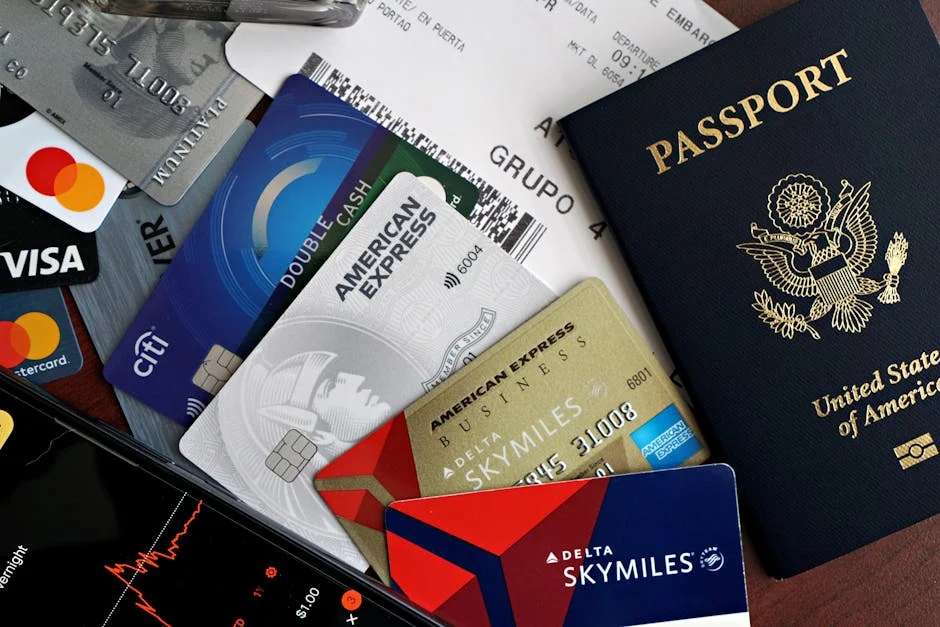
An airline credit card is a co-branded or airline-linked payment card designed to reward spending with travel-related value, usually in the form of airline miles, points, or credits tied to a specific carrier or alliance. Unlike a generic rewards card that earns flexible points for many redemption options, this type of card typically pushes value toward one airline’s ecosystem: its loyalty program, its award chart (or dynamic pricing), its baggage rules, its partner network, and its booking channels. That focus can be a major advantage for people who fly a particular carrier frequently, because the benefits often match real pain points—bag fees, seat selection costs, priority boarding, change fees, or access to extra award availability. At the same time, the same focus can become a drawback if your travel patterns change, your home airport loses service, or the airline devalues its program. Understanding what you are actually buying with annual fees, spending requirements, and loyalty commitments matters more than the marketing language about “free flights.” The best way to think about the card is as a bundle: part rewards engine, part travel benefits subscription, and part loyalty accelerator. When you evaluate it as a bundle, you can compare it to alternatives more honestly and avoid paying for perks you won’t use.
Table of Contents
- My Personal Experience
- Understanding What an Airline Credit Card Really Is
- How Miles, Points, and Redemption Value Actually Work
- Sign-Up Bonuses, Minimum Spend, and Timing Strategy
- Annual Fees and the Real Cost of “Free” Travel
- Free Checked Bags, Priority Boarding, and Airport Experience Benefits
- Lounge Access and Premium Travel Perks: When They Pay Off
- Elite Status Boosts, Priority Treatment, and Loyalty Program Shortcuts
- Foreign Transaction Fees, International Travel, and Partner Airlines
- Expert Insight
- Comparing Co-Branded Airline Cards vs. Flexible Travel Rewards Cards
- Credit Score, Approval Factors, and Responsible Use
- Maximizing Earnings: Category Bonuses, Airline Purchases, and Everyday Spend
- Common Pitfalls: Devaluations, Expiring Miles, and Overcommitting to One Airline
- Choosing the Right Airline Credit Card for Your Travel Profile
- Building a Long-Term Rewards Plan Without Burning Out
- Watch the demonstration video
- Frequently Asked Questions
- Trusted External Sources
My Personal Experience
I finally got an airline credit card last year after realizing I was booking the same carrier for work trips anyway. The sign-up bonus looked great on paper, but what actually sold me was how quickly the points added up on everyday stuff like groceries and gas. After about four months, I had enough miles to cover a round-trip flight to visit my sister, and paying only the taxes felt like a small win. The perks were a mixed bag—free checked bag saved me money twice, but the lounge access was only a discount, not an automatic entry like I assumed. I did have to stay on top of the annual fee and make sure I paid the balance in full, because one month of interest would’ve wiped out the value of the miles. Overall, it’s been worth it for me, but only because I fly that airline often enough to actually use the benefits.
Understanding What an Airline Credit Card Really Is
An airline credit card is a co-branded or airline-linked payment card designed to reward spending with travel-related value, usually in the form of airline miles, points, or credits tied to a specific carrier or alliance. Unlike a generic rewards card that earns flexible points for many redemption options, this type of card typically pushes value toward one airline’s ecosystem: its loyalty program, its award chart (or dynamic pricing), its baggage rules, its partner network, and its booking channels. That focus can be a major advantage for people who fly a particular carrier frequently, because the benefits often match real pain points—bag fees, seat selection costs, priority boarding, change fees, or access to extra award availability. At the same time, the same focus can become a drawback if your travel patterns change, your home airport loses service, or the airline devalues its program. Understanding what you are actually buying with annual fees, spending requirements, and loyalty commitments matters more than the marketing language about “free flights.” The best way to think about the card is as a bundle: part rewards engine, part travel benefits subscription, and part loyalty accelerator. When you evaluate it as a bundle, you can compare it to alternatives more honestly and avoid paying for perks you won’t use.

Most airline-linked cards come in tiers. Entry-level versions emphasize a sign-up bonus and one or two practical perks, such as a free checked bag or early boarding. Mid-tier products may add companion certificates, discounts on inflight purchases, and limited lounge access. Premium versions often compete with general luxury travel cards by offering lounge membership, travel protections, statement credits, and higher earning rates, but they still anchor you to one carrier. The “right” airline credit card depends on how you travel: whether you check bags, travel with family, value seat assignments, rely on last-minute flights, or prefer international partners. It also depends on your ability to meet minimum spending requirements without overspending, and your willingness to manage payments responsibly to avoid interest that can erase the value of any rewards. If you treat the card as a tool—earning miles on routine expenses and converting those miles into flights you would otherwise pay for—it can be powerful. If you treat it as a status symbol or a reason to buy more than you need, it can become expensive quickly.
How Miles, Points, and Redemption Value Actually Work
Rewards earned from an airline credit card usually come as miles or points deposited into the airline’s frequent flyer program. The name varies by carrier, but the mechanics are similar: you earn a set number of miles per dollar spent, with elevated rates for purchases made directly with the airline and sometimes for categories like dining, grocery stores, gas, or travel. What matters most is not only how fast you earn, but how valuable each mile is when you redeem. Redemption value is influenced by the airline’s pricing model, the routes you want, the time of year, and whether the airline uses a fixed award chart or dynamic award pricing. Many major programs now price awards dynamically, meaning the miles required for a flight can rise and fall with cash fares and demand. That can be good when you find low-demand flights at attractive rates, and frustrating when peak travel requires a huge miles balance. Because of this variability, it helps to think in ranges rather than a single “cents-per-mile” number. The most reliable value often comes from economy flights during off-peak periods, saver awards on certain routes, or partner redemptions where pricing is more stable.
Another layer is fees and surcharges. Some programs impose higher taxes and carrier-imposed surcharges on award tickets, especially on certain international routes, which can reduce the effective value of the miles you spend. Additionally, award availability is not guaranteed; an airline may restrict the number of seats available at the best rates, pushing members toward higher-priced awards. Many cards advertise “priority access” to awards or “expanded availability,” which can be genuinely useful for families or travelers booking close to departure. Still, it’s smart to test the airline’s award search for your likely routes before committing to a card. Look at typical mileage prices for the trips you take, the number of seats available, and how far in advance you must book to get decent deals. If you can consistently redeem at a value that beats cash back alternatives after accounting for annual fees, then the airline credit card can be a rational choice. If you rarely find flights you want at reasonable mileage rates, a flexible points card or a simple cash back card may outperform it.
Sign-Up Bonuses, Minimum Spend, and Timing Strategy
The sign-up bonus is often the headline feature of an airline credit card, and it can represent the fastest path to a meaningful mileage balance. A large bonus can cover one or more round-trip tickets, especially for domestic economy, and sometimes more if you redeem strategically. But the bonus is not “free”; it usually requires meeting a minimum spending threshold in a set time window, such as three or six months. The key is to align the application with predictable expenses—insurance premiums, planned home repairs, travel bookings, tuition payments (if fees are reasonable), or everyday bills you can pay by card without surcharges. If you have to manufacture spending or buy things you wouldn’t otherwise buy, the bonus becomes less valuable. Timing also matters because many issuers restrict how often you can earn a welcome bonus, and some airlines have multiple card versions with different rules. Applying without a plan can lock you out of better offers later or lead to unnecessary annual fees.
Beyond the initial bonus, consider how the card fits your long-term spending. Some people focus on the first-year value and then downgrade or cancel before the second annual fee posts. Others keep the card indefinitely because the ongoing perks exceed the cost. A smart approach is to compute the “year-one value” and “year-two value” separately. Year one includes the sign-up bonus, any introductory credits, and waived annual fees (if offered). Year two is mostly about ongoing benefits: free checked bags, companion certificates, annual travel credits, elite-qualifying boosts, or lounge access. Also pay attention to the issuer’s rules for product changes. If you can downgrade to a no-fee version that preserves your miles and account history, you may maintain credit profile benefits while avoiding fees. However, downgrading can change your earning rates and remove perks you rely on. A disciplined strategy treats the airline credit card as part of a broader financial plan: pay in full monthly, meet minimum spend through normal life expenses, and choose application timing that matches your travel calendar so you can use benefits when they matter most.
Annual Fees and the Real Cost of “Free” Travel
Annual fees range from modest to premium, and evaluating them requires more than comparing the number printed on the application page. A low-fee airline credit card might be justified by a single free checked bag benefit if you regularly pay bag fees. For example, if the airline charges per bag each way, even one round trip for two travelers can exceed a typical entry-level annual fee. But if you usually travel with only a personal item, the bag perk may be irrelevant. Premium cards can have high annual fees, but they may include lounge access, travel credits, elite-qualifying assistance, and higher earning rates. The critical question is whether you will reliably use those benefits without changing your behavior in costly ways. Paying a high fee for a lounge you visit twice a year may not be optimal unless you strongly value the comfort or need the workspace. Similarly, travel credits that require booking through a specific channel may not be as flexible as they appear.
It also helps to separate “hard value” from “soft value.” Hard value includes statement credits you will use, bag fees you avoid, and companion certificates you can redeem without hassle. Soft value includes things like priority boarding, preferred seats, and the psychological comfort of having an airline-branded card. Soft value can still matter, but it should not be the only justification for paying ongoing fees. Another hidden cost is opportunity cost: every dollar spent on an airline card is a dollar not spent on a card that might earn more flexible points or higher cash back. If your airline card earns 2 miles per dollar on everyday categories, but a competing card earns 2% cash back or transferable points with broader redemption options, you should compare outcomes based on realistic redemption values. If you value the airline’s miles at 1.2 cents each, 2 miles per dollar approximates 2.4% back—good, but not always best. When you account for annual fees, the airline credit card should still win for your specific travel patterns, not just in theory.
Free Checked Bags, Priority Boarding, and Airport Experience Benefits
Many travelers choose an airline credit card for perks that reduce friction on travel day rather than for miles alone. Free checked bags can be the most concrete benefit, particularly for families, longer trips, or travelers carrying sports equipment. The savings can be substantial if the benefit applies to multiple companions on the same reservation. However, the fine print matters: some cards limit the number of free bags, apply only to the primary cardholder, or require the ticket to be purchased with the card. Priority boarding can also be valuable if you frequently fly with carry-on luggage and want overhead bin space. On crowded flights, boarding earlier reduces the risk of gate-checking your bag, which can save time and stress. In addition, some cards offer preferred boarding groups that can make the airport experience feel smoother even without elite status.

Other airport-related benefits can include discounts on inflight purchases, statement credits for onboard Wi-Fi, or access to special check-in lines. While these perks may seem small, they can add up over a year if you fly often. Still, it’s important to confirm whether the airline you fly most actually offers meaningful differentiation for cardholders. Some carriers have tightened benefits, making them similar across multiple card tiers, while others reserve the best perks for higher-fee products. Consider your typical trip: Do you check a bag? Do you need overhead space? Do you value sitting together with family without paying extra for seats? Some airline cards provide seat selection discounts or credits, which can be more valuable than it sounds if your airline charges for standard seats. Ultimately, the best airline credit card for “airport experience” is the one whose perks match your actual bottlenecks: baggage, boarding, seating, and day-of-travel flexibility.
Lounge Access and Premium Travel Perks: When They Pay Off
Lounge access is one of the most marketed premium features tied to an airline credit card, but it is also one of the easiest to overvalue. If you travel frequently, especially with connections, lounge entry can save money on food and drinks, provide quiet space for work, and make delays more tolerable. Some airline lounges also offer showers, better Wi-Fi, and more comfortable seating than the gate area. However, lounge networks vary widely in quality and availability. If your home airport lacks the airline’s lounge, or if you typically fly nonstop at convenient times, you may not use the benefit enough to justify a large annual fee. Also consider guest policies and crowding. Some lounges restrict guests or charge additional fees, and many have become crowded during peak hours, reducing the “premium” feel. The value is real, but it depends on your routes and travel style.
Premium airline cards may also include travel protections and credits that are not strictly airline-specific. Trip cancellation or interruption insurance, baggage delay coverage, rental car coverage, and purchase protections can be meaningful if you travel often and want a safety net. Yet coverage terms differ by issuer and card tier, so it’s worth reading the benefits guide. Some protections are secondary rather than primary, some require you to pay for the trip with the card, and some exclude certain situations. Premium cards may also provide credits for trusted traveler programs, such as TSA PreCheck or Global Entry, which can improve airport efficiency. If you already have these benefits from another card, duplicating them may not add value. The practical approach is to list the premium perks you will use, estimate their annual value conservatively, and compare that total to the annual fee. If the numbers work without optimistic assumptions, then a premium airline credit card can be a strong fit. If the math only works when you imagine traveling more than you realistically will, a lower-fee card may be the smarter choice.
Elite Status Boosts, Priority Treatment, and Loyalty Program Shortcuts
Airlines increasingly use credit cards to drive loyalty, and some products offer pathways to elite status or status-like perks. This can come in the form of elite-qualifying miles, segments, or points based on card spending, or annual boosts that reduce the amount of flying needed to qualify. For travelers who are close to a status tier, these boosts can be the difference between earning upgrades, better seat selection, fee waivers, and priority customer service—or missing out entirely. Some cards also offer automatic status at an entry level, which may include benefits like preferred seats, earlier boarding, or occasional upgrades depending on the airline. These features can be valuable, but they can also encourage high spending on a card that may not be the most rewarding for everyday purchases. The right decision depends on whether status meaningfully improves your travel and whether you can achieve it without distorting your budget. If you’re looking for airline credit card, this is your best choice.
It’s also important to understand what airline status actually delivers in today’s environment. Upgrades can be scarce on popular routes, especially for carriers that sell premium seats aggressively. If your main goal is first-class upgrades, relying on card-based status boosts may lead to disappointment unless you fly frequently on routes with good upgrade space. On the other hand, status benefits like same-day changes, better seat assignments, and fee waivers can be reliably valuable even without upgrades. Another consideration is whether the airline’s loyalty program is revenue-based, distance-based, or a hybrid. In revenue-based systems, expensive tickets earn more, and status can be harder for budget travelers to reach without assistance. If your spending patterns align with the airline’s qualification rules, an airline credit card that offers elite-qualifying boosts could be a strategic advantage. If not, you might be better served by focusing on flexible rewards and buying the specific perks you need à la carte, rather than chasing a tier that doesn’t deliver consistent value for your routes.
Foreign Transaction Fees, International Travel, and Partner Airlines
If you travel internationally, choosing an airline credit card with no foreign transaction fees is often essential. Foreign transaction fees can add around 3% to purchases made abroad, which can quickly exceed the value of miles earned. Many travel-oriented airline cards waive these fees, but not all entry-level versions do, so it’s a key detail to confirm. International travel also introduces the question of partner airlines and alliances. If your airline is part of a major alliance or has strong bilateral partnerships, your miles may be redeemable on many carriers worldwide. That can dramatically increase the usefulness of your rewards, especially for routes your primary airline does not operate directly. Some of the best redemptions can be on partner airlines with better award availability or more favorable pricing than the primary airline’s own flights.
| Card type | Best for | Typical perks |
|---|---|---|
| Entry-level airline card | Occasional flyers who want simple value | Bonus miles after signup, 1st checked bag free (often), priority boarding (sometimes) |
| Mid-tier airline card | Regular travelers who can use travel benefits | Higher earn on airline purchases, free checked bag + priority boarding, annual companion/flight credit (sometimes) |
| Premium airline card | Frequent flyers chasing elite-like perks | Lounge access (or credits), statement credits, enhanced upgrade/elite benefits (varies), higher annual fee |
Expert Insight
Pick an airline credit card that matches the carrier you fly most, then time your application around a big purchase so you can hit the welcome-bonus spending requirement without overspending. Before applying, confirm the card’s perks you’ll actually use—free checked bags, priority boarding, lounge access—outweigh the annual fee based on your typical trips.
Maximize value by putting airfare and in-flight purchases on the airline card for bonus miles, but use a higher-earning everyday card for groceries, gas, or dining if it earns more. Set a calendar reminder to review your benefits and renewal each year, and downgrade or cancel before the next annual fee if you’re not getting enough value. If you’re looking for airline credit card, this is your best choice.
Still, partner redemptions can be complex. Booking partner awards may require calling customer service, using specific search tools, or navigating mixed-cabin itineraries. Taxes and surcharges may differ by partner, and changes or cancellations can be more restrictive. Also, some airlines have moved toward dynamic pricing even for partner awards, reducing predictability. When evaluating an airline credit card for international use, consider how easy it is to book partner flights, whether the program passes along high surcharges, and whether the airline has a strong presence in the regions you visit. Another factor is travel protections. International trips are often more expensive and more vulnerable to disruptions, so trip delay and cancellation coverage can matter more. Finally, consider acceptance and customer service while abroad: a card with robust fraud protection, easy-to-use app controls, and responsive support can be as valuable as the miles. International travelers often benefit from carrying at least one backup card, but a well-chosen airline credit card can be a reliable primary option if it combines no foreign fees, strong partner utility, and practical protections.
Comparing Co-Branded Airline Cards vs. Flexible Travel Rewards Cards
One of the most important decisions is whether to commit to a co-branded airline credit card or to prioritize a flexible travel rewards card that earns transferable points. Co-branded cards excel when you are loyal to a specific carrier and can use airline-specific perks frequently. They can also provide unique benefits that flexible cards cannot replicate easily, such as free checked bags, companion certificates, or expanded award availability. Flexible points cards, by contrast, often allow transfers to multiple airline and hotel partners, giving you the ability to shop for the best award pricing across programs. They may also offer broader travel credits and stronger earning rates in common categories. The trade-off is that flexible cards usually do not provide airline-specific operational perks, and their best value often requires learning transfer partners and booking strategies.

A practical way to compare is to define your “must-have” benefits. If avoiding bag fees is non-negotiable and you fly one carrier most of the time, a co-branded airline credit card can pay for itself even if you redeem miles only occasionally. If your priority is maximum redemption flexibility, especially across multiple airlines, a transferable points ecosystem may deliver higher long-term value. Another comparison point is how each card type behaves during program changes. Airlines can devalue miles by increasing award prices or reducing availability; flexible points can partially hedge that risk because you can transfer to different partners. However, flexible programs can also change transfer ratios or partner lists. The best setup for many travelers is a combination: a co-branded airline card for core perks with your primary carrier, and a flexible points card for everyday spending and broader redemption options. The balance depends on your budget, credit profile, and willingness to manage multiple accounts. If you prefer simplicity, choose the single card that best matches your most frequent travel behavior rather than chasing theoretical maximum value across many programs.
Credit Score, Approval Factors, and Responsible Use
Applying for an airline credit card involves a credit inquiry and requires meeting issuer underwriting standards. Approval depends on factors like credit score, income, existing debt obligations, and recent application activity. Many premium cards target applicants with strong credit histories, while some entry-level products have more accessible criteria. Still, even a great rewards structure is not worth it if the card leads to carrying a balance and paying interest. Interest charges can dwarf the value of miles quickly. Responsible use means paying the statement balance in full each month, keeping utilization low, and avoiding unnecessary spending just to earn rewards. It also means understanding your cash flow so you don’t rely on credit card debt to fund travel. The miles are a rebate on spending you would do anyway, not a discount on spending you can’t afford.
From a credit health perspective, opening a new card can temporarily reduce your average age of accounts and add a hard inquiry, but it can also increase total available credit, which may lower utilization if you manage it well. If you plan to apply for a mortgage or auto loan soon, timing matters; it may be better to postpone new card applications. Another consideration is account management over time. Closing a long-held card can affect your credit profile, so if you anticipate not keeping the card, check whether a downgrade path exists. Also keep track of annual fee posting dates and benefit renewal cycles so you can evaluate whether to keep or change the card before paying another year’s fee. A disciplined approach treats an airline credit card as a financial instrument: you extract value through benefits and miles, protect your credit through good habits, and avoid letting rewards marketing drive decisions. When used responsibly, the card can enhance travel without compromising financial stability.
Maximizing Earnings: Category Bonuses, Airline Purchases, and Everyday Spend
To get the most from an airline credit card, you need a clear plan for how it fits into your spending mix. Many airline cards offer elevated earning rates on purchases made directly with the airline, such as tickets, seat upgrades, baggage fees, and sometimes vacation packages. If you regularly buy flights with that carrier, putting those purchases on the card is usually a straightforward win, especially when paired with travel protections. Some cards also offer bonus earning in categories like dining, grocery stores, or gas, but the structure varies widely. The best strategy is to match the card to the categories where you spend the most and where the earning rate is meaningfully better than your alternatives. If your airline card offers only modest bonuses outside of airline purchases, it may be best used primarily for airline spend and to unlock perks, while another card handles groceries or general spending.
Another way to maximize earnings is to take advantage of issuer and airline shopping portals, dining programs, and limited-time promotions. Many airlines run online malls where you can earn additional miles for purchases at participating retailers. Stacking portal miles with credit card miles can accelerate earning without changing what you buy, as long as prices remain competitive and you avoid impulse purchases. Dining programs can also generate extra miles at restaurants you already visit. Additionally, some cards offer annual spend thresholds that trigger bonuses, companion certificates, or elite-qualifying boosts. These thresholds can be valuable, but they can also tempt you to route too much spend to a lower-earning card just to hit a target. A better approach is to calculate the incremental value of the threshold reward and compare it to what you would earn by putting that spend on a different card. If the threshold reward is worth more than the difference, it may be rational; if not, it’s better to ignore the threshold. Maximizing an airline credit card is less about chasing every mile and more about building a repeatable system that aligns with your budget and travel goals.
Common Pitfalls: Devaluations, Expiring Miles, and Overcommitting to One Airline
Even the best airline credit card can disappoint if you fall into predictable traps. One major risk is loyalty program devaluation, where the airline increases the miles required for awards, reduces saver availability, or adds fees that make redemptions less attractive. Because airlines control their programs, these changes can happen with limited notice. If you hold a large mileage balance and rarely redeem, you are exposed to this risk. A practical defense is to earn with a purpose: build miles toward a specific trip and redeem when you have enough, rather than hoarding indefinitely. Another pitfall is miles expiration policies. Some programs expire miles after a period of inactivity, while others keep miles active as long as you have account activity, which can include earning miles from a card. If your program has expiration rules, understand what counts as activity and set reminders so you don’t lose value unexpectedly.

Overcommitting to one airline is another common issue. Route networks change, prices fluctuate, and competitors may offer better schedules or fares. If you choose an airline credit card primarily for miles but you don’t consistently fly that airline, you may end up with rewards you can’t use efficiently. This is especially true for travelers in smaller airports where service can be limited or seasonal. Also watch for benefit restrictions: a free bag benefit may require booking directly with the airline, or it may not apply to basic economy fares in certain cases. Companion certificates can be valuable, but they may have blackout dates, fare class restrictions, or complicated booking rules. Finally, don’t overlook customer service and operational reliability. Rewards are only part of the experience; irregular operations, delays, and rebooking policies matter too. The best way to avoid pitfalls is to evaluate the card annually, track real savings from benefits, and remain willing to switch if your travel patterns or the airline’s program changes. Flexibility is often the difference between consistently extracting value and feeling stuck with a card that no longer fits.
Choosing the Right Airline Credit Card for Your Travel Profile
Selecting an airline credit card should start with a clear snapshot of your travel behavior rather than with the biggest advertised bonus. Consider your home airport and which airlines offer the most nonstop routes and convenient schedules. If you frequently fly one carrier because it dominates your airport, a co-branded card can deliver outsized value through operational perks like free checked bags, priority boarding, and easier access to award seats. Next, look at your typical trip length and luggage habits. Weekend travelers who pack light may not benefit from baggage perks, while families and business travelers often will. Then consider how far in advance you book. If you book last minute, you may value expanded award availability, change-fee flexibility, or elite-like support lines more than a slightly higher earning rate. If you plan trips far ahead, you may be able to extract better award value and make the miles portion more important.
Also consider your spending patterns and simplicity preferences. If you want one primary card for most purchases, look for an airline card with strong everyday earning categories and benefits that you will use consistently. If you are comfortable carrying two cards, you can keep the airline card for airline purchases and perks while using a different rewards card for categories where it earns more. Don’t ignore the annual fee, but don’t fixate on it either; measure it against realistic savings and rewards. A good test is to estimate how many flights you take per year, what you pay in bag fees, whether you would pay for lounge access otherwise, and how likely you are to use any companion or travel credits. If the conservative estimate of value exceeds the fee and the card fits your travel habits, it’s a strong candidate. If the value only works with optimistic assumptions, it may be better to choose a no-fee or lower-fee option. Ultimately, the best airline credit card is the one that keeps delivering value after the excitement of the sign-up bonus fades.
Building a Long-Term Rewards Plan Without Burning Out
Long-term success with an airline credit card comes from consistency, not constant optimization. Start by setting a simple goal, such as earning enough miles for one annual trip you actually want to take. Track your mileage balance and redemption opportunities periodically, but avoid obsessing over every minor fluctuation in value. Many travelers get frustrated when they compare every redemption to a theoretical “best possible” deal. In practice, a good redemption is one that saves you money on a flight you would otherwise buy, at a mileage cost you can afford, with acceptable flight times. It also helps to establish a routine: use the airline card for airline purchases and any categories where it is clearly competitive, pay the balance in full, and schedule a quarterly check-in to review benefits, credits, and upcoming annual fees. If your card offers statement credits that require activation or specific purchase types, set calendar reminders so you don’t leave value unused.
Consider how the card fits into life changes. A move to a different city, a new job with different travel needs, or a growing family can change the airline you fly and the perks you value. A card that was perfect when you traveled alone with a carry-on might be less compelling when you start checking bags or traveling during school holidays. Likewise, a premium lounge-focused card might be less useful if you shift to nonstop flights or reduce travel frequency. The healthiest approach is to treat your airline rewards as a supportive tool rather than a hobby that demands constant attention. Keep your miles from expiring, redeem regularly, and avoid accumulating more complexity than you can manage. When you do that, the airline credit card becomes a practical asset that reduces travel costs and improves comfort, rather than a source of stress or unnecessary spending. The best outcome is sustainable: you earn miles naturally, use benefits you genuinely value, and finish the year feeling that the airline credit card earned its place in your wallet.
Watch the demonstration video
In this video, you’ll learn how airline credit cards work, what perks they typically offer (like miles, free checked bags, and priority boarding), and how to compare options based on fees and rewards. It also explains smart ways to earn and redeem miles, avoid common pitfalls, and decide whether an airline card fits your travel habits.
Summary
In summary, “airline credit card” is a crucial topic that deserves thoughtful consideration. We hope this article has provided you with a comprehensive understanding to help you make better decisions.
Frequently Asked Questions
What is an airline credit card?
An airline credit card is a co-branded card that earns miles or points with a specific airline and may include travel perks like free checked bags, priority boarding, or lounge access.
How do airline credit card miles work?
You earn miles from card spending (and often airline purchases at higher rates), plus potential sign-up bonuses; miles can be redeemed for flights or upgrades based on the airline’s award pricing and availability. If you’re looking for airline credit card, this is your best choice.
Is an airline credit card worth the annual fee?
It can be if the value of perks (e.g., free bags, companion fares, lounge access) and rewards you’ll actually use exceeds the annual fee; otherwise a no-fee or flexible travel card may be better. If you’re looking for airline credit card, this is your best choice.
Do airline miles expire?
Mileage expiration rules differ from one airline to another: some programs let your miles last forever, while others require you to earn or redeem within a set timeframe. Review your airline’s policy, and if you need to keep miles from expiring, a small purchase on an **airline credit card** or another qualifying activity can help keep your account active.
What should I look for when choosing an airline credit card?
Compare an airline’s routes from your home airport, then weigh the sign-up bonus requirements, earning rates, annual fee, foreign transaction fees, and the perks you’ll actually use—like free checked bags, priority boarding, lounge access, or companion benefits—so you can choose the right **airline credit card**.
Can I use an airline credit card for international travel?
Yes—just be selective. Pick an **airline credit card** that skips foreign transaction fees and includes solid travel protections, and make sure the airline (and its partner network) reliably offers award seats on the routes you actually plan to fly.
? Looking for more info about airline credit card? Follow Our Site for updates and tips!

Trusted External Sources
- Best Travel Credit Card focused on air travel : r/CreditCards – Reddit
Mar 3, 2026 … As far as airline cards are concerned, the JetBlue Plus Card is our top pick right now. Some other good ones include the United Explorer Card, … If you’re looking for airline credit card, this is your best choice.
- Citi® / AAdvantage® – American Airlines Credit Card Offers | AA.com
Earn bonus miles when you spend $7,000 on purchases in the first 3 months after opening your account. This airline credit card has a $595 annual fee and a variable Purchase APR of 19.49%–29.49% (terms apply).
- Compare Airline Credit Cards | Chase
Choose the best airline credit card for your travel needs to earn bonus miles and points toward free flights, and access other travel benefits.
- AAdvantage® credit cards – American Airlines
Start earning more miles for flights and other perks with an AAdvantage® credit card.
- MileagePlus Personal Credit Cards for Travel Rewards | United …
The United Quest SM Card is an **airline credit card** packed with valuable perks, including a **$200 United® travel credit** each year and an **annual 10,000-mile award flight discount** to help your miles go further. You can also enjoy added benefits like **free first and second checked bags**, making it a strong option for frequent United flyers.