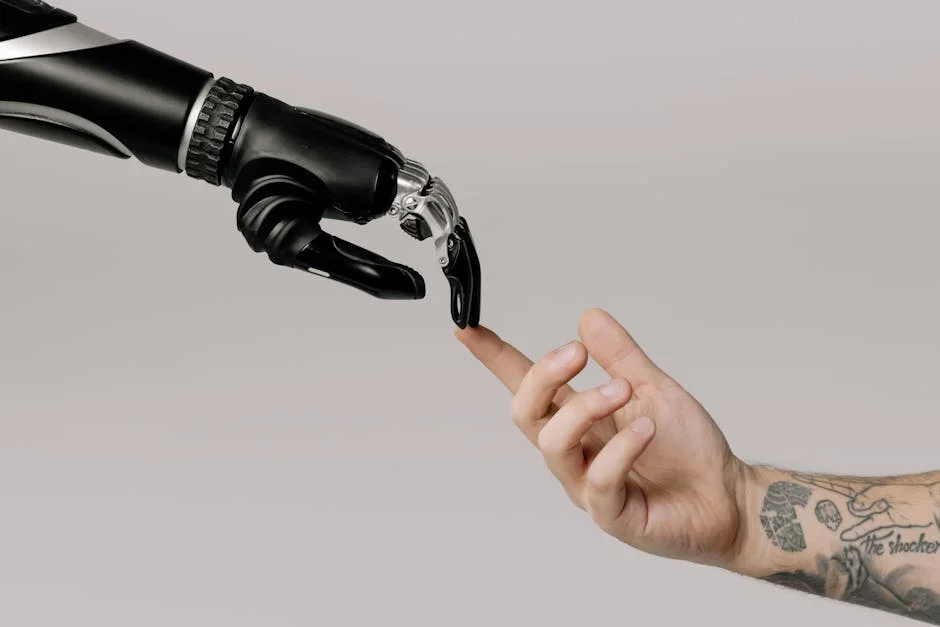
AI and the future are becoming inseparable concepts because artificial intelligence is no longer a distant laboratory experiment or a niche tool used only by technical teams. It has moved into everyday routines: search engines interpret intent, phones translate speech in real time, recommendation systems shape what people watch and buy, and automated assistants help draft messages, summarize documents, and manage schedules. This shift is not merely about convenience; it signals a deeper transition in how decisions are made, how knowledge is created, and how value is produced. The most significant aspect is that AI is evolving from a tool that supports tasks into a system that can generate content, propose strategies, and operate semi-independently under human guidance. As adoption accelerates, the conversation is no longer limited to “what can AI do?” but expands to “what should AI do, who controls it, and how do societies adapt to its influence?”
Table of Contents
- My Personal Experience
- AI and the Future: A Turning Point for Work, Life, and Meaning
- How AI Is Redefining Work, Productivity, and Career Pathways
- Education and Learning in an AI-Driven World
- Healthcare, Medicine, and Longevity: New Possibilities and New Risks
- Business Strategy, Innovation, and the Competitive Landscape
- Government, Public Services, and the Changing Nature of Governance
- Creativity, Media, and Culture in the Age of Generative Systems
- Expert Insight
- Security, Cybercrime, and the AI Arms Race
- Ethics, Bias, and the Question of Human Values
- Climate, Energy, and Sustainability: AI as a Force Multiplier
- Human Identity, Relationships, and the Social Fabric
- Preparing for What Comes Next: Practical Steps for Individuals and Organizations
- Watch the demonstration video
- Frequently Asked Questions
- Trusted External Sources
My Personal Experience
Last year at work I started using an AI tool to help me draft emails and summarize long meeting notes, and it changed my day-to-day more than I expected. At first I treated it like a shortcut, but I quickly realized the real benefit was how it freed up time for the parts of my job that actually need judgment—talking to clients, spotting risks, and making decisions when the information is messy. It also made me a little uneasy: I caught myself accepting suggestions without thinking, and I had to build a habit of double-checking facts and rewriting anything that didn’t sound like me. Now when people talk about “AI and the future,” I don’t picture robots taking over—I picture a quiet shift where the people who learn to collaborate with these tools thoughtfully will move faster, and the rest will feel like the world sped up without them.
AI and the Future: A Turning Point for Work, Life, and Meaning
AI and the future are becoming inseparable concepts because artificial intelligence is no longer a distant laboratory experiment or a niche tool used only by technical teams. It has moved into everyday routines: search engines interpret intent, phones translate speech in real time, recommendation systems shape what people watch and buy, and automated assistants help draft messages, summarize documents, and manage schedules. This shift is not merely about convenience; it signals a deeper transition in how decisions are made, how knowledge is created, and how value is produced. The most significant aspect is that AI is evolving from a tool that supports tasks into a system that can generate content, propose strategies, and operate semi-independently under human guidance. As adoption accelerates, the conversation is no longer limited to “what can AI do?” but expands to “what should AI do, who controls it, and how do societies adapt to its influence?”

AI and the future also intersect through a series of choices that will define economic resilience, personal autonomy, and the health of democratic institutions. When automation becomes widely available, the benefits can compound quickly for those who have access to data, computing power, and skilled talent, while others risk being left behind. At the same time, AI can unlock new discoveries in medicine, improve public services, and reduce waste across supply chains. The future will not be shaped by AI alone, but by how people design incentives, build guardrails, share opportunities, and invest in education. The most constructive way to think about the next decade is to see AI as an amplifier: it can amplify productivity, creativity, and scientific progress, but it can also amplify misinformation, inequality, and surveillance. The direction depends on governance, culture, and the practical choices made by organizations and individuals every day.
How AI Is Redefining Work, Productivity, and Career Pathways
AI and the future of work are tightly linked because organizations increasingly treat intelligent automation as a core competitive advantage. In offices, AI systems can draft reports, analyze contracts, generate presentations, and turn messy datasets into actionable dashboards. In customer support, AI can handle routine questions and triage complex cases to humans. In engineering and design, AI can propose code, suggest architectures, and generate early prototypes. These capabilities change what “entry-level” looks like, because many starter tasks—basic research, first drafts, simple troubleshooting—can be assisted or partially automated. Rather than eliminating all roles, AI often reshapes them: people spend less time on repetitive steps and more time on judgment, stakeholder communication, and decision-making under uncertainty. This creates a premium on skills such as domain expertise, critical thinking, and the ability to evaluate AI outputs for accuracy and bias. The most successful professionals will likely be those who can collaborate with AI effectively, treating it as a partner that accelerates work while maintaining human responsibility for outcomes.
AI and the future of careers also raise difficult questions about job displacement, wage pressure, and the distribution of productivity gains. Automation can reduce costs, but if savings are captured only by a small segment of owners and executives, social tension will grow. A healthier trajectory involves reinvestment: using AI-driven efficiency to expand services, create new roles, and improve wages through higher output per worker. Many new jobs will emerge around AI operations, data stewardship, model evaluation, compliance, and human-centered design. Even in highly automated environments, organizations need people who can set goals, interpret results, and manage the human consequences of decisions. For individuals, the best preparation is not to chase every new tool, but to build durable capabilities: writing clearly, reasoning with data, understanding systems, and learning how AI models work well enough to spot failure modes. The future workforce will reward those who can combine human empathy and accountability with AI-augmented speed.
Education and Learning in an AI-Driven World
AI and the future of education may be one of the most consequential pairings because learning determines who benefits from technological change. Intelligent tutoring systems can personalize practice, identify gaps, and provide explanations in multiple styles. Students can receive feedback instantly, which can accelerate mastery when used responsibly. Teachers can use AI to reduce administrative burden, generate lesson variations, and analyze class-level trends to better support struggling learners. However, the same tools can encourage shortcuts if schools do not adapt assessments and expectations. If assignments are designed only to test output rather than understanding, AI-generated work can undermine learning. The solution is not to ban AI outright, but to redesign curricula and evaluation: more oral defenses, iterative drafts with reflection, project-based learning, and assessments that require personal reasoning, local context, or hands-on experimentation.
AI and the future of learning also depend on equitable access and digital literacy. Wealthier schools and families may adopt high-quality AI tutors and devices sooner, widening the gap unless public systems invest deliberately. Beyond access, people must learn how AI works: what training data means, why models can hallucinate, how bias enters systems, and how to verify claims. Critical media literacy becomes essential when AI can generate convincing text, images, and audio at scale. Education systems that treat AI as a basic literacy—like reading, writing, and numeracy—will better prepare students to thrive. This includes teaching students how to ask good questions, how to evaluate sources, and how to use AI ethically without outsourcing thinking. When learners understand both the power and the limits of AI, they can use it to explore ideas, simulate scenarios, and deepen understanding rather than simply producing answers.
Healthcare, Medicine, and Longevity: New Possibilities and New Risks
AI and the future of healthcare are often framed in terms of speed and precision, and for good reason. AI systems can analyze imaging scans, predict patient risk, and help clinicians prioritize care. In drug discovery, models can explore chemical spaces more efficiently than traditional methods, accelerating early-stage research and identifying promising candidates faster. Hospitals can use AI to optimize staffing, reduce wait times, and detect patterns that indicate infection outbreaks or readmission risk. For patients, AI-enabled monitoring tools can support chronic disease management by tracking symptoms and alerting care teams when intervention is needed. These applications can improve outcomes, especially in areas with limited specialist availability, where AI can provide decision support and raise the baseline quality of care.

AI and the future of medicine also require caution because errors can be costly and trust is fragile. Models trained on biased datasets can misdiagnose underrepresented populations or recommend treatments that do not reflect diverse needs. Overreliance on automated recommendations can reduce clinical vigilance, particularly when systems appear confident even when wrong. Strong governance is essential: rigorous validation, transparent reporting of performance across demographic groups, and clear accountability when systems fail. Privacy is another central issue, as medical data is deeply personal and valuable. Secure data handling, consent frameworks, and careful vendor oversight will determine whether AI improves care without eroding patient rights. The most promising future is one where AI strengthens clinicians rather than replacing them, enabling more time for patient communication, shared decision-making, and compassionate care.
Business Strategy, Innovation, and the Competitive Landscape
AI and the future of business strategy revolve around the ability to convert data into decisions faster than competitors. Companies that integrate AI into product development, marketing, operations, and customer experience can iterate quickly, personalize offerings, and anticipate demand shifts. In manufacturing, AI can predict equipment failure and reduce downtime. In retail, it can optimize inventory and pricing. In finance, it can detect fraud and model risk. Yet the true differentiator is not merely adopting AI tools; it is building a culture and infrastructure that supports continuous learning, experimentation, and responsible deployment. Data quality, governance, and cross-functional collaboration matter as much as model selection. Organizations that treat AI as a one-time project often stall, while those that embed AI into workflows and decision loops can create compounding advantages.
AI and the future of innovation also depend on how businesses manage intellectual property, talent, and trust. Generative AI can accelerate brainstorming and content creation, but it can also raise questions about originality and ownership. Firms need clear policies on how AI outputs are used, how sources are documented, and how proprietary data is protected. Talent strategies will shift toward hybrid roles: domain experts who can guide AI systems, interpret results, and ensure alignment with business goals. Customers and regulators will increasingly demand transparency, especially when AI influences pricing, credit decisions, hiring, or health-related recommendations. Companies that invest early in explainability, auditing, and ethical design may gain reputational advantages. In the long run, competitive strength will come not from using AI everywhere, but from using it where it truly improves outcomes while maintaining accountability.
Government, Public Services, and the Changing Nature of Governance
AI and the future of government could transform public services by making them more responsive, efficient, and accessible. Agencies can use AI to process applications, detect fraud, and allocate resources based on real-time needs. Cities can optimize traffic lights, plan public transit routes, and monitor infrastructure for safety issues. In emergency management, AI can help predict wildfire spread, coordinate evacuations, and analyze satellite imagery to prioritize response. When implemented carefully, these systems can reduce bureaucratic friction and improve citizen experiences. However, government adoption must be especially cautious because public systems affect rights, benefits, and opportunities at scale, and mistakes can harm vulnerable populations.
AI and the future of governance also raise concerns about surveillance, due process, and democratic accountability. Predictive policing and automated risk scoring can reinforce historical bias if not strictly controlled and audited. Automated decision systems used for benefits eligibility, immigration, or housing can become opaque, leaving citizens unable to understand or challenge outcomes. To protect fairness, governments need transparent procurement standards, independent audits, and clear appeal mechanisms. Public sector AI should be explainable where possible, and where explainability is limited, oversight must be stronger. Democratic societies also need rules for political advertising, deepfakes, and automated influence campaigns that can distort elections. The future of governance will be healthier if AI is deployed with public input, strong privacy protections, and a commitment to human rights.
Creativity, Media, and Culture in the Age of Generative Systems
AI and the future of creativity are already visible in music generation, image synthesis, video editing, and writing assistance. Artists and creators can use AI to explore styles, generate variations, and prototype ideas quickly. Small teams can produce high-quality visuals and audio that once required large budgets, potentially democratizing creative production. AI can also help preserve cultural heritage by restoring old recordings, enhancing archival images, and translating literature into new languages. These tools can expand what is possible, enabling rapid experimentation and cross-cultural collaboration. For many creators, AI becomes a new kind of instrument—one that responds to prompts, examples, and iterative feedback.
| Area | What AI Enables | Key Risks / Tradeoffs |
|---|---|---|
| Work & Productivity | Automation of routine tasks, faster decision support, new roles and industries | Job displacement, skill gaps, over-reliance on automated outputs |
| Society & Governance | Better public services, safer infrastructure, improved forecasting and response | Bias and inequity, surveillance misuse, unclear accountability |
| Science & Innovation | Accelerated research, drug/material discovery, personalized education and healthcare | Dual-use concerns, misinformation, concentration of power and access |

Expert Insight
Take a close look at your day-to-day work and pinpoint the tasks that are repetitive, rules-driven, or packed with data. Then reshape your workflow to automate those steps—so your team can spend more time on sound judgment, creative problem-solving, and building strong relationships, especially as we navigate **ai and the future**.
Invest in durable skills: strengthen critical thinking, clear writing, and domain expertise, and build a habit of continuous learning so you can adapt quickly as tools, roles, and expectations evolve. If you’re looking for ai and the future, this is your best choice.
AI and the future of media also bring challenges around authenticity, livelihoods, and trust. When AI can generate realistic faces, voices, and scenes, misinformation becomes easier to produce and harder to debunk. Audiences may struggle to know what is real, especially during breaking news events. Creative professionals may face economic disruption if clients choose cheap AI-generated alternatives. The path forward likely includes new licensing models, watermarking or provenance systems, and updated labor agreements that protect human creators. Culture will also need new norms: disclosure when AI is used, respect for original artists, and education that helps the public interpret synthetic media critically. The future of creativity can be vibrant if AI supports human expression rather than replacing it, and if society builds systems that reward originality, context, and genuine craft.
Security, Cybercrime, and the AI Arms Race
AI and the future of security are intertwined because the same technologies that defend systems can also power new attacks. Cybersecurity teams can use AI to detect anomalies, prioritize alerts, and automate routine response tasks. Models can analyze malware, identify phishing patterns, and predict which vulnerabilities are most likely to be exploited. For defenders, AI can reduce the workload of overwhelmed teams and improve time-to-detection. In physical security, AI-enabled sensors can monitor facilities and critical infrastructure, though these uses must be balanced against privacy concerns. As networks grow more complex, AI can help map dependencies and simulate attack paths, allowing organizations to harden defenses proactively.
AI and the future of cybercrime are equally significant because attackers can use AI to scale social engineering and automate reconnaissance. Phishing messages can be personalized, grammatically flawless, and tailored to specific targets. Voice cloning can enable convincing impersonation scams. Automated vulnerability discovery can accelerate exploitation. This creates an arms race in which both sides adopt AI rapidly, and the advantage may shift depending on who has better data and faster iteration cycles. Organizations will need layered defenses, strong identity verification, and continuous training for staff. Policy will also matter: international cooperation against cybercrime, standards for secure AI deployment, and requirements for reporting major incidents. The future security landscape will reward resilience, transparency, and a realistic understanding that AI increases both capability and risk.
Ethics, Bias, and the Question of Human Values
AI and the future of ethics are central because AI systems do not operate in a vacuum; they reflect the data, objectives, and constraints provided by humans. If a hiring model is trained on historical decisions, it may replicate discrimination. If a recommendation engine is optimized only for engagement, it may amplify sensationalism. Ethical AI requires more than good intentions; it requires concrete practices such as bias testing, diverse stakeholder review, and careful selection of metrics that reflect human values. It also requires clarity about where AI should not be used, particularly in high-stakes settings where errors can cause irreparable harm. Ethical design must be integrated into the product lifecycle, from data collection and model training to deployment and monitoring.
AI and the future of human values also involve difficult trade-offs. Privacy can conflict with personalization. Transparency can conflict with proprietary business interests. Safety can conflict with speed to market. The most responsible approach recognizes that trade-offs are inevitable and builds processes to manage them openly. This may include algorithmic impact assessments, external audits, and user rights such as the ability to opt out, correct data, or appeal automated outcomes. Organizations should also invest in human oversight, especially when AI influences health, freedom, employment, or financial stability. Ethical leadership means acknowledging uncertainty and designing systems that fail safely. The future will be shaped not just by what AI can do, but by what societies decide is acceptable, fair, and aligned with human dignity.
Climate, Energy, and Sustainability: AI as a Force Multiplier
AI and the future of sustainability intersect through optimization and discovery. AI can improve energy efficiency in buildings by adjusting heating and cooling based on occupancy and weather forecasts. Power grids can use AI to balance supply and demand, integrating renewables more effectively. In agriculture, AI can support precision farming, reducing fertilizer and water use while maintaining yields. In transportation, AI routing can cut fuel consumption and reduce congestion. These improvements may appear incremental, but at scale they can have meaningful environmental impact. AI can also accelerate materials science research, helping identify better batteries, catalysts, and carbon capture methods that support a lower-emissions economy.
AI and the future of climate action also come with a footprint that must be managed. Training large models can consume substantial energy, and the growth of data centers raises concerns about electricity demand and water usage for cooling. Responsible AI development includes efficiency improvements, model optimization, renewable energy sourcing, and transparent reporting of environmental costs. Policymakers and industry leaders can encourage greener computing through standards and incentives. The net impact of AI on sustainability depends on whether its benefits outweigh its costs and whether it is applied to high-leverage areas rather than trivial uses. The future can be more sustainable if AI is deployed to reduce waste, improve forecasting, and accelerate clean technology while developers commit to energy-aware engineering.
Human Identity, Relationships, and the Social Fabric
AI and the future of social life will be shaped by how people interact with intelligent systems that can converse, empathize, and simulate companionship. For some, AI companions may reduce loneliness, provide coaching, or support mental health when human services are scarce. AI can help people practice difficult conversations, learn languages, or manage stress through guided routines. Yet there is a delicate balance between support and substitution. If AI becomes a primary source of emotional validation, it may reshape expectations of real relationships, which are inherently complex and sometimes uncomfortable. Society will need new norms about transparency—knowing when one is interacting with an AI—and about healthy boundaries, especially for children and vulnerable individuals.

AI and the future of identity also raise questions about authorship and self-expression. When AI helps write messages, generate photos, or curate social profiles, people may present increasingly optimized versions of themselves. This can intensify social comparison and reduce authenticity. At the same time, AI can empower self-expression for those who struggle with communication, disabilities, or limited access to creative tools. The social fabric will be influenced by whether AI strengthens community and understanding or fuels manipulation and isolation. Design choices matter: platforms can prioritize meaningful interaction over addictive engagement, and regulators can require disclosure for synthetic personas used in marketing or politics. The future will feel more human if AI is used to enhance connection, learning, and empathy rather than to replace them.
Preparing for What Comes Next: Practical Steps for Individuals and Organizations
AI and the future can feel overwhelming because the technology evolves quickly and headlines often swing between utopian promises and catastrophic warnings. A practical approach starts with building literacy: understand what AI is good at, where it fails, and how to verify outputs. Individuals can develop workflows that use AI for brainstorming, summarization, and drafting, while maintaining a habit of fact-checking and adding personal judgment. Investing in transferable skills remains essential: communication, negotiation, domain expertise, and the ability to work with data. For organizations, readiness means more than buying tools. It involves data governance, security controls, model evaluation, staff training, and policies for responsible use. Teams should document where AI is used, what data it touches, and how decisions are reviewed by humans.
AI and the future will ultimately be shaped by collective choices: how companies compete, how governments regulate, how educators teach, and how citizens demand accountability. The most resilient strategy is to treat AI as a permanent part of the environment—like electricity or the internet—while insisting on standards that protect people. That includes privacy protections, bias mitigation, transparency for high-stakes uses, and clear responsibility when harm occurs. It also includes ensuring that AI-driven productivity gains translate into broader well-being, not only higher profits. AI and the future belong together, but the future is not predetermined; it will reflect the values embedded in systems, the institutions that enforce those values, and the everyday decisions people make about how to use intelligent tools.
Watch the demonstration video
In this video, you’ll explore how AI is reshaping the future—transforming jobs, education, healthcare, and everyday life. You’ll learn what today’s breakthroughs mean for tomorrow’s opportunities and risks, including ethics, privacy, and bias. The video also offers practical ways to prepare for an AI-driven world and make informed choices. If you’re looking for ai and the future, this is your best choice.
Summary
In summary, “ai and the future” is a crucial topic that deserves thoughtful consideration. We hope this article has provided you with a comprehensive understanding to help you make better decisions.
Frequently Asked Questions
How will AI change jobs in the future?
As **ai and the future** reshape the workplace, AI will take over certain routine tasks while also opening the door to entirely new roles. Many existing jobs will evolve toward supervision, creative problem-solving, and more human-centered responsibilities—making ongoing reskilling and adaptability more important than ever.
Will AI replace most human workers?
Across most industries, AI is far more likely to take over individual tasks than wipe out whole jobs. Still, as productivity rises, some roles will shrink while others expand—showing how **ai and the future** will reshape work by changing what people do, not just whether they’re employed.
What new careers might AI create?
Fast-growing fields span AI product management, model evaluation and auditing, data governance, AI safety, human–AI interaction design, and domain-specific AI operations—key roles shaping **ai and the future** as these systems become more widely adopted and trusted.
What are the biggest risks of AI in the future?
Key risks in **ai and the future** include biased and discriminatory outcomes, erosion of privacy, the rapid spread of misinformation, growing security threats, the concentration of power in a few hands, and autonomous systems that may act in unsafe or misaligned ways.
How can society ensure AI is used responsibly?
Using AI responsibly means putting clear rules in place, being transparent about how systems work, and regularly auditing them. It also requires strong data protection, rigorous safety testing, and real accountability when harm occurs—along with inclusive public oversight so everyone has a voice in shaping **ai and the future**.
What should individuals do to prepare for an AI-driven future?
To prepare for **ai and the future**, focus on building strong AI literacy while sharpening adaptable skills like critical thinking, clear communication, and deep domain expertise. Get hands-on with AI tools so you can use them confidently and effectively, and stay committed to continuous learning as the technology evolves.
? Looking for more info about ai and the future? Follow Our Site for updates and tips!

Trusted External Sources
- Gen-AI: Artificial Intelligence and the Future of Work
On Jan 14, 2026, conversations about **ai and the future** are increasingly focused on how Artificial Intelligence could transform the global economy—most notably by changing labor markets, redefining job roles, and reshaping the skills workers need to thrive.
- How much is AI really going to change the near future (5-20years)?
By Feb. 19, 2026, it’s becoming clear that **ai and the future** will be shaped by how quickly AI pushes robotics forward in both commercial and industrial settings. As smarter systems move from labs into warehouses, factories, and service businesses, robots will evolve faster than ever—bringing noticeable changes over the next five to ten years.
- Event | AI & the Future of Human Capital in the Global South
Sep 29, 2026 … How AI-driven innovations can help address critical human development challenges in low- and middle-income countries.
- Gen-AI: Artificial Intelligence and the Future of Work – IMF
2026. “Gen-AI: Artificial Intelligence and the Future of. Work.” IMF Staff Discussion Note SDN2024/001, International Monetary Fund, Washington, …
- AI In 2026: 10 Predictions On Automation And The Future Of Work
On Dec 10, 2026, we’ll take a closer look at how AI is set to reshape work and business—exploring forecasts around AGI progress, whether AI agents will replace certain jobs, and the smartest ways companies can approach automation. If you’re curious about **ai and the future**, this overview breaks down the key predictions and what they could mean in the years ahead.