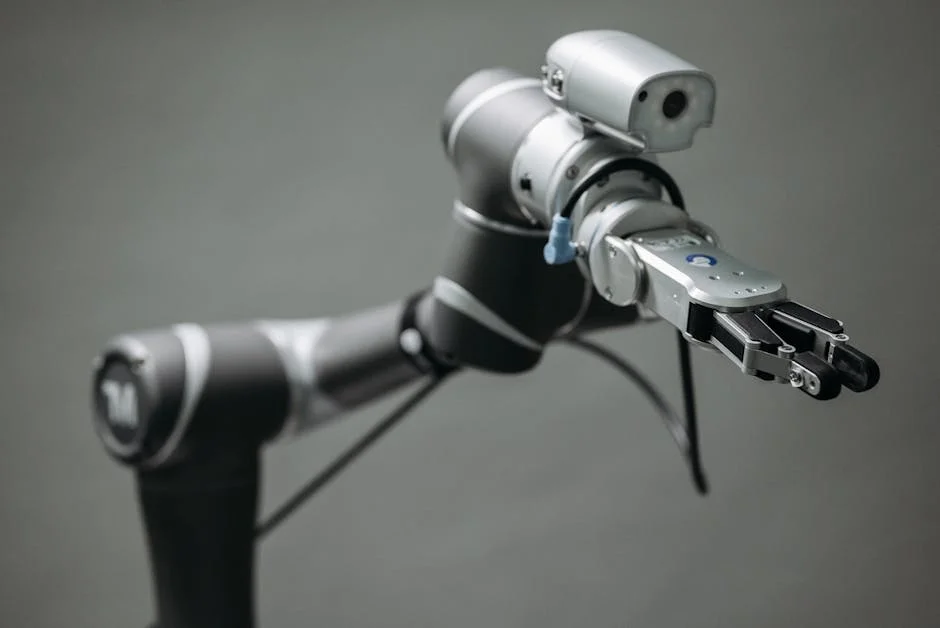
A robotic arm is a programmable mechanical limb designed to move, position, and manipulate objects with a level of precision and repeatability that is difficult to achieve consistently by hand. Built from rigid links connected by joints, this type of industrial or service robot typically imitates the kinematics of a human arm: a base that anchors the system, one or more segments that extend reach, and an end effector that performs the actual task. Depending on the application, the end effector might be a gripper, suction cup, welding torch, screwdriver, camera, scalpel-like tool, or a custom device engineered for a single product line. What makes these systems particularly valuable is the combination of repeatable motion, controllable force, and the ability to operate for long periods without fatigue. Manufacturers, laboratories, and logistics hubs rely on robotic manipulation to stabilize output quality and reduce variability, especially when tolerances are tight or when the environment is unsafe for continuous human presence.
Table of Contents
- My Personal Experience
- Understanding the Robotic Arm: What It Is and Why It Matters
- Core Components and How a Robotic Arm Works
- Types of Robotic Arm Designs and Their Best Uses
- Degrees of Freedom, Reach, Payload, and Precision: Key Specs That Matter
- End Effectors and Tooling: The Real Source of Productivity
- Control Systems, Programming, and Motion Planning
- Industrial Applications: From Welding to Packaging and Beyond
- Expert Insight
- Collaborative Robots and Human-Robot Workflows
- Sensors, Vision, and AI: Making Robotic Arms More Adaptive
- Safety, Compliance, and Risk Management in Robotic Arm Deployments
- Integration, Maintenance, and Total Cost of Ownership
- Future Trends: Modular Automation, Digital Twins, and Smarter Robotic Arms
- Choosing the Right Robotic Arm for Your Operation
- Watch the demonstration video
- Frequently Asked Questions
- Trusted External Sources
My Personal Experience
Last year at my internship, I got to work with a six-axis robotic arm on a small assembly line, and it was a lot less “sci‑fi” than I expected. The first time I powered it up, it moved with this smooth confidence that made me instinctively step back, even though it was in a safety cage. My job was to teach it a simple pick-and-place routine—grab a plastic housing, rotate it, and set it into a fixture—and I learned quickly that tiny details mattered: a few millimeters off in the grip point meant it would either crush the part or drop it halfway through the move. After a couple of frustrating hours of tweaking speeds, approach angles, and the gripper pressure, it finally ran ten cycles in a row without a fault, and I felt weirdly proud watching it repeat the same motion perfectly. It also made me appreciate how much of “automation” is really just patient troubleshooting and careful setup.
Understanding the Robotic Arm: What It Is and Why It Matters
A robotic arm is a programmable mechanical limb designed to move, position, and manipulate objects with a level of precision and repeatability that is difficult to achieve consistently by hand. Built from rigid links connected by joints, this type of industrial or service robot typically imitates the kinematics of a human arm: a base that anchors the system, one or more segments that extend reach, and an end effector that performs the actual task. Depending on the application, the end effector might be a gripper, suction cup, welding torch, screwdriver, camera, scalpel-like tool, or a custom device engineered for a single product line. What makes these systems particularly valuable is the combination of repeatable motion, controllable force, and the ability to operate for long periods without fatigue. Manufacturers, laboratories, and logistics hubs rely on robotic manipulation to stabilize output quality and reduce variability, especially when tolerances are tight or when the environment is unsafe for continuous human presence.
Beyond factory floors, a robotic arm increasingly appears in research labs, hospitals, farms, and even creative studios. The same core idea—controlled movement through multiple axes—can support drastically different goals: assembling microelectronics, palletizing boxes, dispensing adhesives, handling sterile instruments, or filming smooth camera paths. A key reason adoption continues to expand is the way modern robot control integrates sensors and software. Vision systems can locate parts on a conveyor, force sensors can detect contact and limit pressure, and advanced controllers can plan motion that avoids collisions while optimizing cycle time. The result is not merely a machine that repeats a motion, but a platform that can adapt to product variation and data-driven optimization. As product cycles shorten and customization rises, the value of a flexible manipulator grows, because it can be retooled for new tasks through programming and modular tooling rather than by replacing entire production lines.
Core Components and How a Robotic Arm Works
The structure of a robotic arm is typically defined by its mechanical chain: links, joints, actuators, sensors, and a controller that coordinates everything. Joints can be rotational (revolute) or linear (prismatic), and each joint adds a degree of freedom that expands the set of reachable positions and orientations. Many industrial units are six-axis systems because six degrees of freedom allow the end effector to reach a point in space and orient itself arbitrarily, which is essential for tasks like welding, painting, and complex assembly. Some applications need fewer axes for cost and simplicity, such as a three- or four-axis pick-and-place unit, while others add a seventh axis for redundancy, improved dexterity, and obstacle avoidance. The mechanical arrangement—articulated, SCARA, delta, or Cartesian—determines stiffness, speed, workspace shape, and ease of integration with surrounding equipment.
Motion is generated by actuators, commonly servo motors coupled with gearboxes such as harmonic drives or cycloidal reducers. These components trade speed for torque and help hold position under load. In collaborative designs, direct-drive motors or torque-controlled joints may be used to achieve smoother force control and safer contact behavior. Sensors play a crucial role: encoders measure joint position, inertial sensors can refine motion estimation, and force/torque sensors at the wrist can detect subtle contact forces for insertion, polishing, or delicate handling. The controller runs algorithms for kinematics (mapping joint angles to end-effector pose), trajectory planning (creating smooth paths), and servo control (tracking those paths accurately). When the controller receives a command—such as moving to a coordinate, following a curve, or responding to a vision target—it computes the required joint motions while respecting speed limits, acceleration constraints, and collision boundaries. This coordinated system turns high-level intent into stable, repeatable motion that can be audited, tuned, and improved over time. If you’re looking for robotic arm, this is your best choice.
Types of Robotic Arm Designs and Their Best Uses
Different robotic arm architectures exist because no single design optimizes every attribute at once. An articulated arm, with multiple rotary joints, is the most recognizable form and offers exceptional flexibility in reaching around obstacles and orienting tools. This versatility makes it common in welding, machine tending, painting, and general assembly. A SCARA (Selective Compliance Assembly Robot Arm) design uses a combination of rotary and vertical motion to excel at fast, planar pick-and-place tasks and precision insertion, especially in electronics and small-part assembly. Delta robots, often seen above conveyors, use parallel linkages to achieve very high speed and low moving mass, making them ideal for sorting, packaging, and lightweight handling. Cartesian robots, built from linear axes, provide straightforward programming and high stiffness for applications like CNC loading, dispensing, and large-format 3D printing, particularly when the workspace is rectangular and predictable.
Choosing among these designs is not just about speed or reach; it is about matching the workspace, payload, accuracy needs, and tooling constraints. A compact SCARA might be perfect for placing components onto a PCB fixture, while an articulated unit is better for reaching into a machine tool through a narrow door. Delta robots thrive when cycle times are extremely short and payloads are small, but they can be limited in tool orientation. Cartesian systems can be cost-effective for large travel distances, and they simplify maintenance because linear rails and belts are familiar to many technicians. For each architecture, the end effector and peripheral equipment—feeders, conveyors, safety systems, and sensors—often dominate the success of the deployment. A well-chosen robotic arm design reduces integration complexity, improves reliability, and provides headroom for future product variations without forcing a complete redesign of the cell.
Degrees of Freedom, Reach, Payload, and Precision: Key Specs That Matter
Evaluating a robotic arm begins with understanding the practical meaning of its specifications. Degrees of freedom indicate how many independent joint movements are available, which influences dexterity and the ability to orient a tool in tight spaces. Reach defines the maximum distance the end effector can travel from the base, but the usable workspace is often smaller due to joint limits and collision constraints. Payload is the maximum weight the arm can handle at the wrist, and it should include not only the product being moved but also the gripper, brackets, cabling, and any sensors mounted on the tool. Many real-world failures come from underestimating tool weight or the dynamic effects of acceleration. An arm may lift a certain payload statically, yet struggle to hit cycle-time targets without overshoot if the inertia is high or the load is extended far from the wrist center.
Precision is commonly described through repeatability rather than absolute accuracy. Repeatability measures how consistently the end effector returns to the same point, while accuracy measures how close it gets to the commanded coordinate. In industrial automation, repeatability is often more important because fixtures and reference points can be calibrated to the robot’s actual behavior. Still, applications like metrology, medical procedures, and high-precision dispensing can demand tighter absolute performance and careful calibration. Speed and acceleration affect throughput but also influence vibration, wear, and safety. Environmental ratings matter, too: a robotic arm used in food processing may require washdown protection, while one used near abrasive dust or welding spatter may need protective covers and sealed joints. Considering these specs together—rather than in isolation—helps ensure that the selected system can meet current requirements and remain stable as production scales or products evolve.
End Effectors and Tooling: The Real Source of Productivity
Although the robotic arm provides motion, the end effector provides function. Grippers can be mechanical, pneumatic, vacuum-based, magnetic, or adhesive, and each approach has trade-offs in speed, reliability, and part compatibility. A parallel-jaw gripper is versatile for prismatic items, while a three-finger gripper can center round parts. Vacuum cups excel in packaging and sheet handling, but they can fail if surfaces are porous, dusty, or irregular. In assembly, specialized tooling might include compliant mechanisms that allow slight misalignment, reducing the need for perfect fixturing. For tasks like welding or dispensing, the “tool” is a process head, and performance depends on maintaining correct angle, standoff distance, and consistent motion. Tool changers add flexibility by allowing one arm to perform multiple operations, such as picking, placing, and fastening, without manual intervention.
Tooling decisions influence not only grasp quality but also cycle time, maintenance, and safety. A gripper that is too aggressive can damage products; one that is too gentle can drop them, causing downtime and quality incidents. Sensors integrated into the end effector—such as part presence switches, vacuum pressure sensors, or tactile arrays—provide confirmation that the object is secured before motion begins. For delicate items, force-controlled gripping can limit pressure and adapt to variability. In high-mix settings, modular fingers and quick-change plates reduce changeover time, enabling a single robotic arm to support multiple SKUs. Cable management is another subtle but critical factor: poorly routed hoses and wires can snag, fatigue, or interfere with motion, especially in tight work envelopes. When tooling is engineered with the same rigor as the robot selection, the overall cell becomes more robust, easier to troubleshoot, and capable of sustaining high uptime across shifts.
Control Systems, Programming, and Motion Planning
A robotic arm is only as capable as the control stack that drives it. Traditional industrial programming often uses vendor-specific languages and teach pendants, where an operator jogs the robot to points and records positions. This approach is effective for repetitive tasks with stable fixtures, and it can be maintained by plant technicians after initial deployment. However, modern environments increasingly demand more flexible programming methods: offline programming with digital twins, script-based control via APIs, and integration with PLCs and MES systems. Offline tools allow engineers to simulate reach, cycle time, and collisions before the hardware arrives, reducing commissioning time. When the physical cell matches the virtual model, programs can be transferred with minimal touch-up, and changes can be validated in simulation rather than on the production line.
Motion planning translates task goals into safe, efficient trajectories. Even a simple pick-and-place involves decisions about approach vectors, clearance heights, wrist orientation, and speed profiles. Advanced planners can generate smooth paths that reduce jerk, which lowers vibration and extends gearbox life. For collaborative robots, control often includes torque sensing and impedance behavior so the arm can yield under unexpected contact. Vision-guided robotics adds another layer: the controller must transform camera coordinates into robot coordinates, compensate for conveyor motion, and adapt to parts that are rotated or shifted. Force-guided insertion—such as pressing bearings or fitting connectors—requires interpreting sensor feedback in real time and adjusting motion to find the correct mating alignment. These capabilities expand what a robotic arm can do beyond fixed automation, enabling it to handle variation without sacrificing speed or quality.
Industrial Applications: From Welding to Packaging and Beyond
In manufacturing, the robotic arm is a cornerstone of automation because it can deliver consistent results at high throughput. Welding is a classic example: a robot can trace a seam with repeatable speed and angle, improving bead quality and reducing rework. In painting and coating, controlled motion produces even coverage while keeping workers away from fumes and overspray. Machine tending—loading and unloading CNC machines, presses, or injection molding equipment—reduces idle time and helps stabilize production schedules. Assembly tasks range from simple screwdriving to complex sequences involving multiple parts and tools. In each case, the robot’s value is tied to predictable performance: once the process is validated, it can run with minimal variation, producing more uniform output and enabling tighter process control.
Expert Insight
Start by defining the task in measurable terms—payload, reach, cycle time, and required repeatability—then select end-of-arm tooling that matches the part’s geometry and surface (e.g., compliant grippers for variability, vacuum for flat nonporous items). Validate with a quick fixture-and-tooling mockup before committing to the arm to avoid costly rework. If you’re looking for robotic arm, this is your best choice.
Improve reliability by tuning motion profiles: use smooth acceleration/deceleration, minimize unnecessary wrist rotations, and keep the center of mass close to the flange to reduce wear. Add simple safeguards—hard stops, torque limits, and routine calibration checks—to catch drift early and maintain consistent placement accuracy. If you’re looking for robotic arm, this is your best choice.
Packaging and logistics have become major growth areas for robotic manipulation. A robotic arm can pick items from bins, orient them, and place them into cartons, trays, or shipping containers. Palletizing systems stack boxes with patterns optimized for stability and truck utilization, and they can switch patterns quickly based on order requirements. In food and beverage, hygienic designs and washdown-rated units handle products while supporting sanitation standards. In electronics, small, fast robots place components, apply adhesives, and perform inspection tasks with camera systems. Even within a single factory, different arms may be deployed for different zones: a high-payload unit for palletizing, a fast SCARA for small-part placement, and a collaborative arm for flexible assembly near operators. This diversity reflects how a robotic arm is not a single product category but a broad toolkit that can be tailored to process needs, space constraints, and safety requirements.
Collaborative Robots and Human-Robot Workflows
Collaborative designs have expanded where a robotic arm can be deployed by enabling closer interaction with humans. Unlike traditional industrial robots that often require fenced cells, collaborative systems emphasize force limiting, speed monitoring, and contact detection. This does not eliminate the need for risk assessment, but it does open up workflows where an operator and robot share a workstation. Typical examples include assisted assembly, kitting, labeling, and testing, where the robot handles repetitive positioning while the person performs judgment-based steps. The benefit is not simply labor replacement; it is process stabilization. A robot can hold a part at a consistent angle, apply a steady force during pressing, or perform a precise dispensing operation, allowing the operator to focus on quality checks and exceptions rather than repetitive motion.
| Type | Best for | Pros | Trade-offs |
|---|---|---|---|
| Articulated (6-axis) robotic arm | General-purpose automation, complex paths, machine tending | High flexibility and reach; versatile end-effector support | More complex programming and safety setup; larger footprint |
| SCARA robotic arm | Fast pick-and-place, assembly, planar tasks | Very fast cycles; high repeatability; compact | Limited vertical/3D dexterity; smaller work envelope |
| Collaborative (cobot) robotic arm | Shared workspaces, low-to-medium payload tasks, flexible redeployments | Easier deployment; built-in force limiting; quick changeovers | Lower speed/payload than industrial arms; may still need risk assessment |
Successful collaboration depends on designing the entire workcell around the interaction, not just placing a robot near a person. Tooling should minimize pinch points, edges should be rounded, and the robot’s paths should be predictable. Interfaces matter: intuitive start buttons, clear status lights, and straightforward recovery procedures reduce downtime. Training is also essential so operators understand how the robotic arm behaves, what triggers stops, and how to resume safely after an interruption. Many facilities combine collaboration with partial guarding, scanners, or safety-rated monitored stops to maximize speed when the area is clear and slow down when people approach. This hybrid approach can deliver strong throughput while preserving flexible access. When implemented thoughtfully, collaborative workflows can improve ergonomics, reduce repetitive strain, and create a production environment where automation supports people rather than isolating them behind fences.
Sensors, Vision, and AI: Making Robotic Arms More Adaptive
Adding perception and feedback transforms a robotic arm from a repeatable motion device into an adaptive system. Vision is often the first step: cameras can locate parts on a conveyor, detect orientation, and guide the robot to pick without precise fixturing. Two-dimensional vision works well for planar tasks, while 3D cameras help estimate depth and handle bin picking where objects overlap. Calibration between camera and robot frames is critical, and lighting design can be as important as the camera itself. Force/torque sensors enable compliant behavior, allowing the robot to “feel” contact and adjust. This is particularly valuable for insertion tasks where even small misalignments can cause jams or damage. Tactile sensing and vacuum feedback can confirm successful picks and reduce the risk of drops that lead to line stoppages.
AI techniques, including machine learning, increasingly complement classical robotics. For example, learning-based grasp selection can improve bin picking success rates by choosing stable grasps on irregular items. Anomaly detection can monitor motor currents, vibrations, or cycle times to predict maintenance needs before failures occur. However, the practical value of AI depends on constraints and validation. Production systems need predictable behavior, and changes to models must be tested carefully. Many deployments use AI in narrow, measurable ways—improving perception robustness, reducing false rejects in inspection, or optimizing grasp choices—while keeping motion control deterministic. When perception and control are integrated properly, the robotic arm can handle more variation in part shape, position, and surface finish, which reduces the need for expensive fixturing and increases the range of products that can be automated profitably.
Safety, Compliance, and Risk Management in Robotic Arm Deployments
Safety is central to any robotic arm installation, regardless of whether the system is collaborative or traditional. Risk assessment typically considers hazards such as impact, crushing, pinching, tool-related risks (sharp edges, heat, lasers), and unexpected motion due to programming or sensor failures. Traditional industrial robots often operate at high speed and force, so guarding, interlocks, and safety-rated controllers are common. Light curtains, area scanners, and safety gates can stop motion when someone enters a restricted zone. For collaborative robots, safety functions may include power and force limiting, safety-rated monitored stop, speed and separation monitoring, and hand-guiding modes. Even with these features, tooling and the handled product can introduce hazards that require additional protection.
Compliance involves adhering to relevant standards and documenting the design decisions that reduce risk. This includes validating stop times, verifying safety-rated I/O, and ensuring that emergency stops and recovery procedures are clear. Operational safety also depends on maintenance practices: worn gripper pads, loose bolts, or damaged cables can create unpredictable behavior. Training should cover not only how to run the cell, but how to respond to faults without bypassing safety measures. Clear lockout/tagout procedures are essential when technicians enter the workspace for service. A well-managed safety program protects people, reduces downtime from incidents, and improves confidence in automation. When workers trust that a robotic arm system is predictable and protected by robust safeguards, adoption is smoother and the organization gains the full productivity benefits without compromising workplace well-being.
Integration, Maintenance, and Total Cost of Ownership
Integrating a robotic arm into an existing operation involves more than installing hardware. The robot must communicate with conveyors, sensors, PLCs, and upstream or downstream machines. Cycle time balancing is crucial: if the robot is faster than the rest of the line, it will wait; if it is slower, it becomes a bottleneck. Reliable part presentation—through feeders, trays, or vision—often determines whether the system achieves its target throughput. Electrical and pneumatic infrastructure must be sized correctly, and network reliability matters when the robot exchanges data with supervisory systems. A clean design includes accessible routing for cables and hoses, well-labeled panels, and spare capacity for future expansions like additional sensors or a second end effector.
Total cost of ownership includes purchase price, integration labor, tooling, safety equipment, training, downtime, spare parts, and ongoing maintenance. Preventive maintenance schedules typically include checking gearboxes, lubrication, fasteners, and cable wear, along with verifying calibration and safety functions. Predictive maintenance can add value by using telemetry to detect early signs of wear. Tooling maintenance is often the hidden cost: suction cups wear out, gripper fingers get damaged, and process heads can clog or drift. A smart approach is to design the cell for serviceability, with quick access to common wear items and clear diagnostics that point technicians to the root cause of faults. When maintenance is planned and spare parts are stocked appropriately, the robotic arm system can achieve high uptime, stable quality, and a payback period that remains attractive even as production demands change.
Future Trends: Modular Automation, Digital Twins, and Smarter Robotic Arms
The evolution of the robotic arm is shaped by the demand for flexibility, faster deployment, and deeper integration with data systems. Modular automation is gaining traction: standardized bases, quick-change tooling, and plug-and-play vision packages reduce engineering time and make it easier to redeploy robots when product lines shift. Digital twins—virtual replicas of the robot, tooling, and cell—support offline programming, collision testing, and throughput optimization before physical changes are made. This reduces commissioning risk and enables continuous improvement, where engineers can test new motion strategies, gripper designs, or layout changes in simulation and then roll them out with minimal disruption.
Smarter control is another major direction. Improved force control, better perception, and more robust error recovery allow a robotic arm to handle edge cases without stopping the line. Instead of faulting out when a part is slightly misaligned, the system can regrasp, reattempt insertion with compliant motion, or route the part to an inspection station. Connectivity also matters: robots increasingly share data with quality systems, maintenance platforms, and production dashboards, providing traceability and enabling process analytics. Energy efficiency and quieter operation are becoming more important, especially in facilities aiming for sustainability targets. As these trends converge, the robotic arm becomes less of a standalone machine and more of a configurable automation node—one that can be orchestrated across a factory, updated through software, and optimized continuously based on real production data.
Choosing the Right Robotic Arm for Your Operation
Selecting the right robotic arm starts with defining the task clearly: what objects are handled, what cycle time is required, what level of precision is needed, and what constraints exist in space and safety. Payload and reach should be chosen with margins that account for tooling weight and dynamic motion, not just static lifting. Environmental conditions—dust, humidity, washdown requirements, temperature, and exposure to chemicals—should be matched to appropriate protection ratings and materials. If the product mix changes often, flexibility features like quick-change tooling, vision guidance, and intuitive programming may matter more than absolute speed. If throughput is the priority, a faster architecture such as delta or SCARA might be a better fit than a general-purpose articulated system, provided orientation requirements are met.
Integration considerations can be decisive. A robotic arm that is easy to program but difficult to maintain may cost more over time than a slightly more complex system with strong diagnostics and local support. Vendor ecosystem matters: availability of spare parts, training resources, and compatible grippers, cameras, and safety components can reduce risk. It is also wise to validate feasibility with a proof of concept, especially for tasks like bin picking, delicate handling, or force-guided assembly where real-world variability can surprise even experienced teams. A thoughtful selection process aligns the robot’s capabilities with the process requirements, ensuring that performance targets are met without overbuying. When the match is right, the robotic arm becomes a dependable asset that improves consistency, supports growth, and adapts as products and market demands evolve.
Ultimately, a robotic arm delivers value when it is treated as part of a complete system: mechanics, tooling, sensing, safety, software, and maintenance practices working together. Organizations that invest in careful specification, robust end effector design, and realistic integration planning tend to achieve higher uptime and smoother scaling than those that focus only on the robot itself. As technology advances, the capabilities of robotic manipulation will continue to expand, but the fundamentals remain the same: match the arm to the task, engineer for reliability, and build workflows that make automation a stable, measurable contributor to quality and throughput.
Watch the demonstration video
In this video, you’ll learn how a robotic arm works, from its main parts and joints to the motors and sensors that control movement. It explains how the arm is programmed to pick, place, and manipulate objects accurately, and highlights real-world uses in manufacturing, medicine, and research.
Summary
In summary, “robotic arm” is a crucial topic that deserves thoughtful consideration. We hope this article has provided you with a comprehensive understanding to help you make better decisions.
Frequently Asked Questions
What is a robotic arm?
A robotic arm is a programmable mechanical manipulator with joints and links that moves tools or grippers to perform tasks like pick-and-place, assembly, or welding.
What are common applications of robotic arms?
They’re used in manufacturing (assembly, welding, painting), logistics (sorting, palletizing), labs (sample handling), healthcare (surgical assistance), and education/research.
How many degrees of freedom (DoF) does a robotic arm need?
It really comes down to what you need the **robotic arm** to do: a 4–5 DoF setup is often enough for straightforward positioning, while 6 DoF is the go-to choice for full 3D movement with precise orientation control. Adding even more DoF can boost flexibility, especially when the arm has to maneuver around obstacles or work in tight, cluttered spaces.
What’s the difference between an industrial robot arm and a cobot?
Traditional industrial robots are built for maximum speed and heavy payloads, which is why they usually need safety guarding and separation from workers. By contrast, collaborative robots (cobots) use force/torque limiting and other built-in protections so a **robotic arm** can operate safely alongside people—typically with slower, more controlled motion.
How is a robotic arm controlled?
You can control a **robotic arm** in several ways—through a teach pendant, offline programming, or via APIs/ROS. Once a program is set, the arm’s movements are driven by kinematics and trajectory planning, then continuously refined using sensor feedback from encoders and force or vision systems for smooth, accurate motion.
What should I consider when choosing a robotic arm?
When choosing a **robotic arm**, focus on the essentials: how much it can lift (payload), how far it can extend (reach), how consistently it hits the same spot (repeatability and accuracy), and how fast it can move. Also consider whether it supports the end-effector you need, meets your safety requirements, and integrates smoothly with your setup—IO, vision systems, and software included. Finally, weigh practical constraints like footprint and the total cost of ownership over its lifetime.
? Looking for more info about robotic arm? Follow Our Site for updates and tips!

Trusted External Sources
- This $150 Robot Arm Is The Best Way to Start With Advanced Robotics
Oct 6, 2026 … SO-ARM101 kit: https://www.seeedstudio.com/SO-ARM101-Low-Cost-AI-Arm-Kit-Pro-p-6427.html?sensecap_affiliate=dazZk2a&referring_service=link …
- Entry-level Robot Arm : r/robotics – Reddit
Jan 12, 2026 … They’re a bit more advanced because you have better control over the speed and have some feedback. The arms are small and light (about 1 kg) but … If you’re looking for robotic arm, this is your best choice.
- Robotic Arm with Arduino – Save/Play/Export/Import Positions.
Aug 14, 2026 … Find all the components and screws you need here : https://fabricreator.com/en/products/robotic-arm-kit-fabri-creator Hello!
- ROBOTIC ARM INSTRUMENT CARD WHITE [25/BX] CSRC100
See the Robotic Instrument Card for details. **Disclaimer:** Only manufacturer-approved Original Equipment Manufacturer (OEM) parts—designed for use with your **robotic arm**—have been assessed to meet required quality and performance standards.
- A prospective double-blinded randomised control trial comparing …
… versus robotic arm-assisted mechanically aligned total knee arthroplasty. Trials. 2026 Feb 18;21(1):194. doi: 10.1186/s13063-020-4123-8. Authors.