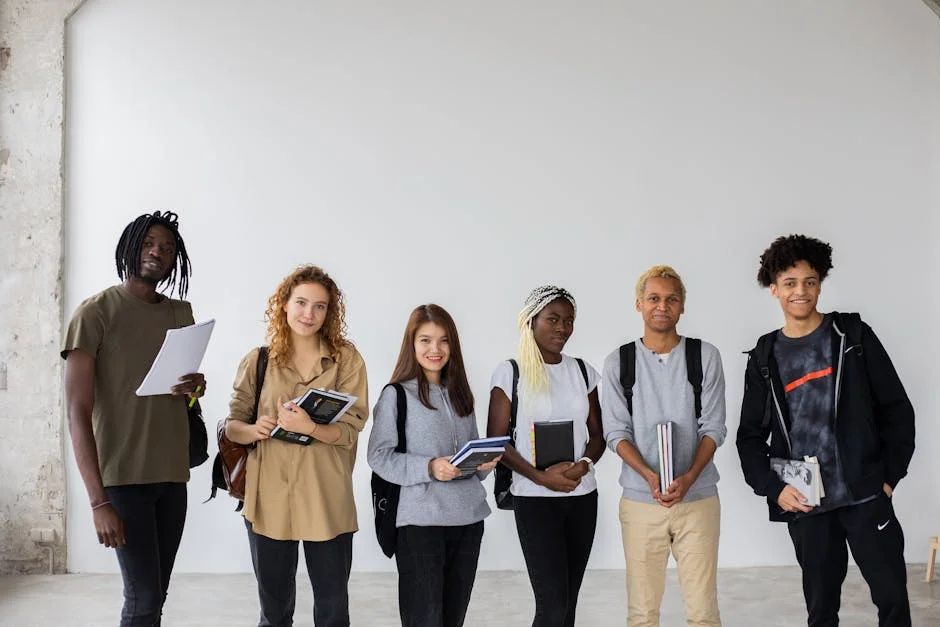
International student exchange programs have become one of the most practical ways for learners to step into a new academic culture while continuing progress toward their degree. Rather than pausing studies to travel, an exchange places students inside a host institution where credits, course expectations, and academic calendars are mapped to their home requirements. That structure is what distinguishes an exchange from independent study abroad: there is usually a formal agreement, a defined duration (often a semester or year), and a credit-transfer process that keeps graduation on track. For many participants, the most immediate benefit is the day-to-day immersion that happens when lectures, group projects, lab work, and campus life unfold in another language or educational style. Over time, that immersion builds a kind of confidence that is difficult to replicate through short trips or online learning, because it is rooted in routine: navigating public transport, managing deadlines, collaborating with classmates from different backgrounds, and resolving misunderstandings when norms differ.
Table of Contents
- My Personal Experience
- Understanding International Student Exchange Programs
- Key Types of Exchange Models and How They Work
- Academic Planning: Credits, Course Equivalencies, and Degree Progress
- Eligibility, Applications, and Selection Criteria
- Costs, Funding Options, and Budgeting Strategies
- Visas, Immigration Rules, and Legal Responsibilities
- Housing, Campus Life, and Day-to-Day Adaptation
- Expert Insight
- Language Learning, Communication Skills, and Cultural Competence
- Health, Safety, Insurance, and Wellbeing Abroad
- Career Value: Skills, Networking, and Employability Outcomes
- Common Challenges and How to Solve Them Proactively
- Making the Most of the Experience: Practical Habits for Success
- Returning Home: Credit Transfer, Re-Entry, and Long-Term Impact
- Watch the demonstration video
- Frequently Asked Questions
- Trusted External Sources
My Personal Experience
I joined an international student exchange program during my second year of university and spent a semester in Barcelona, which sounded glamorous until the first week when I realized how exhausting it is to do everything—classes, groceries, even phone calls—in a second language. My host family was kind but direct, and at dinner I mostly listened at first, picking up expressions I’d never learn in a classroom. The program paired me with a local “buddy,” and she helped me navigate the campus bureaucracy and invited me to her friends’ weekend trips, which is where I finally stopped feeling like a visitor. I missed home more than I expected, especially on quiet Sundays, but the routine I built—morning lectures, afternoon studying in crowded cafés, nightly walks—made the city feel livable. Coming back, I noticed I was more patient, less afraid of making mistakes, and oddly grateful for how much I’d grown just by being uncomfortable for a while. If you’re looking for international student exchange programs, this is your best choice.
Understanding International Student Exchange Programs
International student exchange programs have become one of the most practical ways for learners to step into a new academic culture while continuing progress toward their degree. Rather than pausing studies to travel, an exchange places students inside a host institution where credits, course expectations, and academic calendars are mapped to their home requirements. That structure is what distinguishes an exchange from independent study abroad: there is usually a formal agreement, a defined duration (often a semester or year), and a credit-transfer process that keeps graduation on track. For many participants, the most immediate benefit is the day-to-day immersion that happens when lectures, group projects, lab work, and campus life unfold in another language or educational style. Over time, that immersion builds a kind of confidence that is difficult to replicate through short trips or online learning, because it is rooted in routine: navigating public transport, managing deadlines, collaborating with classmates from different backgrounds, and resolving misunderstandings when norms differ.
Beyond personal growth, international student exchange programs serve a broader academic purpose by connecting institutions, faculty, and research communities. Universities often use exchange agreements to deepen partnerships in areas such as engineering, health sciences, business, social sciences, or arts. A student might take specialized modules unavailable at the home campus, join a research lab with different equipment or methodologies, or access archives and field sites unique to the host location. These opportunities can shape a future thesis topic, spark a professional network, or reveal a new career direction. At the same time, exchange participation requires a realistic understanding of responsibilities: the student is accountable to two sets of policies, must meet enrollment rules, and should plan for differences in grading standards, attendance expectations, or academic integrity procedures. When approached with clear goals and careful planning, an exchange becomes more than a change of scenery; it becomes an academically meaningful step that strengthens skills, clarifies interests, and adds global context to a student’s education.
Key Types of Exchange Models and How They Work
Most international student exchange programs fall into several recognizable models, and knowing the differences helps students choose an option that matches their academic plan and budget. The classic “reciprocal exchange” is based on a balance between partner institutions: students from University A study at University B while a similar number from University B study at University A. Tuition is often paid to the home institution, which can reduce financial uncertainty because students keep their usual tuition rate and financial aid structure. Another common model is “consortium exchange,” where multiple universities join a network that standardizes processes such as nominations, course approvals, and student support. Consortia can expand destination choices and may provide shared orientation resources, housing guidance, or emergency protocols. There are also “departmental exchanges” focused on specific disciplines, which can be ideal for students who need specialized labs, clinical placements, studios, or language immersion aligned with their major.
Program structure also varies by duration and academic format. Semester exchanges are popular because they fit neatly into degree timelines and allow students to test a new environment without committing to a full year. Year-long exchanges can deliver deeper language acquisition and stronger integration into campus culture, but they require more careful planning around prerequisites and graduation requirements. Some institutions offer summer exchanges with intensive coursework, internships, or field-based modules; these can be a good compromise for students with rigid major sequences. Regardless of format, the mechanics usually include nomination by the home university, an application to the host institution, course selection and pre-approval, visa documentation, and final credit transfer after transcripts are issued. The best outcomes happen when students treat these steps as an academic project: timelines are tracked, documents are backed up, and course equivalencies are confirmed in writing before departure so the exchange strengthens progress rather than complicating it. If you’re looking for international student exchange programs, this is your best choice.
Academic Planning: Credits, Course Equivalencies, and Degree Progress
Academic planning is the backbone of successful international student exchange programs, because the value of the experience increases dramatically when credits transfer smoothly and coursework supports degree requirements. The first priority is understanding how the home institution evaluates transfer credit: some universities accept credits as direct equivalents, while others apply them as electives unless a formal equivalency exists. Students should identify required courses for their major, prerequisites for later semesters, and any capstone or accreditation rules that limit what can be taken off-campus. It is often wise to build a “course plan A and plan B” because host universities may change schedules, close courses due to low enrollment, or reserve certain modules for local students. Planning also includes verifying contact hours, lab components, and assessment types, since a course that looks similar by title may differ in workload or outcomes.
Grading conversion is another area that deserves attention. Some institutions transfer only credits (pass/fail), while others convert grades into the home grading scale. Students should ask how the host transcript will be interpreted and whether the exchange grades affect GPA, scholarships, honors eligibility, or graduate school applications. Differences in academic culture can also impact performance: in some systems, a single final exam might determine most of the grade; elsewhere, continuous assessment through essays, presentations, and tutorials is standard. Students coming from a participation-heavy classroom might find a lecture-based environment challenging, while others may need time to adjust to seminar discussion expectations. Setting realistic academic goals—such as balancing one demanding course with several moderate ones—can protect both learning and wellbeing. When credit approvals, grading policies, and course expectations are clarified early, international student exchange programs become academically strategic rather than academically risky.
Eligibility, Applications, and Selection Criteria
Eligibility requirements for international student exchange programs vary, but most institutions look for academic readiness, maturity, and a plan that fits the exchange agreement. Common baseline requirements include a minimum GPA, completion of a certain number of credits, and good disciplinary standing. Some destinations require language proficiency demonstrated through standardized tests or internal assessments, especially when courses are taught in the local language. Even when courses are offered in English, host universities may still expect basic language capability for daily life, housing arrangements, and administrative processes. Competitive exchanges may prioritize students whose academic goals align with the partner institution’s strengths, such as applicants proposing research projects, fieldwork, or advanced coursework that connects clearly to their major.
The application process typically includes a statement of purpose, transcript, recommendation letters, a proposed study plan, and sometimes an interview. Strong applications show that the student understands the host institution’s academic environment and has thought through practical considerations like housing, budgeting, and health coverage. A compelling statement is specific without being rigid: it identifies courses or departments of interest, explains how the exchange supports degree progress, and demonstrates cultural openness. Interviews, when used, often assess adaptability, communication, and problem-solving rather than only academic performance. Students can improve their candidacy by meeting with an exchange advisor early, attending information sessions, and contacting returned students for destination-specific insights. Selection is not only about merit; it can also depend on exchange balance, available spaces, and departmental priorities. Approaching the process as a professional application—organized documents, clear timelines, and thoughtful goals—helps students stand out and reduces last-minute stress. If you’re looking for international student exchange programs, this is your best choice.
Costs, Funding Options, and Budgeting Strategies
Costs are a decisive factor in international student exchange programs, and a realistic budget should account for both obvious and hidden expenses. Tuition arrangements depend on the exchange model: in many reciprocal exchanges, students pay tuition to their home university, which can be financially predictable. However, predictable tuition does not mean predictable total cost. Housing, meals, local transportation, textbooks, lab fees, and personal expenses may be higher or lower than at home. Students should also budget for visa fees, residence permits, required medical tests, and travel to and from the host country. Currency fluctuations can affect day-to-day spending, especially for longer stays, so it can be helpful to build a buffer into the budget. Some destinations require proof of funds for visa approval, which means students may need documentation showing access to a certain amount of money even if day-to-day costs are manageable.
Funding options often include institutional scholarships, government grants, philanthropic awards, and destination-specific mobility funds. Many universities offer travel grants for exchange participants, sometimes targeted toward students with financial need, first-generation students, or underrepresented groups. Some governments support outbound mobility to strengthen workforce readiness and international collaboration; these programs may have eligibility requirements related to citizenship or study level. Students should also explore whether existing financial aid can be applied during an exchange, especially if tuition continues to be paid at the home institution. Budgeting strategies that reduce stress include securing housing early (to avoid premium short-term rentals), using student transit passes, choosing meal plans or shared cooking arrangements, and planning travel during off-peak periods. It is also wise to set up a banking solution that minimizes foreign transaction fees and allows easy access to funds. With careful planning, international student exchange programs can be financially attainable, and the long-term value—skills, networks, and academic growth—often outweighs the short-term costs.
Visas, Immigration Rules, and Legal Responsibilities
Visa and immigration planning is one of the most time-sensitive parts of international student exchange programs because processing timelines can be unpredictable and requirements differ widely by country. Students typically need a formal acceptance letter from the host institution, proof of enrollment status at the home institution, evidence of sufficient funds, and proof of accommodation or a housing plan. Many countries also require health insurance that meets specific coverage standards, and some require medical screenings or vaccination records. Because visa rules can change, students should rely on official government sources and the host university’s international office rather than informal advice. A small documentation error—such as mismatched names, outdated bank statements, or missing signatures—can delay approval. Planning should start as soon as nomination is confirmed, with a checklist that includes passport validity, appointment scheduling, and document translation or notarization if required.
Legal responsibilities extend beyond obtaining the visa. Students may need to register with local authorities after arrival, apply for a residence permit, or report address changes within a set timeframe. Work permissions are another area where misunderstandings can create serious risk. Some student visas allow part-time work up to a certain number of hours, while others prohibit employment entirely or restrict it to on-campus jobs. Internships may require separate authorization even if they are unpaid. Students should also understand travel rules within and outside the host country; for example, leaving and re-entering during the semester may require a multiple-entry visa or a valid residence card. Compliance matters because violations can lead to fines, loss of status, or future travel restrictions. When handled carefully, visa and legal steps become a manageable administrative phase that protects the student’s ability to focus on academics and cultural integration once the exchange begins. If you’re looking for international student exchange programs, this is your best choice.
Housing, Campus Life, and Day-to-Day Adaptation
Housing choices can shape the entire experience of international student exchange programs because where a student lives influences language exposure, social connections, and daily routines. University dormitories often provide the easiest transition: they may include furnished rooms, built-in support services, proximity to campus, and a community of local and international students. Homestays can offer deeper cultural immersion and language practice, especially for students learning the host language, but they require flexibility with household norms and communication styles. Private rentals can provide independence, yet they may involve deposits, contracts in another language, and responsibilities such as utilities and internet setup. Students should verify what is included, understand local tenant rights, and avoid sending money through unverified channels. When possible, booking through official university housing portals or reputable partners reduces risk.
Expert Insight
Choose programs that align with your academic goals and budget: confirm credit transfer policies in writing, compare total costs (tuition, housing, insurance, visas), and ask for recent participant contacts to verify support quality and housing realities. If you’re looking for international student exchange programs, this is your best choice.
Prepare early for a smoother transition: start visa and housing paperwork at least 3–6 months ahead, build a weekly language and cultural routine before departure, and set two concrete objectives (e.g., join one campus club and complete one internship or research project) to maximize outcomes. If you’re looking for international student exchange programs, this is your best choice.
Day-to-day adaptation is a mix of practical habits and social openness. Students often need to learn new systems quickly: public transportation, grocery shopping, healthcare appointments, and campus administrative processes. Academic schedules may also differ, with evening seminars, weekend field trips, or fewer contact hours paired with heavier independent study. Socially, it helps to join clubs, sports, volunteer groups, or language exchanges early in the semester, before routines solidify and friendship circles become harder to enter. At the same time, students should be prepared for moments of fatigue or frustration when cultural cues are unfamiliar. Simple strategies—maintaining a consistent sleep schedule, planning meals, and setting weekly goals—can make adaptation smoother. A successful exchange is not measured by constant excitement; it is measured by steady engagement with the host environment. Over time, international student exchange programs can turn unfamiliar routines into comfortable skills that students carry into future travel, work, and multicultural teamwork.
Language Learning, Communication Skills, and Cultural Competence
Language development is often a central motivation for international student exchange programs, but progress depends on more than classroom instruction. Students learn fastest when they create regular opportunities to use the language in real contexts: discussing assignments with classmates, participating in clubs, handling errands, and practicing with conversation partners. Even in destinations where courses are taught in English, local language skills can improve quality of life and deepen social integration. Many universities offer placement tests and language modules designed for exchange students, and some provide tandem programs that match local students with visiting students for mutual language practice. The key is consistency; short daily interactions can be more effective than occasional long study sessions, especially when they are tied to real needs and emotions, such as navigating a new neighborhood or preparing a group presentation.
| Program Type | Typical Duration | Best For | Key Considerations |
|---|---|---|---|
| Semester/Year Abroad (Partner University) | 4–12 months | Deep academic immersion and campus life abroad | Credit transfer agreements, language prerequisites, housing availability, visa timelines |
| Short-Term Faculty-Led Program | 2–8 weeks | Structured experience with guided coursework and group travel | Higher per-week cost, limited elective choice, fixed itinerary, condensed academics |
| Exchange + Internship/Work Placement | 3–12 months | Career-focused students seeking international work experience | Work authorization rules, placement support, insurance requirements, balancing workload with classes |
Cultural competence grows alongside language skills, and it is increasingly valued by employers and graduate programs. Cultural competence includes recognizing that communication styles differ: directness, politeness strategies, turn-taking in conversations, and expectations around punctuality or hierarchy can vary across regions. Misunderstandings are normal, but students can reduce friction by observing carefully, asking clarifying questions, and avoiding assumptions about intent. Group projects are a common setting where cultural differences become visible, such as attitudes toward deadlines, leadership, and conflict resolution. Students who approach these differences with curiosity—rather than judgment—build trust and collaboration skills. It also helps to learn local academic etiquette: how to address professors, how office hours work, and how participation is evaluated. Over time, international student exchange programs can train students to communicate across differences with tact and clarity, a skill that remains useful long after the exchange ends.
Health, Safety, Insurance, and Wellbeing Abroad
Health and safety planning is essential for international student exchange programs because a new environment can introduce unfamiliar risks and barriers to care. Before departure, students should confirm required vaccinations, carry copies of prescriptions, and understand whether medications are legal and available in the host country. Health insurance should be reviewed carefully: some destinations require enrollment in a national student health plan, while others accept private coverage if it meets specific standards for emergency care, hospitalization, and repatriation. Students should also learn how the local healthcare system functions—whether appointments are needed, how to find English-speaking providers, and what to do after hours. A small preparation step, such as saving emergency numbers and the address of the nearest hospital, can reduce panic if something happens.
Wellbeing includes mental health, which can be affected by culture shock, academic pressure, and social isolation. Many students experience an initial “honeymoon” period followed by frustration or homesickness when novelty fades and challenges accumulate. Universities often provide counseling services, but availability and language support vary. Students can protect wellbeing by building routines, staying physically active, and maintaining a balanced schedule that includes both academic commitments and restorative time. Safety practices should be destination-specific: learning which neighborhoods to avoid at night, understanding common scams, and using secure transportation options. Students should also keep digital security in mind, including strong passwords and careful use of public Wi-Fi. International student exchange programs are generally well supported, but personal responsibility remains important. When students prepare for health and safety realistically, they gain the freedom to engage more fully with learning and community life.
Career Value: Skills, Networking, and Employability Outcomes
The career impact of international student exchange programs often shows up in both tangible and subtle ways. Tangibly, an exchange can add international coursework, language proficiency, and cross-cultural projects to a resume. Some students gain access to specialized modules, research groups, or industry-connected lectures that are not available at their home institution. Even without a formal internship, everyday academic work abroad can demonstrate adaptability: presenting to diverse audiences, writing in another academic style, and collaborating with peers from different educational backgrounds. These experiences translate into competencies employers frequently list—communication, resilience, problem-solving, and teamwork—because students have practiced them in a setting where assumptions do not automatically hold.
Networking is another long-term advantage. Students meet professors, advisors, and classmates who may become references, collaborators, or professional contacts. Attending departmental events, career fairs, guest lectures, and student conferences can expand networks beyond the home campus. To make networking effective, students should approach it with intention: introduce themselves to instructors during office hours, participate actively in group work, and connect with peers through shared projects rather than only social events. It also helps to document achievements during the exchange—major assignments, presentations, research tasks, and measurable outcomes—so they can be described clearly later. When students return home, they can leverage the experience by tailoring resumes to highlight cross-cultural collaboration and by using specific examples in interviews. International student exchange programs can be a differentiator in competitive job markets, not as a vague signal of travel, but as evidence of sustained performance in a complex environment.
Common Challenges and How to Solve Them Proactively
Even well-organized international student exchange programs come with challenges, and anticipating them can prevent small issues from becoming major disruptions. One frequent challenge is academic mismatch: courses may be more theoretical, more exam-heavy, or more independent than expected. Students can respond by attending early lectures consistently, reviewing syllabi carefully, and seeking clarification from instructors before assessment deadlines. Another challenge is administrative complexity, such as registration systems in another language or unexpected fees. Keeping digital copies of documents, saving email confirmations, and maintaining a timeline of tasks can reduce confusion. Social integration can also be harder than students imagine, particularly if local students already have established friend groups or if the campus culture is commuter-based. Joining structured activities—clubs, labs, volunteer programs, and language tandems—often works better than relying on casual encounters.
Culture shock and communication friction are also common. Students might misread humor, struggle with indirect communication, or feel uncomfortable with unfamiliar classroom dynamics. A proactive approach includes learning basic cultural norms, asking trusted peers for feedback, and reflecting on misunderstandings without self-blame. Financial strain can appear if living costs are higher than anticipated; solutions include tracking spending weekly, using student discounts, cooking more often, and limiting nonessential travel until the budget is stable. Homesickness can be managed by building a support system in the host country while maintaining healthy contact with home—enough to feel connected, but not so much that it prevents local engagement. The most effective mindset is flexible planning: having goals, but allowing methods to change. When students treat obstacles as part of the learning process, international student exchange programs become a training ground for practical problem-solving and emotional resilience.
Making the Most of the Experience: Practical Habits for Success
Students who thrive in international student exchange programs typically combine curiosity with structure. Curiosity helps them explore beyond familiar circles, while structure ensures they meet academic responsibilities and maintain wellbeing. A practical habit is setting weekly priorities that include both academic tasks and cultural engagement, such as attending a campus event, visiting a museum connected to a course theme, or practicing language skills in a real-life setting. Another habit is building relationships intentionally: speaking to classmates after seminars, forming study groups, and participating in clubs where repeated interaction happens naturally. The goal is not to collect superficial experiences, but to develop routines that create depth—depth in friendships, depth in learning, and depth in understanding the host society.
Documentation is also valuable. Keeping a record of courses taken, major assignments, and projects can simplify credit transfer and strengthen future job applications. Students can save syllabi, reading lists, and graded work where allowed, and they can write short reflections on what they learned from group projects or presentations. Travel can be a meaningful part of an exchange, but it is most rewarding when balanced with campus life; constant weekend trips can reduce language progress and weaken social ties. Students should also learn to ask for help early—whether from the host international office, academic advisors, or resident staff—because support systems are designed to prevent crises. Small proactive steps, repeated consistently, create a stable foundation. Over time, international student exchange programs can feel less like a temporary detour and more like a second academic home where students grow into capable, globally aware professionals.
Returning Home: Credit Transfer, Re-Entry, and Long-Term Impact
Re-entry is an often overlooked phase of international student exchange programs, yet it determines how well the experience integrates into a student’s academic and professional path. The first practical task is ensuring transcripts are sent and that credit transfer is processed according to the pre-approved plan. Students should follow up with their home department if any course titles, credit values, or grading conversions differ from what was expected. Keeping syllabi and assignment descriptions can help resolve discrepancies, especially if a department needs proof that a course covered specific learning outcomes. Re-entry also includes updating academic plans for the next semester, since prerequisites and sequencing may shift. When students handle these tasks promptly, they reduce the risk of delayed graduation or last-minute schedule changes.
The longer-term impact of an exchange often depends on how students articulate what they gained. Some experience “reverse culture shock,” where home feels unfamiliar or less exciting, and friends may not fully understand what changed. Processing the experience through reflection, campus presentations, mentoring future exchange students, or joining international clubs can help maintain the momentum. Professionally, students can translate their exchange into concrete stories: managing ambiguity, collaborating across cultures, adapting to different assessment systems, or building relationships in another language. These examples strengthen interviews and personal statements far more than generic claims about global exposure. Students can also keep international connections alive through research collaboration, alumni networks, or future graduate study opportunities. When approached thoughtfully, the exchange becomes a lasting asset rather than a closed chapter. International student exchange programs can continue to influence academic choices, career direction, and personal identity for years, because the skills gained—adaptability, communication, and global awareness—remain relevant in nearly every field.
Watch the demonstration video
In this video, you’ll learn how international student exchange programs work, including eligibility, application steps, costs and funding options, and how credits transfer. It also highlights the academic, cultural, and career benefits of studying abroad, plus practical tips for choosing a host country, preparing for travel, and adapting to a new campus and culture.
Summary
In summary, “international student exchange programs” is a crucial topic that deserves thoughtful consideration. We hope this article has provided you with a comprehensive understanding to help you make better decisions.
Frequently Asked Questions
What is an international student exchange program?
A program where students study at a partner institution abroad for a set period while earning credit toward their home degree.
Who is eligible to participate in an exchange program?
Eligibility requirements differ from one school to another, but most **international student exchange programs** look for students with a solid minimum GPA, good academic standing, enough prerequisite credits completed, and—depending on the destination—specific language proficiency or course requirements.
How do credits transfer back to my home institution?
Credits transfer through pre-approved course equivalencies or a learning agreement that your home department confirms before you go.
How much does an exchange program cost?
In many **international student exchange programs**, you continue paying tuition to your home institution, while you’re responsible for costs like travel, housing, insurance, and day-to-day living expenses in your host country—exact fees vary based on the destination and the specific program.
Do I need a visa and health insurance for an exchange?
Before you pack your bags for **international student exchange programs**, check the essentials: most destinations will require a student visa or residence permit, along with proof of health insurance that satisfies both local regulations and your host university’s requirements.
How far in advance should I apply, and what documents are needed?
Plan to apply 6–12 months in advance for **international student exchange programs**. Most applications ask for your academic transcripts, a clear statement of purpose, a proposed course plan, recommendation letters, any required language test scores, and a valid passport.
? Looking for more info about international student exchange programs? Follow Our Site for updates and tips!

Trusted External Sources
- ISEP Study Abroad
You can have peace of mind with ISEP. We’re here for you on your study abroad journey. Studying abroad is an investment in your future. ISEP can help make … If you’re looking for international student exchange programs, this is your best choice.
- International Student Exchange (ISE) | Host an Exchange Student
ISE Area Representatives are community-minded individuals who work to secure welcoming placements for exchange students in local high schools. They do this by recruiting and supporting host families, building strong relationships with school staff, and guiding students throughout their stay—helping international student exchange programs run smoothly and successfully in their communities.
- International Student Exchange | FIU Education Abroad
Through the International Student Exchange (ISE), you can study at one of our partner schools anywhere in the world and experience true cultural immersion. These **international student exchange programs** give you the chance to learn in a new academic environment, build global connections, and grow your confidence as you explore life in another country.
- Host Family Requirements and Questions | ISE
Discover what it takes to host an exchange student, including host family requirements, student eligibility, and paid program opportunities. Explore answers to common questions and learn how **international student exchange programs** work, so you can confidently decide whether hosting is right for your family.
- ASSE-International Student Exchange Programs
You’ll come home with fresh knowledge, deeper cultural understanding, new confidence, and lifelong friends from your host country. Through **international student exchange programs**, you’ll experience everyday life in a new place—sharing traditions, learning new perspectives, and growing in ways you never expected. Honestly, the hardest part might be saying goodbye to your ASSE host family and the community that starts to feel like home.