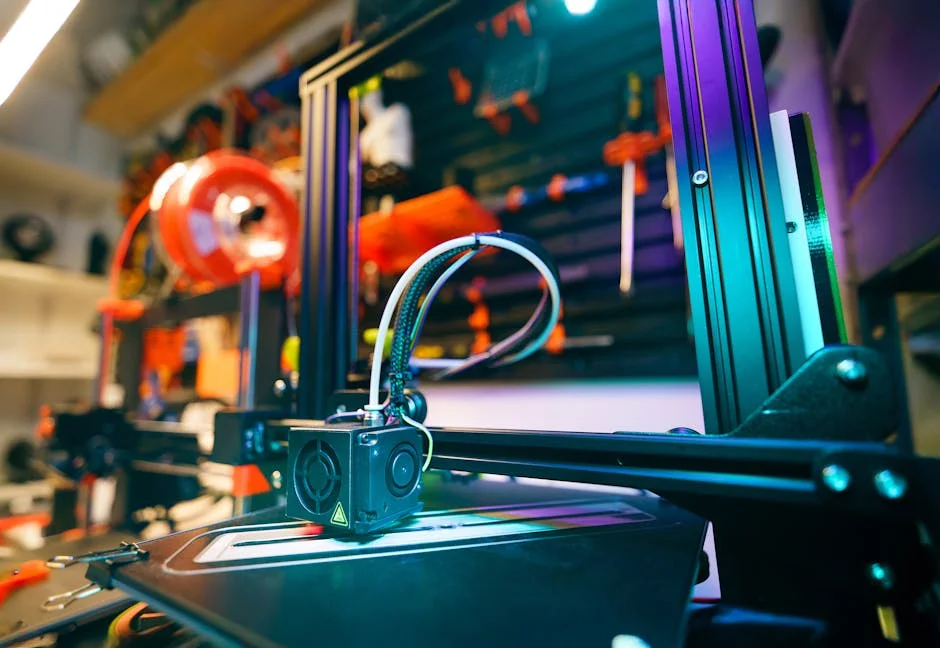
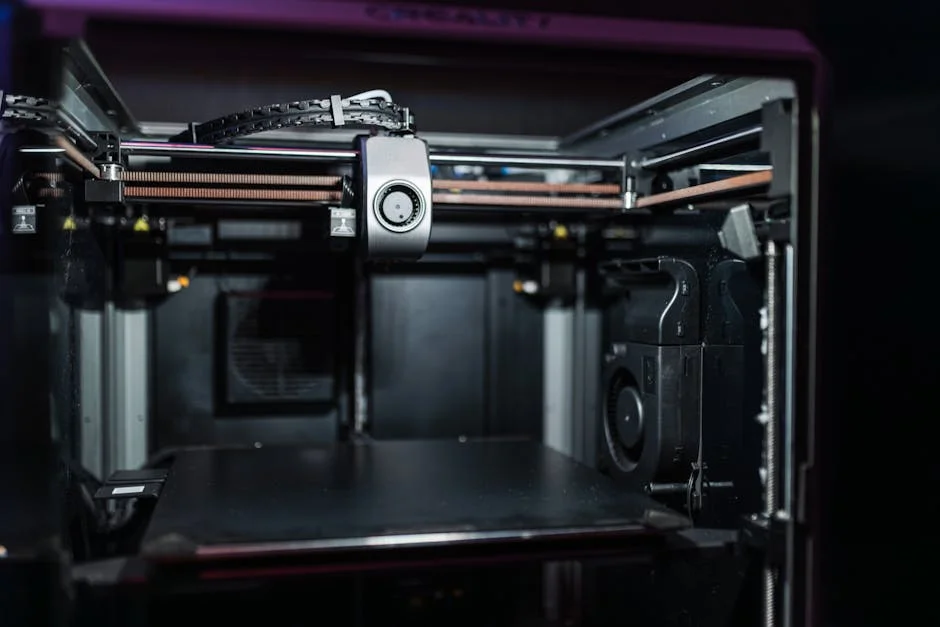
Online 3d printing has shifted how individuals and companies turn digital ideas into physical objects, largely because it removes the traditional barriers of owning a printer, learning machine maintenance, and sourcing materials. Instead of investing in hardware, you upload a model, choose a material and finish, confirm dimensions, and receive a manufactured part at your door. This workflow has become especially valuable for product designers, engineers, makers, and small businesses that need prototypes or low-volume production without building an in-house fabrication lab. The convenience is only one part of the story: the real impact comes from access to industrial-grade processes, calibrated machines, and a broad material catalog that would be expensive to maintain locally. When the work is handled through a web interface, the service can allocate your job to the most suitable technology, whether that is resin printing for detail, powder-based methods for strength, or metal printing for end-use parts. The result is a more flexible path from concept to tangible artifact, with fewer interruptions caused by machine downtime or trial-and-error calibration.
Table of Contents
- My Personal Experience
- Understanding Online 3D Printing and Why It Matters
- How the Online Ordering Workflow Typically Works
- Choosing the Right Printing Technology for Your Part
- Materials and Mechanical Properties: What to Look For
- Design for Additive Manufacturing: Practical Guidelines
- Cost Drivers and How to Control Your Budget
- Quality, Tolerances, and Inspection Expectations
- Expert Insight
- Lead Times, Shipping, and Production Planning
- Security, Intellectual Property, and File Handling
- Common Use Cases: Prototypes, End-Use Parts, and Small-Batch Production
- Comparing Service Providers: What to Evaluate Before Ordering
- Best Practices for Getting Reliable Results Every Time
- The Future of Online 3D Printing in Digital Manufacturing
- Frequently Asked Questions
My Personal Experience
I tried online 3D printing for the first time when I needed a small replacement knob for an old desk lamp and couldn’t find the part anywhere. I downloaded a simple model, tweaked the measurements in a browser-based editor, and uploaded it to a printing service to get a quote. The preview looked fine, but I still hesitated over material choices, so I went with a basic nylon after reading a few reviews. A week later the part arrived, and it was surprisingly solid—though the surface was a bit rougher than I expected and the hole was slightly tight, so I had to sand it down for a perfect fit. It wasn’t as instant as printing at home, but it saved me from buying a whole new lamp and made me confident enough to order a couple more small parts since then.
Understanding Online 3D Printing and Why It Matters
Online 3d printing has shifted how individuals and companies turn digital ideas into physical objects, largely because it removes the traditional barriers of owning a printer, learning machine maintenance, and sourcing materials. Instead of investing in hardware, you upload a model, choose a material and finish, confirm dimensions, and receive a manufactured part at your door. This workflow has become especially valuable for product designers, engineers, makers, and small businesses that need prototypes or low-volume production without building an in-house fabrication lab. The convenience is only one part of the story: the real impact comes from access to industrial-grade processes, calibrated machines, and a broad material catalog that would be expensive to maintain locally. When the work is handled through a web interface, the service can allocate your job to the most suitable technology, whether that is resin printing for detail, powder-based methods for strength, or metal printing for end-use parts. The result is a more flexible path from concept to tangible artifact, with fewer interruptions caused by machine downtime or trial-and-error calibration.
Another reason online 3d printing matters is that it has normalized iteration. When a team can order multiple variations of a component in different materials and finishes, they can validate fit and function quickly. Even solo creators benefit from being able to run a few versions—changing wall thickness, hole tolerances, or surface textures—without the sunk cost of spools, resins, or failed prints. Many platforms also provide automated checks that flag thin walls, non-manifold geometry, and risky overhangs before production starts. These preflight tools, combined with transparent pricing and lead-time estimates, make planning easier than relying on a local machine that may require reprints. For businesses, especially those working across locations, the ability to send a link or a file and keep manufacturing consistent is a major operational advantage. It supports distributed collaboration: the CAD designer, the project manager, and the customer can all confirm specifications and approve production. As more industries adopt digital supply chains, ordering parts through a browser becomes a practical extension of how products are designed and delivered.
How the Online Ordering Workflow Typically Works
The ordering flow for online 3d printing is designed to be predictable, but it still has enough options to cover diverse manufacturing needs. Most services begin with file upload, accepting common formats such as STL, OBJ, 3MF, and sometimes STEP for processes that benefit from precise geometry. After upload, a quoting engine analyzes volume, bounding box size, surface area, and complexity. Some platforms provide instant pricing, while others route complex jobs to a technician for review. From there, you select a technology—often presented as categories like resin, filament, powder, or metal—followed by material choice, color, layer height, and surface finish. Depending on the provider, you may also specify tolerances, infill, orientation preferences, support removal expectations, and post-processing such as dyeing, polishing, vapor smoothing, or heat treatment. Shipping options and lead times are then presented, ranging from economy to expedited manufacturing plus express logistics.
What makes online 3d printing especially approachable is the combination of automation and human oversight. Automated model checks can detect issues that would otherwise cause weak parts or printing failures, such as intersecting shells or minimum feature violations. Still, reputable services often include a manual review stage for certain materials, tight tolerances, or complex geometries. Communication usually happens through the platform’s messaging system, where staff can suggest design tweaks like increasing fillet radii, thickening thin walls, or adding drain holes for hollow resin parts. Once approved, the part enters a production queue and is printed, cleaned, and finished according to the chosen options. Quality control typically includes visual inspection and dimensional checks on critical features; some services offer inspection reports for an added fee. Finally, the part is packaged to protect delicate features and shipped with tracking. For repeat orders, many platforms store configurations so you can reorder the same part without reselecting every option, which is useful for small-batch production and ongoing product support.
Choosing the Right Printing Technology for Your Part
Online 3d printing services usually offer multiple technologies because different processes excel at different outcomes. Filament-based printing (often FDM/FFF) is popular for cost-effective prototypes, larger parts, and functional components where ultra-fine detail is not the primary requirement. Resin-based printing (commonly SLA/DLP/MSLA) is chosen for smooth surfaces, fine features, and applications like miniatures, dental models, jewelry masters, and housings that need crisp text or intricate geometry. Powder-bed fusion processes—such as SLS for nylon polymers—produce strong parts without support structures, which makes them ideal for complex shapes, internal channels, and assemblies with moving features printed in place. Metal processes such as DMLS/SLM can create high-strength components in stainless steel, aluminum, titanium, and other alloys, but they tend to be more expensive and require more rigorous design rules and post-processing. Some platforms also include binder jetting, MJF, or specialized composite options, each with distinct tradeoffs in strength, surface finish, anisotropy, and cost.
Picking the best method through online 3d printing starts with clarifying the part’s purpose. For appearance models, resin may provide the best surface quality and sharpness, especially when paired with sanding and painting. For rugged functional prototypes, nylon powder processes often strike a balance between strength and geometric freedom, while filament prints can be economical for brackets, jigs, and fixtures. If the part will be exposed to heat, UV, chemicals, or sustained loads, material properties become the deciding factor more than appearance. You also need to consider tolerances: some processes produce more predictable dimensions, but every technology has limits tied to shrinkage, warping, and support contact points. Another important factor is how the part will be finished—threads may need tapping, bearing seats may need reaming, and sealing surfaces may need machining. Many service bureaus can coordinate secondary operations, but you should specify critical features clearly. By aligning technology with use case, you reduce the number of iterations and avoid paying for a process that looks impressive but doesn’t match the mechanical or environmental demands of the final application.
Materials and Mechanical Properties: What to Look For
A major benefit of online 3d printing is access to a broad range of materials, from basic plastics to engineering polymers and metals. For plastics, common options include PLA-like materials for visual models, ABS-like resins for tougher prototypes, PETG-like materials for durability, and nylon variants for strength and fatigue resistance. Some services offer glass-filled or carbon-fiber-reinforced polymers that improve stiffness, though they may be more brittle or require careful design to avoid stress concentrations. Flexible materials such as TPU can be used for gaskets, grips, and vibration-damping parts, but they require specific geometry to print reliably. For resin printing, material choice affects not only strength but also brittleness, heat deflection temperature, and long-term stability; standard resins can look excellent but may crack under repeated stress, while “tough” or “engineering” resins provide improved impact resistance at a higher cost. Metal options expand the range further, enabling high-strength, corrosion-resistant components when plastic is not sufficient.
To choose materials effectively in online 3d printing, it helps to translate your requirements into measurable properties. Tensile strength indicates how a part resists pulling forces, while elongation at break hints at ductility and the ability to flex without snapping. Heat deflection temperature matters for parts near motors, electronics, or sunlight exposure. Chemical resistance is essential for parts that contact oils, fuels, cleaning agents, or skin. You should also consider anisotropy: many printed parts are weaker between layers than within layers, especially in filament processes. Powder-based nylon tends to be more isotropic than filament, which can be useful for load-bearing brackets or functional hinges. Surface finish and porosity can influence sealing and hygiene; some materials are naturally porous and may require sealing or smoothing if used around fluids. If you’re ordering a part that must mate with other components, think about creep (slow deformation under constant load) and wear resistance. Reliable providers publish material datasheets and design guidelines; using those references while you model can prevent expensive reorders and ensure the delivered part performs as expected.
Design for Additive Manufacturing: Practical Guidelines
Success with online 3d printing is strongly influenced by how the model is designed. Additive manufacturing allows complex geometry, but it also has constraints around minimum wall thickness, unsupported spans, and feature size. Thin walls may warp, crack, or print inconsistently, and tiny pins or clips may break during shipping or post-processing. Overhangs can require supports, which add marks and may affect dimensional accuracy. Holes often print undersized depending on the process, so designers frequently add clearance or plan to drill to final size. For assemblies, you need to account for tolerances and fit: a snap-fit that works in injection molding may not behave the same in a layered polymer, and a press-fit may be too tight if the surface is slightly rough. Text and logos should be sized appropriately for the chosen layer height; embossed details tend to survive finishing better than engraved details, depending on sanding and coating plans.
When preparing files for online 3d printing, it is also important to consider orientation and post-processing. Orientation impacts strength because layer lines act like a grain; if a part will be loaded in bending, you may want the layers aligned to resist delamination. Orientation also changes surface quality; upward-facing surfaces can be smoother, while supported surfaces may show contact points. If the service lets you specify orientation, do so with clear reasoning, but be flexible if technicians recommend an alternative for reliability. For resin parts, hollowing can reduce cost and weight, but it requires drain holes and adequate wall thickness to prevent suction forces and trapped resin. For powder processes, enclosed cavities can trap powder and need escape holes. For metal parts, support removal and heat treatment may affect tolerances. Many online platforms provide automated checks, but they cannot always infer the functional intent of a part. Adding notes about critical dimensions, load directions, and cosmetic faces can help the provider choose settings that meet your goals. Thoughtful DfAM reduces failures and makes each order more predictable.
Cost Drivers and How to Control Your Budget
Pricing in online 3d printing can feel opaque until you understand the main cost drivers. Material volume is a common factor, but it is not the only one. Machine time, labor, post-processing, and quality control all influence the final quote. Complex geometries may require more supports or longer print times, and fine layer heights can significantly increase manufacturing time. Metal printing costs often reflect not just the print itself but also support removal, stress relief, machining allowances, and inspection. Even for plastics, finishing steps like dyeing, polishing, bead blasting, or painting add labor and can increase lead time. Shipping is another variable; larger parts require bigger boxes and more protective packaging. Some services offer instant quotes that adjust in real time as you change material and finish, which is useful for exploring tradeoffs before committing.
To manage expenses with online 3d printing, begin with geometry optimization. Reducing unnecessary bulk, adding internal lattices, or hollowing thick regions can lower material usage and sometimes shorten print time. However, hollowing must be balanced with structural needs and printability; too-thin walls can cause failures that cost more than the savings. Consider whether the part truly needs a premium material or ultra-fine resolution; a fit-check prototype may be fine in an economical polymer, while the final version can be ordered in a stronger option. Another budget lever is splitting a large model into smaller pieces that fit more efficiently in a build volume, though this can introduce assembly steps and alignment challenges. If surface finish matters only on visible areas, you can request selective finishing rather than full-part polishing. Lead time also affects cost; choosing standard production instead of rush service can lower the price. For recurring parts, ask about volume discounts or batch pricing. Careful planning turns online ordering into a predictable manufacturing line item rather than a series of surprises.
Quality, Tolerances, and Inspection Expectations
Online 3d printing quality depends on the process, the provider’s calibration practices, and the realism of your tolerance expectations. Additive manufacturing is not a direct substitute for precision CNC machining in every case, especially for tight bearing fits or sealing surfaces. That said, many service bureaus can deliver consistent results when designs respect process limitations. Surface finish varies widely: resin prints can be very smooth but may show support marks; filament prints can show visible layer lines; powder-based nylon often has a slightly grainy texture. Dimensional accuracy can be influenced by shrinkage, warping, and post-processing. For example, dyeing nylon can slightly change dimensions, and polishing can soften edges. Understanding these realities helps you specify what matters: which dimensions are critical, which faces are cosmetic, and where you can accept variation.
| Option | Best for | Key advantages | Trade-offs |
|---|---|---|---|
| Instant online quote + order (upload STL/STEP) | Fast turnaround on standard parts | Immediate pricing, material/finish selection, automated manufacturability checks | Less flexibility for unusual requirements; complex parts may need manual review |
| Managed service / manual review (DFM + support) | Complex geometries, tight tolerances, or production planning | Human DFM feedback, process optimization, better guidance on tolerances and finishes | Slower quoting; may require back-and-forth and minimum order values |
| Marketplace / network of print shops | Comparing prices and capabilities across vendors | Multiple bids, wider range of machines/materials, potential cost savings | Quality consistency varies; lead times and support depend on the chosen provider |
Expert Insight
Before uploading a model to an online 3D printing service, run a quick printability check: confirm wall thickness meets the material minimums, ensure the model is watertight (no holes or non-manifold edges), and verify overall dimensions. Export in the format the service recommends (often STL or 3MF) and include the correct units to avoid costly scale errors.
Reduce surprises by ordering a small, low-cost prototype first and using the service’s material and finish samples to match your functional needs. When requesting a quote, specify critical tolerances, surface requirements, and orientation preferences—then compare at least two providers on lead time, shipping, and post-processing options before committing to a full run. If you’re looking for online 3d printing, this is your best choice.
When ordering through online 3d printing platforms, it is smart to define inspection needs early. If a part must meet a specific tolerance on a hole diameter or a mating surface, consider requesting an inspection report or at least a note to check those features. Some providers offer coordinate measuring machine (CMM) inspection for high-value parts, especially in metal. For polymer parts, caliper checks on key dimensions may be available. If you intend to machine the part after printing, add machining allowance and communicate that certain surfaces will be finished later. Also consider how the part will be used: snap-fits may tolerate more dimensional variation than press-fits; cosmetic enclosures may prioritize surface quality over exact dimensions. If you need consistent repeatability across batches, select the same material and finish each time and avoid frequent design tweaks that create a moving target for process control. A clear specification, combined with realistic expectations, makes quality outcomes much more dependable.
Lead Times, Shipping, and Production Planning
Lead time is one of the most practical benefits of online 3d printing, but it requires careful planning to align manufacturing, post-processing, and shipping. Many services provide estimated production days based on current capacity, process type, and finish selection. Simple filament prints might be produced quickly, while powder-based nylon or metal parts may take longer due to build scheduling and post-processing steps. Finishing can add significant time; dyeing, polishing, painting, and heat treatment are not instantaneous. If your project has a deadline tied to a product demo, a customer delivery, or a tooling milestone, you should work backward from the required arrival date and include buffer time for potential revisions. Even when a service offers expedited production, shipping carriers can introduce delays, especially for international deliveries or remote locations.
To use online 3d printing effectively in production planning, standardize your ordering habits. Keep a record of which material and finish combinations reliably meet your needs, and avoid last-minute changes that increase risk. If the part is critical, consider ordering two copies in separate shipments or ordering an extra unit as a contingency. For assemblies, coordinate lead times so that all components arrive together, or plan a staging approach where you validate one key part before ordering the rest. Packaging and handling also matter: delicate resin features can break if not protected, and thin nylon arms can deform under pressure. Reputable services package parts thoughtfully, but you can still request extra protection when needed. For ongoing projects, some businesses treat online ordering as a micro supply chain: periodic reorders, stored configurations, and consistent shipping methods. With that discipline, you can integrate additive manufacturing into schedules that would otherwise require a dedicated internal production team.
Security, Intellectual Property, and File Handling
Uploading designs to an online 3d printing platform naturally raises questions about confidentiality and intellectual property. Many parts are proprietary: product housings, internal mechanisms, custom medical fixtures, or specialized tooling. Before submitting files, it is wise to review the provider’s terms regarding ownership, data retention, and whether models are used for marketing or shared in any form. Reputable services typically state that you retain ownership and that files are used solely to fulfill orders. Some platforms offer additional protections such as non-disclosure agreements, private project spaces, access controls for team members, and encrypted storage. If you work in a regulated environment, you may need to confirm where data is stored geographically and how long it remains on servers. Even without strict regulations, basic diligence prevents misunderstandings and reduces risk.
Practical steps can improve safety when using online 3d printing. Share only what is necessary: if a vendor does not need the entire product assembly, upload just the part to be printed. Consider removing internal reference geometry or sketches that are not required for manufacturing. If the provider accepts STEP files, remember that STEP can contain more precise design intent than an STL mesh; choose the format that matches your risk tolerance and the provider’s needs. Watermarking is not typically applicable to 3D models in the same way as images, but you can embed non-functional identifiers if appropriate. For highly sensitive designs, some organizations use a vetted vendor list and standardized legal agreements. Also consider operational security: limit team access to the project, and use platform roles so only authorized users can approve orders. With thoughtful handling, online ordering can be compatible with professional IP practices while still delivering the speed and convenience that make it attractive.
Common Use Cases: Prototypes, End-Use Parts, and Small-Batch Production
Online 3d printing is widely used for prototyping because it supports fast iteration at a relatively low commitment. Early-stage prototypes might focus on size, ergonomics, and general fit, where a basic polymer is sufficient. Later prototypes may require stronger materials to validate snap-fits, screw bosses, and load-bearing features. Engineers often order multiple revisions in parallel, comparing performance across wall thicknesses, rib patterns, and reinforcement strategies. Product teams can also use printed parts for stakeholder reviews, photography mockups, and early user testing. The ability to reorder a previous revision or compare two variants side by side makes additive manufacturing a practical tool for decision-making, not just a way to produce a single model.
Beyond prototypes, online 3d printing increasingly supports end-use parts and small-batch production. Nylon powder parts, for example, can be robust enough for functional brackets, custom mounts, protective housings, and wear-resistant components. Resin parts can be used for detailed enclosures, light-duty mechanisms, or masters for molding processes. Metal printing can produce jigs, fixtures, and specialized components where machining would be expensive or geometrically limiting. Small businesses often use online services to fulfill niche demand without holding inventory, ordering batches as sales come in. This approach reduces warehousing costs and minimizes the risk of overproduction. For replacement parts, additive manufacturing can keep older equipment running when original suppliers discontinue components. The key is matching expectations to the process: printed parts can be excellent, but they require design rules that respect layer-based manufacturing and post-processing realities. With the right alignment, online ordering becomes a flexible production strategy rather than a one-off convenience.
Comparing Service Providers: What to Evaluate Before Ordering
Not all online 3d printing providers are equal, and choosing the right one can determine whether your experience is smooth or frustrating. Start by evaluating the technology and material catalog: a platform may offer many materials but only in certain processes, or it may have strong polymer options but limited metal capabilities. Next, look at transparency: instant quoting, clear lead times, and accessible design guidelines are signs of a mature operation. Customer support matters too; for complex parts, the ability to message a technician, discuss orientation, or confirm tolerances can save days of rework. Also consider consistency: if you plan to reorder, you want a provider that can maintain stable results across builds. Reviews and sample galleries can be helpful, but it is better to validate with a small test order that includes the features you care about, such as thin walls, snap-fits, or cosmetic surfaces.
Operational factors are equally important when selecting an online 3d printing service. Check shipping coverage, packaging quality, and whether the provider can handle customs paperwork for international orders. For business use, look for invoicing options, purchase order support, and team collaboration features. If you need repeatability, ask whether the provider tracks machine parameters and lot numbers for materials, and whether they offer batch control or consistent finishing. For regulated industries, confirm any relevant compliance claims carefully and request documentation where necessary. Also examine post-processing capabilities: sanding, painting, dyeing, vapor smoothing, inserts, tapping, and heat-set hardware can turn a raw print into a ready-to-use component. Finally, compare pricing in context—an inexpensive print that arrives late or fails tolerance can cost more than a slightly higher quote from a provider that delivers predictable results. A deliberate vendor selection process turns online ordering into a reliable extension of your design and manufacturing workflow.
Best Practices for Getting Reliable Results Every Time
Consistency with online 3d printing comes from treating each order as a controlled process rather than a casual upload. Begin by maintaining clean CAD habits: avoid non-manifold geometry, intersecting bodies, and extremely thin features that are likely to fail. Export meshes with appropriate resolution; overly coarse meshes can create faceted curves and dimensional errors, while excessively dense meshes can slow quoting and processing. If your part needs to mate with another component, build in clearance and plan for post-processing where necessary. Keep a record of what worked: material, finish, orientation notes, and any provider feedback. That documentation becomes a playbook for future iterations and helps new team members avoid repeating the same learning curve.
Communication also drives reliability in online 3d printing. Use order notes to clarify what matters: label cosmetic faces, identify critical dimensions, and mention intended loads or assembly methods. If you need threaded holes, specify whether you want printed threads, tapping, or heat-set inserts; printed threads may work for light duty but are not always ideal for repeated assembly. For resin parts, request appropriate curing and consider whether the part should be hollowed with drain holes; trapped resin can cause long-term issues. For powder nylon, consider whether dyeing or sealing is needed for appearance or cleanliness. If you are producing a small batch, ask whether all parts can be made in the same run to minimize variation. Finally, validate with a pilot order before scaling. A small upfront cost can prevent expensive mistakes later, especially when the design is heading toward customer-facing production. With these habits, online ordering becomes a dependable tool that supports both speed and quality.
The Future of Online 3D Printing in Digital Manufacturing
Online 3d printing is increasingly connected to broader trends in digital manufacturing, where design, quoting, production, and logistics are integrated into a single data-driven pipeline. As platforms improve automated manufacturability checks, more issues will be caught at upload time, reducing back-and-forth and helping users converge on printable designs faster. Material offerings are also expanding, with better engineering polymers, more stable resins, and improved metal options that target real-world performance rather than just novelty. On the software side, tighter integration with CAD tools, PLM systems, and procurement workflows makes it easier for teams to manage revisions, approvals, and repeat orders. This kind of integration matters because additive manufacturing is often most valuable when it is not treated as a special event, but as a routine option alongside machining, molding, and sheet fabrication.
Another direction for online 3d printing is distributed production. Instead of shipping every part from a single facility, platforms can route jobs to regional partners or local hubs, reducing shipping time and emissions while improving responsiveness. This model also supports resilience: if one site is overloaded, production can shift elsewhere. For businesses, that means fewer delays and a more stable supply chain for low-volume parts. As quality systems mature, customers may gain more control over inspection levels, traceability, and certification options, especially for aerospace, medical, and industrial applications. At the same time, competition is pushing providers to offer better finishing, more predictable tolerances, and clearer communication. For designers and product owners, the practical outcome is straightforward: the gap between a digital model and a usable physical part keeps shrinking. With careful design and vendor selection, online 3d printing can serve as a long-term manufacturing strategy rather than only a prototyping shortcut.
Summary
In summary, “online 3d printing” is a crucial topic that deserves thoughtful consideration. We hope this article has provided you with a comprehensive understanding to help you make better decisions.
Frequently Asked Questions
What is online 3D printing?
With **online 3d printing**, you simply upload your 3D model, pick the material and finish you want, receive an instant quote, and then have your custom part professionally made and delivered right to your door.
Which 3D file formats are typically accepted?
Most services accept STL and OBJ; many also support STEP/IGES for CAD, plus 3MF for richer print settings.
How do I get an accurate price quote online?
Upload your 3D model, then choose the printing process, material, quantity, and finish you want. With **online 3d printing**, the price is typically calculated from factors like part volume, overall dimensions (bounding box), machine time, and any required post-processing.
What materials and processes can I order online?
Common options include FDM (PLA/ABS), SLA/DLP (resins), SLS/MJF (nylon), and metal printing (DMLS/SLM) with various finishes.
How can I ensure my model is printable before ordering?
Check wall thickness, clearances, overhangs/support needs, watertight geometry, and scale; many services provide automated design-rule checks.
How long does online 3D printing take and what affects lead time?
Lead time ranges from days to weeks depending on process, material availability, part complexity, finishing, quantity, and shipping speed.
? Looking for more info about online 3d printing? Follow Our Site for updates and tips!