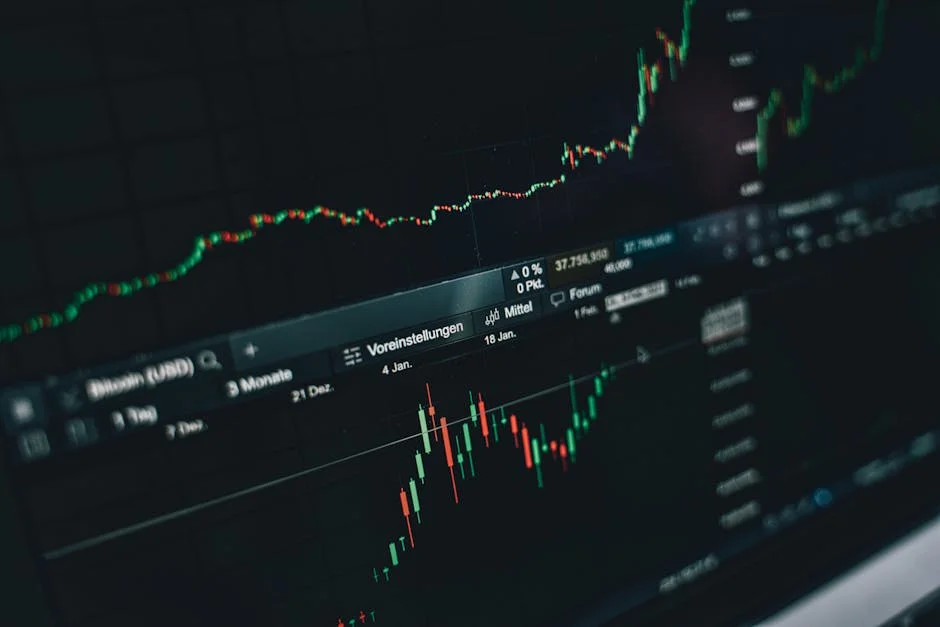
The difference between forex trading and stock trading starts with what is being exchanged and why those markets exist. In foreign exchange, traders buy one currency while simultaneously selling another, creating a currency pair such as EUR/USD or USD/JPY. Prices move primarily because participants constantly reprice currencies based on interest-rate expectations, inflation trends, central bank policy, geopolitical risk, trade balances, and capital flows. Stock markets, by contrast, revolve around ownership claims in individual companies. A stock price reflects expectations about a firm’s future cash flows, competitive position, management execution, and broader economic conditions. While both markets respond to macro events, a single earnings report or product announcement can move an individual stock far more than an equivalent “company-like” event could move a major currency pair. This foundational difference shapes how analysis is performed, how risk is managed, and how profits and losses tend to behave during normal conditions and during shocks.
Table of Contents
- My Personal Experience
- Understanding the difference between forex trading and stock trading
- Market size, liquidity, and how prices form
- Trading hours and session behavior
- What drives price moves: macro forces versus company-specific fundamentals
- Leverage, margin, and position sizing
- Costs, spreads, commissions, and hidden friction
- Regulation, transparency, and protections
- Volatility patterns and risk events
- Expert Insight
- Tools, platforms, and analytical approaches
- Strategy fit: day trading, swing trading, and long-term positioning
- Comparison table: key features of forex trading versus stock trading
- Tax considerations and accounting complexity
- Choosing between markets based on goals, temperament, and constraints
- Practical risk management differences and common mistakes
- Final perspective on the difference between forex trading and stock trading
- Watch the demonstration video
- Frequently Asked Questions
- Trusted External Sources
My Personal Experience
When I first started trading, I assumed forex and stocks would feel basically the same, but the day-to-day experience turned out very different. With stocks, I found myself focusing on company earnings, news, and longer-term themes, and I was comfortable holding positions for days or weeks because the market had clear open and close hours. Forex felt more like managing a moving stream—prices reacted quickly to economic data and central bank comments, and the near-24/5 market tempted me to check charts constantly. I also noticed leverage was easier to access in forex, which made small moves matter more (for better and worse), while stock trading felt slower and more “fundamental” to me. After a few late nights chasing currency spikes, I ended up using forex only for short, planned trades and keeping most of my attention on stocks where my routine and risk felt more predictable. If you’re looking for difference between forex trading and stock trading, this is your best choice.
Understanding the difference between forex trading and stock trading
The difference between forex trading and stock trading starts with what is being exchanged and why those markets exist. In foreign exchange, traders buy one currency while simultaneously selling another, creating a currency pair such as EUR/USD or USD/JPY. Prices move primarily because participants constantly reprice currencies based on interest-rate expectations, inflation trends, central bank policy, geopolitical risk, trade balances, and capital flows. Stock markets, by contrast, revolve around ownership claims in individual companies. A stock price reflects expectations about a firm’s future cash flows, competitive position, management execution, and broader economic conditions. While both markets respond to macro events, a single earnings report or product announcement can move an individual stock far more than an equivalent “company-like” event could move a major currency pair. This foundational difference shapes how analysis is performed, how risk is managed, and how profits and losses tend to behave during normal conditions and during shocks.
Another part of the difference between forex trading and stock trading is the market structure and the way participants access liquidity. Forex is largely an over-the-counter network of banks, liquidity providers, prime brokers, and electronic venues that aggregate quotes, so pricing is decentralized even though it is extremely competitive. Stock trading is typically centralized through exchanges with visible order books and consolidated reporting, though dark pools and alternative trading systems also play a role. For everyday traders, this means forex often offers tighter access to continuous pricing across time zones, while stocks offer standardized contracts and strong regulatory reporting around corporate actions and disclosures. Understanding these market mechanics helps clarify why forex often emphasizes macro narratives and relative value, while stock trading often emphasizes company fundamentals, sector rotations, and event-driven catalysts.
Market size, liquidity, and how prices form
A major difference between forex trading and stock trading is sheer market size and the resulting liquidity characteristics. The global foreign exchange market is among the most liquid markets in the world, with massive daily turnover spread across major currency pairs. That depth typically translates to tight spreads in liquid pairs, rapid execution, and the ability to enter and exit positions frequently without materially moving the market—especially for retail-sized orders. Stocks vary widely: mega-cap equities can be extremely liquid, but small-cap stocks may have wider bid-ask spreads, thinner order books, and larger price impact. As a result, the practical cost of trading—spreads, slippage, and the ability to scale—can be more consistent in major forex pairs than across the full spectrum of equities. Liquidity also influences the reliability of technical levels: in very liquid markets, widely watched price zones may attract more two-way flow, while in thin stocks, a single large order can overwhelm “levels” and create abrupt gaps.
Price formation differs as well, which further highlights the difference between forex trading and stock trading. In forex, quotes come from a network of dealers and electronic communication platforms; brokers typically stream prices derived from multiple liquidity sources, and the “market price” is effectively a composite. This can create small differences in quotes between brokers, especially in fast markets, and it makes the concept of a single official last price less central than in exchange-traded assets. In stocks, exchanges publish official last trades, consolidated quotes, and time-and-sales data. This centralized reporting can make backtesting and historical analysis more standardized, though differences still exist due to data feeds and the complexity of order routing. Practically, forex traders often focus on spread behavior and execution quality per broker, while stock traders often focus on the microstructure of the exchange, limit orders, and how liquidity changes around the open, close, and major news events.
Trading hours and session behavior
Another important difference between forex trading and stock trading is when the markets are open and how activity clusters across time zones. Forex is commonly available nearly 24 hours a day during the business week, following the sun from Asia to Europe to North America. Liquidity is not uniform throughout that period, however. The most active times tend to occur when major financial centers overlap, such as the London–New York overlap, and when high-impact economic releases hit the tape. This rhythm shapes common forex strategies: some traders specialize in session breakouts, others in mean reversion during quieter periods, and many adapt position sizing based on whether spreads are tight and order flow is deep. The ability to react to global events in near real time is appealing, but it also means risk can emerge at any hour, especially when unexpected headlines cross during active sessions.
Stock trading hours are more constrained, which is a key difference between forex trading and stock trading for people balancing trading with other commitments. Most stock exchanges have defined regular sessions, with pre-market and after-hours trading available but typically with reduced liquidity and wider spreads. The open and close can be particularly volatile because overnight information is incorporated quickly, institutional rebalancing occurs, and large orders are executed. Earnings releases, guidance updates, and corporate news often arrive outside regular hours, creating gaps between sessions that can be difficult to manage with stop-loss orders. This “gap risk” is less common in major forex pairs during the week because trading is continuous, though weekend gaps can still occur. For stock traders, managing exposure around earnings, investor days, and major macro events is central; for forex traders, managing exposure around economic calendars, central bank decisions, and geopolitical developments is often the core discipline.
What drives price moves: macro forces versus company-specific fundamentals
The difference between forex trading and stock trading becomes especially clear when comparing primary price drivers. Forex prices generally reflect the relative strength of two economies, expressed through currency demand and expectations for interest rates. Central banks matter enormously because policy rates and forward guidance influence yield differentials, which can attract or repel capital. Inflation surprises, employment data, GDP growth, fiscal policy, and political stability can all shift expectations quickly. Even when a trader uses technical analysis, the biggest moves often cluster around macro catalysts like central bank announcements or sudden changes in risk sentiment. Because currencies are priced relative to one another, a “strong” currency is often strong compared to a counterpart, and the same news can have different effects depending on what the other currency in the pair is doing.
Stock prices, on the other hand, are anchored to company performance and valuation, which is a core difference between forex trading and stock trading. A firm’s revenue growth, margins, product pipeline, competitive moat, balance sheet strength, and capital allocation decisions can drive multi-year trends. Sector dynamics matter too: a regulatory change can reprice a whole industry; a technological shift can make one business model obsolete and elevate another. Macro forces still matter—rates influence discount rates and equity risk premiums—but stock trading often requires understanding the specifics of business operations and the catalysts that change investor expectations about cash flows. That is why earnings season can dominate a stock trader’s calendar, while an FX trader’s calendar is often dominated by inflation prints, employment reports, and central bank meetings. These different drivers also shape which news sources and data feeds traders prioritize.
Leverage, margin, and position sizing
Leverage is frequently the most discussed difference between forex trading and stock trading, and it affects both opportunity and risk. Retail forex accounts often provide access to higher leverage than typical stock brokerage accounts, allowing a trader to control a larger notional position with a smaller margin deposit. This can make small price movements meaningful in dollar terms, which is one reason forex appeals to short-term traders. However, leverage amplifies losses just as efficiently as it amplifies gains, and it can create rapid drawdowns if position sizing is not tightly controlled. Margin requirements can also change during volatile periods or around major events, and some brokers widen spreads or adjust execution rules during fast markets. Effective risk management in leveraged FX trading often relies on conservative position sizing, disciplined stop placement, and an understanding of how volatility changes across sessions and news cycles.
Stock trading can involve margin as well, but the practical difference between forex trading and stock trading is that leverage is often lower and more regulated for many retail participants. Many equity traders use little or no leverage, focusing instead on position selection and time horizon. Where leverage is used—such as in margin accounts or through derivatives like options—the risk profile becomes more complex, because options introduce time decay, implied volatility shifts, and nonlinear payoffs. Even without options, stock traders must consider special situations like short selling, borrow costs, and the possibility of trading halts. In forex, shorting is mechanically straightforward because every trade is long one currency and short another; in equities, shorting can involve constraints that affect execution and risk. These structural differences influence how traders think about sizing: FX traders often size based on pips and volatility (ATR), while stock traders may size based on dollar risk per share, liquidity, and event risk around earnings.
Costs, spreads, commissions, and hidden friction
Transaction costs are a practical difference between forex trading and stock trading that can quietly determine whether a strategy survives. Forex costs are commonly embedded in the spread, though some accounts charge explicit commissions with tighter raw spreads. In liquid pairs, spreads can be very small, which supports high-frequency decision-making and short-term approaches. Yet costs can rise sharply in illiquid pairs, during rollovers, or when volatility spikes. Execution quality matters: slippage during news releases can exceed the typical spread, and stop orders may fill at worse prices in fast markets. Another cost unique to holding FX positions is rollover or swap, which reflects interest-rate differentials between the two currencies and can be positive or negative depending on the direction of the trade. Over time, swap can materially affect returns for position traders, especially in high-yield differentials.
Stock trading costs differ, reinforcing the difference between forex trading and stock trading. Many brokers advertise commission-free equity trading, but the true cost can include spread, market impact, and order routing practices. For less liquid stocks, spreads can be wide, and a market order can create immediate slippage. Additionally, corporate actions—splits, dividends, mergers—can alter price series and require careful accounting in performance analysis. For longer-term investors, explicit trading costs may be less important than taxes and opportunity costs, but for active traders, even small frictions add up. Borrow fees for short selling can be significant in crowded shorts, and hard-to-borrow conditions can force buy-ins. Compared with forex, where pairs are standardized and liquidity in majors is consistently deep, the equity universe includes thousands of names with very different liquidity profiles, making cost estimation a more individualized exercise per stock and per market regime.
Regulation, transparency, and protections
Regulatory environment is another difference between forex trading and stock trading that influences transparency and perceived safety. Stock markets in many jurisdictions operate under well-defined exchange rules, listing standards, and continuous disclosure requirements. Public companies must file financial statements, disclose material events, and follow governance standards designed to protect shareholders. This produces a rich information environment for analysis and a clearer framework for enforcement against insider trading or market manipulation. Market data is widely disseminated, and although high-frequency trading and off-exchange venues add complexity, the core reporting infrastructure is robust. For many participants, this transparency makes it easier to justify longer-term positions based on verifiable fundamentals, and it provides a clearer process for handling disputes related to trade reporting and corporate actions.
Forex regulation depends heavily on jurisdiction and broker model, which is a key difference between forex trading and stock trading. Because forex is largely OTC, traders often interact with a broker acting as an agent or as a counterparty, and the quality of execution and the degree of protection can vary. Reputable regulators impose capital requirements, segregation rules, leverage limits, and conduct standards, but the global nature of FX has historically attracted a mix of high-quality and low-quality providers. Transparency around order execution can be less intuitive to new participants, particularly when dealing with “market maker” models. That does not automatically make forex unsafe, but it raises the importance of choosing well-regulated brokers, understanding how pricing is sourced, and reviewing policies on negative balance protection, margin calls, and stop execution. These considerations are part of the real-world difference between forex trading and stock trading for anyone deciding where to place capital.
Volatility patterns and risk events
Volatility behavior is a meaningful difference between forex trading and stock trading, especially when planning risk controls. Major currency pairs often exhibit relatively lower day-to-day volatility compared with individual stocks, but they can experience sharp bursts during macro announcements, surprise policy shifts, or geopolitical escalations. Because forex is a relative market, risk-on/risk-off dynamics can rapidly reprice multiple pairs simultaneously, creating correlation spikes. A trader long several USD pairs might unknowingly be concentrated in one macro view, and a sudden shift in rate expectations can move all those positions together. Additionally, because FX trades are often leveraged, even modest percentage moves can translate into large account swings if position sizing is aggressive. Weekend gaps can occur after major political events, and flash moves—though rare—have historically happened when liquidity evaporates.
Expert Insight
Forex trading centers on currency pairs and typically offers near-24/5 access with high liquidity and leverage, while stock trading involves owning shares in individual companies with set exchange hours and company-specific risks. Tip: match the market to your schedule and strategy—use forex for short-term, time-flexible setups and stocks for thesis-driven trades tied to earnings, sectors, and fundamentals. If you’re looking for difference between forex trading and stock trading, this is your best choice.
Price drivers differ: forex reacts heavily to interest rates, inflation data, and central bank policy, whereas stocks move on earnings, guidance, and business performance. Tip: build a focused watchlist and calendar—track key economic releases and rate decisions for forex, and follow earnings dates, filings, and news catalysts for stocks to avoid being surprised by volatility. If you’re looking for difference between forex trading and stock trading, this is your best choice.
In equities, the difference between forex trading and stock trading often appears in idiosyncratic risk. Individual stocks can gap dramatically on earnings, regulatory actions, lawsuits, product failures, or takeover rumors. A stock might drop 20% in a day without a corresponding move in the broader index, while another might surge on a single catalyst. This creates both opportunity and hazard: diversification across many stocks can reduce single-name risk, but concentrated positions can be vulnerable to sudden, unrecoverable gaps. Index-level volatility is influenced by macro variables like rates and growth expectations, but single-stock volatility is heavily event-driven. Risk management therefore differs: stock traders often size positions around earnings dates, use options to hedge, or avoid holding through binary events; FX traders often manage around scheduled economic releases and central bank decisions, sometimes reducing leverage ahead of high-impact events.
Tools, platforms, and analytical approaches
The difference between forex trading and stock trading also shows up in the tools traders rely on. Forex platforms often emphasize fast execution, streamlined order entry, and charting optimized for intraday trading. Because FX is heavily driven by macro data, calendars, news squawks, and real-time rate expectations can be central to a workflow. Many FX traders focus on technical analysis, market structure, and sentiment indicators, while macro-focused traders may incorporate yield curves, swap markets, and central bank communications. Correlation tools are commonly used to monitor exposure across pairs, and traders frequently watch the U.S. dollar index, commodity links (like AUD with metals, CAD with oil), and risk proxies. Backtesting in FX can be nuanced because pricing differs slightly across brokers and because swap and spread assumptions must be realistic.
| Aspect | Forex Trading | Stock Trading |
|---|---|---|
| Market & Instruments | Trades currency pairs (e.g., EUR/USD) in a decentralized OTC market. | Trades shares of individual companies (and ETFs) on centralized exchanges. |
| Trading Hours & Liquidity | Typically 24/5 with very high liquidity in major pairs. | Exchange hours vary by country; liquidity depends on the specific stock. |
| Leverage & Volatility Drivers | Often higher leverage; moves driven by macro factors (rates, inflation, geopolitics). | Usually lower leverage; moves driven by company fundamentals, earnings, and sector news. |
Stock traders often use a wider mix of fundamental screeners, earnings calendars, insider transaction data, and sector/industry analytics, reflecting the difference between forex trading and stock trading. Charting still matters, particularly for timing entries and exits, but company financial statements and valuation frameworks are more central than they are in many FX approaches. Order types and routing can matter more for active equity traders who work limit orders, manage partial fills, and avoid unnecessary market impact. Many equity traders also incorporate options for defined-risk structures, hedging, or volatility plays around events. Data quality is critical in equities because corporate actions can distort historical price series; robust platforms adjust for splits and dividends and provide reliable fundamental datasets. The result is that stock trading workflows often resemble research pipelines—screen, analyze, catalyst-check, execute—while forex workflows often resemble macro monitoring and rapid reaction to global information flow.
Strategy fit: day trading, swing trading, and long-term positioning
Strategy selection highlights the difference between forex trading and stock trading because each market’s structure naturally favors certain styles. Forex’s deep liquidity in major pairs, tight spreads, and near-24-hour access can suit day trading and short-term swing trading, especially for traders who prefer frequent opportunities and the ability to respond to global developments. Session-based strategies are common: traders may focus on London breakouts, New York reversals, or Asian range plays. Longer-term FX positioning is also possible, particularly when a clear interest-rate differential or macro trend emerges, but holding costs via swap and the need to tolerate multi-week drawdowns can influence the attractiveness of long holds. Many FX traders also gravitate toward systematic approaches that exploit recurring behaviors, though they must account for regime shifts when central banks change policy paths.
Stock trading can support day trading, swing trading, and long-term investing, but the difference between forex trading and stock trading is that equities offer a broader universe of instruments with distinct narratives. A day trader might focus on high-relative-volume movers, news catalysts, and momentum patterns. A swing trader might focus on sector rotation, breakouts from multi-week bases, or mean reversion after overreactions. Long-term investors can build around compounders, dividends, and thematic exposure, benefiting from the fact that stocks represent productive assets that can grow earnings over time. This “equity growth engine” is an important distinction: currencies do not generate earnings, but companies can. That said, stock selection risk is higher, and managing event risk is a constant requirement. Many participants end up using both markets for different purposes: forex for tactical macro expressions, stocks for long-term wealth building and targeted thematic bets.
Comparison table: key features of forex trading versus stock trading
Side-by-side comparisons can make the difference between forex trading and stock trading easier to evaluate when choosing a market to focus on. The categories below reflect common decision points: accessibility, typical costs, leverage, volatility profile, and the learning curve. “Ratings” are generalized impressions based on typical retail experience (not a guarantee), and “Price” refers to common cost structures rather than a product price. Actual conditions depend on broker, region, and instrument liquidity, so it is wise to confirm the specific details with a regulated provider and to test execution in a demo or small account before scaling.
Another way to interpret the table is by matching the market’s strengths to personal constraints. Traders with limited time during regular exchange hours may prefer the flexibility of FX sessions, while those who value corporate transparency and enjoy researching businesses may prefer equities. Cost sensitivity also plays out differently: FX spreads can be consistently low in majors but jump during news; stocks may be “commission-free” but still carry spread and impact, especially in small caps. Leverage is a double-edged sword: it can make FX feel efficient, but it can also magnify mistakes. The best choice often depends less on which market is “better” and more on which market aligns with risk tolerance, schedule, and analytical strengths. If you’re looking for difference between forex trading and stock trading, this is your best choice.
| Name | Features | Ratings | Price |
|---|---|---|---|
| Forex Trading (Major Pairs) | 24/5 access; high liquidity; tight spreads in majors; macro-driven; easy to go long/short via pairs; rollover/swap for holds | 4.4/5 | Typically spread-based or spread+commission; swap/rollover may apply |
| Stock Trading (Large-Cap Shares) | Exchange-traded; strong disclosures; earnings-driven catalysts; dividends possible; pre/after-hours available with thinner liquidity | 4.6/5 | Often $0 commission, but spread/impact exists; taxes and fees vary |
| Stock Trading (Small-Cap Shares) | Higher idiosyncratic moves; wider spreads; more gap risk; potential for outsized momentum runs; liquidity can be inconsistent | 3.9/5 | Often $0 commission, but higher spread/impact; borrow fees for shorts can be high |
| Forex Trading (Exotic Pairs) | Potentially large moves; wider spreads; higher event/geopolitical risk; liquidity can drop sharply during stress | 3.7/5 | Wider spreads; may include higher financing costs and greater slippage |
Tax considerations and accounting complexity
Taxes can be an overlooked difference between forex trading and stock trading because the same profit can be treated differently depending on jurisdiction, holding period, and instrument type. Stock profits are often categorized into short-term versus long-term capital gains, with long-term holdings sometimes receiving favorable rates. Dividends may be taxed differently than capital gains, and special rules can apply to qualified dividends, dividend reinvestment plans, and foreign withholding taxes on international stocks. Corporate actions add complexity: mergers can create taxable events, spin-offs can require cost-basis allocation, and stock splits change share counts without changing economic value. For active stock traders, wash sale rules in some regions can complicate loss harvesting by disallowing certain losses if the same or substantially identical security is repurchased within a defined window. Accurate recordkeeping, including trade confirmations and adjusted cost basis, becomes essential.
Forex taxation varies widely, reinforcing the difference between forex trading and stock trading in practical planning. Some jurisdictions treat spot FX gains as ordinary income; others provide different treatment depending on whether trading is considered investing or business activity. If a trader uses FX derivatives such as futures or CFDs, the tax characterization can change again. Financing charges (swap/rollover) may be treated as interest or as part of trading profit, depending on local rules. Because FX trading can involve many small transactions, the volume of records can be substantial, and converting profits into a base currency for reporting can introduce additional accounting steps. The most reliable approach is to maintain detailed statements, track realized and unrealized P&L, and consult a qualified tax professional familiar with the instruments being traded. Taxes do not determine market quality, but they can affect net returns enough that they should be part of any serious comparison.
Choosing between markets based on goals, temperament, and constraints
Personal fit may be the most decisive difference between forex trading and stock trading. Traders who enjoy interpreting macro narratives, tracking central bank communication, and reacting to global data often feel at home in FX. The ability to express views like “U.S. rates will stay higher for longer” or “risk sentiment is improving” through currency pairs can be intuitive. FX also suits those who want frequent setups and the flexibility to trade outside standard exchange hours. However, the same environment can punish impulsive behavior because leverage is readily available and markets can move quickly when liquidity changes. Success often depends on strict risk limits, consistent execution, and a willingness to stand aside during unpredictable news windows. A trader who prefers calm decision-making and fewer but higher-conviction trades may need to deliberately design a slower FX approach to avoid overtrading.
Stock trading may be a better match for those who enjoy business analysis, competitive strategy, and the idea of owning productive assets, which is a key difference between forex trading and stock trading. Evaluating management quality, reading financial statements, and understanding industry structure can give a trader or investor a sense of edge that is harder to cultivate in macro-driven FX. Stocks also allow for long-term compounding through earnings growth and dividends, but they require comfort with single-name risk and the discipline to manage event exposure. Schedules matter: if someone cannot monitor markets during exchange hours, they might prefer longer-term stock investing rather than intraday trading, or they might choose FX for its session flexibility. The most sustainable choice is usually the one that aligns with temperament—patience versus action orientation, research depth versus rapid execution—and with the amount of time available for preparation, monitoring, and review.
Practical risk management differences and common mistakes
Risk management practices often look similar on paper—set a stop, size positions conservatively, diversify—but the difference between forex trading and stock trading shows up in the failure modes. In forex, a common mistake is treating leverage as a substitute for edge, increasing position size to force meaningful returns from small price movements. This can lead to frequent margin stress and emotionally driven decisions. Another common FX error is ignoring correlation: holding multiple positions that all depend on the same outcome, such as broad U.S. dollar weakness, can create a hidden “one big trade.” Traders also underestimate execution risk around news: spreads can widen, stops can slip, and a strategy that works in calm conditions can fail abruptly in a volatility spike. Sound FX risk management often includes maximum leverage caps, event filters, correlation checks, and a plan for reducing exposure ahead of major releases.
In stock trading, the difference between forex trading and stock trading becomes clear in gap risk and single-name surprises. Traders often place stops expecting a controlled exit, only to see a stock gap through the stop after earnings or a major headline. Overconcentration is another recurring issue: believing strongly in a company’s story and allocating too much capital to a single position can be devastating when the narrative breaks. Liquidity traps can occur in small-cap names, where exiting quickly is costly or impossible at the expected price. Short sellers face additional hazards: borrow can become expensive, shares can be recalled, and short squeezes can be violent. Effective equity risk management often includes limiting exposure per position, using options for defined risk when appropriate, avoiding holding oversized positions into binary events, and maintaining a watchlist-driven approach that reduces impulsive chasing of news-driven spikes.
Final perspective on the difference between forex trading and stock trading
The difference between forex trading and stock trading ultimately comes down to what you prefer to analyze, how you want to express an idea, and which risks you are best equipped to manage. Forex trading centers on relative economic strength, interest-rate expectations, and global capital flows, with near-24-hour access and frequent opportunities but with leverage and execution risks that demand discipline. Stock trading centers on company fundamentals, sector dynamics, and event-driven catalysts, offering the potential for long-term compounding through business growth while exposing traders to single-name gaps, corporate surprises, and liquidity variation across thousands of tickers. Choosing between them is less about finding a universally superior market and more about selecting the environment where your time, temperament, and risk controls can produce consistent decision-making—because the difference between forex trading and stock trading is not just academic, it shapes every part of how a trading plan performs in real conditions.
Watch the demonstration video
In this video, you’ll learn the key differences between forex trading and stock trading, including how each market works, what drives price movements, and when they’re open. It also breaks down liquidity, leverage, costs, and risk—helping you decide which option better fits your goals, schedule, and trading style. If you’re looking for difference between forex trading and stock trading, this is your best choice.
Summary
In summary, “difference between forex trading and stock trading” is a crucial topic that deserves thoughtful consideration. We hope this article has provided you with a comprehensive understanding to help you make better decisions.
Frequently Asked Questions
What is the main difference between forex trading and stock trading?
Forex trading is all about buying and selling currency pairs in a massive, decentralized global marketplace, where prices move around the clock based on economic and geopolitical events. Stock trading, on the other hand, focuses on purchasing and selling shares of individual companies on regulated exchanges during set market hours. Understanding the **difference between forex trading and stock trading** helps you choose the market that best fits your goals, schedule, and risk tolerance.
Which market is more liquid: forex or stocks?
Because the forex market handles enormous global trading volume, it’s typically far more liquid than most individual stocks—often leading to tighter spreads on major currency pairs. This higher liquidity is a key point when comparing the **difference between forex trading and stock trading**.
How do trading hours differ between forex and stocks?
One key **difference between forex trading and stock trading** is the schedule: the forex market runs 24 hours a day, five days a week, giving traders near round-the-clock access, while stock markets operate only during set exchange hours and shut down overnight, on weekends, and on holidays.
Is leverage different in forex trading compared to stock trading?
One key **difference between forex trading and stock trading** is leverage: forex brokers often provide higher leverage (depending on your country and broker), while stock trading typically comes with lower leverage and tighter, more strictly regulated margin requirements.
What factors most influence price movements in forex vs stocks?
Forex prices are driven mainly by macroeconomic data, interest rates, central bank policy, and geopolitics, while stock prices are driven by company performance, earnings, industry trends, and broader market conditions. If you’re looking for difference between forex trading and stock trading, this is your best choice.
How do typical costs compare between forex and stock trading?
In forex, your trading costs are usually baked into the spread and sometimes an added commission, whereas with stocks you’ll often pay low or even zero commissions but still face the bid-ask spread and potential exchange or venue fees—one key **difference between forex trading and stock trading** when it comes to what you actually pay to place a trade.
? Looking for more info about difference between forex trading and stock trading? Follow Our Site for updates and tips!

Trusted External Sources
- Forex vs stocks (swing/day trading) – Reddit
Dec 18, 2026 … Here are some key differences between forex and stocks: Market hours: Forex markets are open 24 hours a day, 5 days a week, while stock markets … If you’re looking for difference between forex trading and stock trading, this is your best choice.
- The main differences between forex and stock trading – IG
Lesson summary: The **difference between forex trading and stock trading** comes down to a few key factors—forex typically has far higher trading volume and liquidity, often lower transaction costs, and longer trading hours, while stocks can offer more company-specific opportunities but usually trade within set market sessions.
- Forex or stocks? : r/Daytrading – Reddit
Many beginners find stock trading to be less risky than forex, but the right choice depends on your goals, time horizon, and risk tolerance. Before you jump in, take time to learn the basics—especially the **difference between forex trading and stock trading**—so you understand how each market works, what drives price movements, and how to manage risk as you get started.
- Forex Trading vs Stock Trading – Differences, Advantage
Explore the **difference between forex trading and stock trading** and see which market best matches your goals. From fees and liquidity to volatility and common trading strategies, learn what sets each option apart so you can choose the approach that fits your risk tolerance and style.
- Forex vs Stocks: What are the Key Differences? | Dukascopy Bank SA
On Oct 24, 2026, we break down what the stock market is and explain the **difference between forex trading and stock trading** in a clear, practical way. You’ll learn how the two markets compare in key areas like trading hours, the size and volume of assets traded, typical volatility and liquidity, and how margin works—so you can better decide which style of trading fits your goals.