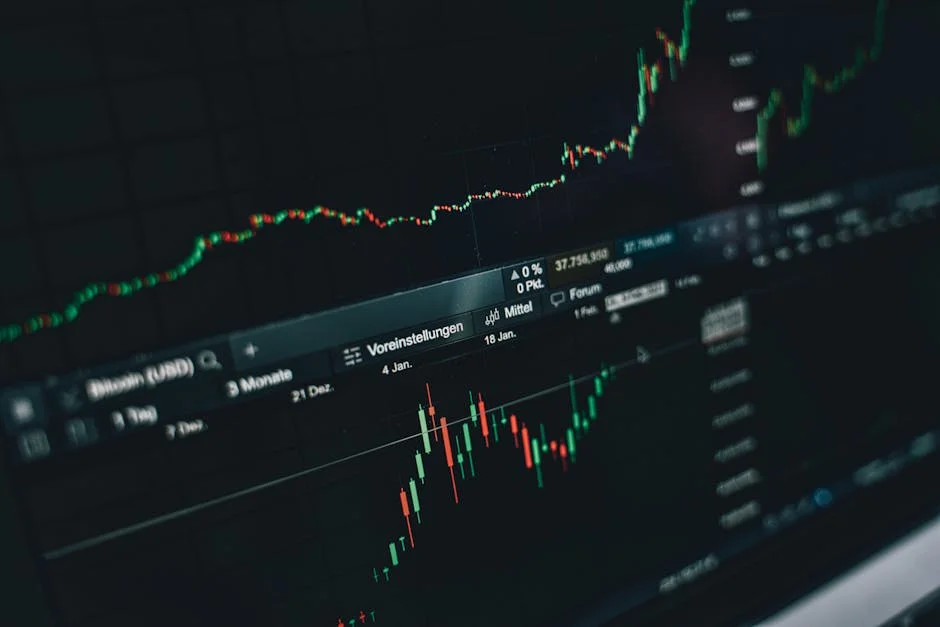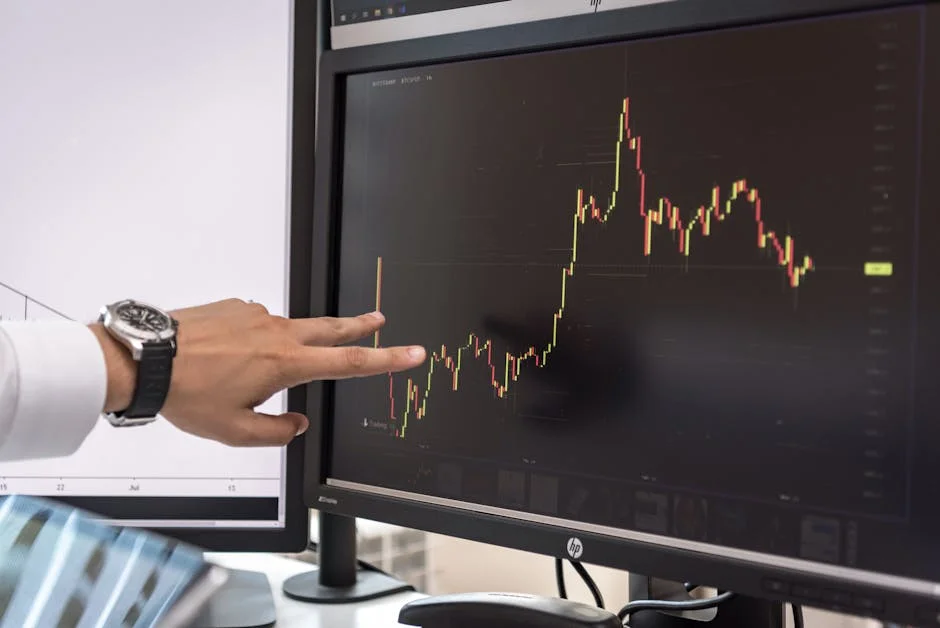
The difference between stock trading and forex trading starts with what each market represents and why participants show up every day. Stock trading revolves around buying and selling shares of publicly listed companies. A share is a fractional ownership stake, so when a trader buys a stock, they are effectively buying a small slice of that business, along with exposure to corporate earnings, management decisions, industry cycles, and broader economic conditions. Forex trading, by contrast, involves exchanging one currency for another in pairs such as EUR/USD or USD/JPY. Instead of owning a company, the trader is expressing a view on relative value between two economies, central bank policies, interest-rate differentials, and global capital flows. Both markets can be traded for short-term speculation or longer-term positioning, yet the core “asset” you are trading and the forces that move price are fundamentally different.
Table of Contents
- My Personal Experience
- Understanding the difference between stock trading and forex trading
- Market structure, venues, and who participates
- Trading hours, liquidity cycles, and volatility patterns
- What drives prices: company fundamentals vs macroeconomics
- Leverage, margin, and position sizing differences
- Costs and fees: spreads, commissions, swaps, and hidden friction
- Risk profiles: gaps, news shocks, and tail events
- Expert Insight
- Strategy styles: investing, swing trading, day trading, and scalping
- Regulation, transparency, and information availability
- Tools, platforms, and a practical comparison table
- Taxes, dividends, and accounting differences
- Choosing between the two based on goals, temperament, and time
- Putting it together: practical takeaways on the difference between stock trading and forex trading
- Watch the demonstration video
- Frequently Asked Questions
- Trusted External Sources
My Personal Experience
When I first started trading, I assumed stocks and forex were basically the same—just different tickers on a screen. My first few stock trades felt slower and more “story-driven”: I was watching earnings dates, news about the company, and how the overall market opened and closed each day. With forex, it hit me fast that it’s a different rhythm—prices can move at odd hours, and the focus shifts to interest rates, economic releases, and how one currency stacks up against another. I also noticed the leverage and tight spreads in forex made small moves feel bigger, which was exciting but punished sloppy risk management more quickly than my stock account ever did. After a few months, I ended up using stocks for longer holds and forex only when I had time to actively manage trades around major data events. If you’re looking for difference between stock trading and forex trading, this is your best choice.
Understanding the difference between stock trading and forex trading
The difference between stock trading and forex trading starts with what each market represents and why participants show up every day. Stock trading revolves around buying and selling shares of publicly listed companies. A share is a fractional ownership stake, so when a trader buys a stock, they are effectively buying a small slice of that business, along with exposure to corporate earnings, management decisions, industry cycles, and broader economic conditions. Forex trading, by contrast, involves exchanging one currency for another in pairs such as EUR/USD or USD/JPY. Instead of owning a company, the trader is expressing a view on relative value between two economies, central bank policies, interest-rate differentials, and global capital flows. Both markets can be traded for short-term speculation or longer-term positioning, yet the core “asset” you are trading and the forces that move price are fundamentally different.
Another part of the difference between stock trading and forex trading lies in how the markets are organized and how price discovery occurs. Stock markets are centralized through exchanges like the NYSE or Nasdaq, where listed securities must meet disclosure requirements and trading occurs during set hours. Forex is primarily decentralized and operates over-the-counter through a network of banks, prime brokers, liquidity providers, and retail brokers, with trading available almost continuously from Monday to Friday. That structure changes the feel of execution, the nature of liquidity, and the way news is absorbed. Stocks can react sharply to company-specific events like earnings and product launches, while currencies often respond to macro data such as inflation reports, employment numbers, and central bank statements. Understanding these building blocks helps traders choose tools, risk controls, and strategies that fit the market’s mechanics rather than forcing a one-size-fits-all approach.
Market structure, venues, and who participates
Stock trading typically takes place on regulated exchanges where listing standards, reporting obligations, and market surveillance aim to protect investors and promote orderly trading. Companies must publish quarterly and annual financial statements, disclose material events, and comply with governance rules. Because of this, a stock’s price is not only a reflection of supply and demand but also a continuous referendum on the company’s fundamentals and the market’s expectations of future growth. Participants include retail investors, mutual funds, pension funds, hedge funds, market makers, and corporate insiders operating under strict rules. Orders are routed through brokers to exchanges, and the exchange’s matching engine pairs buyers and sellers. Trading hours are defined, and while pre-market and after-hours sessions exist, liquidity and spreads can differ substantially outside the main session. If you’re looking for difference between stock trading and forex trading, this is your best choice.
Forex trading is built on a different foundation: a global interbank market with no single centralized exchange. Banks quote prices to one another, liquidity providers stream bid/ask prices, and brokers aggregate those quotes for clients. This decentralized nature means pricing can vary slightly between brokers, and execution quality depends heavily on the broker’s liquidity relationships, technology, and policies regarding slippage and order handling. Participants include central banks, commercial banks, multinational corporations hedging currency exposure, asset managers rebalancing international portfolios, macro hedge funds, and retail traders. Because currency conversion is embedded in international trade and investment, forex tends to have enormous daily turnover and deep liquidity in major pairs. This structure can make the market feel “always on,” with price responding quickly to global events as different financial centers open and close throughout the week. If you’re looking for difference between stock trading and forex trading, this is your best choice.
Trading hours, liquidity cycles, and volatility patterns
A practical difference between stock trading and forex trading shows up the moment you consider when you can trade and how liquidity changes through the day. Stock trading is anchored to local exchange hours. For example, U.S. equities have a primary session, and although extended-hours trading exists, it often comes with thinner liquidity and wider spreads. Liquidity clusters around the market open and close, and volatility frequently spikes around scheduled events like earnings releases, economic data, and index rebalancing. For active traders, these rhythms matter because entering or exiting during low-liquidity windows can increase transaction costs and slippage. In addition, individual stocks can become illiquid based on market capitalization and daily volume, so a strategy that works well on mega-cap names may behave very differently on small-cap stocks.
Forex trading operates nearly 24 hours a day during the business week, but that does not mean liquidity is constant. Liquidity and volatility follow the “session” model: the Asian session, the London session, and the New York session. The overlap between London and New York is often the most liquid for major currency pairs, while late New York and early Asia can be quieter. Some pairs have unique rhythms; for instance, JPY pairs may be more active during Asia, while EUR and GBP pairs often move more during London. News can hit at any time, but volatility tends to surge around major economic releases and central bank events. For traders, the continuous nature of the market can be convenient, yet it can also tempt overtrading. Managing attention, sleep, and risk limits becomes part of the discipline, especially when positions are held through multiple sessions and liquidity conditions shift beneath them. If you’re looking for difference between stock trading and forex trading, this is your best choice.
What drives prices: company fundamentals vs macroeconomics
Stock prices are heavily influenced by company-specific fundamentals and narrative. Earnings growth, profit margins, competitive positioning, product pipelines, leadership changes, regulatory actions, and even brand perception can materially move a stock. Analysts build valuation models, compare multiples, and update forecasts as new information arrives. That does not mean macro factors are irrelevant—interest rates, inflation expectations, and economic growth influence discount rates and risk appetite—but the core unit of analysis is the individual company. This focus creates opportunities for traders who specialize in sectors, read financial statements, or exploit event-driven catalysts. It also creates idiosyncratic risk: two companies in the same index can behave very differently based on their balance sheets, guidance, and execution. If you’re looking for difference between stock trading and forex trading, this is your best choice.
Forex trading, in contrast, tends to be dominated by macroeconomics and relative policy. A currency pair is a relationship, so the trader is always comparing two jurisdictions. Interest-rate differentials, central bank forward guidance, inflation trends, employment strength, trade balances, fiscal stability, geopolitical risk, and commodity linkages can all influence currency value. For example, a hawkish central bank that signals higher rates can support its currency, while political uncertainty can weaken investor confidence and drive capital outflows. Because currencies are linked to national balance sheets and cross-border flows, forex often reacts quickly to global risk sentiment—sometimes behaving as a “risk-on/risk-off” barometer. This macro emphasis changes how traders prepare: calendars of economic releases and central bank meetings can be as important as chart levels, and understanding correlations across bonds, commodities, and equities can provide context for currency moves. If you’re looking for difference between stock trading and forex trading, this is your best choice.
Leverage, margin, and position sizing differences
The difference between stock trading and forex trading becomes especially tangible when you look at leverage and how brokers handle margin. In stock trading, leverage is typically more conservative for retail accounts, and regulations may limit the amount of borrowed capital used to buy shares. Margin rules vary by country and broker, but many stock traders operate with low or moderate leverage, particularly if they are investing rather than day trading. Because stocks can gap sharply on earnings or breaking news, margin can be a double-edged sword; a leveraged position that moves against the trader can trigger margin calls, forced liquidations, or significant losses. Position sizing in stocks often considers share price, volatility, average true range, and liquidity, and many traders use stop-loss orders to cap downside, though gaps can bypass stops.
Forex trading commonly offers higher leverage, which can make small price movements meaningful in account terms. While leverage caps exist in many regulated jurisdictions, forex still tends to provide more margin flexibility than equities. This can be attractive for short-term strategies, but it also increases the importance of risk management because currency pairs can move rapidly during data releases or surprise policy shifts. Position sizing in forex is typically calculated using lot sizes, pip values, and the distance to a stop level. Because currency pairs are quoted relative to each other, a trader must also consider the account’s base currency and how it affects profit and loss. Higher leverage is not inherently “better”; it is a tool that magnifies both gains and losses. Many experienced traders treat leverage as optional, using it sparingly and focusing instead on consistency, drawdown control, and the ability to survive adverse streaks that can occur in any liquid market. If you’re looking for difference between stock trading and forex trading, this is your best choice.
Costs and fees: spreads, commissions, swaps, and hidden friction
Stock trading costs often include commissions (though many brokers offer commission-free trading in certain regions), exchange fees, regulatory fees, and the bid/ask spread. Even when commissions are advertised as zero, there can be indirect costs such as payment for order flow, slightly worse execution, or wider spreads on less liquid names. For active stock trading, slippage can become a meaningful factor, especially when trading around the open, during earnings, or in thinly traded shares. Additionally, corporate actions like splits, dividends, and mergers can affect accounting and tax reporting. The net cost of stock trading depends on the broker’s execution quality, the liquidity of the chosen stocks, and the trader’s frequency. For longer-term investors, costs may be relatively small compared to the impact of market movement, but they still compound over time. If you’re looking for difference between stock trading and forex trading, this is your best choice.
Forex trading costs are usually embedded in the spread, sometimes combined with a commission on “raw spread” accounts. Another unique cost is the overnight financing charge, often called swap or rollover, which reflects the interest-rate differential between the two currencies plus broker markup. If a trader holds positions overnight, swap can either cost money or earn money depending on direction and the pair’s rates, but it can change over time as central banks adjust policy. Execution model matters: some brokers operate a dealing desk, while others route orders to liquidity providers, influencing spreads, requotes, and slippage. Because forex is commonly traded with leverage, small differences in spread and swap can materially affect performance for high-frequency or long-hold strategies. Evaluating total trading cost therefore requires looking beyond a headline spread and considering average spreads during your trading hours, commission structure, swap rates, and the broker’s track record on execution during volatile events. If you’re looking for difference between stock trading and forex trading, this is your best choice.
Risk profiles: gaps, news shocks, and tail events
Stock trading carries risks that are often concentrated in single names. Earnings surprises, lawsuits, product failures, executive scandals, or regulatory decisions can cause abrupt price gaps that exceed a trader’s planned stop-loss. This is particularly relevant for traders who hold positions through earnings or major announcements. Diversification can reduce company-specific risk, but active traders sometimes focus on a small watchlist, increasing exposure to idiosyncratic events. Broader market shocks—such as recessions, geopolitical conflicts, or sudden changes in interest-rate expectations—can also drag down entire sectors. Another stock-specific risk is trading halts, which can occur during extreme volatility or pending news; halts can prevent exits and increase uncertainty. For risk management, many stock traders use position limits, avoid holding leveraged positions through binary events, and pay attention to liquidity to ensure exits are feasible. If you’re looking for difference between stock trading and forex trading, this is your best choice.
Expert Insight
Stock trading involves buying and selling shares of individual companies on regulated exchanges with set market hours, where performance is driven by earnings, sector trends, and company-specific news. Forex trading focuses on currency pairs in a largely 24/5 global market, where price moves are shaped by interest rates, central bank policy, and macroeconomic data—so match your strategy to what you can realistically monitor and understand. If you’re looking for difference between stock trading and forex trading, this is your best choice.
Tip 1: If you prefer research-driven decisions, build a stock watchlist and trade around scheduled catalysts (earnings dates, guidance updates), using position sizing and stop-loss levels based on each stock’s volatility. Tip 2: If you trade forex, plan around the economic calendar and major session overlaps (London/New York), and cap leverage so a single spike doesn’t exceed your predefined risk per trade. If you’re looking for difference between stock trading and forex trading, this is your best choice.
Forex trading risk often shows up as macro-driven shocks and correlation cascades. Central bank surprises, unexpected inflation prints, geopolitical escalations, or abrupt shifts in risk sentiment can push currency pairs sharply, sometimes with slippage if liquidity thins. While major pairs are generally liquid, liquidity can evaporate during extreme events, holidays, or flash moves, leading to rapid price jumps. Another risk is that forex positions are inherently leveraged for many retail traders, which makes drawdowns more severe if risk is not tightly controlled. Because currencies are interconnected, multiple pairs can move together, and a trader holding several correlated positions may unknowingly concentrate risk. Tail events—rare but impactful—can include sudden policy decisions, pegs breaking, or emergency interventions. A robust approach often includes conservative leverage, hard risk limits per trade, awareness of the economic calendar, and scenario planning for “what if” moves that exceed typical volatility. If you’re looking for difference between stock trading and forex trading, this is your best choice.
Strategy styles: investing, swing trading, day trading, and scalping
Stock trading supports a wide spectrum of approaches, from long-term investing to short-term speculation. Investors may buy shares based on valuation, growth prospects, dividends, and competitive advantage, holding for years while compounding returns. Swing traders might hold for days to weeks, using technical setups, sector rotation, and catalysts like earnings revisions or momentum trends. Day traders often focus on intraday volatility, volume patterns, and news flow, aiming to capture moves during the most liquid hours. Some traders specialize in mean reversion, others in breakouts, and others in event-driven plays around earnings. Because stocks are diverse, traders can pick niches: small-cap momentum, large-cap trend following, options-based hedging, or pairs trading between related companies. This diversity is a strength, but it also demands careful selection and ongoing research because each stock has its own behavior and news cycle. If you’re looking for difference between stock trading and forex trading, this is your best choice.
| Aspect | Stock Trading | Forex Trading |
|---|---|---|
| Market & Instruments | Buying/selling shares of individual companies on stock exchanges. | Trading currency pairs (e.g., EUR/USD) in the global FX market. |
| Trading Hours & Liquidity | Exchange-specific hours; liquidity varies by stock and session. | Typically 24 hours (weekdays); generally very high liquidity in major pairs. |
| Volatility, Leverage & Costs | Leverage often lower; costs may include commissions and exchange fees; moves driven by company news/earnings. | Leverage often higher (broker/regulation dependent); costs commonly via spread/rollover; moves driven by macro data and central banks. |
Forex trading tends to emphasize macro, technical, and flow-based strategies that exploit the continuous nature of the market and the depth of major pairs. Swing trading in forex often uses trend following aligned with interest-rate expectations or risk sentiment, holding positions through multi-day moves. Day trading and scalping are common due to tight spreads in liquid pairs and frequent intraday swings around session opens and economic releases. Some forex traders build strategies around range trading during quieter sessions, while others focus on breakout behavior during London or New York. Carry trading—seeking to profit from interest-rate differentials—can be a longer-term forex approach, though it can unwind violently during risk-off episodes. Because currencies are relative, hedging and diversification can be more nuanced: holding EUR/USD and GBP/USD may not be diversification if both are driven by USD dynamics. Successful forex strategy selection often depends on matching the approach to your available trading hours, tolerance for news volatility, and ability to manage leveraged exposure. If you’re looking for difference between stock trading and forex trading, this is your best choice.
Regulation, transparency, and information availability
Stock trading is generally associated with high transparency due to strict disclosure rules. Public companies must report financial results, material events, insider transactions, and risk factors, and these filings are available to all market participants. Exchanges publish volume data, and many jurisdictions enforce rules against insider trading and market manipulation. While information asymmetry can still exist—institutions may have better tools or faster access to analytics—the baseline availability of audited financial statements provides a shared foundation for analysis. This transparency supports fundamental investing and makes it easier to justify a trade thesis with verifiable data. It also creates a rich ecosystem of research: earnings call transcripts, analyst reports, industry metrics, and alternative data, all of which can be used to form a view on a company’s prospects. If you’re looking for difference between stock trading and forex trading, this is your best choice.
Forex trading operates in a more fragmented environment. Because the market is decentralized, there is no single consolidated tape showing all volume. Retail traders often rely on broker-provided tick volume as a proxy, while institutions may have access to deeper flow information. Economic data and central bank communications are public, but interpreting them can be complex, and market reactions can depend on positioning and expectations rather than the headline number. Regulation varies by jurisdiction, and broker quality matters significantly, especially regarding order execution, segregation of client funds, and dispute resolution. Transparency in forex can therefore feel different: macro data is public, but microstructure data is less standardized. For many traders, the practical solution is to choose a well-regulated broker, use robust risk controls, and focus on repeatable processes rather than trying to “out-information” the market. If you’re looking for difference between stock trading and forex trading, this is your best choice.
Tools, platforms, and a practical comparison table
The difference between stock trading and forex trading also influences the tools and platforms traders gravitate toward. Stock traders often use platforms that integrate market scanners, level II order books, news feeds, earnings calendars, and fundamental data. Because stock selection matters, scanning for volume spikes, relative strength, or unusual options activity can be central to the workflow. Charting is important, but so is access to corporate actions, filings, and sector performance dashboards. Many stock traders also integrate options for hedging or directional plays, which adds another layer of platform requirements such as Greeks, implied volatility charts, and strategy builders. Execution routing and order types can matter for active traders, particularly those who trade the open or use limit orders around key levels.
Forex trading platforms often prioritize fast execution, stable connectivity, advanced order management, and clear display of spreads and swap rates. Because forex is commonly traded as pairs with leverage, traders pay close attention to margin usage, pip values, and risk per trade. Economic calendars, real-time news squawks, and alerts for central bank events can be integrated directly into the platform. Automated trading is also popular in forex, with many traders using algorithmic scripts or expert advisors to enforce discipline and reduce emotional decisions. Below is a practical comparison table of common tool categories and typical cost expectations. The “Ratings” column reflects general user sentiment in the retail trading community rather than a formal review, and the “Price” column is representative because actual costs vary by region and provider. If you’re looking for difference between stock trading and forex trading, this is your best choice.
| Name | Features | Ratings | Price |
|---|---|---|---|
| Multi-asset Broker Platform | Stocks + forex access, basic charting, integrated account margin, common order types | 4.2/5 | $0–$30/month platform fee (often waived) + spreads/commissions |
| Advanced Stock Scanner Suite | Real-time scanners, news, earnings calendar, alerts, sector heatmaps | 4.5/5 | $50–$250/month |
| Professional Charting Terminal | Multi-timeframe charting, indicators, backtesting, alerts, cross-asset views | 4.6/5 | $15–$60/month (retail tiers) |
| Forex Execution-Focused Platform | Low-latency execution, depth-of-market (varies), one-click trading, spread monitoring | 4.3/5 | Usually included with brokerage; costs in spreads/commissions |
| Economic Calendar & News Feed | Macro releases, central bank schedules, real-time headlines, event alerts | 4.4/5 | $0–$100/month |
Taxes, dividends, and accounting differences
Stock trading has tax and accounting considerations that can materially affect net returns. Depending on jurisdiction, profits may be taxed as capital gains, with different rates for short-term versus long-term holding periods. Dividends may be taxed differently from price appreciation, and some investors build dividend-focused strategies that consider yield stability and payout growth. Corporate actions such as splits, spin-offs, and mergers can create complex cost-basis adjustments. Wash sale rules in some countries can limit the ability to claim losses if a trader repurchases the same or a substantially identical security within a set window. For active traders, keeping accurate records of entries, exits, commissions, and corporate actions is essential, especially when trading many tickers throughout the year. Broker tax documents help, but they may not capture every nuance for complex strategies involving options, short selling, or multiple accounts. If you’re looking for difference between stock trading and forex trading, this is your best choice.
Forex trading taxes can be simpler in some cases and more complex in others, depending on how the jurisdiction classifies currency trading and whether it is treated as capital gains, ordinary income, or a special category for derivatives. Another accounting wrinkle is that forex positions are quoted in pairs, so profit and loss may be realized in a quote currency and then converted to the account’s base currency, potentially creating additional reporting lines. Swap or rollover interest can also affect taxable outcomes. For traders who frequently open and close positions, the volume of transactions can be high, making recordkeeping and reconciliation important. Because rules vary widely, many traders consult a qualified tax professional familiar with trading activity. The key practical point is that the “best” market is not just about gross returns; after-tax returns and administrative burden matter, especially for high-frequency approaches where small edges can be eroded by unfavorable tax treatment or reporting friction. If you’re looking for difference between stock trading and forex trading, this is your best choice.
Choosing between the two based on goals, temperament, and time
When deciding where you fit, it helps to translate the difference between stock trading and forex trading into lifestyle and behavioral terms. Stock trading can be ideal for traders who enjoy researching companies, following industries, and forming opinions about competitive advantage and valuation. If you prefer a market where individual instruments have distinct stories and catalysts, stocks provide endless variety. The trade-off is that company-specific news can introduce gap risk, and you may need to manage a watchlist of many names to consistently find opportunities. Stock trading also aligns well with those who want to blend investing and trading—holding a core portfolio while tactically trading around it. Time availability matters: if you can focus during a specific exchange session, equities can fit neatly into a daily routine.
Forex trading can suit traders who prefer macro narratives, technical frameworks, and liquid instruments with frequent price movement. The near-24-hour schedule can be helpful if you cannot trade during a local stock session, but it can also be distracting if you feel compelled to monitor positions constantly. Forex’s accessible leverage can make small accounts feel “more powerful,” yet that same leverage punishes undisciplined risk-taking. If you like structured routines built around economic calendars and session overlaps, forex can be a good match. Many traders also appreciate that there are fewer major instruments to track—focusing on a handful of pairs rather than hundreds of stocks—though that can also mean fewer idiosyncratic opportunities. Ultimately, the better choice is the one that matches your risk tolerance, patience, research style, and ability to stick to a plan during inevitable losing streaks. If you’re looking for difference between stock trading and forex trading, this is your best choice.
Putting it together: practical takeaways on the difference between stock trading and forex trading
The difference between stock trading and forex trading is not a simple ranking of which market is “better,” but a map of trade-offs that affect execution, analysis, and risk. Stocks offer ownership-based instruments shaped by company fundamentals, disclosures, and exchange-based trading hours. They provide a wide universe of opportunities across sectors and market caps, but they also bring idiosyncratic risk, earnings gaps, and the need for careful selection. Forex offers a relative-value market driven by macroeconomics, rates, and global flows, with deep liquidity in major pairs and near-continuous weekday access. It can be efficient for technical and macro traders, yet leverage, swap costs, and event-driven volatility require strict controls. Recognizing these structural realities helps traders avoid forcing strategies onto a market that does not naturally support them.
For many participants, the most sustainable approach is to pick one primary arena, master its mechanics, and treat the other as a secondary market only when there is a clear edge. That might mean using stock trading for longer-term themes and selective swing trades while using forex trading for short-term setups around central bank cycles, or it might mean specializing entirely in one to reduce cognitive load. Whatever the path, consistent success usually comes from aligning your strategy with liquidity conditions, cost structure, and the specific drivers of price, then sizing positions so that no single surprise can derail the account. With that mindset, the difference between stock trading and forex trading becomes a practical decision framework rather than a debate, allowing you to choose the market that best fits your goals, schedule, and tolerance for uncertainty.
Watch the demonstration video
In this video, you’ll learn the key differences between stock trading and forex trading, including what each market involves, how they’re regulated, and when they’re open. It also breaks down liquidity, volatility, leverage, and typical costs—so you can better understand the risks and decide which style of trading fits your goals. If you’re looking for difference between stock trading and forex trading, this is your best choice.
Summary
In summary, “difference between stock trading and forex trading” is a crucial topic that deserves thoughtful consideration. We hope this article has provided you with a comprehensive understanding to help you make better decisions.
Frequently Asked Questions
What is the main difference between stock trading and forex trading?
Stock trading is all about buying and selling shares of publicly listed companies on stock exchanges, aiming to profit as those companies’ values rise or fall. Forex trading, on the other hand, focuses on exchanging currency pairs—like EUR/USD—in the global foreign exchange market, where prices move based on shifts in economic conditions and interest rates. In short, the **difference between stock trading and forex trading** comes down to what you’re trading (company shares vs. currencies) and the markets where those trades take place.
Which market has more trading hours: stocks or forex?
One key **difference between stock trading and forex trading** is the schedule: the forex market runs nearly 24 hours a day, five days a week, while stock trading happens during fixed exchange hours that vary by country and usually shut down overnight.
How does liquidity typically compare between forex and stocks?
Major forex pairs tend to be extremely liquid, which usually means tighter spreads and smoother order execution. By contrast, stock liquidity can differ dramatically depending on the company and the exchange—some shares trade heavily all day, while others see far fewer transactions—highlighting an important **difference between stock trading and forex trading**.
Is leverage different in forex trading versus stock trading?
One key **difference between stock trading and forex trading** is leverage: forex brokers often provide much higher leverage than stock brokers. The exact limits vary based on local regulations and each broker’s policies, but it’s important to remember that greater leverage can amplify both profits and losses.
What are the main costs in stock trading compared to forex trading?
Stocks may involve commissions and exchange fees (though many brokers offer $0 commissions) and bid-ask spreads; forex costs are usually primarily the spread and/or a commission plus rollover/financing for overnight positions. If you’re looking for difference between stock trading and forex trading, this is your best choice.
What factors most commonly drive price movements in stocks versus forex?
Stocks are driven by company performance, earnings, and sector sentiment, alongside broader markets; forex is driven mainly by interest rates, inflation, economic data, central bank policy, and geopolitical risk between the two currencies. If you’re looking for difference between stock trading and forex trading, this is your best choice.
📢 Looking for more info about difference between stock trading and forex trading? Follow Our Site for updates and tips!

Trusted External Sources
- Forex vs stocks (swing/day trading) – Reddit
Dec 18, 2026 … The forex market is a global market for the trading of currencies, while the stock market is a marketplace for buying and selling company stocks … If you’re looking for difference between stock trading and forex trading, this is your best choice.
- Forex Trading vs Stock Trading – Differences, Advantage
The forex market is known for its deep liquidity, fast-moving price action, 24/5 trading hours, and easy access to higher leverage. Stocks, by contrast, trade on set exchange hours, often move differently based on company-specific news and earnings, and typically come with more limited leverage. Understanding the **difference between stock trading and forex trading** comes down to market hours, what drives price movements, volatility levels, and how much leverage traders can use.
- Forex vs Stocks: What are the Key Differences? | Dukascopy Bank SA
As of Oct 24, 2026, the currency market operates as a vast, decentralized network connecting banks, brokers, and traders worldwide, while stocks are typically bought and sold through more structured, centralized exchanges—highlighting a key **difference between stock trading and forex trading**.
- The main differences between forex and stock trading – IG
Lesson summary: The **difference between stock trading and forex trading** comes down to a few key factors—trading volume, liquidity, typical costs, and how many hours each market is open. Stocks generally trade on set exchange hours with varying liquidity by company, while forex runs nearly 24/5 with massive global volume and high liquidity, often leading to tighter spreads and different fee structures.
- Forex vs Stocks: What are the Differences? | CMC Markets
Forex markets tend to move faster and swing more sharply than most stock markets, which can create quick profit opportunities for experienced, disciplined traders. At the same time, that speed cuts both ways—higher volatility can amplify losses just as quickly. Understanding the **difference between stock trading and forex trading** is essential, because factors like leverage, trading hours, liquidity, and the news events that drive price moves can make forex both more flexible and more demanding than stocks.