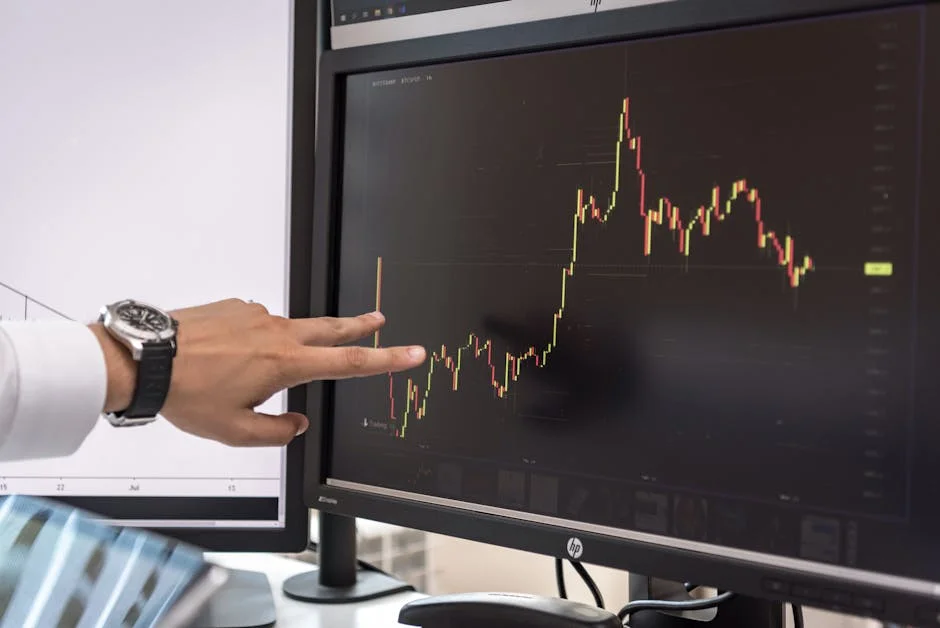
Forex market risk management is the practical discipline that keeps trading decisions aligned with survival, consistency, and long-term compounding rather than short-term excitement. The foreign exchange market moves fast, reacts to news in seconds, and can travel hundreds of pips in a session when volatility spikes. In that environment, even a strong directional view can fail if position size, leverage, and stop placement are not controlled. Many traders focus on entry signals, but the reality is that outcomes are heavily shaped by how much is at risk, how losses are contained, and how capital is protected during adverse conditions. Forex market risk management turns trading from a series of emotional bets into a structured process with predefined limits. It helps prevent the classic blow-up scenario where a few oversized positions erase months of progress. It also improves decision quality because the trader knows the worst-case scenario before entering, which reduces hesitation and prevents impulsive “revenge trades” after a loss.
Table of Contents
- My Personal Experience
- Understanding Why Forex Market Risk Management Matters
- Defining Risk: Volatility, Leverage, and Uncertainty in FX
- Building a Trading Risk Framework Before Placing Any Trade
- Position Sizing: The Core of Consistent Risk Control
- Stop-Loss Strategy: Where Protection Meets Market Structure
- Managing Leverage and Margin to Avoid Forced Liquidation
- Handling Correlation and Concentration Risk Across Currency Pairs
- Volatility and News Risk: Planning for the Unexpected
- Expert Insight
- Trading Psychology as Risk Management: Controlling Behavior Under Pressure
- Using Reward-to-Risk, Expectancy, and Drawdown Limits to Stay Profitable
- Operational Risk: Broker, Platform, and Execution Quality
- Creating a Risk Management Plan You Can Follow Daily
- Common Risk Management Mistakes and How to Prevent Them
- Putting It All Together for Long-Term Survival and Growth
- Watch the demonstration video
- Frequently Asked Questions
- Trusted External Sources
My Personal Experience
When I first started trading forex, I treated risk management like an optional add-on and paid for it fast. I’d move my stop-loss “just a little” when a trade went against me, or size up after a win because I felt confident, and a couple of bad moves wiped out weeks of progress. The turning point was forcing myself to risk a fixed small percentage per trade, setting the stop based on the chart instead of my emotions, and walking away once the order was placed. I also began tracking every trade in a journal, and it was obvious that my biggest losses came from breaking my own rules, not from the market being “unfair.” I’m still not perfect, but sticking to position sizing and predefined exits has made my results steadier and my stress a lot lower. If you’re looking for forex market risk management, this is your best choice.
Understanding Why Forex Market Risk Management Matters
Forex market risk management is the practical discipline that keeps trading decisions aligned with survival, consistency, and long-term compounding rather than short-term excitement. The foreign exchange market moves fast, reacts to news in seconds, and can travel hundreds of pips in a session when volatility spikes. In that environment, even a strong directional view can fail if position size, leverage, and stop placement are not controlled. Many traders focus on entry signals, but the reality is that outcomes are heavily shaped by how much is at risk, how losses are contained, and how capital is protected during adverse conditions. Forex market risk management turns trading from a series of emotional bets into a structured process with predefined limits. It helps prevent the classic blow-up scenario where a few oversized positions erase months of progress. It also improves decision quality because the trader knows the worst-case scenario before entering, which reduces hesitation and prevents impulsive “revenge trades” after a loss.
Risk in currency trading is multi-layered. There is market risk from price movement, but there is also execution risk from slippage, spread widening, and partial fills; liquidity risk around rollovers and news; and operational risk from platform outages or mistakes. Forex market risk management addresses all of these by setting guardrails that cover the entire lifecycle of a trade: planning, execution, monitoring, and exit. When properly applied, it creates a stable framework that can withstand a range of market regimes, from low-volatility ranges to trend days to sudden risk-off shocks. A trader who understands risk controls can remain active when opportunities appear, while someone who ignores them often becomes overly cautious after large drawdowns. The goal is not to eliminate losses—losses are inevitable—but to ensure losses remain small enough that the strategy has room to work and the trader has the psychological resilience to follow the plan through a realistic sample size.
Defining Risk: Volatility, Leverage, and Uncertainty in FX
In currency markets, “risk” is not just the possibility of losing money; it is the measurable exposure to uncertain price movement relative to account equity and the potential for that exposure to expand unexpectedly. Volatility is a central component because it determines how far price can travel in a normal session and how often a stop might be reached. A 20-pip stop on a quiet day can be reasonable, yet the same stop during a central bank announcement can be effectively meaningless. Forex market risk management starts by recognizing that the same position size can carry dramatically different risk depending on volatility, time of day, and the pair being traded. EUR/USD behaves differently from GBP/JPY, and even the same pair behaves differently around key data releases, month-end flows, or geopolitical events.
Leverage magnifies both returns and losses, and it can turn a modest move into a large equity swing. Many brokers offer high leverage, but the availability of leverage is not a recommendation to use it fully. A common failure pattern is confusing margin requirement with risk; margin is only the collateral needed to open a trade, while risk is the potential loss if price moves against the position. Forex market risk management treats leverage as a tool to be used carefully and often sparingly. Uncertainty is another layer: no trader knows the future, and even a high-probability setup can fail. That means risk controls must be designed for the worst reasonable outcome, not the most likely one. When volatility expands, spreads widen, or stops slip, the actual loss can exceed the planned loss unless the trader accounts for these realities. A robust approach includes buffers for slippage, awareness of market microstructure, and a recognition that “normal” market behavior changes over time.
Building a Trading Risk Framework Before Placing Any Trade
A reliable risk framework begins with defining account-level limits that are independent of any single trade idea. This includes maximum risk per trade, maximum daily loss, maximum weekly drawdown, and maximum open exposure across correlated pairs. Forex market risk management at the framework level prevents a trader from improvising limits during emotional moments. For example, risking 0.5% to 1% of account equity per trade is common among disciplined traders, but the exact number should reflect strategy win rate, average reward-to-risk, and personal tolerance for drawdowns. If a strategy has a lower win rate but high payoff, it may need smaller risk per trade to survive inevitable losing streaks. The framework also defines when trading stops for the day—after a certain loss threshold, after a sequence of losses, or after a major deviation from plan.
Another crucial element is defining “conditions to trade” and “conditions to stand aside.” Markets are not equally tradable at all times. A framework might prohibit new positions minutes before major economic releases, restrict trading during illiquid hours, or require spread and volatility to be within a defined range. Forex market risk management also benefits from predefining the instruments traded, the maximum number of concurrent positions, and the maximum percentage of equity exposed to a single currency. For example, holding multiple USD-long positions across different pairs can create hidden concentration risk. A framework should also include rules for handling platform issues, internet outages, and errors, such as always using server-side stop-loss orders where possible and maintaining a contingency plan for contacting the broker. By setting these rules in advance, the trader reduces decision fatigue and creates a repeatable process that can be improved through journaling and performance review.
Position Sizing: The Core of Consistent Risk Control
Position sizing converts a trade idea into a controlled bet with a known maximum loss. The most common approach is fixed fractional sizing, where the trader risks a consistent percentage of equity on each trade. Forex market risk management becomes far more effective when position size is calculated from the stop-loss distance and the chosen risk percentage. For example, if the trader risks 1% of a $10,000 account ($100) and the stop is 50 pips away, the position size should be set so that 50 pips equals $100. This method ensures that wider stops lead to smaller positions and tighter stops allow larger positions, keeping the dollar risk constant. It also naturally adapts to changing volatility if stop distances reflect market conditions rather than arbitrary numbers.
Position sizing should also consider pip value differences and quote currency effects. A standard lot does not have the same pip value across all pairs, especially when the account currency differs from the quote currency. Forex market risk management requires accurate pip-value calculations or a broker calculator to avoid accidental oversizing. Additionally, traders should account for spread and potential slippage, particularly during news or low liquidity. If the intended stop is 50 pips, but slippage could add 5 to 15 pips, the effective risk may be higher than planned. Some traders incorporate a “risk buffer” by calculating size based on a slightly larger stop than the technical level, or by reducing the risk percentage during high-impact events. Another sizing consideration is scaling in or partial entries. While scaling can improve average entry price, it can also increase total exposure if not capped. A disciplined approach defines a maximum total risk across all entries, ensuring that adding to a position does not exceed the original risk plan.
Stop-Loss Strategy: Where Protection Meets Market Structure
Stop-loss orders are a primary defense against catastrophic losses, but they must be placed with logic rather than fear. A stop should be located where the original trade thesis is invalidated, not where it merely feels uncomfortable. Forex market risk management treats stops as part of the trade design: entry, invalidation point, and target should form a coherent structure. Common approaches include placing stops beyond recent swing highs/lows, outside support and resistance zones, beyond a volatility measure such as ATR, or past a key moving average depending on the strategy. Each method has trade-offs. A tight stop can improve reward-to-risk, but it may be vulnerable to normal noise. A wide stop may reduce stop-outs but forces smaller position size and may lower the frequency of trades that meet minimum reward-to-risk criteria.
Stop execution also matters. In fast markets, a stop order can fill at a worse price than expected, especially around news. Forex market risk management therefore includes awareness of stop type and broker execution model. A stop market order prioritizes exit but can slip; a stop limit order controls price but may not fill, leaving the trader exposed. Many traders prefer stop market orders because certainty of exit is often more important than a perfect fill during a spike. Another consideration is stop placement relative to obvious levels. If many market participants place stops at the same round number or just beyond a visible swing, price can briefly run those stops and reverse. This does not mean stops should be avoided; it means they should be placed with a margin that reflects volatility and liquidity. Finally, stop adjustments such as moving to breakeven should be rule-based. Moving a stop too soon can turn good trades into small losses repeatedly, while never adjusting can give back large unrealized gains. A balanced method uses structure-based trailing, time-based rules, or partial profit-taking to reduce exposure without choking the trade.
Managing Leverage and Margin to Avoid Forced Liquidation
Leverage is often misunderstood because traders focus on the ability to open large positions with small margin, while ignoring how quickly losses can accumulate when price moves. Forex market risk management treats leverage as an outcome of position sizing rather than a target. If a trader sizes positions based on a fixed risk percentage and realistic stop distances, the effective leverage typically stays within safer ranges. Problems arise when traders use maximum leverage to chase returns, place stops too tight, or trade without stops. A small adverse move can then trigger a margin call or forced liquidation, locking in losses at the worst possible time and preventing recovery.
Margin management includes monitoring free margin, margin level, and the impact of floating losses across multiple positions. Forex market risk management also accounts for correlation: several trades that seem different can move together if they share the same base currency or are driven by the same risk sentiment. During risk-off events, correlations often increase, meaning multiple positions can lose simultaneously. Traders should set a maximum total margin usage and a maximum total account risk across all open trades. Another practical safeguard is keeping a cash buffer: not deploying all available margin even when setups appear attractive. This buffer reduces stress, allows room for normal drawdowns, and helps prevent the broker from closing trades prematurely. Additionally, traders should understand how rollover and swap can affect margin and equity over time, especially for longer-term positions. While swap is often small day-to-day, it can compound or spike during certain conditions, and it should be part of the overall exposure assessment.
Handling Correlation and Concentration Risk Across Currency Pairs
Currency pairs do not move independently. EUR/USD and GBP/USD may rise together when USD weakens broadly, while USD/JPY may react differently depending on yield differentials and risk sentiment. Forex market risk management requires looking beyond individual charts to the portfolio’s combined exposure. If a trader is long EUR/USD, long GBP/USD, and short USD/CHF, the portfolio may be heavily short USD, meaning a sudden USD rally can hit all positions at once. This is concentration risk, and it can cause drawdowns that exceed the intended per-trade risk limits because losses become correlated.
Managing correlation starts with mapping exposures by currency. A simple approach is to list each open trade and note whether you are effectively long or short each currency. Forex market risk management also benefits from limiting the number of positions tied to a single macro theme. Another approach is adjusting position sizes when adding correlated trades, so the combined risk remains within a predefined cap. For example, instead of risking 1% on each of three highly correlated USD trades (totaling roughly 3% exposure), the trader might risk 0.5% on each or choose only the cleanest setup. Correlation is not static; it changes across regimes. During major crises, many pairs can move in a “risk-on/risk-off” manner, making diversification less effective. Traders can also hedge, but hedging can create complexity and costs, and it is not a substitute for proper sizing. A more straightforward method is to reduce exposure during periods when correlations are elevated, such as around major central bank decisions or geopolitical shocks, and to avoid stacking trades that depend on the same outcome.
Volatility and News Risk: Planning for the Unexpected
News risk is a defining feature of FX markets because currencies are directly tied to macroeconomic data, interest rate expectations, and geopolitical developments. Even technical strategies are impacted when volatility surges. Forex market risk management includes an economic calendar routine: knowing when high-impact events occur, which currencies they affect, and how the market typically behaves during those windows. Some traders avoid holding positions through major releases, while others trade them with specialized rules. Either approach can be valid, but it must be intentional. A common mistake is treating a high-impact release like a normal session, only to experience slippage, spread widening, and rapid price gaps that bypass stop levels.
| Risk Management Approach | Best For | Key Benefit | Main Trade-Off |
|---|---|---|---|
| Stop-Loss & Take-Profit Orders | Most traders seeking consistent, rule-based exits | Limits downside and locks in gains automatically | Can be triggered by short-term volatility (whipsaws) |
| Position Sizing (Risk % per Trade) | Traders aiming to protect capital across varying volatility | Controls drawdowns by sizing trades to a fixed risk amount | May reduce returns if sizing is too conservative |
| Hedging (Correlated Pairs/Options) | Traders exposed to event risk or holding longer-term positions | Reduces net exposure during uncertainty | Adds cost/complexity and can cap upside |
Expert Insight
Define risk before every trade: set a fixed percentage of account equity to risk (e.g., 0.5–2%), calculate position size from your stop-loss distance, and place the stop immediately so one bad move can’t exceed your limit. If you’re looking for forex market risk management, this is your best choice.
Control exposure across the portfolio: cap total open risk (e.g., 3–5% combined), avoid stacking highly correlated pairs in the same direction, and reduce size or step aside around major economic releases when spreads and volatility can spike. If you’re looking for forex market risk management, this is your best choice.
Volatility management can be improved by using adaptive stops and smaller position sizes during high-ATR conditions. Forex market risk management also includes recognizing the difference between scheduled and unscheduled events. Scheduled events include CPI, employment reports, GDP, central bank rate decisions, and speeches. Unscheduled events include surprise headlines, conflict escalation, policy leaks, and flash crashes. Because unscheduled events cannot be avoided, traders should build resilience into the system: conservative leverage, always-on stops, and limits on overnight and weekend exposure. Holding trades over the weekend can be particularly risky because markets can gap at the open. If a weekend gap jumps beyond a stop-loss, the fill can be significantly worse than planned. Traders who prefer swing trading can reduce weekend gap risk by lowering size, taking partial profits before the close, or avoiding holding positions in especially headline-sensitive currencies. Ultimately, volatility is not the enemy; uncontrolled exposure is. The aim is to ensure that when volatility expands, the account is not positioned in a way that turns a normal market shock into an unrecoverable drawdown.
Trading Psychology as Risk Management: Controlling Behavior Under Pressure
Even the best technical rules fail if a trader cannot execute them consistently. Emotional decision-making is a major hidden risk, and it often appears after a streak of losses or a large win. Forex market risk management therefore includes behavioral controls designed to prevent impulsive actions such as doubling position size to “win it back,” removing stops, or entering trades out of boredom. Stress and fatigue also degrade decision quality, leading to missed signals or late entries that distort reward-to-risk. Practical psychological safeguards include a pre-trade checklist, a mandatory cool-down period after a loss, and a rule that any change to risk parameters must be made outside market hours. These controls reduce the chance that emotions override the plan.
Confidence should come from process, not from recent outcomes. Forex market risk management supports process confidence by enforcing repeatable steps: define setup, calculate risk, place orders, and accept the outcome. Journaling plays a key role because it separates controllable actions from uncontrollable results. A trader can lose money on a well-executed trade and still have done the right thing, while making money on a reckless trade can reinforce bad habits. Over time, the trader’s edge is expressed through a large sample size, not through any single outcome. Another psychological risk is “analysis paralysis,” where fear of loss prevents executing valid setups, leading to inconsistent participation and missed opportunities. Clear risk limits reduce fear because the maximum loss is known and acceptable. Finally, traders should acknowledge that personal life stress can leak into trading. When focus is compromised, reducing size or skipping a session is a risk decision, not a missed opportunity. The market will always be there; capital and mental clarity must be protected first.
Using Reward-to-Risk, Expectancy, and Drawdown Limits to Stay Profitable
Profitability is not just about win rate; it is about expectancy, which combines win rate and average win versus average loss. Forex market risk management improves expectancy by controlling losses and ensuring winners are large enough to offset inevitable losing trades. Reward-to-risk ratios are a tool, but they must be realistic for the strategy and market conditions. A scalping approach may aim for smaller reward-to-risk but higher win rate, while a trend-following approach may accept a lower win rate in exchange for larger winners. The key is consistency: if the strategy requires a 2:1 reward-to-risk to be profitable, then taking 0.8:1 trades out of impatience undermines the math. Traders should test their strategy to understand typical drawdowns and the distribution of wins and losses rather than relying on generic ratios.
Drawdown limits are essential because even a strategy with positive expectancy can experience long losing streaks. Forex market risk management includes setting a maximum drawdown threshold at which trading is reduced or paused to reassess. For example, a trader might cut risk per trade in half after a 5% drawdown and stop trading after a 10% drawdown until a review is completed. This prevents a bad period from escalating into a catastrophic loss. Another helpful practice is separating “strategy drawdown” from “execution drawdown.” If losses are due to breaking rules, the solution is behavioral: tighten discipline and reduce size. If losses occur despite good execution, the strategy may be out of sync with the current market regime and may require adjustment or temporary sidelining. Expectancy also benefits from managing trade management decisions, such as partial profits and trailing stops, but these should be tested. Randomly changing exits in response to recent outcomes usually makes performance worse. A stable approach uses predefined rules that align with the edge and that keep the distribution of outcomes within expected boundaries.
Operational Risk: Broker, Platform, and Execution Quality
Operational risk is often overlooked because it is less exciting than chart analysis, but it can cause losses even when the market behaves as expected. Forex market risk management includes selecting a reputable broker, understanding the account type (market maker vs ECN-style), and knowing how orders are executed. Slippage, requotes, and spread widening can materially change results, especially for short-term strategies. Traders should evaluate typical spreads during their trading hours, check swap rates for overnight positions, and understand how stop orders are handled during fast markets. A broker’s policies on negative balance protection, margin closeout levels, and order execution can determine how bad a worst-case event becomes.
Platform reliability matters as well. Internet disruptions, device failures, and software crashes can leave trades unmanaged. Forex market risk management therefore includes practical redundancies: using server-side stops and limits rather than relying on local scripts, keeping a backup internet option, and having the broker’s dealing desk or support contact accessible. It also includes good operational habits such as double-checking order size, verifying the correct symbol, confirming stop-loss placement before clicking confirm, and avoiding trading when distracted. Another operational issue is time synchronization: economic releases occur at specific times, and chart candles depend on server time. Misalignment can lead to entering at the wrong moment or misunderstanding candle closes. Finally, record-keeping is part of operational control. Saving trade confirmations, maintaining a journal, and exporting account statements help identify whether performance issues come from the strategy or from execution costs. Over time, reducing operational friction can improve net returns without changing the strategy itself.
Creating a Risk Management Plan You Can Follow Daily
A written plan turns good intentions into actionable rules. Forex market risk management becomes far more consistent when the plan specifies exact numbers and procedures rather than vague goals. A practical plan includes: risk per trade (percentage or fixed amount), maximum daily loss, maximum weekly loss, maximum open trades, maximum correlated exposure, and rules for when to stop trading. It also includes pre-trade requirements such as confirming the trend condition, checking the economic calendar, ensuring spread is within limits, and calculating position size based on stop distance. The plan should define acceptable setups and timeframes, because trading outside the tested environment increases uncertainty. It should also define how to handle partial profits, trailing stops, and trade invalidation conditions, so management decisions are not improvised.
Daily execution should be supported by a simple routine. Forex market risk management can be reinforced with a checklist that is reviewed before every trade: setup quality, entry level, stop level, target, risk amount, and correlation check. After the trade, record whether rules were followed and note any execution issues like slippage or unusual spread. Weekly or monthly reviews should focus on process metrics: percentage of trades executed according to plan, average risk per trade, average loss compared to planned loss, and whether drawdown limits were respected. The plan should evolve, but changes must be made carefully. Adjusting risk rules too often can destabilize results and make it impossible to evaluate performance. When updates are needed, change one variable at a time and track the impact over a meaningful sample size. A good plan also includes self-awareness: if sleep is poor or stress is high, risk is reduced or trading is skipped. That is not a lack of discipline; it is discipline applied to the most important variable—the trader’s ability to execute consistently.
Common Risk Management Mistakes and How to Prevent Them
Many traders fail not because their market analysis is always wrong, but because their risk behavior is inconsistent. A frequent mistake is risking too much per trade, which makes normal losing streaks emotionally and financially intolerable. Forex market risk management prevents this by keeping risk small enough that a sequence of losses is survivable and does not provoke rule-breaking. Another common error is moving stops farther away to avoid taking a loss. This converts a planned, limited loss into an open-ended risk. If the original stop is hit, the trade idea is wrong or the timing is off; accepting the loss is part of the business. Overtrading is another risk issue: taking too many marginal setups increases transaction costs and exposure to randomness. Setting a maximum number of trades per day and requiring strict setup criteria helps reduce this.
Ignoring correlation is also widespread. Traders may think they are diversified because they trade multiple pairs, but if those pairs are highly correlated, the portfolio risk is concentrated. Forex market risk management addresses this by capping total exposure to a currency theme and reducing size when trades overlap. Another mistake is failing to account for spreads, swaps, and slippage, which can turn a strategy that looks good on paper into one that underperforms live. Traders should test with realistic costs and monitor whether costs increase during certain sessions or events. Finally, inconsistency in execution—entering late, missing stops, changing targets—creates unpredictable results and makes it hard to evaluate the strategy. The solution is a tighter process: checklists, automation where appropriate (such as preset order templates), and routine reviews focused on whether the plan was followed. Over time, preventing these common errors often improves performance more than finding a new indicator.
Putting It All Together for Long-Term Survival and Growth
Long-term success in FX is largely a function of staying in the game through different market regimes. Trends, ranges, and volatility cycles will come and go, and no strategy performs the same in every environment. Forex market risk management provides the continuity that allows a trader to adapt without blowing up during the transition. When risk per trade is controlled, leverage is kept reasonable, and exposure is diversified thoughtfully, a trader can take many trades and let the statistical edge play out. Risk controls also protect confidence and decision quality because the trader is not constantly recovering from outsized losses. Over time, consistent risk practices make performance more stable, which can be just as valuable as high returns because stability supports compounding and reduces the chance of abandoning a sound approach during a temporary drawdown.
Practical improvement comes from treating risk as a measurable system. Track planned risk versus realized risk, monitor how often slippage occurs, and note when correlation amplifies losses. Adjust rules based on evidence, not on emotion. Forex market risk management is not a one-time setup; it is an ongoing discipline that evolves with account size, market conditions, and personal experience. When executed well, it transforms trading into a repeatable process where each decision is made within predefined boundaries, and where a single unpredictable event cannot erase months or years of effort. The market will always present uncertainty, but controlled exposure turns uncertainty into manageable variability, allowing skill, patience, and consistency to compound over time through forex market risk management.
Watch the demonstration video
In this video, you’ll learn practical forex risk management techniques to protect your capital and trade more consistently. It covers how to size positions, set effective stop-loss and take-profit levels, manage leverage, and control drawdowns. You’ll also see common mistakes traders make—and how to build a simple plan to limit losses and stay disciplined. If you’re looking for forex market risk management, this is your best choice.
Summary
In summary, “forex market risk management” is a crucial topic that deserves thoughtful consideration. We hope this article has provided you with a comprehensive understanding to help you make better decisions.
Frequently Asked Questions
What is risk management in forex trading?
It’s the process of controlling potential losses using position sizing, stop-loss orders, and limits on leverage and exposure to protect your trading capital.
How much should I risk per forex trade?
Many traders risk 0.5%–2% of account equity per trade, adjusting lower for higher volatility or correlated positions.
How do I calculate position size in forex?
To determine the right position size as part of effective **forex market risk management**, base your lot size on how much of your account you’re willing to risk, how far your stop-loss is in pips, and the pip value of the pair you’re trading. A simple way to calculate it is: **Lots = (Account Equity × Risk %) ÷ (Stop-Loss Pips × Pip Value)**.
Why are stop-loss orders important in forex?
They limit your downside by automatically exiting a position once it hits a preset price, so minor setbacks don’t snowball into account-draining drawdowns—an essential tool in **forex market risk management**.
How does leverage increase forex risk?
Leverage can amplify both profits and losses, so even small price swings may lead to margin calls or forced liquidation if your position is too large relative to your account balance—making solid **forex market risk management** essential.
How can I manage risk from news and volatility in forex?
To strengthen your **forex market risk management**, consider scaling down your position size, and only widening stop-loss levels when higher volatility truly warrants it. It also helps to sit out major economic news releases, place limit orders instead of chasing price, and keep a close eye on spreads and potential slippage so unexpected costs don’t erode your edge.
📢 Looking for more info about forex market risk management? Follow Our Site for updates and tips!

Trusted External Sources
- Managing Foreign Exchange Rate Risk: Capacity Development for …
As of Aug 2, 2026, managers in emerging market and low-income countries are placing greater emphasis on foreign exchange exposure, recognizing it as a core component of public debt strategy. Strengthening **forex market risk management** helps governments better anticipate currency swings, reduce vulnerability to external shocks, and maintain more stable debt outcomes over time.
- Supervisory guidance for managing risks associated with the …
As of Feb 15, 2026, significant FX settlement-related risks still persist—especially as forex trading activity continues to grow rapidly. The updated guidance outlines practical steps for strengthening controls and improving **forex market risk management**, helping firms reduce exposure and enhance the safety of their settlement processes.
- Six Steps to Manage Trading Risk Efficiently – FOREX.com US
Six steps to manage risk efficiently · 1. Determine your risk tolerance · 2. Size each position correctly · 3. Determine your timing · 4. Avoid weekend gaps · 5 … If you’re looking for forex market risk management, this is your best choice.
- Eight Forex Risk Management Strategies for Beginners
How to manage risk in forex trading · Understand the forex market · Get a grasp on leverage · Build a good trading plan · Set a risk-reward ratio · Use stops and … If you’re looking for forex market risk management, this is your best choice.
- MAR11 – Definitions and application of market risk
Our approach covers both foreign exchange (FX) risk and commodities risk across trading book instruments, while also setting out a clear risk management policy for structural FX positions. As part of our **forex market risk management** framework, this policy must be clearly defined in advance to ensure consistent oversight, robust controls, and timely decision-making.