Free forex trading lessons can be a practical starting point for anyone curious about currency markets, but the value depends on how clearly the lessons explain the basics and how responsibly they frame risk. Forex is the global marketplace where currencies are exchanged, and prices move because of interest rates, inflation expectations, economic growth, geopolitical events, and shifting sentiment. New traders often arrive with a mix of excitement and confusion: they hear about leverage, 24-hour trading, and the ability to go long or short, yet they don’t understand why EUR/USD can drift for hours and then spike in seconds. The most useful free training breaks that complexity into a mental model: a currency pair is a relative price, not a standalone asset, and every quote reflects the market’s current opinion about two economies at once. Strong lessons define common terms early—pip, spread, lot size, margin, leverage, and swap—because misunderstanding any one of them can lead to poor decisions. They also show how a broker’s quote is built, why spreads widen during low liquidity, and why a tight spread is not the only cost. When free lessons are structured well, they encourage a slow pace: learn the language, then learn the mechanics, then learn risk, and only then explore strategies.
Table of Contents
- My Personal Experience
- Getting Started With Free Forex Trading Lessons: What Beginners Actually Need
- How the Forex Market Works: Sessions, Liquidity, and Price Movement
- Essential Forex Vocabulary and Trading Mechanics You Must Know
- Understanding Currency Pairs, Quotes, and Correlations
- Chart Basics: Candlesticks, Trends, and Market Structure
- Technical Indicators: Using Them Without Overcomplication
- Fundamental Analysis for Retail Traders: News, Rates, and Narratives
- Expert Insight
- Risk Management: The Core Skill Behind Survival and Growth
- Building a Practice Routine: Demo Trading, Journaling, and Feedback Loops
- Common Trading Strategies Explained Simply: Breakouts, Pullbacks, and Ranges
- Choosing Reliable Free Learning Resources and Avoiding Misleading Content
- Turning Free Lessons Into a Realistic Trading Plan and Next Steps
- Watch the demonstration video
- Frequently Asked Questions
- Trusted External Sources
My Personal Experience
I started looking for free forex trading lessons after realizing I didn’t even understand basics like pips, spreads, or why my “good” entries kept getting stopped out. I found a handful of beginner playlists and broker webinars that were actually useful, but what helped most was treating them like a course—taking notes, replaying the parts on risk management, and testing everything on a demo account instead of jumping straight into live trades. The free lessons weren’t perfect (some felt like sales pitches), but they gave me a structure: build a simple plan, focus on one setup, and risk small. After a few weeks, I wasn’t suddenly profitable, but I stopped making the same rookie mistakes and finally felt like I knew what I was doing when I opened a chart.
Getting Started With Free Forex Trading Lessons: What Beginners Actually Need
Free forex trading lessons can be a practical starting point for anyone curious about currency markets, but the value depends on how clearly the lessons explain the basics and how responsibly they frame risk. Forex is the global marketplace where currencies are exchanged, and prices move because of interest rates, inflation expectations, economic growth, geopolitical events, and shifting sentiment. New traders often arrive with a mix of excitement and confusion: they hear about leverage, 24-hour trading, and the ability to go long or short, yet they don’t understand why EUR/USD can drift for hours and then spike in seconds. The most useful free training breaks that complexity into a mental model: a currency pair is a relative price, not a standalone asset, and every quote reflects the market’s current opinion about two economies at once. Strong lessons define common terms early—pip, spread, lot size, margin, leverage, and swap—because misunderstanding any one of them can lead to poor decisions. They also show how a broker’s quote is built, why spreads widen during low liquidity, and why a tight spread is not the only cost. When free lessons are structured well, they encourage a slow pace: learn the language, then learn the mechanics, then learn risk, and only then explore strategies.
Free forex trading lessons are also most helpful when they set expectations about time, practice, and emotional discipline. Many beginners assume they need to predict the future; in reality, trading is managing probabilities under uncertainty. A credible learning path explains that a trader can be profitable without being “right” most of the time, as long as losses are controlled and winners are allowed to develop. It also highlights the difference between analysis and execution: you can have a reasonable idea but enter at a poor price, use an oversized position, or move a stop-loss impulsively. Good free lessons emphasize process over outcomes, and they do not imply that one indicator or one setup is a shortcut. They teach how to read a chart, but also how to read your own behavior—overtrading, revenge trading, fear of missing out, and the tendency to widen stops to avoid being wrong. A beginner needs clarity on what can be controlled: position size, entry criteria, stop placement, and daily risk limits. They also need basic operational knowledge, such as how to place a market order versus a limit order, how slippage can occur during fast moves, and why news events can cause price gaps even in liquid pairs. When your early learning focuses on these fundamentals, free education becomes a foundation rather than a distraction.
How the Forex Market Works: Sessions, Liquidity, and Price Movement
Free forex trading lessons often mention that the market is open “24 hours,” but the nuance lies in liquidity cycles and regional sessions. Trading activity rotates through the Sydney, Tokyo, London, and New York sessions, and each session has typical characteristics. London and New York overlap tends to bring the highest liquidity and the fastest price discovery for major pairs such as EUR/USD and GBP/USD. Tokyo hours can be calmer for some pairs, yet JPY crosses may become more active when Japanese data releases hit. A learner benefits from understanding that “busy” is not always “better.” Higher liquidity can mean tighter spreads, but it can also mean rapid moves that punish sloppy entries. The best free lessons map out when spreads are usually tighter, when volatility often increases, and why certain pairs behave differently depending on the session. For instance, AUD/USD may respond more to Asian session flows, while EUR pairs often move more during European hours. This session awareness helps a beginner choose practice times and avoid trading randomly across the day.
Price movement in forex can feel mysterious until you connect it to order flow and expectations. While retail traders rarely see the full institutional order book, free lessons can still teach practical proxies: support and resistance zones often reflect areas where participants previously agreed on value, and breakouts can occur when new information shifts that agreement. Economic releases matter because they change expectations about interest rates and growth, which affect capital flows. Central bank decisions, inflation data, employment reports, and geopolitical headlines can reprice a currency quickly. A strong educational approach explains why interest rate differentials matter, why a “hawkish” statement can strengthen a currency, and why sometimes “good news” leads to a sell-off because the market had already priced it in. Free training is most useful when it encourages learners to think in terms of scenarios: what is the market expecting, what would surprise it, and how could that surprise change the trend? Even if a trader focuses on technical analysis, understanding these drivers helps interpret volatility spikes and reduces the urge to treat every candle as a random event. If you’re looking for free forex trading lessons, this is your best choice.
Essential Forex Vocabulary and Trading Mechanics You Must Know
Free forex trading lessons should spend real time on the vocabulary that controls profit and loss. A pip is typically the fourth decimal place in most pairs (or the second in JPY pairs), and a pip’s value depends on position size and quote currency. A lot is a standardized unit—often 100,000 units for a standard lot—but many brokers allow mini and micro lots. The spread is the difference between bid and ask, and it acts like an immediate cost when you enter. Margin is the capital reserved to support a leveraged position, and leverage is the multiplier that allows a small deposit to control a larger position. Beginners commonly confuse margin with a fee; it is not a fee, but it can amplify losses if position sizes are too large. Swap or rollover is the interest adjustment for holding positions overnight, and it varies by pair and broker. Slippage is the difference between expected execution price and actual fill price, often occurring during fast markets. When these terms are clear, a learner can interpret platform numbers correctly and avoid accidental overexposure.
Mechanics also include order types and platform behavior. Market orders prioritize execution, while limit orders prioritize price. Stop orders can be used to enter momentum moves or to exit losing trades via stop-loss. A take-profit order automates exits at predefined targets, which can reduce emotional decision-making. Free lessons that include platform walkthroughs—without overselling—help traders understand how to set position size, attach a stop-loss, and calculate risk per trade. The most practical training teaches a simple rule: decide your stop-loss level first, then choose position size so that the monetary loss at that stop equals a small percentage of your account. This flips the common beginner mistake of picking a large position first and hoping the market cooperates. Lessons should also explain how spreads and commissions affect stop placement and targets, because a stop set too tight relative to average spread and volatility can cause frequent small losses. A trader who understands mechanics can focus on improving decision quality rather than fighting the platform. If you’re looking for free forex trading lessons, this is your best choice.
Understanding Currency Pairs, Quotes, and Correlations
Free forex trading lessons become far more effective when they clarify how currency pairs are quoted and why “strength” is relative. In EUR/USD, the euro is the base currency and the U.S. dollar is the quote currency; if the price rises, the euro is strengthening relative to the dollar. That seems simple, yet it leads to deeper insights: a USD move can affect multiple pairs simultaneously, and a trader who ignores that may accidentally place several trades that are all the same bet. Majors typically include EUR/USD, GBP/USD, USD/JPY, USD/CHF, AUD/USD, NZD/USD, and USD/CAD. Crosses exclude USD, like EUR/GBP or GBP/JPY, and can have different volatility profiles. Exotics involve emerging market currencies and usually carry wider spreads and higher event risk. Free lessons that compare these categories help beginners choose pairs that match their tolerance for volatility and costs.
Correlation is another concept that prevents accidental risk stacking. If EUR/USD and GBP/USD are positively correlated much of the time, buying both can double exposure to USD weakness. If USD/JPY often moves differently during risk-on or risk-off periods, a position there can behave unlike a EUR/USD trade. Correlations are not constant; they shift with regimes, central bank policy divergence, and global risk sentiment. High-quality free training encourages checking correlation over the timeframe you trade and considering whether multiple positions share the same underlying driver. For example, being long AUD/USD and NZD/USD can be similar exposure to commodity-linked and risk-sensitive currencies, especially during broad risk-on moves. Lessons can also introduce the idea of a “currency basket” mindset: rather than seeing each chart as isolated, consider what the USD is doing across several pairs, what the JPY is doing, and where flows may be concentrated. This broader view helps traders avoid tunnel vision and improves the quality of trade selection. If you’re looking for free forex trading lessons, this is your best choice.
Chart Basics: Candlesticks, Trends, and Market Structure
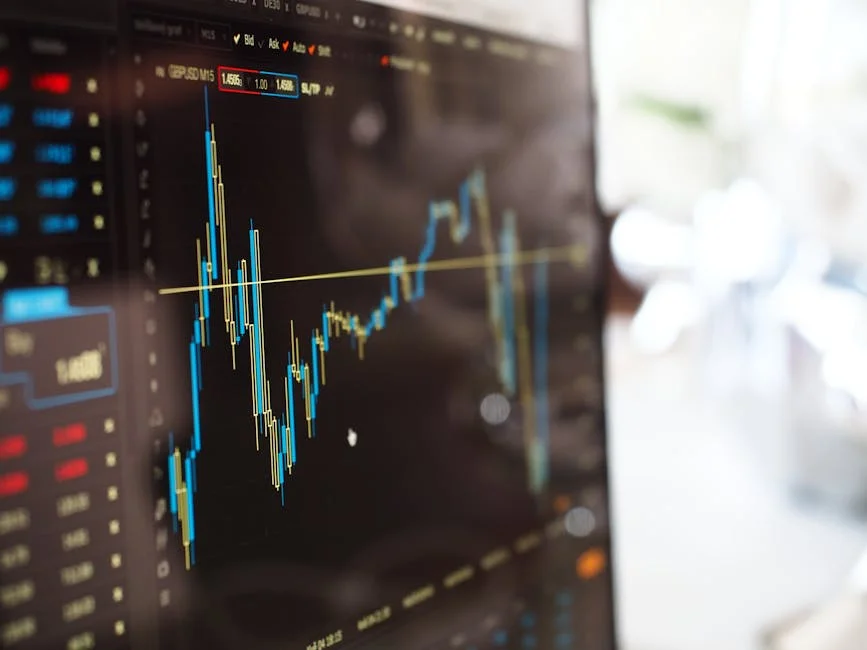
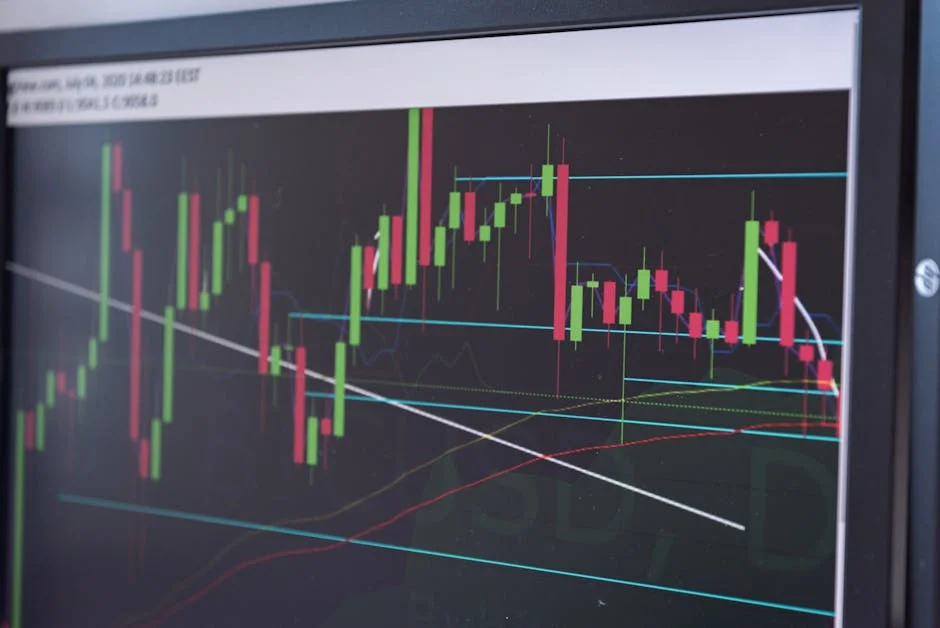
Free forex trading lessons frequently jump into indicators, but the more durable foundation is price behavior and basic market structure. Candlesticks show open, high, low, and close, and they can reveal momentum and rejection. A long wick can indicate that price tested an area and was pushed back, while a series of higher highs and higher lows can define an uptrend. Market structure is the language of trends: swing highs, swing lows, breaks of structure, and changes of character. Beginners gain a lot by practicing simple tasks: mark obvious swing points, identify whether the market is trending or ranging, and note where price accelerates versus consolidates. This avoids the trap of using five indicators to answer a question that the chart already shows. Free lessons that emphasize “what is price doing now” create traders who can adapt when conditions change.
Support and resistance works best when treated as zones rather than single lines. Price rarely turns at the exact same pip; it responds to areas where liquidity and orders cluster. Good free education explains why a level matters: it may be a prior high, a weekly open, a round number, or a consolidation range. It also explains why levels fail: a strong trend can slice through resistance, and a breakout can retest the level before continuing. Beginners benefit from learning the difference between a clean breakout and a false break, and from understanding that confirmation often costs pips but reduces uncertainty. Market structure also connects to risk management: a stop-loss placed beyond a structural point (like beyond a swing low in an uptrend) is usually more logical than a random tight stop. By focusing on structure, traders develop a repeatable method to define entries, exits, and invalidation points without relying on constant prediction. If you’re looking for free forex trading lessons, this is your best choice.
Technical Indicators: Using Them Without Overcomplication
Free forex trading lessons can make indicators feel like magic tools, but indicators are simply transformations of price and sometimes volume. Moving averages smooth price to help visualize direction; RSI and stochastic oscillators estimate momentum and potential overbought/oversold conditions; MACD combines moving averages to show momentum shifts; ATR estimates typical volatility. The key is to use indicators as decision aids, not decision makers. A moving average can help keep you aligned with trend by discouraging countertrend trades, but it won’t tell you where institutions will buy. RSI can highlight momentum extremes, but in a strong trend it can remain overbought or oversold for long periods. Free lessons that show indicator limitations are more trustworthy than those that promise a “perfect” signal. Beginners should learn one or two indicators deeply, understand what they measure, and test how they behave across different market regimes.
A practical way to use indicators is to pair them with structure. For example, in an uptrend, you might wait for a pullback into a support zone and then look for RSI to recover from a dip, or for price to reclaim a moving average. ATR can help place stops and targets in a way that respects the pair’s current volatility; if your stop is smaller than normal fluctuations, you may be stopped out frequently even when your idea is right. Free training that teaches volatility-aware thinking helps traders stop blaming the market for “hunting stops” and start placing stops where the trade idea is actually invalidated. Another useful approach is to simplify charts: too many indicators create conflicting signals and encourage hesitation. If a free lesson encourages removing clutter, keeping a trading journal, and testing one change at a time, it supports long-term progress rather than short-term excitement. If you’re looking for free forex trading lessons, this is your best choice.
Fundamental Analysis for Retail Traders: News, Rates, and Narratives
Free forex trading lessons that include fundamentals should focus on what actually moves currencies: interest rate expectations, inflation trajectories, growth differentials, and risk sentiment. Central banks are pivotal because they set policy rates and guide expectations. When a central bank is expected to hike more than another, the currency can strengthen as yield seekers flow into it. Inflation data matters because it influences how aggressive a central bank must be. Employment data can shift growth expectations and therefore rate expectations. Retail traders don’t need an institutional research desk to benefit from fundamentals, but they do need a routine: track an economic calendar, note the highest-impact events, and understand consensus versus surprise. A credible free lesson explains that markets often move on expectations, and the biggest moves can occur when data diverges from what was priced in. It also explains why headlines can create short-term volatility that later fades if the broader narrative remains intact.
| Lesson Format | What You’ll Learn | Best For |
|---|---|---|
| Beginner Basics (self-paced) | Forex terminology, how the market works, lot sizes, pips, spreads, leverage & margin, placing your first trades. | New traders who want a clear, step-by-step foundation without jargon. |
| Strategy & Technical Analysis | Chart reading, trends, support/resistance, indicators, entries/exits, backtesting simple setups, avoiding common mistakes. | Traders who know the basics and want repeatable trade ideas. |
| Risk Management & Trading Psychology | Position sizing, stop-loss planning, risk/reward, drawdowns, journaling, discipline, emotional control. | Anyone aiming to trade consistently and protect capital over time. |
Expert Insight
Start with free forex trading lessons that teach market structure and risk management before indicators. Build a simple routine: learn one concept (e.g., support/resistance), mark it on 20 past charts, then write a one-sentence rule you can follow consistently.
Practice in a demo account with strict position sizing: risk no more than 1% per trade and set a stop-loss before entering. Keep a trading journal that records the setup, entry, stop, target, and outcome, then review weekly to spot one mistake to eliminate and one rule to reinforce. If you’re looking for free forex trading lessons, this is your best choice.
Narratives are the bridge between data points. For example, a currency can strengthen not because one report was strong, but because the market believes a policy shift is coming. Free lessons that teach you to identify the dominant narrative—risk-on, risk-off, inflation shock, growth scare, energy crisis, policy divergence—help you avoid trading against strong macro currents. They also help you choose which pairs to focus on. If USD strength is driven by higher yields, you might see it across several pairs; if the move is driven by risk-off fear, JPY and CHF may behave differently. A practical fundamental approach for retail traders is to treat major news releases as “volatility windows” and decide in advance whether you will trade them, avoid them, or only trade after the initial spike settles. Free education that includes this kind of planning reduces impulsive trades and encourages thoughtful exposure. If you’re looking for free forex trading lessons, this is your best choice.
Risk Management: The Core Skill Behind Survival and Growth
Free forex trading lessons are only truly useful when they prioritize risk management over flashy entries. Most trading outcomes are determined by position sizing and loss control rather than by finding the perfect indicator. A simple, effective rule is to risk a small fixed percentage per trade—often 0.5% to 2% depending on experience and tolerance—so that a losing streak doesn’t wipe out the account. Risk per trade should be defined in money terms, not just pips, because the pip value changes with lot size. A stop-loss is not a sign of pessimism; it is the cost of doing business in a probabilistic environment. Free training should also explain the danger of leverage: leverage magnifies both gains and losses, and high leverage can cause margin calls during normal volatility. Learning to calculate margin requirements, understand free margin, and avoid overexposure is essential for staying in the game long enough to develop skill.
Risk management also includes trade frequency and correlation control. Taking many trades at once can create a hidden risk concentration, especially if the trades share the same currency exposure. A disciplined approach includes a daily loss limit and a maximum number of trades, which prevents emotional spirals. Drawdown awareness matters: recovering from a 50% drawdown requires a 100% gain just to break even. Free lessons that show this math help beginners respect risk early. Another overlooked part of risk is execution risk: spreads widen during illiquid times, stops can slip during news, and weekend gaps can jump over orders. Managing these risks may involve avoiding holding positions through major events, using smaller size, or trading at times with better liquidity. When free education treats risk as the central pillar, it creates traders who can remain consistent and continue learning even after inevitable losses. If you’re looking for free forex trading lessons, this is your best choice.
Building a Practice Routine: Demo Trading, Journaling, and Feedback Loops
Free forex trading lessons often recommend a demo account, but the real advantage is not “paper profits”; it is creating a structured feedback loop. A demo allows you to practice placing orders, setting stops, and managing trades without financial pressure. However, to make demo practice meaningful, it should mirror your intended real environment: same timeframes, same session hours, and realistic position sizes. If you plan to trade with small risk in a live account, do the same in demo so your habits match. Free training that encourages routine—review the calendar, mark key levels, define scenarios, then trade only when criteria are met—helps transform learning into a repeatable process. Without routine, demo accounts often become a playground where traders take random positions and learn little about discipline.
Journaling is where improvement becomes measurable. A useful journal records the pair, timeframe, entry reason, stop placement logic, target plan, position size, and emotional state. Screenshots before and after the trade can reveal whether you followed your plan or improvised. Over time, patterns emerge: maybe you lose more during certain sessions, or you cut winners early, or you trade poorly after a loss. Free lessons that include journaling templates and review methods can accelerate progress more than another strategy video. A weekly review can focus on a few questions: Did you respect your risk limits? Did you trade your setup or chase moves? Were your losses acceptable and planned, or were they due to rule-breaking? The goal is not to eliminate losses; it is to eliminate preventable mistakes. When your practice routine is structured, free education becomes a system you can apply rather than a pile of disconnected tips. If you’re looking for free forex trading lessons, this is your best choice.
Common Trading Strategies Explained Simply: Breakouts, Pullbacks, and Ranges
Free forex trading lessons frequently introduce popular strategies, and it helps to categorize them into a few core ideas. Breakout trading aims to capture momentum when price leaves a consolidation zone or a key level, often during high-volume sessions or after news. The challenge is false breakouts, where price briefly moves beyond a level and then reverses. A cautious breakout approach waits for a close beyond the level and, ideally, a retest that holds. Pullback trading focuses on entering with the trend after a retracement, using structure to define where the pullback ends and the trend resumes. This approach can offer better risk-reward because the stop can often be placed beyond a recent swing, but it requires patience and the ability to accept that sometimes price won’t pull back far enough to give an entry. Range trading works when price oscillates between support and resistance, and it requires recognizing when conditions shift from range to trend. Free lessons that clearly define when each approach is appropriate help traders avoid forcing a breakout strategy in a range or a range strategy in a strong trend.
Strategy selection should also consider timeframe and lifestyle. Short-term strategies on lower timeframes can produce more signals but also more noise, higher transaction costs relative to targets, and greater emotional intensity. Higher timeframes can be calmer but require wider stops and patience. Good free training encourages choosing one primary setup and practicing it until you understand its strengths and weaknesses. It also emphasizes that strategies are not just entries; they include filters, risk rules, and exit logic. For example, a pullback strategy might require trend confirmation, a pullback into a zone, and a specific trigger candle, followed by a stop beyond structure and a target at the next resistance zone. Keeping the rules simple supports consistency. Over time, traders can refine rules based on evidence from their journal rather than constantly switching strategies after a few losses. If you’re looking for free forex trading lessons, this is your best choice.
Choosing Reliable Free Learning Resources and Avoiding Misleading Content
Free forex trading lessons are everywhere—broker academies, platform tutorials, reputable educators, and also aggressive marketing funnels. To choose reliable resources, look for transparency and risk emphasis. Trustworthy lessons explain leverage risks, encourage small sizing, and avoid promises of guaranteed returns. They show losing trades and discuss drawdowns as normal. They also provide definitions and context rather than only signals. Broker education can be useful for platform mechanics and market basics, though it may be light on strategy depth. Public educational content from experienced traders can be valuable when it focuses on process and evidence rather than lifestyle imagery. A good sign is when lessons encourage backtesting, journaling, and gradual progression from demo to small live trading. Another good sign is when the educator explains multiple market conditions and admits uncertainty, because real trading is uncertain.
Misleading content often shares predictable traits: unrealistic profit claims, heavy emphasis on “secret” indicators, pressure to buy an expensive course to access the “real strategy,” or the suggestion that losses are only due to not following their system. Free education should empower you to think, not make you dependent on signals. It should also avoid overcomplicated strategies that require many indicators and constant screen time to catch tiny moves. A practical way to evaluate lessons is to ask: Can I write down the rules clearly? Do they include risk management? Is there a method to evaluate performance over at least 50 to 100 trades? If the content cannot answer these questions, it may be entertainment rather than training. Choosing a small set of reliable free resources and sticking with them long enough to build competence is usually more productive than consuming endless videos and switching approaches weekly. If you’re looking for free forex trading lessons, this is your best choice.
Turning Free Lessons Into a Realistic Trading Plan and Next Steps
Free forex trading lessons become truly powerful when they are converted into a written trading plan that you can follow under pressure. A plan does not need to be complicated; it needs to be specific. Define which pairs you will trade, which session hours you will focus on, and which timeframes you will use for analysis and entries. Define your setup in plain language, including what you need to see before entering and what invalidates the trade idea. Include your risk rules: maximum risk per trade, maximum daily loss, and how you will handle correlated positions. Add execution rules: always place a stop-loss, avoid moving stops farther away, and decide how you will take profits—fixed targets, partial exits, or trailing stops. A plan also includes a routine: pre-market review, mid-session check-ins, and post-trade journaling. When your plan is written, you can measure discipline objectively rather than relying on memory and emotion.
Free forex trading lessons can also guide your progression from learning to live practice without rushing. Many traders benefit from a three-stage approach: demo for mechanics and rule practice, then a small live account to experience real emotions and execution, and only then gradual scaling if results are stable. Scaling should be tied to consistency, not to a single good week. If your journal shows that you follow your rules and your results are improving across a meaningful sample size, you can consider increasing size slightly while keeping risk percentages steady. Continue refining by focusing on one improvement at a time: better entry patience, better stop placement, fewer trades, or avoiding specific news events. Forex rewards consistency and self-control more than constant innovation. When you treat free learning as a foundation, build a plan around it, and commit to disciplined practice, free forex trading lessons can remain a long-term resource rather than a temporary burst of motivation.
Watch the demonstration video
Discover the basics of forex trading with free, easy-to-follow lessons designed for beginners. This video explains how the currency market works, key terms like pips and spreads, and simple strategies for reading charts and managing risk. You’ll also learn common mistakes to avoid and how to practice safely before trading live. If you’re looking for free forex trading lessons, this is your best choice.
Summary
In summary, “free forex trading lessons” is a crucial topic that deserves thoughtful consideration. We hope this article has provided you with a comprehensive understanding to help you make better decisions.
Frequently Asked Questions
Where can I find free forex trading lessons?
You can find **free forex trading lessons** in plenty of places, from broker education hubs and reputable trading websites to YouTube channels run by regulated educators. Add in free webinars and step-by-step platform tutorials—like MetaTrader guides—and you’ll have a solid, no-cost learning path to build your skills.
Are free forex lessons good enough to start trading?
They’ll teach you the essentials—currency pairs, pips, leverage, and how different orders work—but don’t stop there. Use **free forex trading lessons** alongside plenty of demo-account practice, focus on solid risk management, and develop a strategy you’ve tested thoroughly before putting real money on the line.
What should a beginner learn first in forex?
Begin by understanding market structure and how currency pairs are priced, then learn how quotes work along with pips and spreads. From there, explore the main order types, how leverage and margin affect your trades, and the essentials of risk management. Finally, get hands-on practice using a trading platform with **free forex trading lessons** that guide you step by step.
How long does it take to learn forex with free lessons?
Mastering the basics of forex trading can take anywhere from a few days to a few weeks, but building consistent, reliable skills usually requires months of structured learning, demo account practice, journaling your trades, and testing strategies—especially if you’re using **free forex trading lessons** to guide your progress step by step.
How can I practice forex for free?
Start by opening a demo account with a reputable broker so you can practice trading with virtual funds risk-free. Then backtest your strategies on historical data, and keep a detailed trading journal to track your decisions and results—pairing this routine with **free forex trading lessons** can help you learn faster and trade with more confidence.
How do I avoid scams in “free forex training”?
Watch out for anyone promising guaranteed profits, rushing you to deposit funds, or pushing pricey “signal” upgrades. Take time to verify credentials, stick with regulated and reputable providers, and start with **free forex trading lessons** to build your knowledge. Most importantly, never share your account access or send money directly to individuals.
📢 Looking for more info about free forex trading lessons? Follow Our Site for updates and tips!

Trusted External Sources
- Online Trading Lessons – FOREX.com
Build your skills with our interactive online trading lessons, covering everything from how the markets work to advanced trading strategies—plus access to **free forex trading lessons** to help you get started with confidence.
- FREE Online Forex Trading Courses – AvaAcademy
Learn free online Forex trading courses at AvaAcademy! Engaging videos, quizzes & certificates, accessible anytime, anywhere. Join now!
- Trading Lessons | Free Forex Trading Lessons | FOREX.com Europe
Explore our interactive trading lessons designed to help you build real skills step by step. With a wide range of topics, strategies, and practical techniques, these **free forex trading lessons** are an engaging way to learn the fundamentals and sharpen your approach—whether you’re just getting started or refining your edge.
- Is there a good free course for trading? : r/Forex – Reddit
Dec 15, 2026 … Go onto trader Dante’s website & read his forum posts on forex factory. A ton of gold in those, all for free. If you can afford it, I’d … If you’re looking for free forex trading lessons, this is your best choice.
- Top Free Forex Trading Courses & Tutorials Online – Udemy
Learn how to trade the foreign exchange market with guidance from experienced professionals through a Forex trading course on Udemy. You’ll gain practical skills, real-world strategies, and **free forex trading lessons** to help you confidently open the door to global opportunities.