Robotics STEM education sits at the intersection of how people learn, how industries evolve, and how communities prepare for emerging careers. When learners build a robot, they do more than attach motors to a chassis or write a few lines of code; they practice a complete cycle of inquiry that includes asking questions, making predictions, testing ideas, measuring results, and revising designs. That cycle mirrors how real engineering teams work, which is why robotics STEM education has become a practical pathway for developing durable skills like systems thinking, structured problem solving, data literacy, and technical communication. It also creates a tangible reason to learn math and science. Ratios become gear reductions, geometry becomes turning radius, and physics becomes friction, torque, and stability. These connections reduce the feeling that STEM is abstract and instead show it as a set of tools for building something that moves, senses, and reacts in the real world.
Table of Contents
- My Personal Experience
- Why Robotics STEM Education Matters in a Changing World
- Core Concepts Learners Gain Through Robotics Projects
- Age-Appropriate Pathways: From Early Learners to Advanced Students
- Hardware Platforms and Tools That Support Effective Learning
- Teaching Methods That Make Robotics Instruction Work
- Project-Based Learning and Real-World Challenges
- Building Coding Skills Through Robotics Without Losing the Engineering
- Equity, Inclusion, and Broad Participation in Robotics Programs
- Expert Insight
- Competitions, Clubs, and Community Partnerships
- Assessment and Measuring Learning Outcomes in Robotics
- Safety, Ethics, and Responsible Use of Robotics Technology
- How Families and Educators Can Support Robotics Learning at Home and School
- Future Trends Shaping Robotics Learning and Career Pathways
- Creating Sustainable Robotics STEM Education Programs Over Time
- Watch the demonstration video
- Frequently Asked Questions
- Trusted External Sources
My Personal Experience
I first got into robotics through a STEM club at my middle school, mostly because a friend needed an extra person on their team. At the beginning I felt completely lost—wires everywhere, code that wouldn’t compile, and a robot that kept driving in circles no matter what we changed. But our coach pushed us to treat every failure like a clue, so we started keeping a simple notebook of what we tried and what happened. The first time we finally got the sensors to detect the line correctly, it felt like magic, not because it was perfect, but because we could explain why it worked. That experience made STEM feel less like memorizing formulas and more like solving real problems with other people, and it’s the reason I’m still drawn to engineering classes now. If you’re looking for robotics stem education, this is your best choice.
Why Robotics STEM Education Matters in a Changing World
Robotics STEM education sits at the intersection of how people learn, how industries evolve, and how communities prepare for emerging careers. When learners build a robot, they do more than attach motors to a chassis or write a few lines of code; they practice a complete cycle of inquiry that includes asking questions, making predictions, testing ideas, measuring results, and revising designs. That cycle mirrors how real engineering teams work, which is why robotics STEM education has become a practical pathway for developing durable skills like systems thinking, structured problem solving, data literacy, and technical communication. It also creates a tangible reason to learn math and science. Ratios become gear reductions, geometry becomes turning radius, and physics becomes friction, torque, and stability. These connections reduce the feeling that STEM is abstract and instead show it as a set of tools for building something that moves, senses, and reacts in the real world.
Another reason robotics STEM education matters is that it supports a broad range of learners, including those who may not initially see themselves as “STEM kids.” Robotics projects can be visual, hands-on, social, and creative, making them accessible to students with different strengths. A robotics build session can include design sketches, storytelling, coding, prototyping, and iterative testing, which opens multiple ways to contribute. The collaborative nature of robotics also encourages peer teaching: one student may understand wiring while another excels at debugging code, and both learn by explaining. This kind of shared ownership is valuable because modern technical work is rarely solo. Whether a learner later enters manufacturing, healthcare technology, logistics, agriculture, or software, the ability to collaborate across disciplines is essential. Robotics STEM education, when designed thoughtfully, becomes a bridge between curiosity and capability, helping learners build confidence through repeated cycles of “try, fail, fix, improve.”
Core Concepts Learners Gain Through Robotics Projects
Robotics STEM education naturally integrates core concepts that can feel disconnected in traditional instruction. On the science side, students encounter forces, motion, energy transfer, and sensor behavior in a direct way. A robot that slips on a smooth surface invites investigation into friction and traction; a robot arm that droops invites discussion about torque, leverage, and load distribution. On the technology and engineering side, learners see how components form a system: a sensor provides input, a controller processes information, and actuators create output. This input-process-output model becomes intuitive when a robot follows a line, avoids obstacles, or responds to light. Through this systems lens, learners also begin to understand constraints, such as battery capacity, motor heat, and mechanical wear. Those constraints are not inconveniences; they are the realities that drive good engineering decisions.
Mathematics becomes meaningful in robotics STEM education because it is used to predict and verify behavior. Students can measure wheel circumference to estimate distance traveled, calculate speed from time trials, and use proportional reasoning to tune motor power. They may graph sensor readings to find thresholds or compare algorithm performance under different conditions. Even basic statistics appears when teams run repeated tests and average results to reduce noise. Coding in robotics ranges from block-based environments to text-based languages, but the learning goals remain consistent: sequencing, loops, conditionals, variables, and debugging. Debugging is especially valuable because it teaches persistence and evidence-based reasoning. When a robot fails, the question shifts from “Who is wrong?” to “What is the evidence, and what should we test next?” That mindset supports learning far beyond robotics, making robotics STEM education a structured way to practice thinking clearly under uncertainty.
Age-Appropriate Pathways: From Early Learners to Advanced Students
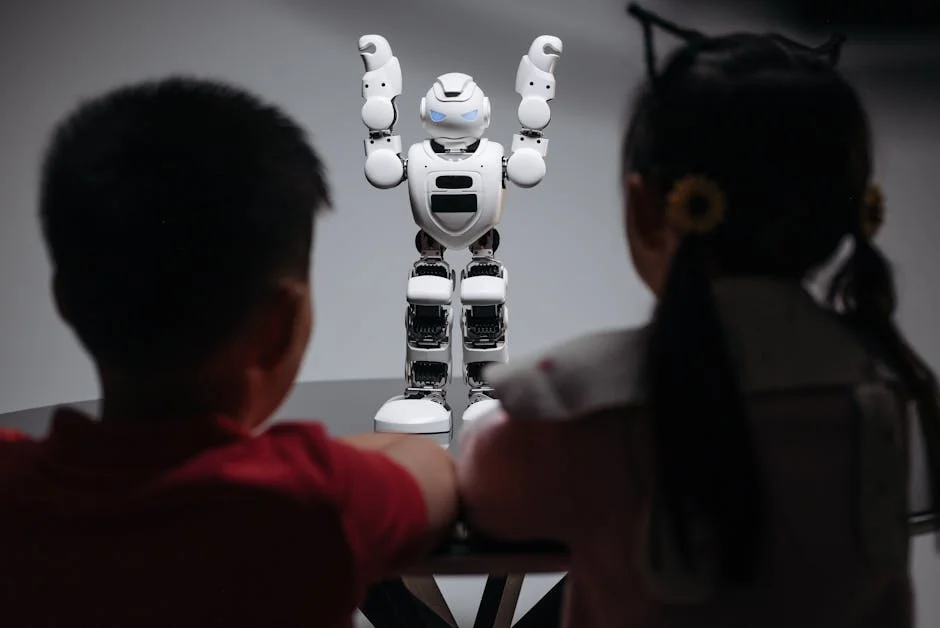
Robotics STEM education works best when it follows an age-appropriate progression that respects cognitive development and fine-motor skills. For early learners, the focus should be on cause-and-effect, sequencing, and simple mechanisms. Tools like snap-together building systems and screen-free coding cards can introduce the idea that instructions control behavior. A young student who programs a robot to move forward three steps and turn right is already practicing decomposition and spatial reasoning. At this stage, success depends on short build cycles and immediate feedback. Learners benefit from storytelling prompts, such as guiding a robot “helper” through a map, because narrative makes abstract logic feel purposeful. The goal is not to master complex robotics but to build comfort with experimentation and the idea that mistakes are part of learning.
As students grow, robotics STEM education can introduce more formal engineering practices: measuring, documenting, iterating, and comparing solutions. Upper elementary and middle school learners can handle sensors, gears, and more structured coding, including loops and conditionals tied to real sensor data. They can begin to use design notebooks, create test plans, and justify design choices. High school and advanced learners can move into microcontrollers, CAD, 3D printing, electronics, and more sophisticated algorithms such as PID control, mapping, or computer vision. They can also explore ethical and societal dimensions, including how automation affects jobs and how robots should behave around people. A strong pathway does not rush complexity; it builds layers so learners repeatedly revisit core ideas with increasing depth. That spiral approach makes robotics STEM education sustainable, preventing the common problem of students hitting a wall when projects become too hard too quickly.
Hardware Platforms and Tools That Support Effective Learning
Choosing hardware for robotics STEM education is less about chasing the newest gadget and more about aligning tools with learning goals, budget, and classroom realities. Entry-level kits with durable parts and clear assembly can reduce frustration and increase time spent on problem solving rather than troubleshooting broken components. For schools, durability and replaceable parts matter because robotics kits must survive frequent handling. For coding, platforms that offer both block-based and text-based options can support differentiation: beginners can start with blocks, while advanced students can transition to Python or C-style syntax without switching hardware. Sensor variety also matters. A kit with distance sensors, line sensors, gyros, and color sensors enables a wider range of challenges, from autonomous navigation to data collection and environmental monitoring.
As learners advance, robotics STEM education can incorporate microcontrollers and single-board computers, which open the door to real-world engineering workflows. Microcontrollers teach pin mapping, signal types, and the basics of embedded systems. Single-board computers can support higher-level programming, networking, and even basic machine learning projects. Tools like multimeters, breadboards, and soldering stations can be introduced with strong safety routines and clear purpose, such as diagnosing why a motor is not receiving voltage or why a sensor returns noisy readings. CAD software and 3D printing can extend robotics into mechanical design, allowing students to create custom brackets, gears, and enclosures. The most effective tool choices minimize unnecessary complexity while maximizing opportunities for inquiry. In robotics STEM education, the best hardware is the set of tools that helps learners test ideas quickly, see results clearly, and iterate confidently.
Teaching Methods That Make Robotics Instruction Work
Robotics STEM education thrives when instruction balances structure with autonomy. Too much structure turns robotics into a recipe where students follow steps without understanding; too much autonomy can overwhelm beginners and lead to unproductive trial and error. A strong approach often uses guided exploration: teachers provide a clear challenge, a limited set of constraints, and a few key concepts, then allow teams to develop solutions. Mini-lessons can be timed to moments of need, such as introducing sensor thresholds after students notice inconsistent line following. This “just-in-time” teaching respects attention and increases retention because learners immediately apply the concept. Another effective method is the use of design cycles with explicit checkpoints: plan, build, test, analyze, improve. When students know they are expected to analyze results, they become more careful about data collection and more reflective about changes.
Collaboration routines also determine whether robotics STEM education becomes inclusive and productive. Teams need roles, but roles should rotate to prevent one student from always coding while another always builds. Rotations can be structured around tasks: wiring, programming, documenting, testing, and presenting. Teachers can use short stand-up meetings where each team states what worked, what failed, and what they will try next. This builds a culture where setbacks are normalized and progress is tracked openly. Assessment can include observation checklists, design notebooks, code reviews, and performance in challenges, but it should also include communication and reasoning. A robot that performs well by accident is less valuable than a robot that performs well for understood reasons. Effective robotics STEM education emphasizes the “why” behind design choices, helping learners become thinkers and communicators, not just builders.
Project-Based Learning and Real-World Challenges
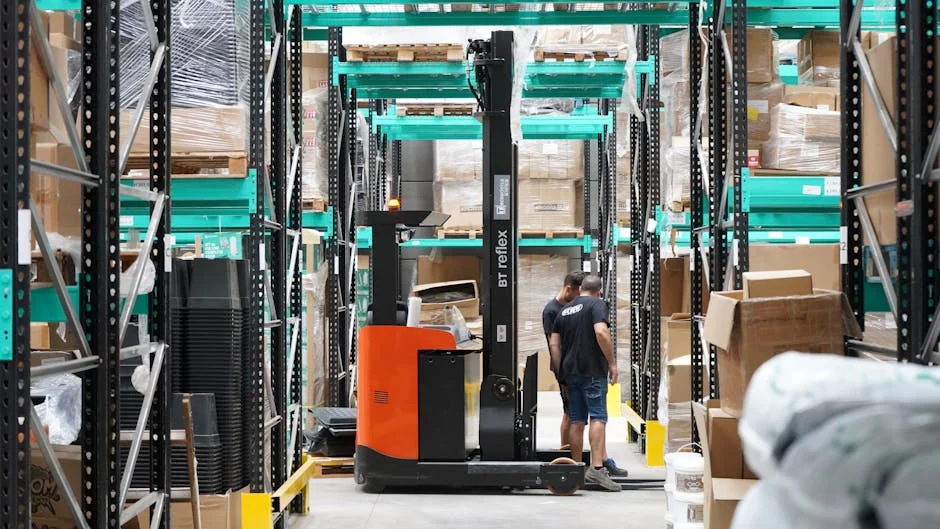
Project-based learning is a natural fit for robotics STEM education because robots are built to do something measurable. Good projects have clear objectives but multiple possible solutions, encouraging creativity and engineering trade-offs. For example, a “warehouse sorter” challenge can require a robot to detect and move objects to different locations based on color or size. Students must consider sensor placement, gripper design, navigation strategy, and code logic. A “disaster response” challenge can focus on traversing uneven terrain, avoiding obstacles, and delivering supplies. These scenarios give meaning to design constraints, such as limited time, limited energy, or restricted materials. They also encourage students to think about safety and reliability, since a robot that succeeds once but fails repeatedly would be unacceptable in real applications.
Real-world context also helps robotics STEM education connect to careers and community needs. Learners can explore how robotics supports agriculture through automated irrigation monitoring, how hospitals use robotic assistance for logistics, or how manufacturing uses robotic arms for precision tasks. Projects can incorporate data collection and analysis, such as building a robot that measures temperature and humidity across a classroom or greenhouse area. Students can then visualize the data and propose improvements. When projects include documentation and presentation, learners practice explaining technical work to non-technical audiences, which is essential in professional settings. A well-designed project sequence can start with simple movement challenges and build toward autonomous behaviors, ensuring learners gain confidence at each step. By grounding tasks in authentic problems, robotics STEM education becomes more than a club activity; it becomes a structured way to practice applied innovation.
Building Coding Skills Through Robotics Without Losing the Engineering
Robotics STEM education is sometimes treated as a coding program with wheels, but the strongest learning happens when code and engineering are developed together. A robot’s behavior is shaped by mechanical choices as much as software. If a robot drifts, the fix might be better wheel alignment rather than more complex code. If a robot tips, the solution might be lowering the center of mass instead of adding delays. Teaching students to consider both sides prevents the misconception that software can solve every problem. Coding lessons can begin with simple control structures and gradually incorporate sensor feedback. Students can compare open-loop control, where the robot follows timed commands, to closed-loop control, where the robot adjusts based on sensor input. That comparison helps learners see why feedback is essential for reliable autonomy.
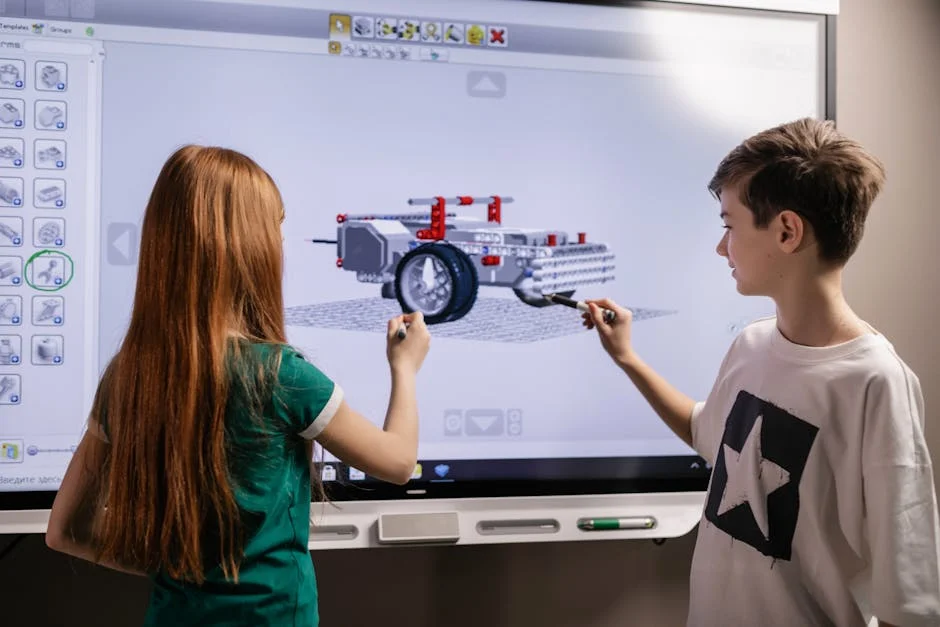
Debugging is the bridge that connects coding to scientific thinking in robotics STEM education. Students can learn to isolate variables by changing one thing at a time, to use print statements or telemetry to observe internal states, and to create small test programs that verify each component. A useful practice is to teach learners to write “diagnostic modes” that display sensor values or motor outputs, helping them understand what the robot thinks is happening. This reduces frustration and builds independence. As students advance, they can explore more sophisticated concepts like state machines, which help manage complex behaviors such as “search, approach, pick up, deliver.” They can also practice writing reusable functions and documenting code for teammates. When coding is taught as part of an engineering system rather than an isolated skill, robotics STEM education becomes a coherent learning experience that reflects how real robotics teams operate.
Equity, Inclusion, and Broad Participation in Robotics Programs
Robotics STEM education can either widen opportunity or reinforce existing gaps, depending on how programs are designed. Access starts with practical considerations: cost, transportation, scheduling, and availability of equipment. Schools and community groups can reduce barriers by offering loaner kits, providing open lab times, and designing activities that do not require expensive personal devices. Inclusion also depends on classroom culture. Students need to feel safe trying, failing, and asking questions without being judged. Teachers can reinforce that every role matters, from building and coding to documenting and presenting. When teams celebrate learning progress rather than only competition results, more students remain engaged. Representation matters as well: highlighting diverse engineers and roboticists helps learners imagine themselves in those roles.
| Approach | Best for | Key benefits |
|---|---|---|
| Hands-on robotics kits | Grades 3–8 building foundational STEM skills | Builds engineering intuition, supports iterative design, makes abstract concepts tangible |
| Coding + simulation (virtual robotics) | Classrooms with limited hardware or remote learning | Lower cost, faster experimentation, strengthens programming and debugging skills |
| Project-based robotics challenges | Middle–high school teams and clubs | Develops problem-solving, collaboration, and real-world systems thinking through competition-style goals |
Expert Insight
Start with a clear, real-world challenge (line-following, obstacle avoidance, or a simple pick-and-place) and break it into small milestones: build the chassis, wire sensors, write a basic control loop, then iterate. Use quick tests after each step—one sensor, one motor, one behavior—so troubleshooting stays simple and progress stays visible. If you’re looking for robotics stem education, this is your best choice.
Make learning measurable by adding a short design journal and a demo rubric: require students to sketch the circuit, label code changes, and record test results (speed, accuracy, battery life). End each session with a two-minute “next improvement” plan so teams leave with a concrete task list for the next build cycle. If you’re looking for robotics stem education, this is your best choice.
Team dynamics can unintentionally exclude students if roles become fixed or if confident voices dominate decisions. Robotics STEM education benefits from explicit collaboration norms, such as turn-taking during hands-on tasks, structured decision-making, and rotating leadership. Teachers can use protocols where each student must propose at least one idea before a design is chosen, ensuring quieter students are heard. Differentiation is also essential. Some learners may need more scaffolding with coding, while others may need support with spatial reasoning or fine-motor assembly. Providing multiple entry points—visual programming, pre-built base models, optional extension tasks—helps every learner experience success. When inclusion is intentional, robotics STEM education becomes a community of practice where diverse perspectives improve designs, and where students learn that innovation is stronger when everyone can contribute.
Competitions, Clubs, and Community Partnerships
Competitions and clubs can be powerful motivators in robotics STEM education, but their value depends on how they are framed. A competition can provide deadlines, clear rules, and a sense of excitement that pushes teams to refine their designs. Students often learn project management skills naturally: dividing tasks, tracking progress, and testing under pressure. However, if winning becomes the only metric, some learners may disengage, and teams may prioritize quick hacks over deep understanding. The healthiest competition culture emphasizes engineering process, documentation, and gracious professionalism. Coaches can set goals like “improve consistency,” “reduce build time,” or “write clearer code comments,” which keeps attention on growth rather than just ranking.
Community partnerships can expand what robotics STEM education can offer. Local businesses, makerspaces, libraries, and universities may provide mentors, workshop space, donated components, or guest speakers. Mentors can help students see how classroom concepts map to real careers, and they can introduce tools and practices used in industry, such as version control, design reviews, and safety checks. Partnerships also create authentic audiences for student work. A team presenting a robotics solution to a city department, a nonprofit, or a small manufacturer gains a deeper sense of purpose. Even small collaborations—like a library hosting a robotics demo day—can build momentum and visibility. When clubs and partnerships are aligned with inclusive practices, robotics STEM education becomes a community effort that connects learners to real networks and long-term opportunities.
Assessment and Measuring Learning Outcomes in Robotics
Assessing robotics STEM education requires more than checking whether a robot completes a task. Performance matters, but it is only one slice of learning. Strong assessment captures design reasoning, iteration quality, and teamwork. Teachers can evaluate planning documents, design notebooks, annotated diagrams, and test logs that show what students tried and what they learned. Rubrics can include criteria such as clarity of problem definition, justification of design choices, quality of testing methods, and ability to interpret data. Code can be assessed for readability, organization, and use of appropriate control structures. Oral explanations and demonstrations can reveal understanding that a final robot run might not show, especially if a mechanical failure happens at the wrong time.
Robotics STEM education also benefits from formative assessment that guides improvement during the project. Quick check-ins, peer feedback, and short reflection prompts can help students identify what they understand and what they need to revisit. For example, a reflection might ask students to describe one change they made based on test results and explain why it helped. Another might ask them to compare two sensor configurations and discuss trade-offs. These prompts encourage metacognition, which strengthens learning transfer. Teachers can also assess collaboration by observing role rotation, communication patterns, and how teams resolve disagreements. When assessment rewards evidence-based thinking and clear communication, students learn that engineering is not magic; it is a disciplined process. That message is central to robotics STEM education and helps learners develop confidence grounded in real competence.
Safety, Ethics, and Responsible Use of Robotics Technology
Safety is a foundational component of robotics STEM education, especially as projects introduce tools, batteries, moving parts, and electrical systems. Clear routines reduce risk: checking for loose wires, securing hair and clothing near rotating mechanisms, using appropriate eye protection when cutting or drilling, and handling batteries correctly. Students should learn why these rules exist, not just memorize them. For instance, understanding how a short circuit generates heat makes careful wiring feel logical. Safety also includes digital practices, such as protecting devices, using secure passwords, and respecting privacy when robots collect data. When learners treat safety as part of engineering quality, they build habits that transfer to labs, workshops, and future workplaces.
Ethics and responsibility are equally important in robotics STEM education because robots influence how people live and work. Students can explore questions about bias in data, surveillance concerns, accessibility, and the impact of automation on jobs. Even simple classroom robots can spark meaningful discussion: If a robot follows a person, what consent is needed? If a robot makes decisions based on sensor input, what happens when sensors fail? Learners can also consider environmental impact through choices about materials, reuse, and energy consumption. These conversations should be practical rather than abstract, connected to design decisions students are already making. When ethics is integrated into projects—such as requiring a privacy statement for any data collection or an accessibility check for user interfaces—students learn that responsible innovation is part of the job. Robotics STEM education becomes not only skill-building but also character-building, preparing learners to create technology that serves people well.
How Families and Educators Can Support Robotics Learning at Home and School
Support for robotics STEM education does not require a fully equipped lab or expensive kits, although resources help. The most important support is time, encouragement, and a mindset that values experimentation. Families can help by asking learners to explain what their robot is supposed to do, what problem they encountered, and what they tried. These questions reinforce reflection and communication. Simple household materials can support prototyping, such as cardboard, tape, rubber bands, and small containers for organizing parts. If a learner has access to a basic robotics kit, families can encourage short, repeatable test sessions rather than long marathons that end in frustration. Celebrating incremental improvements—like a robot turning more accurately—builds motivation and teaches that engineering progress is often gradual.
Educators can support robotics STEM education by creating consistent routines and making learning visible. Posting a design cycle on the wall, maintaining a parts inventory system, and establishing clear team norms can reduce chaos and increase productive time. Teachers can also build pathways for students who want more challenge, such as optional extensions involving additional sensors or performance constraints. Sharing student work with the broader school community—through showcases, hallway displays, or short demonstrations—helps learners feel that their effort matters. When possible, connecting robotics activities to core subjects strengthens buy-in: a math teacher can collaborate on measurement and graphing, while a science teacher can connect sensors to data collection. The strongest support systems treat robotics as a learning ecosystem rather than a standalone activity. When learners see consistent encouragement from both home and school, robotics STEM education becomes a stable platform for confidence, curiosity, and long-term skill growth.
Future Trends Shaping Robotics Learning and Career Pathways
Robotics STEM education is evolving alongside advances in sensors, computing, and connectivity. As costs drop and tools become more accessible, students can work with technologies that were once limited to research labs. Computer vision, edge AI, and networked robotics are increasingly within reach for advanced classrooms, enabling projects like object recognition, smart navigation, and remote monitoring. At the same time, there is a growing emphasis on foundational principles that remain stable even as tools change: feedback control, system integration, reliability testing, and human-centered design. Programs that focus only on a single platform risk becoming outdated, while programs that emphasize transferable concepts prepare learners to adapt. Robotics learning is also expanding into interdisciplinary areas such as biomedical devices, environmental monitoring, and assistive technology, making the field relevant to students interested in health, sustainability, or social impact.
Career pathways connected to robotics STEM education are broader than “roboticist” or “software engineer.” Students may move into mechatronics, manufacturing technology, automation maintenance, UX design for human-robot interaction, data analysis for sensor systems, or technical project management. Many roles value practical competence: the ability to troubleshoot, document, and collaborate. Credentials can include industry certifications, dual-enrollment courses, apprenticeships, and portfolio-based demonstrations of skill. A strong robotics program encourages learners to build a portfolio of designs, code samples, test results, and reflections that show growth over time. That portfolio mindset also benefits students who pursue non-technical careers, because it demonstrates initiative and problem solving. As technology continues to reshape work, robotics STEM education remains a powerful way to help learners build adaptable skills, connect learning to real outcomes, and develop confidence in shaping the tools that shape the world.
Creating Sustainable Robotics STEM Education Programs Over Time
Sustainability is often the difference between a robotics initiative that lasts one exciting year and robotics STEM education that becomes a lasting part of a school or community. Sustainable programs plan for staffing, training, budgeting, and equipment maintenance. Teacher support is essential: educators need time to learn platforms, troubleshoot common issues, and design meaningful challenges. Professional development works best when it includes hands-on practice, not just presentations, and when teachers leave with ready-to-run lessons. Budget planning should account for consumables and replacement parts, since robotics kits wear over time. A simple inventory system—labeled bins, check-out procedures, and a routine for charging batteries—can prevent loss and reduce downtime. When logistics are smooth, more time is available for learning, and frustration drops for both students and instructors.
Long-term success in robotics STEM education also depends on building a culture of mentorship and continuity. Older students can mentor younger teams, creating leadership opportunities and preserving knowledge across years. Documentation practices—like shared build guides, code repositories, and troubleshooting notes—help new cohorts start stronger rather than repeating the same early mistakes. Schools can schedule regular showcases to maintain visibility and community support. Partnerships can provide stability as well, especially when local organizations contribute mentors or sponsor equipment. Most importantly, sustainability requires a clear educational purpose: robotics should be tied to learning outcomes such as problem solving, collaboration, and applied STEM understanding, not treated as a novelty. When a program is designed to be repeatable, inclusive, and aligned with learning goals, robotics STEM education becomes an enduring engine for student growth and community innovation.
Watch the demonstration video
Discover how robotics can make STEM education more engaging and hands-on. This video shows how building and programming robots helps students develop problem-solving, coding, and engineering skills while encouraging creativity and teamwork. You’ll learn practical ways educators use robotics projects to connect classroom concepts to real-world applications. If you’re looking for robotics stem education, this is your best choice.
Summary
In summary, “robotics stem education” is a crucial topic that deserves thoughtful consideration. We hope this article has provided you with a comprehensive understanding to help you make better decisions.
Frequently Asked Questions
What is robotics STEM education?
Robotics STEM education uses hands-on robot building and programming to teach science, technology, engineering, and math concepts through real-world projects.
What skills do students gain from robotics programs?
Students build coding, engineering design, problem-solving, teamwork, communication, and systems-thinking skills, plus persistence through iterative testing.
What age is appropriate to start robotics?
Students can begin their journey in early elementary with simple robotics kits and block-based coding, then steadily advance into text-based programming and more complex builds as they move through middle and high school—building confidence and real-world skills through robotics stem education.
Do students need prior coding or engineering experience?
No. Most curricula start with basics and scaffold skills; prior experience helps but isn’t required to begin and succeed.
What equipment is typically needed for a robotics class or club?
To get started, you’ll typically need a robotics kit, a computer or tablet, and programming software, along with a few basic tools for building and troubleshooting. For a more hands-on setup in **robotics stem education**, it also helps to have optional add-ons like sensors, spare batteries, and a dedicated practice field or workspace to test and refine your robot.
How can robotics be aligned with school standards and curriculum?
Robotics projects align naturally with NGSS, CSTA, and math standards by focusing on clear learning goals—such as measurement, data analysis, forces and motion, algorithmic thinking, and the engineering design process—making them a strong fit for robotics stem education.
📢 Looking for more info about robotics stem education? Follow Our Site for updates and tips!

Trusted External Sources
- mBot2: No.1 Coding Robot for STEM Education – Makeblock
Makeblock mBot2 is a top-choice robot kit for K–12 learners, designed to make coding and hands-on building fun and approachable. Through DIY projects and interactive programming, it helps students strengthen problem-solving skills while supporting effective **robotics stem education** in the classroom or at home.
- Robotics STEM Education United States Robotics | Local – ABB
Explore our portfolio of innovative software and hardware solutions, backed by globally recognized STEM certification programs and curriculum. We also provide hands-on training, a comprehensive new-robot checklist, and everything you need to support impactful **robotics stem education**.
- FIRST | For Inspiration and Recognition of Science and Technology
We’re a youth-focused nonprofit dedicated to expanding **robotics stem education** and inspiring the next generation of innovators. Discover FIRST robotics programs for kids of all ages—available in schools and community organizations worldwide.
- LEGO® Education: Hands-on Learning Materials for K-8 Classrooms
Our new K-8 computer science solution that engages all students with hands-on collaboration. Discover more. Watch full video. Homepage_4to3_800x300.jpg.
- DOE: STEM Education – IN.gov
The STEM Integration Grant supports Education (IDOE) efforts to align STEM programs by expanding hands-on learning opportunities. Through participation in competitive robotics teams, students deepen their understanding of STEM concepts while building real-world skills like problem-solving, collaboration, and creative design—strengthening robotics stem education in an engaging, practical way.