Check in baggage is the part of your luggage that you hand over to the airline at the airport so it can travel in the aircraft’s cargo hold rather than in the cabin with you. For many travelers, it’s the difference between a light, fast trip and a more comfortable journey with extra clothing, shoes, toiletries, and special items that simply don’t fit airline cabin limits. Even though the concept sounds straightforward, the rules around checked luggage vary widely by airline, route, ticket type, and even the airport’s operational constraints. The result is that two travelers on the same flight can face different allowances, fees, and restrictions depending on fare class, loyalty status, or whether their ticket was booked as part of a package. Getting the details right before you arrive at the terminal reduces the risk of surprise charges, delays at the counter, or a last-minute repack in a busy check-in hall. When you understand how a carrier defines allowance, what “piece concept” versus “weight concept” means, and how oversize or overweight charges are triggered, you can pack strategically and protect your budget. This matters especially on multi-leg itineraries, where the first airline’s policy may not be the one that applies to the whole journey, and where transfer airports can impose additional screening steps that affect how your suitcase is handled.
Table of Contents
- My Personal Experience
- Understanding Check In Baggage: What It Really Includes and Why It Matters
- Airline Allowances: Weight, Pieces, and the Fine Print That Changes Everything
- Size and Weight Limits: Measuring Bags Correctly and Avoiding Overweight Fees
- What You Can and Cannot Pack: Restricted Items, Batteries, Liquids, and Safety Rules
- How the Airport Process Works: Check-In Counters, Bag Drop, Tagging, and Screening
- Fees and Pricing Strategies: When Paying for Checked Luggage Makes Sense
- Packing Techniques for Check In Baggage: Protection, Organization, and Space Efficiency
- Expert Insight
- Connecting Flights and Transfers: Reducing the Risk of Delayed or Misrouted Bags
- Special Items: Sports Equipment, Strollers, Mobility Aids, and Musical Instruments
- International Travel Considerations: Customs, Duty, and Country-Specific Rules
- Handling Problems: Lost, Delayed, or Damaged Bags and How to Respond Effectively
- Making Check In Baggage Work for You: Practical Habits for Frequent and Occasional Travelers
- Watch the demonstration video
- Frequently Asked Questions
- Trusted External Sources
My Personal Experience
Last month I flew out early in the morning and decided to check in my suitcase instead of dragging it through security. The line at the baggage counter moved slowly, and I had that familiar worry about the weight limit, so I shifted a pair of shoes into my carry-on while the agent watched. She tagged the bag, sent it down the belt, and I felt relieved—until I landed and stood at the carousel for almost half an hour with nothing showing up. When it finally appeared, the handle was scuffed and one corner looked like it had taken a hit, but everything inside was still there. Since then I’ve started putting a change of clothes and my chargers in my carry-on, just in case my checked baggage decides to take its own trip again. If you’re looking for check in baggage, this is your best choice.
Understanding Check In Baggage: What It Really Includes and Why It Matters
Check in baggage is the part of your luggage that you hand over to the airline at the airport so it can travel in the aircraft’s cargo hold rather than in the cabin with you. For many travelers, it’s the difference between a light, fast trip and a more comfortable journey with extra clothing, shoes, toiletries, and special items that simply don’t fit airline cabin limits. Even though the concept sounds straightforward, the rules around checked luggage vary widely by airline, route, ticket type, and even the airport’s operational constraints. The result is that two travelers on the same flight can face different allowances, fees, and restrictions depending on fare class, loyalty status, or whether their ticket was booked as part of a package. Getting the details right before you arrive at the terminal reduces the risk of surprise charges, delays at the counter, or a last-minute repack in a busy check-in hall. When you understand how a carrier defines allowance, what “piece concept” versus “weight concept” means, and how oversize or overweight charges are triggered, you can pack strategically and protect your budget. This matters especially on multi-leg itineraries, where the first airline’s policy may not be the one that applies to the whole journey, and where transfer airports can impose additional screening steps that affect how your suitcase is handled.
Beyond cost and convenience, check in baggage has practical implications for security, reliability, and time management. Once your suitcase is tagged and accepted, it typically moves through a chain of custody that includes screening, sorting, loading, and unloading, and then delivery to the baggage carousel. Each step is designed to be efficient, but any mismatch between your bag and your itinerary—such as a tight connection, a late check-in, or incorrect tagging—can create complications. Some airports have advanced tracking that ties your suitcase to your boarding pass, while others rely more heavily on manual scans. Either way, the more you know about timelines, labeling, and what happens behind the scenes, the more you can make decisions that reduce risk. For example, choosing a hard-sided suitcase can help protect fragile contents, while using a bright strap or a distinctive luggage tag can make identification at baggage claim easier. Understanding the limits on items like lithium batteries, aerosols, and certain tools also helps prevent a bag from being pulled for inspection, which can delay its loading. When you treat checked luggage as a system with rules and trade-offs rather than a simple “drop it and forget it” step, you’re far more likely to arrive with everything you packed, on time, and without unnecessary fees.
Airline Allowances: Weight, Pieces, and the Fine Print That Changes Everything
Airline allowances for check in baggage usually follow one of two frameworks: the weight concept or the piece concept. Under the weight concept, you’re typically allowed a total combined weight across one or more suitcases, such as 20 kg, 23 kg, or 30 kg, depending on the fare and route. Under the piece concept, common on many long-haul routes, you may be allowed one or two bags, each up to a maximum weight (often 23 kg or 32 kg) and within a size limit measured as total linear dimensions (length + width + height). The difference matters because it changes how you distribute your items. With a weight allowance, you might split weight across two smaller suitcases if permitted, while with a piece allowance you might be better off maximizing one case and keeping the second lighter to avoid overweight penalties. The fine print can also specify whether the allowance includes a stroller, a sports item, or a musical instrument, and whether a personal item in the cabin is counted separately. Travelers often assume “standard allowance” is universal, but carriers frequently adjust allowances based on competition, fuel costs, and fare structures, so the same airline may offer different checked luggage benefits on different routes or seasons.
Ticket type is another major factor. Basic economy fares on many airlines may exclude check in baggage entirely, or include it only on certain international routes. Standard economy might include one bag, while premium economy, business, and first class can include two or three pieces, sometimes with higher weight limits. Loyalty programs and co-branded credit cards can also change the picture; a frequent flyer status tier may grant an extra piece or additional kilograms, and some cards offer free checked luggage for the cardholder and companions on the same reservation. Codeshare flights add complexity: the marketing airline on your ticket may not be the operating carrier, and baggage rules can follow the “most significant carrier” principle on international itineraries, meaning the airline that operates the longest or most significant segment sets the policy. To avoid disputes at the counter, confirm the specific allowance tied to your booking reference and route, and take a screenshot or printout of the policy shown in your booking confirmation. If the airline agent’s system displays something different, having documentation can help clarify the intended allowance. Getting this right is one of the most effective ways to prevent unexpected charges for check in baggage, especially when you are traveling with family, bulky items, or multiple stops.
Size and Weight Limits: Measuring Bags Correctly and Avoiding Overweight Fees
Size and weight limits for check in baggage are enforced with surprising consistency, especially at airports where airlines use self-service bag drops and automated scales. Weight is straightforward: you place the suitcase on a scale, and if it exceeds the limit by even a small margin, it can trigger an overweight fee or require repacking. Size is usually measured as total linear dimensions, such as 158 cm (62 inches) combined. Many travelers never measure their suitcase, assuming a “medium” or “large” bag is fine, but hard-shell designs and external wheels can push a case over the threshold. Airlines may not measure every bag, yet it only takes one strict agent or one crowded flight to make enforcement more likely. The most practical approach is to weigh your packed suitcase at home using a digital luggage scale and measure it with a tape measure, including wheels and handles. Doing this before travel lets you redistribute items into a carry-on or a second bag within the allowance, rather than opening your suitcase on the airport floor while a line forms behind you.
Avoiding overweight fees often comes down to packing discipline and smart gear choices. Shoes, jeans, and toiletries add weight quickly, and souvenirs on the return leg can turn a compliant bag into an overweight one. Consider packing a compact foldable tote or duffel inside your suitcase so you have an extra option if you need to split items at the last minute. If your airline allows two pieces of check in baggage, balancing weight between them is usually cheaper than paying an overweight penalty on one. If you only have one piece included, evaluate whether prepaying for an additional checked suitcase is less expensive than overweight charges; many airlines price these differently, and the cheaper option can vary by route. Also pay attention to “heavy bag” limits: some carriers set a maximum weight per bag for safety, often 32 kg. If your suitcase exceeds that, it may be refused entirely or require repacking into two bags. Using lightweight luggage can make a meaningful difference; some suitcases weigh several kilograms empty, which is essentially wasted allowance. By treating weight and size limits as a packing target rather than a constraint discovered at the airport, you keep check in baggage predictable and avoid the most common cost surprises.
What You Can and Cannot Pack: Restricted Items, Batteries, Liquids, and Safety Rules
Rules about what you can pack in check in baggage are shaped by aviation safety, security screening, and international regulations. While checked luggage allows you to pack larger liquid containers than cabin baggage, there are still restrictions on hazardous materials such as flammable aerosols, fuels, certain chemicals, and some types of gas cylinders. Items like camping stove fuel, fireworks, and many industrial solvents are prohibited. Lithium batteries are an especially important category: spare lithium-ion batteries and power banks are typically required to be in carry-on baggage, not checked, because a battery fire in the cargo hold is harder to detect and suppress. Devices with installed batteries, such as laptops or cameras, may be allowed in checked luggage on some airlines, but it is still safer to carry them in the cabin to reduce theft risk and prevent damage. Similarly, valuables like jewelry, cash, passports, and critical medication should not go into checked luggage. Even when airlines do their best, mishandling and delays happen, and you don’t want essential items separated from you.
Liquids and toiletries are often a reason travelers rely on check in baggage, but it’s still wise to pack them carefully. Pressure changes and rough handling can cause leakage, so use sealed bags, tighten caps, and consider taping lids. Glass bottles should be cushioned inside clothing, and anything that could ruin other items should be isolated in a waterproof pouch. Sharp objects such as scissors or tools that are not allowed in the cabin can often be placed in checked luggage, but local laws and airline policies may still restrict certain blades or equipment. Sporting goods and firearms have strict rules, usually requiring declaration, specific cases, and sometimes advance approval. Food items can be tricky on international routes, where customs regulations may prohibit meat, dairy, fresh produce, or seeds. Even if the airline allows the item as check in baggage, the destination country may confiscate it or issue fines. The safest approach is to check both airline restrictions and the destination’s customs guidance, especially for gifts, packaged foods, and cultural items. Packing within the rules reduces the chance your bag will be opened for inspection, delayed, or refused, and it helps keep the entire baggage system safer for everyone on the flight.
How the Airport Process Works: Check-In Counters, Bag Drop, Tagging, and Screening
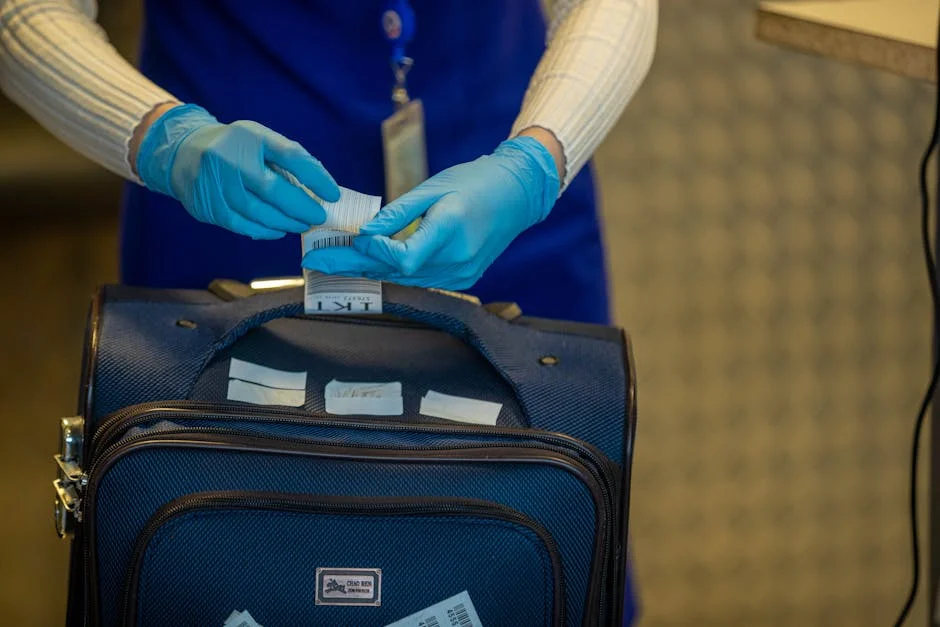
The airport process for check in baggage typically begins at either a staffed counter or a self-service kiosk followed by a bag drop. At a staffed counter, an agent confirms your identity and itinerary, checks your allowance, weighs your suitcase, attaches a baggage tag, and provides a receipt stub that includes a tracking number. At self-service bag drop, you may print the tag yourself, attach it, and place the bag on a belt where it is weighed and accepted. In both cases, the tag is crucial: it encodes your flight details and routing so automated systems can sort the suitcase to the correct aircraft. Errors can happen if the tag is misprinted, attached incorrectly, or damaged, so it’s worth checking that the destination airport code looks correct before your bag disappears onto the belt. Keep the receipt until you have collected your luggage at the end of your trip; it is often required for tracing if the bag is delayed.
After acceptance, check in baggage enters a screening process that can include X-ray, CT scanning, explosive detection, and sometimes manual inspection. If security needs to open a bag, procedures vary by country: some airports use a controlled inspection area, while others may open it with or without the passenger present. Using TSA-approved locks in the United States can prevent locks from being cut if inspection is needed, though no lock guarantees protection against theft. In many airports, bags are then sorted by destination and loaded into containers or directly onto carts for the aircraft. Tight connections and late check-in can reduce the time available for these steps, increasing the chance the suitcase misses the flight. Airlines publish “bag acceptance cutoffs,” such as 45 to 60 minutes before departure for domestic flights and longer for international routes. Arriving early isn’t only about clearing security for yourself; it’s also about giving your checked luggage enough time to be screened and loaded. Understanding this flow helps you plan: if you have fragile items, ensure they are packed for rough handling; if you have connections, consider whether carry-on-only travel is feasible; if you must check a bag, choose flights with longer layovers to reduce the risk of your check in baggage arriving later than you do.
Fees and Pricing Strategies: When Paying for Checked Luggage Makes Sense
Fees for check in baggage can be simple on paper and expensive in practice. Many airlines charge per bag, with a lower price if you pay online in advance and a higher price at the airport. Others bundle checked luggage into fare families, where the cheapest fare excludes bags and the next tier includes one. On some routes, especially short-haul or low-cost carriers, baggage fees can exceed the difference between fare tiers, making it smarter to buy a more inclusive ticket rather than adding bags later. Overweight and oversize charges can be even higher and may stack on top of standard fees. That means a traveler might pay once for the bag and again for exceeding weight limits. The most cost-effective approach is to estimate your packing needs before booking, not after. If you know you’ll need a suitcase, compare the all-in cost of each fare option with the bag included versus paying separately. Also consider family travel: if two people each get a carry-on but only one checked suitcase is needed, sharing one piece of checked luggage can reduce the total cost, provided the weight stays within limits.
There are also smart pricing strategies that reduce check in baggage costs without compromising convenience. Prepaying online often saves money, and some airlines allow you to add bags through the app right up to check-in. Credit cards and loyalty status can eliminate fees entirely, but only when the booking is made correctly—sometimes you must pay with the co-branded card or attach the frequent flyer number before check-in. Another strategy is to evaluate whether shipping items is cheaper than checked luggage for certain trips, especially when traveling with heavy gear or moving between countries for an extended stay. For sports equipment, the fee structure varies: some airlines treat items like golf clubs as a normal checked bag if within size limits, while others add special handling charges. Musical instruments can be similar, with additional options such as buying a seat for an instrument rather than checking it. Finally, keep an eye on seasonal promotions or route-specific policies; airlines sometimes include extra check in baggage on long-haul flights during peak travel periods to compete with rivals. Treat baggage as part of the total travel cost, and you’ll make decisions that keep your trip comfortable without paying more than necessary.
Packing Techniques for Check In Baggage: Protection, Organization, and Space Efficiency
Effective packing for check in baggage starts with choosing the right suitcase and building a structure that protects your belongings. A hard-shell case offers better impact resistance, while a soft-sided bag can be more flexible for squeezing into size limits. Either way, internal organization matters: packing cubes separate categories like shirts, underwear, and accessories, making it easier to find items without tearing the bag apart. For fragile items, create layers: place softer clothing at the bottom and top as shock absorbers, and position breakables in the center surrounded by padding. Shoes should be bagged to keep dirt away from clothing, and belts or straps can be used to stabilize items. If you are checking a bag on a multi-city trip, consider packing a “top layer” with one day of clothing and toiletries so you can quickly access essentials in a hotel without unpacking everything. This also helps if the suitcase is inspected; a neat interior is less likely to be disrupted.
| Option | Best for | Typical allowance | Key considerations |
|---|---|---|---|
| Standard checked bag | Most travelers with clothing and essentials for multi-day trips | 1 bag, 20–23 kg (44–50 lb) | Weight/size limits vary by airline and fare; overweight fees can be high |
| Extra checked bag | Long trips, families, or travelers with bulky items | +1 bag (often 20–23 kg), priced per segment | Cheaper when prepaid online; confirm total bag count allowed on your ticket |
| Oversize / overweight checked bag | Sports gear, instruments, or heavy luggage | Over 23 kg up to 32 kg (50–70 lb) and/or oversize dimensions | May require special handling; some airlines cap weight at 32 kg; advance notice sometimes needed |
Expert Insight
Weigh and measure your check-in baggage at home, then leave a small buffer for last-minute items to avoid surprise fees. Place heavier items near the wheels, keep essentials and valuables in your carry-on, and add a clear luggage tag both outside and inside the bag in case the outer one is torn off. If you’re looking for check in baggage, this is your best choice.
Pack for smoother screening and fewer delays by grouping liquids, chargers, and small accessories in easy-to-reach pouches, and avoid prohibited items like spare lithium batteries in checked luggage. Take a quick photo of your bag and its contents before you leave, and keep your baggage receipt handy so you can report and track it quickly if it’s delayed. If you’re looking for check in baggage, this is your best choice.
Space efficiency is not just about fitting more; it’s about keeping weight and balance manageable. Rolling clothing works for some fabrics, while folding reduces wrinkles for others. Heavier items should be placed near the wheels so the suitcase is easier to maneuver. If you expect to bring back purchases, leave space or pack a collapsible bag. Liquids should be sealed and placed in a dedicated waterproof pouch; double-bagging helps prevent shampoo leaks from ruining clothing. Consider including a small repair kit: a spare zipper pull, a few cable ties, and a compact roll of tape can save a trip if a handle loosens or a seam tears. Also, add identification inside the bag in case the external tag is damaged: a card with your name, phone number, and email, plus the address of your first hotel, can help airlines reunite you with your check in baggage. Finally, take photos of the packed interior and exterior before departure. If you need to file a damage or loss claim, photos provide evidence of condition and contents, and they help you remember exactly what was packed. Packing with protection and documentation in mind turns checked luggage into a reliable tool rather than a source of anxiety.
Connecting Flights and Transfers: Reducing the Risk of Delayed or Misrouted Bags
Connections are where check in baggage is most vulnerable to delays, especially if the layover is short or the airport is large and congested. When you check a bag at the origin, it is usually tagged to your final destination, but not always. Some itineraries require you to collect and recheck luggage at a transfer point, particularly when entering a country where you must clear customs before continuing. In the United States, for example, international arrivals often require passengers to pick up checked luggage, go through customs, and then recheck it for the next segment. If you assume your suitcase is automatically transferred and it isn’t, you could end up traveling onward without it. Confirm at the counter where your check in baggage is tagged to, and look at the tag yourself; the final airport code should match your intended endpoint. If you are traveling on separate tickets, the airline may refuse to through-check luggage, even if the flights are on the same carrier, which increases risk and requires more time between flights.
To reduce misrouting risk, build buffer time into your itinerary and avoid the tightest legal connection if you must check a bag. A longer layover gives ground crews time to move luggage between aircraft, especially in bad weather or during peak hours. If you have essential items for a wedding, business meeting, or cruise departure, pack them in your carry-on rather than relying on checked luggage. Using tracking tools can also help: many airlines now offer app-based updates showing when your bag is loaded, transferred, and delivered. Independent trackers placed in the suitcase can provide additional reassurance, though you should ensure any device complies with airline battery rules and is set up properly. Labeling your suitcase clearly with a durable tag and removing old tags reduces sorting errors. If your bag is delayed, report it immediately at the airport’s baggage service desk before leaving, because that creates a record and speeds tracing. Keep receipts for essential purchases if you are separated from your belongings; many carriers reimburse reasonable expenses under their delayed baggage policies. With thoughtful planning, check in baggage can work well even on complex itineraries, but it requires acknowledging that transfers are the highest-risk part of the journey and packing accordingly.
Special Items: Sports Equipment, Strollers, Mobility Aids, and Musical Instruments
Special items often require check in baggage handling even when you prefer to travel light. Sports equipment such as skis, snowboards, surfboards, bicycles, and golf clubs may be accepted as part of your checked allowance, or they may incur separate fees depending on size and route. The definition of “oversize” can differ for sports gear, and some airlines require advance notice or limit the number of such items per flight. Packaging matters: a padded ski bag, a rigid bike case, or a hard golf travel cover can prevent damage, while internal padding reduces movement. For bicycles, airlines often require handlebars to be turned, pedals removed, and tires partially deflated. These requirements exist to protect the item and to fit it safely into cargo holds. If you are renting equipment at your destination, compare rental costs with baggage fees and the risk of damage; sometimes renting is the cheaper and simpler option, especially for short trips.
Families and travelers with accessibility needs have additional considerations. Strollers and car seats are commonly checked at the counter or gate, with policies varying by airline. Gate-checking can be convenient because you use the stroller through the terminal, but it can also expose it to rough handling, so a protective travel bag is a wise investment. Mobility aids such as wheelchairs and walkers are typically transported without the same fees as standard check in baggage, and airlines have procedures for handling batteries and medical equipment. Musical instruments can be checked if packed in a flight-rated hard case, but many musicians prefer to carry them on to avoid temperature changes and impacts. Some airlines allow a larger instrument in the cabin if you buy an extra seat, which can be a practical alternative to checked transport for valuable instruments. Regardless of the item, document its condition before travel with photos and keep receipts or appraisals for high-value gear. If damage occurs, reporting it before leaving the baggage claim area is crucial; many airlines have strict deadlines for filing claims. Special items can travel safely as checked luggage, but they require more planning, better protective packing, and a clear understanding of the carrier’s rules before you arrive at the airport.
International Travel Considerations: Customs, Duty, and Country-Specific Rules
International travel adds layers of complexity to check in baggage because your suitcase is not only subject to airline rules but also to border controls and customs regulations. Even if an item is permitted by the airline, it may be restricted or taxable at your destination. Customs declarations often require you to disclose high-value purchases, large amounts of currency, or certain categories of goods such as alcohol, tobacco, and commercial quantities of merchandise. Some countries have strict rules about medications, including over-the-counter drugs that are common elsewhere. Packing prescriptions in original packaging and carrying a doctor’s note can prevent issues, and placing critical medication in carry-on baggage is still the safest approach. Agricultural controls are another area where travelers get caught off guard: fresh foods, plants, seeds, and some animal products can be prohibited, and fines can be steep. If you pack gifts, keep them accessible in case inspection is required, and consider leaving them unwrapped until you arrive.
Another international factor is how baggage is handled during entry and onward connections. Some countries require you to collect checked luggage to clear customs even if you are only transiting, while others allow “sterile transfers” where bags remain in the system. The difference affects how much connection time you need and whether you must meet additional check in baggage cutoffs at the transfer airport. Travel to regions with smaller airports may also involve aircraft with limited cargo capacity, which can lead to stricter enforcement of weight limits or occasional offloading of bags when flights are weight-restricted due to weather or runway constraints. In such cases, airlines may prioritize passengers and essential cargo, and suitcases can arrive on a later flight. To reduce disruption, pack a small set of essentials in your cabin bag—underwear, a change of clothes, basic toiletries, and any must-have items for the first day. Also ensure your luggage tag includes an international phone number format and an email address, which can be easier for overseas baggage teams to use. International travel with checked luggage can be smooth, but it rewards travelers who plan for customs realities, connection procedures, and the possibility that check in baggage may not arrive at the same time they do.
Handling Problems: Lost, Delayed, or Damaged Bags and How to Respond Effectively
Even with modern tracking and improved logistics, check in baggage can be delayed, misrouted, or damaged. The key to a good outcome is acting quickly and keeping documentation. If your suitcase doesn’t appear on the carousel, go directly to the airline’s baggage service desk before leaving the secure area, because they can file a report, confirm whether the bag was scanned at arrival, and start tracing. Provide the baggage tag number from your receipt and a detailed description of the suitcase, including brand, color, size, and distinguishing features like straps or stickers. Photos taken before departure can significantly improve identification. Ask for a reference number for your report and confirm how you will receive updates, whether by SMS, email, or the airline app. If you are traveling onward, provide the address and dates where you can receive delivery. Many airlines deliver delayed luggage to your hotel or home, but timing can vary based on flight frequency and customs processes.
For delayed baggage, airlines often reimburse reasonable essential purchases, but policies vary by carrier and jurisdiction. Keep receipts for toiletries and basic clothing, and avoid luxury purchases that may be denied. If your bag is damaged, report it immediately at the airport, ideally before you exit baggage claim. Airlines may offer repair, replacement, or compensation depending on the damage and the suitcase’s age. Note that many carriers exclude certain types of wear and tear, such as scuffs, minor scratches, or damage to external straps. If items inside are broken, documentation helps: photos of the damaged contents and proof of value improve your claim. Travel insurance can fill gaps, especially for higher-value items or when airline liability limits apply, but you must still follow reporting deadlines. Some countries follow international conventions that cap compensation for checked luggage, so understanding liability limits is helpful when packing expensive items. The most effective prevention is not to place irreplaceable or high-value goods in checked luggage, but if something goes wrong, a calm, organized approach with receipts, photos, and prompt reporting can turn a stressful check in baggage problem into a manageable inconvenience.
Making Check In Baggage Work for You: Practical Habits for Frequent and Occasional Travelers
Making check in baggage consistently smooth comes down to repeatable habits that reduce uncertainty. Start with a packing checklist tailored to your typical trips, and include reminders for items that are easy to forget, such as adapters, swimwear, or formal shoes. Weigh your suitcase after packing and again before returning home, because return trips often include gifts, laundry, and shopping. Keep a small “airport kit” ready—luggage scale, spare tag, zip ties, and a marker—so you can respond quickly if a zipper fails or a bag needs reinforcement. Use a durable luggage tag and place a second identification card inside the suitcase. Remove old airline tags to prevent scanning confusion. If you often check a bag, consider luggage with replaceable wheels and strong zippers; repairable luggage can save money over time and reduces the chance of a mid-trip failure that forces you to buy a replacement at inflated airport-area prices.
It also helps to align your travel choices with how you prefer to handle luggage. If you value speed and flexibility, choose accommodations with laundry and pack lighter, potentially avoiding checked luggage altogether on short trips. If you value comfort and variety in clothing, accept that check in baggage is part of your routine and optimize for it: arrive earlier, choose flights with longer connections, and prepay baggage fees when it’s cheaper. For business trips, pack critical items in the cabin so a delayed suitcase doesn’t derail meetings. For family trips, distribute essentials across multiple bags so one missing suitcase doesn’t eliminate everyone’s basics. Tracking tools, whether airline apps or personal trackers, can reduce uncertainty, but they work best alongside smart packing and realistic timing. The most successful travelers treat checked luggage as a planned component of the trip rather than an afterthought. When you build a system—confirm allowance, pack within limits, label clearly, and keep essentials with you—check in baggage becomes a reliable way to travel with what you need, and the final paragraph of your trip can be about arriving and enjoying your destination rather than chasing a missing suitcase.
Watch the demonstration video
In this video, you’ll learn the essentials of checking in baggage at the airport—from preparing your suitcase and meeting size and weight limits to tagging your bag and dropping it off at the counter or kiosk. It also covers common fees, security rules, and tips to help your luggage arrive safely and on time. If you’re looking for check in baggage, this is your best choice.
Summary
In summary, “check in baggage” is a crucial topic that deserves thoughtful consideration. We hope this article has provided you with a comprehensive understanding to help you make better decisions.
Frequently Asked Questions
What is check-in baggage?
Check-in baggage is luggage you hand over at the airport counter to be stored in the aircraft hold and collected at baggage claim after landing.
How many checked bags can I take?
Your checked baggage allowance can vary based on the airline you’re flying, your route, your fare type, and any frequent-flyer status you have. To know exactly what you can bring as **check in baggage**, look at your booking confirmation or visit the airline’s website for the most accurate details.
What are the typical size and weight limits for checked baggage?
Most airlines let you bring about 23 kg (50 lb) per bag with a combined length, width, and height of roughly 158 cm (62 in) for your **check in baggage**—but rules can differ, so it’s always smart to confirm the exact limits with your airline for your specific trip.
What items are not allowed in checked baggage?
Many airlines restrict certain items for safety—such as spare lithium batteries and power banks, e-cigarettes and vapes, flammable liquids, explosives, and some chemicals—and these restrictions can differ depending on the country and the carrier. Before you pack, double-check what’s allowed in your carry-on versus your **check in baggage** to avoid delays or confiscation.
What happens if my checked bag is overweight or oversized?
Depending on the airline and airport, you might have to pay an extra fee, rearrange your items into a different bag, or have it handled separately as special **check in baggage**.
What should I do if my checked baggage is delayed, lost, or damaged?
Before you leave the airport, head straight to the airline’s baggage service desk and report the issue with your **check in baggage** right away. Hold on to your baggage tag and any receipts, then use the reference number they give you to file your claim as soon as possible.
📢 Looking for more info about check in baggage? Follow Our Site for updates and tips!

Trusted External Sources
- No option to purchase check-in baggage during online check in
Aug 23, 2026 … Comments Section … Just do it at the airport. The price is the same. … As of 2/20/24 it reportedly costs $40 at the airport and $35 online per … If you’re looking for check in baggage, this is your best choice.
- Can I bring my desktop computer as check-in baggage on a flight?
Apr 6, 2026 … I would however suggest bringing it as a carry-on because you reduce the risk of physical damage. This is only possible if your case fits the carry-on size … If you’re looking for check in baggage, this is your best choice.
- No Checked Baggage Flights?! Help! – Reddit
check in baggage: Mar 26, 2026 … When I tried booking this flight yesterday, it was showing that you could buy extra baggage but what does that mean if it can’t be checked in?
- Prepaid Extra Bags – Excess baggage – Air New Zealand
Already checked in online? If your fare includes a bag, you can still purchase Prepaid Extra Bags before you travel. This option is available online for eligible journeys, making it easy to add more **check in baggage** in advance and save time at the airport.
- Help! AirAsia charging ₹6K for 20kg check-in baggage – Reddit
Sep 29, 2026 … Now, when I try to add 20kg check-in baggage per person on the AirAsia website, it’s charging me around ₹6,000 per person — which is turning out … If you’re looking for check in baggage, this is your best choice.