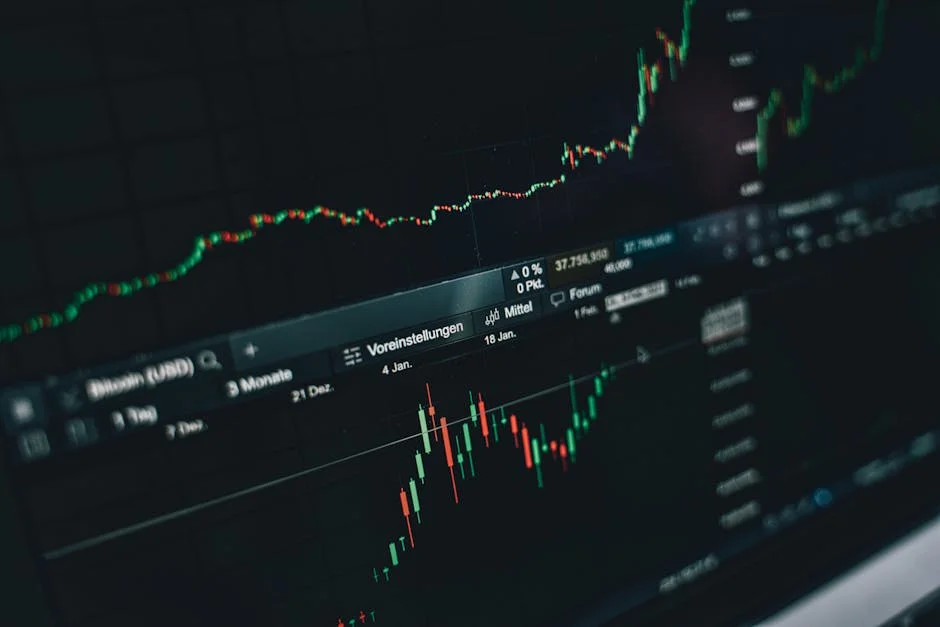
Trading forex vs crypto is often framed as a choice between a mature global currency market and a newer, fast-evolving digital asset market. The biggest practical difference starts with what you are actually trading. Forex pairs represent exchange rates between national currencies that are deeply tied to trade flows, interest-rate expectations, central bank policy, and macroeconomic stability. Crypto pairs, on the other hand, represent exchange rates between blockchain-based assets, many of which have no cash flows, no central bank backstop, and a value narrative driven by network utility, scarcity claims, adoption, tokenomics, and shifting market sentiment. That difference influences nearly everything a trader experiences: volatility, market hours, liquidity distribution, pricing behavior around news events, and how risk should be sized. In forex, a large part of the market’s “gravity” comes from economic fundamentals and institutional participation. In crypto, gravity can shift quickly because narratives change, token supply schedules evolve, and market structure is still developing across multiple venues.
Table of Contents
- My Personal Experience
- Understanding the Core Difference Between Forex and Crypto Trading
- Market Structure, Liquidity, and Price Discovery
- Trading Hours, Sessions, and Lifestyle Considerations
- Volatility Profiles and What They Mean for Strategy
- Leverage, Margin, and Liquidation Mechanics
- Regulation, Counterparty Risk, and Custody
- Costs: Spreads, Commissions, Funding, and Hidden Friction
- Fundamentals and Catalysts: Macro Data vs Network and Narrative
- Technical Analysis and Price Behavior Differences
- Expert Insight
- Risk Management: Position Sizing, Stops, and Tail Events
- Choosing a Platform: Broker vs Exchange Considerations
- Comparison Table: Forex vs Crypto Trading Venues and Tools
- Tax Treatment, Reporting, and Record-Keeping
- Which Market Fits Different Trader Profiles?
- Practical Takeaways for Getting Started Safely
- Final Thoughts on Trading Forex vs Crypto
- Watch the demonstration video
- Frequently Asked Questions
- Trusted External Sources
My Personal Experience
I started out trading forex because it felt more “grown up” and predictable—tight spreads on majors, clear session times, and fewer surprise 20% candles. But I quickly learned that predictability doesn’t mean easy: a small position with too much leverage can still blow up fast, and I got chopped up more than once during news releases when slippage hit and my stop didn’t fill where I expected. Crypto was the opposite experience—simpler access and nonstop markets, but the volatility and weekend moves messed with my sleep and my discipline. After a few months of bouncing between the two, I realized I trade better in forex when I stick to a plan around the London/NY overlap, while I only touch crypto with smaller size and wider stops because it can move against you for no “reason” and then reverse in minutes. If you’re looking for trading forex vs crypto, this is your best choice.
Understanding the Core Difference Between Forex and Crypto Trading
Trading forex vs crypto is often framed as a choice between a mature global currency market and a newer, fast-evolving digital asset market. The biggest practical difference starts with what you are actually trading. Forex pairs represent exchange rates between national currencies that are deeply tied to trade flows, interest-rate expectations, central bank policy, and macroeconomic stability. Crypto pairs, on the other hand, represent exchange rates between blockchain-based assets, many of which have no cash flows, no central bank backstop, and a value narrative driven by network utility, scarcity claims, adoption, tokenomics, and shifting market sentiment. That difference influences nearly everything a trader experiences: volatility, market hours, liquidity distribution, pricing behavior around news events, and how risk should be sized. In forex, a large part of the market’s “gravity” comes from economic fundamentals and institutional participation. In crypto, gravity can shift quickly because narratives change, token supply schedules evolve, and market structure is still developing across multiple venues.
Another key distinction in trading forex vs crypto is how the ecosystem is organized. Forex is largely an over-the-counter (OTC) market with pricing streamed by banks and liquidity providers through brokers, while crypto trading primarily happens on centralized exchanges and decentralized protocols that are transparent on-chain but fragmented across venues. Forex pricing tends to be tighter in major pairs (EUR/USD, USD/JPY, GBP/USD) because of deep liquidity, while crypto spreads can widen materially during volatility spikes or exchange-specific issues. In forex, regulatory oversight is more standardized, and broker requirements vary by jurisdiction but are generally well-defined. In crypto, regulatory clarity differs widely across countries, and the operational risks include exchange custody, smart contract risk, and token-specific vulnerabilities. The result is that a trader choosing between these markets isn’t just choosing an asset class; they are choosing a market microstructure, a regulatory environment, and a risk profile that can behave very differently under stress.
Market Structure, Liquidity, and Price Discovery
Forex liquidity is concentrated and institutional by design. Large banks, hedge funds, corporations hedging exposures, and sovereign entities participate daily, which helps create continuous price discovery that is less dependent on any single venue. When thinking about trading forex vs crypto from a liquidity standpoint, this means forex often provides more predictable execution in normal conditions, especially in major pairs. Bid-ask spreads are typically tight, slippage is generally manageable, and depth is robust during overlapping sessions like London–New York. Liquidity does thin out during rollovers, holidays, or during sharp risk-off events, but the market’s maturity and the presence of multiple liquidity providers help stabilize pricing. Additionally, economic calendars and scheduled releases create known “liquidity events,” allowing traders to plan around them. The depth of the forex market also makes it harder for individual actors to manipulate prices for long, although short-term stop runs and liquidity sweeps can occur.
Crypto liquidity, while growing, is more fragmented. Trading forex vs crypto here means recognizing that crypto price discovery occurs across many exchanges with different order books, different rules, and sometimes different standards for listing and market surveillance. Even large assets like BTC and ETH can experience exchange-specific dislocations due to outages, funding-rate shocks, or liquidation cascades on leveraged venues. Altcoins can be significantly thinner, with wider spreads and less reliable depth, making them more sensitive to large orders and sudden sentiment shifts. On-chain decentralized exchanges add another layer: liquidity is provided by pools, pricing is influenced by automated market makers, and execution costs depend on network fees and pool depth. Fragmentation creates opportunities for arbitrage but also increases complexity and operational risk. For traders, this means execution planning is more important in crypto, including venue selection, order types, and an awareness of how leveraged liquidations can accelerate moves.
Trading Hours, Sessions, and Lifestyle Considerations
The forex market runs 24 hours a day, five days a week, following the global banking week and rolling through the Asia, Europe, and North America sessions. For many participants, trading forex vs crypto comes down to the rhythm of the market. Forex has well-known “active windows” when volatility and volume are typically higher, such as the London open, the London–New York overlap, and major macro releases. Because the market pauses over the weekend, many traders prefer the psychological reset and the ability to plan around closures. Weekend gaps can happen from Friday close to Sunday open, but they are often manageable in major pairs unless there is a significant geopolitical shock or surprise election outcome. This schedule also makes it easier to maintain boundaries, especially for traders who combine trading with a job or other commitments.
Crypto trades 24/7, including weekends and holidays, which changes both opportunity and risk. Trading forex vs crypto in terms of lifestyle means acknowledging that crypto can move sharply at any time, including during low-liquidity hours when many traders are offline. That always-on nature can be attractive for those who want flexibility, but it can also lead to overtrading, sleep disruption, and difficulty stepping away. Weekend liquidity can be thinner, and sudden moves can occur from exchange announcements, protocol issues, hacks, regulatory headlines, or social media-driven sentiment. Because there is no standardized “close,” risk management often requires more active monitoring or the disciplined use of protective stops and alerts. Some traders adapt by focusing on higher timeframes, using position sizing that can withstand overnight volatility, and limiting exposure during periods when they cannot monitor markets.
Volatility Profiles and What They Mean for Strategy
Volatility is one of the most visible differences when comparing trading forex vs crypto. Forex majors usually exhibit lower daily percentage moves than crypto majors, which can make forex feel “slower” but also more structured. Lower volatility often means tighter stops can be more easily targeted around technical levels, and position sizing can be larger for the same risk budget because average true ranges are smaller. It also means that capturing meaningful returns may require leverage, longer holding periods, or more frequent trades with smaller targets. Many forex traders rely on macro trends, carry dynamics, and session-based setups, and they pay close attention to central bank communication, inflation prints, employment data, and risk sentiment. Volatility tends to cluster around scheduled events, giving traders a way to anticipate when conditions might shift.
Crypto volatility is typically higher, with larger intraday swings and more frequent regime changes. Trading forex vs crypto under high volatility can be advantageous for traders seeking bigger moves, but it also increases the probability of getting stopped out, experiencing slippage, or being caught in liquidation-driven spikes. In crypto, volatility is not only a function of news; it can be endogenous to market structure. High leverage availability on some exchanges, combined with perpetual futures funding dynamics, can create reflexive moves where price changes trigger liquidations, which then push price further. For strategy selection, this means some approaches that work well in forex—such as very tight scalping around small ranges—may be harder to execute consistently in crypto without paying significant spread and slippage costs. Conversely, momentum and breakout approaches may have more frequent opportunities in crypto, but they require strict risk controls to avoid giving back gains during sharp reversals.
Leverage, Margin, and Liquidation Mechanics
Leverage is common in both markets, but the way it is offered and the risks it creates can differ. In forex, leverage is typically provided by regulated brokers with margin requirements that depend on jurisdiction and account classification. Trading forex vs crypto here involves understanding that forex leverage is often stable and governed by rules designed to protect retail participants, though leverage can still magnify losses quickly. Margin calls and stop-outs are usually handled by the broker’s risk engine, and negative balance protection may exist in some regions. Because forex volatility is often lower, traders may be tempted to increase leverage to chase returns. That can be dangerous during unexpected events such as central bank surprises or flash crashes, where liquidity can vanish briefly and stops may fill at worse levels than expected.
Crypto leverage can be more variable and, on some platforms, extremely high. Trading forex vs crypto in leveraged environments means paying close attention to liquidation thresholds, funding rates on perpetual futures, and how the exchange handles auto-deleveraging or insurance funds. Liquidations can happen quickly during fast moves, and the cascade effect can turn a normal pullback into a sharp wick. The cost of leverage in crypto is also more explicit through funding payments that can be paid or received depending on market positioning. While funding can be a tool for timing and sentiment, it can also become a persistent drag on positions held during crowded trades. For traders who use leverage, a practical approach is to treat maximum leverage as a theoretical ceiling rather than a target, size positions based on volatility, and leave enough margin buffer to survive normal fluctuations. Conservative leverage paired with disciplined stop placement often outperforms aggressive leverage over time, especially in crypto’s faster swings.
Regulation, Counterparty Risk, and Custody
Regulation shapes the trading experience in subtle but important ways. Forex brokers in many jurisdictions must meet capital requirements, segregate client funds, provide risk disclosures, and comply with conduct rules. Trading forex vs crypto from a counterparty perspective often means forex offers clearer recourse pathways if a broker behaves improperly, though protections vary by country and by whether the broker is properly licensed. That said, forex is not risk-free: broker quality matters, and traders must evaluate execution policies, conflict-of-interest models (market maker vs ECN/STP), and the broker’s history. Still, the overall framework is relatively established, and many traders value the predictability of rules and the availability of oversight.
Crypto regulation is evolving and can differ dramatically across regions. Trading forex vs crypto under these conditions means crypto traders may face higher operational uncertainty: exchange licensing can change, assets can be delisted, and banking access for fiat on-ramps can be interrupted. Custody is another major distinction. In forex, traders typically do not “hold” the underlying currencies; they trade contracts through a broker. In crypto, traders may hold assets on an exchange, in a personal wallet, or in a custodial service. Holding on an exchange introduces exchange solvency and security risks, while self-custody introduces key management risk and the possibility of irreversible errors. A thoughtful crypto trading setup often includes clear rules about how much capital remains on exchanges, how withdrawals are handled, whether hardware wallets are used, and how to avoid phishing and SIM-swap threats. For many, the operational playbook is as important as the trading strategy.
Costs: Spreads, Commissions, Funding, and Hidden Friction
Costs can determine whether a strategy is viable. In forex, costs are often expressed through spreads and, depending on account type, commissions. Trading forex vs crypto with a cost lens means noting that major forex pairs can be very cheap to trade, especially on competitive ECN accounts, but costs can rise in exotic pairs or during volatile periods. Swap rates (rollover) also matter for positions held overnight, particularly for carry trades. Some brokers offer “swap-free” accounts, but these may include alternative fees. Execution quality—slippage, requotes, and order handling—can be the hidden cost that dwarfs published spreads, so analyzing fill quality and trading during liquid sessions can materially improve outcomes.
Crypto trading costs include exchange trading fees, spreads, and potentially large implicit costs during volatility. Trading forex vs crypto also requires factoring in funding rates for perpetual futures, which can be significant in trending markets. Withdrawal fees, network gas fees, and conversion costs between fiat and stablecoins can add up, especially for active traders moving capital between venues. Another often overlooked cost is the “market impact” cost on thinner altcoins, where even modest orders can move price. Finally, platform reliability is a cost: outages during high volatility can prevent exits or force traders into suboptimal decisions. Minimizing friction in crypto often means selecting reputable venues with deep liquidity, using limit orders when appropriate, avoiding overtrading during high-fee network congestion, and keeping a clear ledger of all fees to understand true net performance rather than just gross P&L.
Fundamentals and Catalysts: Macro Data vs Network and Narrative
Forex fundamentals are heavily macro-driven. Interest rate differentials, inflation trajectories, employment trends, fiscal policy, and geopolitical risk often dominate price direction over medium horizons. Trading forex vs crypto from a catalyst standpoint means forex traders frequently build a calendar-based routine: tracking central bank meetings, CPI releases, GDP prints, and speeches that can shift expectations. Even technical traders in forex tend to respect the macro schedule because liquidity and volatility can change rapidly around those events. Currency strength is also relative; a currency can rise because it is strong or because the other side of the pair is weak. That relative nature encourages a comparative framework: which economy is accelerating, which central bank is more hawkish, and how risk sentiment is influencing safe havens versus growth-linked currencies.
Crypto fundamentals are more heterogeneous. Trading forex vs crypto here means recognizing that “fundamental” can mean different things depending on the asset: for BTC it may include adoption, scarcity narrative, hash rate security, and macro liquidity conditions; for ETH it may include network usage, fee dynamics, staking participation, and ecosystem development; for other tokens it may include protocol revenue, token supply emissions, governance changes, and competitive positioning. Catalysts can be technical (upgrades, forks), regulatory (ETFs, enforcement actions), or social (narrative shifts, influencer-driven cycles). Because narratives can change quickly, crypto traders often monitor on-chain metrics, exchange flows, derivatives positioning, stablecoin issuance, and funding rates as real-time sentiment indicators. The challenge is filtering signal from noise and avoiding the temptation to treat every headline as tradable. A consistent framework—deciding which metrics matter for which asset—helps keep decision-making grounded.
Technical Analysis and Price Behavior Differences
Technical analysis is used in both markets, but price behavior can differ because of participant composition and market mechanics. Forex technical levels often align with institutional behaviors such as hedging flows, option barriers, and liquidity around round numbers. Trading forex vs crypto from a charting perspective means forex can respect levels cleanly during liquid sessions, yet it can also produce sharp spikes around news releases. Many forex traders incorporate session highs/lows, weekly opens, and prior day ranges, as well as volatility measures to adjust stop placement. Additionally, the influence of the U.S. dollar as a global reserve currency creates correlations across pairs that can be used for confirmation or risk reduction, such as watching DXY, yields, and equity futures for context.
| Comparison | Forex (FX) | Crypto |
|---|---|---|
| Market hours & liquidity | 24/5 market with generally deep liquidity in major pairs; tighter spreads are common. | 24/7 market; liquidity varies widely by coin/exchange, often with wider spreads outside top assets. |
| Volatility & risk profile | Typically lower volatility; price moves often driven by macro data and central banks. | Typically higher volatility; moves can be driven by sentiment, news, and on-chain/exchange dynamics. |
| Regulation & custody | More established regulation and broker oversight in many regions; no wallet management for most traders. | Regulation differs by jurisdiction; traders may face exchange risk and optional self-custody (wallet/private keys). |
Expert Insight
Match your strategy to market structure: forex typically offers deeper liquidity and tighter spreads during major session overlaps, while crypto can move sharply on weekends and off-hours. Define your “no-trade” windows, use limit orders to control entries, and size positions so a single spike won’t exceed your preset risk per trade. If you’re looking for trading forex vs crypto, this is your best choice.
Adjust risk controls to volatility: in forex, focus on economic calendars and protect around high-impact releases with wider stops or reduced exposure; in crypto, assume sudden gaps and use hard stops plus alerts, and consider scaling out to lock gains. Track fees and funding (spreads, swaps, and perpetual funding rates) so carrying costs don’t quietly erase edge. If you’re looking for trading forex vs crypto, this is your best choice.
Crypto technicals can be more reflexive and sentiment-driven, with rapid transitions from range to trend and back again. Trading forex vs crypto on the chart often reveals more frequent “stop hunts” and wicks, especially on lower timeframes, due to thinner depth and liquidation dynamics. Key levels like prior all-time highs, major moving averages, and high-volume nodes can matter greatly, but traders must account for exchange fragmentation: a level may break on one venue and hold on another. Volume analysis can be more accessible in crypto because exchange data is readily available, but it can be distorted by wash trading on smaller venues. Many traders prefer to focus on high-liquidity pairs and reputable exchanges for cleaner signals. Using broader timeframes and combining price action with derivatives metrics—open interest changes, funding shifts, and liquidation heatmaps—can help avoid false signals that appear convincing on price alone.
Risk Management: Position Sizing, Stops, and Tail Events
Risk management principles are universal, but the tail risks differ. In forex, tail events often relate to policy shocks, pegged currency breaks, or sudden geopolitical escalations. Trading forex vs crypto means acknowledging that forex can experience rare but extreme dislocations, such as flash crashes or surprise central bank decisions, where liquidity evaporates and stops may not execute at expected levels. To manage this, traders often reduce exposure ahead of major event risk, diversify across uncorrelated pairs, and avoid excessive leverage. Position sizing based on volatility rather than intuition is especially useful because it standardizes risk across changing market conditions. Many also track correlation risk, since multiple forex positions can unintentionally concentrate exposure to the same driver, such as USD strength or risk-on sentiment.
Crypto tail risks include exchange failure, stablecoin depegs, smart contract exploits, and regulatory actions that can cause rapid repricing. Trading forex vs crypto risk management often requires additional layers: counterparty diversification across exchanges, limiting idle balances on trading venues, and planning for operational disruptions. Stop-loss orders can help, but during extreme volatility they may fill far from intended levels. Some traders use options to define risk, but options liquidity varies by asset and venue. Another practical tool is scenario planning: deciding in advance what actions to take if an exchange halts withdrawals, if a stablecoin deviates materially from its peg, or if a token is suddenly delisted. Because crypto can move significantly while a trader sleeps, reducing position size and avoiding “max pain” liquidation zones becomes even more important. The goal is not to eliminate risk, but to ensure no single surprise can permanently damage trading capital.
Choosing a Platform: Broker vs Exchange Considerations
Platform selection affects execution, costs, and safety. In forex, traders choose brokers based on regulation, spreads, commission structure, execution model, and platform stability. Trading forex vs crypto in this context means forex brokers often provide standardized tools like MetaTrader or cTrader, along with robust order types, economic calendars, and sometimes guaranteed stop features in certain regions. The quality of a broker’s liquidity connections can influence slippage and fill speed, particularly for scalpers or news traders. It’s also important to assess deposit/withdrawal reliability and whether the broker has a history of disputes. A good forex setup is one where the trader understands exactly how orders are routed and what the broker’s incentives are.
Crypto platform choice involves exchange reputation, proof-of-reserves practices (where applicable), security track record, insurance policies, and the depth available on spot and derivatives markets. Trading forex vs crypto also means crypto traders may need multiple venues: one for spot accumulation, another for futures hedging, and possibly a decentralized venue for specific tokens. Order types can vary widely, and some exchanges offer advanced conditional orders while others are limited. API reliability matters for algorithmic traders, and fee tiers can materially affect high-frequency strategies. A practical approach is to start with a short list of reputable, high-liquidity exchanges, test with small capital, evaluate execution during volatile periods, and only then scale. Keeping clear records of fees, funding, and realized P&L is essential, since crypto trading across venues can make performance tracking messy.
Comparison Table: Forex vs Crypto Trading Venues and Tools
Deciding between markets is easier when the comparison is concrete. Trading forex vs crypto often comes down to the tools you need, the costs you can tolerate, and the safeguards you prioritize. The table below summarizes common choices traders consider when selecting where and how to trade. Ratings are general impressions based on typical trader priorities such as liquidity, transparency, and tool availability, and pricing reflects the usual way costs show up rather than a fixed dollar amount. The goal is to clarify trade-offs: forex accounts are often optimized for tight spreads and macro-driven routines, while crypto exchanges emphasize 24/7 access, a large variety of assets, and derivatives features that can be powerful but risky.
Use the comparison to align platform features with your strategy rather than choosing based on marketing. For example, if the plan involves frequent entries and exits, cost structure and execution quality matter more than an unusually wide asset list. If the plan involves holding positions for days, overnight financing or funding rates and the reliability of risk tools become more important. Trading forex vs crypto successfully is rarely about finding a “best” platform in the abstract; it is about matching a platform’s strengths to a defined approach and making sure operational risk is understood before meaningful capital is deployed.
| Name | Market | Features | Ratings | Price |
|---|---|---|---|---|
| Regulated Forex Broker (ECN/STP account) | Forex | Tight spreads on majors, deep liquidity, economic calendar focus, robust order types, potential negative balance protection | 4.6/5 | Spread + commission; overnight swap on held positions |
| Regulated Forex Broker (Standard account) | Forex | Simplified pricing, no explicit commission in many cases, suitable for swing trading, fewer institutional-style features | 4.2/5 | Wider spread; overnight swap on held positions |
| Top-Tier Centralized Crypto Exchange (Spot) | Crypto | Large coin selection, high liquidity on majors, staking/earn options, fast execution, custody risk if funds left on exchange | 4.4/5 | Maker/taker fees + spread; withdrawal/network fees |
| Top-Tier Centralized Crypto Exchange (Perpetual Futures) | Crypto | High leverage availability, advanced conditional orders, hedging tools, liquidation mechanics, funding-rate costs/credits | 4.3/5 | Trading fees + funding rates; potential liquidation costs |
| Decentralized Exchange (AMM) | Crypto | Self-custody, on-chain transparency, access to long-tail assets, smart contract risk, variable slippage | 4.1/5 | Swap fee + price impact + network gas fees |
Tax Treatment, Reporting, and Record-Keeping
Taxes can meaningfully change net performance, and the administrative burden differs. Forex taxation varies by jurisdiction and sometimes by account type or instrument classification. Trading forex vs crypto from a reporting standpoint means forex traders often receive standardized statements from brokers that summarize realized gains and losses, swaps, and commissions. However, the details can still be complex if trading multiple pairs, using CFDs, or holding positions across year-end. In some regions, traders may have access to more favorable tax treatment under specific rules, while in others, gains may be treated as ordinary income. Because rules differ widely, many traders rely on local tax professionals to ensure compliance and to avoid surprises that can erase a profitable year.
Crypto tax reporting can be more demanding because trading activity may span multiple exchanges, wallets, and on-chain transactions. Trading forex vs crypto here often means crypto traders must track every taxable event: selling one coin for another, converting to stablecoins, receiving staking rewards, and sometimes even certain airdrops depending on local rules. Cost basis methods (FIFO, LIFO, specific identification) can change outcomes, and missing data from older wallets or delisted exchanges can create reconciliation challenges. The best operational habit is meticulous record-keeping: export trade history regularly, track deposits and withdrawals, label wallet addresses, and document the purpose of transfers. Using reputable portfolio tracking and tax software can help, but it still requires careful review because exchange data formats vary and on-chain transactions can be miscategorized. Strong reporting discipline reduces stress and allows a trader to evaluate performance accurately after taxes, which is what ultimately matters.
Which Market Fits Different Trader Profiles?
Different personalities and constraints align better with different markets. Forex often suits traders who prefer structured catalysts, a well-defined weekly rhythm, and a macro framework that can be studied systematically. Trading forex vs crypto for someone who values predictability may tilt toward forex majors because liquidity is deep and pricing tends to be less erratic outside scheduled news. Traders who enjoy analyzing central bank policy, yield spreads, and global risk sentiment can find a durable edge in forex by specializing in a small set of pairs and learning their behavior across sessions. Additionally, the lower volatility can be psychologically easier for some, allowing them to focus on process rather than reacting to constant large swings.
Crypto can suit traders who are comfortable with faster regime changes, technology-driven catalysts, and the operational realities of managing exchange and custody risk. Trading forex vs crypto for someone who wants weekend access or who thrives on momentum cycles may tilt toward crypto, especially if they can maintain discipline in a 24/7 environment. Crypto also offers a broader spectrum of instruments, from majors like BTC and ETH to sector-based themes and ecosystem tokens, which can create more “story-driven” opportunities. The trade-off is that the same breadth increases the temptation to chase hype and over-diversify into illiquid assets. A practical way to choose is to consider which environment you can follow consistently without forcing attention. Consistency often beats excitement: the market that fits your schedule and temperament is usually the one where you can apply risk management faithfully and avoid emotional decision-making.
Practical Takeaways for Getting Started Safely
Getting started responsibly means building a routine before scaling size. In trading forex vs crypto, the most common early mistake is focusing on entries while ignoring execution, costs, and risk limits. A safer approach begins with defining a risk budget per trade, a maximum daily loss limit, and a maximum open exposure limit across correlated positions. In forex, that might mean limiting exposure to USD-heavy positions if multiple pairs are open. In crypto, it might mean limiting exposure to highly correlated altcoins that all follow BTC’s direction. Paper trading can help with platform familiarity, but it should be paired with small live trades to understand real fills and emotional responses. Tracking performance with a journal—entry reason, exit reason, market conditions, and mistakes—often provides more improvement than adding indicators.
Another safety lever is simplifying the universe of instruments. Trading forex vs crypto becomes more manageable when you focus on a few liquid pairs rather than scanning everything. In forex, that might be two or three majors plus one cross. In crypto, that might be BTC, ETH, and one additional large-cap pair until execution and risk habits are stable. Use protective stops where appropriate, but also recognize that stops are not a guarantee in fast markets; position sizing is the more reliable defense. Finally, treat operational security as part of trading skill in crypto: enable strong authentication, use unique passwords, be cautious with links, and rehearse withdrawal procedures. A trader who protects capital and stays solvent can keep learning; a trader who takes oversized risk may not get a second chance.
Final Thoughts on Trading Forex vs Crypto
Trading forex vs crypto is less about picking a “better” market and more about choosing the market structure and risk profile you can navigate with discipline. Forex offers deep liquidity, a mature regulatory environment in many regions, and a macro-driven framework that rewards patience and preparation. Crypto offers constant access, higher volatility, and a wide range of instruments, but it also demands stronger operational awareness and respect for liquidation-driven dynamics. Both markets can be traded responsibly with solid position sizing, cost awareness, and a repeatable process, and both can punish impulsive leverage and poor risk controls.
The most durable edge in trading forex vs crypto usually comes from matching strategy to temperament: trading liquid instruments, keeping leverage conservative, and building routines that prevent emotional decision-making. Traders who prefer scheduled catalysts and a five-day rhythm often thrive in forex, while those who can handle 24/7 flows and rapid narrative shifts may find more opportunity in crypto. Whichever path fits, consistent execution, careful record-keeping, and a focus on protecting downside tend to matter more than any single indicator or prediction, and that mindset is what ultimately separates sustainable trading forex vs crypto from short-lived speculation.
Watch the demonstration video
In this video, you’ll learn the key differences between trading forex and crypto—how each market moves, when they’re most active, and what drives price changes. We’ll compare liquidity, volatility, leverage, fees, and regulation, and highlight the risks and opportunities so you can choose the market that best fits your strategy and schedule. If you’re looking for trading forex vs crypto, this is your best choice.
Summary
In summary, “trading forex vs crypto” is a crucial topic that deserves thoughtful consideration. We hope this article has provided you with a comprehensive understanding to help you make better decisions.
Frequently Asked Questions
What’s the main difference between trading forex and trading crypto?
Forex trading involves buying and selling government-issued currencies in a highly regulated, bank-driven market with deep liquidity, while crypto trading focuses on digital assets traded on exchanges where liquidity is more fragmented and price swings are often sharper—key differences to understand when comparing **trading forex vs crypto**.
Which market is more volatile: forex or crypto?
When comparing **trading forex vs crypto**, crypto markets tend to be far more volatile, often seeing bigger and more frequent price swings in a short time. By contrast, major forex pairs usually move in a steadier, more gradual way—although major news releases and unexpected events can still trigger sudden, sharp moves.
When can I trade forex vs crypto?
When it comes to **trading forex vs crypto**, one of the biggest differences is market hours: forex trading usually runs 24 hours a day from Monday through Friday, while crypto markets never close—staying active 24/7, including weekends and holidays.
How do liquidity and spreads compare between forex and crypto?
Major forex pairs typically offer deep liquidity and tight spreads, making trade execution more consistent. By contrast, in **trading forex vs crypto**, liquidity can differ widely depending on the coin and exchange, and spreads may expand sharply during volatile moves or when market volume thins out.
How does leverage differ in forex vs crypto trading?
When comparing **trading forex vs crypto**, forex brokers often provide higher leverage (within regulatory limits), whereas leverage in crypto varies by exchange and jurisdiction. While crypto platforms can sometimes offer very high leverage, it typically comes with a much greater risk of sudden liquidation due to sharp price swings.
What risks are more common in crypto compared to forex?
When considering **trading forex vs crypto**, it helps to recognize that each market comes with its own risk profile. Crypto introduces hazards like exchange custody and hacking threats, on-chain or network disruptions, token-specific surprises, and shifting regulatory rules. Forex, on the other hand, tends to be driven more by macroeconomic headlines, central bank policy and interest-rate moves, and practical trading frictions such as broker fees and rollover costs.
📢 Looking for more info about trading forex vs crypto? Follow Our Site for updates and tips!

Trusted External Sources
- Which is easiest for beginners? Crypto trading or forex trading?
Feb 26, 2026 … 24 votes, 122 comments. I want to start trading and wondered which one would be the best to go for? I am currently paper trading forex but … If you’re looking for trading forex vs crypto, this is your best choice.
- Forex Trading vs Crypto Trading: What Is the Difference and Which …
As of Jun 5, 2026, many traders note that **trading forex vs crypto** often comes down to stability versus upside potential: forex markets tend to be steadier and more liquid, making it easier to enter and exit positions smoothly, while crypto can deliver bigger gains—but usually with much sharper volatility and risk.
- Forex vs Crypto: Key Differences Explained | IG International
Both markets can be volatile, but cryptocurrencies usually swing far more dramatically than most forex pairs. When you’re comparing **trading forex vs crypto**, this difference matters: crypto prices can surge or plunge in a short time, creating big opportunities—but also increasing the risk of sharp, sudden losses.
- 10 SIGNS OF A SCAM CRYPTO OR FOREX TRADING WEBSITE
Most scams tied to cryptocurrency or foreign exchange markets—often framed as **trading forex vs crypto**—start on social media or through messaging apps, where fraudsters use friendly chats, flashy screenshots, and “can’t-miss” promises to lure people in.
- Forex Trading vs Crypto Trading: Key Differences for Beginners
As of Dec 2, 2026, one of the biggest contrasts in **trading forex vs crypto** comes down to market access: crypto markets run 24/7, while the forex market typically trades 24 hours a day, five days a week. Liquidity can also vary widely—forex pairs are often deeply liquid during major sessions, whereas crypto liquidity depends heavily on the specific coin, exchange, and time of day.