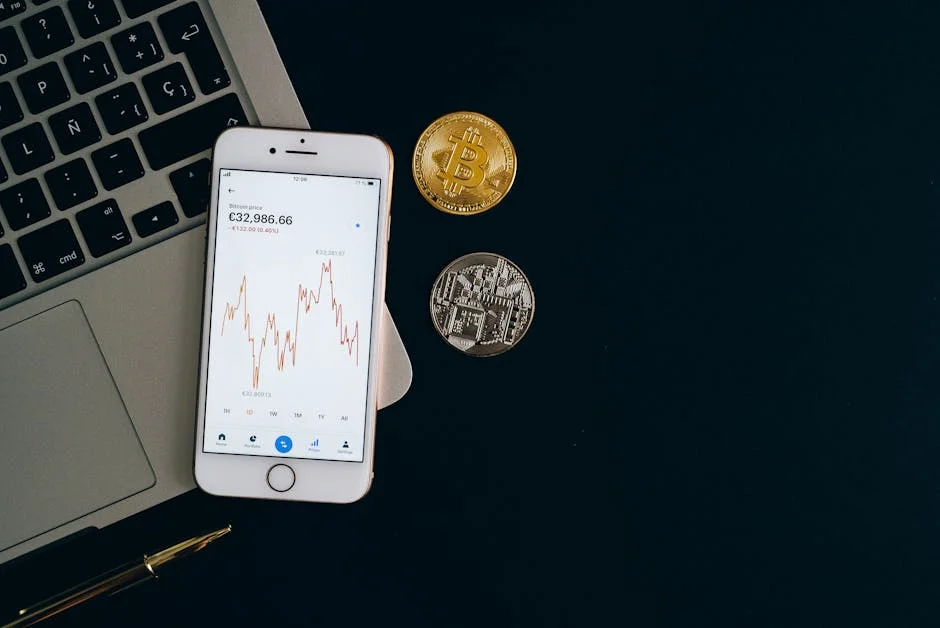
When comparing cryptocurrency vs stocks, the most useful starting point is defining what you actually own in each case and what gives it value. A stock is an equity security that represents a fractional claim on a real business. Shareholders typically benefit when the company grows revenues, improves margins, launches successful products, or expands into new markets. Even if the share price fluctuates daily, the long-term anchor is the firm’s ability to generate cash flows and, in some cases, return capital through dividends or buybacks. Stocks also come with a mature ecosystem: audited financial statements, standardized disclosures, earnings calls, and regulated exchanges that enforce listing standards. Those features create a relatively consistent framework for pricing and risk assessment. That doesn’t mean stocks are “safe,” but it does mean the investor can often point to concrete fundamentals—sales, costs, debt, competitive position—to justify why a valuation might rise or fall. The ownership aspect matters: shareholders may have voting rights, can participate in corporate actions, and can be protected by well-established investor rights in many jurisdictions.
Table of Contents
- My Personal Experience
- Understanding Cryptocurrency vs Stocks: What Each Asset Represents
- How Markets Function: Trading Hours, Liquidity, and Access
- Volatility and Risk Profiles: Why Price Swings Differ
- Valuation Approaches: Fundamentals, Narratives, and Metrics
- Regulation and Investor Protections: Rules, Rights, and Recourse
- Costs and Fees: Commissions, Spreads, Taxes, and Hidden Friction
- Custody and Security: Brokerage Accounts vs Wallet Responsibility
- Diversification and Portfolio Construction: Correlations, Cycles, and Allocation
- Expert Insight
- Income Potential: Dividends, Buybacks, Staking, and Yield Risks
- Use Cases and Utility: Payments, Innovation, and Real-World Adoption
- Comparison Table: Key Differences Between Crypto Assets and Stock Investments
- Behavioral Factors: Psychology, Hype Cycles, and Decision Traps
- Choosing Between Cryptocurrency vs Stocks: Matching Assets to Goals and Constraints
- Final Takeaway: Building a Balanced View of Cryptocurrency vs Stocks
- Watch the demonstration video
- Frequently Asked Questions
- Trusted External Sources
My Personal Experience
I started investing with stocks because they felt familiar—buying shares of companies I actually used and could read about in earnings reports. A couple years later I put a small amount into crypto after friends wouldn’t stop talking about it, and at first the fast gains were exciting. Then I watched the same coins swing 20% in a day for no clear reason, and I realized how much that volatility messed with my mood and decision-making. With stocks, even when prices drop, I can usually point to a news event or fundamentals and decide whether I still believe in the business. With crypto, I felt like I was mostly betting on sentiment and timing, so I scaled it back to a “money I can lose” slice and kept most of my long-term savings in diversified stock funds. If you’re looking for cryptocurrency vs stocks, this is your best choice.
Understanding Cryptocurrency vs Stocks: What Each Asset Represents
When comparing cryptocurrency vs stocks, the most useful starting point is defining what you actually own in each case and what gives it value. A stock is an equity security that represents a fractional claim on a real business. Shareholders typically benefit when the company grows revenues, improves margins, launches successful products, or expands into new markets. Even if the share price fluctuates daily, the long-term anchor is the firm’s ability to generate cash flows and, in some cases, return capital through dividends or buybacks. Stocks also come with a mature ecosystem: audited financial statements, standardized disclosures, earnings calls, and regulated exchanges that enforce listing standards. Those features create a relatively consistent framework for pricing and risk assessment. That doesn’t mean stocks are “safe,” but it does mean the investor can often point to concrete fundamentals—sales, costs, debt, competitive position—to justify why a valuation might rise or fall. The ownership aspect matters: shareholders may have voting rights, can participate in corporate actions, and can be protected by well-established investor rights in many jurisdictions.
Cryptocurrency, by contrast, usually represents a digital asset recorded on a blockchain, and the “ownership” is often closer to control of a token than a claim on a company’s balance sheet. In cryptocurrency vs stocks, this is the core conceptual difference: most crypto tokens do not represent equity. Some tokens are designed as payment instruments, others as “utility” for network fees, governance rights in decentralized protocols, or collateral in on-chain financial systems. Value can come from network adoption, scarcity mechanics, security properties, and perceived utility, but also from narrative and market sentiment. While some projects publish transparent on-chain metrics, they may not have the same standardized reporting as public companies. That can make valuation more challenging and can increase reliance on market psychology. At the same time, crypto introduces unique properties: borderless transferability, programmable transactions, and near-constant market access. Understanding whether you are buying a cash-flowing enterprise (stocks) or a tokenized network asset (crypto) shapes everything from expected returns to the kinds of risks you should monitor.
How Markets Function: Trading Hours, Liquidity, and Access
Cryptocurrency vs stocks also diverges significantly in how and when markets operate. Stock markets typically trade during set hours on business days, with pre-market and after-hours sessions varying by region and broker. This structure can reduce some forms of overnight volatility but can also concentrate it: major news released outside market hours can cause gap-ups or gap-downs at the next open. Liquidity in stocks depends on market capitalization, index inclusion, and investor interest. Large-cap stocks often have tight bid-ask spreads and deep order books, while small-caps can be thinly traded, making price impact and slippage more relevant. Access is usually mediated by brokers, and participation may require identity verification, suitability checks for certain products, and compliance with regional regulations. For many investors, these constraints can feel restrictive, but they also provide guardrails: surveillance, circuit breakers, and standard settlement systems that reduce certain operational risks.
Crypto markets, on the other hand, operate 24/7 across global exchanges and decentralized platforms. In cryptocurrency vs stocks, this always-on environment changes the experience of risk management. Prices can move sharply at any hour, including weekends and holidays, and the absence of centralized circuit breakers can amplify momentum during stressful periods. Liquidity varies widely by asset and venue; major cryptocurrencies may trade with substantial depth, while long-tail tokens can be illiquid and prone to manipulation. Access can be easier in the sense that anyone with an internet connection can often open an account on an exchange, but that ease comes with trade-offs: exchange solvency risk, varying standards of market integrity, and complex custody decisions. Even when liquidity appears high, it can fragment across venues, and sudden changes in funding rates, leverage availability, or exchange policies can impact pricing. For practical decision-making, investors comparing cryptocurrency vs stocks should ask: how will I handle volatility outside normal working hours, which venue provides the best execution, and what protections exist if a counterparty fails?
Volatility and Risk Profiles: Why Price Swings Differ
Volatility is one of the most visible differences in cryptocurrency vs stocks, and it stems from both structural and behavioral factors. Stocks can be volatile, especially in high-growth sectors or during macroeconomic shocks, but many public companies have established revenue streams, predictable cost structures, and investor bases that include long-term institutions. Earnings, guidance, and macro indicators often provide reference points that moderate the extremes, even if markets sometimes overreact. Additionally, many equity markets have mechanisms that can slow panic, such as trading halts and disclosure requirements for material events. Stock volatility also tends to cluster around known catalysts—earnings releases, product launches, regulatory decisions, or economic data. While surprises happen, the calendar of events is often visible, allowing risk to be managed with position sizing, diversification, and hedging instruments like options.
Crypto volatility is influenced by a shorter history, rapidly shifting narratives, and a market structure that often includes high leverage and reflexive feedback loops. In cryptocurrency vs stocks, crypto assets can react sharply to social sentiment, changes in exchange policy, regulatory headlines, protocol upgrades, or security incidents. Because many tokens lack traditional cash flows, valuation can be more perception-driven, which can magnify both rallies and drawdowns. Leverage is widely available through perpetual futures and margin products, and liquidation cascades can accelerate price movements. Another difference is that crypto markets incorporate global retail participation at all times, which can intensify trend-following behavior. That doesn’t mean crypto is inherently “bad,” but it does mean risk management must be explicit: define maximum drawdown tolerance, set rules for rebalancing, and decide in advance how to respond to extreme moves. Anyone weighing cryptocurrency vs stocks should treat volatility not as a side note but as a central feature that affects portfolio construction, emotional discipline, and time horizon.
Valuation Approaches: Fundamentals, Narratives, and Metrics
Valuation is where cryptocurrency vs stocks becomes especially nuanced. Stocks have a long tradition of fundamental analysis: price-to-earnings ratios, free cash flow yields, dividend discount models, competitive moat assessment, and balance-sheet health. Even when markets are irrational in the short run, investors can argue about intrinsic value using shared tools and comparable sets. Analysts can compare peers within an industry, examine margins, model growth rates, and stress-test assumptions. The existence of audited financial statements and standardized accounting rules makes it easier to evaluate whether a company is improving or deteriorating. Valuation is still imperfect—especially for early-stage or disruptive companies—but the inputs are relatively concrete, and the feedback loop is clearer: a company either executes or it doesn’t.
Crypto valuation often relies on a hybrid of network metrics, token economics, and adoption signals. In cryptocurrency vs stocks, you may see analysts focus on active addresses, transaction volume, fees generated by a protocol, total value locked in decentralized finance, or the rate at which new users enter an ecosystem. Token supply schedules—such as emissions, burns, staking rewards, and lockups—can heavily influence price dynamics. Some investors apply variations of “network value” ratios that compare market capitalization to on-chain activity, but these metrics can be noisy and vulnerable to manipulation. Narrative also plays a larger role: the market may assign value based on a token’s perceived role as digital gold, a settlement layer, or infrastructure for decentralized applications. Because frameworks vary and standards are evolving, the same asset can look “cheap” or “expensive” depending on the model used. For those evaluating cryptocurrency vs stocks, the practical takeaway is to demand clarity: what specific mechanism is expected to drive value, what evidence supports adoption, and how could the thesis break if incentives change?
Regulation and Investor Protections: Rules, Rights, and Recourse
Regulation is a major axis of difference in cryptocurrency vs stocks. Equity markets in many countries have decades of legal precedent and enforcement around disclosure, insider trading, market manipulation, and fiduciary responsibility. Public companies are generally required to report financial results, disclose material risks, and maintain governance structures. Brokerages and exchanges must follow rules designed to protect investors, including segregation of customer assets, capital requirements, and best execution standards. If fraud occurs, there are established channels for investigation and potential restitution, even if outcomes are not guaranteed. Importantly, shareholder rights are relatively well-defined: voting on certain corporate matters, access to proxy statements, and the ability to pursue legal remedies in cases of misconduct.
Crypto regulation is developing quickly but remains inconsistent across jurisdictions, creating uncertainty that can affect pricing and access. In cryptocurrency vs stocks, this uncertainty can show up as sudden delistings, restrictions on certain products, or changes in taxation and reporting requirements. Some crypto assets may be treated as commodities in one region and securities in another, and that classification can determine whether an exchange can legally list them or whether issuers must provide disclosures. Investor protections also vary widely by platform. If a centralized exchange suffers a hack or insolvency, users may have limited recourse, depending on local laws and the exchange’s corporate structure. Self-custody reduces counterparty risk but introduces personal operational risk, such as loss of private keys. For investors comparing cryptocurrency vs stocks, it helps to map regulation to concrete questions: what is the legal status of the asset where you live, what protections exist on the trading venue, and how would you recover assets in a worst-case scenario?
Costs and Fees: Commissions, Spreads, Taxes, and Hidden Friction
Costs can quietly determine real-world returns, and cryptocurrency vs stocks carries different types of friction. In stock investing, commissions have fallen dramatically, with many brokers offering zero-commission trades on major markets. However, costs still exist in spreads, currency conversion fees for international stocks, and fund expense ratios if you invest through ETFs or mutual funds. There can also be opportunity costs related to settlement times, as stocks generally settle on a schedule that can delay the re-use of capital. Taxes are often straightforward in concept—capital gains and dividends—though the details can become complex with wash sale rules, tax-loss harvesting, and differing rates for short-term versus long-term gains. Because the ecosystem is mature, investors can usually access reliable tax documents and reporting tools.
Crypto costs can be more variable and sometimes more opaque. In cryptocurrency vs stocks, trading fees on exchanges may be low, but spreads can widen during volatility, and withdrawal fees can add friction. On-chain transactions introduce network fees that fluctuate with congestion, and interacting with decentralized finance protocols can involve multiple transactions, each with its own fee. If you move assets across chains or use bridges, additional costs and risks appear. Taxation can also be complicated: many jurisdictions treat crypto trades as taxable events, including swapping one token for another, spending crypto, or receiving staking rewards. Recordkeeping can become burdensome when activity spans multiple wallets and platforms. A realistic comparison of cryptocurrency vs stocks should include an estimate of total cost of ownership: trading fees, spreads, custody costs, tax software, and the time spent reconciling transactions, because these can materially reduce net performance even when headline returns look attractive.
Custody and Security: Brokerage Accounts vs Wallet Responsibility
Custody is a defining difference in cryptocurrency vs stocks because it changes who bears operational responsibility. With stocks, most investors hold shares through a brokerage account where custody is handled by regulated intermediaries and clearing systems. While not risk-free, the system is designed to minimize the chance of losing assets due to user error. Account access can be recovered through established identity procedures, and fraud protections may cover certain unauthorized transactions. Corporate actions—splits, dividends, tender offers—are processed automatically by the brokerage. For many investors, this managed custody is convenient and reduces cognitive load, letting them focus on allocation and risk rather than the mechanics of holding the asset.
Crypto introduces a spectrum of custody options, each with trade-offs. In cryptocurrency vs stocks, holding crypto on an exchange is similar to leaving money with a broker, but the protective framework can be weaker and varies by jurisdiction and platform. Self-custody, where you control private keys in a software or hardware wallet, offers sovereignty and can reduce counterparty exposure, yet it also makes you responsible for security practices. Mistakes can be irreversible: sending funds to the wrong address, losing seed phrases, or falling for phishing can permanently eliminate access. Even advanced users must manage device security, backups, and safe storage. Multi-signature wallets and institutional custodians can mitigate some risks but add complexity and sometimes cost. Anyone deciding between cryptocurrency vs stocks should be honest about operational readiness: if you are not prepared to maintain secure key management, you may prefer regulated products like crypto ETFs where available, or you may reduce exposure to match your ability to handle custody safely.
Diversification and Portfolio Construction: Correlations, Cycles, and Allocation
Diversification behaves differently in cryptocurrency vs stocks, especially during periods of market stress. Stock portfolios can diversify across sectors, geographies, and factors like value versus growth. Bonds, cash equivalents, and commodities may reduce drawdowns depending on macro conditions. Correlations among stocks often rise during crises, but diversification still matters because businesses have different sensitivities to interest rates, commodity prices, consumer demand, and regulation. Investors can also use index funds to spread risk across hundreds or thousands of companies, reducing idiosyncratic exposure to a single firm’s management mistakes or competitive disruption. Portfolio construction in equities tends to emphasize long-term compounding, rebalancing, and aligning risk with time horizon and income needs.
| Aspect | Cryptocurrency | Stocks |
|---|---|---|
| Ownership & value basis | Typically represents a digital asset or network token; value often tied to utility, adoption, and market sentiment. | Represents equity in a company; value tied to business performance, assets, and expected earnings. |
| Market hours & liquidity | Trades 24/7 on global exchanges; liquidity varies widely by coin and venue. | Trades during market hours on regulated exchanges; generally deeper liquidity for large-cap stocks. |
| Risk & regulation | Higher volatility; regulatory treatment varies by jurisdiction and can change quickly. | Typically lower volatility (varies by stock); established disclosure rules and investor protections. |
Expert Insight
Match the investment to your goal and time horizon: use stocks for steadier, long-term compounding and income potential, and treat cryptocurrency as a higher-volatility satellite position. Set a clear allocation cap (e.g., a small percentage of your portfolio), rebalance on a schedule, and avoid increasing exposure just because prices are rising. If you’re looking for cryptocurrency vs stocks, this is your best choice.
Manage risk with rules, not reactions: for stocks, diversify across sectors and favor low-cost index funds if you don’t have time to research individual companies; for crypto, stick to established assets, use reputable exchanges and cold storage for long holds, and predefine exit points (profit targets and stop-loss levels) before entering a trade. If you’re looking for cryptocurrency vs stocks, this is your best choice.
Crypto diversification is more complex because many tokens can be highly correlated, particularly during broad risk-on or risk-off regimes. In cryptocurrency vs stocks, it is common for the entire crypto market to move together when liquidity conditions change or when sentiment shifts. Some assets may behave differently—stablecoins aim to track fiat, and certain tokens may respond to specific protocol news—but during sharp drawdowns, correlations can converge. That doesn’t mean crypto cannot diversify a broader portfolio; it means the allocation should reflect its volatility and tail risk. Practical frameworks often treat crypto as a high-volatility satellite position around a core of diversified equities and fixed income. Rebalancing can be especially powerful: trimming after large rallies and adding after drawdowns can help manage risk, though it requires discipline. When comparing cryptocurrency vs stocks for portfolio design, investors should consider position sizing, maximum loss tolerance, liquidity needs, and the psychological impact of 24/7 price movement on decision-making.
Income Potential: Dividends, Buybacks, Staking, and Yield Risks
Income is another area where cryptocurrency vs stocks can feel similar on the surface but differs in substance. Many stocks pay dividends, offering a tangible cash return that can be reinvested or used for spending. Dividend policies often reflect a company’s maturity, cash generation, and capital allocation priorities. Additionally, stock buybacks can increase shareholder value by reducing share count, even if they don’t provide direct cash in hand. Importantly, dividends and buybacks are tied to corporate earnings and governance decisions, and they are constrained by regulation, debt covenants, and the need to maintain business investment. While dividends can be cut during downturns, the mechanisms are familiar and the risks are generally visible through financial statements.
Crypto “yield” can come from staking, lending, liquidity provision, and various incentive programs, but these carry distinct risks that investors should not treat as equivalent to dividends. In cryptocurrency vs stocks, staking rewards often come from token issuance or protocol fees, meaning the “income” may be offset by dilution if demand does not keep pace with emissions. Lending yield can depend on borrower quality and platform risk; if the platform fails, the yield was never worth it. Liquidity provision can earn fees, yet impermanent loss can erode returns if token prices diverge. Some yields are subsidized to attract users and may decline rapidly once incentives end. There is also smart contract risk: a bug can drain funds regardless of market direction. A careful approach to cryptocurrency vs stocks income comparison requires asking where yield originates, who pays it, what collateral secures it, and what happens under stress. High advertised yields are often a sign that risk is being priced in, not a free lunch.
Use Cases and Utility: Payments, Innovation, and Real-World Adoption
Stocks primarily serve as a way to own productive enterprises and participate in economic growth. In cryptocurrency vs stocks, equities are typically linked to familiar real-world activities: manufacturing goods, providing services, developing software, distributing products, and employing people. That connection can make the investment thesis intuitive—if a company sells more, earns more, and defends its market position, shareholders may benefit. Even speculative stock investing often ties back to expectations about future products or market expansion. Stocks also integrate into retirement systems, pension funds, and institutional portfolios, reinforcing their role as a foundational asset class for long-term wealth building.
Crypto’s utility is broader in some ways and narrower in others. In cryptocurrency vs stocks, crypto assets can be used directly for transferring value, settling transactions, and accessing decentralized applications without traditional intermediaries. Stablecoins can facilitate cross-border payments and provide a digital dollar-like experience in regions with unstable currencies. Smart contract platforms enable programmable financial products, digital ownership primitives, and new forms of coordination. However, adoption is uneven, and many tokens still rely on speculative demand more than everyday use. Utility can also be constrained by user experience challenges, regulatory uncertainty, and security concerns. For investors, the key is to separate real usage from hype: look for sustained activity, developer traction, credible partnerships, and a clear reason why a token is needed rather than optional. Viewing cryptocurrency vs stocks through the lens of utility helps clarify whether you are investing in a durable network effect or merely trading momentum.
Comparison Table: Key Differences Between Crypto Assets and Stock Investments
Choosing between cryptocurrency vs stocks often becomes easier when the comparison is translated into concrete attributes that affect day-to-day investing. The categories below reflect common decision points: what you’re buying, how it trades, what protections exist, and what costs and risks tend to dominate. Ratings are general-purpose impressions for typical retail investors, assuming a preference for transparency and predictable rules; they are not a guarantee of performance and should be adapted to your own risk tolerance, jurisdiction, and experience level. Prices are indicative ranges rather than quotes, because both markets change constantly and product costs differ by broker or exchange.
The table also highlights a practical truth about cryptocurrency vs stocks: you may not need to choose only one. Many investors hold both, using stocks as a core allocation tied to long-term economic growth and using crypto as a smaller satellite position aimed at asymmetric upside or exposure to financial innovation. The appropriate mix depends on goals, time horizon, liquidity needs, and whether you can tolerate large drawdowns without making emotional decisions. Use the comparison as a checklist to identify which risks you understand well and which ones you might be underestimating.
| Name | Features | Ratings | Price |
|---|---|---|---|
| Large-cap Stocks (e.g., blue-chip equities) | Equity ownership, audited disclosures, dividends/buybacks possible, regulated exchanges, broad analyst coverage | Transparency: 4.5/5; Volatility: 2.5/5; Investor protections: 4.5/5 | Often low commissions; ETF expense ratios commonly ~0.03%–0.30% annually |
| Growth Stocks (e.g., tech or emerging sectors) | Higher expected growth, earnings sensitivity, valuation depends on future cash flows, options market often available | Transparency: 4/5; Volatility: 3.5/5; Investor protections: 4.5/5 | Often low commissions; higher volatility can increase spread/impact costs |
| Bitcoin (BTC) | Scarcity narrative, decentralized settlement, 24/7 trading, custody choice (exchange or self-custody) | Transparency: 3.5/5; Volatility: 4.5/5; Investor protections: 2.5/5 | Exchange fees often ~0.1%–0.5% per trade; network fees vary by congestion |
| Ethereum (ETH) | Smart contracts, fees paid for computation, staking possible, ecosystem-driven demand, 24/7 trading | Transparency: 3/5; Volatility: 4.5/5; Investor protections: 2.5/5 | Exchange fees often ~0.1%–0.5%; on-chain fees vary; staking fees depend on provider |
| Stablecoins (e.g., USD-pegged tokens) | Designed to track fiat value, used for payments/trading, issuer and reserve risks, regulatory sensitivity | Transparency: 2.5/5; Volatility: 1.5/5 (normally); Investor protections: 2/5 | Trading fees similar to crypto; redemption/spread costs vary by issuer and venue |
Behavioral Factors: Psychology, Hype Cycles, and Decision Traps
Investor behavior plays a large role in outcomes, and cryptocurrency vs stocks can trigger different psychological pressures. Stock investing often encourages a slower tempo: quarterly earnings, business news cycles, and long-term narratives about innovation or competitive advantage. Even active traders operate within set market hours, which can create natural breaks that reduce impulsive decisions. That said, stocks still generate fear and greed—think of meme-stock surges or panic selling during recessions. The difference is that stock investors can often lean on familiar anchors like valuation multiples, analyst estimates, and long-term index returns to stay grounded. The presence of retirement accounts and automatic contributions can also promote disciplined, recurring investment behavior that smooths entry prices over time.
Crypto markets can intensify behavioral traps because prices update constantly, communities are highly online, and narratives move quickly. In cryptocurrency vs stocks, the combination of 24/7 trading, viral social content, and visible on-chain wealth can amplify FOMO, revenge trading, and overconfidence. It is easy to confuse a bull market with skill, especially when leverage is accessible and rapid gains feel normal. Conversely, drawdowns can be severe enough to cause capitulation near bottoms. Practical behavioral defenses include writing an investment thesis before buying, defining exit or rebalancing rules, limiting leverage, and using position sizes that allow you to sleep without checking prices overnight. Another safeguard is to separate “long-term holds” from “trading positions” so you don’t accidentally turn a speculative trade into a long-term bag or sabotage a long-term allocation with short-term fear. Mastering the psychological dimension is essential to making cryptocurrency vs stocks a productive comparison rather than a reactive gamble.
Choosing Between Cryptocurrency vs Stocks: Matching Assets to Goals and Constraints
The most effective way to choose between cryptocurrency vs stocks is to map each asset class to your real constraints: time horizon, liquidity needs, income stability, and tolerance for uncertainty. Stocks often fit goals like retirement planning, building wealth through compounding, and participating in broad economic growth. A diversified stock index approach can reduce single-company risk and has historically rewarded patience, though past performance never guarantees future results. Stocks also integrate well with tax-advantaged accounts in many regions, and the investor protections and disclosure frameworks can make it easier to evaluate what you own. If you prioritize transparency, standardized reporting, and a relatively predictable legal environment, stocks frequently serve as the foundation of a long-term portfolio.
Crypto may fit investors who can tolerate high volatility, who want exposure to a new financial and technological paradigm, or who seek an uncorrelated return stream—while accepting that correlations can rise during stress. In cryptocurrency vs stocks, crypto often behaves like a high-beta risk asset, and that can be useful only when it is sized appropriately. For many households, crypto works best as a limited allocation that is rebalanced, rather than a concentrated bet that can derail core financial goals. Consider also the operational side: do you understand custody, platform risk, and tax tracking? If not, you might prefer regulated crypto products where available or keep exposure modest until competence grows. Ultimately, cryptocurrency vs stocks is less about declaring a winner and more about aligning each asset with a role: stability and compounding on one side, optionality and innovation exposure on the other, all within a plan you can follow through multiple market cycles.
Final Takeaway: Building a Balanced View of Cryptocurrency vs Stocks
A clear-eyed perspective on cryptocurrency vs stocks recognizes that both markets can create opportunities and both can punish sloppy risk management. Stocks offer ownership in cash-flowing businesses with established disclosure norms, legal protections, and time-tested portfolio tools. Crypto offers programmable, borderless assets with new forms of utility and potentially asymmetric upside, but it also brings sharper volatility, evolving regulation, and custody responsibilities that can overwhelm unprepared investors. The most durable approach is to define your objectives, size positions to survive worst-case scenarios, and keep decision rules simple enough to follow when emotions run high. With that foundation, cryptocurrency vs stocks becomes a practical allocation choice rather than a debate, and your portfolio can reflect both long-term discipline and selective exposure to innovation.
Watch the demonstration video
In this video, you’ll learn how cryptocurrency and stocks compare in risk, volatility, and potential returns. It breaks down what drives each market, how regulation and liquidity differ, and what that means for everyday investors. You’ll also get practical tips for choosing between them—or balancing both in a portfolio. If you’re looking for cryptocurrency vs stocks, this is your best choice.
Summary
In summary, “cryptocurrency vs stocks” is a crucial topic that deserves thoughtful consideration. We hope this article has provided you with a comprehensive understanding to help you make better decisions.
Frequently Asked Questions
What’s the main difference between cryptocurrency and stocks?
Stocks give you a stake in a company, often including benefits like voting rights and potential dividends, while cryptocurrencies are digital assets that run on blockchain networks and usually don’t confer ownership in a business—one of the key distinctions to understand in the *cryptocurrency vs stocks* debate.
Which is more volatile: crypto or stocks?
In the debate over **cryptocurrency vs stocks**, crypto tends to be far more volatile, often seeing bigger and faster price swings. That’s largely because many crypto markets have lower liquidity, are heavily influenced by investor sentiment and hype, and operate under regulations that are still evolving.
How do trading hours differ for crypto vs stocks?
Unlike traditional equities, which are typically bought and sold only during business-day exchange hours (with limited pre-market and after-hours windows in some regions), crypto markets never sleep—cryptocurrency vs stocks is a clear contrast here, since cryptocurrencies trade globally 24/7, giving investors constant access no matter the time zone.
How are crypto and stocks regulated?
Stocks operate under strict regulations, including standardized disclosures and strong investor protections, while crypto rules differ widely by country and by token—and many are still evolving, making **cryptocurrency vs stocks** a comparison shaped as much by regulation as by returns.
How do taxes typically differ between crypto and stocks?
Both investments can trigger capital gains taxes, but **cryptocurrency vs stocks** often differs in how frequently those taxable moments occur. With crypto, you may rack up taxable events more often—such as when you swap one coin for another, use crypto to buy something, or receive certain staking rewards—depending on your local tax rules.
Which is safer for beginners: crypto or stocks?
Broad stock index funds are usually a straightforward, lower-risk starting point for beginners, offering diversification and a smoother ride over time. In the **cryptocurrency vs stocks** debate, crypto may still make sense for some people—but typically only if you’re comfortable with bigger price swings and committed to strong security habits, like using reputable exchanges, enabling two-factor authentication, and storing assets safely.
📢 Looking for more info about cryptocurrency vs stocks? Follow Our Site for updates and tips!

Trusted External Sources
- r/CryptoCurrency – Crypto vs. stocks: What’s the better choice for you?
Mar 31, 2026 … the best strategy is to use your crypto returns in a bullmarket to invest in stocks and then use your returns on stocks to buy cryptos in a … If you’re looking for cryptocurrency vs stocks, this is your best choice.
- Cryptocurrency Vs. Stocks: Which Is The Better Choice For You?
Jul 15, 2026 … A stock is an ownership interest in a business (backed by the company’s assets and cash flow), whereas cryptocurrency, in most cases, is not backed by anything … If you’re looking for cryptocurrency vs stocks, this is your best choice.
- Cryptocurrency vs Stocks – Similarities, Differences
As of Jun 18, 2026, one of the biggest points in the **cryptocurrency vs stocks** debate comes down to the technology behind them: cryptocurrencies run on blockchain networks, which record transactions on decentralized, transparent ledgers—something traditional stocks don’t rely on in the same way.
- Crypto Prices Move More in Sync With Stocks, Posing New Risks
As of Jan 11, 2026, Bitcoin and the stock market have increasingly moved in tandem. Before the pandemic, crypto assets like Bitcoin and Ether often showed little correlation with major stock indices—highlighting how the *cryptocurrency vs stocks* relationship has shifted over time.
- Before You Invest in Crypto, Know the Risks | disb
Unlike traditional fiat money, cryptocurrencies don’t carry all the same built-in features and protections of government-issued currency. Coins like Bitcoin and Ethereum also don’t work the same way as company shares, which is why the **cryptocurrency vs stocks** comparison matters: when you buy crypto, you’re purchasing a digital asset whose value is driven largely by network demand and market sentiment, not ownership in a business with earnings and dividends. In other words, crypto isn’t “real money” in the conventional sense—and it isn’t a stock either—so it’s important to understand what you’re actually buying before you invest.