The market for automation has matured into a complex ecosystem where the top robot manufacturers compete not only on hardware specifications but also on software, safety certifications, service networks, and the ability to integrate into diverse production environments. Buyers evaluating industrial automation today are often comparing far more than payload and reach. They want predictable uptime, rapid deployment, cybersecurity-ready connectivity, and long-term support for spare parts and upgrades. This is why the global leaders in robotics tend to be organizations with decades of engineering investment, broad channel partnerships, and proven performance in harsh factory conditions. The best-known robotics brands also benefit from large installed bases, which create feedback loops for reliability improvements and application libraries. At the same time, newer entrants and specialized firms are winning deals by focusing on flexible cells, vision-guided manipulation, and collaborative operation that reduces the need for expensive guarding. The competitive landscape spans heavy industrial arms for welding and palletizing, fast pick-and-place units for packaging and electronics, mobile robots for warehouses, and service robots in healthcare and hospitality. Each segment has different expectations for safety, speed, precision, and lifecycle cost, which means “best” depends on the job and the site.
Table of Contents
- My Personal Experience
- Understanding the Global Landscape of Top Robot Manufacturers
- ABB Robotics: Broad Portfolio and Deep Industrial Integration
- FANUC: Reliability, Scale, and a Massive Installed Base
- KUKA: Flexible Automation for Automotive and Beyond
- Yaskawa Motoman: Motion Expertise and High-Throughput Performance
- Universal Robots: Collaborative Robotics for Accessible Automation
- Boston Dynamics: Advanced Mobility and High-Agility Robotics
- Expert Insight
- iRobot: Consumer Robotics and the Evolution of Home Automation
- DJI: Robotics-Adjacent Leadership Through Drones and Autonomous Systems
- Intuitive Surgical: Medical Robotics and High-Precision Assisted Procedures
- Teradyne (MiR and Others): Mobile Robots for Warehouses and Factories
- How to Evaluate Top Robot Manufacturers for Your Use Case
- Watch the demonstration video
- Frequently Asked Questions
- Trusted External Sources
My Personal Experience
When our small packaging line started missing orders, I was tasked with comparing top robot manufacturers to see what would actually work on a tight floor plan and an even tighter budget. I booked demos with ABB and FANUC through local integrators, and I was surprised by how much the decision came down to support rather than specs—both arms were fast enough, but the difference was how quickly someone could show up when a sensor fault stopped the cell. We also looked at a Universal Robots cobot for a side station, and that was the first time I felt like I could teach a routine without needing a full-time programmer. In the end we went with FANUC for the main palletizing cell because parts availability and training were better in our area, and we added a UR cobot later for case packing. The biggest lesson for me was that “top manufacturer” isn’t just brand prestige—it’s the one whose ecosystem keeps your line running on a bad Tuesday.
Understanding the Global Landscape of Top Robot Manufacturers
The market for automation has matured into a complex ecosystem where the top robot manufacturers compete not only on hardware specifications but also on software, safety certifications, service networks, and the ability to integrate into diverse production environments. Buyers evaluating industrial automation today are often comparing far more than payload and reach. They want predictable uptime, rapid deployment, cybersecurity-ready connectivity, and long-term support for spare parts and upgrades. This is why the global leaders in robotics tend to be organizations with decades of engineering investment, broad channel partnerships, and proven performance in harsh factory conditions. The best-known robotics brands also benefit from large installed bases, which create feedback loops for reliability improvements and application libraries. At the same time, newer entrants and specialized firms are winning deals by focusing on flexible cells, vision-guided manipulation, and collaborative operation that reduces the need for expensive guarding. The competitive landscape spans heavy industrial arms for welding and palletizing, fast pick-and-place units for packaging and electronics, mobile robots for warehouses, and service robots in healthcare and hospitality. Each segment has different expectations for safety, speed, precision, and lifecycle cost, which means “best” depends on the job and the site.

Another defining trait of the top robot manufacturers is their growing emphasis on complete automation stacks rather than standalone machines. Many vendors now bundle robot arms with controllers, drives, programming environments, simulation tools, application packages, and partner ecosystems for grippers, conveyors, and machine vision. This end-to-end approach reduces integration risk and can shorten commissioning time, which matters when downtime costs are high. Yet, standardization can also create lock-in, so procurement teams often weigh openness and interoperability. A manufacturer that supports common industrial networks, offers robust APIs, and maintains a strong integrator community can be easier to scale across multiple plants. Regional factors also influence purchasing decisions: availability of local service engineers, training in the local language, and compliance with national safety standards can be as decisive as raw performance. With energy costs, labor shortages, and quality expectations rising, automation adoption continues to expand beyond automotive into food, pharmaceuticals, e-commerce, and small-to-mid-sized machining operations. That expansion is pushing robotics suppliers to offer easier programming, faster changeovers, and better human-robot interaction, reshaping what leadership means in this industry.
ABB Robotics: Broad Portfolio and Deep Industrial Integration
ABB is frequently placed among the top robot manufacturers because it combines a wide robot portfolio with a long history in industrial electrification, drives, and factory control. This matters in real deployments where a robot is just one component of a production cell that includes motors, safety devices, PLCs, and plant-wide monitoring. ABB’s industrial robots are commonly found in automotive body shops for welding and sealing, in general industry for machine tending, and in logistics for palletizing. The company has also invested heavily in collaborative robot lines and simplified programming tools to appeal to smaller manufacturers that may not have dedicated robotics engineers. Another differentiator is ABB’s ability to support large global rollouts with consistent service and documentation. Multi-plant standardization is often a key reason enterprises choose established robotics suppliers. ABB’s ecosystem includes simulation and offline programming options that help engineering teams validate cycle times and reach before hardware arrives, reducing startup risk. In practice, these tools can be as valuable as the robot itself, especially when a facility is working under aggressive deadlines and cannot afford repeated mechanical changes.
ABB’s position among the top robot manufacturers is also reinforced by its focus on digital connectivity and data-driven maintenance. Modern robot fleets generate valuable information about motor loads, temperature, cycle counts, and error codes, and ABB has supported platforms that can feed this data into maintenance planning and performance dashboards. For users, the benefit is not only fewer unplanned stoppages but also better understanding of bottlenecks. When a cell misses throughput targets, the cause might be upstream part presentation, gripper wear, or an overly conservative motion profile. Data visibility helps isolate the issue. ABB also benefits from a strong integrator and partner network, enabling tailored solutions with specialized end-effectors, vision systems, and safety scanners. That ecosystem matters because many applications are not “out of the box.” A foundry handling hot castings, a food plant with washdown requirements, and an electronics line with high-speed precision all require different configurations. While every major vendor claims flexibility, the practical measure is how quickly a solution can be engineered and supported over years of operation. ABB’s long-term parts availability and global footprint remain key strengths for organizations that treat robotics as core infrastructure.
FANUC: Reliability, Scale, and a Massive Installed Base
FANUC is widely recognized as one of the top robot manufacturers due to its reputation for durability and an enormous global installed base. In many factories, reliability is the decisive factor because a robot failure can halt an entire line. FANUC’s yellow industrial robots are common in arc welding, spot welding, painting, material handling, and machine tending. The company’s conservative engineering approach, paired with extensive field experience, has helped it build trust in high-volume environments. Another reason FANUC remains a go-to choice is the breadth of its models, ranging from compact units for tight spaces to high-payload robots capable of moving heavy parts. For buyers, this breadth can simplify standardization: a plant can select a single supplier for multiple use cases, reducing training burden and spare parts complexity. FANUC also has deep roots in CNC and factory automation, which can be advantageous for machining and metalworking operations where robot-to-machine communication needs to be robust and predictable.
Being among the top robot manufacturers also requires strong support for integration and programming, and FANUC has invested in software options and application packages that address common industrial needs. Vision guidance, force sensing, and coordinated motion with external axes can be critical in real-world tasks like bin picking, deburring, and assembly. FANUC’s ecosystem includes these capabilities, often with proven recipes that integrators can adapt. Another practical advantage is the availability of trained technicians and integrators familiar with FANUC controllers, which reduces project risk. When a company expands automation across multiple sites, it benefits from hiring and training pipelines that already exist in the labor market. Additionally, FANUC’s emphasis on long product life cycles appeals to manufacturers that keep equipment running for decades. While newer robotics vendors may innovate quickly, long-term consistency is a business requirement for many industries. For procurement teams balancing up-front costs with lifecycle costs, a stable supplier with predictable support can be worth the premium. FANUC’s combination of scale, reliability, and market familiarity keeps it firmly in the top tier.
KUKA: Flexible Automation for Automotive and Beyond
KUKA is frequently included in lists of the top robot manufacturers because of its strong presence in automotive manufacturing and its growing reach in general industry. Historically, KUKA robots have been central to body-in-white production lines, handling tasks like spot welding and material transfer with high precision and repeatability. Automotive environments demand fast cycle times and consistent quality, and KUKA’s engineering has been shaped by those expectations. Over time, the company has expanded its portfolio to address other sectors such as consumer goods, electronics, and metal fabrication. KUKA’s product range includes small robots for compact work cells, large robots for heavy payload handling, and collaborative solutions designed to work alongside people. The vendor’s experience with complex multi-robot cells, synchronized motion, and advanced safety configurations is particularly relevant for high-density production lines where space is limited and throughput targets are strict.

One reason KUKA remains among the top robot manufacturers is its focus on system-level automation and the ability to engineer complete production solutions. Many buyers do not purchase a robot alone; they purchase a functioning cell with guarding, conveyors, tooling, sensors, and software that meets safety and quality requirements. KUKA’s integration capabilities and partnerships can reduce the number of vendors involved, which simplifies accountability. KUKA also emphasizes programming and simulation tools that help engineers validate layouts and optimize motion paths before installation. This can be important when a facility needs to retrofit robots into existing lines with minimal disruption. Another practical factor is the company’s service network in key industrial regions, supporting maintenance, spare parts, and training. Like other leading robotics suppliers, KUKA is also responding to demand for easier deployment through more intuitive interfaces and modular automation concepts. For manufacturers that want to scale automation quickly, the ability to replicate a proven cell design with predictable performance is a strong advantage. KUKA’s heritage in demanding applications, combined with ongoing expansion into new industries, keeps it highly competitive.
Yaskawa Motoman: Motion Expertise and High-Throughput Performance
Yaskawa, through its Motoman robotics brand, is consistently considered among the top robot manufacturers due to its expertise in motion control and a broad lineup of industrial robots. Yaskawa’s background in servo drives and control systems contributes to strong performance in applications where smooth, precise motion is essential. Motoman robots are widely used for welding, painting, cutting, assembly, and packaging. The company offers specialized models for tasks such as arc welding, where torch orientation and cable management are critical, and for high-speed handling where cycle time determines profitability. Many factories choose Yaskawa because it provides a mature platform with extensive application knowledge accumulated over years of deployments. Another point of differentiation is the vendor’s ability to support multi-robot coordination, which is important in cells where two robots work together on a shared part or where a robot must synchronize with external positioners.
Among the top robot manufacturers, Yaskawa is often valued for balancing performance with practical deployment considerations. Integrators frequently emphasize how controller features, programming workflows, and diagnostics impact startup time and long-term maintainability. A robot that is fast but difficult to troubleshoot can become a liability. Motoman systems are known for industrial-grade design and a large ecosystem of integrators familiar with their controllers. This familiarity can reduce commissioning time and ease hiring challenges. Yaskawa also supports a range of safety and collaborative options that allow manufacturers to design cells with reduced guarding in appropriate scenarios. In addition, the company’s global presence helps multinational manufacturers standardize equipment across regions. Standardization can lead to lower training costs, consistent spare parts inventories, and repeatable quality. As manufacturers pursue more flexible production, the ability to retool a cell and reprogram quickly becomes essential. Yaskawa’s continued investment in software tools and application packages reflects this shift, making it a strong choice for both high-volume lines and mixed-model production environments where changeovers are frequent.
Universal Robots: Collaborative Robotics for Accessible Automation
Universal Robots is often cited among the top robot manufacturers in the collaborative robot category, largely because it helped popularize cobots as practical tools for small and mid-sized companies. Traditional industrial robots can require significant guarding and complex integration, which may be too costly for low-volume production or frequently changing product lines. Cobots address this by offering force-limited operation, simpler deployment, and intuitive programming that can be learned by technicians without deep robotics backgrounds. Universal Robots has built a reputation for making automation approachable, especially in tasks like machine tending, light assembly, screwdriving, inspection, and packaging. The company’s ecosystem of end-effectors, vision modules, and software plugins has also played a major role. When a manufacturer can choose from a marketplace of grippers, sensors, and application kits, it can deploy solutions faster and with less custom engineering.
Universal Robots’ place among the top robot manufacturers is also tied to how cobots change the economics of automation. For many operations, the challenge is not whether a robot can perform a task, but whether the payback period fits budget constraints. A cobot can sometimes be deployed in weeks rather than months, and it can be moved between workstations as needs change. This flexibility is valuable in job shops and contract manufacturing where demand fluctuates. Another factor is workforce dynamics: cobots are often framed as tools that assist people rather than replace them, reducing resistance to adoption and enabling redeployment of workers to higher-value tasks. Of course, collaborative operation is not a blanket permission to ignore safety; risk assessments and appropriate tooling remain essential. Still, the ability to design smaller cells and reduce guarding can lower total system cost. Universal Robots continues to expand capabilities through improved payload options, better software, and tighter integration with vision and force control. For companies that want to start small and scale gradually, cobots from major collaborative suppliers remain a compelling entry point into automation.
Boston Dynamics: Advanced Mobility and High-Agility Robotics
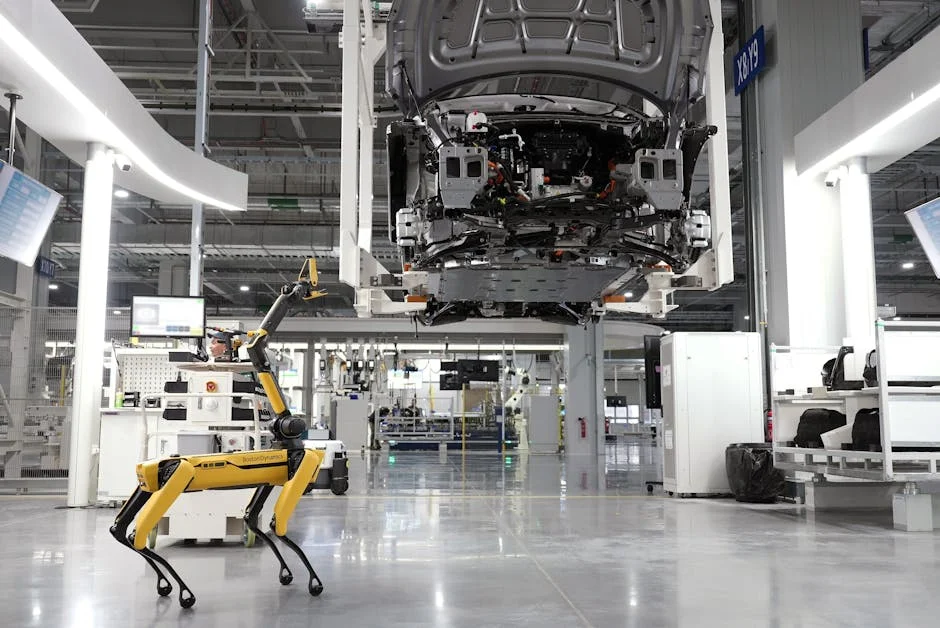
Boston Dynamics is frequently mentioned in conversations about the top robot manufacturers in advanced mobility, even though its product focus differs from traditional industrial arm suppliers. The company is best known for legged robots and highly mobile platforms designed to navigate complex environments. Where factory robots typically operate within fenced cells or predictable lanes, Boston Dynamics’ machines are designed to move through human environments, climb stairs, traverse uneven terrain, and perform inspections in places that are difficult or unsafe for people. This capability positions the company for applications in industrial inspection, construction monitoring, hazardous site assessment, and certain logistics tasks. The value proposition is not primarily speed of a repetitive task, but the ability to gather data and perform work in dynamic settings where conventional automation struggles. For businesses managing large facilities, the ability to automate inspection rounds, detect anomalies, and generate repeatable reports can reduce downtime and improve safety outcomes.
| Manufacturer | Strengths | Common Use Cases |
|---|---|---|
| FANUC | High reliability, broad robot lineup, strong global support | Automotive welding, machine tending, material handling |
| ABB | Advanced motion control, strong software ecosystem, flexible automation | Assembly, painting, packaging, electronics manufacturing |
| KUKA | High payload options, precise industrial automation, scalable integration | Automotive body-in-white, palletizing, heavy-duty handling |
Expert Insight
When comparing top robot manufacturers, start by matching the vendor’s strongest application area to your use case (e.g., welding, palletizing, cleanroom handling). Request a proof-of-cycle using your parts and takt time, and confirm payload, reach, repeatability, and IP rating with real end-effector weight and cabling included.
Evaluate the full support ecosystem before committing: verify local integrator availability, spare-parts lead times, and warranty terms, and ask for references in your industry. Prioritize manufacturers with robust training, clear maintenance schedules, and readily available safety documentation to reduce downtime and speed up commissioning. If you’re looking for top robot manufacturers, this is your best choice.
Being among the top robot manufacturers in this niche also requires a strong software layer, and Boston Dynamics’ systems often emphasize autonomy features, perception, and data capture workflows. In real deployments, customers care about how easily a robot can be tasked, how reliably it can navigate, and how quickly it can produce actionable information. Mobility robotics introduces different operational concerns: battery management, mapping, fleet coordination, and robust remote support. Additionally, safety expectations are different from those in fixed industrial cells because the robot shares space with people. Organizations evaluating mobile and legged robots often conduct pilots to validate performance under their specific lighting, floor conditions, and connectivity constraints. While legged robotics is not a universal fit for every site, it can be transformative in environments with stairs, tight corridors, or outdoor terrain. Boston Dynamics’ prominence reflects the broader trend that robotics is expanding beyond the factory line into facility operations, inspection, and data-driven maintenance, creating new categories where agility and perception are decisive.
iRobot: Consumer Robotics and the Evolution of Home Automation
iRobot is commonly recognized among the top robot manufacturers in consumer robotics, largely due to its leadership in home cleaning devices that have become mainstream. While industrial robots focus on payload and precision, consumer robots must excel in usability, safety, quiet operation, and navigation in cluttered environments. iRobot’s products have helped define expectations for autonomous cleaning, including mapping, scheduling, and adaptive behavior across different floor types. The consumer robotics market is intensely competitive and sensitive to price and user experience, which forces manufacturers to optimize hardware design and software reliability. The ability to handle edge cases—cables, thresholds, rugs, pet hair, and furniture layouts—determines customer satisfaction. In this space, design details such as brush systems, suction performance, sensor placement, and docking behavior can be as important as algorithms. iRobot’s long presence in the market has allowed it to refine these elements across many product generations.

iRobot’s standing among the top robot manufacturers also highlights how robotics adoption is shaped by ecosystems and ongoing software improvements. Consumer robots increasingly rely on companion apps, cloud connectivity, and firmware updates that add features or improve navigation over time. For users, this can extend product life and increase value, but it also introduces concerns about data privacy and long-term support. Successful consumer robotics companies must manage these expectations while keeping devices simple to set up and maintain. Another important aspect is customer support and replacement parts availability, since consumer devices face wear and tear in everyday use. The broader significance of iRobot’s success is that it helped normalize robotics in daily life, which indirectly supports workforce familiarity with automation and autonomy concepts. As sensors become cheaper and AI capabilities improve, consumer robotics continues to diversify into lawn care, window cleaning, and other household tasks. The category’s growth also influences industrial expectations: intuitive interfaces and hands-off operation are no longer “nice to have” features; they are increasingly expected across many robotics domains.
DJI: Robotics-Adjacent Leadership Through Drones and Autonomous Systems
DJI is often included in discussions of the top robot manufacturers in the context of autonomous systems, even though it is best known for drones rather than factory robot arms. Drones are robots in the sense that they combine sensors, control loops, navigation, and autonomy to perform tasks in the physical world. DJI has built a dominant position by offering reliable flight platforms, strong stabilization, high-quality imaging, and software that makes piloting and mission planning accessible. In commercial environments, DJI drones are used for surveying, construction progress monitoring, infrastructure inspection, agriculture mapping, and emergency response support. The value is speed and coverage: drones can capture data across large areas far faster than ground crews, and they can reach places that are expensive or dangerous to access. DJI’s product ecosystem includes payload options and software features that enable repeatable missions and consistent data capture, which is critical for inspection and measurement workflows.
DJI’s relevance among the top robot manufacturers also reflects the growing convergence of robotics, sensing, and data analytics. Many drone deployments are less about the flight itself and more about the resulting models, measurements, and reports. That requires robust camera systems, GPS and RTK options, obstacle avoidance, and software pipelines that convert images into actionable outputs. Organizations choosing drones evaluate reliability, regulatory compliance, training requirements, and support. DJI’s scale has enabled rapid iteration and competitive pricing, though buyers in regulated sectors also consider supply chain and policy constraints. As autonomy improves, drones are moving toward more automated missions, better obstacle detection, and tighter integration with enterprise asset management systems. This is part of a broader trend where robotics platforms become data collection nodes that support predictive maintenance and operational planning. While drones differ from industrial manipulators, they share the same core robotics themes: perception, control, safety, and dependable operation. DJI’s influence shows that robotics leadership can emerge from mobility and sensing as much as from mechanical manipulation.
Intuitive Surgical: Medical Robotics and High-Precision Assisted Procedures
Intuitive Surgical is regularly referenced among the top robot manufacturers in medical robotics because of its role in advancing robotic-assisted surgery systems. Medical robots operate under a very different set of constraints than industrial automation. Safety margins are tighter, regulatory requirements are extensive, and the customer is often a hospital system balancing patient outcomes, surgeon training, and financial considerations. The value proposition of surgical robotics includes enhanced precision, improved ergonomics for surgeons, and the potential for minimally invasive approaches that can reduce recovery times for certain procedures. The technology involves sophisticated instrument control, high-quality visualization, and reliable system performance under strict clinical protocols. Unlike factory robots that repeat the same motion thousands of times per shift, surgical systems must support a wide variety of anatomical scenarios and surgeon preferences, demanding flexible interfaces and consistent responsiveness.
Intuitive Surgical’s position among the top robot manufacturers also underscores how service, training, and workflow integration define success in healthcare. Hospitals require structured training programs, certification pathways, and ongoing technical support to maintain system availability. Downtime in a clinical environment can disrupt schedules and affect patient care, so maintenance planning and rapid service response are crucial. Additionally, medical robotics must integrate into hospital workflows, including sterilization processes, operating room layouts, and data management requirements. Purchasing decisions often consider total cost of ownership over many years, including consumables, service contracts, and upgrade paths. The medical robotics field is expanding into new procedure types and is attracting more competition, but leadership remains tied to clinical evidence, surgeon adoption, and dependable support infrastructure. The broader implication is that robotics is no longer confined to manufacturing; it is shaping outcomes in sectors where precision and trust are paramount. For readers exploring robotics leadership, medical systems illustrate that “top” can mean excellence in safety, usability, and real-world performance, not only mechanical specifications.
Teradyne (MiR and Others): Mobile Robots for Warehouses and Factories
Teradyne is often discussed among the top robot manufacturers at the corporate level because of its ownership of key robotics businesses, including autonomous mobile robot (AMR) specialists such as MiR. Mobile robots have become central to modern logistics and intralogistics, moving materials between workstations, feeding assembly lines, and supporting kitting operations. Unlike fixed conveyors, AMRs can adapt to changing layouts and can be scaled incrementally by adding more units. This flexibility is especially valuable in facilities with seasonal demand swings or frequent product changes. MiR’s robots are commonly used in manufacturing plants, hospitals, and warehouses where they transport bins, carts, or pallets with minimal human intervention. The business case often focuses on reducing walking time, improving material flow, and enabling workers to focus on higher-value tasks. Successful deployments require reliable navigation, safe obstacle avoidance, and integration with doors, elevators, and fleet management systems.

Teradyne’s relevance among the top robot manufacturers also points to a major shift: many automation gains now come from connecting processes rather than only speeding up a single workstation. AMRs can reduce work-in-progress bottlenecks by ensuring that parts arrive on time and that finished goods move efficiently. That said, mobile robot projects can fail if they are treated as simple “drop-in” solutions without attention to process design. Facilities need clear pickup/drop-off standards, stable barcode or RFID workflows where applicable, and a plan for traffic management in shared spaces. Fleet software and integration with warehouse management systems can be decisive, particularly when scaling beyond a pilot. Another advantage of leading AMR vendors is their partner ecosystems for top modules, conveyors, and safety sensors, allowing robots to serve multiple missions. As labor shortages persist in warehousing and manufacturing support roles, AMRs are becoming a strategic investment. Companies evaluating mobile automation often compare navigation performance, service availability, and the maturity of fleet tools. Teradyne’s robotics holdings and the growth of AMRs demonstrate that robotics leadership increasingly includes mobility and orchestration, not only robotic arms.
How to Evaluate Top Robot Manufacturers for Your Use Case
Choosing among the top robot manufacturers requires aligning vendor strengths with the realities of your application, environment, and operational maturity. Start with the task: welding, palletizing, precision assembly, inspection, mobile transport, or medical assistance all impose different requirements. For industrial arms, key considerations include payload, reach, repeatability, speed, duty cycle, and environmental ratings such as protection against dust, fluids, or washdown. For collaborative robots, look beyond the marketing and assess safety functions, force limits, tooling risks, and the true cycle time you can achieve without compromising safety. For mobile robots, evaluate navigation reliability in your facility’s lighting and floor conditions, how the robot handles dynamic obstacles, and whether it can integrate with doors, elevators, and traffic rules. Across all categories, software matters: offline programming, simulation, diagnostics, and APIs can determine how quickly you can deploy and how effectively you can maintain the fleet. Training resources, documentation quality, and local language support can have a measurable impact on ramp-up time, especially for teams new to automation.
Another practical way to compare the top robot manufacturers is to focus on lifecycle economics and operational resilience. Up-front robot price is only one part of total cost. Integration engineering, end-of-arm tooling, safety systems, downtime risk, spare parts, and service contracts can outweigh the initial purchase. Ask about lead times and parts availability, especially for plants that cannot tolerate long outages. Consider the size and quality of the integrator ecosystem in your region, since many deployments depend on third-party expertise. Evaluate how open the platform is: can you use preferred vision systems, grippers, and PLCs, or are you locked into proprietary stacks? Cybersecurity and network readiness are increasingly important as robots connect to plant networks and cloud analytics. Also consider scalability: a pilot cell that works well should be replicable across shifts, lines, and facilities with consistent performance. Finally, validate with proof: request references in your industry, visit running installations if possible, and run a structured pilot that measures throughput, quality, and maintainability. The best choice is not always the most famous brand, but the vendor whose robots, software, and support model match your constraints. When evaluated with these criteria, the top robot manufacturers stand out not only for engineering, but for the ability to deliver predictable results year after year.
Watch the demonstration video
In this video, you’ll discover the top robot manufacturers shaping automation today. Learn what each company is known for, the industries they serve, and how their robots differ in performance and applications. By the end, you’ll have a clear snapshot of the leading brands to watch and why they stand out.
Summary
In summary, “top robot manufacturers” is a crucial topic that deserves thoughtful consideration. We hope this article has provided you with a comprehensive understanding to help you make better decisions.
Frequently Asked Questions
Who are considered the top robot manufacturers globally?
When people talk about the **top robot manufacturers**, names like FANUC, ABB, KUKA, Yaskawa Motoman, Kawasaki Robotics, and Universal Robots often come up—though who ranks highest can shift depending on the industry segment and the year.
Which manufacturers lead in industrial robots for automotive and heavy industry?
ABB, FANUC, KUKA, Yaskawa Motoman, and Kawasaki are widely used in high-volume automotive and heavy industrial automation.
Which manufacturers are best known for collaborative robots (cobots)?
Universal Robots is a leading collaborative robot (cobot) brand, and several of the **top robot manufacturers**—including ABB, FANUC, Yaskawa, and KUKA—also offer their own cobot lines. Other notable players in the space include Doosan Robotics and Techman Robot.
How do I choose among top robot manufacturers?
When evaluating **top robot manufacturers**, compare key factors like payload and reach, cycle time and repeatability, available safety options, the strength of the software ecosystem, integration partner availability, total cost of ownership, and the quality of local service and support.
What industries do top robot manufacturers serve beyond automotive?
They commonly serve electronics, metal fabrication, logistics/warehousing, food and beverage, pharmaceuticals, medical devices, and general manufacturing.
What should I check about service and support before buying?
Verify local spare parts availability, response SLAs, warranty terms, training, maintenance tools, controller/software update policy, and integrator certification network.
? Looking for more info about top robot manufacturers? Follow Our Site for updates and tips!

Trusted External Sources
- 10 Industrial Robot Companies That Lead the Industry
As of Oct. 20, 2026, Comau stands out among the **top robot manufacturers**. Headquartered in Turin, Italy, this automation and robotics company has been innovating since its founding in 1973—earning recognition for early breakthroughs, including the development of its first laser-based solutions.
- Top 10: Robotics Companies | Technology Magazine
Apr 2, 2026 … Top 10: Robotics Companies · 10: Tesla · 9: KUKA AG · 8: Google DeepMind · 7: Universal Robots · 6: Yaskawa Electric Corporation · 5: Nvidia · 4: … If you’re looking for top robot manufacturers, this is your best choice.
- Top 10: Industrial Robot Manufacturers
Dec 3, 2026 … Top 10: Industrial Robot Manufacturers · 8. Universal Robots · 7. Denso · 6. KUKA · 5. Yaskawa · 4. Kawasaki Robotics · 3. FANUC · 2. Epson · 1. If you’re looking for top robot manufacturers, this is your best choice.
- THE TOP ROBOT MANUFACTURERS: BY THE NUMBERS
As of 2026, KUKA was neck-and-neck with ABB as the world’s second-largest robotics company, holding about a 13.5% share of the global market. While its footprint is worldwide, North America stands out as KUKA’s biggest and most important region—one reason it remains firmly among the **top robot manufacturers**.
- The 10 Best Robot Manufacturers of 2026 – Studio Red
Jan 2, 2026 … The 10 Best Robot Manufacturers of 2026 · 1. Boston Dynamics · 2. FANUC · 3. ABB Robotics · 4. Yaskawa · 5. Agility Robotics · 6. Figure AI · 7. If you’re looking for top robot manufacturers, this is your best choice.