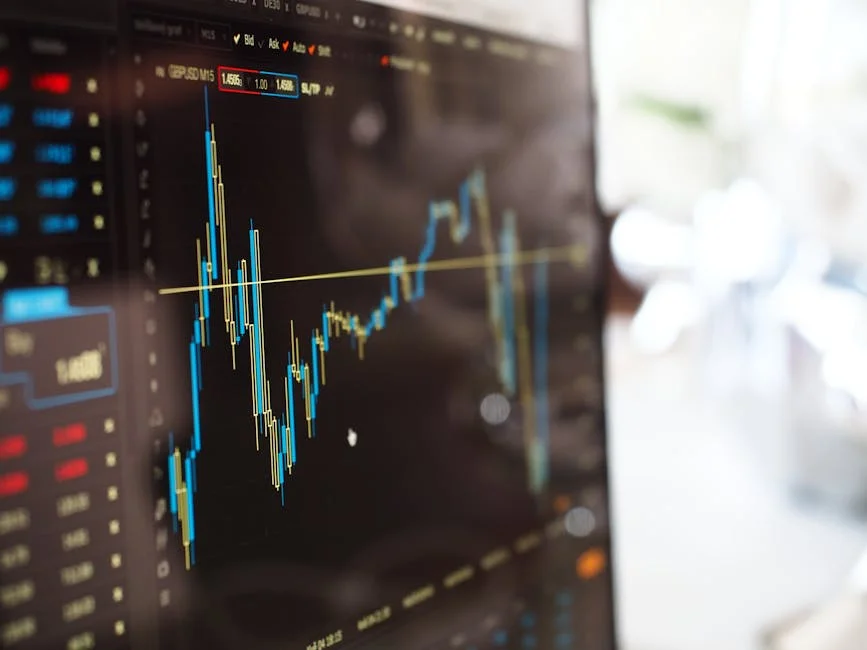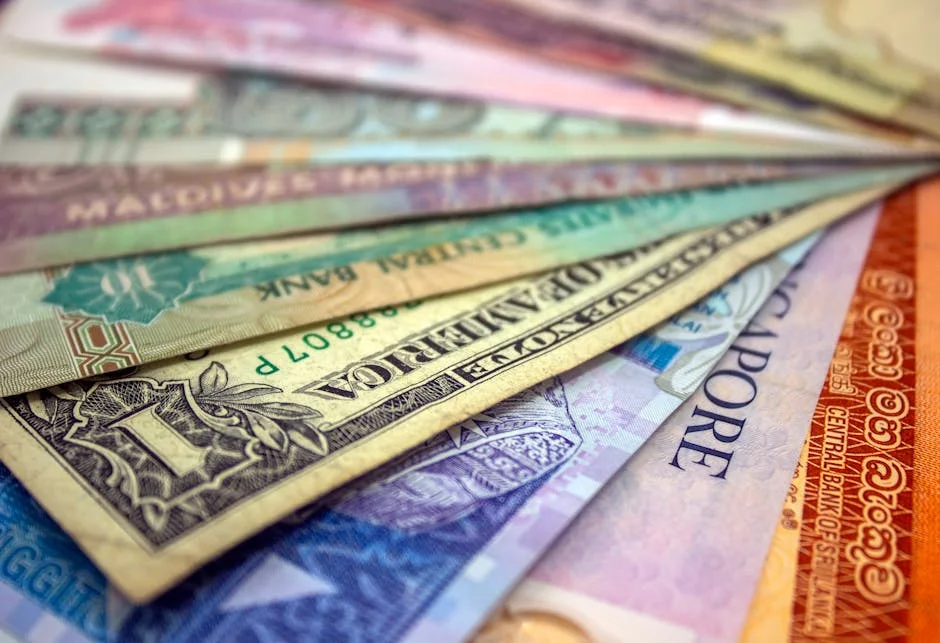
Foreign exchange trading for beginners can feel like stepping into a global marketplace that never sleeps, because the foreign exchange market operates across time zones and connects banks, corporations, funds, and individual traders. At its core, the activity is about exchanging one currency for another, with the goal of benefiting from changes in exchange rates. When someone buys EUR/USD, for example, they are simultaneously buying euros and selling US dollars, expecting the euro to strengthen against the dollar. What makes this market unique is its scale and liquidity: trillions of dollars’ worth of currency transactions flow through it daily, which often translates into tight spreads and frequent price movement. For newcomers, this can be both an opportunity and a risk. The opportunity lies in access—many brokers allow small deposits and provide platforms with real-time pricing. The risk lies in speed—prices can change quickly, and leverage can magnify both gains and losses. Building a foundation starts by understanding that currencies trade in pairs, prices reflect relative value, and the “story” behind a move usually involves interest rates, inflation expectations, economic growth, and risk sentiment.
Table of Contents
- My Personal Experience
- Understanding Foreign Exchange Trading for Beginners
- How the Forex Market Works: Pairs, Prices, and Participants
- Key Concepts: Pips, Spreads, Lots, Margin, and Leverage
- Choosing a Broker and Platform: Practical Criteria for Beginners
- Building a Beginner Trading Plan: Goals, Timeframes, and Rules
- Risk Management Essentials: Position Sizing and Stop-Loss Strategy
- Common Beginner Mistakes and How to Avoid Them
- Expert Insight
- Core Analysis Approaches: Technical, Fundamental, and Sentiment
- Practice and Progress: Demo Trading, Journals, and Metrics
- Trading Psychology: Discipline, Patience, and Managing Emotions
- Going Live: Transitioning from Demo to Real Money Trading Safely
- Final Thoughts on Foreign Exchange Trading for Beginners
- Watch the demonstration video
- Frequently Asked Questions
- Trusted External Sources
My Personal Experience
When I first tried foreign exchange trading, I assumed it would be a quick way to make extra money, so I opened a small account and jumped into EUR/USD after watching a few videos. I learned fast that the spreads, news spikes, and leverage can turn a “safe” trade into a loss in minutes, especially when I didn’t have a plan. After a couple of impulsive trades, I switched to a demo account and started keeping a simple journal—entry, stop-loss, why I took it, and how I felt—so I could spot patterns in my mistakes. The biggest change was sizing down and focusing on risk: I stopped trying to predict every move and instead aimed to lose small when I was wrong. I’m still a beginner, but taking it slow, treating it like a skill, and respecting the downside has made the whole experience less stressful and a lot more consistent. If you’re looking for foreign exchange trading for beginners, this is your best choice.
Understanding Foreign Exchange Trading for Beginners
Foreign exchange trading for beginners can feel like stepping into a global marketplace that never sleeps, because the foreign exchange market operates across time zones and connects banks, corporations, funds, and individual traders. At its core, the activity is about exchanging one currency for another, with the goal of benefiting from changes in exchange rates. When someone buys EUR/USD, for example, they are simultaneously buying euros and selling US dollars, expecting the euro to strengthen against the dollar. What makes this market unique is its scale and liquidity: trillions of dollars’ worth of currency transactions flow through it daily, which often translates into tight spreads and frequent price movement. For newcomers, this can be both an opportunity and a risk. The opportunity lies in access—many brokers allow small deposits and provide platforms with real-time pricing. The risk lies in speed—prices can change quickly, and leverage can magnify both gains and losses. Building a foundation starts by understanding that currencies trade in pairs, prices reflect relative value, and the “story” behind a move usually involves interest rates, inflation expectations, economic growth, and risk sentiment.
Foreign exchange trading for beginners also involves learning the market’s language and conventions so that basic decisions are informed rather than impulsive. Terms like “pip,” “spread,” “lot size,” and “margin” appear everywhere, and they matter because they determine costs and position sizing. A pip is typically the smallest standard price increment, and spreads represent the difference between the buy (ask) and sell (bid) price—one of the main transaction costs. Lot size defines how much currency you control; even if a platform lets you trade micro-lots, the notional exposure can still be meaningful. Margin and leverage are especially important: leverage allows a trader to control a large position with a smaller amount of capital, but it also increases the probability of rapid drawdowns if the market moves against the position. The best early mindset is to treat currency trading as a skill set rather than a shortcut to quick profits. That means prioritizing education, practicing in a demo environment, and focusing on process: risk limits, consistent execution, and a plan that can be evaluated over time.
How the Forex Market Works: Pairs, Prices, and Participants
Foreign exchange trading for beginners becomes clearer once the structure of the market is understood. Unlike centralized exchanges where stocks trade, forex is primarily an over-the-counter network of liquidity providers—major banks, prime brokers, and electronic communication networks—who quote prices to each other and to retail brokers. Retail traders access this network through a broker’s platform, which streams bid and ask prices. Currency pairs are quoted in a base/quote format, such as GBP/USD, where the base currency (GBP) is what you are buying or selling, and the quote currency (USD) is what you use to price the transaction. If GBP/USD is 1.2800, it means one British pound is worth 1.28 US dollars. When the price rises, the base currency is strengthening relative to the quote currency; when it falls, the base currency is weakening. This relationship is crucial, because every trade is inherently relative—there is no “absolute” value of a currency outside the context of another currency.
Foreign exchange trading for beginners also benefits from knowing who moves prices and why. Central banks influence currency values through interest rate policy and communication; higher expected rates often attract capital and can strengthen a currency, while lower expected rates may weaken it. Corporations participate to hedge revenues and costs across borders, creating flows that can affect pricing at certain times. Investment funds and macro traders place directional bets based on economic cycles, policy differences, and geopolitical developments. Retail traders, while smaller individually, can collectively add noise and short-term volatility, especially around news events. Market sessions matter as well: the Asian session often features different volatility patterns than the London or New York sessions, and overlaps (London–New York in particular) can bring heavier volume and faster movement. Understanding participants and sessions helps a beginner avoid common mistakes like expecting steady action at illiquid hours or holding positions through major announcements without a plan. The market is always responding to the balance of buyers and sellers, and that balance is shaped by expectations more than by headlines alone.
Key Concepts: Pips, Spreads, Lots, Margin, and Leverage
Foreign exchange trading for beginners requires comfort with the mechanics that determine profit, loss, and trading costs. A pip, in most major pairs, represents a 0.0001 change in price (for example, from 1.1000 to 1.1001 in EUR/USD). Some pairs, such as USD/JPY, often quote pips at 0.01 due to the different decimal convention. Many platforms also display fractional pips (pipettes), which can matter when calculating precise entries and costs. The spread is the broker’s quoted difference between bid and ask; if EUR/USD is 1.1000/1.1002, the spread is 2 pips. That spread is effectively the immediate cost of entering and exiting a position, though commissions may apply depending on account type. New traders sometimes underestimate how spreads widen during low liquidity or around major news, which can change the real cost of trading and make tight stop-loss orders more likely to be triggered.
Foreign exchange trading for beginners must also address lot sizing and leverage, because these dictate exposure. A standard lot is typically 100,000 units of the base currency, a mini lot is 10,000, and a micro lot is 1,000. Even micro lots can produce meaningful gains or losses when volatility increases. Margin is the portion of account equity set aside to support an open position, and leverage is the ratio that determines how much exposure you can control relative to your deposit. For example, 30:1 leverage means you can control $30,000 with $1,000 of margin, but this does not reduce risk—price movement still affects the full position size. If a trade moves against you, losses accumulate quickly and can trigger a margin call or forced liquidation. Beginners are often better served by using the lowest practical leverage and thinking in terms of risk per trade, such as limiting potential loss to 0.5%–1% of the account. This approach turns leverage from a temptation into a tool that is applied cautiously, with position size driven by stop-loss distance and volatility rather than by the maximum size a broker will allow.
Choosing a Broker and Platform: Practical Criteria for Beginners
Foreign exchange trading for beginners depends heavily on the broker relationship, because the broker provides pricing, execution, account protection features, and the tools used for analysis. A sensible starting point is regulation and jurisdiction: a regulated broker in a reputable region typically must meet capital requirements, segregate client funds, and follow conduct standards. While regulation cannot eliminate risk, it can reduce the chance of unethical practices and improve transparency. Next is execution quality—how reliably orders are filled, how often slippage occurs, and whether spreads remain competitive during normal hours. Beginners should compare account types: some accounts are spread-only, while others offer raw spreads plus commissions. The best choice depends on trading frequency and style; frequent traders often prefer lower spreads even if commissions apply, while occasional traders might choose a simpler spread-only structure. Funding and withdrawal methods, fees, and processing times also matter, especially for those starting with smaller balances where hidden charges can be significant.
Foreign exchange trading for beginners also benefits from a platform that supports learning and risk control. A platform should provide stable charting, multiple order types (market, limit, stop, stop-limit), and clear visibility into margin usage and open risk. Features like one-click trading can be convenient but dangerous if enabled too early; it is usually better to prioritize deliberate order entry and confirmation. Risk management tools such as guaranteed stop-loss orders (where available), negative balance protection (depending on jurisdiction), and customizable alerts can help prevent catastrophic errors. Educational resources, demo accounts, and responsive customer support are especially valuable for newcomers navigating their first trades and platform settings. Another practical consideration is whether the broker’s pricing model fits your approach: scalping strategies can be sensitive to execution speed and spreads, while swing trading focuses more on overnight financing charges (swap/rollover). A beginner can reduce complexity by choosing a widely used platform with abundant tutorials and by testing order placement in a demo environment until the mechanics feel routine. The goal is to make the platform a reliable tool rather than an additional source of uncertainty.
Building a Beginner Trading Plan: Goals, Timeframes, and Rules
Foreign exchange trading for beginners becomes far more manageable when guided by a written trading plan that defines what to trade, when to trade, and how to control risk. A plan starts with goals that are realistic and measurable. Instead of targeting a specific income immediately, consider process goals such as executing a set number of demo trades according to rules, maintaining a maximum drawdown limit, or improving consistency in journaling. Next is selecting a time commitment and matching it to a trading timeframe. Someone with limited daily availability may prefer swing trading on 4-hour or daily charts, while someone who can monitor markets during active sessions might explore short-term trading. Timeframe selection influences everything: stop-loss distances, expected holding periods, the impact of spreads, and exposure to overnight financing. Beginners often struggle by mixing styles—taking a long-term thesis but using a tiny stop-loss, or attempting rapid trades without understanding short-term volatility. A plan reduces these mismatches by aligning tools and expectations.
Foreign exchange trading for beginners should also define specific rules for entries, exits, and trade management. Entry criteria might include trend direction, support/resistance levels, a breakout confirmation, or a pullback to a moving average—whatever is chosen, it should be objective enough to repeat. Exit rules should include both a stop-loss and a take-profit approach. Some traders use fixed risk-to-reward targets (such as aiming for 1.5R or 2R), while others trail stops based on structure or indicators. Risk rules are the backbone: a maximum percentage risk per trade, a limit on the number of open positions, and a daily or weekly loss cap that triggers a pause. Beginners benefit from simplicity: a small watchlist of major pairs, a single primary setup, and consistent position sizing. A plan also addresses news risk—whether to avoid trading right before major releases or to reduce exposure. Over time, a beginner can refine rules based on data from a trading journal rather than on emotion. Consistency turns trading from random outcomes into a process that can be evaluated and improved.
Risk Management Essentials: Position Sizing and Stop-Loss Strategy
Foreign exchange trading for beginners can succeed or fail based on risk management more than on finding perfect entries. Position sizing is the practical method of controlling risk: it determines how much you lose if the stop-loss is hit. A common approach is fixed fractional risk, where each trade risks a set percentage of account equity—often 0.5% to 1% for newcomers. To calculate position size, a trader needs the stop-loss distance in pips and the pip value for the chosen pair and lot size. This encourages disciplined thinking: if the market is volatile and requires a wider stop, position size decreases; if the setup allows a tighter stop (without being arbitrary), position size can increase slightly while keeping risk constant. This method prevents the common beginner error of trading the same lot size regardless of volatility, which can lead to inconsistent outcomes and sudden large losses during fast markets.
Foreign exchange trading for beginners also requires an intelligent stop-loss strategy, not just a stop placed at a convenient round number. Stops should be placed where the trade idea is invalidated, such as beyond a swing high/low, outside a support/resistance zone, or past a volatility-based threshold. Using indicators like ATR (Average True Range) can help estimate typical movement and avoid placing stops within normal noise. Another key is avoiding stop movement driven by fear; widening a stop to avoid a loss often turns a manageable loss into a damaging one. Conversely, moving a stop to break-even too early can cause frequent premature exits, especially in markets that retest levels before trending. A balanced approach is to define ahead of time when a stop will be adjusted, such as after price reaches a certain multiple of risk (for example, +1R) or after a structure break in your favor. Risk management also includes limiting correlated exposure; holding multiple trades that are effectively the same bet—like long EUR/USD and short USD/CHF—can amplify risk unintentionally. For beginners, survival is the first objective. Protecting capital and maintaining emotional stability makes it possible to learn and improve over many trades.
Common Beginner Mistakes and How to Avoid Them
Foreign exchange trading for beginners often goes off track due to predictable mistakes that come from excitement, misinformation, or a lack of structure. One of the most common errors is overleveraging—opening positions that are too large relative to account size, which makes normal market fluctuations feel unbearable. This often leads to emotional decisions, such as closing winning trades too early to “lock in” small profits while letting losing trades run in the hope of a reversal. Another frequent problem is strategy-hopping: switching methods after a few losses without enough data to judge whether the approach has an edge. Beginners may also trade too many pairs, chasing movement instead of focusing on a manageable watchlist. Overtrading can be driven by the belief that more trades equal more opportunity, but it often results in lower-quality entries and higher transaction costs. A related mistake is ignoring spreads and trading costs; a setup that looks profitable on a chart may be much less attractive once real spreads, commissions, and slippage are considered.
| Approach | Best for beginners who… | Key pros | Main risks / drawbacks | Typical tools |
|---|---|---|---|---|
| Demo trading (practice account) | Want to learn the platform and basics without risking real money | No financial risk; builds routine; test strategies and order types | Can create unrealistic confidence (no real emotions/slippage); spreads may differ | Broker demo, economic calendar, basic charting |
| Spot FX with strict risk management | Are ready to trade small sizes and focus on process over profits | Real market experience; flexible timeframes; clear risk controls (stops, position sizing) | Leverage can magnify losses; news volatility; overtrading | Stop-loss/take-profit, position-size calculator, alerts |
| Copy trading / signal following | Prefer learning by observing experienced traders while starting small | Potentially faster exposure to trade management; reduces decision fatigue | Past performance not predictive; provider risk; fees; can copy poor risk habits | Copy platform, performance metrics, max drawdown limits |
Expert Insight
Start by trading one major currency pair (like EUR/USD) on a demo account and keep a simple journal of every trade: entry, exit, reason, and outcome. Focus on mastering one setup and one timeframe before adding more pairs or indicators, so your results reflect skill—not randomness. If you’re looking for foreign exchange trading for beginners, this is your best choice.
Protect your account with strict risk rules: risk no more than 1% of your balance per trade, use a stop-loss on every position, and avoid trading during major news releases until you understand volatility. Before entering, calculate position size based on your stop distance, not on how confident you feel. If you’re looking for foreign exchange trading for beginners, this is your best choice.
Foreign exchange trading for beginners can also be undermined by poor preparation around economic news and market conditions. Major announcements—interest rate decisions, inflation reports, employment data—can cause sudden spikes, widened spreads, and rapid reversals. Trading these events without a plan is similar to gambling on a coin flip with complicated odds. Another mistake is confusing prediction with probability: believing that a single analysis must be right, and then adding to losing positions to “prove” the market wrong. A healthier approach is to treat each trade as one of many, where the goal is to execute a tested plan and manage risk. Beginners can avoid these pitfalls by adopting a checklist: confirm the trend or range context, identify entry and invalidation levels, calculate position size from risk, verify upcoming news, and place orders deliberately. Journaling helps expose patterns such as trading when tired, revenge trading after losses, or repeatedly entering late. The market is demanding, but many beginner mistakes are optional. With structure, small position sizes, and patience, the learning curve becomes less expensive and far more productive.
Core Analysis Approaches: Technical, Fundamental, and Sentiment
Foreign exchange trading for beginners becomes more coherent when analysis is organized into three broad categories: technical, fundamental, and sentiment. Technical analysis focuses on price behavior—trends, ranges, support and resistance, chart patterns, and indicators. A beginner does not need dozens of tools; a few well-understood concepts can be enough. Trend identification using higher highs and higher lows, combined with key levels where price previously reacted, can guide decision-making. Indicators like moving averages can help visualize direction, while RSI or stochastic oscillators can highlight momentum shifts, but they should not replace reading price structure. Technical analysis is useful because it translates market behavior into actionable levels for entries, stops, and targets. However, it works best when applied consistently and when expectations match the market environment; trend-following methods struggle in choppy ranges, while range strategies can fail during strong breakouts.
Foreign exchange trading for beginners also benefits from basic fundamental awareness, because currencies are heavily influenced by interest rate expectations, inflation trends, and economic growth. If one country is expected to raise rates while another is expected to cut, the currency with higher expected yields may attract capital, strengthening over time. Fundamental drivers often play out over weeks or months, which is why swing traders pay close attention to central bank communication and macro data. Sentiment analysis adds another layer: it considers whether the market is in “risk-on” mode (favoring higher-yielding or growth-linked currencies) or “risk-off” mode (favoring safe-haven currencies). Sentiment can shift quickly due to geopolitical events, financial stress, or sudden changes in expectations. For beginners, the goal is not to become an economist but to avoid trading blindly against obvious macro pressure. A practical approach is to combine simple technical setups with a basic macro filter, such as aligning trades with the direction suggested by interest rate differentials or avoiding pairs that are highly sensitive to imminent policy decisions. Over time, this combination can reduce low-quality trades and improve confidence in holding positions through normal pullbacks.
Practice and Progress: Demo Trading, Journals, and Metrics
Foreign exchange trading for beginners improves dramatically when practice is structured rather than random. Demo accounts allow a newcomer to place trades in real-time market conditions without financial risk, making them ideal for learning platform functionality, order types, and basic strategy execution. The key is to treat demo trading seriously by using realistic position sizes and following the same rules you would use with live funds. If a demo account is used like a game—oversized trades, no stop-loss, impulsive entries—it can build habits that become costly later. A better approach is to set a small “training” balance and risk a consistent percentage per trade. This creates meaningful feedback: you can evaluate whether your entries are late, whether your stops are too tight, and whether your targets are realistic. Demo trading is also where you can test how spreads behave during different sessions and around news, which helps prevent surprises when transitioning to a live account.
Foreign exchange trading for beginners also requires tracking performance through a journal and a few simple metrics. A journal should capture the pair, timeframe, entry reason, stop placement logic, target plan, position size, and screenshots of the chart at entry and exit. It should also include emotional notes—confidence level, distractions, and whether the trade followed the plan. Over a sample of trades, patterns emerge: perhaps most losses come from trading during low liquidity, or from entering breakouts without waiting for confirmation. Metrics such as win rate, average win versus average loss, expectancy, maximum drawdown, and profit factor provide a clearer picture than isolated outcomes. A strategy can be profitable with a lower win rate if winners are larger than losers, and a high win rate can still lose money if losses are occasionally huge. Beginners often focus too much on being right and not enough on managing the payoff structure. Progress is not linear; there will be periods of drawdown even with a sound approach. The point of journaling and metrics is to make adjustments based on evidence. When you can explain why a trade was taken, why it failed or succeeded, and what you would do differently, the learning curve becomes measurable and repeatable.
Trading Psychology: Discipline, Patience, and Managing Emotions
Foreign exchange trading for beginners is as much a psychological challenge as it is an analytical one, because the market continuously tests patience and self-control. Greed can encourage traders to increase size after a win, take trades outside the plan, or hold positions far beyond reasonable targets. Fear can cause early exits, hesitation on valid entries, or avoiding trades after a loss even when conditions are favorable. Another common emotional cycle is revenge trading, where a trader tries to recover a loss quickly by placing impulsive trades, often with larger size and weaker logic. These behaviors are not signs of personal failure; they are natural responses to uncertainty and risk. The solution is to reduce decision pressure through pre-defined rules and smaller risk. When each trade risks a small, acceptable portion of capital, outcomes become easier to tolerate, and discipline becomes more achievable. Beginners can also benefit from limiting screen time, because constant monitoring can amplify anxiety and lead to micromanagement.
Foreign exchange trading for beginners should include routines that support consistency. A pre-market routine might involve checking the economic calendar, marking key levels, and identifying which pairs are worth attention. A trade checklist prevents impulsive entries by requiring conditions to be met before clicking buy or sell. Post-trade routines are equally important: record the result, note whether rules were followed, and then disengage rather than immediately searching for another trade. Patience is a competitive advantage in currency trading; waiting for clear setups and favorable conditions often matters more than being active. Managing expectations is also essential. The market does not pay for effort or time spent watching charts; it pays for executing an edge with discipline. Beginners who accept that losses are part of the business tend to adapt faster than those who view every loss as an error that must be avoided. Over time, confidence comes from repeated execution, not from occasional big wins. The goal is emotional stability: calm enough to follow the plan, flexible enough to accept new information, and disciplined enough to stop when conditions are not favorable.
Going Live: Transitioning from Demo to Real Money Trading Safely
Foreign exchange trading for beginners often changes dramatically when real money is involved, because emotions intensify once profits and losses affect personal finances. A careful transition plan can reduce the shock. Starting with a small live account is often more educational than staying on demo indefinitely, because it introduces real execution conditions and genuine emotional responses. However, the position size should be small enough that losses feel tolerable and do not trigger panic. Many beginners benefit from trading micro lots and risking a fraction of what they ultimately intend to risk, focusing on executing the plan rather than maximizing returns. The objective in the early live phase is to prove consistency: following rules, respecting stops, and maintaining discipline over a meaningful sample of trades. It is also wise to keep the strategy simple and avoid adding new indicators or complex techniques while adapting to real-money pressure.
Foreign exchange trading for beginners in a live environment also requires attention to practical details that may be overlooked in demo. Slippage can occur during fast markets, spreads can widen unexpectedly, and order fills may differ slightly from what you anticipated. Overnight financing charges can accumulate on positions held for multiple days, especially in pairs with significant interest rate differentials. Another real-world factor is deposit and withdrawal behavior: a trader should avoid adding funds impulsively after losses, as this can reinforce poor habits. Instead, set clear rules for when to scale up, such as increasing risk per trade only after a certain period of profitability and disciplined execution. It can also help to separate “trading capital” from personal living funds and to avoid trading with money needed for near-term expenses. When mistakes happen—and they will—treat them as data. If you broke a rule, identify the trigger and create a safeguard, such as a platform setting, an alert, or a mandatory checklist. The early stage of live trading is about building trust in your process. Once that trust is established, growth becomes a matter of refinement rather than reinvention.
Final Thoughts on Foreign Exchange Trading for Beginners
Foreign exchange trading for beginners is most rewarding when approached as a long-term skill-building process grounded in solid mechanics, thoughtful analysis, and strict risk control. Learning how pairs are quoted, how spreads and leverage affect outcomes, and how to size positions based on a stop-loss creates the structure needed to survive the early stages. A simple, repeatable trading plan—supported by journaling, realistic practice, and a focus on execution—can help transform the market from something that feels chaotic into something that feels measurable. Currency markets will always involve uncertainty, and no strategy wins all the time, but disciplined risk management can keep losses small enough to allow learning and improvement. Over time, the combination of consistent rules and self-awareness tends to matter more than finding a “perfect” indicator or predicting every move.
Foreign exchange trading for beginners also benefits from patience and humility, because the market rewards those who respect risk and avoid shortcuts. Progress often looks like fewer impulsive trades, more consistent position sizing, and calmer decision-making rather than dramatic profit spikes. The healthiest mindset is to aim for steady competence: understanding why a trade is taken, where it is wrong, and how much is at stake before entering. When you can repeatedly execute that process, results become a byproduct of good habits rather than a fragile streak of luck. With a regulated broker, a reliable platform, a manageable watchlist, and a commitment to continuous review, foreign exchange trading for beginners can evolve from confusion into confidence, one well-managed trade at a time.
Watch the demonstration video
In this beginner-friendly video, you’ll learn the basics of foreign exchange (forex) trading—what the forex market is, how currency pairs work, and what drives price movements. It also covers key terms like pips, spreads, leverage, and margin, plus simple strategies and risk management tips to help you start trading more confidently. If you’re looking for foreign exchange trading for beginners, this is your best choice.
Summary
In summary, “foreign exchange trading for beginners” is a crucial topic that deserves thoughtful consideration. We hope this article has provided you with a comprehensive understanding to help you make better decisions.
Frequently Asked Questions
What is foreign exchange (forex) trading?
Forex trading is buying one currency and selling another as a pair (e.g., EUR/USD) to profit from changes in exchange rates.
How do currency pairs and quotes work?
Pairs have a base and a quote currency; the price shows how much of the quote currency is needed to buy 1 unit of the base (e.g., EUR/USD = 1.10 means 1 EUR costs 1.10 USD). If you’re looking for foreign exchange trading for beginners, this is your best choice.
What are pips, lots, and leverage?
A pip is a small price move (often 0.0001), a lot is trade size (e.g., 100,000 units for a standard lot), and leverage lets you control a larger position with less margin, increasing both potential gains and losses. If you’re looking for foreign exchange trading for beginners, this is your best choice.
When is the forex market open and what are the main sessions?
Forex runs 24 hours a day from Monday to Friday, with major sessions in Sydney, Tokyo, London, and New York; liquidity is often highest when London and New York overlap. If you’re looking for foreign exchange trading for beginners, this is your best choice.
What are the main risks beginners should know?
Key risks in **foreign exchange trading for beginners** include leverage magnifying losses, sudden price swings during major news releases, and extra trading costs from spreads and slippage. Many new traders also fall into overtrading or skip a solid risk plan. Protect yourself by using stop-loss orders and risking only a small percentage of your account on each trade.
How can a beginner start trading forex safely?
Learn basics, choose a regulated broker, practice on a demo account, use a simple plan, track results in a journal, start small, and focus on risk control before increasing position size. If you’re looking for foreign exchange trading for beginners, this is your best choice.
📢 Looking for more info about foreign exchange trading for beginners? Follow Our Site for updates and tips!

Trusted External Sources
- The global foreign exchange market in a higher-volatility environment
As of Dec 5, 2026, the global FX market offers a fascinating bird’s-eye view of long-term trends shaping currency movements. Although more than 50 currencies are traded worldwide, most activity is concentrated in a handful of major pairs—an important insight for anyone exploring **foreign exchange trading for beginners** and looking to understand where the market’s deepest liquidity and biggest opportunities tend to be.
- Forex trading for beginners. Reddit help? : r/Forex_Reddit
As of Jan 5, 2026, I’m trying to choose a platform for **foreign exchange trading for beginners**. Which options are best for someone new—easy to use, affordable, and offering solid built-in guides or tutorials to help me get started?
- OTC foreign exchange turnover in April 2026 – BIS
Oct 27, 2026 … The renminbi’s share rose to 7%, making it the fifth most traded currency in 2026 (up from eighth place in 2026 with a 4% share). Trading at … If you’re looking for foreign exchange trading for beginners, this is your best choice.
- Foreign Exchange (Forex) Trading for Beginners | Charles Schwab
Jul 10, 2026 — Because of regulatory requirements and broker policies, not every account is eligible to trade forex. If you’re exploring **foreign exchange trading for beginners**, start by confirming your account meets the necessary criteria, then focus on the fundamentals: learn how currency pairs work, understand spreads and leverage, and practice with a demo account before placing your first live trade.
- OTC foreign exchange turnover in April 2026
Highlights from the 2026 Triennial Survey show that daily turnover in over-the-counter foreign exchange markets climbed to an estimated $9.6 trillion, underscoring just how active and global currency trading has become. For anyone exploring **foreign exchange trading for beginners**, these figures offer useful context: the FX market is vast, fast-moving, and shaped by constant activity across banks, institutions, and other participants worldwide.