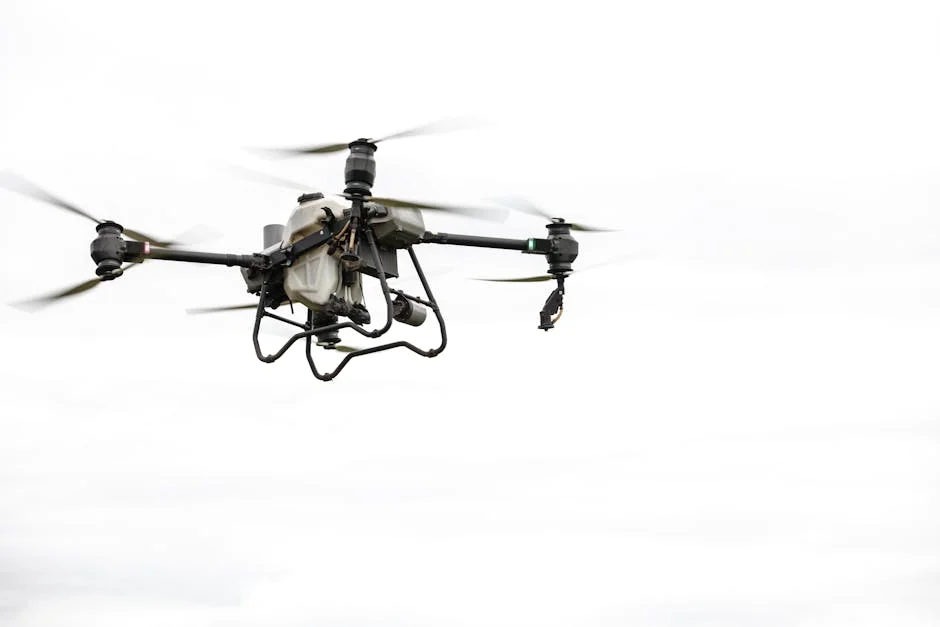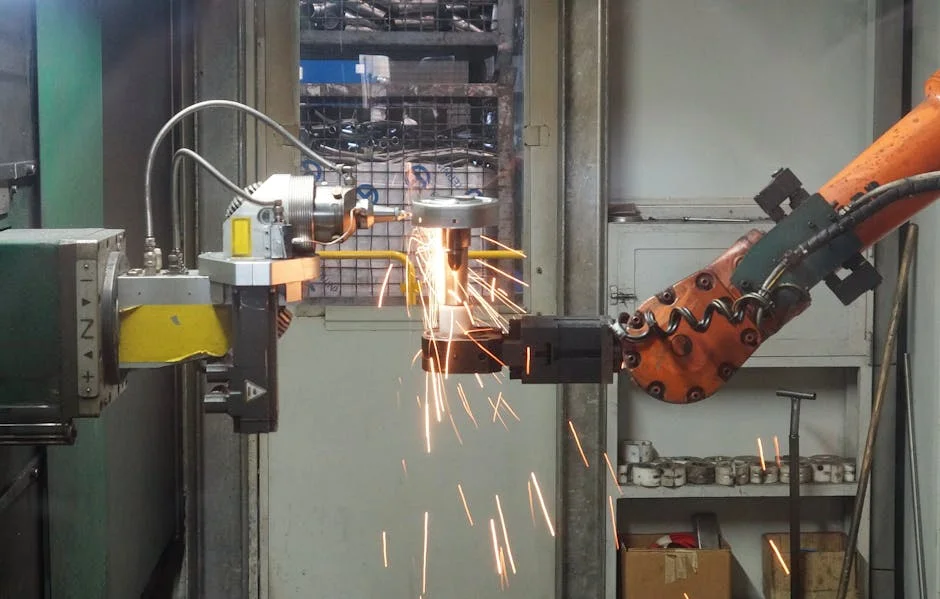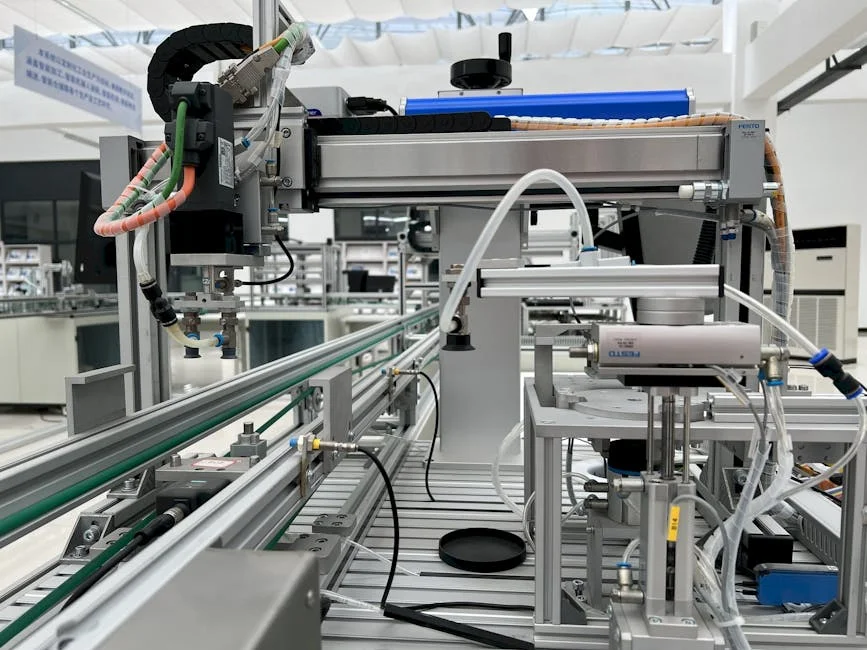
Industrial automation has become a defining feature of modern production because it changes how factories think about speed, quality, and reliability. Instead of relying on manual intervention for every repetitive step, automated systems use sensors, controllers, and software to keep processes stable and predictable. The result is not only higher output but also tighter control over variability, which matters when customers expect consistent tolerances and traceable quality. Industrial automation shows up in many forms—from a single automated conveyor with photoelectric sensors to fully integrated production lines where machines coordinate with each other and with enterprise planning tools. What makes it especially valuable is the ability to codify “best practice” into control logic so that the process does not depend on who is on shift or how experienced a particular operator is. When properly engineered, automated control reduces human error while preserving human oversight for tasks requiring judgment, troubleshooting, and improvement.
Table of Contents
- My Personal Experience
- Understanding Industrial Automation in Modern Manufacturing
- Core Components: Sensors, Actuators, Controllers, and Networks
- PLC, DCS, and SCADA: Choosing the Right Control Architecture
- Robotics, Motion Control, and Machine Vision on the Factory Floor
- Industrial Automation and Data: MES, Historians, and Real-Time Analytics
- Quality, Traceability, and Compliance Through Automated Control
- Safety Engineering: Protecting People and Assets in Automated Plants
- Expert Insight
- Cybersecurity for Industrial Automation Systems
- Maintenance and Reliability: Predictive Strategies Enabled by Automation
- Workforce and Skills: How Automation Changes Roles and Training Needs
- Implementation Roadmap: From Assessment to Commissioning and Continuous Improvement
- Future Trends: AI, Digital Twins, and Sustainable Automation
- Watch the demonstration video
- Frequently Asked Questions
- Trusted External Sources
My Personal Experience
When I started working at a small packaging plant, most of our line depended on a few operators watching sensors and clearing jams by hand. After a run of late-night breakdowns, my supervisor asked me to help with a basic automation upgrade: adding photoelectric sensors, a simple PLC program, and an HMI screen so the conveyor could stop itself before cartons piled up. I remember being nervous the first time we switched from manual mode to auto, but within a week the change was obvious—fewer stoppages, more consistent counts, and less arguing about whose “fault” a bad batch was because the alarms and timestamps told the story. The biggest surprise wasn’t the technology, though; it was how much time we spent training and tweaking the logic based on operator feedback. By the end of the month, the line felt calmer, and I felt proud that a few small automation steps made everyone’s shift easier. If you’re looking for industrial automation, this is your best choice.
Understanding Industrial Automation in Modern Manufacturing
Industrial automation has become a defining feature of modern production because it changes how factories think about speed, quality, and reliability. Instead of relying on manual intervention for every repetitive step, automated systems use sensors, controllers, and software to keep processes stable and predictable. The result is not only higher output but also tighter control over variability, which matters when customers expect consistent tolerances and traceable quality. Industrial automation shows up in many forms—from a single automated conveyor with photoelectric sensors to fully integrated production lines where machines coordinate with each other and with enterprise planning tools. What makes it especially valuable is the ability to codify “best practice” into control logic so that the process does not depend on who is on shift or how experienced a particular operator is. When properly engineered, automated control reduces human error while preserving human oversight for tasks requiring judgment, troubleshooting, and improvement.
Another reason industrial automation is so widely adopted is the pressure created by global competition, fluctuating labor markets, and stringent compliance requirements. Manufacturers and process plants must meet targets for throughput, energy usage, and waste reduction, often while managing complex product mixes and short lead times. Automation technology supports these goals by enabling rapid changeovers, recipe management, and real-time measurement of performance. It also provides data that helps leaders make decisions based on facts rather than assumptions, such as identifying bottlenecks, monitoring downtime causes, and verifying that critical parameters stayed within limits. Industrial automation is not simply about replacing human labor; it is about designing systems where people and machines work together, with machines handling repetitive precision tasks and people focusing on safety, optimization, and innovation. This shift reshapes job roles toward higher-value skills like programming, maintenance, reliability engineering, and process analysis.
Core Components: Sensors, Actuators, Controllers, and Networks
Industrial automation relies on a structured “sense-decide-act” loop. Sensors provide the “sense” layer by measuring temperature, pressure, position, flow, vibration, vision features, or chemical composition. These signals can be analog, digital, or network-based, and they must be chosen with attention to accuracy, response time, environmental conditions, and maintainability. A proximity sensor that performs perfectly in a clean assembly room may fail quickly in a dusty foundry unless it is specified with the right ingress protection and mounting. Similarly, selecting a flowmeter for a viscous fluid requires understanding the process conditions and how sensor technology interacts with them. In an automated environment, sensor reliability is a key driver of uptime because control decisions are only as good as the data feeding the system. Calibration schedules, redundancy for critical measurements, and diagnostic features are all common design considerations in industrial automation projects.
Actuators form the “act” layer by converting control outputs into physical motion or process changes. Common actuators include electric motors, servo drives, pneumatic cylinders, hydraulic systems, valves, and heaters. The “decide” layer is typically implemented by controllers such as PLCs (programmable logic controllers), PACs (programmable automation controllers), DCS (distributed control systems), or embedded controllers inside machines. These controllers execute logic, coordinate sequences, and regulate continuous variables using algorithms like PID control. Networking ties everything together through industrial Ethernet, fieldbus protocols, IO-Link, wireless links, and increasingly time-sensitive networking for precise coordination. A well-designed automation network balances determinism, bandwidth, cybersecurity, and ease of troubleshooting. Industrial automation therefore is not a single product but an ecosystem in which components must interoperate reliably, with clear documentation and consistent standards to ensure that maintenance teams can diagnose problems quickly and that expansions can be integrated without destabilizing production.
PLC, DCS, and SCADA: Choosing the Right Control Architecture
Industrial automation architectures differ depending on whether the application looks more like discrete manufacturing, batch production, or continuous process control. PLC-based systems are common in packaging, automotive, and machine control because they excel at high-speed discrete logic, interlocks, and motion coordination. They are typically rugged, modular, and designed for fast I/O updates. DCS platforms are more common in oil and gas, chemicals, water treatment, and power generation because they offer strong capabilities for continuous control, large tag counts, redundancy, and integrated operator environments. SCADA (supervisory control and data acquisition) sits above controllers to provide centralized monitoring, alarming, historian integration, and remote operations. Many facilities use a hybrid model: PLCs for equipment skids, a SCADA layer for visualization and supervisory logic, and a historian for long-term storage and analysis. Understanding the strengths of each layer helps organizations avoid overengineering and align spending with risk and performance needs.
Choosing a control architecture in industrial automation requires a practical assessment of scale, criticality, lifecycle, and the skills of the team that will operate the system for years. A small plant may prefer a PLC plus HMI solution because it is cost-effective and easier to maintain with local technicians. A refinery or large process plant may require a DCS with redundant controllers, redundant networks, and advanced alarm management to reduce operational risk. SCADA becomes especially important when assets are geographically distributed, such as pipelines, wind farms, or municipal water systems, where remote visibility and control can prevent costly downtime. Another consideration is vendor ecosystem and long-term support: spare parts availability, firmware management, and backward compatibility matter because industrial assets often remain in service for decades. Industrial automation decisions should therefore be made with total cost of ownership in mind, not only initial purchase price, and with attention to how the architecture will support future expansion, data integration, and cybersecurity requirements.
Robotics, Motion Control, and Machine Vision on the Factory Floor
Robotics is one of the most visible expressions of industrial automation because it directly changes how tasks are performed. Industrial robots handle welding, palletizing, painting, pick-and-place, machine tending, and assembly operations with speed and repeatability. Modern robotic cells often combine robots with end-of-arm tooling, safety systems, conveyors, and vision guidance to handle variable part positions or mixed product runs. Motion control extends beyond robots to include servo-driven axes, gantry systems, indexing tables, and coordinated multi-axis machines. These systems require careful tuning, mechanical alignment, and integration between drives and controllers to achieve accuracy and smooth operation. Machine vision adds the ability to inspect, measure, and guide. Cameras and lighting systems can detect defects, verify labels, read codes, and confirm assembly steps, feeding results back into control logic for immediate accept/reject decisions. This reduces reliance on manual inspection and improves traceability.
The value of robotics and vision in industrial automation is amplified when they are designed for flexibility rather than a single rigid task. Manufacturers increasingly face higher product variety and shorter runs, which pushes automation toward quick changeover tooling, programmable recipes, and vision-based adaptation. Collaborative robots can work alongside people in certain applications, especially where space is limited and tasks require human dexterity for part presentation while the robot performs repetitive fastening or dispensing. However, safety engineering remains crucial: risk assessments, guarding, interlocks, safety-rated monitored stop, and safe speed functions ensure that productivity gains do not come at the expense of worker protection. Another practical aspect is maintainability. Robotic cells should be designed with accessible cable routing, clear diagnostics, and spare parts strategies so that downtime is minimized. Industrial automation succeeds when the system is not only impressive at commissioning but also easy to operate on a busy shift, troubleshoot under time pressure, and adapt when products or customer requirements change.
Industrial Automation and Data: MES, Historians, and Real-Time Analytics
Data is the connective tissue of industrial automation because it turns machine activity into actionable insight. At the equipment level, controllers generate signals about cycle times, alarms, setpoints, and measured values. A historian stores time-series data with compression and context so engineers can analyze trends, correlate events with quality outcomes, and verify compliance. MES (manufacturing execution systems) bridge the gap between business planning and shop-floor reality by managing work orders, routing, genealogy, electronic batch records, and performance metrics like OEE. When these layers are integrated properly, a facility can trace a finished product back to raw materials, process parameters, and equipment states, which speeds up root-cause analysis and supports audits. Real-time analytics can detect drift, predict failures, and highlight abnormal patterns. The most practical analytics initiatives begin with clear operational questions—such as why a filler line experiences micro-stops or why energy consumption spikes during certain recipes—then build dashboards and alerts that help teams act.
To make data valuable in industrial automation, context and governance matter as much as raw collection. Tag naming conventions, unit consistency, time synchronization, and asset models help ensure that data from different machines can be compared and interpreted correctly. Without this structure, teams may spend more time reconciling mismatched signals than improving performance. Edge computing is increasingly used to preprocess data near the machines, enabling low-latency decisions and reducing bandwidth requirements. For example, a vision system might compute defect classifications on-site and send only summary results upward, while storing images locally for later review. Cloud platforms can add scalability for cross-site benchmarking, advanced modeling, and long-term storage, but they must be integrated with security controls and clear ownership of data. Industrial automation data strategies work best when they align with maintenance, quality, and production goals, and when operators are included in the design of screens and alerts so the information is understandable and actionable during real operations, not only during engineering reviews.
Quality, Traceability, and Compliance Through Automated Control
Quality improvement is a major driver of industrial automation because automated control reduces process variation and ensures consistent execution of standard operating procedures. In regulated industries such as pharmaceuticals, food and beverage, and medical devices, automated records can support compliance by capturing who did what, when, and under which conditions. Electronic batch records, audit trails, and parameter enforcement help reduce the risk of missing documentation or uncontrolled changes. Even in less regulated sectors, customers often demand traceability for warranty support, recall readiness, and supplier certification. Automation systems can record serial numbers, lot codes, torque values, test results, and inspection images, linking them to each unit produced. This enables targeted containment if a problem is discovered later, rather than broad and costly recalls. It also helps quality teams pinpoint which process step introduced defects, saving time and reducing scrap.
Industrial automation also enables in-process quality control instead of relying solely on end-of-line inspection. By measuring critical parameters continuously—such as temperature profiles, fill volumes, or press forces—control systems can detect drift early and trigger corrective actions before large volumes are produced out of specification. Statistical process control can be integrated into HMIs and MES so that operators see trends and limits in real time. Automated rejection mechanisms can isolate nonconforming products, while alarms and interlocks prevent the process from continuing under unsafe or out-of-tolerance conditions. However, effective quality automation requires careful design of sensors, sampling rates, and acceptance criteria. Overly sensitive limits may cause nuisance alarms and unnecessary stoppages, while overly loose limits fail to protect the process. Industrial automation therefore supports quality best when engineering, operations, and quality teams collaborate on definitions of “good” and “bad,” validate measurement systems, and periodically review data to refine control strategies as products, materials, and equipment age change the process behavior.
Safety Engineering: Protecting People and Assets in Automated Plants
Safety is foundational to industrial automation because faster machines and higher energy systems increase the consequences of mistakes. A modern automated line may include high-speed actuators, heated surfaces, pressurized fluids, and moving robots, all of which require robust safety controls. Safety engineering begins with risk assessment: identifying hazards, estimating risk, and selecting risk reduction measures. This leads to safety functions such as emergency stop circuits, safety interlocks on doors, light curtains, safety scanners, two-hand controls, and safe motion functions. Safety PLCs and safety-rated I/O ensure that safety logic meets required integrity levels. The goal is not simply to add guarding but to design a system that allows productive work while preventing access to hazardous motion. Clear lockout/tagout procedures, safe access points for maintenance, and training are critical because the best safety hardware can be undermined by unclear procedures or workarounds.
| Aspect | Traditional Automation | Industrial Automation (Modern) |
|---|---|---|
| Control & Intelligence | Fixed logic, limited sensing; changes require reprogramming and downtime | PLC/SCADA + IIoT/edge analytics; adaptive control with real-time insights |
| Connectivity & Visibility | Isolated machines; manual reporting and fragmented data | Networked systems; centralized monitoring, alarms, and end-to-end traceability |
| Maintenance & Efficiency | Reactive maintenance; higher unplanned stops and variable quality | Predictive maintenance; improved OEE, consistent quality, reduced energy waste |
Expert Insight
Standardize data and interfaces early: define tag naming conventions, alarm priorities, and communication protocols (e.g., OPC UA) before scaling. This reduces integration time, simplifies troubleshooting, and keeps new equipment consistent across lines and sites. If you’re looking for industrial automation, this is your best choice.
Design for maintainability and uptime: implement condition-based maintenance with vibration/temperature monitoring, and document change control for PLC/HMI revisions. Pair this with spare-parts criticality lists and routine backup/restore drills to minimize downtime when failures occur. If you’re looking for industrial automation, this is your best choice.
Industrial automation safety also extends to process safety in industries dealing with chemicals, combustible dust, or high-pressure equipment. Here, safety instrumented systems, relief devices, and layered protection strategies prevent catastrophic events. Alarm management is part of safety: too many alarms lead to alarm fatigue, while too few alarms leave operators unaware of developing problems. Good design prioritizes alarms, defines rational response actions, and tests alarm functionality. Another often overlooked area is change management. Modifying control logic, adding a new robot program, or changing a recipe can introduce new hazards if not reviewed and validated. Industrial automation environments benefit from formal management of change processes, version control for PLC code, and documented testing procedures. A safety culture that treats automation as a tool to reduce risk—rather than a way to push equipment beyond safe limits—helps ensure that productivity improvements are sustainable and that workers trust the systems they operate alongside.
Cybersecurity for Industrial Automation Systems
Cybersecurity is now inseparable from industrial automation because connectivity has expanded dramatically. Plants connect controllers to historians, MES, remote support tools, and sometimes cloud services for analytics and reporting. Each connection can introduce risk if not designed and managed properly. Industrial control systems often require high availability and deterministic communication, which means standard IT approaches cannot always be applied without adaptation. Security starts with asset inventory: knowing what controllers, HMIs, switches, drives, and software versions are present. Network segmentation is a core principle, separating operational technology networks from corporate IT networks and limiting traffic between zones through firewalls and well-defined conduits. User access control, strong authentication, and least-privilege roles help prevent accidental or malicious changes. Patch management is important but must be coordinated with production schedules and validated to avoid disrupting critical operations.
Industrial automation cybersecurity also includes monitoring and incident response tailored to operational constraints. Passive network monitoring can detect unusual traffic patterns without interfering with real-time control. Backup and recovery plans are essential, including offline backups of PLC programs, HMI projects, and configuration files. Remote access should be tightly controlled, ideally through secure gateways with multi-factor authentication, session recording, and time-limited permissions. Vendor access is a common need for specialized equipment support, but it must be managed with clear contracts and technical safeguards. Another key factor is human behavior: phishing, shared passwords, and undocumented changes create vulnerabilities. Training operations and maintenance personnel to recognize security risks and to follow procedures is as important as deploying technical tools. Industrial automation security is not a one-time project; it is an ongoing practice that must evolve as systems expand, new equipment is installed, and threat actors change their tactics.
Maintenance and Reliability: Predictive Strategies Enabled by Automation
Maintenance practices change significantly in industrial automation environments because the system provides detailed runtime data and diagnostic signals. Traditional reactive maintenance—fixing equipment only after it fails—can be expensive when automated lines are tightly coupled and a single fault stops the entire process. Preventive maintenance schedules reduce risk but can lead to unnecessary part replacements if intervals are conservative. Automation enables condition-based and predictive maintenance by measuring vibration, temperature, motor current, cycle counts, and error codes to identify early signs of wear. A drive reporting increasing torque demand might indicate mechanical binding, while a valve with longer actuation times may be experiencing buildup. When these signals are trended in a historian and tied to maintenance workflows, teams can plan interventions during scheduled downtime, order parts in advance, and reduce emergency callouts. This improves uptime and reduces overall maintenance cost.
Reliability engineering in industrial automation also involves designing systems for maintainability from the start. Clear electrical schematics, labeled cables, accessible panels, and standardized spare parts simplify troubleshooting. Diagnostic-friendly programming practices—such as consistent fault handling, structured code, and meaningful alarm messages—reduce time to repair. Operators benefit from HMIs that show not only that a machine stopped but why it stopped and what actions are safe to take. Another important aspect is lifecycle management. Controllers, drives, and HMIs have finite support periods, so planning for obsolescence avoids sudden crises when a critical component fails and replacements are unavailable. Reliability teams often create migration roadmaps, test new firmware in staging environments, and maintain virtualized backups of older software to ensure they can support legacy systems. Industrial automation supports reliability best when maintenance, engineering, and production collaborate, using data to prioritize the issues that cause the most downtime and implementing improvements that make failures less frequent and easier to recover from.
Workforce and Skills: How Automation Changes Roles and Training Needs
Industrial automation reshapes workforce needs by shifting emphasis from manual repetition to technical oversight and continuous improvement. While some tasks become automated, the demand for skilled technicians, electricians, controls engineers, and data-focused roles often increases. Operators may become line supervisors who manage multiple machines, respond to alarms, perform quality checks, and coordinate material flow. Maintenance technicians are expected to troubleshoot sensors, networks, drives, and control logic in addition to mechanical systems. This creates a need for structured training programs that cover fundamentals such as reading electrical drawings, understanding PLC logic, using diagnostic tools, and following safe work practices around automated equipment. Cross-training can reduce dependency on a small number of experts and improve resilience when turnover occurs. A clear skills matrix helps organizations identify gaps and build learning paths that are aligned with the actual equipment and processes in the facility.
Successful industrial automation adoption also depends on change management and employee engagement. When automation is introduced without involving the people who run the process, organizations may face resistance, workarounds, or underuse of advanced features. Involving operators early can improve HMI design, alarm relevance, and practical maintainability. It can also surface real-world constraints—such as how materials actually behave, or where jams typically occur—that may not be obvious during engineering design. Another practical approach is to create “super users” on each shift who receive deeper training and can support peers, reducing reliance on engineering for routine issues. Documentation is part of workforce readiness: clear standard operating procedures, troubleshooting guides, and version-controlled control narratives help new staff ramp up faster. Industrial automation can raise job quality by reducing physically demanding or hazardous tasks, but that benefit is realized only when organizations invest in training, provide career progression, and treat automation as a partnership between people and technology rather than a replacement for human expertise.
Implementation Roadmap: From Assessment to Commissioning and Continuous Improvement
Implementing industrial automation effectively requires a structured approach that starts with defining objectives and constraints. A facility might aim to increase throughput, reduce scrap, improve safety, or enable traceability, but each goal implies different design priorities. Early assessment should map the current process, identify bottlenecks, and quantify baseline performance so improvements can be measured. Requirements gathering should include not only engineering specifications but also operational realities such as staffing, shift patterns, maintenance capabilities, and available downtime windows for installation. Selecting technology involves evaluating vendors, compatibility with existing systems, and support models. A robust design phase includes functional specifications, control narratives, network architecture, safety design, and instrumentation selection. Simulation, digital twins, or offline program testing can reduce commissioning risk. Factory acceptance testing and site acceptance testing help verify that the system meets requirements before full production ramp-up.
Commissioning is often where industrial automation projects succeed or struggle because it is the moment when mechanical, electrical, controls, and process elements must work together under real conditions. A phased start-up plan can reduce risk by validating subsystems first, then integrating them. Clear issue tracking, change control, and communication across teams are essential to avoid chaos during startup. After go-live, continuous improvement should be planned rather than assumed. Early weeks of operation often reveal tuning needs, sensor placement adjustments, and HMI refinements. Capturing lessons learned improves future projects and helps standardize best practices across lines or sites. Performance monitoring should focus on a small set of actionable metrics, tied to responsibilities and response plans. When a downtime event occurs, structured root-cause analysis prevents repeated failures. Industrial automation delivers long-term value when organizations treat it as a lifecycle program—maintaining documentation, managing software versions, periodically reviewing cybersecurity posture, and continuously using data to refine processes—rather than a one-time installation that is left unchanged until it breaks.
Future Trends: AI, Digital Twins, and Sustainable Automation
The future of industrial automation is being shaped by more capable computing, improved connectivity, and increasing pressure for sustainability. AI and machine learning are being applied to quality inspection, anomaly detection, scheduling optimization, and predictive maintenance, especially where large datasets exist and the cost of downtime is high. Digital twins—virtual representations of equipment and processes—can support design decisions, operator training, and scenario testing without disrupting production. Advanced control strategies can reduce energy consumption by optimizing setpoints, coordinating equipment start/stop sequences, and minimizing waste. Sustainability goals also encourage automation that reduces scrap, rework, and overproduction, while improving measurement of energy and water use. As electrification grows, facilities may integrate automation with energy management systems to respond to peak pricing or to coordinate with on-site renewable generation. These trends expand the scope of automation beyond the production line into broader operational performance.
Even as technology advances, the fundamentals of industrial automation remain important: reliable sensors, deterministic control, safe design, and maintainable architectures. Future-ready systems will likely emphasize interoperability through standardized data models and open interfaces, reducing vendor lock-in and easing integration across sites. Edge-to-cloud patterns will continue, but with careful attention to latency, resilience, and cybersecurity. Another trend is modular automation, where standardized machine modules can be reconfigured to support new products faster, aiding responsiveness to market changes. Human-centered design will matter more as systems become more complex; well-designed HMIs, clear alarm strategies, and intuitive workflows can prevent errors and improve adoption of advanced features. Ultimately, industrial automation will continue to evolve as a discipline that merges mechanical engineering, electrical design, software, and data science, with success determined by how well organizations align technology with process knowledge, workforce capability, and long-term operational goals. Industrial automation remains the strategic backbone for factories seeking to compete on quality, agility, and cost while meeting rising expectations for safety and sustainability.
Watch the demonstration video
Discover how industrial automation streamlines manufacturing by using sensors, PLCs, robots, and control systems to boost speed, quality, and safety. This video explains key components, how automated lines are designed and monitored, and why automation reduces downtime and costs—plus real-world examples of where it’s transforming modern factories.
Summary
In summary, “industrial automation” is a crucial topic that deserves thoughtful consideration. We hope this article has provided you with a comprehensive understanding to help you make better decisions.
Frequently Asked Questions
What is industrial automation?
Industrial automation uses control systems (PLCs, sensors, robots, software) to operate machinery and processes with minimal human intervention to improve productivity, quality, and safety.
What are the main components of an industrial automation system?
A modern **industrial automation** setup typically brings together a range of core building blocks: sensors and actuators to detect and control processes; PLCs or PACs to run the logic; drives and motors to power motion; HMIs and SCADA to give operators visibility and control; industrial networks such as EtherNet/IP, PROFINET, and Modbus to connect everything; and safety systems like safety PLCs and light curtains to help protect people and equipment.
How do PLCs differ from SCADA and HMI?
A PLC runs real-time control logic to keep machines operating precisely, while an HMI gives operators an intuitive on-site interface to view status and make adjustments. SCADA ties everything together across multiple machines or locations, gathering data for centralized monitoring, alarms, trends, and reporting—making it a core part of modern **industrial automation**.
What benefits does industrial automation provide?
Common benefits are higher throughput, consistent quality, reduced downtime, improved worker safety, better traceability, and lower operating costs over time.
How do you choose between robotics and traditional automation?
Robots are ideal for variable tasks and flexible production layouts—such as pick-and-place, welding, and palletizing—because they can adapt quickly as needs change. In contrast, traditional **industrial automation** is often the more cost-effective choice for high-volume operations where the process is stable, repeatable, and unlikely to change.
What are common cybersecurity risks in industrial automation, and how are they mitigated?
Key cybersecurity risks in **industrial automation** environments include ransomware attacks, unauthorized access, and insecure remote connections. To reduce exposure, organizations should implement strong network segmentation, enforce least-privilege permissions, maintain disciplined patching and asset management, use secure remote-access methods, continuously monitor for suspicious activity, and keep well-tested incident response plans ready to activate.
📢 Looking for more info about industrial automation? Follow Our Site for updates and tips!

Trusted External Sources
- Industrial Automation Co.: Industrial Automation Parts | Order …
Order industrial automation parts online at Industrial Automation Co. We provide high-quality industrial automation replacement parts and repairs for both …
- Is it worth switching from Software Engineering to Industrial … – Reddit
Feb 24, 2026 … Industrial Automation is a lot like systems engineering. Broad knowledge of mechanical, electrical, safety, inverters, pneumatics, hydraulics, …
- Industrial Automation Inc.
Industrial Automation Inc. Logo. 17:00. Seattle Time. PRODUCTS SERVICES COMPANY QUALITY CONTACTS. GLOBAL RELATIONSHIPS. WORLD WIDE PRESENCE. ©2026 Industrial …
- ATI Industrial Automation: Robotic End Effectors and Automation …
We manufacture advanced robotic tooling and end effectors for **industrial automation**, including tool changers, multi-axis force and torque sensor systems, robotic deburring solutions, and automated assembly equipment.
- Industrial Automation – Analog Devices
Backed by more than 55 years of domain expertise, we help you accelerate the creation of future-ready solutions that solve today’s toughest factory-floor challenges—bringing smarter, more reliable industrial automation to every stage of your operation.